
Nursery benches. Protected crops. Even coverage.
Greenhouse Micro Sprinkler Systems
Build a greenhouse irrigation system around the area you need to water. Explore micro sprinklers, hanging assemblies, filters and control parts for beds, nursery benches and closely spaced crops.
This system page is currently available in English.
- Water a planted bed or bench area from a planned spray layout.
- Keep overhead equipment clear of routine crop work.
- Check coverage before committing to an irrigation schedule.
From the supply to the crop
Find each part of your system.
Explore compatible sizes and specifications in the current product categories.
Made for your growing space
A greenhouse watering system for area coverage
Nursery benches. Protected crops. Even coverage.
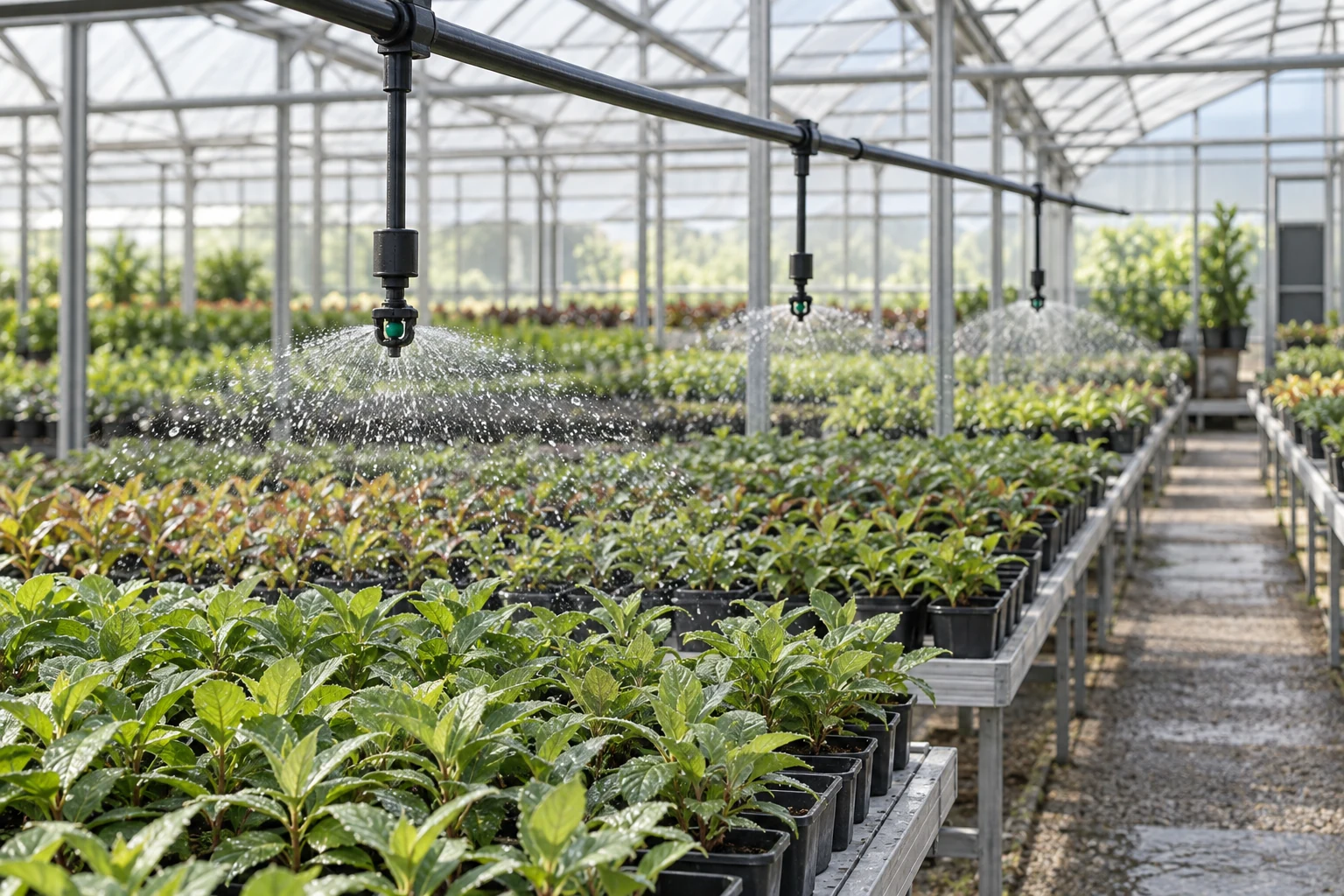
A greenhouse micro sprinkler system distributes droplets across a growing area. It can suit nursery benches, closely arranged trays and planted beds where overhead watering is appropriate. The crop, growing medium and tolerance of wet foliage determine whether that method fits.
For widely spaced pots, a large share of an overhead application can miss the growing medium. Direct drip outlets may be more practical in that situation. Plan separate zones when young trays, established plants and container crops need different schedules or watering methods.
Plan the details
Good choices start with your layout.
Match water delivery, component connections and operating conditions before choosing quantities.
Select sprinkler spacing from the coverage pattern
A quoted spray radius describes reach under stated test conditions; it is not a guarantee that one sprinkler will water every point inside that circle equally. Use the selected manufacturer’s spacing and distribution data to plan overlap at the intended mounting height and pressure.
Map bench edges, walkways, end walls, fans, structural posts and hanging crops before laying out the supply pipe. Air movement and physical obstructions can redirect or block droplets. Check the installed pattern with catch containers across the crop area and compare collected amounts after the same timed run.
- Choose the nozzle and rotor combination before setting final spacing.
- Allow for the greenhouse edges and corners in the layout.
- Test at crop height and repeat when the canopy changes.
- Correct uneven coverage before extending the watering time.
Match every part of the hanging assembly
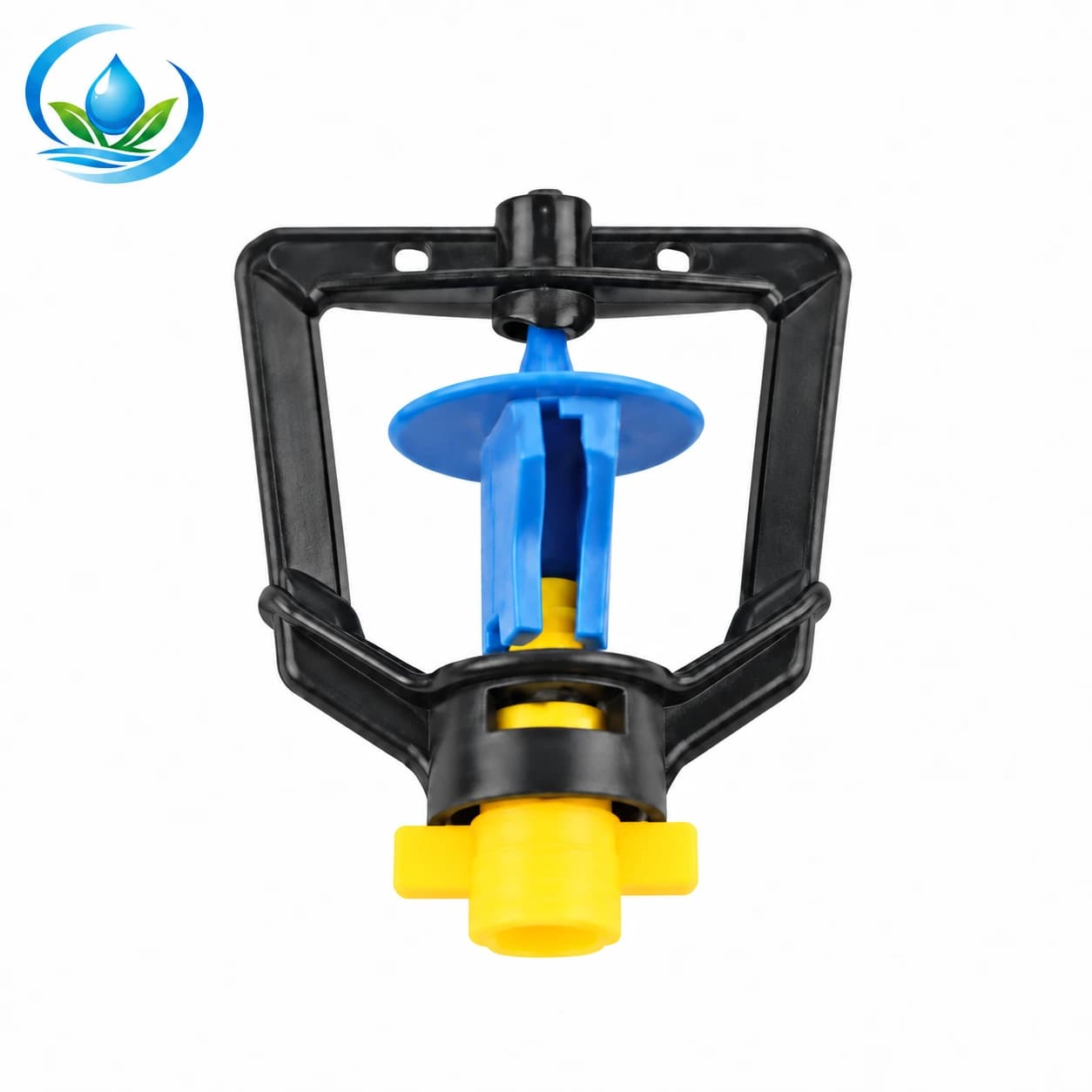
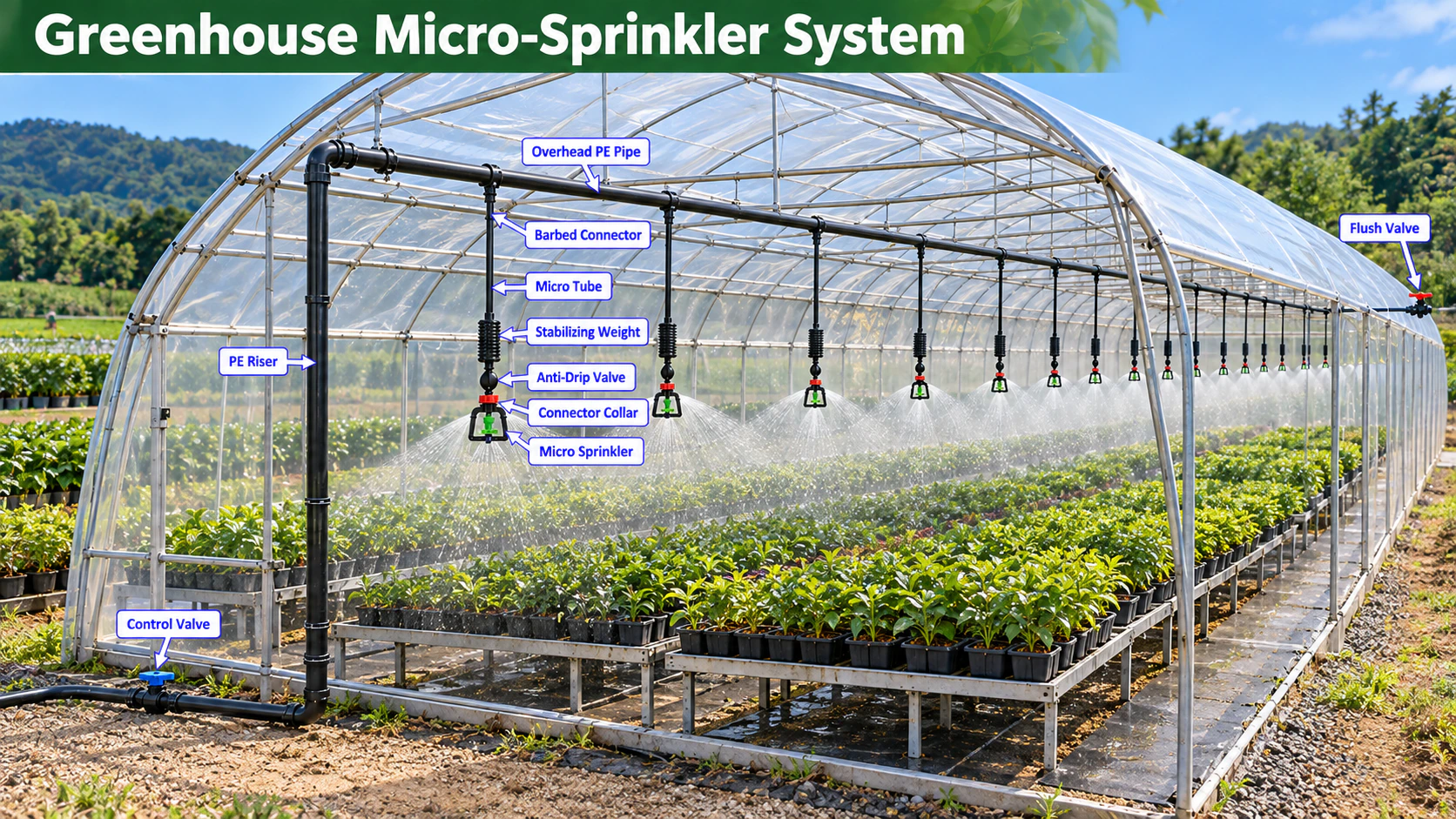
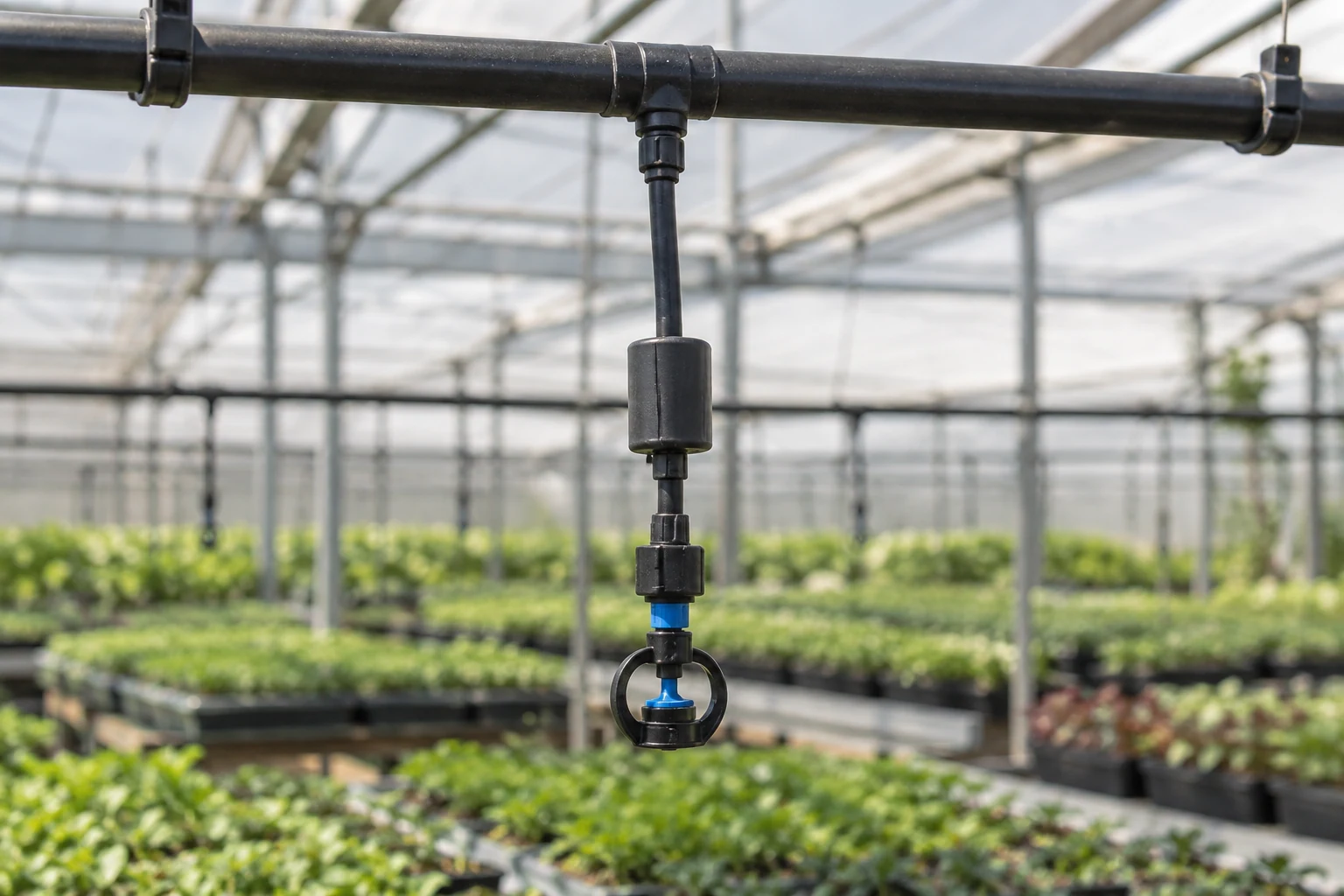
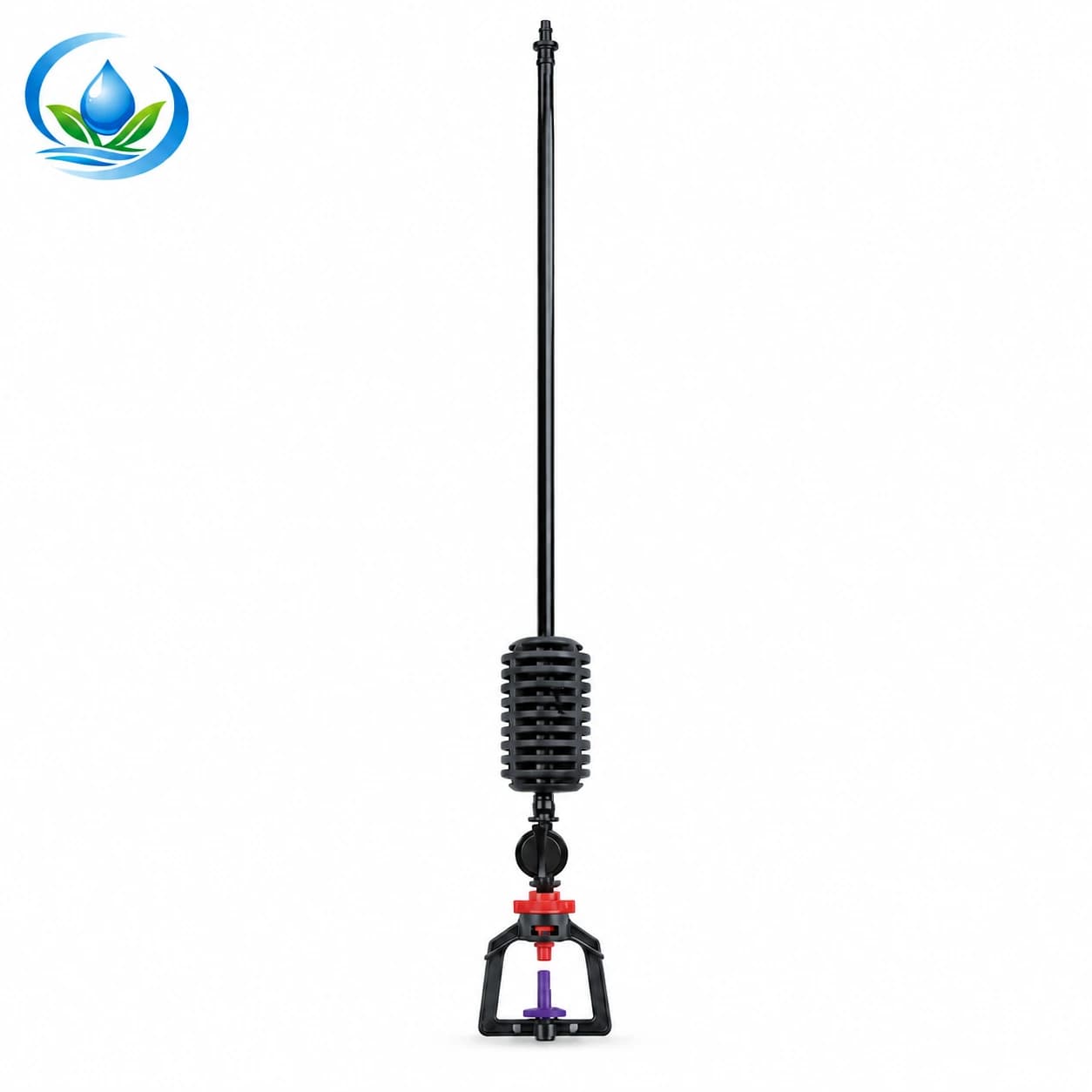
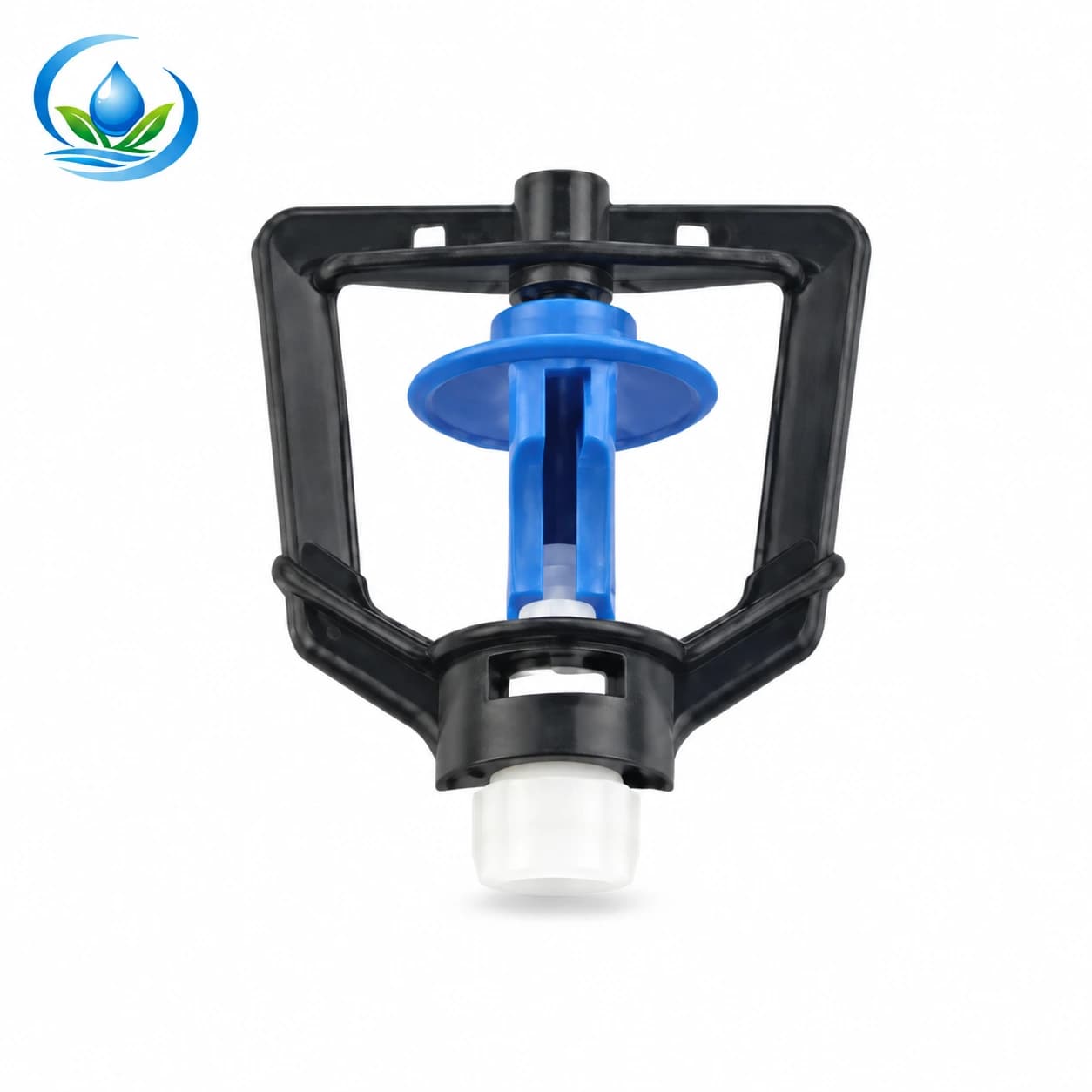
An overhead arrangement may use a distribution pipe, flexible drop tube, stabilizer and a sprinkler intended for inverted mounting. A compatible anti-drain valve can limit discharge after shutdown. These are model-specific choices: an upright-only sprinkler should not be assumed to work correctly when hung upside down.
Netafim’s SpinNet documentation is one example of a manufacturer specifying the drop tube, stabilizer and anti-drain components together. Use that principle when comparing a system, while taking actual sizes, pressure and filtration requirements from the product you select in this store.
Size the supply for the sprinklers running together
Sum the rated flow of all sprinklers that run together, then check the supply and the losses through filters, valves, pipes and elevation changes. As a planning example, 12 sprinklers delivering 40 litres per hour each require 480 litres per hour, or 8 litres per minute. These are illustrative numbers, not specifications for a listed product.
Select filtration from the water analysis and the nozzle requirement. Choose regulation that works at the zone’s real flow. A pressure gauge near the supply does not replace checking the furthest operating sprinkler, especially when another zone is drawing water at the same time.
Choose micro sprinklers or misting by purpose
A micro sprinkler is generally chosen to deposit water on the crop area. A fogger or fine-mist system may instead be selected for humidity management, cooling or propagation. Droplet characteristics, water quality, control strategy and the crop’s requirements determine which equipment is suitable.
Do not choose a nozzle solely because both systems are drawn above plants. Check whether your objective is to replenish root-zone moisture or manage the air around the crop. Where both are needed, separate control makes it possible to respond to each purpose without automatically applying more water to the growing medium.
Build your component list
Shop parts for greenhouse micro sprinklers.
Explore individual components from our catalogue. Match dimensions, pressure ratings and quantities to your own system plan.
drip accessories
Hanging & Ground-Stake Micro Sprinkler Assemblies
Hanging 40–80 cm; ground stake 40 or 60 cm
Esgotado
Ver detalhes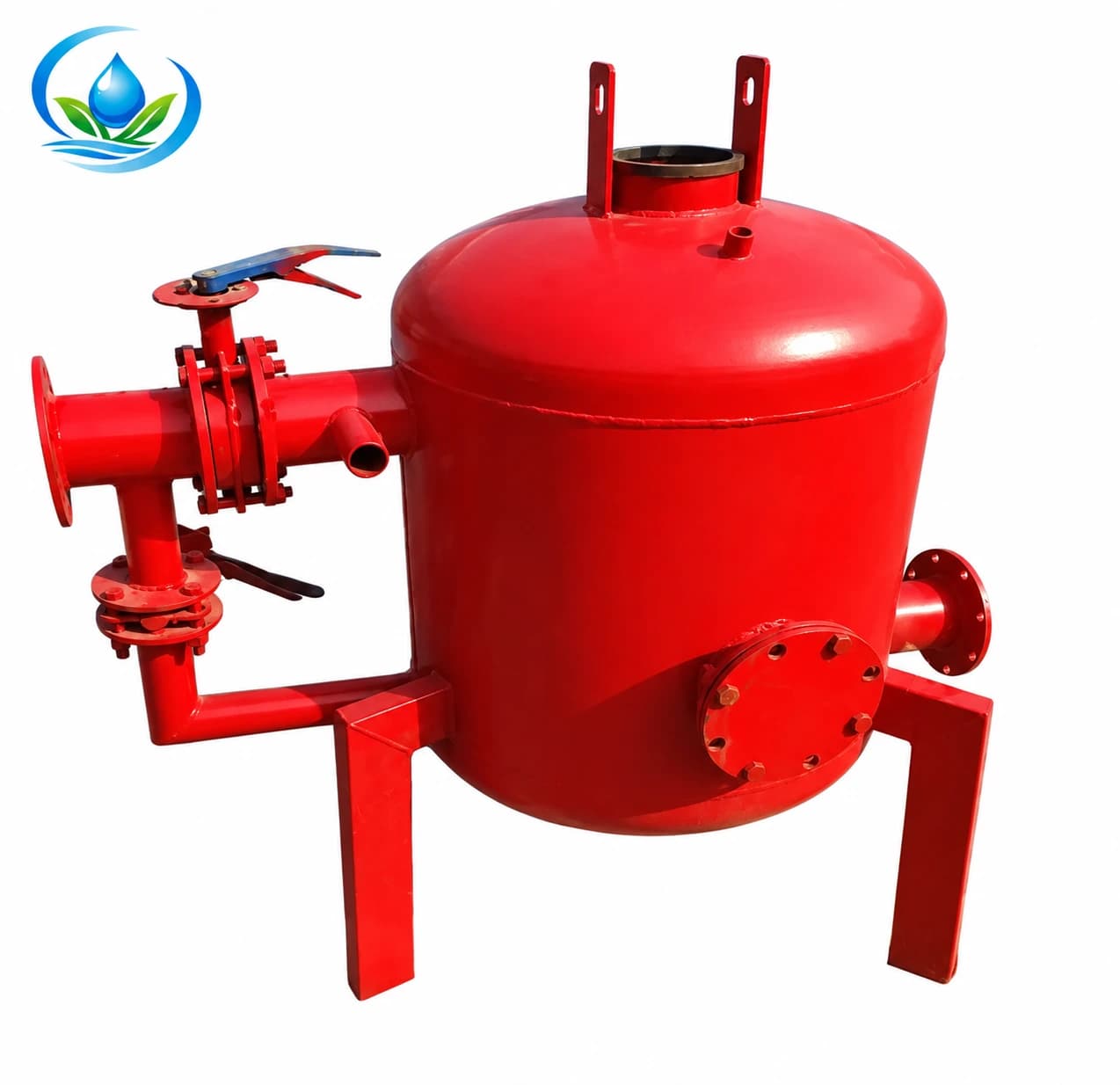
filtros
Single-Tank Sand Media Filter for Drip Irrigation
Filter organic debris from irrigation water with a single sand media vessel. Leave room for media service and a planned backwash outlet.
Esgotado
Ver detalhes
pressure regulators
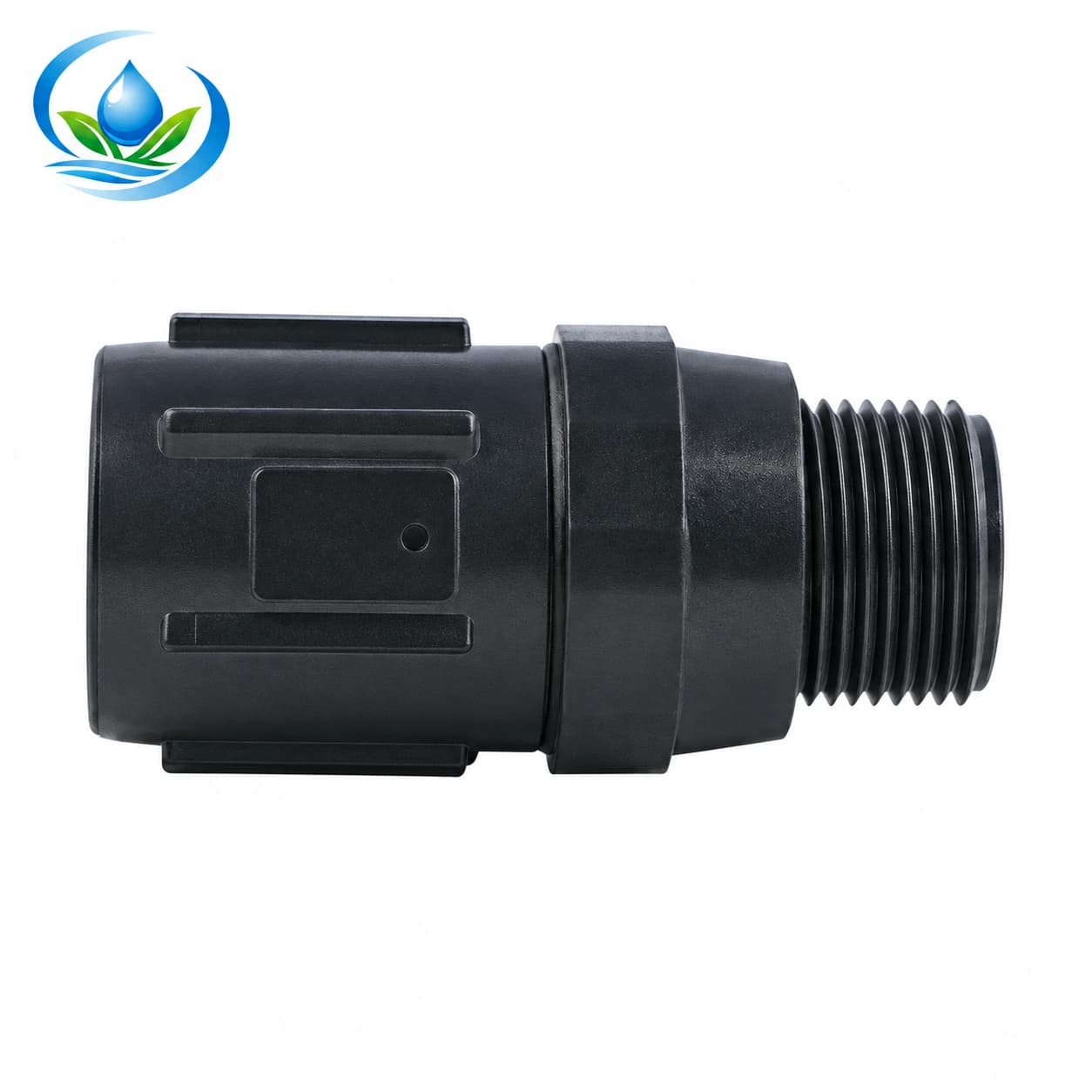
3/4-Inch Drip Irrigation Pressure Regulator
F3/4" × M3/4" — 15 PSI / F3/4" × M3/4" — 20 PSI / F3/4" × M3/4" — 25 PSI / F3/4" × M3/4" — 30 PSI
De14,30 US$
Escolha as opções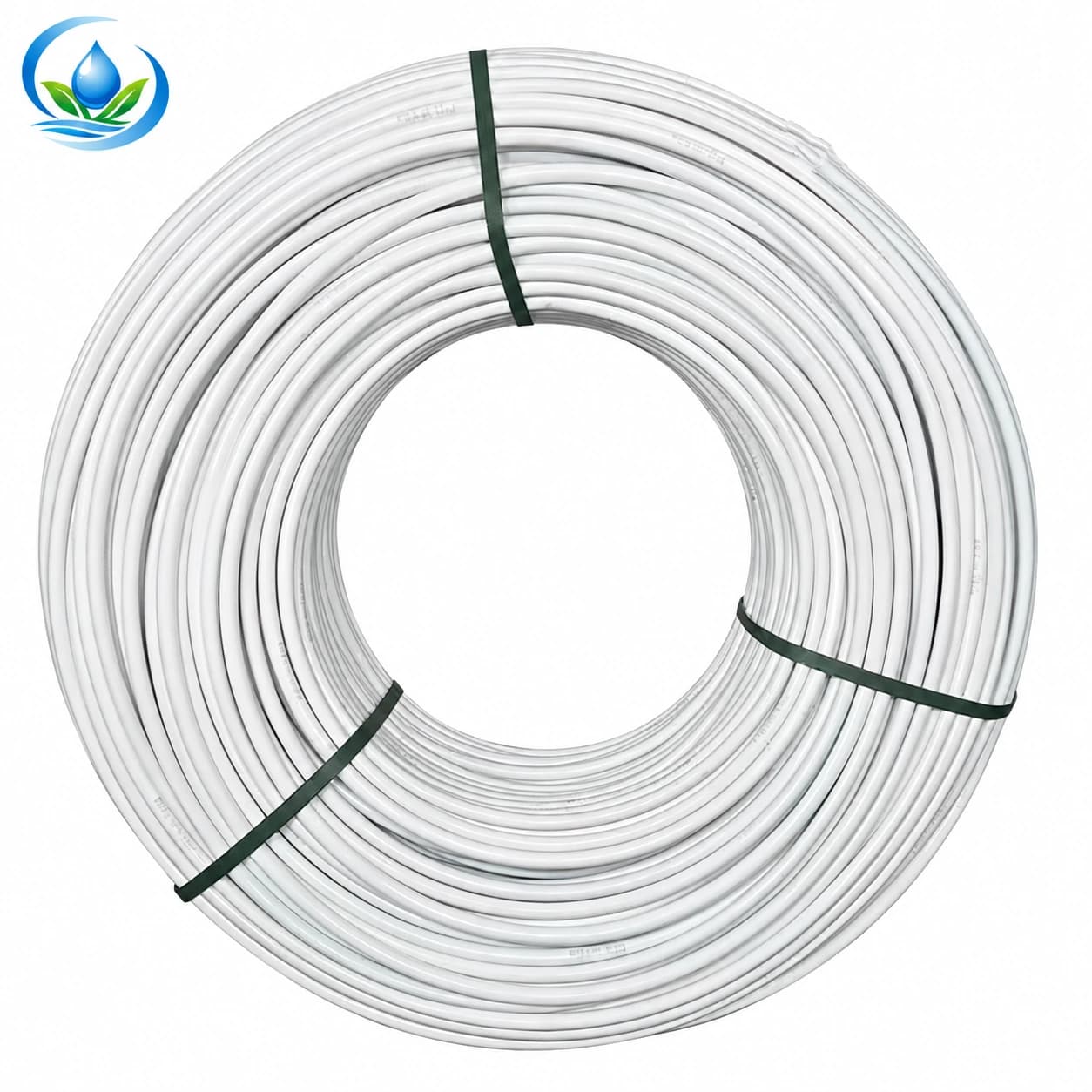
pipe tubing hose
White PE Tubing for Greenhouse Drip Irrigation
Route irrigation water through greenhouse benches or rows with white PE tubing. Add compatible take-offs and emitters where each crop needs them.
Esgotado
Ver detalhes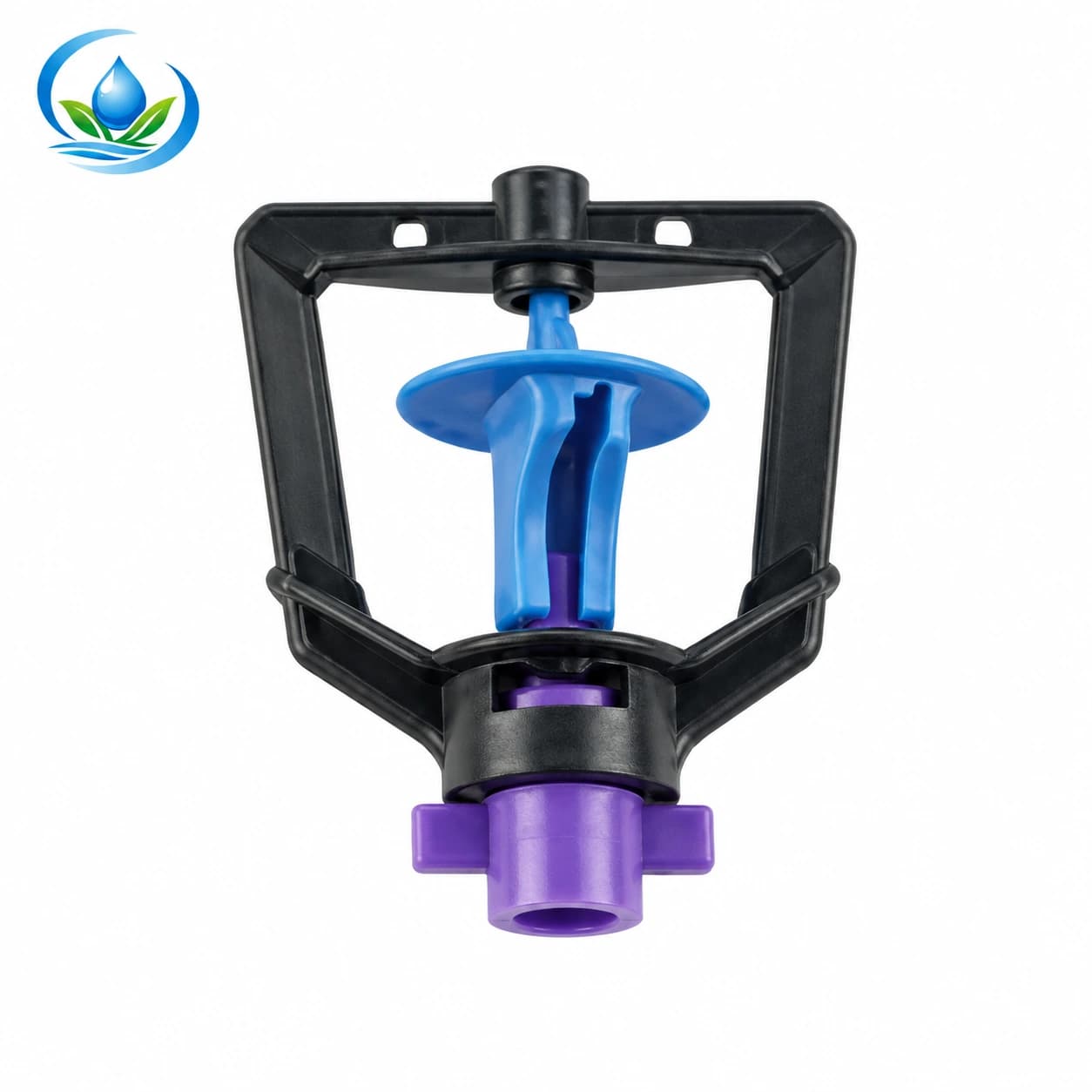
Set up. Check. Keep growing.
Commission coverage, then fine-tune watering
Keep a record of your first working setup.
Check growing-medium moisture, crop stage and greenhouse conditions before running a zone. When overhead watering is appropriate, account for how long leaves remain wet and how ventilation and timing affect drying. A timer is a control tool, not a substitute for crop inspection.
During routine checks, inspect filters, blocked nozzles, damaged rotors, uneven drops and leakage after shutdown. Compare catch-container results when coverage changes. Clean or replace parts following the selected manufacturer’s instructions, then recheck the pattern before assuming the problem is solved.
- Prepare: flush lines and confirm each hanging assembly is compatible.
- Test: compare coverage and inspect drainage after shutdown.
- Adjust: set watering from crop moisture and repeat the coverage check.
Match the way you grow
Four settings. A system for each.
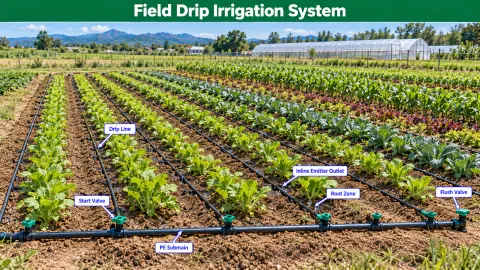
Vegetable beds. Crop rows. Open fields.
Field Drip Irrigation Systems
Deliver water along planted rows.
Explore this system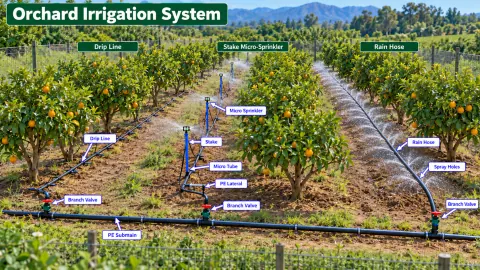
Fruit trees. Orchard rows. Lasting layouts.
Orchard Drip Irrigation Systems
Place watering points around the active root area.
Explore this system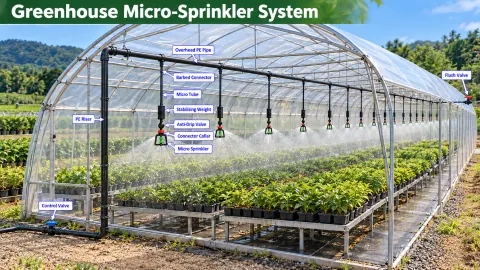
Nursery benches. Protected crops. Even coverage.
Greenhouse Micro Sprinkler Systems
Water a planted bed or bench area from a planned spray layout.
You are exploring this system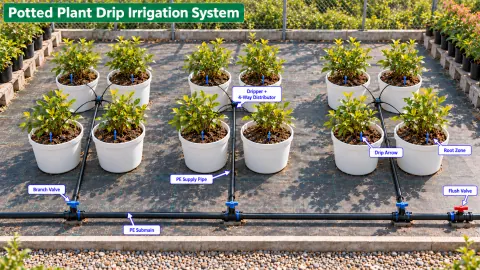
Pots. Planters. Grow bags. Individual care.
Drip Irrigation for Potted Plants
Direct water into individual pots or grow bags.
Explore this systemA little more clarity
Questions before you choose?
Start with these practical answers, then check the specifications of the parts you plan to use.
Talk to our teamWhat spacing should greenhouse micro sprinklers use?
Use the spacing data for the exact nozzle, rotor, mounting height and pressure. Test the installed pattern with catch containers across the growing area. Maximum spray diameter alone is insufficient to set uniform spacing.
Can any micro sprinkler be installed upside down?
Choose a model specified for inverted mounting and match its drop tube, stabilizer and other assembly parts. The operating pattern and drainage behavior can change when a sprinkler is installed in a position it was not designed for.
Why does water drip after the zone switches off?
Water retained in pipes and drop tubes can drain through outlets. Check the installation and whether a compatible anti-drain assembly is specified. A faulty seal or incorrect opening pressure may also need attention.
Is a greenhouse sprinkler system the same as a misting system?
The functions differ. Sprinkler irrigation delivers water to the growing area; a misting or fogging system may serve propagation, cooling or humidity control. Select droplet performance, controls and water treatment for the intended application.
Bring your growing plan. Find the right parts.
Share your layout, water flow and pressure, connection sizes, and the crop you grow. Our team can help you compare product options.
Technical references
Planning information from extension and manufacturer resources. Use selected equipment specifications for final operating values.