Irrigation Supplies Online: Check Your Delivery Before Cutting or Installing
Match delivered rolls and parts to the accepted order, record quantities and condition, and separate unresolved items before cutting material or installing it.
Published by IrriNex Store
Buying irrigation supplies online leaves one important job between delivery and installation: checking that the goods received match the order you accepted. Similar-looking rolls can have different walls or emitter spacing, a bag count can be confused with a piece count, and a damaged carton can hide a cracked connection. A receiving check gives you a clear record before material is cut, mixed with existing stock or carried into the field. An irrigation supply delivery checklist starts with the selected option and expected package count, so discrepancies remain traceable.
For a farm delivery, separate three questions: what was ordered, what arrived and what condition it arrived in. A correct quantity does not prove the variant is correct, and an intact label does not prove the contents are undamaged. The process below organizes those observations into a useful support request.
What order record does the irrigation delivery receiver need?
Keep the accepted order confirmation, any agreed changes, the dispatch information and the packing list together. Use the accepted version rather than an earlier quotation or a product page remembered from browsing. If a substitution was agreed, retain the message identifying the replacement and its quantity. Give the person receiving the shipment access to that record, especially when the person who placed the order will be working elsewhere on the farm.
Create one receiving line for each selected option. Include the product name, SKU or model, relevant dimensions, ordered quantity and selling unit. Leave separate spaces for quantity received, visible condition and anything awaiting clarification. The guide to planning a complete irrigation parts order is useful when the question is whether the project specification itself is complete.
Arrange a clean, sheltered checking area with room to keep cartons and rolls identifiable. Keep new goods separate from older stock until counting is complete. If several people unpack at once, assign each person particular lines or packages and use one shared record. Otherwise the same fitting can be counted twice while a small accessory moves between tables and appears to be missing.
How should the parcel be documented before unpacking?
Count the packages delivered and compare them with the available dispatch information. Record identifiers shown on the shipping labels and any indication that the shipment contains multiple parcels. A partial arrival is not automatically a missing item: another package may have separate tracking or a later dispatch. Ask for clarification when the records do not explain the difference, and keep received packages identified while that question is resolved.
Photograph the outside before removing damaged wrapping. Take an overall view showing the package and a closer view of crushed corners, punctures, wet areas or broken closures. Keep the shipping label readable in a separate photograph. Do not infer that every component inside a marked carton is damaged, or that an undamaged carton guarantees its contents are sound. Record what can actually be seen and continue with the item-level inspection.
Open packaging carefully without driving a blade into a coil or scraping a fitting underneath the seam. Retain wrapping, dividers, labels and small bags until the contents have been reconciled. If a package is unsafe to handle because it is unstable or contains exposed sharp damage, arrange suitable handling rather than rushing the inspection. Follow the delivery-signature and carrier procedures applicable to that shipment, and retain any associated record.
Match the actual variant, not just the product family
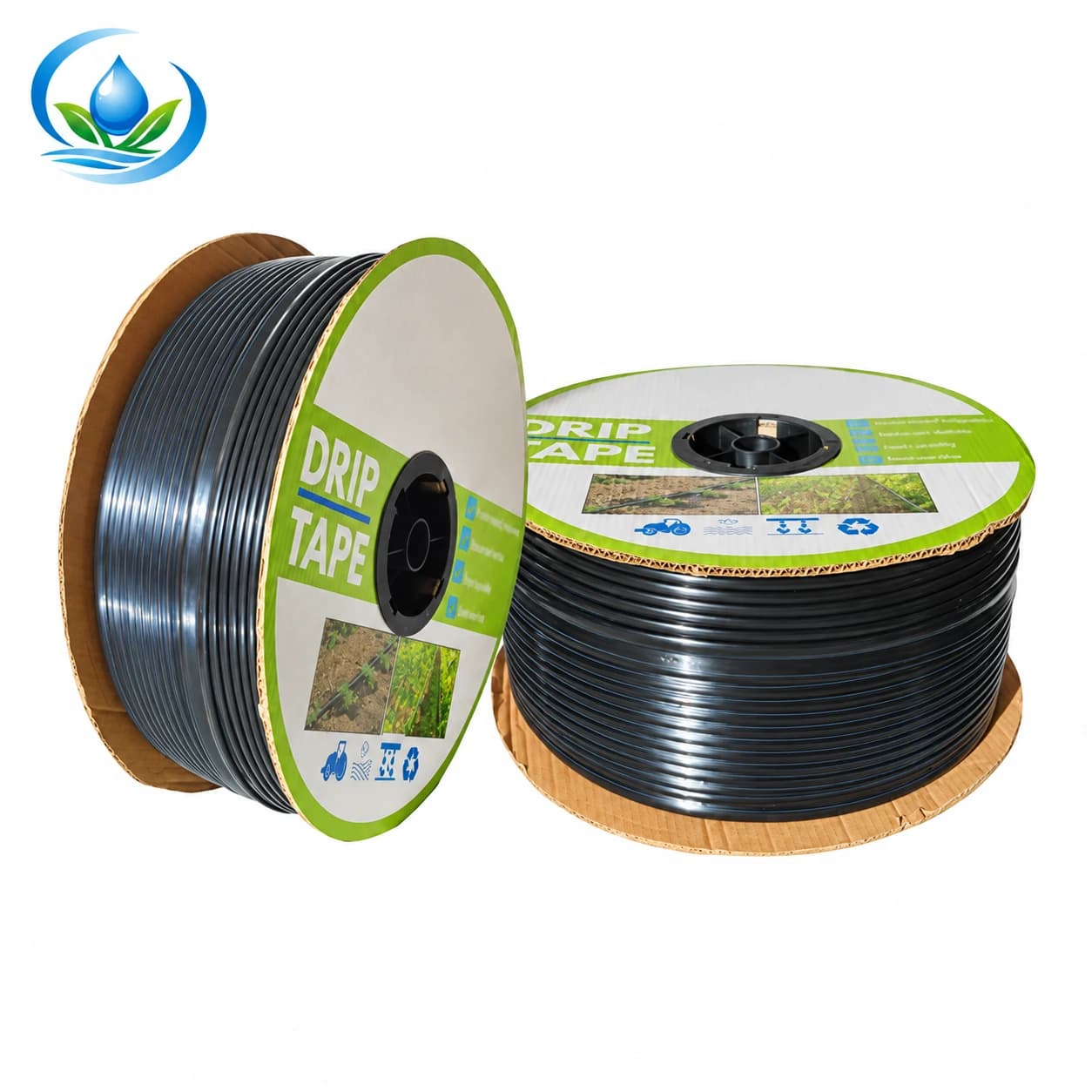
Start with the complete roll label and the accepted order line. For flat-emitter drip tape, diameter, wall thickness, emitter spacing and roll length identify different choices within the range. An order for a 0.2 mm wall is not verified merely because the delivered roll says 16 mm. Compare each field individually and photograph the full label before the wrapper is discarded. Record a batch or lot identifier if one is provided.
One confirmed tape option has SKU IS-2-C526AC2D85: its label combines a 2,000 m roll with 30 cm spacing, a 0.2 mm wall and 16 mm diameter. These values illustrate what a complete identity looks like; they are not instructions to order that option for every crop. The exact option does not have a verified emitter discharge assigned here. Do not fill an absent label field with a flow value borrowed from another tape configuration.
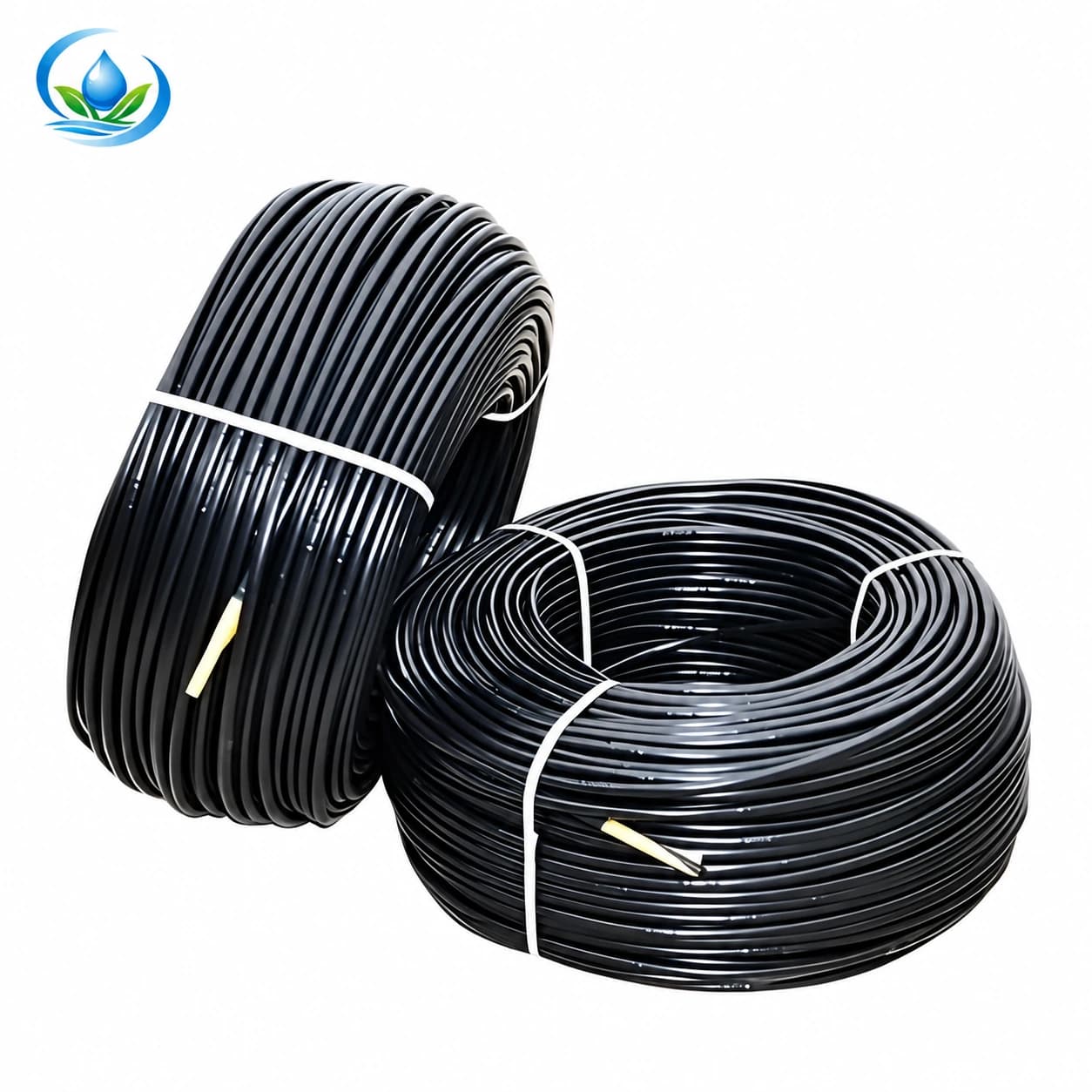
For dripline with integrated emitters, SKU IS-3-8CDA6B18CD identifies the 500 m option with a 0.8 mm wall, 16 mm diameter, 30 cm spacing and a listed 2 L/h emitter flow. Use that full option when comparing an order for it. A family title or a similar photograph is weaker evidence than the selected specification. If the confirmation, product marking and supporting data disagree, record all three and obtain an explanation before treating them as interchangeable.
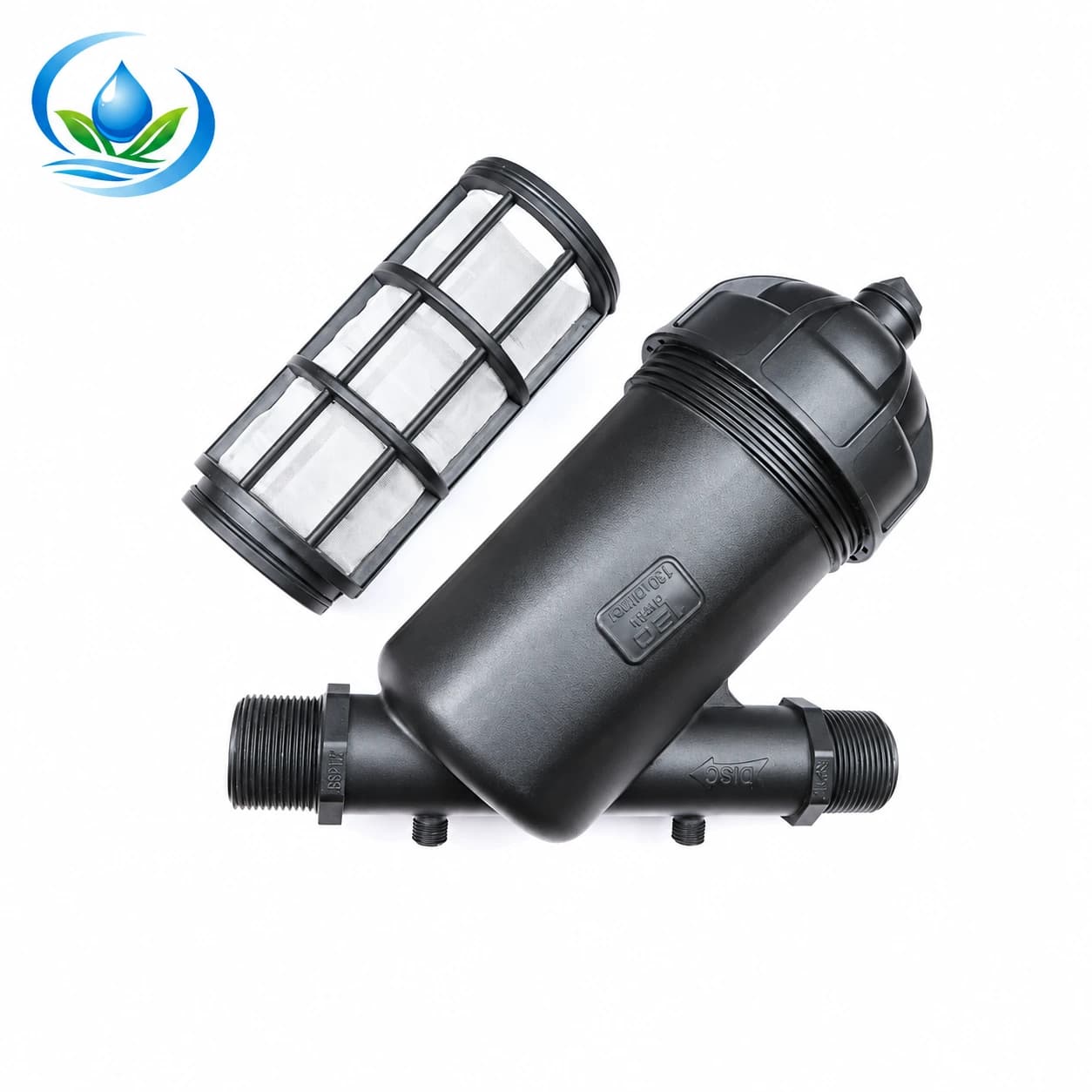
The compact screen filter provides another useful identification example. Its F25YS option is listed with a 3/4-inch connection, while F32YS is listed with a 1-inch connection; both specify 120 mesh. Check the model and supplied element information rather than choosing by body color. The connection size alone does not establish the thread standard, and a visual glance cannot verify the actual mesh grade or certify pressure performance.
Reconcile rolls, packs and individual pieces
Keep the selling unit visible beside every count. If an accepted line states two packs containing ten pieces each, the comparison is two packs and twenty pieces, not two loose fittings. This is a hypothetical arithmetic example, not a package quantity promised for a Store product. When the pack size is unclear, note the number of sealed packs and their labels, then ask for the unit definition rather than opening everything to satisfy an assumption.
For rolls, distinguish the number delivered from the length stated on each label. A printed 500 m length is the declared roll quantity; it is not a measurement you personally completed. Do not unwind an entire disputed roll across the yard or cut it into field lengths merely to investigate a label question. Keep the coil and its identification together and ask what measurement or evidence would resolve a suspected length discrepancy.
Count small parts over a clean tray or table and check inside packing folds before reporting them absent. Compare the received accessories with the accepted contents, not with everything visible in a promotional image. A filter photo may show a connection arrangement without promising that every adapter is included. Separate “listed but not found” from “needed for my installation but not included in the order”; those require different support answers.
Describe visible condition without inventing a diagnosis
Inspect accessible surfaces for cracks, cuts, crushed ends, distorted threads and loose components. With a roll, distinguish an ordinary stored shape from an observed split or severe local deformation, and photograph the questionable area without pulling the entire coil apart. With a filter, note damage to the housing or connection and whether the supplied parts match the documented contents. Avoid dismantling a disputed assembly just to search for an explanation unless support or the product instructions call for it.
Use observations that another person can understand. “A crack is visible across the outlet beside the model marking” is more useful than “bad quality.” Show the whole component, its identifier and a close view of the area; a ruler can help indicate scale when positioned safely without obscuring the defect. Keep the original photographs. An edited image with arrows may help discussion, but it should supplement the unaltered view rather than replace it.
Separate what was seen on receipt from what happened after handling or testing. If an item was already opened, fitted or operated, describe that sequence honestly. Record how many items were examined and how many showed the same issue. Finding a problem in one piece does not establish the condition of every piece in the carton, while checking only one sample does not prove an entire shipment is acceptable.
Keep uncertain goods out of the installation batch
Set aside the affected items with a clear note linking them to the receiving record. Keep their packaging and identification with them, and tell the installation team which items are awaiting clarification. A physical separation matters when several rolls look alike. It prevents a disputed option from being cut into laterals and avoids mixing evidence from the new delivery with parts already used in another field.
A compatibility question is not a reason to force a dry connection. Read the interface descriptions and record accessible dimensions without damaging the material. Do not heat tubing, enlarge a hole, apply sealant or tighten a mismatched thread to make an uncertain part appear suitable. If a sample assembly is needed, agree the method and sample with support or follow the confirmed product instructions. A connection that can be pushed together by hand has not thereby proved a safe operating match.
Likewise, do not treat a receipt check as commissioning. It does not verify emitter output, filter loss, allowable lateral length or operating pressure. Pressure testing belongs to a suitable installation procedure after identity and compatibility are established. If any test has already occurred, include the setup and conditions in the support record.
Send support a request tied to specific order lines
Use the IrriNex Store contact page to identify the order and the affected item. Include the order number, checkout email, selected option, delivered quantity and a short description of the discrepancy. Refer to photograph names or numbers so the reader can match a label and a close-up to the correct component. Send personal order information through the support channel rather than posting an unredacted shipping label in a public discussion.
A useful message might say: “The accepted line lists two rolls of option A. I received two rolls; one label matches and the other shows option B. Both remain uncut. Images 1–3 show the parcel and the two labels. Please confirm the next steps for the differently marked roll.” These are illustrative option names, not a report of a real delivery. The message makes quantity, identity and current condition clear without deciding the remedy in advance.
For damage or absent parts, adapt the same structure. State the exact part affected, how many were checked, what is missing or visible and whether anything has been installed. Explain relevant troubleshooting already performed instead of repeating it without agreement. Keep replies with the original order record and ask for clarification if an instruction does not identify the item, quantity or action it covers.
Consult the Store’s returns and order-issues guidance and contact the team before sending goods back. Keep packaging while the request is reviewed and obtain the instructions applicable to the order, including the destination and shipping arrangements. Follow the terms and support instructions for your order.
Release verified stock with its identity intact
Once the receipt questions are resolved, mark the receiving record with the outcome and the date. Keep any accepted substitution explicit so the crew does not install to the earlier specification by mistake. Move confirmed stock to its intended storage or installation area with labels preserved. When a roll is later divided, carry its specification and remaining quantity into the stock record so future repairs can be matched to the material actually used.
Use the quantity-based irrigation budget guide if a resolved change affects the material plan or remaining stock. Keep that recalculation separate from documenting what arrived. A careful online purchase is complete when the received items are identified, counted and checked, unresolved goods are clearly separated, and the installation team knows which exact materials are ready for the next stage.
Before you order
Compare this guide with the specifications for your exact product, selected option, water supply and field conditions. Your equipment requirements take priority over a general example.
Compare irrigation products