How Much Does a Farm Irrigation System Cost? Build a Crop-Row Parts Budget
Build a farm drip-irrigation budget from measured rows, whole rolls and verified fittings, with freight, installation and reserve stock shown separately.
Published by IrriNex Store
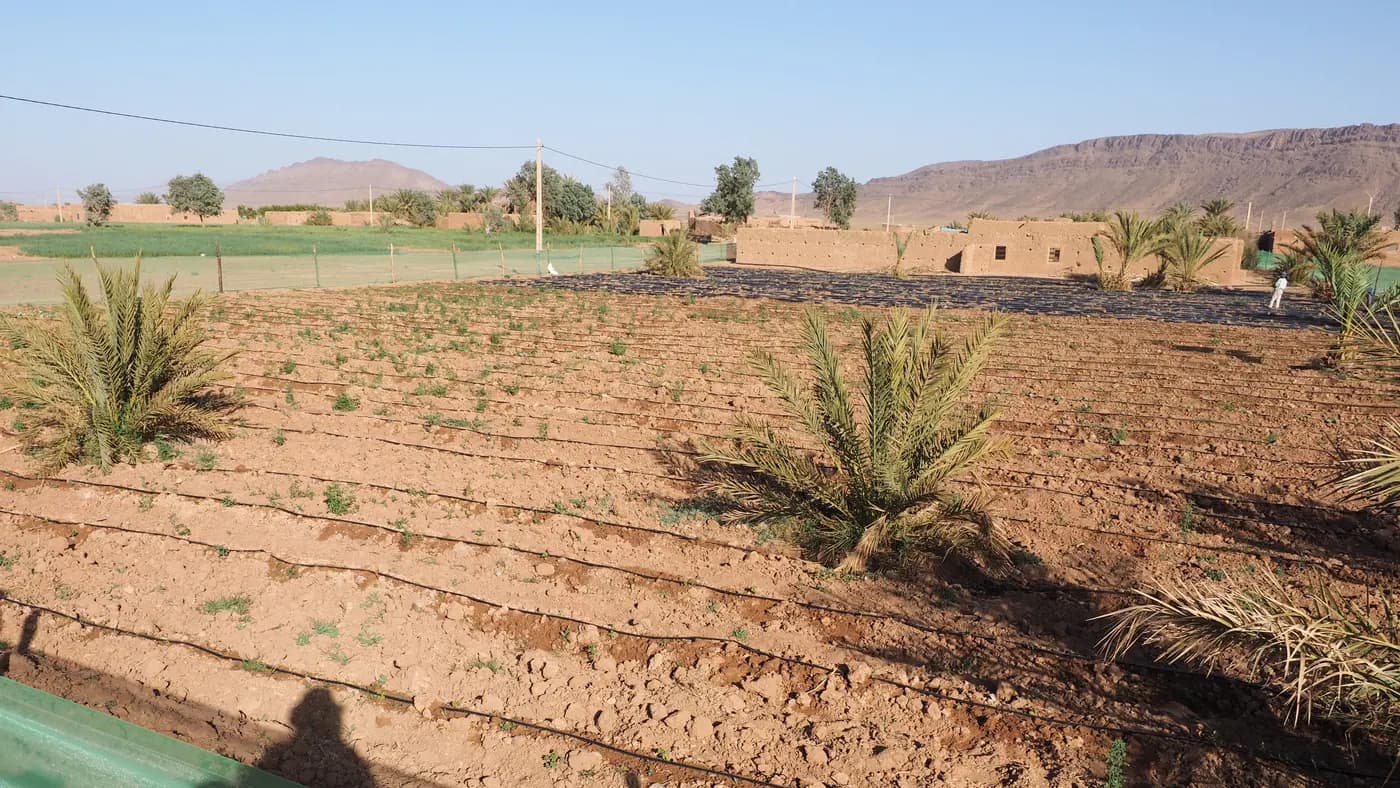
How much does a farm irrigation system cost? A useful answer starts with the work being priced: replacing tape in an existing block, adding crop rows to a working supply, or building a new installation from the water source onward. Each scope produces a different order. Acreage alone cannot tell you how many rolls, connections, valves or hours of installation you will need.
For a crop-row drip system, build the budget from measured quantities and quotations for exact product options. Keep purchased material separate from installed material, and keep delivery, installation and operating costs visible. The example below provides quantities and calculation steps without inventing store prices or presenting a few selected components as a complete irrigation kit.
Define the boundary of the quotation
Write one sentence stating where the proposed work begins and ends. For example, you might request distribution equipment from an existing field connection to the ends of twelve beds. That does not automatically include a pump, intake, storage tank, power supply or changes to the water source. If any of those are needed, give them their own quotation lines.
List existing components as retain, inspect or replace. A filter already on the farm is not automatically suitable for an expanded block, but neither should it be bought again without checking. Photograph connections and record readable labels. This inventory prevents a comparison between one supplier's extension quote and another supplier's complete replacement quote.
The field-ready components list helps identify categories that might otherwise be missed. Use it to define scope, then remove items that are demonstrably outside your project. Mark uncertain items as awaiting confirmation; an omitted price should remain visible instead of silently becoming zero in the total.
Measure crop-row lines and branches before pricing the system
Record each bed's irrigated length and the proposed number of laterals along it. Measure the route from the connection point to the block separately from the header serving the rows. Include actual turns and crossings in the measured route. A rectangular area calculation cannot capture an awkward access route or several groups of short beds. A farm irrigation system cost estimate should price the measured lengths and counted connections, then keep delivery and installation on separate lines.
Count independent line entries and terminations. One bed carrying two separate laterals normally presents two line starts and two ends in a simple open-ended arrangement. A different manifold or flushing arrangement changes that count. Sketch the actual connections rather than applying a universal fittings-per-bed rule.
Mark which blocks would run together and what is known about available flow and working pressure. The flow-rate calculation guide addresses the information needed for that check. A quantity schedule is a purchasing calculation; it does not establish that the supply can operate every proposed outlet simultaneously.
A twelve-bed example without assumed prices
Consider an illustrative block with twelve beds, each requiring 90 m of crop-row coverage. Compare one lateral per bed with two, purely to see how quantities change. This is not a recommendation that either arrangement suits your crop, soil or supply. The lengths below exclude connection tails, test pieces and any additional measured routing.
| Quantity | One lateral per bed | Two laterals per bed |
|---|---|---|
| Beds | 12 | 12 |
| Separate laterals | 12 | 24 |
| Installed crop-row tape | 1,080 m | 2,160 m |
| 2,000 m rolls, before additions | 1 | 2 |
| Purchased tape | 2,000 m | 4,000 m |
| Remainder before additions | 920 m | 1,840 m |
| Line entries / terminations | 12 / 12 | 24 / 24 |
The multiplication is 12 × 90 × the number of laterals per bed. Whole-roll purchasing explains why doubling installed length can also double the roll purchase while leaving a larger remainder. That remainder is stock, not automatically wasted material. Record where it will be stored and whether it is useful for the same verified specification later.
Add measured tails and other required lengths before final rounding. Do not hide them in an unexplained percentage. If you change the bed lengths or roll option, calculate again. Also check that the individual cuts can be taken from the available rolls; total metres alone may conceal unusable short remnants when rows differ greatly in length.
Attach quantities to a complete tape specification
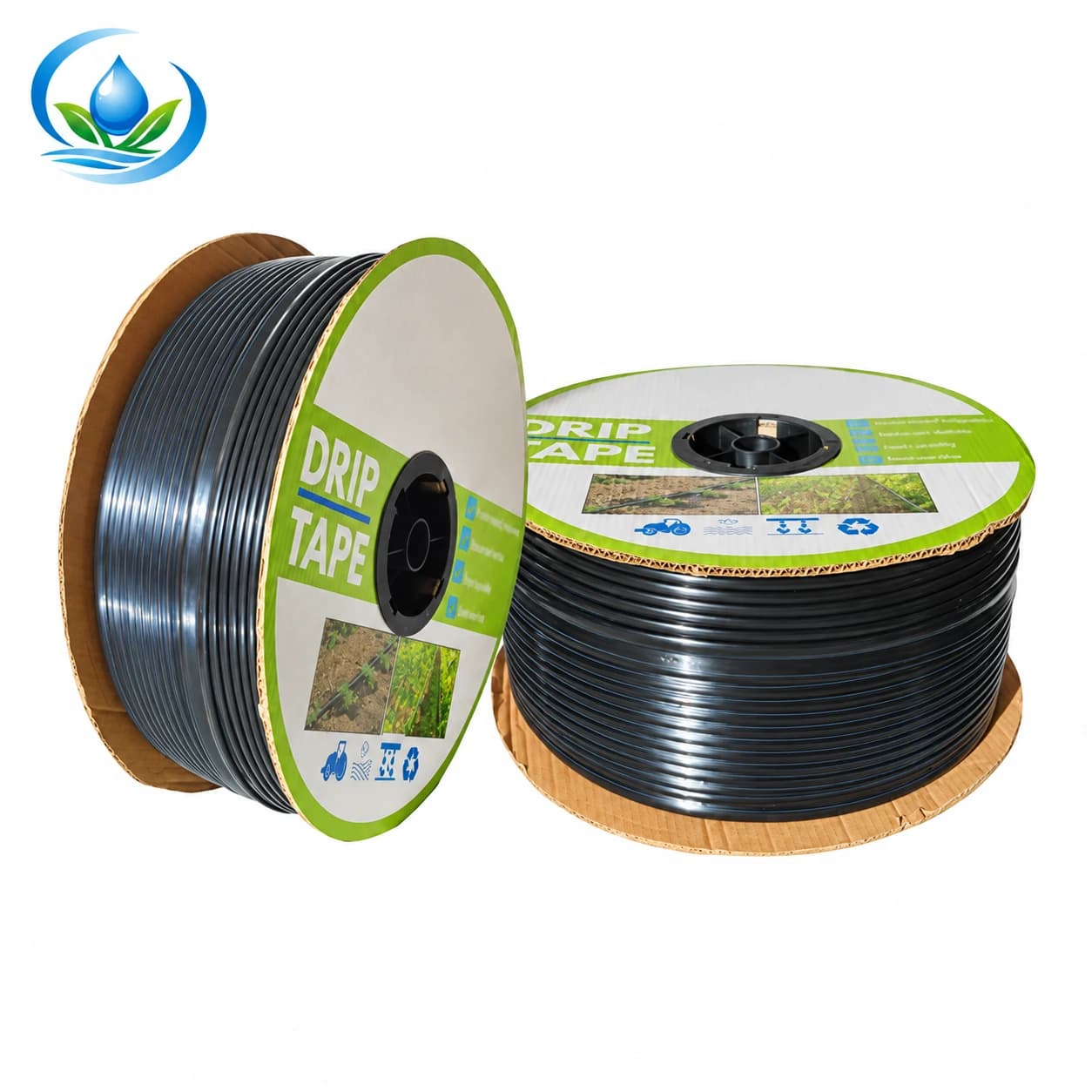
One current option in the flat-emitter drip tape range is 16 mm diameter / 0.2 mm wall / 30 cm emitter spacing / 2,000 m roll, SKU IS-2-C526AC2D85. It provides the verified roll length used in the arithmetic. Request a quotation for that complete option rather than for an unspecified roll of 16 mm tape.
The source record does not assign a verified emitter flow to this exact option. Do not borrow a flow value from a family range to calculate the block demand. Likewise, a 2,000 m roll is a purchasing unit, not an approved uninterrupted run. Even the 90 m example requires a separate check against the chosen product's operating data and site conditions.
A different wall thickness or spacing can change the specification being compared, and some options have different roll lengths. Keep the full label beside the quoted unit price. The drip-tape purchasing guide can help complete the selection before the budget becomes an order.
Count connection functions before naming fittings
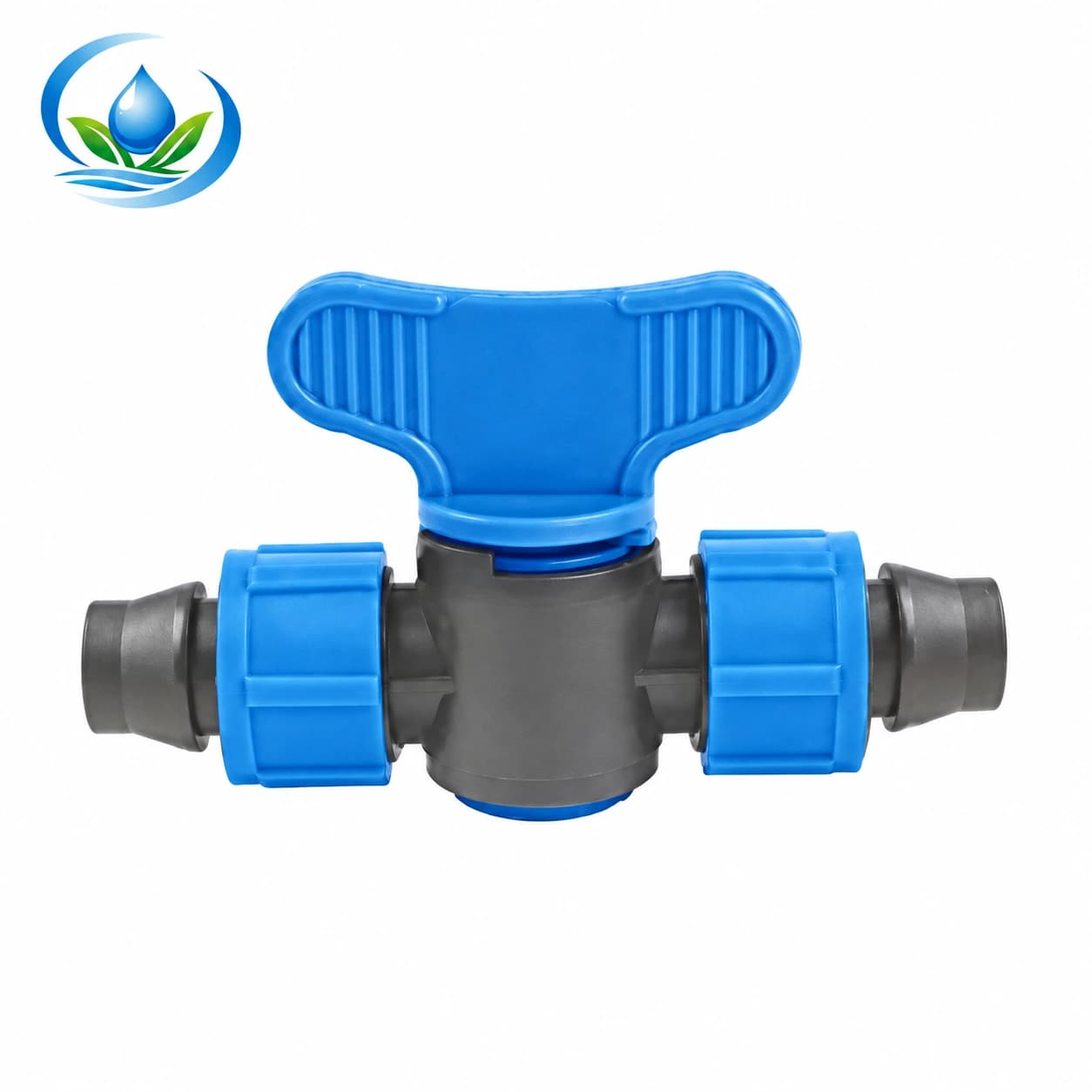
Every item in the connection schedule should have a job: feeding a lateral, joining two compatible sections, isolating a branch or closing an end. The 16 mm lock tape coupler valve lists V161, 16 × 16 mm. Consider it where a compatible tape-to-tape coupling with a valve is required. Its identity does not establish that it can directly make a take-off from your particular PE header.
If the sketch needs a header take-off as well as an inline valve, list those as separate functions and confirm the parts for each. Do not count the V161 once and assume it includes an unverified grommet, threaded adapter or punching tool. Conversely, do not add a valve to every lateral unless that isolation arrangement is part of the chosen plan.
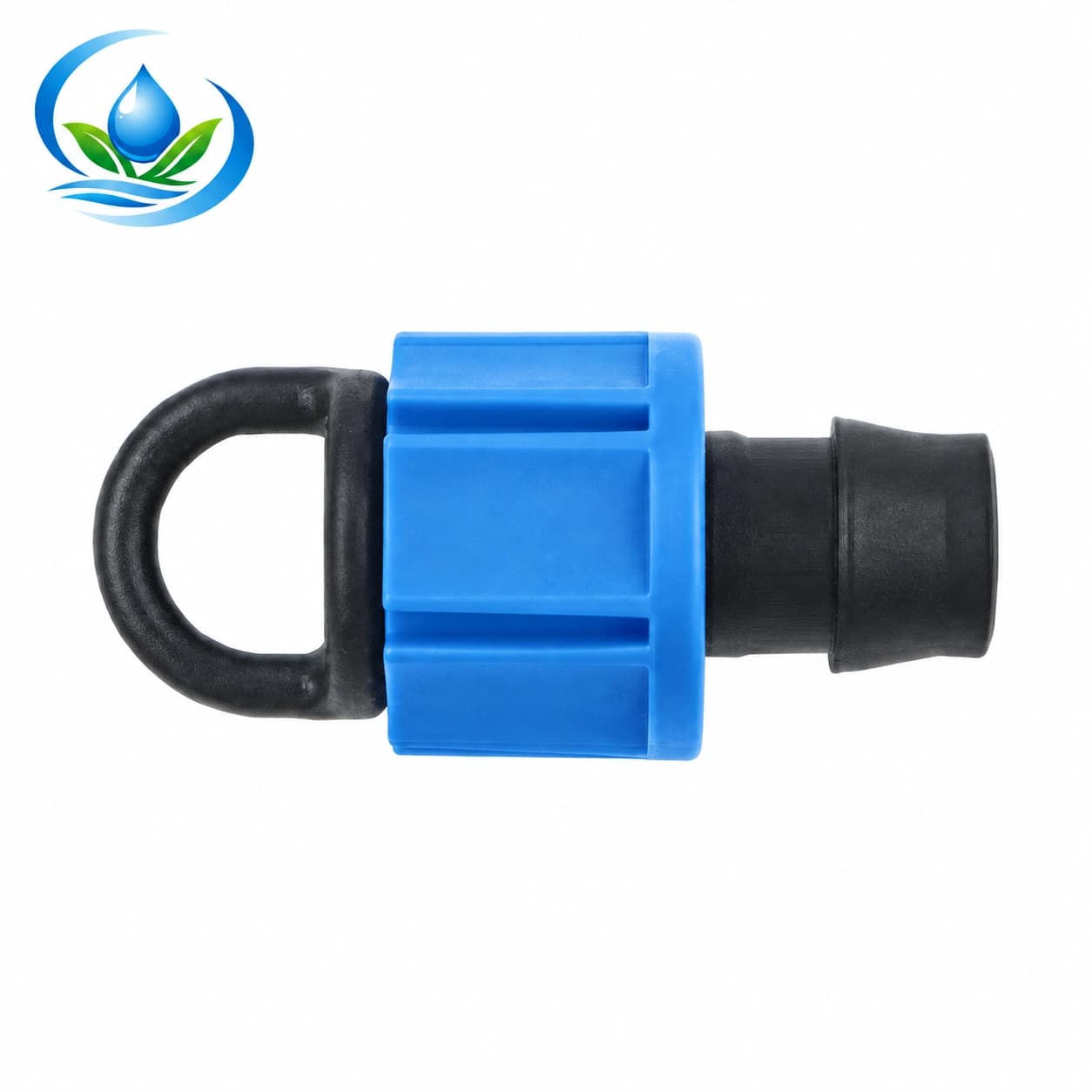
The lock-nut end cap has TP0117 in 16 mm and TP0120 in 20 mm. Select the relevant size and confirm the tape or tube interface. A matching nominal diameter is a starting point, not proof that every product with that diameter connects correctly. An end cap should not be budgeted as an automatic flushing device.
Put unit prices against a transparent irrigation parts worksheet
Give each row a description, exact option, required quantity, selling unit, quoted unit price and extended amount. If R is the quoted price per roll, the tape amount is the number of whole rolls multiplied by R. For valves and caps, multiply the confirmed purchase quantity by the quoted price in the corresponding selling unit.
Check whether a price refers to one piece, a bag or a carton. A requirement for twelve parts cannot be costed reliably from a pack price until its contents are known. If the minimum sale quantity leaves spare pieces, show both the installed count and the purchased count, just as you did with the tape.
The parts subtotal is the sum of those extended amounts, including the separately quoted feed pipe, take-offs, filtration and remaining fittings. Leave unknowns labelled “quotation required.” Record quotation date, currency and tax treatment so that two totals are comparable. A blank amount is a question to resolve, not evidence that an item is included at no charge.
Separate delivery, site work and commissioning
Ask for freight to the actual delivery location and specify any access or unloading requirements. A collection price and a delivered price are different comparisons. Keep delivery as a separate line so that a cheaper component subtotal does not conceal a higher landed total. Confirm which charges and taxes are included in the supplier's written quotation.
Break installation into the work actually required: preparing routes, placing feed pipe, laying laterals, assembling connections and making the system accessible for service. Request labour as defined tasks or stated hours and rates. Equipment hire and work by a separate contractor should remain visible instead of being folded into an unexplained materials allowance.
Include the agreed commissioning work: checking connections, flushing as appropriate and verifying operation of the intended blocks. State who supplies tools and who corrects defects discovered during that work. A quotation that ends at material delivery should not be compared directly with one that includes installation and an operational handover.
Keep reserve stock and running costs distinct
Choose replacement stock from the maintenance plan and actual availability of matching parts. Unused tape from a purchased roll may already cover part of that need. Do not add an arbitrary spare percentage and then count the same remainder a second time. Label stored material with its specification so that it is not mistaken for a different wall or emitter spacing.
Water, pumping energy, inspection time and future replacements belong in a separate operating budget. They cannot be derived from the purchase subtotal alone. Use measured consumption or documented assumptions for the intended operation, and identify the period covered. Avoid promising a fixed saving or payback merely because one material list costs less.
Compare quotations against the same schedule
Send suppliers the same measured layout and quantity sheet. Ask them to identify substitutions, exclusions, package quantities and delivery terms. Compare the complete tape option and each connection function before comparing totals. A missing take-off or an unpriced installation task can explain an apparently lower offer.
Give each revision a date and keep the previous quantities visible. If a supplier substitutes a different roll length, recalculate the number of rolls and the remainder before accepting the new total. If you postpone part of the installation, identify which feed components are still required for the first stage. Removing half the rows does not automatically remove half of every cost, particularly shared delivery and site work.
Before ordering, resolve the remaining technical checks and replace every price variable with a current written quotation. Keep the accepted scope, spare-stock plan and installation responsibilities with the order. You then have a farm irrigation budget that can be checked and revised when a row is added, instead of an area-based estimate whose assumptions are hidden.
Before you order
Compare this guide with the specifications for your exact product, selected option, water supply and field conditions. Your equipment requirements take priority over a general example.
Compare irrigation products