1/2-Inch Drip Irrigation Fittings: Match Thread and Tube Separately
A half-inch label may name a thread or a tubing family. Check both ends of a valve or barb adaptor against the measured PE lateral.
Published by IrriNex Store
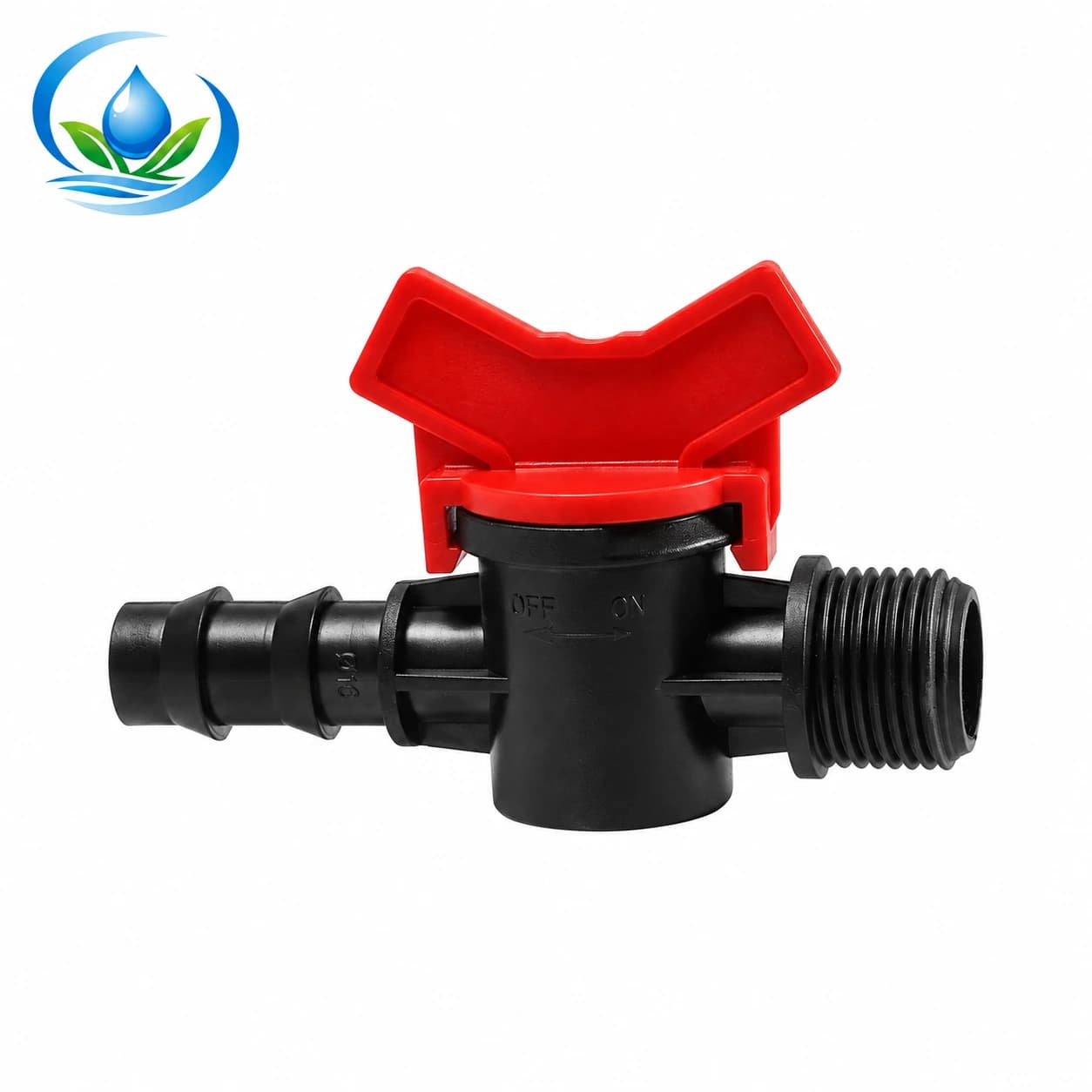
1/2-inch drip irrigation fittings can use “half-inch” to describe a nominal pipe thread, a tubing category or a package name. Those are not interchangeable measurements. A Store mini valve labelled 16 mm barb × 1/2-inch male thread has one metric tube-facing end and one nominal threaded end. Before ordering it or a passive adapter, identify both mating parts independently. Measure the existing lateral, read the threaded port's gender and standard, and confirm the selected product's seal and retention method. A matching half-inch phrase on two webpages is not proof that the parts will join.
This guide resolves the half-inch shopping decision for a real drip branch. The thread-identification guide explains thread families more broadly, and the tape-label guide explains roll thickness and millimetre labels. Here the task is more concrete: decide whether the half-inch belongs to the threaded supply port or to a tubing size description, then select a valve or adapter with a verified opposite end. Keep the old part and the new part on one sketch until the chain is complete.
Write the two ends of the fitting on separate lines
Photograph the installed assembly before taking it apart. On the supply side, identify whether the port is male or female, its nominal thread size and its actual thread standard. On the crop side, record tube type, measured outside diameter, inside diameter where relevant, wall thickness and how it is retained. A fitting name that includes “1/2 inch” may refer only to the supply-side thread, while its barb is designed for a different metric tube convention. The first line of a shopping record should never be just “need a half-inch connector.”
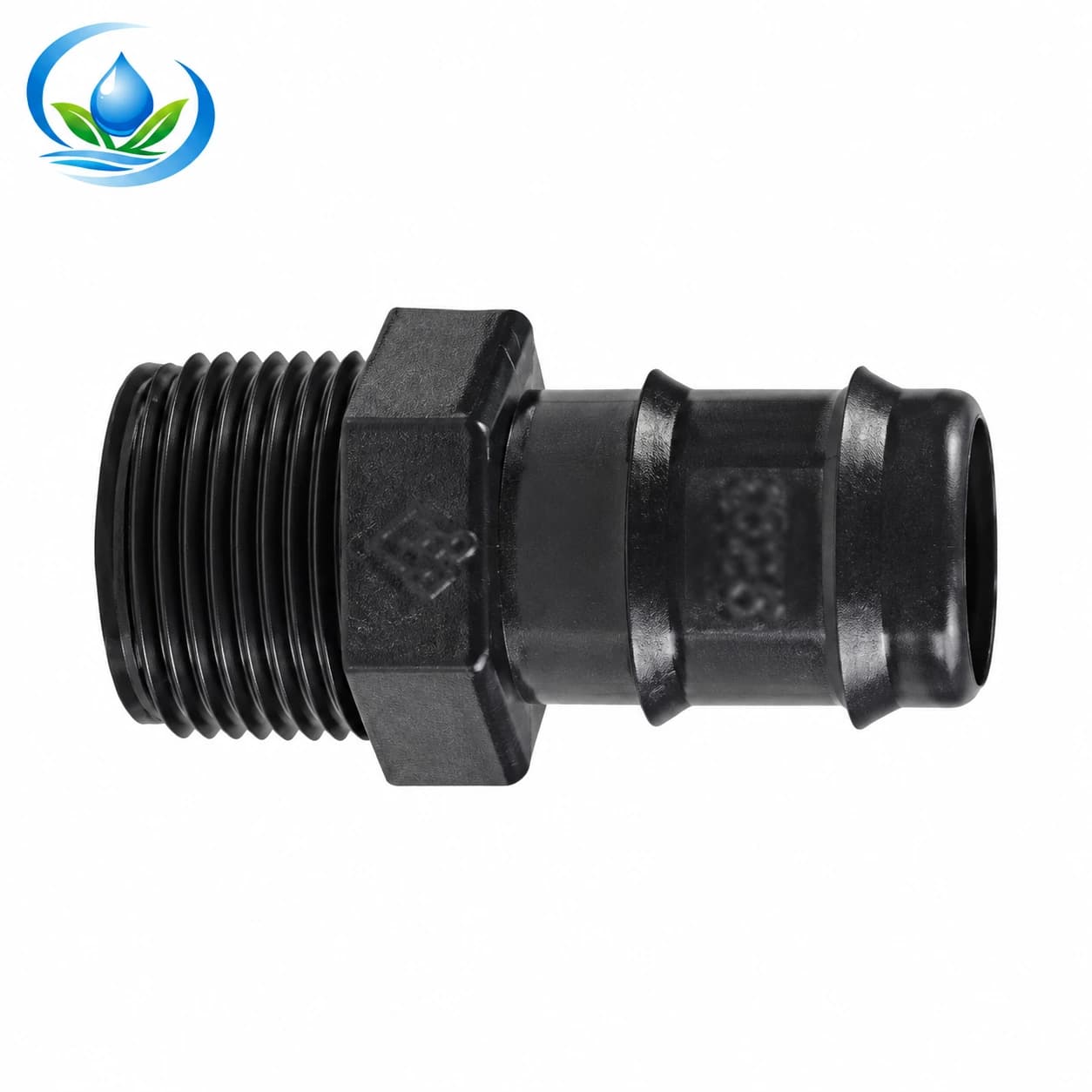
The published mini shut-off valve has a listed 16 mm barb and 1/2-inch male-thread option. It is a candidate for a local branch that needs manual isolation, not a promise that it fits every tube sold as half-inch. The barb male-threaded adaptor family includes 16 × 1/2-inch and 20 × 1/2-inch labels, among other combinations. Those are distinct choices: the same half-inch thread description appears next to different barb sizes. Decide which barb side your actual tubing requires before treating either as an alternative to the valve.
The first product's name describes a function, too. A mini valve adds a manual shutoff action; a passive adaptor joins two interfaces without providing that control. If a zone already has an appropriate isolation point, an additional valve may create cost and leak points without benefit. If a row must be shut off independently, a passive adaptor cannot do that job. The barbed fittings guide sorts those different connector roles; this article focuses on the specific half-inch-to-metric ambiguity.
Measure tubing OD and ID instead of trusting a nickname
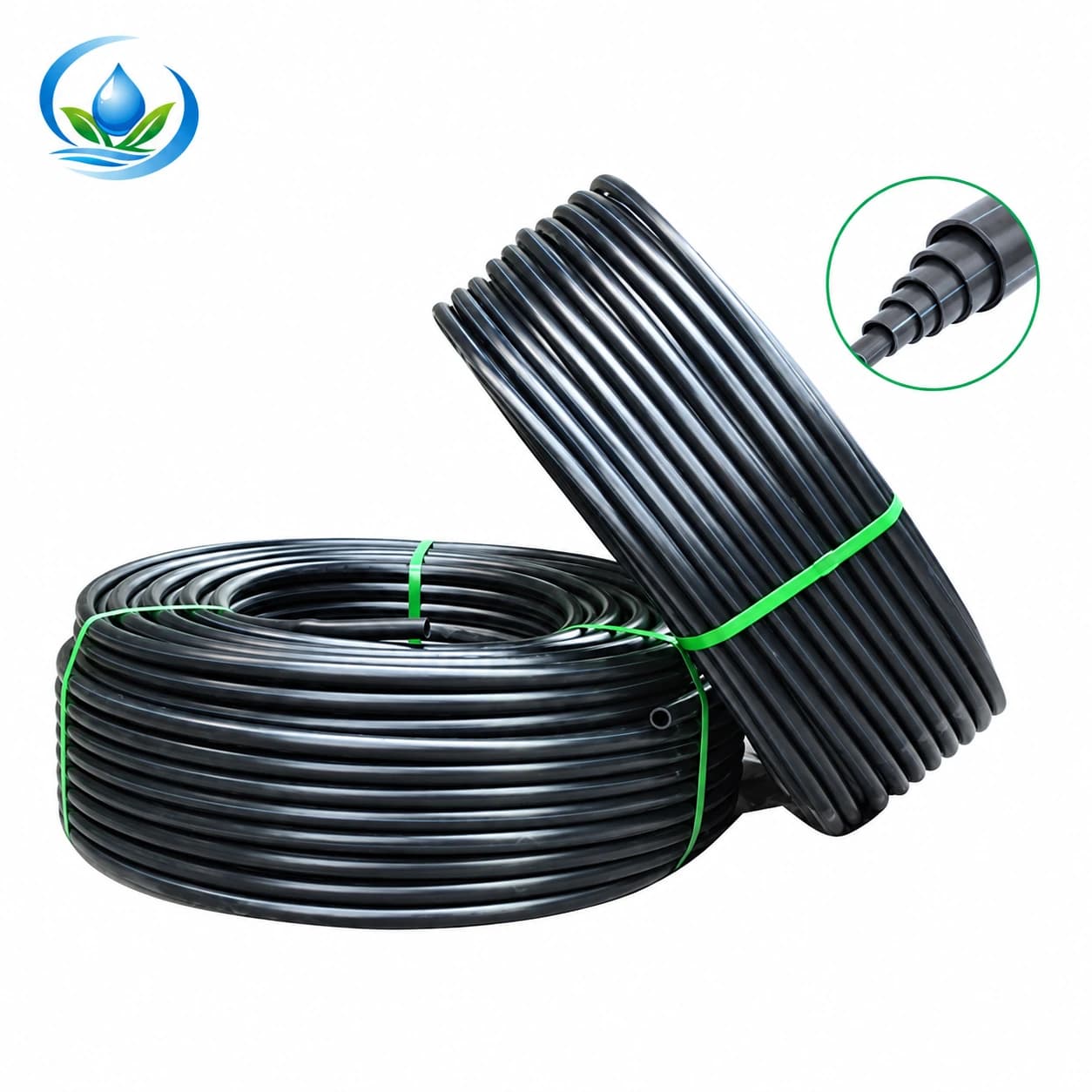
The published blank PE lateral pipe lists exact options such as 16 mm outside diameter with 1.0 mm wall, 20 mm outside diameter with 1.5 mm wall, and 25 mm outside diameter with 1.8 mm wall. These are pipe dimensions, not approvals for the barbs on the valve or adaptor above. In a simple round-wall calculation, a 16 mm OD pipe with two 1.0 mm walls would have a nominal bore near 14 mm. Actual tolerances and fit rules still come from the selected pipe and fitting makers. Do not turn that arithmetic into a guaranteed barb-insertion dimension.
Measure a clean, undeformed section with a suitable caliper and read any printed tube marks. If the existing piece is tape rather than round PE lateral, record its construction separately; a thin-walled tape fitting may use a lock ring or another capture system instead of a rigid-tube barb. UV exposure, age, wall thickness and deformation can change how an old tube grips. If the connection has leaked before, keep a sample of the removed end and do not assume the new piece should be one nominal size larger.
Do not infer a universal conversion from half-inch tubing to either 12.7 mm or 16 mm. Vendors can use half-inch as a tubing category while another label uses 1/2-inch for a nominal pipe thread. Keep the measured tube outside diameter, bore and wall thickness on one line of the connection record. On the other line, record the nominal thread size, male or female end, thread standard and sealing method. Two assemblies carrying the same half-inch nickname may have different tube interfaces. Compare the selected options' actual dimensional data and approved retention method at the intended pressure before deciding that either will fit.
Identify the threaded port as a thread, not a tube diameter
A nominal 1/2-inch male thread does not mean its outside diameter will measure exactly half an inch. Different pipe-thread standards use nominal names, pitches and sealing geometries. Record whether the installed port is female or male and any mark for its standard. Compare that with the exact Store item's male threaded end. Two male ends do not mate without another approved component; a female end with the wrong standard can begin to screw on yet leak or crack. Photograph the port and its markings for a seller if the standard is uncertain.
Check how the joint is supposed to seal. Some connections seal on a specified washer or O-ring face; others use a compatible thread-seal method following the maker's instructions. Do not add tape simply because a joint has threads, and do not force a plastic female port until it seems tight. An unknown seal method belongs on the unresolved-item list, not in the assembly. The older thread identification article gives a fuller way to record gender, standard, size, seat and pressure, but the half-inch label here must still be tied to the actual port being connected.
A reducer changes nominal size; it does not automatically convert thread standard, seal face or barb style. If a seller recommends an intermediate piece, draw it as another two-ended fitting and specify each interface. Do not hide it behind a generic phrase such as “standard half-inch adapter.” One extra component may change the length of the branch and make the valve harder to reach or service.
Compare the valve and passive adaptor as complete assemblies
Build two possible chains on paper. A valve chain might be confirmed female supply port → matching 1/2-inch male thread on the 16 mm mini valve → its confirmed barb-to-selected-tube interface → the branch. A passive chain might substitute the exact 16 × 1/2-inch or 20 × 1/2-inch barb male adaptor and rely on a separate existing shutoff. These are conditional sketches, not a claim that the listed components are verified mates. Every arrow requires the actual manufacturer or supplier connection evidence.
Ask what comes with one ordered unit. Is the valve a single body? Is any collar, clamp, gasket or insert supplied? Is the adaptor sold as one piece or a pack? Are additional supports needed so the pipe does not pull on the thread? The mini valve and the barb male-threaded adaptor have online order options, but a product-page price does not include unlisted mating pieces. Online ordering is not currently available for the blank PE lateral pipe; request its exact option, selling length, price and current availability.
Check the hydraulic and operating envelope as well as dimensions. A valve or adaptor that joins mechanically must also suit the pressure, water and position for the branch. Confirm the selected tube's pressure class or approved duty and the retention method for the barb at that pressure. Do not use a small manual branch valve as a whole-farm mainline control. If the fitting will be buried, exposed to sun, removed seasonally or handled frequently, ask about the exact product's supported installation and service method rather than assuming a generic plastic part can do all four.
Make a one-row test before buying a full set
When the exact sizes and standards are confirmed, order or obtain one representative set and compare its markings with the purchase schedule. Isolate and depressurize the water line before opening the old joint. Cut only a sound end of tubing in the manner required by its manufacturer and assemble the connection according to the chosen fitting instructions. Do not trim a large number of rows to suit a part that has not passed a single connection test. Keep the filter and pressure regulator in their proper positions; a fitting change is not a reason to bypass required water preparation.
Run clean water at the normal zone pressure and observe the threaded joint, barb retention, valve movement if present and the first nearby outlet. Check again after a normal on/off cycle and at the operating temperature relevant to the installation. A joint that is dry for one minute is useful evidence, but it does not establish long-term compatibility or an approved pressure rating. If the tube slips or the thread seeps, stop and identify the failed interface rather than adding wraps, heat or a different random clamp without instructions.
Record the exact product codes, tube markings and measured dimensions, thread standard and gender, seal method, any clamp or collar, installed pressure and test result. For a planned tape replacement, the new-roll-to-row-valve guide helps ensure a different tape construction is not silently treated as the old round lateral. For a broader supply-pipe specification, see the agricultural pipe guide. Both are useful after the specific half-inch ambiguity has been resolved.
Send a precise purchase request instead of a half-inch guess
A useful request can say: “We have a photographed female supply port marked [standard and size to confirm], a measured [OD, ID and wall] lateral, and need [a branch shutoff or a passive transition]. Please confirm whether exact Store option [code] has the mating thread, approved barb connection and any separate seal, collar or clamp.” Fill the brackets with verified site facts rather than copying a neighbor's list. Add quantity only after the sample assembly has passed the installation and water test.
If the supply thread is not identified, ask for a technical drawing or manufacturer mark before ordering either product. If the tube is labelled half-inch but its OD is not established, measure it and identify its construction. If the item page does not state pressure or included pieces, ask for that option's documentation. A missing answer is a reason to pause a specific order line, not to change every fitting in a field by trial and error.
The purchase decision is complete when each end has a named mate: the supply thread on one side and the verified tube-facing connection on the other. The half-inch phrase can then be used accurately instead of carrying an unstated conversion. Choosing the valve or the passive adaptor becomes a simple functional choice, and the selected branch can be repeated without guessing what “1/2-inch drip fitting” meant the first time.
Before you order
Compare this guide with the specifications for your exact product, selected option, water supply and field conditions. Your equipment requirements take priority over a general example.
Compare irrigation products