
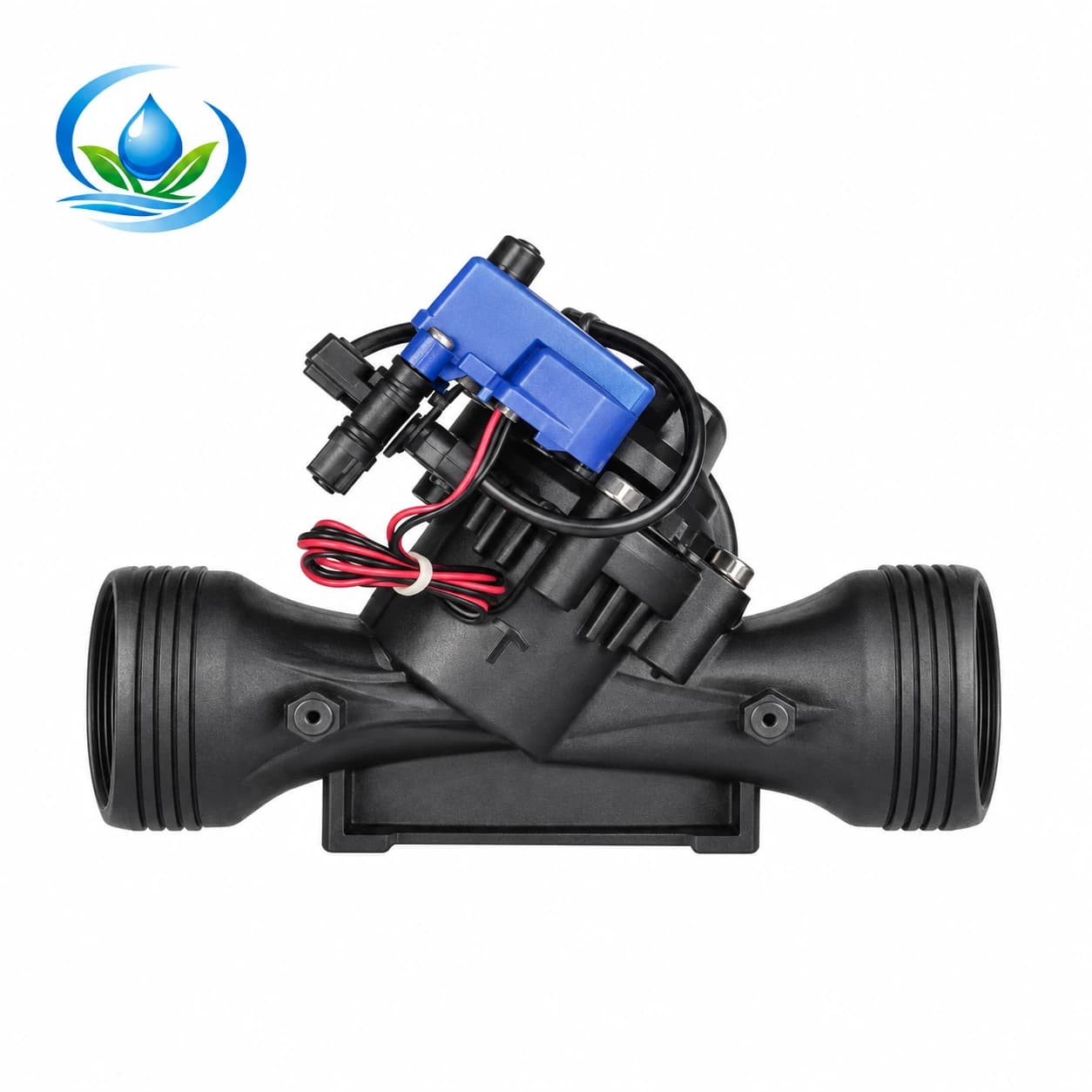
irrigation solenoid valves
Irrigation Solenoid Valve for Automatic Farm Zones
- Operating pressure
- 0.2–10bar
- Maximum fluid temperature
- 60°C
- Connections
- Threaded or flanged, by size
Price on request
View detailsAgricultural irrigation, direct to you
Explore irrigation controllers, smart control cabinets and monitoring equipment. Match power, valves, sensors and communication to your zones.
19 products
Showing 19–19
irrigation solenoid valves
Price on request
View detailsMatch your tubing diameter, connector type and water pressure before you add the finishing touches.
Field guide
An irrigation controller can run watering schedules and operate compatible zone valves. This category now includes smart irrigation control cabinets, fertigation controls, weather and crop monitoring stations, and sensors. An irrigation monitoring system reports the conditions supported by its actual devices; a sensor does not automatically control a valve or pump.
Record zone count, valve voltage, pump interface, power supply and any sensor or communication requirements before comparing products. Check each controller's stated inputs and outputs, weather protection and included components. A smart irrigation controller still needs a suitable hydraulic system and a commissioning test at every zone.
An irrigation controller can open zones on a schedule, while an irrigation monitoring system can report field or greenhouse conditions. The current range includes control cabinets, fertigation controllers, weather stations, crop-monitoring devices and sensors. These products serve different jobs: a monitoring station may collect information without switching a valve. Start with the number of zones, valve type, available power and the decision each sensor should support.
A controller sends a signal to a compatible valve or relay; sensors report a measured condition. Timers do not measure whether water actually reached the crop. Flow and pressure feedback can flag leaks or blocked zones, while soil-moisture readings require correct sensor placement and interpretation. Connectivity does not correct poor hydraulic design.
Review schedules against crop stage, weather and actual soil conditions. Test manual override, power recovery and alarm behavior; keep batteries and enclosures serviceable. Check sensor readings against field observations before trusting automated changes. Compare the selected product's actual inputs, outputs and included equipment rather than assuming every listed controller supports the same functions.
A controller follows a programmed schedule or sensor rule and sends a compatible electrical signal to a valve, relay or pump interface. The hydraulic zone still needs suitable flow and pressure. Commission each output and confirm that monitoring data corresponds to the intended field zone.
Yes, the current range includes smart irrigation control equipment. Check each listing for zone capacity, valve and pump compatibility, power, communications and included parts.
Technical reference: USDA NRCS, National Engineering Handbook: Microirrigation. Use the selected product manual and local requirements for final design.