Impact Sprinkler Heads: Compare Flow, Pressure and Replacement Connections for Field Blocks
Compare S50 and 9703K specifications, record existing connections and operating conditions, and prepare a complete-head replacement enquiry.
Published by IrriNex Store
Impact sprinkler heads should be replaced by their confirmed operating requirements and connections, not by appearance alone. Before choosing a new head for an agricultural block, record the existing model, the inlet connection, the installed nozzle and the pressure available while the block is running. A head that screws onto a riser can still require more water than that block can supply.
This guide helps you prepare a complete-head replacement enquiry and compare the listed IrriNex S50 and 9703K. It separates verified catalogue information from questions that still need an answer. It is intended for a grower replacing field equipment, rather than a tutorial on adjusting the mechanism of a particular sprinkler.
Record one damaged impact-sprinkler position before replacing the head
Photograph the whole installed assembly, the model markings, the inlet and any readable nozzle identification. Record whether the failed item is the complete sprinkler head, its supporting riser, a connection or an upstream component. A photograph of the head alone may hide an adapter already fitted underneath it. An impact sprinkler head replacement order should include the installed inlet, support and operating case, not only a picture of the damaged top.
Keep the existing head and nozzle together for identification. Copy markings exactly, including suffixes, rather than shortening the name to “one-inch sprinkler.” Measure the mounting arrangement and note anything that prevents an unrestricted fit, such as a nearby support, crop canopy or pipe bracket.
Add the number of heads operating together, the supply route and the location of the affected head within the block. Identify a working comparison head if one is available. The resulting record gives the seller specific information to check and helps prevent an order based on a misleading family name.
Separate one damaged head from a block-wide problem
A cracked body, damaged connection or visibly broken mechanism supports investigating that individual unit. Several heads with reduced throw, especially toward the far end of a line, call for a wider supply check. Replacing every weak head with a higher-flow model can increase demand without correcting the cause.
Note whether the problem appeared suddenly after a repair, developed gradually or occurs only when another section opens. Record visible leaks, changes to filters, additional outlets and changes in the water source. These observations do not diagnose every fault, but they make the replacement discussion more useful.
Check available pressure under operation at an appropriate point near the affected head, using suitable equipment. A pressure reading at a closed supply valve describes a different condition. If the existing system cannot provide reliable operating measurements, arrange that check before selecting a substitute model.
Compare S50 and 9703K replacement information separately
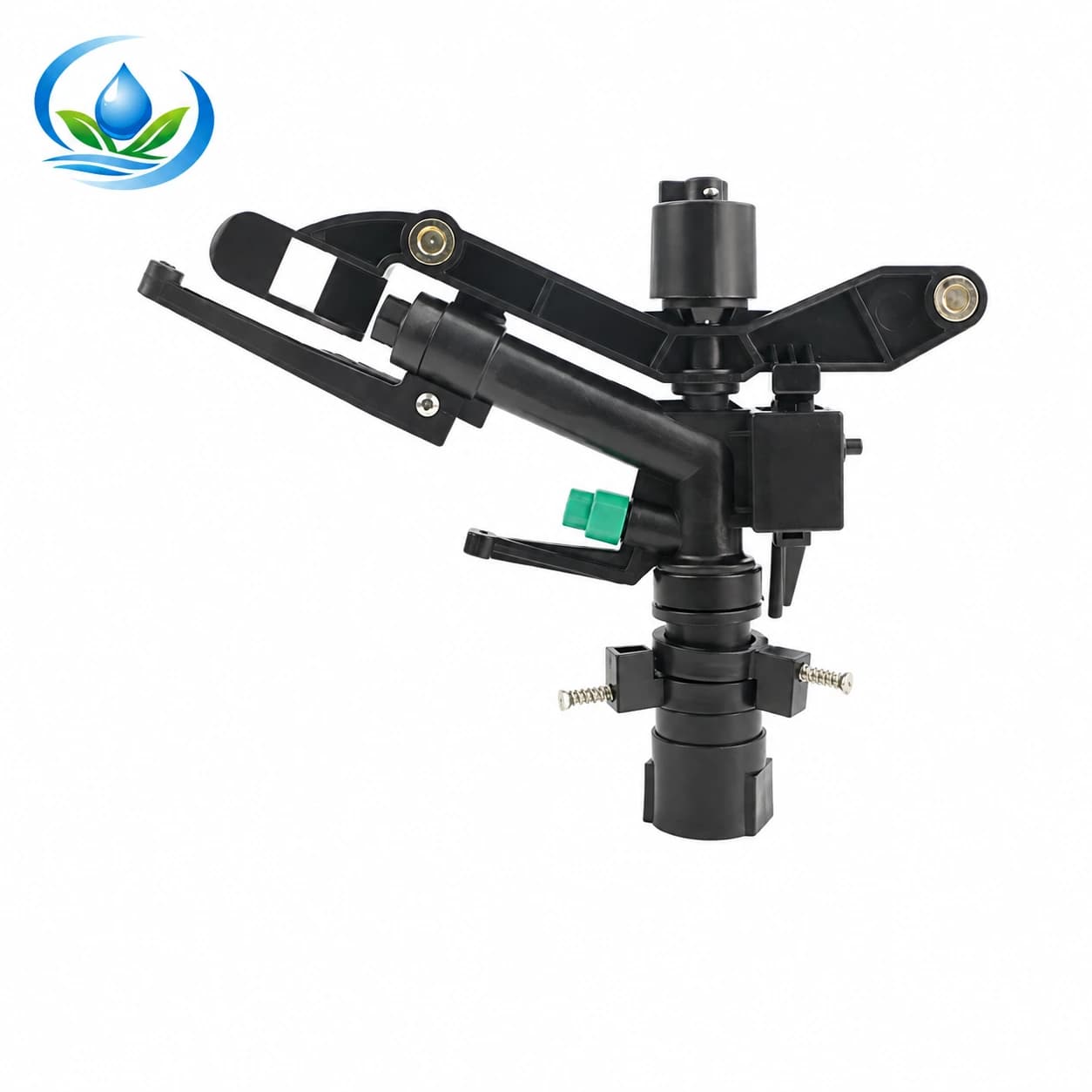
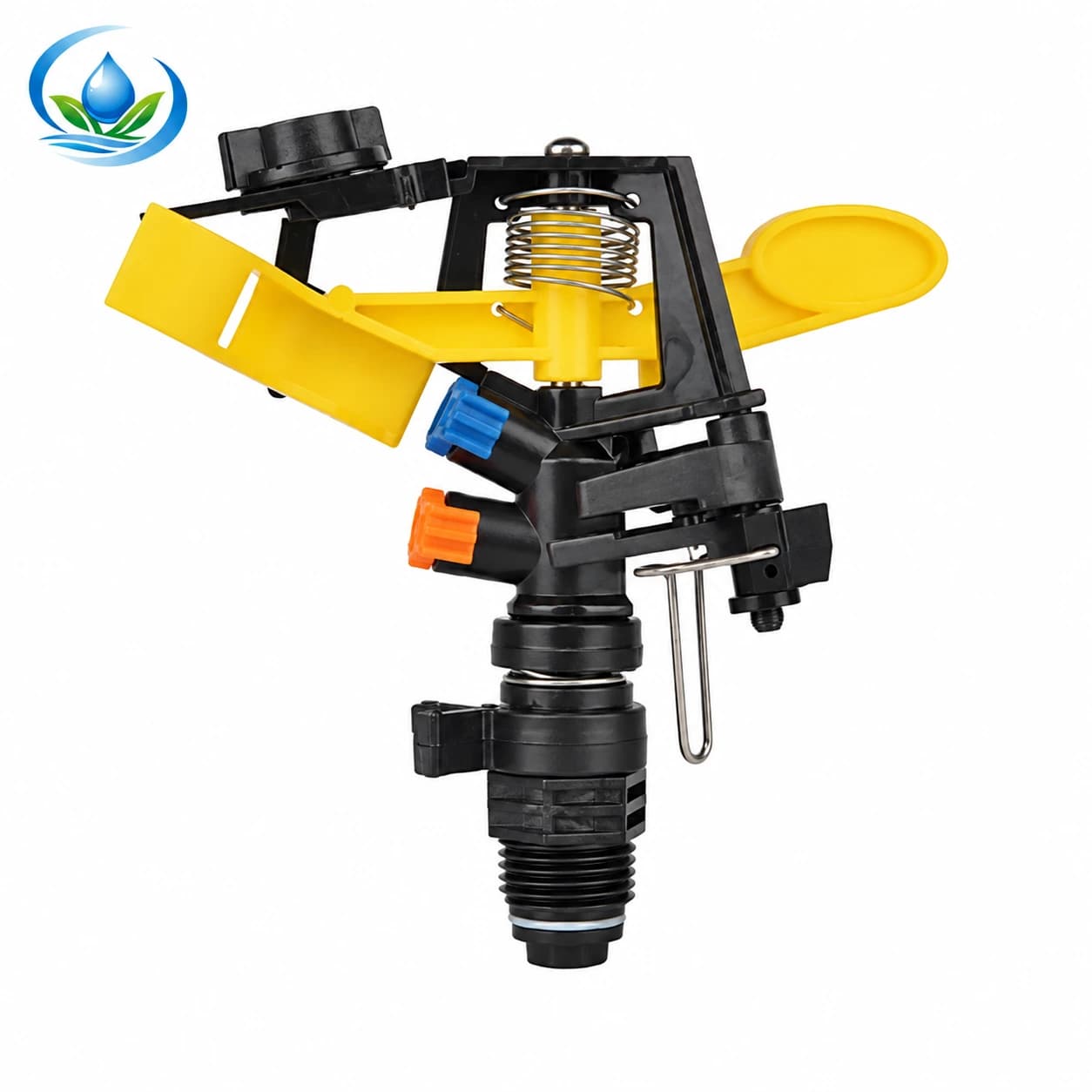
The IRRINEX-S50 impact sprinkler listing and IRRINEX-9703K impact sprinkler listing describe substantially different operating ranges. The following values reproduce their verified catalogue entries. They do not establish that either model can replace the other on the same riser or at the same spacing.
| Published specification | IRRINEX-S50 | IRRINEX-9703K |
|---|---|---|
| Inlet | 1 inch female; thread standard requires confirmation | Not established in the verified specification |
| Nozzle entry | No confirmed diameter in this comparison | 4.0 × 1.8 mm |
| Working pressure | 2.0–5.0 bar | 1.5–3.0 bar |
| Spraying radius | 15–17 m | 6–7 m |
| Flow rate | 3.7–5.0 m³/h | 1.1–1.3 m³/h |
The S50 inlet entry does not establish BSP or NPT. The verified 9703K specification omits an unambiguous inlet size, so obtain written connection details before selecting an adapter. Neither omission should be filled by borrowing a specification from a visually similar product.
Both product pages provide information for comparison. Confirm the exact offered configuration, availability, price and ordering method through the product enquiry. A published listing alone is not a promise that immediate checkout or a particular delivery date is available.
Read a range as a range, not a performance curve
The catalogue gives pressure, radius and flow ranges separately. It does not provide a pressure-by-pressure table for these entries. You therefore cannot treat the lowest flow as the discharge at the lowest listed pressure, pair the two maximum values, or interpolate a verified operating point between them.
Ask for the performance data belonging to the exact head and nozzle being offered. The useful answer connects a stated operating pressure with its discharge and radius under stated conditions. Keep those conditions with the quotation, especially when comparing two different nozzle configurations.
A suitable pressure value on its own is insufficient. The supply must deliver the associated flow while maintaining that pressure at the operating head. The guide to counting simultaneous outlet flow explains the arithmetic principle; use the confirmed sprinkler discharge in that calculation, not a drip-emitter example.
Check every interface between the head and supply pipe
Write down the required inlet size, male or female orientation, thread standard and sealing arrangement as separate fields. A nominal size is not a complete connection specification. Compare the proposed head with the actual riser connection, including any reducer, union or fitting already present.
Inspect those retained components for damage before treating them as reusable. An adapter that can connect two thread sizes does not prove that the riser supports the assembly adequately or that the connection is suitable for the operating pressure. Avoid using the new head to force misaligned pipework into place.
Use the agricultural fittings buying guide when preparing the connection list. For a change involving the supply route, also review the irrigation pipe size and pressure checklist. These checks support the replacement; they do not certify an unverified adapter combination.
Confirm mounting and coverage functions separately
Record the existing mounting height, support arrangement and clearance around the moving head. Specify whether the replacement is intended to remain on that assembly or will need a different support. Include movement, access for servicing and exposure to vehicles in the physical comparison.
Ask explicitly whether the offered model supports the required full-circle or part-circle operation. The catalogue rows reproduced here do not confirm those functions or their adjustment limits. A visible arm, stop or lever in a photograph is not enough evidence to promise a particular coverage setting.
Likewise, the published radius is not a recommended distance between sprinklers. Actual coverage depends on the confirmed configuration and operating conditions. Preserve the field layout record so that a change in model is reviewed as a coverage change, rather than treated as a simple thread replacement.
Count the active demand before changing head type
Count only the heads that run at the same time, but include all of them. A spare stored in the workshop adds no operating demand; a second block connected to the same running supply may do so. Distinguish the number being purchased from the number operating concurrently.
For an arithmetic example, eight heads each confirmed to discharge 1.2 m³/h at the selected operating point require 9.6 m³/h together. That is a hypothetical calculation, not a verified performance claim for either model in the table. The supply check must also account for the route, elevation and other losses.
Do not fit higher-flow replacements simply to compensate for weak performance at the end of a line. Compare the revised total with measured available capacity first. When isolation arrangements are changing, the manual irrigation valve buying guide helps identify the separate connection and access questions.
Keep filtration and repair-part questions in the enquiry
Record the water source and the filtration currently installed. Ask for the filtration requirement of the exact head and nozzle configuration instead of assuming that a larger-looking outlet accepts every type of dirty water. Repeated debris at several heads deserves attention upstream.
The irrigation filtration buying guide helps organize water-source and filter questions. It does not establish a universal mesh value for S50 or 9703K. Keep any confirmed filtration specification beside the model details in your order record.
If a repair is being considered, ask whether the exact required part is identified and supplied for that model. Do not assume that springs, washers, bearings or replacement nozzles are available separately because an illustration shows them. Compare a verified repair offer with a complete-head offer.
Turn the comparison into an unambiguous order request
List the complete head model, confirmed nozzle configuration, operating-point evidence and inlet details first. Then identify each additional adapter, seal, support or connection required by the agreed assembly. Mark which items are included with the head and which need separate confirmation.
Separate damaged-head replacements, planned conversions and chosen spares in the quantity list. If three heads are damaged and one spare is wanted, the request is for four complete heads, with the spare identified as such. Do not order a conversion quantity until one proposed assembly is confirmed compatible.
Ask the seller to return the same record with unresolved fields answered. Retain the model-specific documentation with the response. A concise enquiry containing photographs and operating measurements is more useful than a request for a sprinkler with “the same reach.”
Verify the supplied replacement before extending the change
On receipt, compare the identification and supplied components with the agreed record. Check the inlet and nozzle information before installation. Follow the documentation supplied for the selected model, isolate and depressurize the section before disconnecting equipment, and keep dirt out of open pipework.
Evaluate a confirmed replacement under the intended operating conditions before repeating a model change across the block. Record leakage, operating pressure and the observed coverage alongside the original measurements. If performance remains weak at several outlets, return to the supply investigation instead of adding more replacements.
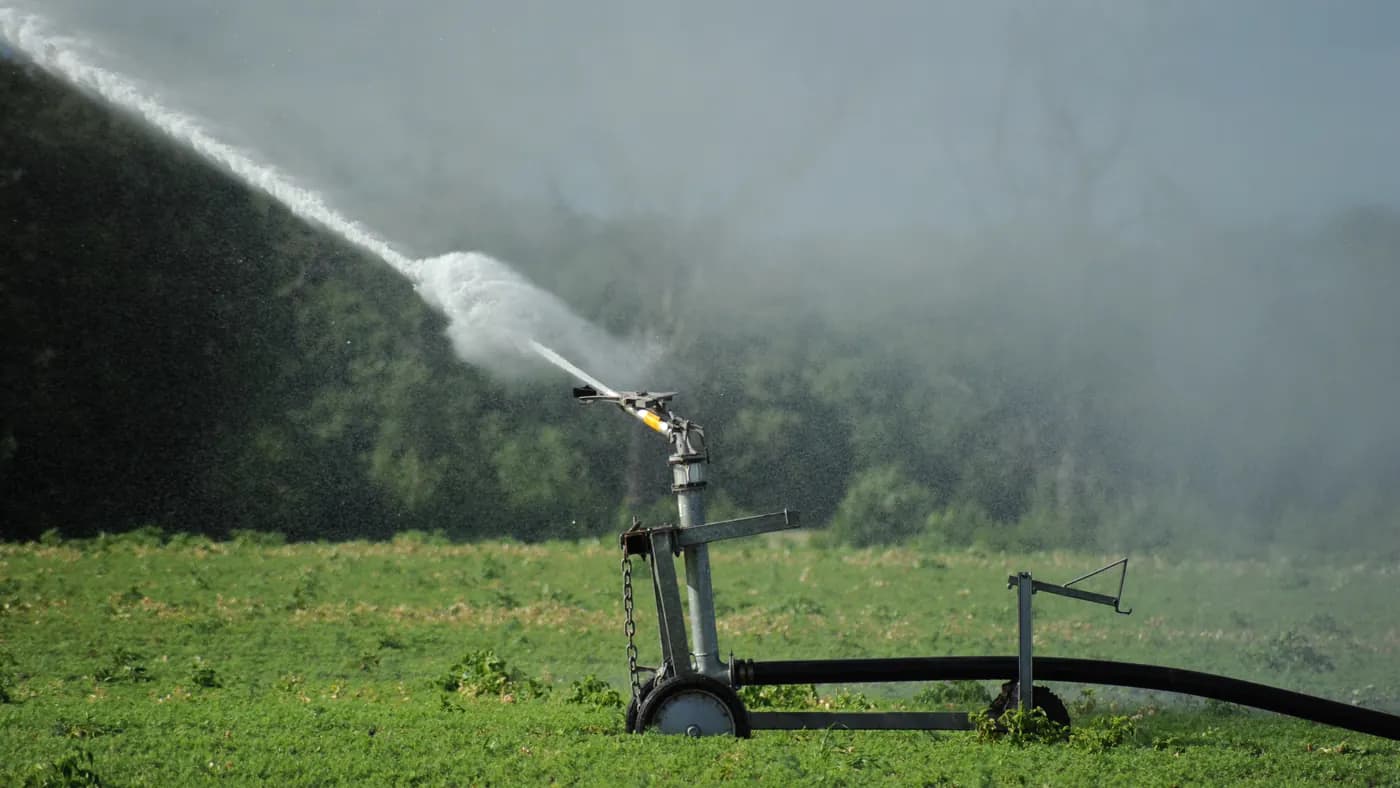
The opening photograph shows a real impact sprinkler operating in a Scottish carrot field. It illustrates agricultural use, not the appearance or supplied contents of either compared model. Use the verified product details and your replacement record to choose the exact equipment.
Before you order
Compare this guide with the specifications for your exact product, selected option, water supply and field conditions. Your equipment requirements take priority over a general example.
Compare irrigation products