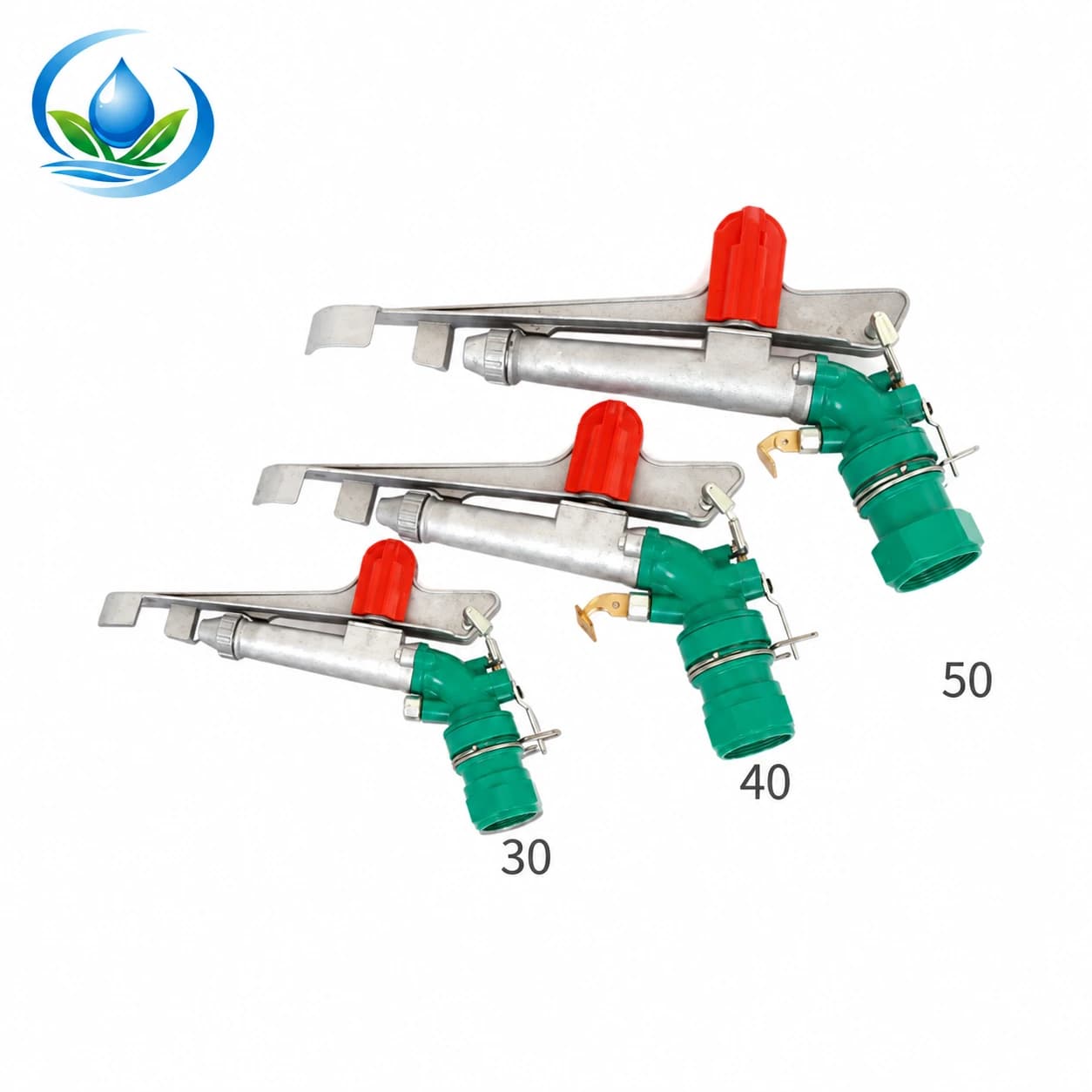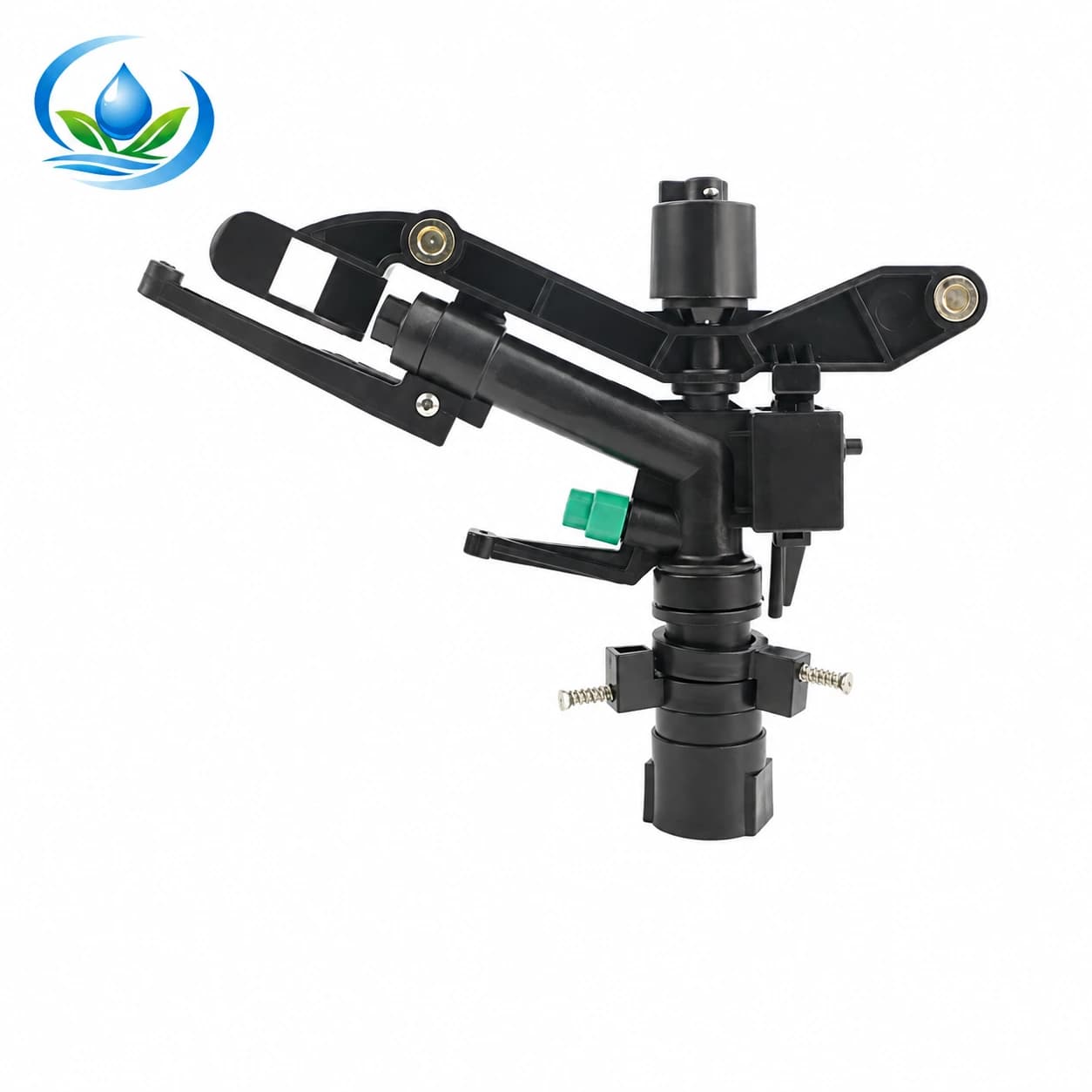
Irrigation Gun: Check Arc Control Before Watering Field Edges
Map the field-edge no-wet boundary, confirm the exact rain gun's part-circle capability, and check application intensity and spray drift before ordering.
Published by IrriNex Store
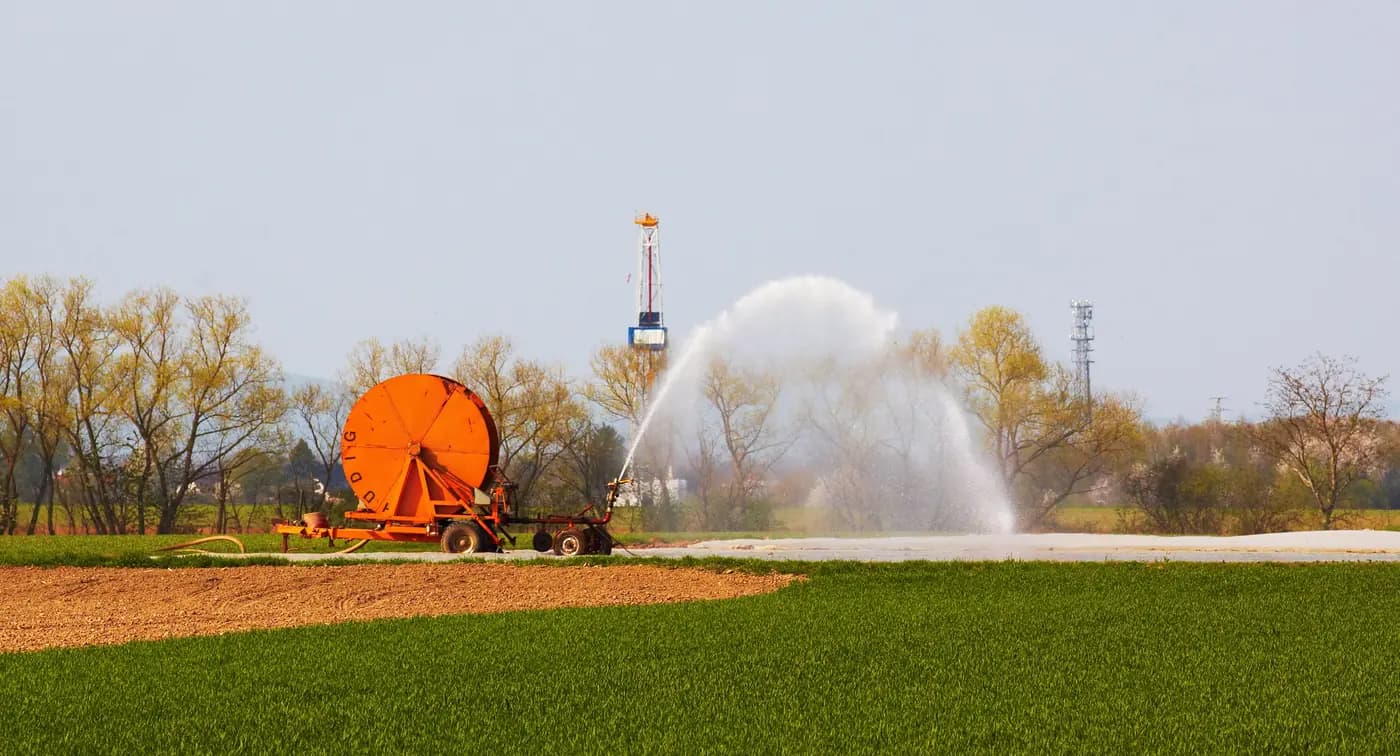
An irrigation gun chosen for a field edge must keep its intended sweep inside an acceptable watering area. A road, neighbouring crop, work yard or access lane may sit close to the planted boundary. Before selecting a head, draw where water is wanted and where it must not be directed, then establish whether the exact model has documented part-circle control for that job. A long listed radius does not show how precisely an arc can be set or how the operating stream behaves near a boundary. Confirm the equipment and the site together before ordering. Irrigation gun arc control starts with marking the no-spray boundary on the field sketch, then checking the selected model's documented sector in operation.
Start with one named edge position rather than a whole farm of circles. Identify the field line, sensitive neighbouring use, working head location, water source, safe approach to the control and people who may use the route while irrigation runs. Put a separate mark where the wetting sector should begin and end. This is a purchase brief for a documented gun and supported installation, not permission to aim a powerful stream toward a public route and hope that a stop catches it.
Map an irrigation gun arc at the field edge
Walk the intended head location with a map or field sketch. Trace the crop area that needs water and each no-wet feature: roadway, electrical equipment, neighbour's planting, shed, vehicle turning area or walking access. Mark the actual fence or legal boundary separately from the edge of the crop. A fence may be some distance from a road, and a crop row may reach farther than the point where a support can be placed. If the no-wet area changes with a gate or harvest activity, record those conditions on the same sheet.
Stand at the proposed support location and identify the two lines that would define the intended sweep. Note fixed landmarks on those lines so another operator could find them again. Photograph each limit from a safe, unpressurized position. Include obstacles above the field, not only those on the ground: a high stream may pass near branches, overhead lines or structures that a flat plan conceals. Do not use a photograph to estimate an approved clearance. Obtain the applicable site rules and keep the stream away from people and electrical hazards.
Mark a zone beyond the planned wetting edge for observation. The drawn arc is the direction in which the head rotates, not a promise that every droplet remains within a geometric sector. Droplets may drift across a road or crop boundary in changing wind, and the near area can receive water from a secondary stream. A field map can identify a conflict in advance, but only the actual installation and safe trial can show how the selected configuration behaves. If off-site spray cannot be tolerated, treat that limit as a selection requirement rather than a reminder to shorten the run later.
Compare part-circle control with throw radius
Arc describes the angular sweep of the rotating head. Radius describes the distance associated with a particular operating arrangement. Pressure, nozzle combination, mounting, wind and rotation also affect where water lands. A head that throws far enough may still be unsuitable if it can only rotate through a full circle or cannot hold the needed sector reliably. Conversely, a narrow sector that respects the road may leave a dry strip between this head and the adjacent field pattern. Write both requirements separately before comparing products.
Ask for the exact delivered model's manual to confirm whether full-circle and part-circle operation are offered, what sector limits the manufacturer permits, how those limits are set, and how the head retains its orientation on the approved support. A visible collar clip or rotating part in a catalogue image does not establish an adjustment range or safe method. Do not borrow a setting procedure from another brand or model. If the proposed product has no documented way to achieve the required sector, choose a different documented arrangement rather than making an improvised stop.
Keep the two arc endpoints in the plan. A sector that begins farther inside the crop may protect the road yet leave the first crop row short of water. A sector extended toward the road may fill that row but wet an access surface. The answer may require changing the head location, using another approved head, altering neighbouring coverage or leaving a strip to a separate irrigation method. One adjustment should not be asked to correct an unsuitable position, wrong flow or the absence of part-circle capability.
Compare the documented PY30 and PY40 specifications
The PY30 agricultural rain gun is listed with a 1.5-inch internal inlet, a 10 × 3.5 mm nozzle entry, a 0.3–0.45 MPa working-pressure range, a 23–25 m radius range and a 7–9 m³/h flow range. These are separate catalogue ranges for the PY30 family, not a pressure-by-pressure performance table or proof that any listed radius is delivered at any listed flow. The inlet marking does not establish a thread standard or tell you what support and connection are supplied.
The PY40 agricultural rain gun has a separate 2-inch internal inlet, a 14 × 7.5 mm nozzle entry, a 0.3–0.4 MPa working-pressure range, a 23–30 m radius range and a 17–20 m³/h flow range. The larger catalogue flow range can create a very different demand on the supply and a different application rate in the selected sector. It does not prove better boundary control. The PY40 and PY30 nozzle entries, inlets, mountings and service parts must not be treated as interchangeable merely because both are rain guns.
For either product, obtain documented data for the precise supplied nozzle arrangement and the pressure, discharge and throw that occur together at the proposed operating point. Confirm any part-circle feature and permitted adjustment range against that exact model's instructions. Check the required inlet mating standard, supported mounting and package contents before ordering. Do not select the PY40 by combining its maximum radius with its minimum flow, or compare one product's minimum pressure with another product's maximum reach as though those values formed tested settings.
Measure available flow and pressure while the intended irrigation group operates through the real supply route. A static gauge reading or open discharge at a tap cannot alone establish the flow available at the head under working pressure. Account for the actual hose or pipe, fittings, elevation and number of guns that run together. The running-flow sprinkler worksheet helps keep the simultaneous count separate from a count of field positions. Model selection should use a supported working point, not a product range at one end and an unrelated source measurement at the other.
Check what a smaller sector does to the crop
Restricting a rotating head to a narrower sector does not necessarily reduce its nozzle discharge. If essentially the same flow is spread over a smaller swept area, the average application intensity can rise, even though less land is being reached. The pattern also changes near its two arc limits, where repeated passes or neighbouring heads may add water. The result depends on the exact gun, nozzle, pressure, arc and layout; a simple fraction of a circle is not a field-tested application rate.
Record the soil and crop observations needed to judge that intensity. At the edge, look for ponding, runoff into a track, crusting or a wet strip that persists after adjacent heads operate. Inside the crop, look for a dry band where the sector ends. The field catch-test guide shows how to compare collected depths at named points when distribution matters. Edge samples need to remain identifiable rather than being hidden in an interior average. Do not set a generic runtime from the catalogue radius or assume a shorter sector allows the same duration without review.
If another head overlaps this edge position, map which heads run simultaneously and which operate in separate shifts. An overlap that is useful in the interior may make the edge too wet when the part-circle head repeatedly returns over the same area. A change in active heads can alter working pressure and the stream shape, so the first trial must reflect the arrangement intended for routine use. Keep the selected gun's documented flow with the active-group record. Do not solve a distribution problem by increasing pressure outside the manufacturer's approved operating case.
Plan a supported and safely accessible first trial
Identify the support and connection approved for the chosen head and operating case. Record ground conditions, clearance for the moving mechanism and the way the support maintains its orientation. A loose stand that turns under reaction forces changes both arc endpoints. A support in soft soil or next to vehicle traffic needs review for that site; a product photograph showing a tripod or wheeled base does not mean it is supplied with PY30 or PY40. Keep the isolation point accessible without walking through the working stream or crossing the road that must remain dry.
Follow the installed system and exact head manuals before touching a collar, stop, nozzle, mounting or connection. Stop and isolate the line, relieve pressure through the designed method and confirm it is safe before any permitted repositioning or adjustment. Never reach toward the moving head, tie a drive arm, wedge an improvised stop or loosen a pressurized connection. Give an observer a safe location with a clear view of the boundary; no one should stand in the path of a high-velocity stream to check whether the setting worked.
During a supervised run, record the model and nozzle identity, operating pressure at a named measurement point, active head count, support position and observed weather. Watch both arc reversals, the farthest visible spray, drift beyond the intended area and movement of the mounting. If water reaches the no-wet zone or the support changes direction, stop the trial through the approved control. A single calm-weather pass cannot certify that a road or neighbouring crop will remain dry under all conditions. Repeat relevant observation when conditions or the operating group change.
Where an edge adjoins a gate or daily farm route, coordinate the trial with the people who use it. The pasture access and sprinkler layout guide addresses the separate question of gates, stock routes and controls; use its access record if those are part of this boundary. For a portable gun moved among several stations, the portable rain-gun position guide handles routes and assembly counts. Here each location still needs its own acceptable arc and no-wet limits; a setting accepted at one edge cannot automatically be copied to another.
Decide whether the selected arrangement actually fits the edge
Keep a short decision record for the first position: drawn boundaries, required sector, selected model and nozzle, manual reference for the permitted control, documented working point, approved support and first-trial observations. Mark any unresolved item. If the actual head cannot hold the desired sector, the correct outcome is a revised head or site layout, not an attempt to defeat its mechanism. If its sector holds but the edge receives too much or too little water, review nozzle, flow, overlap and alternative layout with model-specific data.
Do not confuse a boundary problem with a worn nozzle problem. If a previously acceptable head now throws an irregular stream or one outlet is damaged, identify the complete outlet configuration through the paired agricultural sprinkler nozzle guide before requesting parts. A replacement nozzle chosen only by apparent opening can change discharge and the edge pattern. Likewise, changing the gun's arc is not a substitute for repairing an unstable support or measuring a supply shortfall.
Check the exact PY30 or PY40 listing for its current model option, sale unit, price, availability and delivery. If the product cannot be ordered directly, use support to confirm the available purchasing route and the delivered package. Ask for the model-specific part-circle evidence, sector limits, approved adjustment method and pressure-flow-throw data needed for this edge. Keep a stand, connector or valve on the purchase list only after its fit and package status are confirmed. The field-edge purchase is ready when the selected hardware can be documented, mounted safely and observed keeping water within an acceptable operating pattern.
If the mapped edge needs a smaller ordinary impact head, compare the S50 agricultural sprinkler as a separate candidate. Its listing does not establish the same nozzle, mounting or sector control as a PY model. Ask for its own documented arc capability and working point before proposing it for the boundary; changing head size alone cannot resolve an unacceptable spray direction.
Before you order
Compare this guide with the specifications for your exact product, selected option, water supply and field conditions. Your equipment requirements take priority over a general example.
Compare irrigation products