Sprinkler for Pasture: Keep Irrigation Clear of Grazing and Field Access
Plan pasture sprinkler positions around gates, livestock routes, troughs, mowing access and reachable shutoffs before selecting heads and feed connections.
Published by IrriNex Store
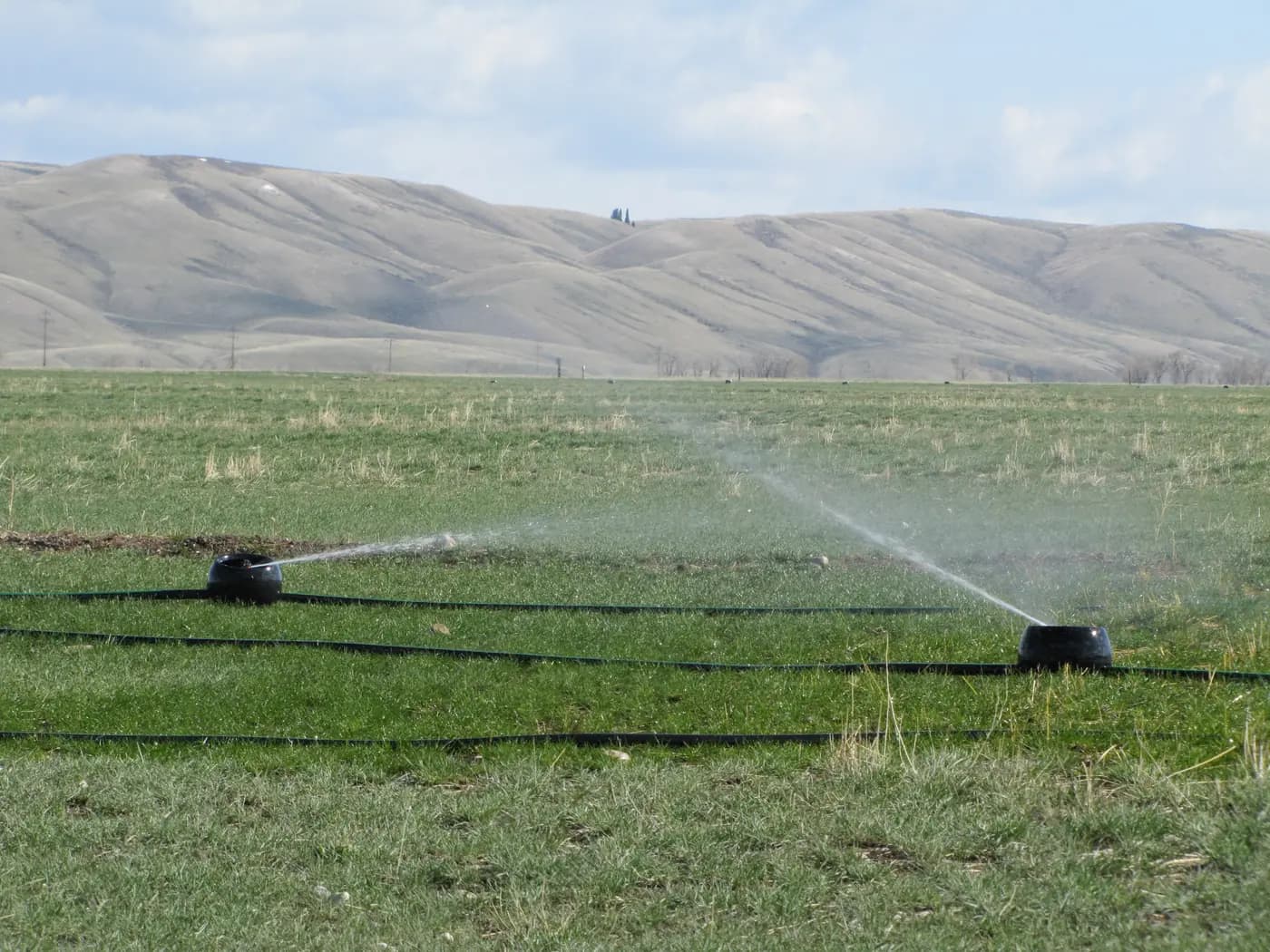
A sprinkler for pasture must fit the way the paddock is used, not merely reach across a rectangle on a map. Gates open for stock and vehicles; animals gather at troughs; mowing equipment needs a clear lane; and someone must reach the shutoff before a line is moved. Mark those activities before choosing a sprinkler position. The resulting plan should show where water can be applied, where a supply line can be protected, and how the crew can leave the area ready for its next use. Pasture sprinkler placement starts with gates, troughs and vehicle lanes, then checks whether each head stays accessible and protected during ordinary grazing.
Begin with one named paddock and one real operating arrangement. Sketch the forage area, boundaries, gates, water points, feed positions, traffic routes, terrain changes, overhead hazards and existing supply. Mark which activities can happen while irrigation runs and which require the system to be shut down and cleared first.
Map livestock access before placing pasture sprinklers
Walk the perimeter with the person who moves animals and the person who maintains irrigation. Mark gates by their actual purpose: stock transfer, tractor entry, emergency access or a foot route to a control. A gate that looks unused today may be essential when a different group enters the paddock. Record the opening direction and whether a proposed hose, riser or valve would obstruct it. Keep a separate list of routes that must remain available while the system is operating.
Mark troughs, feeders, shade and habitual congregation areas as observations, not as a claimed animal-safe offset. Livestock can rub, step on or displace accessible equipment. Local stock behavior, fencing, supervision and farm handling rules determine whether an installation can be protected; this page cannot give a universal clearance. Identify places where jets could strike animals, workers, electrical equipment or a public route and ask for a revised position or controlled access rather than assuming that a catalogue radius makes that exposure acceptable.
Walk the mowing route and any vehicle path with the actual equipment width and turning movement in mind. A connection on a headland may be easy to reach on foot yet lie directly in a mower's path. Note the days when the area is cut, grazed, rested or used for moving stock. These activities are part of the layout because the sprinkler and its feed may need protection, removal or a different operating window.
Choose fixed or removable heads around gates and lanes
For each proposed watering point, decide whether the support and feed will remain in place or whether an approved assembly will be isolated and removed between uses. A fixed point may reduce repeated handling, but it still needs protected access and a support suited to the head's operating forces and local ground. A removable point may clear a mowing lane, yet the crew needs a safe storage place and an agreed process for putting it back. Neither arrangement is automatically compatible with grazing activity.
Create a simple position record: paddock name, support location, accessible shutoff, supply route, periods when people or animals use that ground, and the person authorized to change the arrangement. If a position only works when one gate is closed and a temporary fence is in place, state that condition. A point that cannot be used under the normal farm sequence should not be counted as available merely because it appears on the drawing.
The portable rain-gun layout guide explains how to count stops and plan equipment moves across a field. For pasture, put the stock-handling and gate conditions beside each stop. Do not carry a moving-head procedure into a K-Line-style installation or assume that an S50 or HS30 is towable. Movement and support methods must come from the chosen equipment's instructions.
Route the feed without taking away a gate or service path
Trace the proposed line from the supply to every allowed position along the route it will actually follow. Include turns around protected areas, connection tails and access to closures. A straight line across a paddock may be shorter on paper but can cross a stock lane or leave a pressurized hose where vehicles need to pass. If the route cannot be protected under the farm's handling plan, revise it before selecting a purchase length.
Identify crossings individually. Record who can authorize a closure, how the line is made safe before machinery or animals use the route, and whether a suitably designed permanent crossing is needed. Do not infer a burial depth, crush resistance or livestock load rating from the pipe's appearance. Any buried or vehicle-exposed arrangement needs its own design and site requirements. Likewise, do not use a convenient trough or fence as an improvised anchor or riser support.
A hose may stay at the headland while a branch feeds a point, or a complete approved assembly may be removed when that paddock changes use. Show which parts remain, which travel, and which open outlets need confirmed closures. Measure each route separately so a change at one gate does not silently change a hose order for the whole property. The agricultural pipe buying guide covers pipe specification and order length; here the critical input is a route that still permits daily field access.
Put shutoff access on the same drawing as the head
Before accepting a sprinkler position, walk from the usual approach to the control that isolates it. Could the operator reach that control without entering the spray, crossing an occupied animal area, or going through a gate that may be locked during a stock move? A valve that is reachable only after approaching the working head does not solve the access problem. Keep the control identified by name so relief staff can follow the same sequence.
Use the installed system's prescribed stop, isolation and pressure-release procedure before touching or moving a line. Confirm the pump and valve arrangement permits the intended sequence; do not close arbitrary outlets against a running pump. A shutoff valve's nominal size is one part of the connection, not evidence that it matches the head, hose or system pressure. The manual valve selection guide provides a worksheet for connection and control details.
Write a short handover for an irrigation-to-grazing change: who confirms watering has stopped, who checks that pressure is released, which removable pieces come out, how open connections are protected under their instructions, and who declares the route clear for the next field activity. The farm's animal-handling plan and local agronomic advice decide when stock may enter. Do not replace that decision with a universal re-entry time.
Compare the exact S50 and HS30 without turning ranges into a design
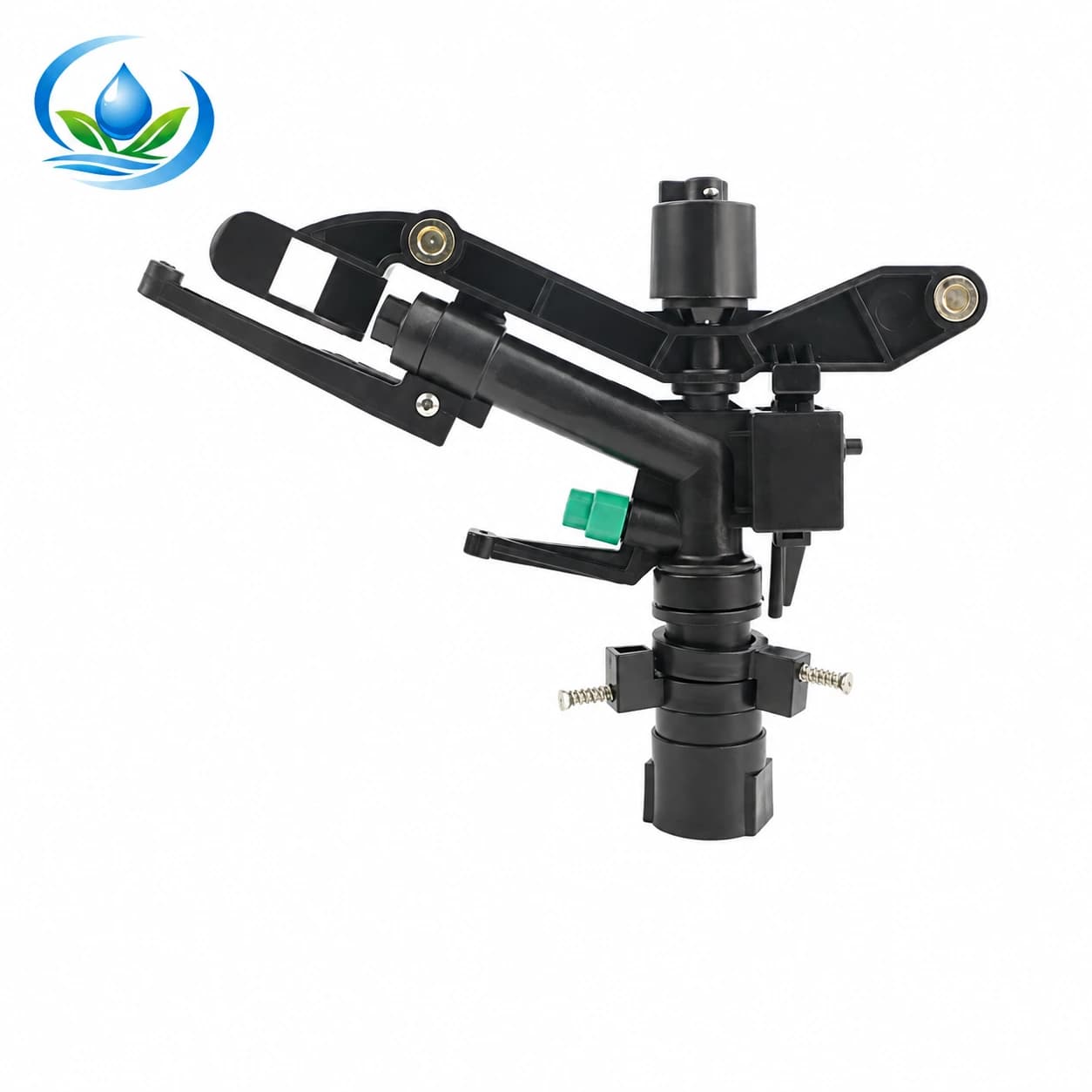
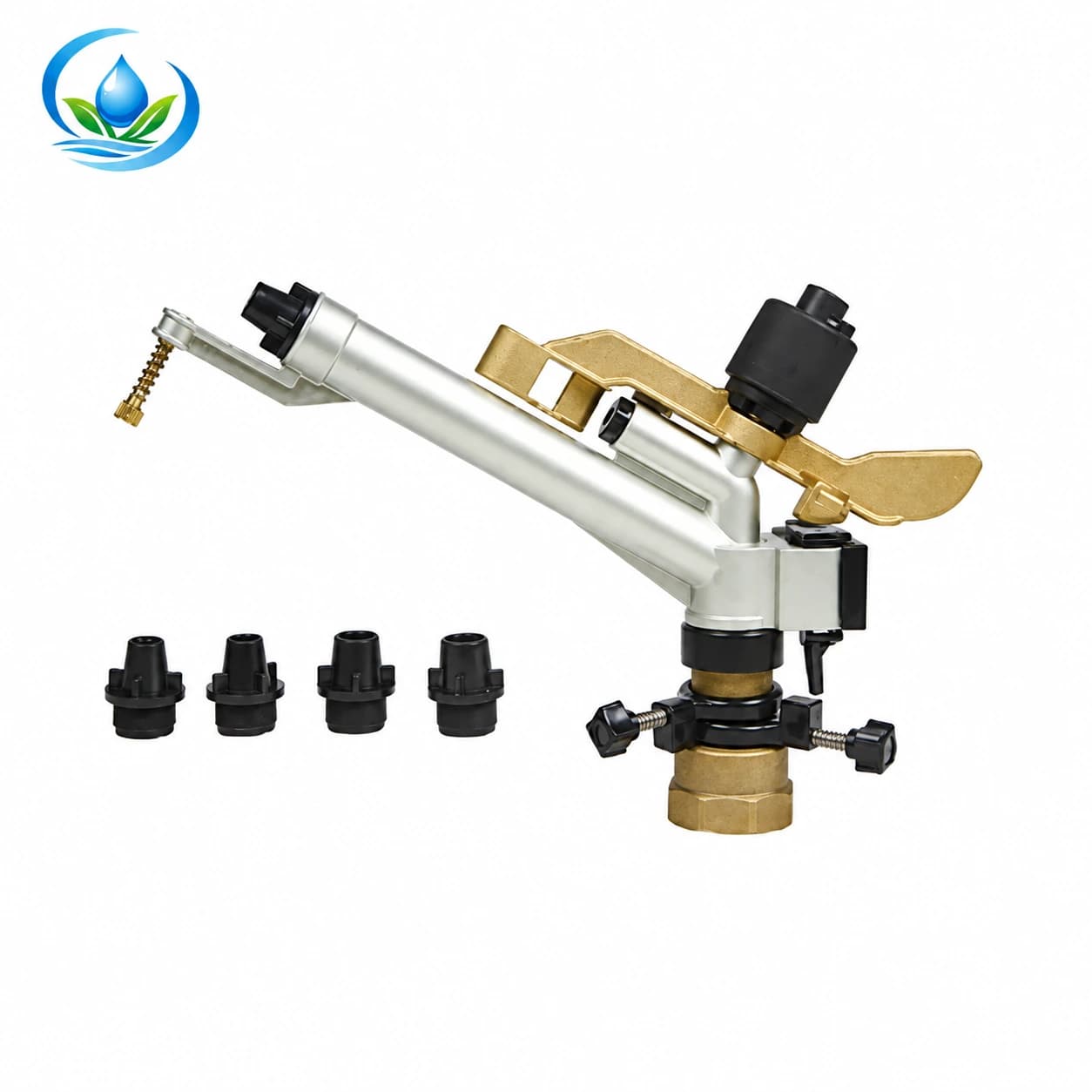
The IrriNex S50 impact sprinkler has a catalogue-listed 1-inch female inlet, 2.0–5.0 bar working-pressure range, 15–17 m spray-radius range and 3.7–5.0 m³/h flow range. The IrriNex HS30 rain gun has a listed 1.5-inch interface, 2–6 bar pressure range, 15–30 m radius range and 5–25 m³/h flow range. These are model-level ranges, not paired pressure, nozzle, flow and radius points for a particular paddock. Neither stated radius is a recommended spacing or a guarantee that water reaches every point inside a circle.
For a candidate position, obtain the nozzle configuration and a documented operating point for the exact model. Record pressure and flow available while the intended number of heads is running, at the head after the real feed route and elevation. Compare that case with the manufacturer's data. An HS30 cannot be made suitable for an unserved paddock simply by increasing pressure; its support, source and downstream components must all be assessed within their permitted operating conditions. The sprinkler zone flow worksheet helps separate simultaneous head demand from the count of positions on the plan.
Connection details need the same care. The S50's 1-inch female marking identifies its inlet gender and nominal size, but an adapter still requires the mating thread standard and sealing method. The HS30's 1.5-inch catalogue marking does not itself establish a thread standard or a stand fit. A larger opening on a hose coupling is not an automatic transition to either head. Obtain the selected support and connection instructions before listing adapters as confirmed parts. The impact-head replacement guide gives additional questions for matching an existing head and its mount.
Support each operating point for the actual ground and activity
A sprinkler that stands safely in a quiet demonstration may be exposed to soft soil, slopes, vibration, wind, mowing or livestock movement in the field. Ask for the approved support arrangement for the chosen head and operating case. Record its required interface, orientation, stability provisions and who inspects it before operation. Do not select a stake height, fence clearance or anchor interval from a competitor's complete kit, and do not substitute a photograph of a tripod for a mounting specification.
Locate supports so the crew can inspect them without entering an unsafe spray or stock movement path. Check nearby electrical equipment and overhead lines when assessing the full water trajectory and handling route. Keep spray off people and equipment that should not be wetted. If livestock can reach an operating support or exposed feed, the farm needs an effective access control or a different arrangement; an attractive low-profile installation is not proof of animal safety.
After a supervised first run, record whether the support remains aligned, whether the feed pulls on its connection, and whether movement at the base changes the stream. An unstable mounting is a stop-and-correct finding. Do not compensate by adding pressure or tightening an unverified fitting. The resulting observation may change the position, support or operating sequence before additional units are ordered.
Test delivery on each allowed pasture configuration
Run the proposed zone only in an allowed field state: gates, exclusions, people and equipment arranged as the farm's plan requires. Note the head model, nozzle, active count, valve setting, observed working pressure, wind and actual support position. Watch whether water reaches the intended forage area and whether it strikes a route or gathering place that must remain clear. A nominal throw on a product page cannot answer these site questions.
If a configuration changes when a gate opens, a hose is moved or another head runs, treat it as a new operating case. Confirm supply and delivery again rather than carrying over a test made under easier conditions. A visible outer droplet is not a distribution measurement. Where the purchase depends on uniform application, use the field catch-test guide to map actual collected depth and preserve the run conditions; do not invent a pasture runoff threshold or a universal watering duration from one trial.
Photograph any ponding, dry strip, drift outside the intended area or water crossing an access route, and link it to a named position. Changes to head count, nozzle or route can alter flow and pressure throughout the active group. Ask for a revised documented operating case, then repeat the relevant observation. Irrigation timing and grazing rotation require local forage, soil, weather and management advice beyond a sprinkler catalogue.
Turn the accepted access plan into a shopping list
Build one line for every physical job rather than ordering heads for every circle drawn on the map. An accepted position may need a head, approved support, supply connection, accessible isolation, line-end treatment and protection at a crossing. Some components may serve several positions in sequence; others remain at each location. Write the quantities in separate columns for installed, movable and spare items. A bare replacement head is not a complete pasture assembly.
| Field record | Question it answers before purchase |
|---|---|
| Position and allowed access state | Can this point operate when gates, stock routes and mowing work are accounted for? |
| Head and approved support | Which exact model, nozzle, mounting interface and ground arrangement are required? |
| Supply and control | What route feeds it, which valve isolates it, and where is pressure released? |
| Field trial | What working conditions and delivered pattern were actually observed? |
| Sale item | Which exact model, option, package unit, price and availability are confirmed? |
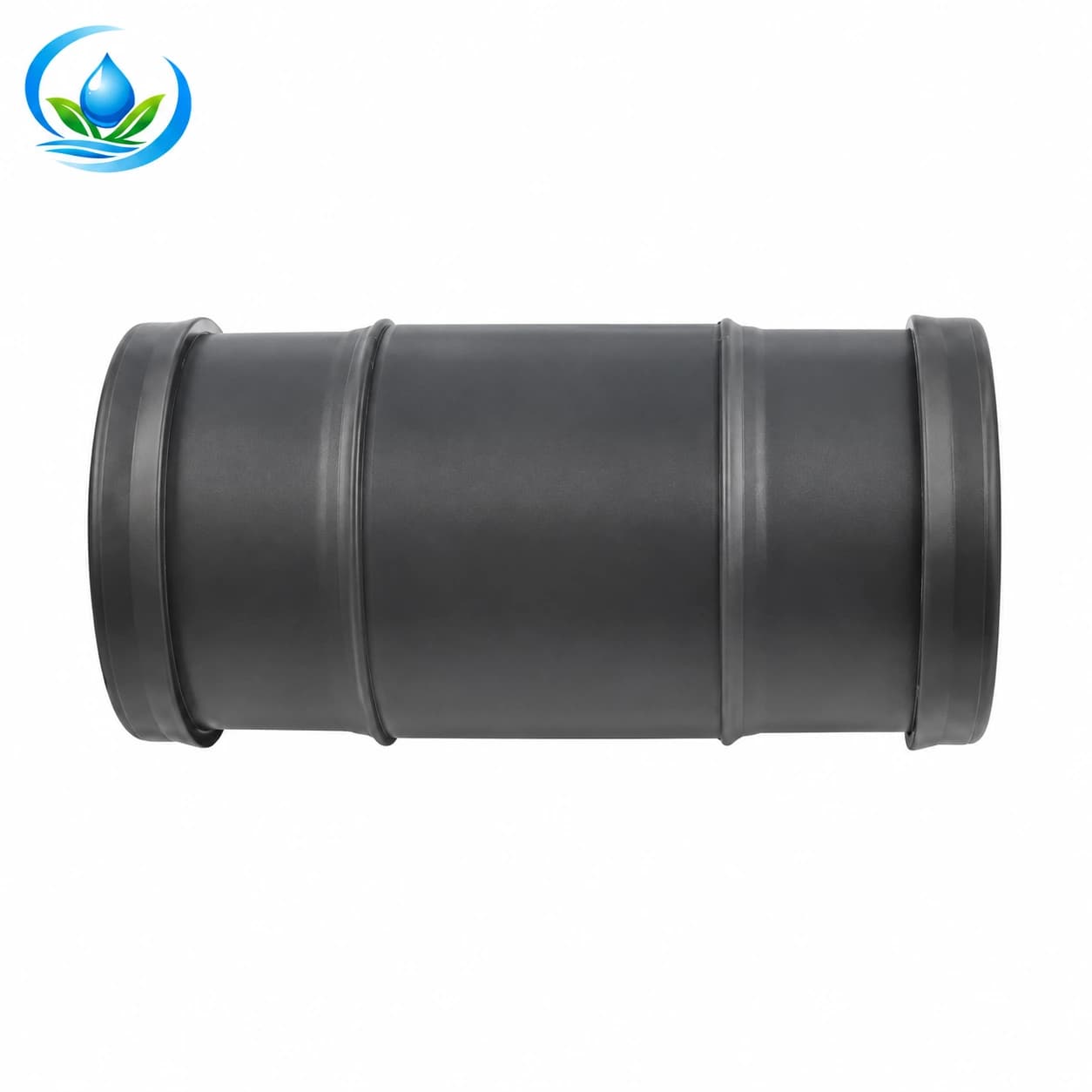
The IrriNex hose coupling offers separate 32, 40, 50, 63, 75, 90 and 110 mm catalogue options, including model 790032 for 32 mm. It joins matching hose ends within a suitable line; it is not a sprinkler inlet adapter or proof that a particular hose will fit. Verify the hose construction, true connection dimensions, retention method and operating rating before including it. Check each selected option's current price, sale unit, availability and delivery. If an S50 or HS30 purchase option is absent, ask Store support when and how to order that exact model before buying related parts.
Keep unresolved support, thread, hose and control details visible on the list rather than silently choosing a substitute. Review the first accepted position with the people who operate the gate, move stock, mow and maintain the line. Confirm compatible selected items and order online where purchase options are available. Keep the accepted location, access conditions and operating case with the equipment so the crew can reproduce the arrangement.
Before you order
Compare this guide with the specifications for your exact product, selected option, water supply and field conditions. Your equipment requirements take priority over a general example.
Compare irrigation products