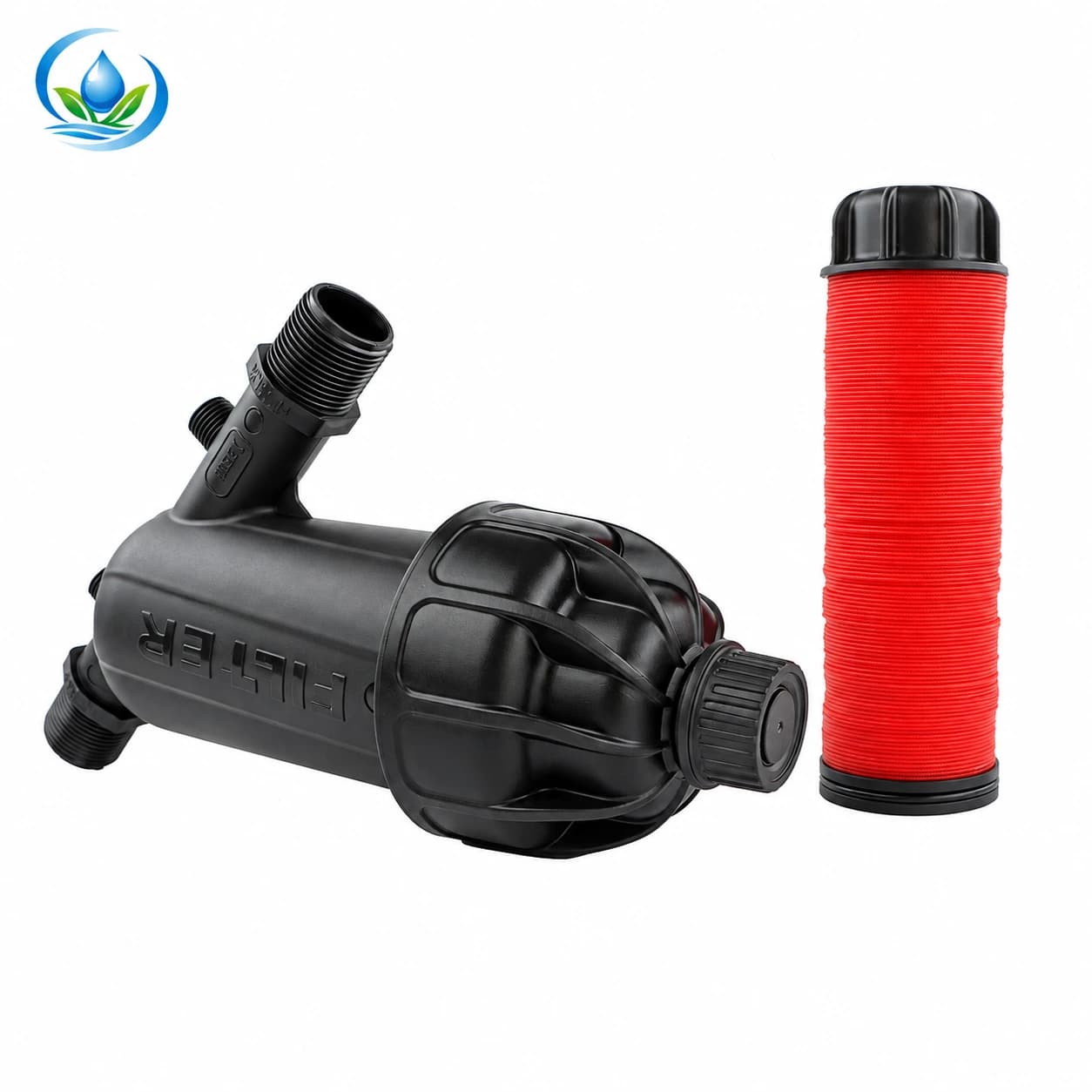
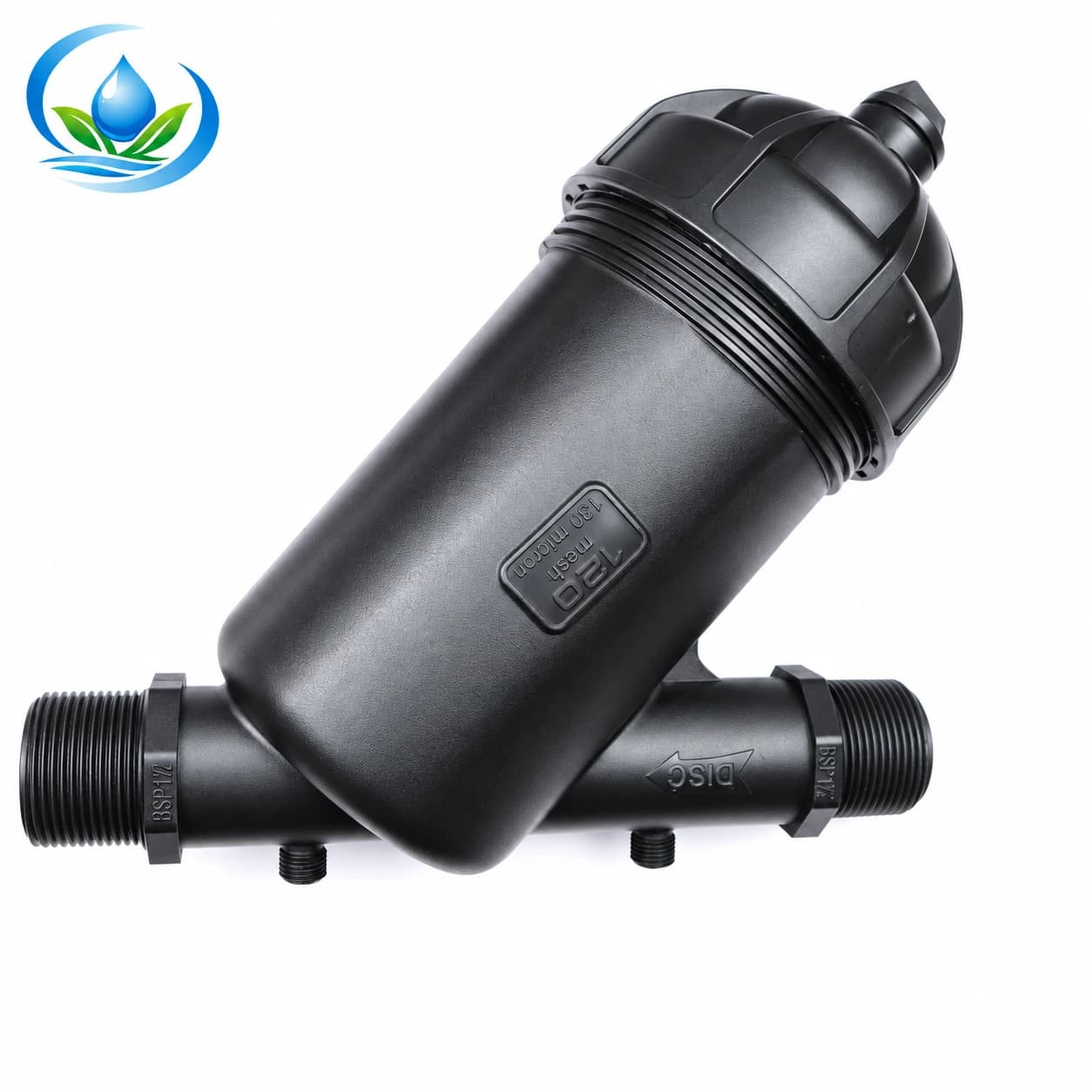
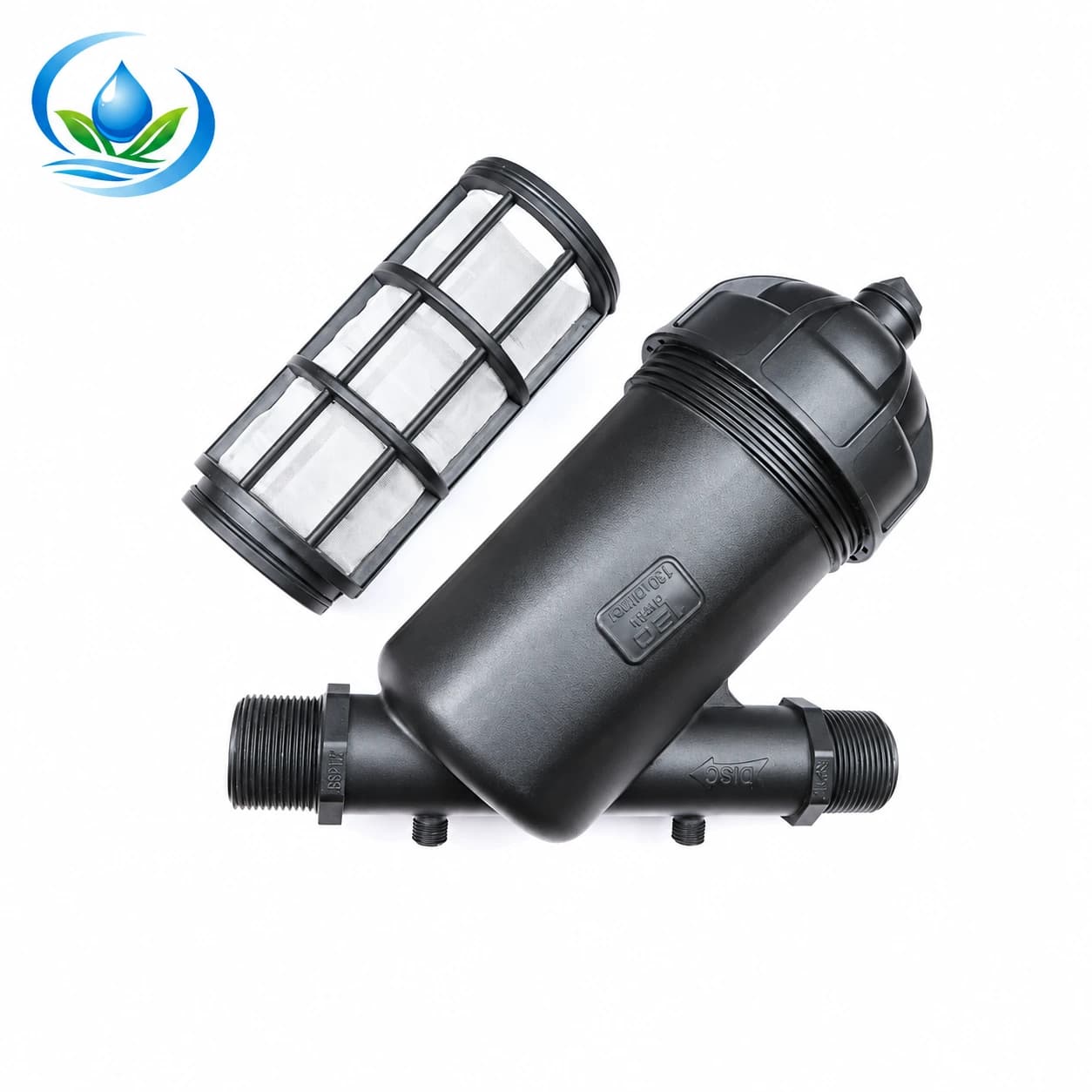
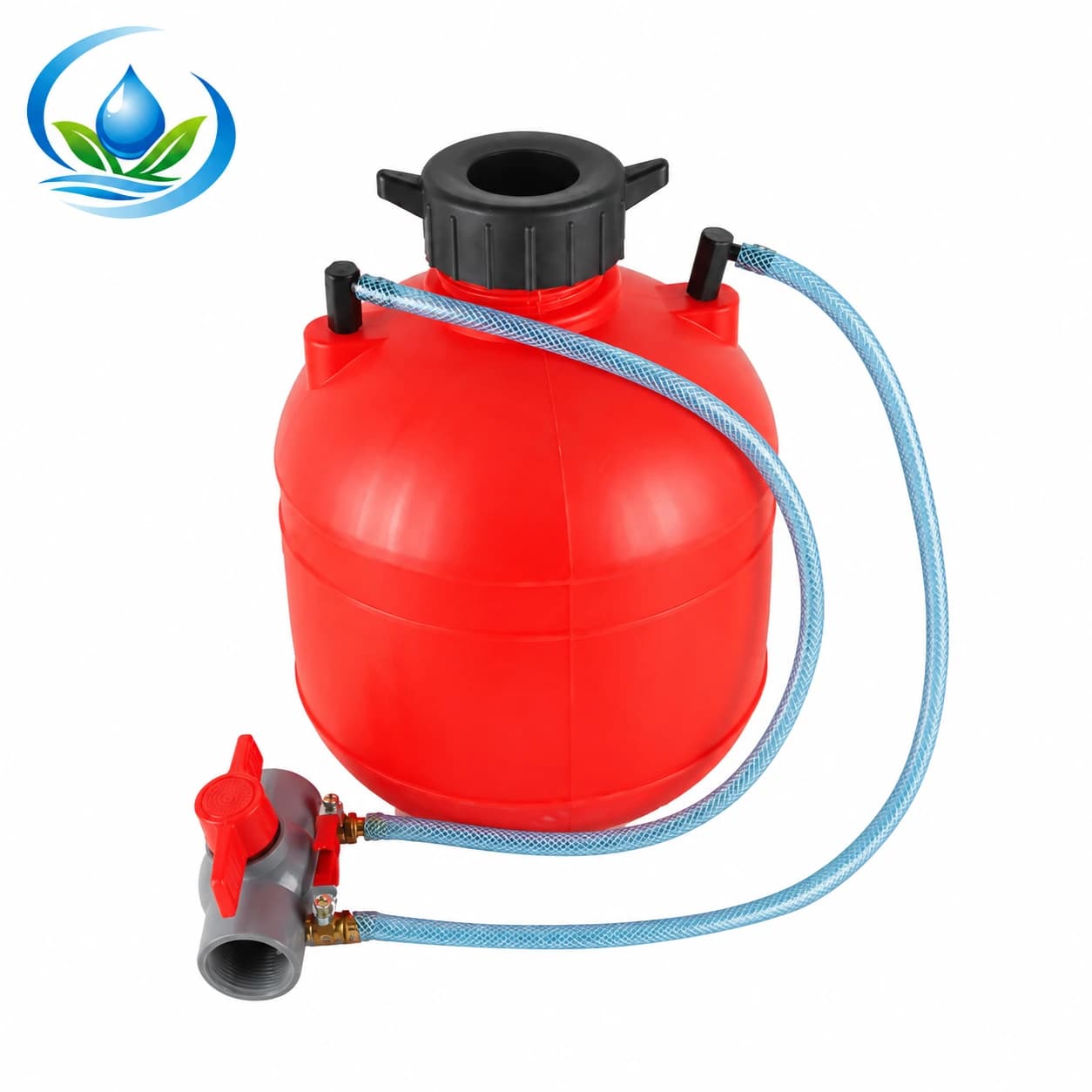
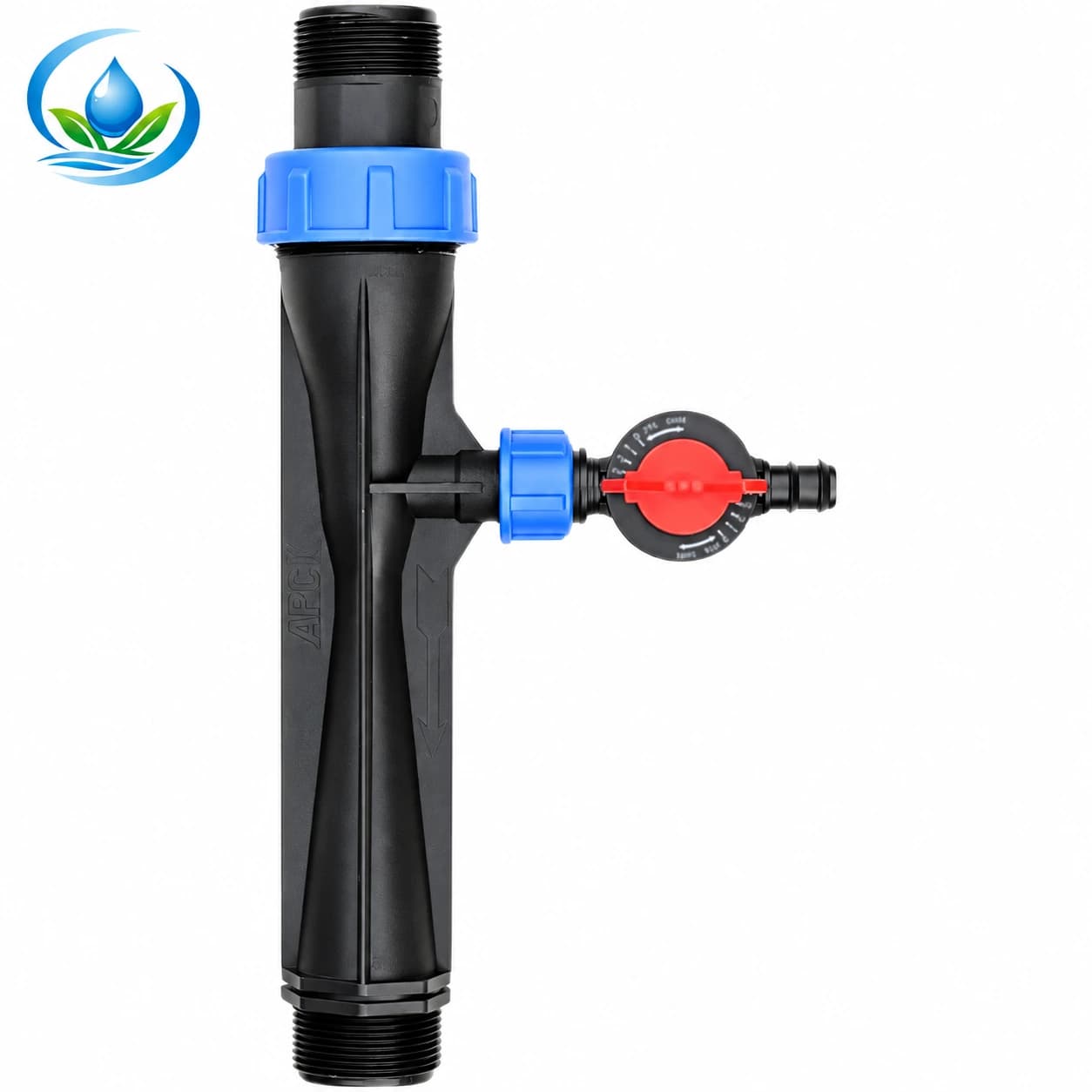
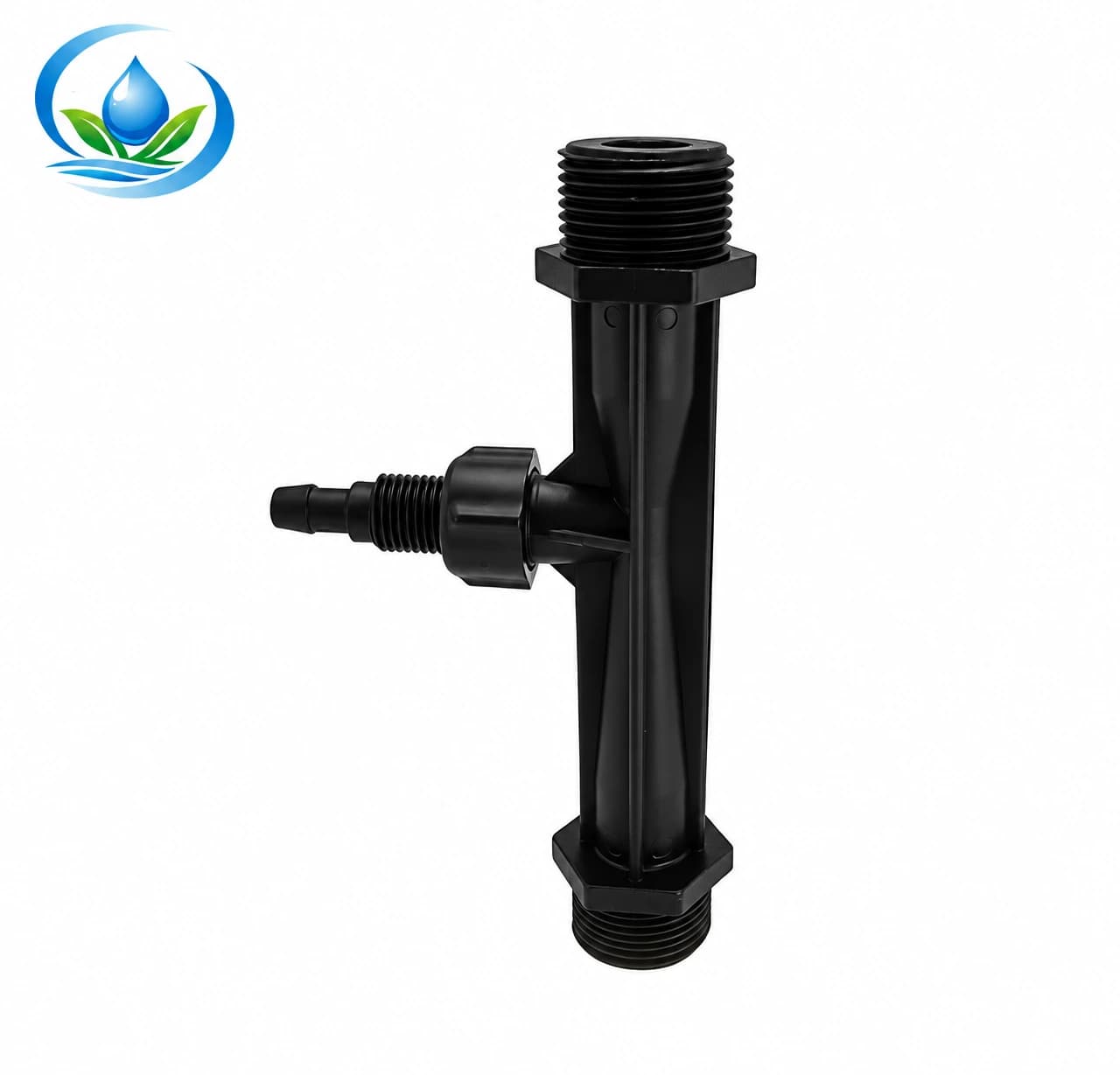
Irrigation filters remove particles that can block drip emitters and small sprinkler nozzles. Fertigation components introduce fertilizer into a suitable irrigation line; a fertilizer injection system also needs compatible water supply, pressure control and backflow protection. This category groups the relevant component families without implying they are sold as one ready-to-run assembly.
Choose filtration for the source water and the smallest downstream outlet, then check filter connection, flow capacity and cleaning access. For injectors, compare operating flow, pressure difference, dilution and material compatibility on the actual product.
Where and when to use it
Filtration and fertigation belong at the control end of a drip system. A filter protects emitters from particles, while an injector introduces a measured soluble fertilizer stream into suitable irrigation water. A small greenhouse block and a field of crop rows will differ in flow, water quality and injector calibration. This mixed category groups components; it does not represent a complete fertilizer injection system.
How it works
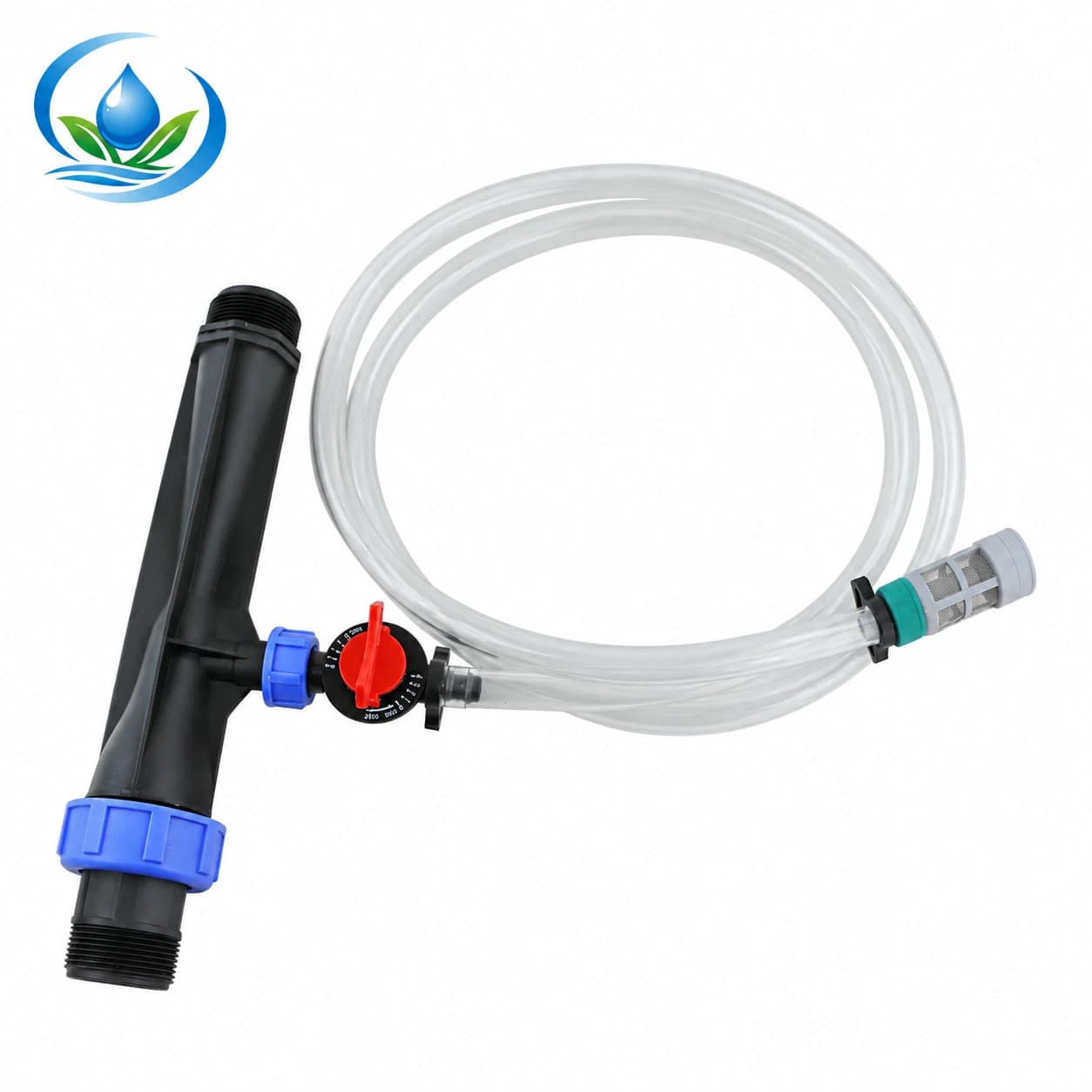
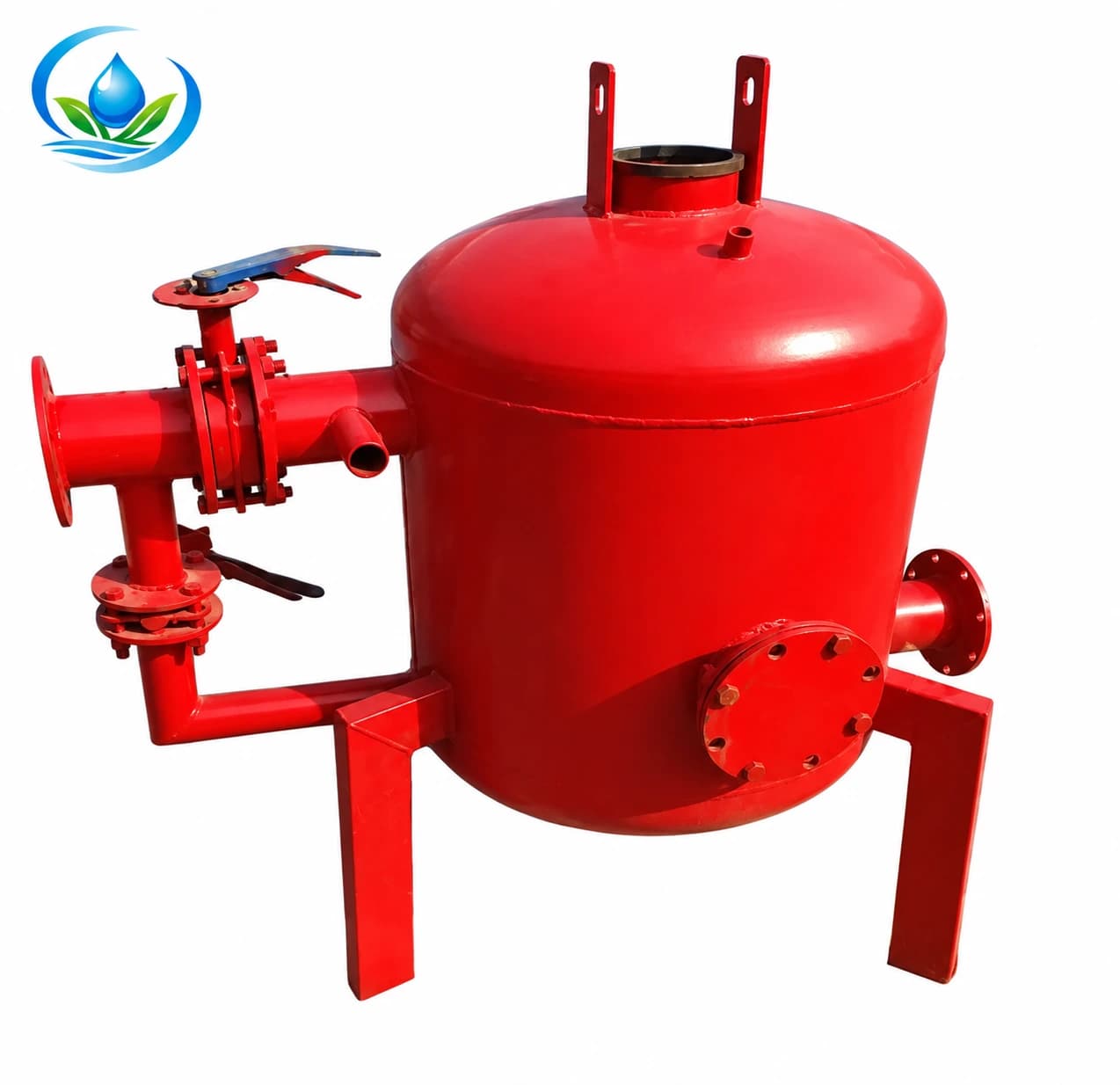
Screen, disc and media filtration capture different particle loads; filter choice follows source water and the smallest downstream passage. A Venturi injector uses a pressure differential, while other injectors may be pump driven. The diluted nutrient stream must be compatible with water, crop plan and equipment. Backflow protection is essential when injecting material into an irrigation line, subject to local requirements.
A fertigation system adds soluble nutrients to irrigation water through a controlled injector, while an irrigation filtration system limits particles reaching that injector and the crop outlets. Size both for the operating zone flow and place monitoring and isolation points where their manuals require.
How to plan and install it
- Test or characterize source water and obtain the emitter maker's filtration recommendation.
- Size filter connection and flow, and allow access to clean or backwash it and read pressure on each side.
- Select the injector from its operating flow, pressure differential and material compatibility; include required backflow protection.
- Flush and pressure-test the water system, then calibrate the injector with the intended solution before crop use.
Operation and maintenance
Record clean-filter pressure loss as a baseline and clean when pressure loss rises according to the product instructions. Check injector seals, suction line and calibration periodically. Never mix fertilizers blindly: precipitation can clog emitters and damage the system. Follow the product label and local rules for chemical handling and backflow prevention.
Common questions
Do I need a filter on my irrigation system?
Drip and micro outlets generally need filtration matched to the source water and the smallest passage in the system. A filter also needs enough rated flow and a cleaning plan. Test source water and follow the selected emitter's filtration specification rather than choosing a filter by pipe size alone.
Where should a fertilizer injection system be installed?
Location depends on filter type, injection method and the approved system design. Follow the injector and backflow-device instructions and verify downstream mixing and flushing.
Technical reference: UGA Extension, Drip Chemigation. Use the selected product manual and local requirements for final design.