High Pressure Irrigation Pumps: Can This Pump Run Your Rain Gun?
Compare your exact rain-gun flow and total-head duty with the offered pump curve, then check the true operating point, drive and suction limits.
Published by IrriNex Store
High pressure irrigation pumps are easy to compare by a large head number and surprisingly hard to compare at a rain gun. If you already know the exact gun and nozzle, the buying question is narrower: will this particular pump, with its offered impeller, speed and drive, deliver the gun's required flow and total dynamic head at the same operating point? A maximum-head label cannot answer that question. The useful evidence is the complete pump curve and the limits around it, evaluated against the water source and the real pipe system.
Take one complete duty requirement to the pump offer
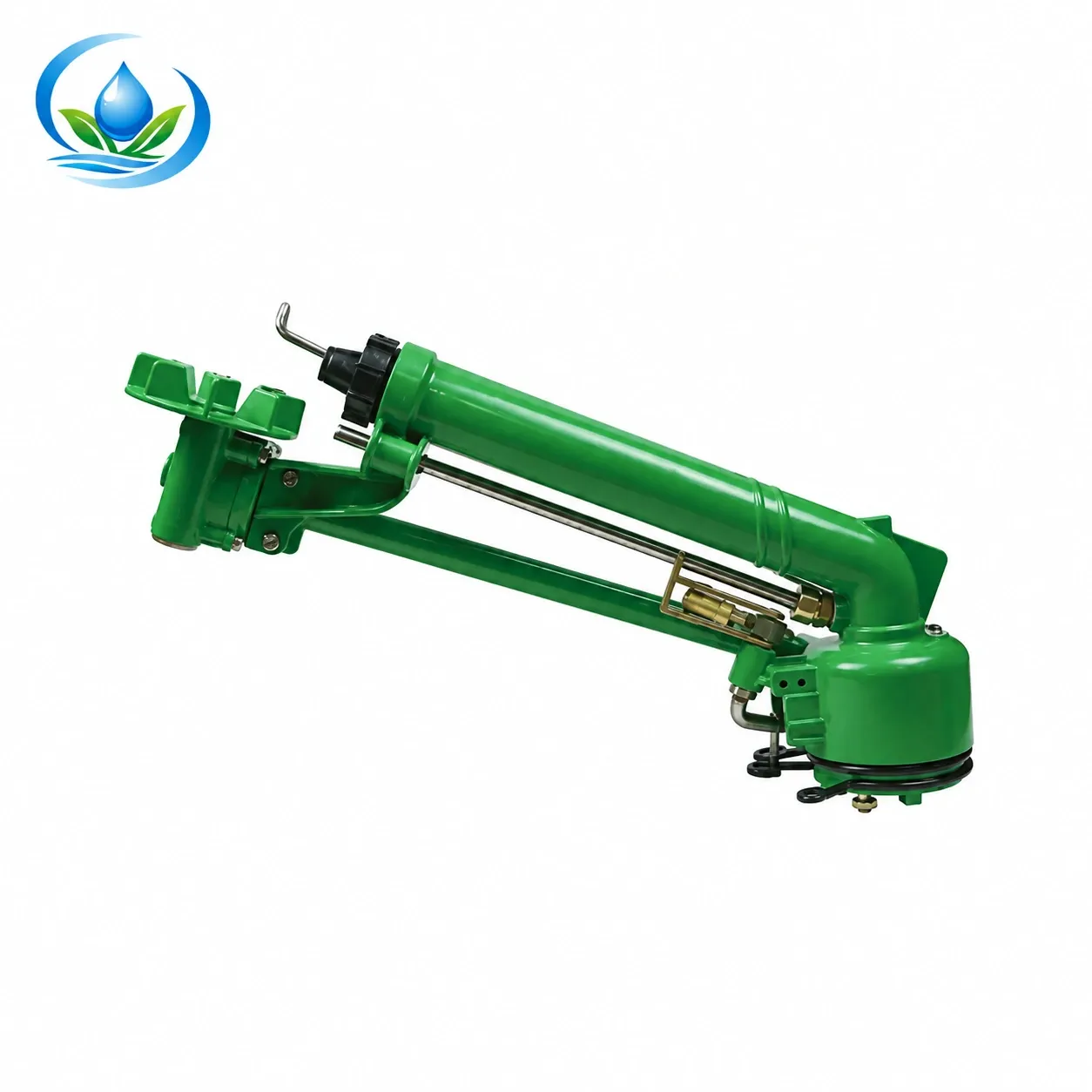
Start with the gun and nozzle you actually intend to run. Record the manufacturer's nozzle configuration, flow at the selected gun-inlet pressure, connection details and permitted operating range. A gun described only as “large” or “high pressure” leaves too much room for a pump mismatch. If the exact nozzle can be changed, treat each permitted nozzle and pressure combination as a separate duty; its discharge is not a fixed number across all pressures. For the rain-gun hardware and its field connections, see the portable rain-gun layout guide. Its placement decisions do not establish which pump curve will serve a selected gun.
Next bring a complete required duty to the seller: flow in one unit, total dynamic head in another, and the conditions used to calculate it. Total head includes the pressure needed at the gun, the vertical difference from the pumping water level to the gun, and losses through suction and delivery pipe, fittings, valves and filters at that flow. Give the source's lowest expected operating water level and the longest or most restrictive intended line. The required point changes if those conditions change. This guide starts after that requirement has been established; the decision here is whether an offered pump genuinely covers it.
Keep gauge pressure at the gun distinct from pump head. Roughly, 1 bar of water pressure is 10.2 metres of water head, so an illustrative 3.0 bar at the gun corresponds to about 30.6 m of pressure head. That is only one component of total head; it is not a universal rain-gun setting and does not mean a pump advertised at 30.6 m will suffice. The gun's own documentation determines its pressure and discharge. For smaller field heads, the impact sprinkler replacement guide explains why head, nozzle and connection must also be checked together.
Read the offered pump curve at its stated configuration
A centrifugal pump's curve puts flow on one axis and total head on the other. Read the head at your required flow, using the actual impeller diameter or trim, speed and model in the offer. Then inspect the efficiency region, shaft or brake power, net positive suction head required (NPSHr) and the maker's minimum and maximum allowed flow. A family graph, a different impeller line or a speed that your offered motor cannot provide is not the curve for the item you are buying. North Dakota State University's Irrigation Water Pumps guide, AE1057 shows head-versus-flow curves at stated speeds with efficiency, brake horsepower and NPSH information, and advises retaining the curve and exact impeller information.
Ask what the sheet means by “maximum head.” For a typical centrifugal pump, it may describe head at or near zero flow, not head while water is leaving through a gun. Maximum flow is normally measured or specified under a different low-head condition. Those two maxima are independent endpoints, so they cannot be treated as one simultaneous operating point. Nor can you make a reliable working curve by drawing a straight line between them. If the seller provides only the two headline figures, there is no defensible answer to “how much water at my required head?”
Look for the exact speed or operating mode on the sheet. An AC, DC or solar drive can have different available input and control behavior; a labelled peak output does not prove the pump stays at that speed when the gun is running. A pump's electrical rating alone does not yield its hydraulic curve. Where the motor, drive and pump are offered as a set, ask for the operating envelope of the set, including any approved control strategy. Do not assume that changing speed, swapping an impeller or restricting a valve is an acceptable field fix unless the manufacturer documents that combination and its limits.
Compare two hypothetical offers at the same gun duty
Calculation example only: the following values are invented to show a buying comparison. They are not Store pump ratings, measured farm results, customer experience or a guarantee for any model. Suppose an exact gun/nozzle and completed pipe assessment require 12 m³/h at 55 m total dynamic head at the pump. The gun's illustrative inlet pressure might be 3.0 bar, about 30.6 m of that total; the remaining 24.4 m represents this example's combined lift and line losses. That arithmetic explains the units, not a recommended pressure for rain guns.
Imagine two offers that include full manufacturer curves for their specified speeds and impellers. The table reproduces selected readings from those hypothetical complete curves to make the same-flow comparison visible; it is not a curve reconstructed from two catalogue maxima. Both have a nominal maximum flow around 24 m³/h under their own low-head conditions. Their pressure delivery at 12 m³/h is very different.
| Flow on each offered curve | Offer A: head | Offer B: head |
|---|---|---|
| 0 m³/h, shutoff reference | 78 m | 102 m |
| 6 m³/h | 70 m | 77 m |
| 12 m³/h, required flow | 55 m | 46 m |
| 18 m³/h | 39 m | 27 m |
| 24 m³/h, low-head end shown | 12 m | 9 m |
Offer B's 102 m shutoff head looks stronger than A's 78 m. Yet at the same required 12 m³/h, B's offered curve supplies only 46 m, nine metres short of the 55 m demand. On this documented configuration, B fails the first comparison despite its dramatic maximum head. A passes the first paper check because its curve includes 12 m³/h at 55 m. If the completed 55 m requirement accurately represents the real system at 12 m³/h, those two curves intersect there. Before purchasing A, confirm the source level, hose route, losses and chosen nozzle behind that requirement, then verify that this intersection and every other intended operating state stay within the pump, drive and pipe limits.
If another seller shows 60 m at 12 m³/h, that figure is also only a screening result. The installation does not automatically settle at 12 m³/h simply because the pump curve is above the demand point there. Water flows where the actual system-resistance curve intersects the pump curve, subject to any approved control. Depending on the intersection, the gun may receive a different pressure and discharge. A supplier should show the overlay or an equivalent operating-point calculation for the actual pipe and source, then check gun limits and application. A larger curve is not a permission slip to force the system to the target by an improvised adjustment.
Check the operating point and its whole permitted envelope
At the proposed intersection, ask four practical questions. First, does the gun receive its specified inlet pressure at the required discharge after losses, including the worst expected water level and the longest intended hose route? Second, is the pump operating in the maker's permitted flow range and a reasonable efficiency region rather than far to the left of its useful duty? Third, does shaft-power demand at that point and at other possible operating points stay within the supplied motor and drive capacity? Fourth, can the piping, valves, hose, couplings and gun tolerate the highest possible pressure during low-flow operation and credible control transitions? The maker's maximum allowed pressure and the weakest component rating matter, even when ordinary running pressure is lower.
Low flow is especially easy to overlook. The impressive shutoff or near-shutoff head that sold the pump can translate into a damaging pressure concern for a line or fitting if the installation reaches that condition. Review this on the curve and component ratings with the installer; do not close a discharge to “test” shutoff head or run a pump against a closed line. Similarly, do not use an undocumented speed increase to chase a missing duty point. Changes in speed affect head and power as well as flow, and any permissible adjustment belongs within the exact maker's instructions and drive rating.
One gun may run through several hydrants or hose lengths. The duty point for the nearest, shortest path can differ from the farthest path, while a partially open or obstructed line creates another state. Include each intended state and the start, stop and control sequence in the operating review. If the design uses a bypass, pressure control or variable speed, require a documented scheme that keeps the pump and every wetted component within their allowable ranges. The sprinkler-zone flow guide is useful if the project later adds heads; it does not replace this single-gun pump-curve check.
Keep suction limits separate from discharge performance
A favourable head-versus-flow curve still cannot rescue an unsuitable suction arrangement. For a surface pump taking water from a pond, canal or tank, note the lowest water surface, vertical suction lift, suction-pipe length and diameter, bends, intake screen and expected temperature. Compare the available suction conditions with the pump's NPSHr at the proposed flow, with the manufacturer's required margin. That margin depends on site elevation, temperature, water level and suction losses. A “maximum suction lift” headline is no more complete than a maximum-head headline.
Watch for a long narrow suction line, leaks that admit air, an intake that can uncover as the source falls, or debris that can block a strainer. These reduce reliable delivery and can cause loss of prime or cavitation even if the discharge curve looked adequate on paper. Confirm the actual pump's priming method and allowed installation position. A pump that needs priming must be prepared according to its maker's procedure; never run it dry to see whether it will pick up water. If the source cannot meet the suction requirement, a different placement or pump arrangement may be needed before choosing a stronger discharge curve.
Also separate lift from discharge head when discussing a well. A deep pumping water level may make a suction-mounted surface unit impractical regardless of its nominal maximum head; another pump type or installation may be appropriate. The surface-pump buying guide compares power-source and placement choices. For this rain-gun decision, carry the chosen source level into both the total-head calculation and the suction check, without counting the same loss twice.
Ask for missing evidence before treating a listing as a match
If a pump listing has no full head-versus-flow curve, put the offer on hold. Ask for the curve for the exact model and impeller, with the test speed, units and tolerance. Request the efficiency and shaft-power or motor-demand data, NPSHr across the intended flow range, allowable continuous flow range, maximum permitted casing and discharge pressure, and any minimum-flow or cooling requirement. For a variable-speed or solar package, request the documented curve or operating map for the offered motor, controller, supply and approved speeds, not a bare pump-end chart from a different drive. Get the permitted control method in writing.
Separately give the supplier the suction conditions and ask for the exact model's allowed suction and priming requirements. A complete discharge curve without NPSH or installation information still leaves a material risk. If only a graph image is supplied, check that axes and units are legible and that the line for the offered impeller or speed is identifiable. Keep the final curve with the purchase record; it helps diagnose later wear or a changed impeller. These are specific document requests, not a request for a vague assurance that a pump is “high pressure.”
When replacing an existing pump, compare evidence before buying more capacity. If the old system once met the gun duty and now falls short, record safe operating measurements from installed gauges and a suitable flow meter under normal running conditions, then have qualified personnel inspect blockage, worn impeller, air entry, filter loading, changed water level and drive condition with equipment isolated and depressurized. Restoring the documented original performance may be the right purchase. If the system has never reached the required duty, a like-for-like replacement is unlikely to solve a curve mismatch; seek a correctly documented pump or revise the pipe and source arrangement.
Use the Store pages to identify components, then verify the exact pair
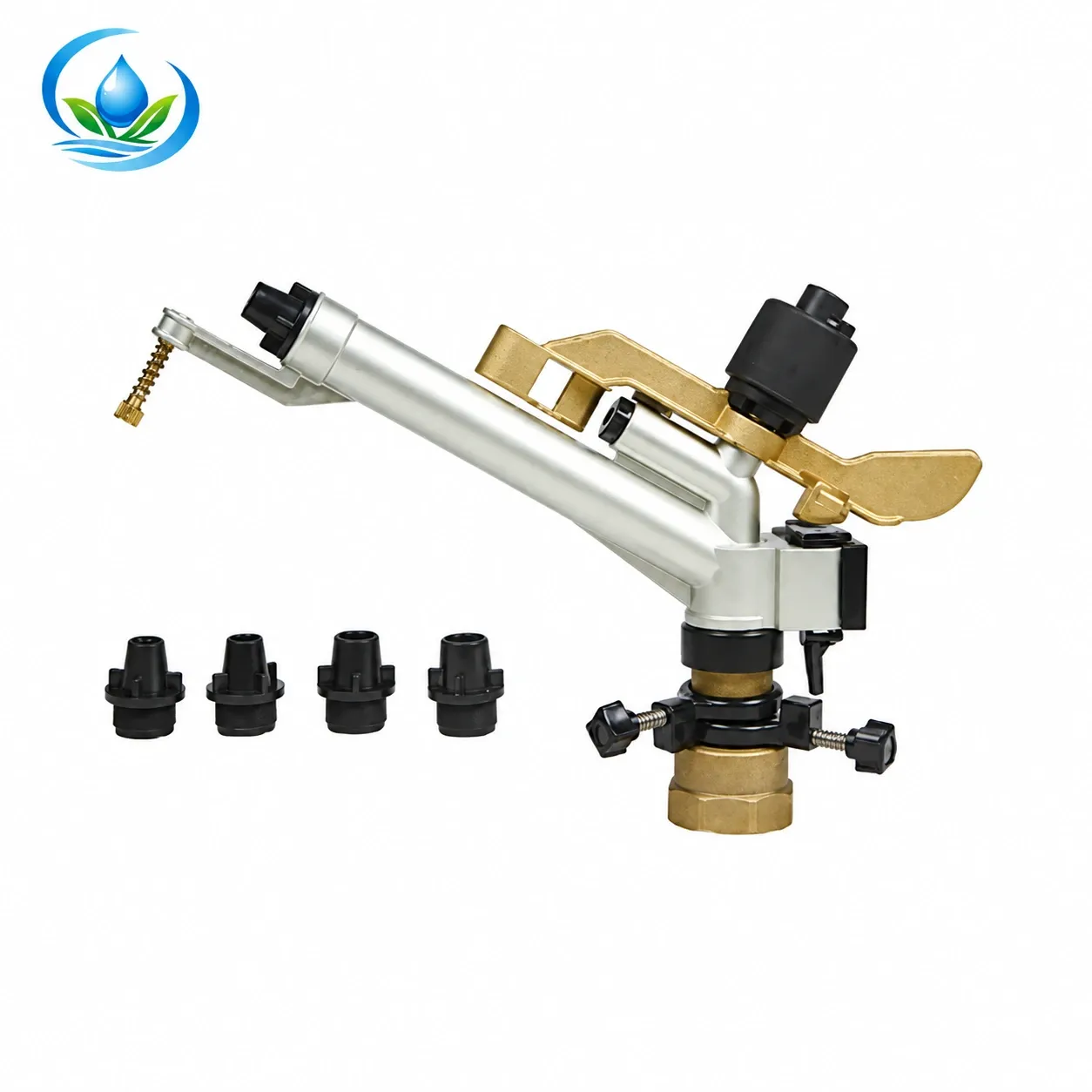
The Store's HS30 rain gun and P40 metal rain gun are starting points for identifying a gun family, not substitutes for a chosen nozzle's flow-versus-pressure table. The HS30 catalogue gives the nozzle entry as 8×18 mm and a 2–6 bar working-pressure range; the P40 gives 12×20 mm and a 2–5 bar range. Retain those nozzle entries as written and confirm the actual supplied configuration. The separate ranges do not say that every nozzle gives every listed discharge at every pressure. For an existing gun, match its exact nozzle, inlet connection, pressure range and flow data before using either page as a replacement reference. The low-pressure sprinkler guide covers a different head family and should not be used to infer rain-gun pump duty.
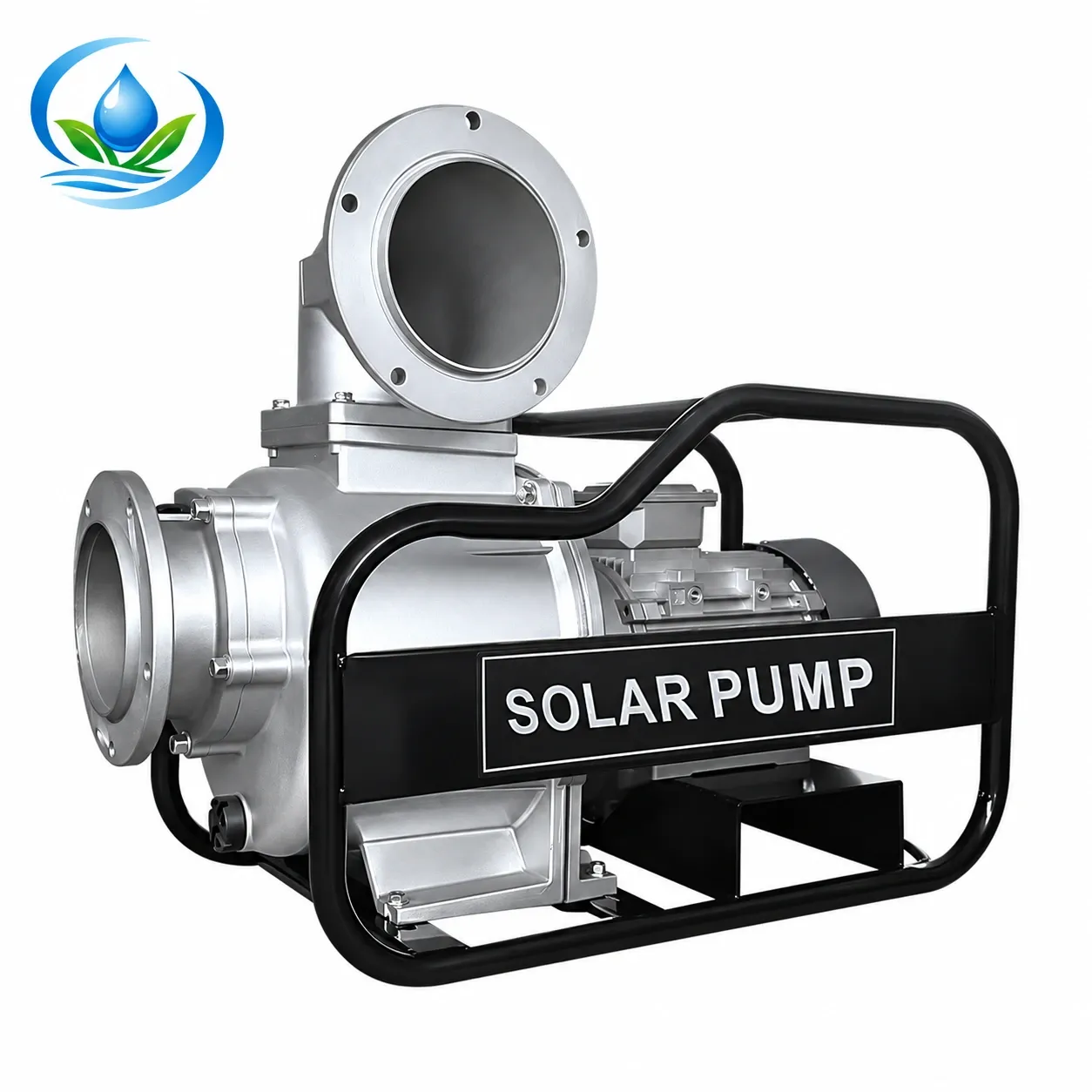
The ZQD high-flow surface-pump page identifies a pump family to investigate. Its catalogue labels include a maximum head of 20 m and maximum-flow figures for two variants, but these are independent specifications; they are not proof of flow at 20 m. The listed 20 m maximum head is below the hypothetical 55 m total-head duty, so neither listed variant matches that example under its stated configuration. For any lower-head real duty, obtain the exact variant's full curve, offered drive mode, suction conditions and component pressure ratings before deciding whether it can run the gun. The three Store products are published reference pages; availability, quote and purchase route must be checked on the current page rather than assumed.
Make the buying decision from the verified intersection
A usable offer identifies the exact gun/nozzle duty; supplies a curve for the exact pump, impeller, speed and drive; predicts an acceptable intersection with the real system; and documents efficiency, motor demand, suction margin and pressure limits over every intended operating state. If an offer cannot support that chain, the sensible result is “undetermined,” even if its box advertises a spectacular head number. If its exact curve falls short at the required flow and head, choose a different documented configuration or redesign the installation under the maker's rules, rather than assuming the maximum-head figure will carry the gun.
For a gun that already works, retain its measured duty and curve documents. For a gun that underperforms, distinguish a deteriorated installation from an original mismatch before replacing hardware. No one needs to open pressurized fittings or deliberately run a pump at shutoff to make this comparison. The shopping decision can be made from the exact equipment documents, a sound system assessment and normal, safe operating evidence.
Before you order
Compare this guide with the specifications for your exact product, selected option, water supply and field conditions. Your equipment requirements take priority over a general example.
Compare irrigation products