Pumps and Irrigation: Compare Solar and Battery Surface Pumps for Crop Blocks
Compare two listed surface-pump models by voltage, separate flow and head limits, connections and the evidence needed for a crop-block duty point.
Published by IrriNex Store
Pumps and irrigation need to be considered together when a crop block depends on a tank, pond or other separate water source. A pump that moves plenty of water through an open hose may not supply the same flow while maintaining the pressure required by the irrigation equipment. Before comparing models, describe what the pump must deliver, where it will sit and how it will receive power.
This guide compares two listed surface-pump families: ZQD solar brushless self-priming pumps and ZM brushless pumps for battery systems. The examples explain how to read their catalogue entries and prepare a useful selection record. They do not establish that either example will suit a particular farm. Check the exact model, performance curve, electrical arrangement and supplied components before making a purchase decision.
Start with the job, not the largest number on the page
Write one sentence describing the intended duty: supplying a particular crop block, transferring water into storage, or supporting another clearly defined irrigation task. Those jobs can require different combinations of flow and pressure. Moving water into an open tank is not equivalent to feeding emitters through a filter, long pipe and pressure regulator. Keep these duties separate in your comparison.
Record the water level relative to the planned pump position, the route to the crop and the elevation of the delivery point. Include changes that occur during use, such as a falling tank level. A photograph helps identify the arrangement, but measured distances and levels are more useful than a general description such as “small field.” The irrigation components shopping list can help identify the equipment that sits between the pump and the plants.
Separate daily water volume from simultaneous demand
A daily volume describes how much water must be delivered over a period. Pump flow describes the rate of delivery. Both matter, but they answer different questions. A block that receives water in several separate runs may have a different instantaneous requirement from the same block irrigated all at once. Record which outlets will operate together rather than adding every outlet on the farm automatically.
For an arithmetic example, 300 emitters nominally delivering 2 L/h each represent 600 L/h, or 0.6 m³/h, while that group operates. This is an outlet-demand example, not a verified pump duty point. The selected pump must also supply the required pressure after elevation and equipment losses are accounted for. Use the drip irrigation flow calculation guide for outlet counting and the crop-block zoning guide when different groups run separately.
Compare the exact solar and battery pump model options
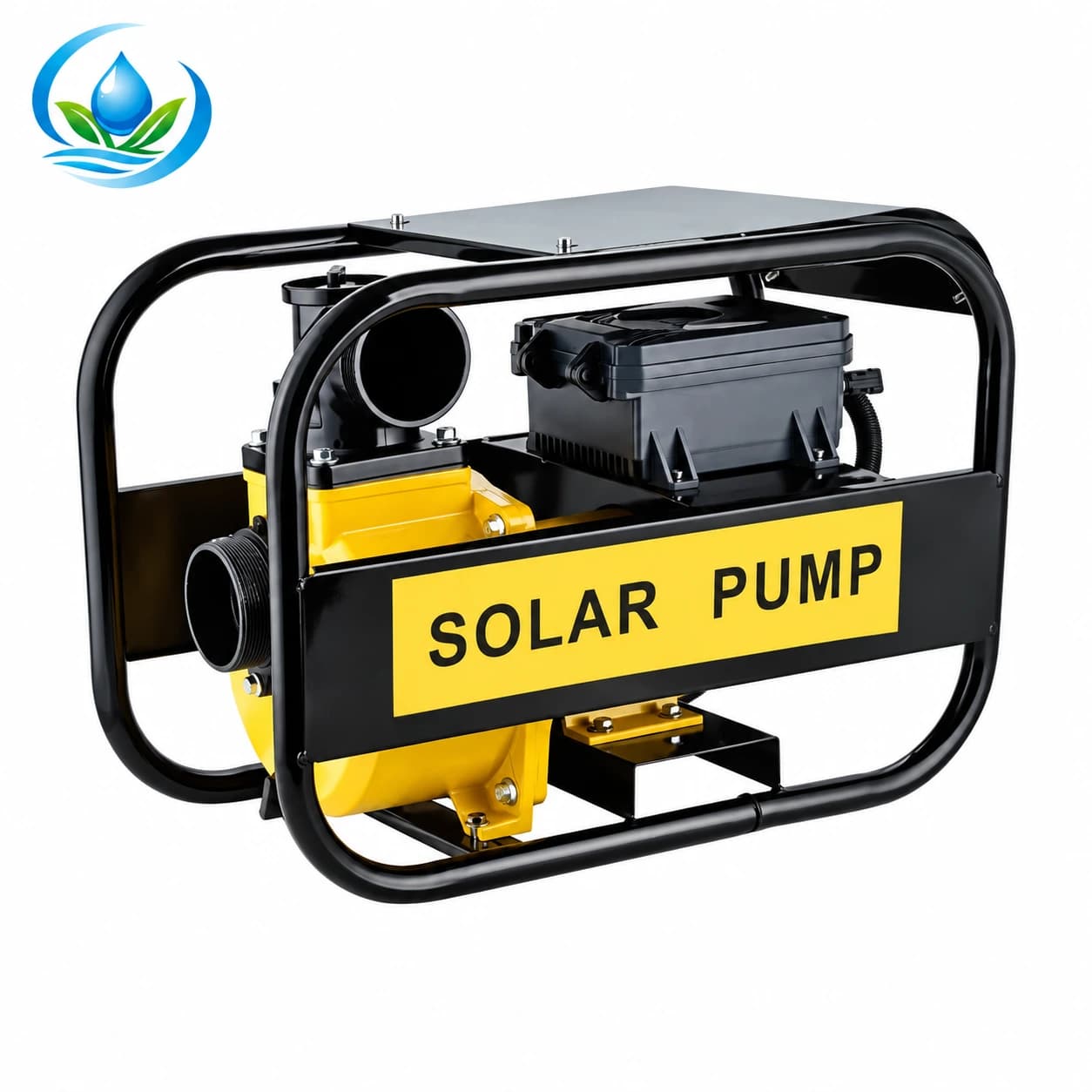
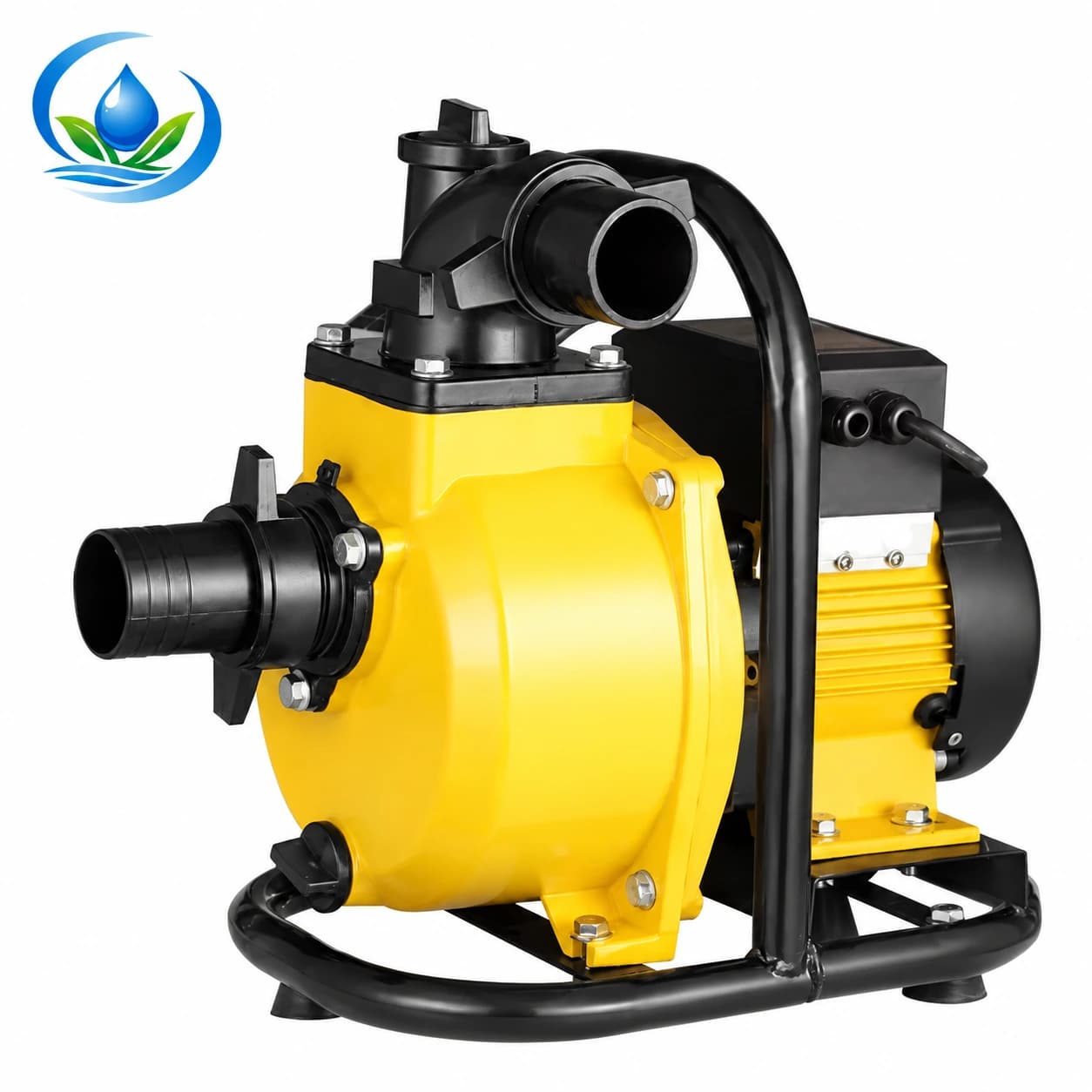
The ZQD solar surface-pump family contains several model options. One listed example is ZQD6-24-48-550. The ZM battery surface-pump family also contains multiple options; the example below is 25ZM6-15-24-400. A family name is not a complete order specification. A solar or battery irrigation pump comparison must pair the chosen model with the actual power arrangement and operating route, not two independent maximum figures.
| Catalogue field | ZQD6-24-48-550 | 25ZM6-15-24-400 |
|---|---|---|
| Listed voltage | 48 V | 24 V |
| Rated power | 550 W | 400 W |
| Maximum flow | 6 m³/h | 6 m³/h |
| Maximum head | 24 m | 15 m |
| Listed connection | 1 inch × 1 inch | 1 inch × 1 inch |
| Working-voltage range | 30–100 V | 24–36 V |
These entries come from the pump catalogue model tables: printed page 73 for this ZQD example and page 75 for this ZM example. They describe individual models, not every member of either family. The listed connection size does not identify the thread standard or confirm compatibility with an existing fitting.
Read maximum pump flow and head as separate limits
Both examples list a maximum flow of 6 m³/h, yet their maximum heads differ. This does not mean the ZQD model delivers 6 m³/h at 24 m head, or that the ZM model delivers 6 m³/h at 15 m. Those two maximum values are not one simultaneous operating condition. Treating them as a paired performance result can produce an unsuitable shortlist.
Ask for the performance curve for the exact model and its applicable operating conditions. Mark the required flow and total head together, then establish whether the curve supports that combination. Confirm which supply voltage, controller setting and test conditions the curve represents. Do not draw a straight line between two catalogue maxima and present the resulting estimate as tested performance.
A higher rated power is also not enough to choose between pumps. The useful comparison is the water delivered at the required operating point under the intended power arrangement. If that point is not established, retain the model as an option awaiting evidence rather than treating it as a confirmed solution.
Check the complete power arrangement
For a solar installation, record the proposed electrical supply and the controller intended to operate the selected model. The word “solar” does not tell you which panels are supplied, how many are required, whether a controller is included or which combinations are permitted. Obtain the configuration for the particular model instead of transferring details from another pump in the same family.
For a battery installation, record the battery arrangement, permitted operating voltage and intended running period. The 24 V entry and 24–36 V working range for the ZM example are catalogue specifications, not permission to connect any battery assembly that appears to have a similar voltage. Controller requirements, wiring and protection still need confirmation for the complete installation.
Do not calculate battery runtime by dividing a nameplate capacity by the pump’s rated watts and treating the answer as guaranteed irrigation time. Actual usable energy, operating load and the power system affect the result. Ask for a supported runtime assessment under the intended conditions. If the water must arrive at a fixed time, discuss that requirement before selecting the power arrangement.
Put pressure, elevation and losses into consistent units
The pump must overcome the relevant elevation difference and hydraulic losses while leaving the required pressure at the delivery point. A useful selection record lists those contributions separately. Do not add a pressure value in bar directly to a height in metres. Convert pressure to equivalent water head before combining it with other head values.
For fresh water, 1 bar corresponds approximately to 10.2 m of water head. Suppose a hypothetical installation needs 1 bar at its delivery point, has 4 m of elevation difference and has verified pipe-and-equipment losses of 3 m at the required flow. Its simplified total is about 17.2 m of head. The 3 m loss is an assumed example input, not a standard allowance for every farm.
On that example, a model listing only 15 m maximum head would already fail the stated head requirement. A model listing 24 m maximum head would still need its curve checked at the required flow; it is not automatically suitable. Review the pressure selection guide to establish what the downstream equipment actually requires.
Confirm the water connection and installation details
Measure and identify existing pipework before choosing adapters. The shared 1 inch × 1 inch catalogue entry does not prove that the two example pumps accept the same threaded fittings, nor that either will connect directly to a hose already on the farm. Confirm inlet and outlet details, thread standard and the intended sealing method for the selected model.
“Self-priming” is not evidence that a pump can run dry or lift water from any depth. Obtain the model’s permitted suction arrangement and priming instructions. Check the position of the water surface during operation, not just when the tank is full. Keep the installation accessible enough to inspect connections and identify a leak or restriction.
Water quality also affects the surrounding equipment. Record visible sediment and the proposed filtration arrangement without assuming the pump replaces an irrigation filter. The filtration buying guide explains the downstream selection question. Confirm the pump manufacturer’s own requirements for incoming water and any inlet protection separately.
Prepare a model-specific order record
Put the chosen model code beside the required flow, total head and power arrangement. Add connection details and a list of components whose inclusion has been confirmed. Keep unconfirmed items visible: controller, panels, battery, cables, fittings, inlet equipment and mounting parts. A catalogue photograph showing several pieces is not an itemized packing list.
Use the product pages to compare the listed models and record the option being discussed. Confirm availability, pricing and the actual ordering route separately. A published catalogue entry does not establish current stock or immediate online payment. This distinction matters when a crop schedule depends on delivery by a particular date.
Retain the supporting curve or specification revision with the order record. If the proposed model changes, repeat the checks rather than replacing only the name at the top of the document. Similar model codes and similar maximum flow values do not establish identical hydraulic or electrical behavior.
Check the delivered model before relying on it
Compare the identification label and supplied components with the agreed record before installation. Follow the model’s commissioning instructions and have electrical work completed by a suitably qualified installer. During the first measured run, record operating pressure, delivered flow, active crop block and the relevant power conditions. Compare those observations with the intended duty.
If delivery is insufficient, check the actual operating arrangement before assuming the pump needs replacing. An unexpected open zone, changed water level, unsuitable controller setting, blocked filter or leaking connection can change the result. A written starting record makes later comparisons more useful and helps distinguish a changed installation from a changed pump.
Questions to settle before choosing a model
Can these two examples supply the same crop block?
The common 6 m³/h maximum flow does not answer that question. Compare both models at the block’s required flow and total head, then check their power and connection requirements. One may fail a requirement that the other satisfies, or neither may be suitable.
Does the solar family include a complete power kit?
Do not assume so. Establish the contents for the exact option being considered. A pump, controller, solar panels and installation accessories are distinct items unless a confirmed packing list groups them together.
What is the most useful information to collect first?
Bring the active block’s demand, required delivery pressure, source and delivery levels, pipe route and available power details. That record lets you compare exact models on a common basis and identify the missing evidence before committing to an unsuitable configuration.
Before you order
Compare this guide with the specifications for your exact product, selected option, water supply and field conditions. Your equipment requirements take priority over a general example.
Compare irrigation products