Farm Irrigation Supplies: Build a Field Spares Box You Can Reorder
Label field spares by installed connection and exact variant, log withdrawals, then reorder against real usage and current selling units.
Published by IrriNex Store
Farm irrigation supplies kept as field spares are useful only when the crew can match each piece to an installed line and replace what it uses. A box marked “16 mm fittings” can contain barbed pipe parts, drip tape locks and end closures that will not necessarily fit the same material. Build the box from a map of the operating system, the failures actually seen and a labelled list of parts that can be reordered by exact option. A farm irrigation spare parts list should tie each item to an installed connection and its mating ends, not to a broad size label on a bin.
Use this in-season stock method after identifying each installed line family and its approved repair method. It takes you from a field map to bin cards, a withdrawal log and a reorder list. The box helps a crew find a compatible spare quickly; each repair still requires the site's isolation and depressurisation procedure, the component instructions and a test before the line returns to service.
List field spares against installed irrigation parts
Walk the zone map and identify the pipe or tape families that are actually in the ground. Record material, printed product code, true mating dimensions, wall description where relevant, and the fitting style at each accessible junction. Keep a photo of the original label or accepted order alongside the map. A bin cannot be identified reliably by the colour of a fitting copied from a photograph.
Mark the nearest valve or safe isolation point for each repairable section. A spare is useful only if a worker can reach the fault, identify the correct line and take it out of service safely. A buried or obstructed branch may call for a separate access plan and trained crew; adding another coupler to a box does not create safe access.
Separate equipment that serves different purposes. A coupling joins two prepared pipe ends; an end cap closes a compatible line end; a tape valve provides control through its documented lock connections. They are not three interchangeable ways to “fix a 16 mm pipe.” The leak-location guide helps establish the damaged interface before a spare is selected.
Make a reorder card for each verified connection
On each card, put the exact product and variant code, approved tube or tape family, the measured mating dimensions, material, selling unit and the field location where that combination is used. Add a photograph of the installed sound joint and the product-page URL. If the manufacturer's instructions require a clamp, lock, seal or tool, list that separately. Do not infer that a catalogue image includes every part of an assembly.
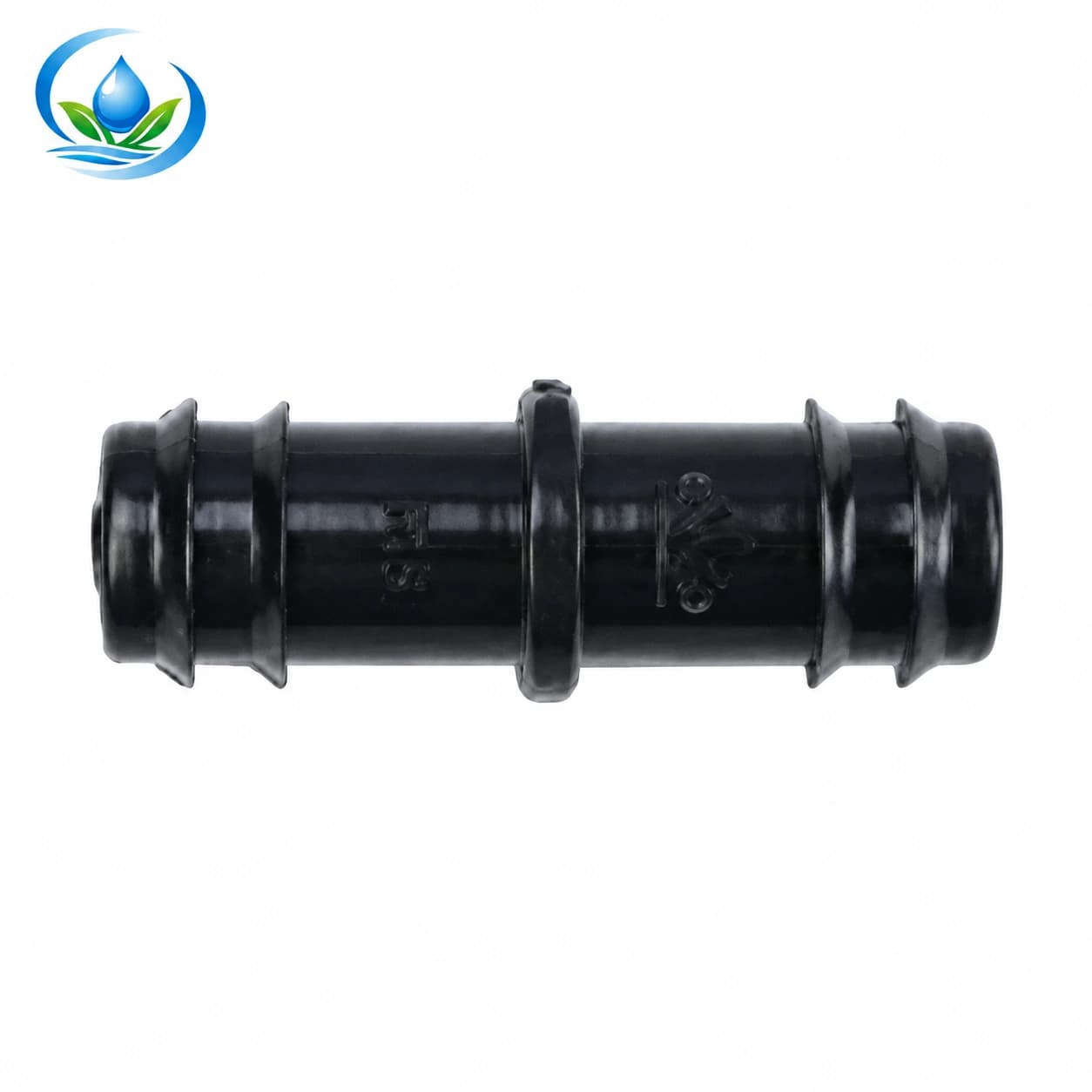
The straight barb coupling range lists SC0116, SC0120, SC0125 and SC0132 for nominal 16, 20, 25 and 32 mm choices. Those are separate options. The size label is a selection clue, not proof that a particular existing tube bore, wall and pressure duty will accept the barb. Keep one card for each verified installed combination rather than mixing all four choices in a single open bin.
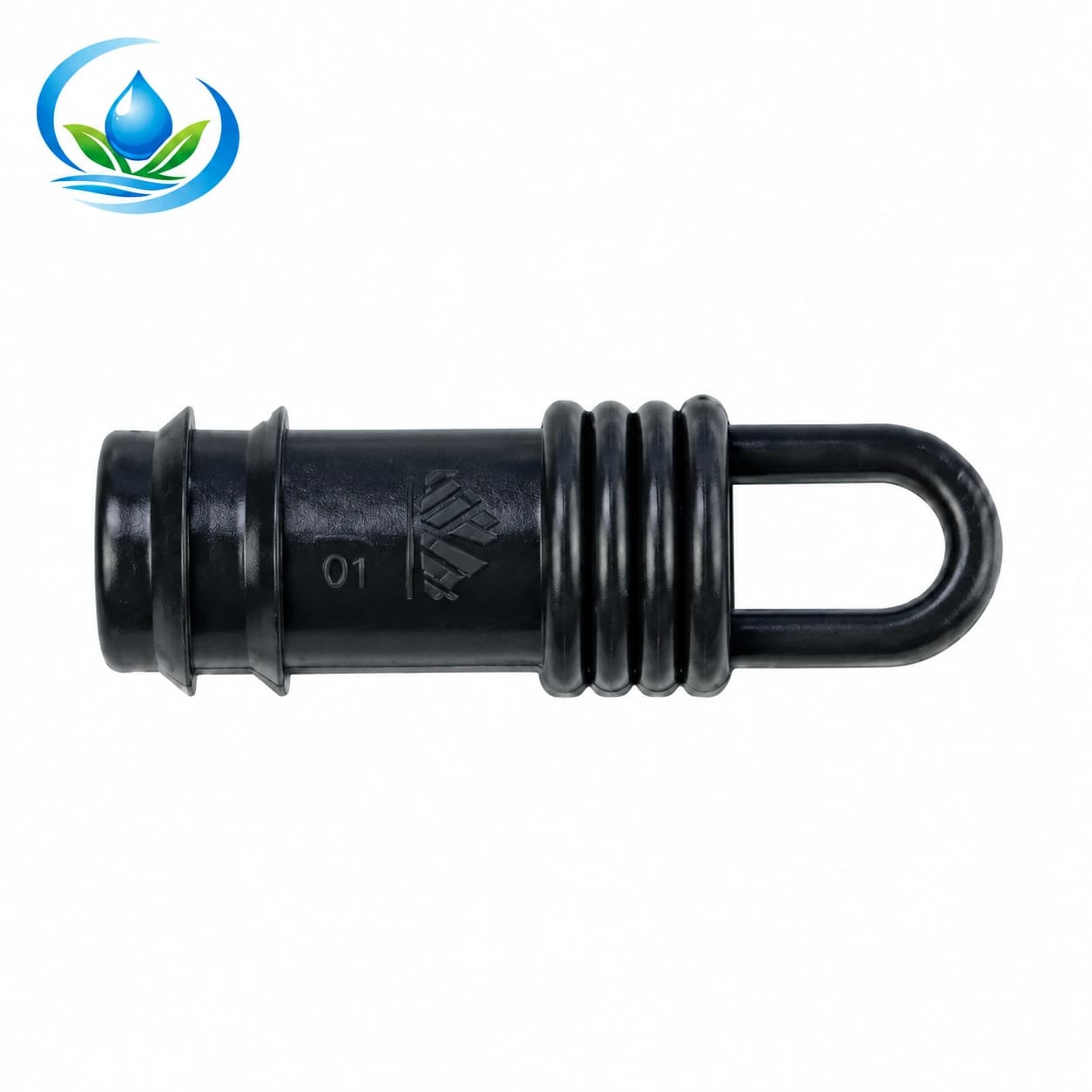
The barb end-cap range similarly lists EL0116, EL0120, EL0125 and EL0132. A cap closes a line; it does not reconnect two cut ends. Identify whether the farm actually uses that cap on a serviceable end and whether its installed tube and closure method are supported. Label a separate bin for each confirmed end-cap option, even if the nominal number matches a coupling elsewhere in the box.
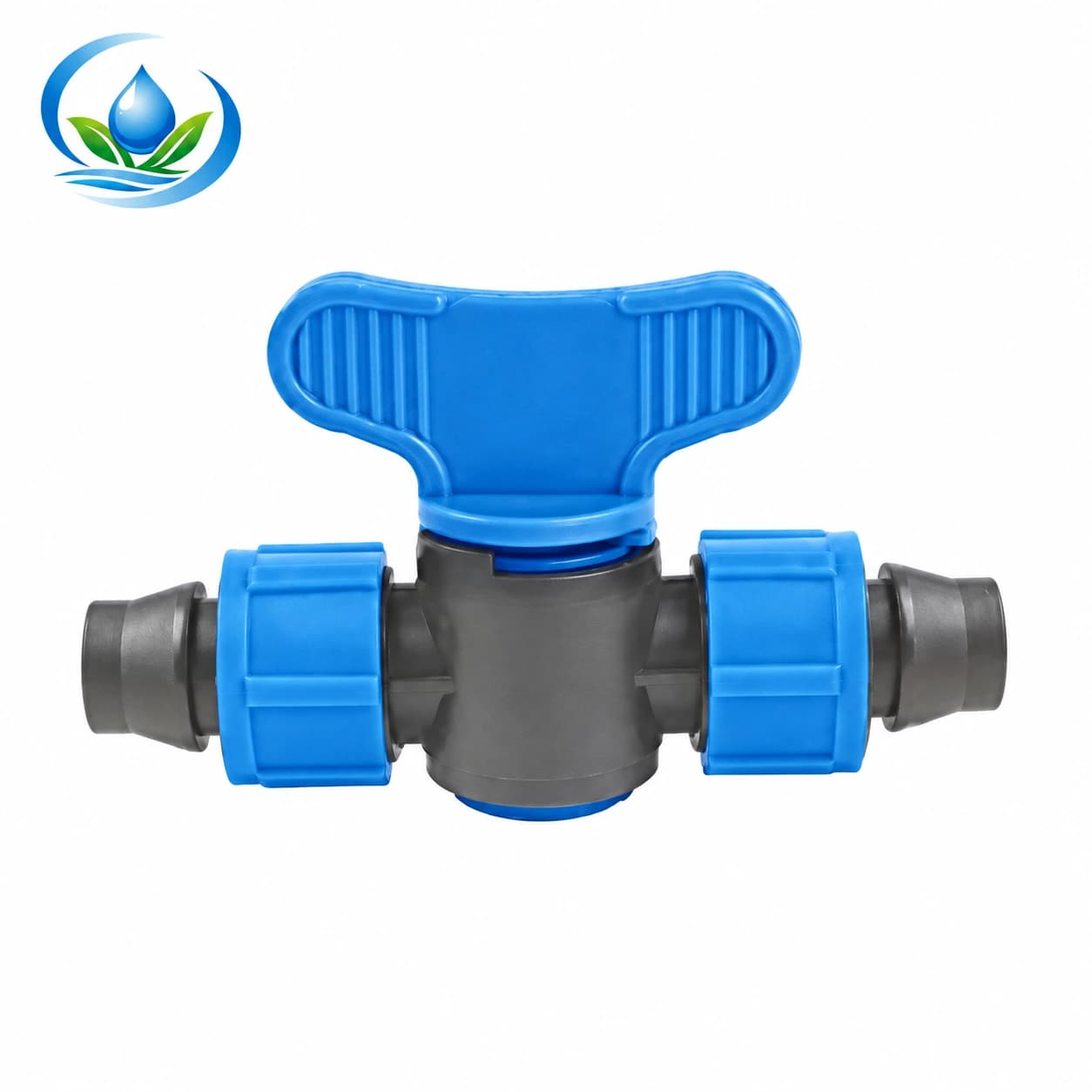
The V161 lock-tape coupler valve is shown as a 16 × 16 mm tape-connection option in its own family. It is not the SC0116 barb coupling or the EL0116 end cap. Two products carrying “16 mm” do not prove they share a mating interface. Confirm the actual tape specification and the valve's lock connection before placing V161 in the box for a particular field block.
A useful card also shows what has not been confirmed. If the original roll label is missing, a connection leaks during the sample test, or a sale-unit description is unclear, place the candidate part in a “verify” tray rather than in ready stock. The fitting-dimension guide explains which measurements to collect before comparing options.
Use a small stock ledger, not a remembered bag count
Give every bin a line in a paper or digital ledger. Record opening quantity, exact SKU, selling unit, date received, date issued, quantity issued, repair location, person taking it, and balance after withdrawal. If a vendor sells packs, note both the pack count and the individual pieces per pack as shown by the current listing and received goods. “Two bags left” is ambiguous when two pack sizes have been mixed.
Keep a labelled sample or photo card at the front, with clean unused stock behind it. Protect openings from dust and damage according to the material's storage instructions. Store cut pipe lengths with their source-roll identity and usable length, not as anonymous black offcuts. The season-end parts guide covers the separate job of inspecting and storing returned components after the system is drained.
Do not return a removed or uncertain fitting to the unopened-stock bin. A used connection may be damaged, stretched or contaminated even when it looks serviceable. Label it for inspection or disposal under the approved procedure. Keep incompatible lookalikes and unconfirmed dimensions in a physically separate tray so a rushed repair does not silently substitute one family for another.
Turn withdrawal history into a practical reorder point
Count what was used during actual repairs, grouped by exact option and operating block. A history of four SC0116 couplings used in one period does not predict that the next period will use exactly four. It gives a starting observation. Note whether those withdrawals came from independent incidents or one recurring failure at the same junction. Repeated failures call for diagnosis of pressure, handling, installation and material condition before simply increasing stock.
Estimate a replenishment interval from the farm's own ordering process: time to notice a low balance, place an order, have the correct variant available, receive it, and complete the delivery inspection. Allow for supplier availability and the delivery options shown at checkout. Review the interval whenever actual orders take longer or shorter than expected.
For an illustrative ledger, suppose a farm started with nine verified SC0116 couplings and used three in recent repairs. Six remain. If its own review says four may be needed before the next realistic replenishment, the manager could set an internal trigger above four so an order is placed while usable stock remains. The numbers show the arithmetic of balance = opening stock + received pieces − issued pieces; they are hypothetical, not a recommended minimum, a sales pack size or a forecast.
Set the trigger separately for each option. The farm may use several EL0120 end caps and no EL0132 caps, even though both appear in the catalogue. An expensive or rarely used part might be ordered only after its specific need is confirmed, while a common verified connection may justify a local spare. There is no universal percentage of the project materials to buy as reserve.
Keep repair decisions outside the inventory calculation
A stocked part does not decide the repair method. When a worker reports a wet patch, locate the actual escape point and determine whether the tube, fitting or another component is damaged. A line with repeated splits may require a section review rather than another coupler. If a joint leaks after replacement, verify the mating dimensions and installation method before consuming the rest of the bin.
Isolate the appropriate zone and relieve pressure before disconnecting or cutting a line. Follow the selected component's instructions for preparation, connection and testing. Do not soften tubing with improvised heat, force a near-size barb into place, use solvent glue on an unspecified material or make a repair on a live line because the spare box is nearby.
Record the repair outcome as well as the withdrawal. Did the selected part fit and hold under the documented operating test? Was it the expected model? Did a second part have to be issued because the original fault was misidentified? That feedback improves the bin card and exposes a systemic problem. Merely subtracting two pieces from stock would hide the reason the first one did not work.
Separate field access, tools and components
The box may hold labelled small parts and the simple tools approved for the installed system, while long pipe lengths, rolls or large head-unit parts remain in suitable storage. Create an index on the lid showing which bin serves each field block. Keep the valve map and emergency contact in the site record rather than assuming a new worker knows which line can be shut off.
Include only tools the crew is trained and permitted to use, such as the specified cutter or measuring tool for that material. A caliper helps distinguish actual tube dimensions; a clean ruler and label photo can document what was measured. Do not add chemical treatment, puncture tools or improvised repair supplies merely because they appear in another supplier's generic kit.
Consumable seals, clamps or plugs belong on the list only when the installed connection and its instructions call for them. The three linked product families do not prove that every farm needs those extras or that they are included in the sale unit. A complete field repair may require a compatible pipe section and a service procedure outside this small-parts box.
Make the reorder an exact retail shopping list
At a regular review, export or copy the bin lines whose balance has reached the farm's trigger. For each line include the exact variant, needed number of individual pieces, current pack or selling unit, and the installed line it serves. Check the current product page for price, pack quantity, availability and delivery options. Convert individual-piece need to packs only after the current pack quantity is known; do not guess from an old bag.
For example, if six individual couplings are needed to restore a bin and the current listing sells packs of five, two packs deliver ten pieces. Six close the shortfall and four remain as additional stock. If the listing sells pieces singly, the arithmetic changes. These sales units are hypothetical and do not describe a current IrriNex package.
Review the cart against the bin cards before paying. Distinguish SC0116 from SC0120 and EL0116 from EL0120; check that V161 is being ordered for verified tape connections rather than any pipe bearing 16 mm. The farm irrigation budget guide handles a project's initial material estimate; this list replenishes parts actually withdrawn from a working system.
If a necessary specification is missing or the selected option cannot be ordered, send the exact code, existing line label and interface measurements to IrriNex Store support before choosing a substitute. Use the delivery information shown for the order; no fixed arrival time is assumed here. Keep the order confirmation with the ledger so the receiving crew can identify what is expected.
Receive, refill and audit the box
When the parcel arrives, compare the item code, variant and count with the accepted order and photograph labels before mixing new and old stock. Set aside any damaged or uncertain items until the discrepancy is resolved. Only verified pieces become available for repair. Record the date and quantity received, then calculate the new balance rather than replacing the old number with an uncounted full bag.
At a seasonal review, check whether the box still reflects the installed system. A line changed from one connector family to another makes old parts surplus; a new valve or tape variant needs a new card only after its approved connection is known. Count physical stock against the ledger and investigate differences, especially if frequent emergency withdrawals were never recorded.
The best reorder list is short enough to use at the field edge and precise enough to recreate the same purchase later. Keep exact variants, confirmed fit, location, current balance and a dated reorder decision together. If the same part is consumed repeatedly at one location, return to diagnosis before treating a larger box as the solution.
Before you order
Compare this guide with the specifications for your exact product, selected option, water supply and field conditions. Your equipment requirements take priority over a general example.
Compare irrigation products