Impact Sprinklers: Check the Riser and Tripod Before Raising a Head
Check the head, connection, tripod, ground and running conditions before lifting an impact sprinkler above growing crops.
Published by IrriNex Store
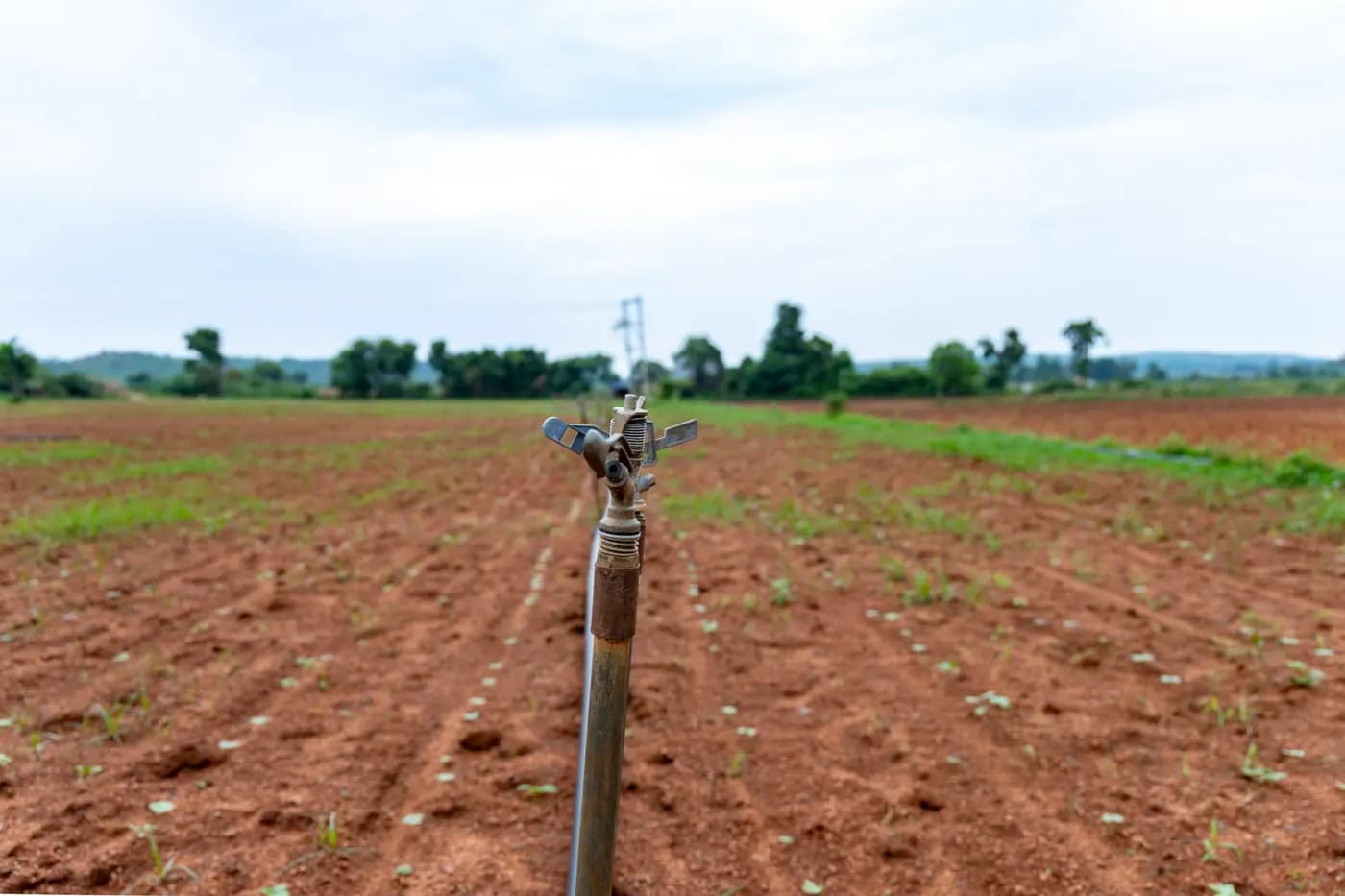
Impact sprinklers sometimes need to sit above a growing crop, but a taller riser changes more than the height of the water stream. The head, its connection, the supporting stand, the feed line and the ground must work as one documented assembly while water is flowing. If an existing stand moves or a new crop will obstruct the stream, identify the precise change required before ordering a longer tripod. The first purchase decision is whether the proposed support is approved for the selected head and site, not which dimension in a product photograph looks tallest. Impact sprinkler tripod stability depends on the head connection, riser, feed line and ground as one assembly while water is flowing.
Begin with one named irrigation position. Record the crop stage, current head and support, intended head elevation, supply route, ground condition and nearby field activity. Photograph the present assembly from the head down to the base, including fittings hidden by vegetation. A tilted spray pattern can begin at a loose head connection, a bent riser, an unsupported hose or moving legs; each calls for a different remedy. Keep the observed movement separate from the part you think will fix it.
Raise impact sprinkler heads above crop canopy safely
Stand beside the isolated installation and mark the present nozzle level and the crop height it must clear. Identify the leaves, stakes, netting, machinery or other obstructions involved. A crop that is short today may reach the stream during the next irrigation period. Conversely, raising the head for a temporary obstruction can add unnecessary handling and exposure for every later run. Record the intended elevation as a requirement to check against the selected assembly, not as permission to extend a telescoping stand to its maximum.
Look across the full rotation path, including the impact arm and connection below the head. A nozzle may clear the canopy while the arm strikes a tall stem or support wire. The crew also needs a safe approach to the isolation control and a route that does not pass beneath the operating stream. Mark nearby vehicle tracks, gates and overhead hazards. If farm work will bring people or equipment close to the position, plan that activity and irrigation as separate site states.
Note whether the position is permanent or moved between blocks. A portable assembly has to be supported at every stop, yet its support also has to be handled and transported under the maker's instructions. The portable field-position guide helps count moves and route equipment. For this support decision, keep the focus on the particular head, stand, connection and ground that will carry the operating sprinkler at each named stop.
Match the head, riser and tripod as one supported assembly
Write the assembly as four separate interfaces: the sprinkler inlet, any mating adapter or riser, the stand's sprinkler connection, and the way the stand bears on the ground. For each, capture the exact model, size and manufacturer drawing or instruction. A shared nominal diameter does not establish that two threads mate. The listed inlet may leave thread form, seal and insertion detail unresolved, while the stand may require a particular mounting piece that is not included with a bare head.
Do not solve an unknown interface by stacking whatever adapters happen to screw together. Each additional component changes the assembly's length and the way movement reaches the joint. Ask for the selected head and stand makers' permitted connection arrangement, including any allowed adapter, required seal, locking method and orientation. Confirm the actual supplied components before choosing a riser length. A photograph of a head mounted on a different brand of stand cannot answer those questions for your selected combination.
Follow the load path further down. The feed line should reach the support by a route and connection approved for the system, without pulling the elevated head sideways or inviting a vehicle to drag the line. Note whether the stand base is on firm soil, a compacted track, a slope or recently irrigated ground. These are observations for assessing the arrangement, not a formula for ballast, stake depth or concrete size. Site engineering or the equipment maker may be needed where the operating load and ground cannot be documented for the proposed setup.
Read the S50 and tripod listings as separate products
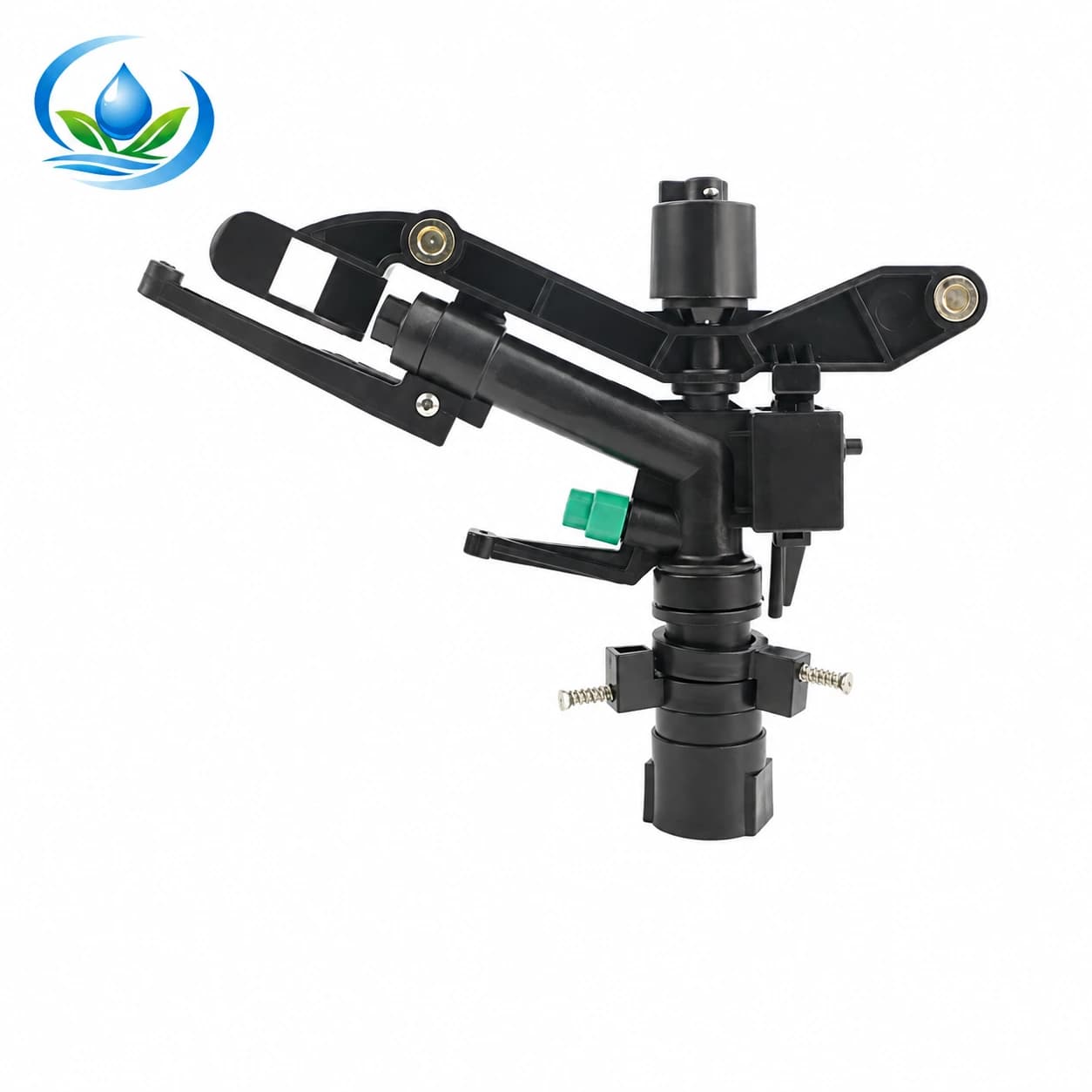
The IRRINEX-S50 agricultural impact sprinkler is listed with a 1-inch female inlet. Its stated working-pressure range is 2–5 bar, its radius range 15–17 m and its flow range 3.7–5 m³/h. These are independent ranges, not a verified combination of pressure, nozzle, flow and throw at one operating point. The 1-inch female entry does not establish a thread standard or prove that a stand's male connection is suitable.
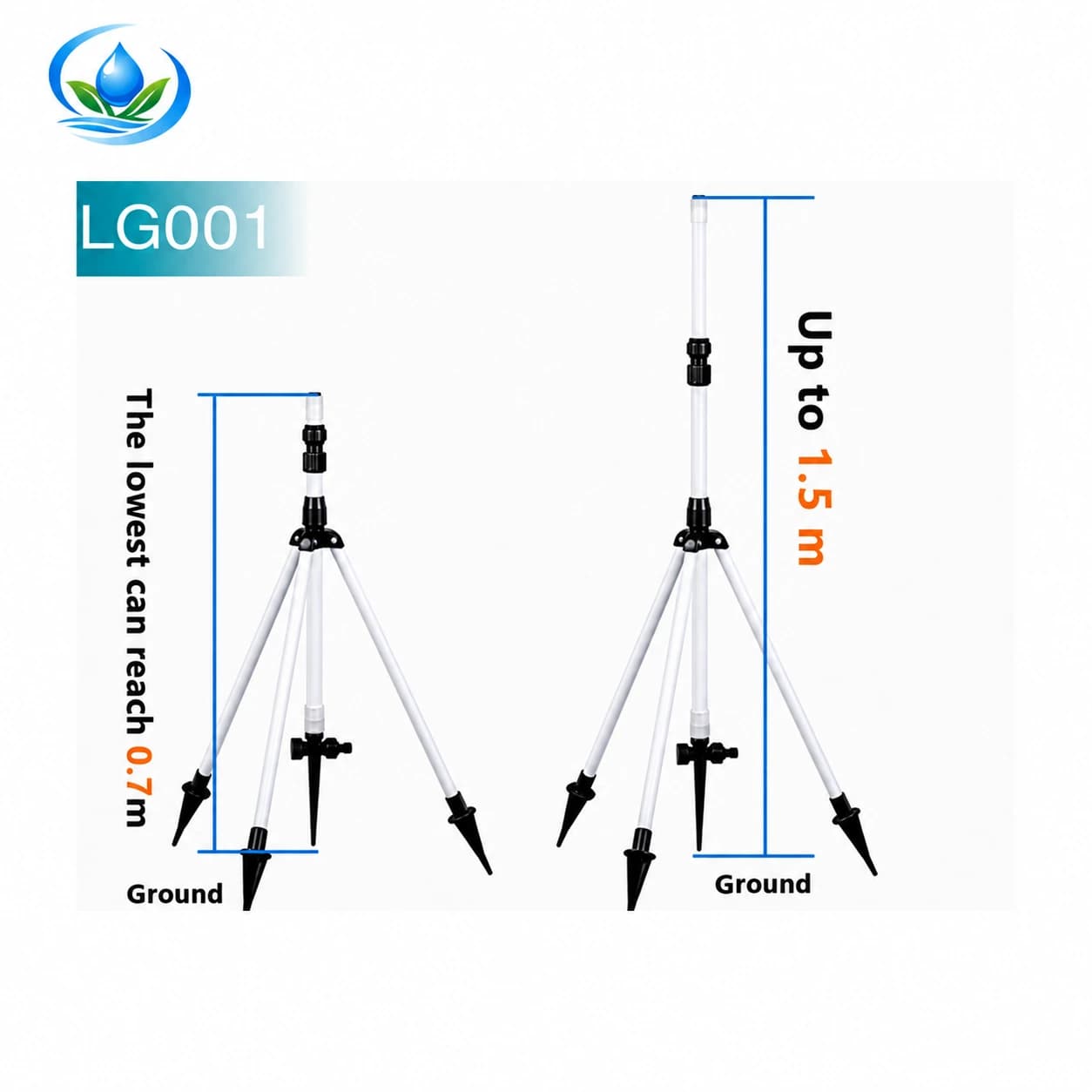
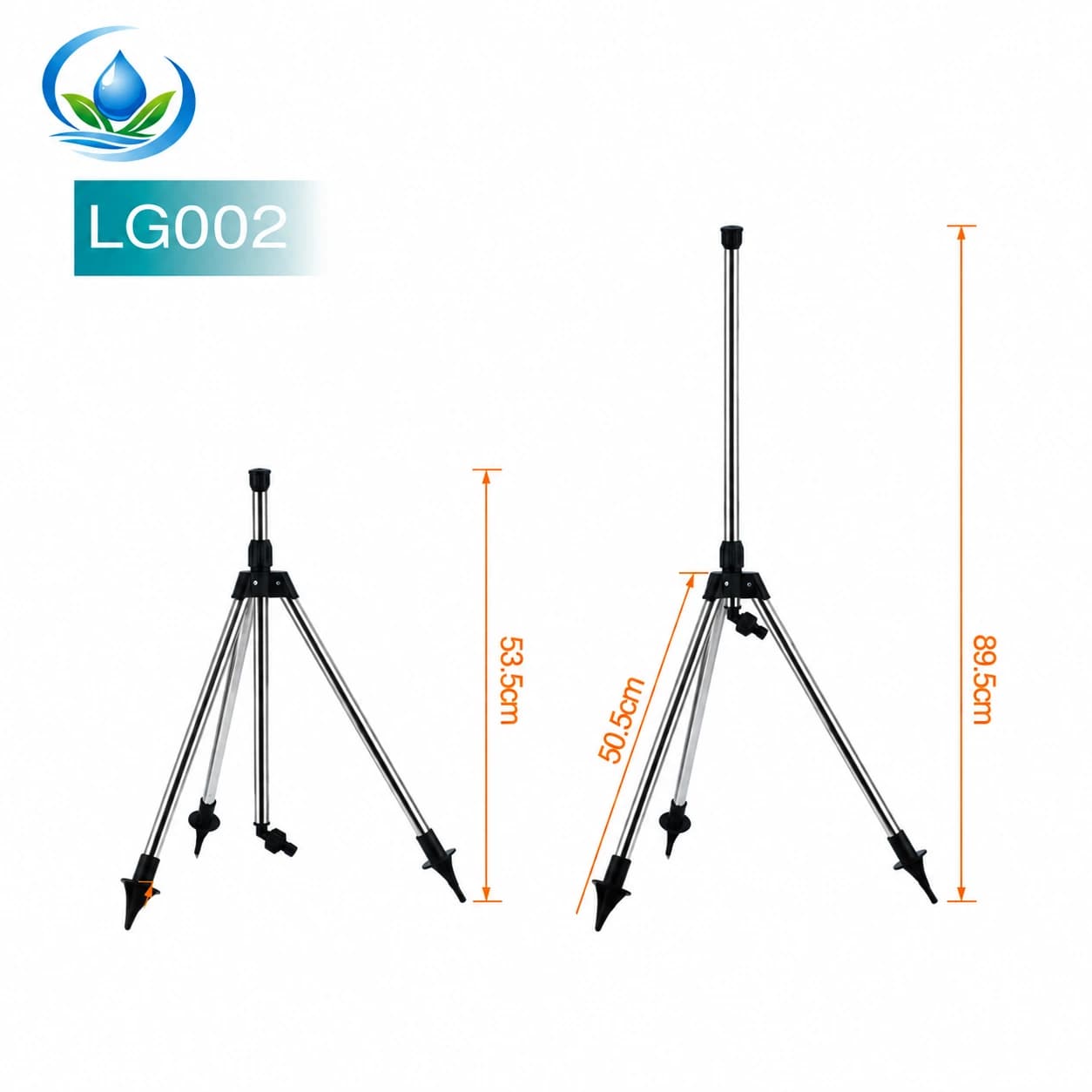
The LG001 adjustable tripod stand has a pictured 0.7–1.5 m telescoping dimension. The LG002 compact tripod stand has pictured physical extents of 53.5–89.5 cm. Those dimensions help compare the listed products' geometry. They do not state an approved mounted-head height, supported mass, reaction load, wind limit or compatibility with S50. Measure the intended installation against the exact delivered model and obtain its permissible mounting and operating instructions before choosing either stand.
Ask what is actually supplied with the selected stand: tripod, upright section, head connection, locking parts and any separate fittings. Ask the same question of the head. A package described as a stand may not include the sprinkler or adapter. Compare the model references and package contents on the product pages, then resolve any missing fit information before paying for matching parts. A shorter stand may suit a lower crop if the complete assembly is approved; a longer listed dimension alone is not an argument for a taller operating setting.
Keep hydraulic suitability separate from geometric reach. The S50's ranges do not show the operating point the supply can hold after pipe losses, elevation change and other active heads are included. Obtain the exact nozzle's pressure, discharge and radius data for the proposed running case. Raising the head can change pressure at the nozzle; it does not guarantee improved coverage over the crop. A supply that appears adequate at an open tap has not yet demonstrated flow at working pressure at the elevated sprinkler.
Ask the questions that make a stand choice verifiable
Provide the seller or manufacturer with the exact head model, nozzle configuration, intended operating point, proposed stand model and desired elevation. Include the actual inlet and mounting photographs. Ask for written confirmation of the mating standard and any approved adapter, the allowed head and pressure/flow configuration on that stand, the way height is secured, and the inspection or maintenance steps for the completed assembly. If a response only repeats a nominal diameter or an extension range, the fit question is still open.
Describe the ground and surroundings as carefully as the hardware. The same support may behave differently on compacted level soil, soft irrigated ground or a rutted headland. Note expected hose direction, slope, machinery crossings and whether the stand is unattended during operation. Ask which stabilization or placement method the exact stand instructions allow for that site. Avoid copying a ballast weight, stake pattern, tie-down or concrete detail from a different sprinkler system; those measures need the selected equipment and actual operating load.
For a field with several locations, make one row per position: head, nozzle, stand, intended elevation, ground, feed route, active-head count and outstanding approval. Count the stands needed for simultaneous use separately from the locations served by a movable stand. A single movable support may serve multiple positions in sequence, while a fixed riser remains at one location. The running-flow sprinkler worksheet helps keep the simultaneously operating head count distinct from the number of planned locations.
If the task is replacing an entire damaged sprinkler rather than supporting the existing one, use the impact-head replacement checklist to collect head identity and inlet data first. If the difficulty is a paired nozzle rather than a moving riser, the agricultural nozzle identification guide addresses that separate repair. Buying a new stand does not correct an unverified head, incorrect outlet or under-supplied irrigation group.
Separate a support symptom from a water-delivery symptom
Before changing hardware, record what moves and when. Does the base shift after the soil becomes wet? Does the upright flex while the legs stay put? Does the head turn relative to the riser? Does a hose pull when the pump starts or another valve opens? Observe from a safe place without touching the pressurized assembly. Video taken from outside the spray area can help show the sequence, but do not move closer to capture it if the stand is unstable.
A stream that falls short without visible support movement may reflect supply pressure, nozzle condition or a changed active group. A stand that sways while throw remains long is still an unacceptable support question. Do not increase pump pressure to try to make an elevated head clear the crop, and do not assume a tighter fitting corrects movement at the base. Keep the observed symptoms, measured operating condition and physical inspection results as separate lines in the decision record.
The field catch-test guide explains how to compare collected water after the installation is stable and the operating configuration is confirmed. A single farthest droplet is not a measure of even application. If raising a head or replacing a stand changes the spray pattern, record the selected nozzle, running pressure, support height and nearby overlap during that trial. Do not convert a listed radius into a universal stand height or sprinkler spacing.
Plan a safe first trial for the confirmed assembly
Follow the installed system and exact head and stand instructions for shutdown, isolation, pressure release, assembly and restart. Before altering a connection or stand setting, prevent automatic restart where applicable and verify that the relevant section is depressurized by its approved method. Never try to hold a moving pressurized stand upright, reach into the impact arm, loosen a live connection or add an improvised brace while water is flowing.
Inspect the completed, unpressurized installation from top to base. Confirm the delivered model and approved connection, the height setting, the locking features, hose route and ground contact against the documented arrangement. Keep people outside the stream and any area the assembly could reach if it moves. Start the first run using the equipment's procedure while an observer watches from a safe location. Stop through the approved control if the base migrates, the riser tilts, a joint leaks or the stream reaches an unacceptable area.
Record the operating pressure at a named measurement point, the active heads, nozzle identity, support position and observed movement. A calm first run is useful evidence for that condition, not a certificate for all wind, soil moisture and traffic conditions. Repeat the relevant checks when the stand is moved, the crop height changes, a hose route changes or the active group changes. For headland or pasture traffic, the field access and sprinkler layout guide helps record gates and travel routes separately from the stand's mechanical fit.
Turn the evidence into the right purchase
Make the order line describe the exact head, the exact stand and any approved connection parts individually. Record whether each selected listing includes the necessary pieces or sells them separately. Check its present sale unit, price, availability and delivery on the product page. If a direct purchase option is unavailable, ask Store support how to obtain that exact model; if the mating or supported operating case remains unresolved, seek written compatibility information before ordering the rest of the assembly.
The purchase is ready when you can identify the chosen head and nozzle, a documented running case, a permitted stand and height arrangement, a confirmed mating connection, and a support method suitable for the actual ground. Keep the approved drawings and first-run record with the equipment. Then a future crop change, move or repair can be compared with a known assembly instead of judged by the tallest dimension or a photograph of another installation.
Before you order
Compare this guide with the specifications for your exact product, selected option, water supply and field conditions. Your equipment requirements take priority over a general example.
Compare irrigation products