Micro Sprinkler: Choose Hanging or Standing 251T Heads
Compare 251TDG085 and 251TDC085 heads, catalogue test conditions, connections and assembly contents before requesting the right quantity.
Published by IrriNex Store
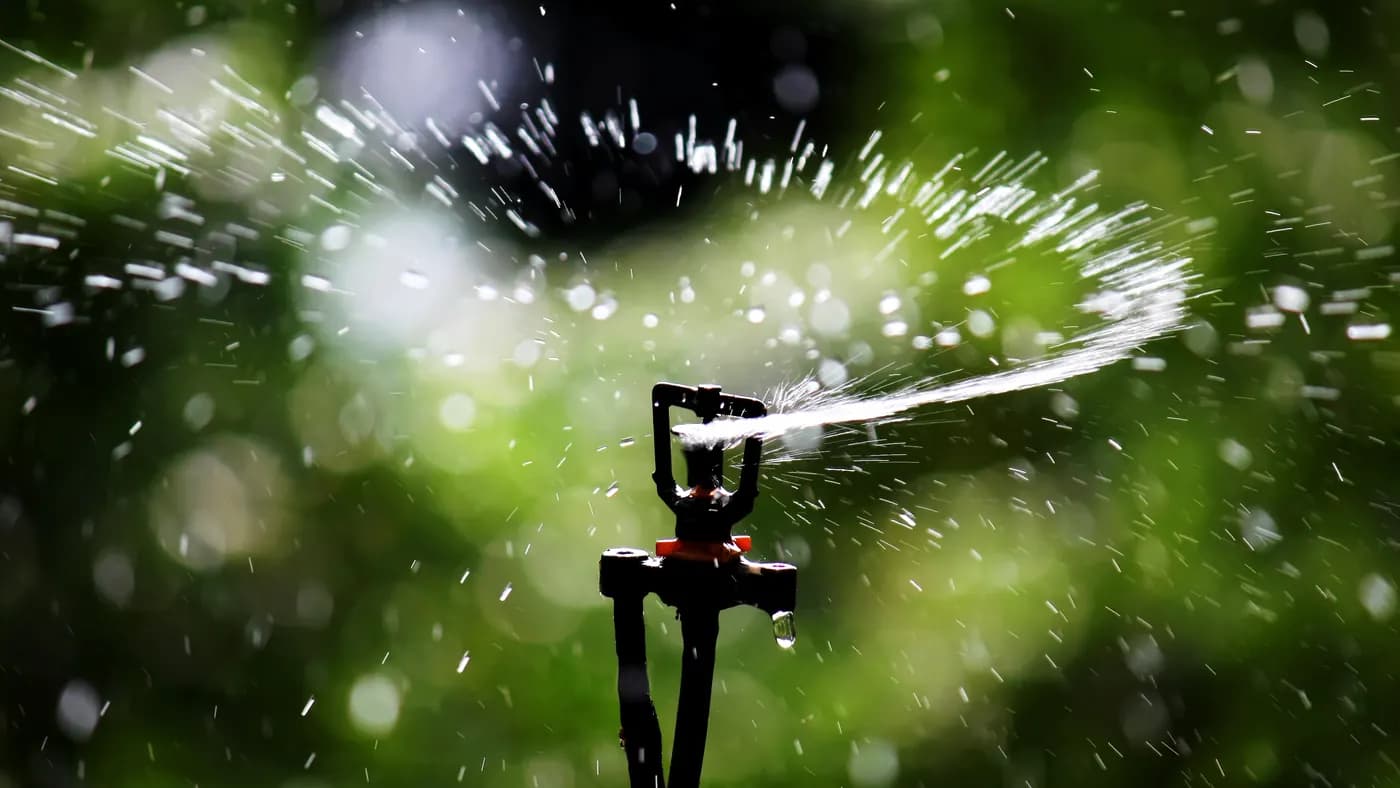
Choosing a micro sprinkler from the 251T range starts with the mounting position and the exact model code. The hanging 251TDG085 and standing 251TDC085 both list a 0.85 mm nozzle, 40 L/h flow, 2.0 bar working pressure and a 3 m spraying radius. Those shared numbers do not make the heads interchangeable. Buy the orientation that matches the intended installation, then confirm the connection, support, supplied pieces and operating conditions before committing to a larger quantity.
This guide compares the two listed heads for growers buying replacement parts or preparing a small trial. It does not turn a catalogue radius into a planting-bed layout. The aim is a clear order: an identifiable head, a compatible mounting arrangement and a recorded list of everything needed to connect it.
Compare hanging and standing 251T micro-sprinkler models
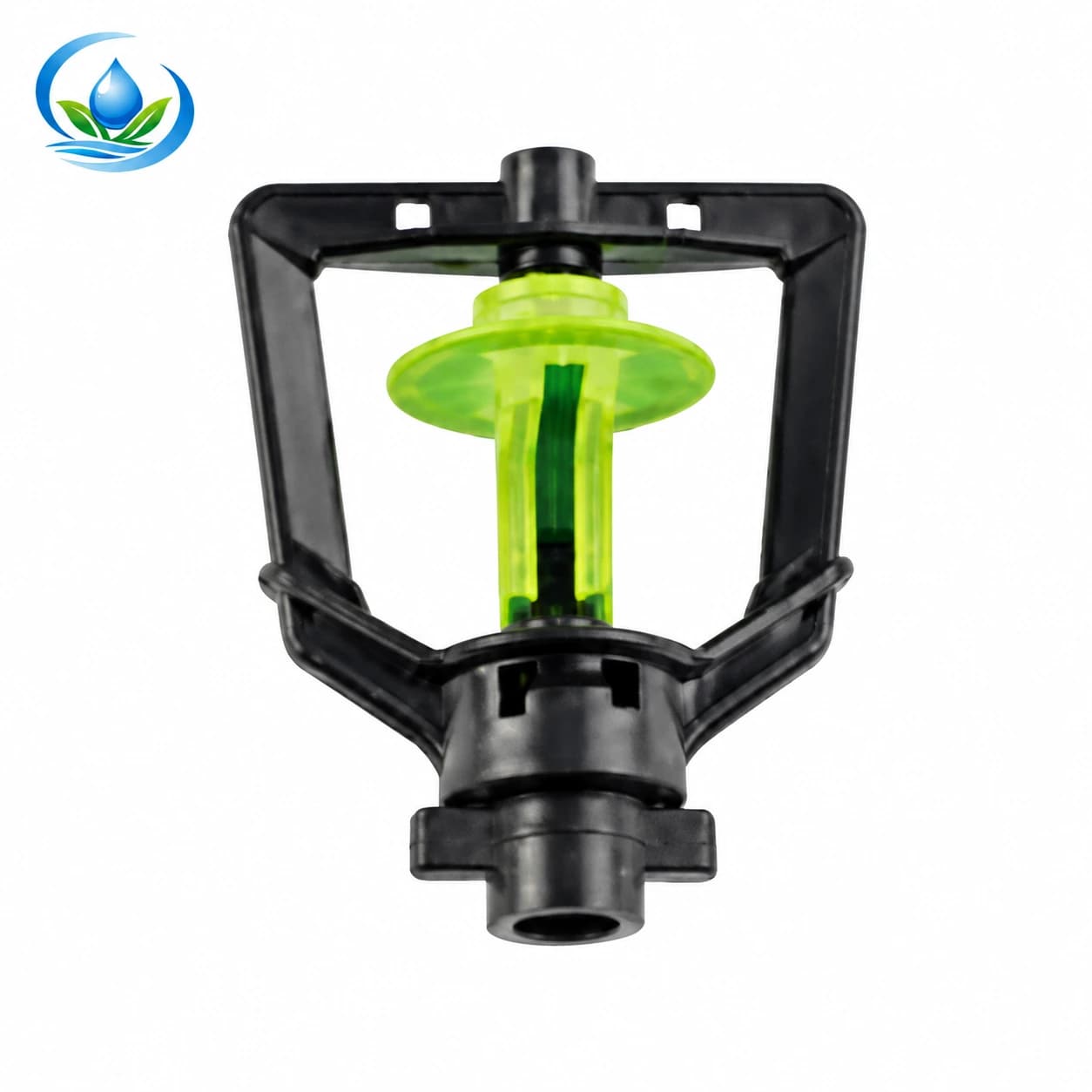
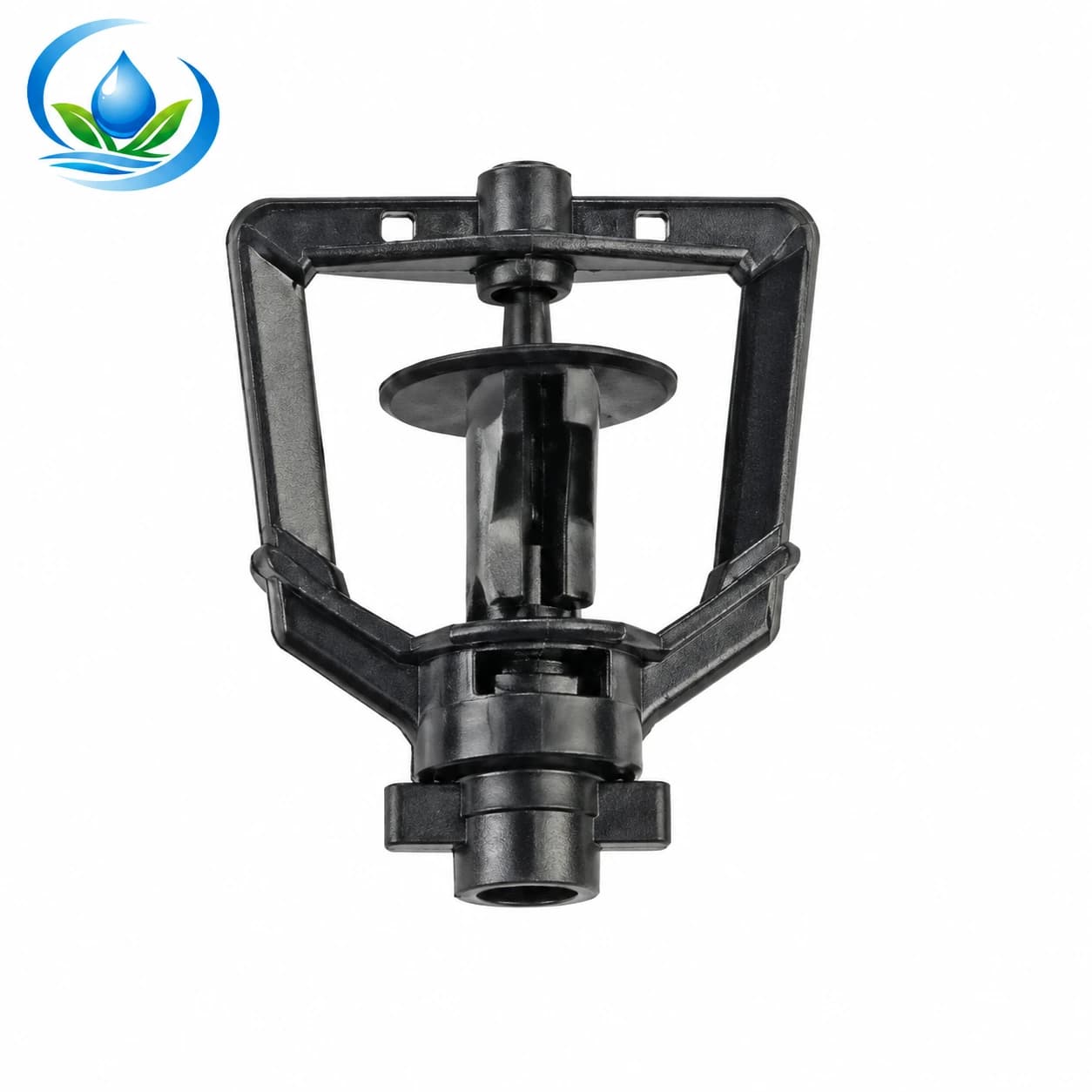
The 251TDG085 hanging rotary micro sprinkler and 251TDC085 standing rotary micro sprinkler are separate catalogue entries. Keep their complete codes in any enquiry or replacement list. Writing only “251T, 0.85 mm” leaves out the distinction that matters most for mounting. A 251T micro sprinkler mounting choice should keep the hanging or standing code beside the planned support position before quantity is counted.
| Item to compare | 251TDG085 | 251TDC085 |
|---|---|---|
| Listed mounting type | Hanging | Standing |
| Nozzle diameter | 0.85 mm | 0.85 mm |
| Listed flow | 40 L/h | 40 L/h |
| Listed working pressure | 2.0 bar | 2.0 bar |
| Listed spraying radius | 3 m | 3 m |
| Connection and package contents | Confirm for this code | Confirm for this code |
The catalogue measurement condition is 0.2 MPa, with the sprinkler 2 m above the ground, in windless conditions. Since 0.2 MPa equals 2.0 bar, these pressure values describe the same reference point. Retain the height and wind qualification alongside the performance figures whenever comparing an alternative.
Choose the 251T mounting orientation around the work area
Consider a protected crop bed with an existing overhead support. A hanging head may fit that arrangement, but the support, connecting tube and head attachment still need checking. Look at how staff move trays, tie plants and reach the bed. A suspension point that is convenient today may become obstructed when the crop is taller or when equipment passes underneath.
For a standing arrangement, consider where the support can remain stable and accessible. Pots are moved, beds are cultivated and trolley routes change. The decision includes the available space for the head and its supply tube, not simply whether a stake can be pushed into the ground. Ask what support the particular head requires before adding one to the order.
Do not turn a standing head upside down to avoid changing the support, or assume the hanging model can be used upright. The two product names identify intended orientations. If an existing installation needs a different arrangement, obtain confirmation for the exact model before buying replacement heads.
Separate nozzle size from connection size
The listed 0.85 mm dimension identifies the nozzle diameter. It is not the outside diameter of a connecting tube, the size of a thread or a mounting-hole specification. An order described as “the 0.85 mm connector” is therefore ambiguous and can lead to the wrong part arriving.
For a replacement, photograph the complete existing assembly and a close view of its connection. Record any code on the head, which part connects to the supply and whether an adapter remains attached when the head is removed. Measure the actual mating parts where possible. Keep those measurements separate from the nozzle figure in your notes.
The store's guide to irrigation fittings and branches can help organise a connection list. It cannot establish an undocumented connection on either 251T model. Request the matching interface specification instead of choosing an adapter from a photograph or a visually similar head.
Read the 3 m radius with its test conditions
A listed 3 m spraying radius is not a recommended 3 m installation spacing, and doubling it does not establish a 6 m head-to-head spacing. Radius describes reach under the stated catalogue condition. It does not, by itself, describe the distribution of water across every point inside that reach.
Your mounting height, surrounding crop and exposure to air movement may differ from the reference of 2 m above ground in windless conditions. A bed edge, hanging tube or nearby foliage can also change what reaches the intended area. These differences should be checked in a representative trial rather than hidden inside a coverage assumption.
Keep the purchase decision separate from the final placement decision. You can identify a suitable model and request a sample while the layout remains under review. Buying a full field quantity from radius alone risks leaving both spare heads and unserved areas, even when every head has the correct catalogue code.
Confirm pressure where the heads will operate
The two selected entries list 2.0 bar working pressure. That figure does not provide a complete allowable pressure range or prove pressure-compensating behaviour. It also does not mean that a pump gauge reading of 2.0 bar guarantees the same pressure at each operating head.
When discussing compatibility, state where pressure was measured and which outlets were running. A reading taken with the outlet closed describes a different condition from a reading with the planned heads delivering water. Include the location of the filter and any control valve so the person reviewing the enquiry understands the supply arrangement.
For the questions to record, use the pressure and regulator buying checklist. Its general measurement principles help organise an enquiry, but drip-specific settings in another article are not settings for these sprinklers. If the required operating range is unclear, request model-specific information before selecting a regulator.
Count simultaneous heads separately from spare stock
The listed flow provides a useful preliminary quantity check. At the stated reference condition, 12 heads at 40 L/h represent 480 L/h of nominal sprinkler demand; 24 represent 960 L/h. These are arithmetic examples for an enquiry, not proof that a particular pipe, pump or block can maintain the required operating pressure.
Record how many heads run together, how many belong to other separately operated areas and how many will be kept as replacements. Spare heads in a box do not add operating demand. Conversely, replacing a point outlet with a sprinkler can change the demand substantially, so the old outlet count alone is not a useful capacity check.
The flow-rate purchasing guide explains why outlet quantities need units and an operating schedule. Apply that record-keeping approach here, while retaining the 251T figures and their conditions rather than borrowing another emitter's flow value.
Ask what one order actually contains
A product photograph may show a head with tubing, a support or an adapter. That appearance does not establish the contents of the supplied package. Ask whether the order unit is one head, an assembled outlet or a stated group of pieces. Have the answer tied to 251TDG085 or 251TDC085, including the selected nozzle.
- Confirm the exact head code and nozzle size.
- Identify the connection at the head and the connection to the supply line.
- List support, tube, adapter and retaining pieces separately.
- Mark each item as included, separately required or retained from the existing installation.
- Confirm the quantity represented by the quoted order unit.
This short bill of materials prevents a common receiving problem: the correct head arrives, but there is no confirmed way to mount or connect it. It also prevents buying supports twice when usable, compatible pieces are already present.
Check water preparation without guessing a filter rating
Before choosing additional components, describe the water source and existing filtration. Record the filter model, element rating if known, and how it is maintained. A nozzle dimension by itself is not sufficient evidence for prescribing a particular mesh or micron rating for these models.
The irrigation filtration buying guide helps distinguish source-water questions from filter-connection questions. Use it to prepare the enquiry, then request the applicable filtration requirement for the selected head. If that information is unavailable, leave the requirement open instead of filling it with a familiar number from another product.
Keep flushing and cleaning arrangements in the parts list as well. Access to the line end and the ability to isolate a small area affect how practical a replacement will be. They should be considered before the new heads are installed throughout the work area.
Use a small trial to confirm the order
A useful trial represents the intended mounting arrangement, crop surroundings and operating group. Record the head code, nozzle, support position, pressure measurement location and number of outlets running. Photograph the installed connection as well as the resulting wetted area. These records are more useful for a repeat order than an unlabelled picture of water spraying.
Observe whether water reaches the intended containers or bed surfaces and whether foliage, supports or routine work obstruct the spray. Keep observations separate from catalogue claims. A satisfactory result in one sheltered position does not establish the same result across an exposed site.
If the result is unsuitable, check the supplied identity and installation details before changing the order quantity. Do not enlarge a nozzle, reverse the head or add an unverified component as a substitute for confirming compatibility. Request clarification with the trial record attached.
Receiving checks and later replacements
On arrival, compare the supplied labels and counted pieces with the confirmed order. Separate hanging and standing models before assembly, even when their nozzle sizes match. Check for obvious damage and identify any supplied adapters before discarding packaging. If a code or part differs, resolve it before distributing the heads around the site.
For future replacements, keep one record containing the complete head code, confirmed connection, support arrangement and included components. Note any separate parts that were required. A purchase history saying only “micro sprinkler” forces the next buyer to repeat those checks and increases the chance of mixing orientations.
Questions to settle before requesting availability
Are these pressure-compensating or anti-drip heads? The verified entries do not establish either feature. Do not add those descriptions to an order or assume a check valve is included. A need for pressure compensation or drain prevention requires separate, model-specific confirmation.
Can either model be ordered as a frost-protection system? The available model data do not establish that application. Spraying water and having a stated radius are not evidence of a complete frost-protection design.
Are the products ready for immediate checkout? Both model pages are published, but immediate purchasing is not currently enabled. Use the pages to identify the requested model and ask about availability, order contents and the next purchase step. Publication is not a stock or dispatch promise.
Send a concise request with the chosen code, intended orientation, quantity, retained parts and unresolved connection details. Add the catalogue reference condition and your trial observations when available. That gives the store a specific purchase to check and gives you a dependable record for the next replacement.
Before you order
Compare this guide with the specifications for your exact product, selected option, water supply and field conditions. Your equipment requirements take priority over a general example.
Compare irrigation products