Traveling Gun Irrigation System: Check Replacement Head Fit Before Ordering
Replacing a traveling gun? Check the existing cart mount, reel duty and complete moving pass before ordering a new head.
Published by IrriNex Store
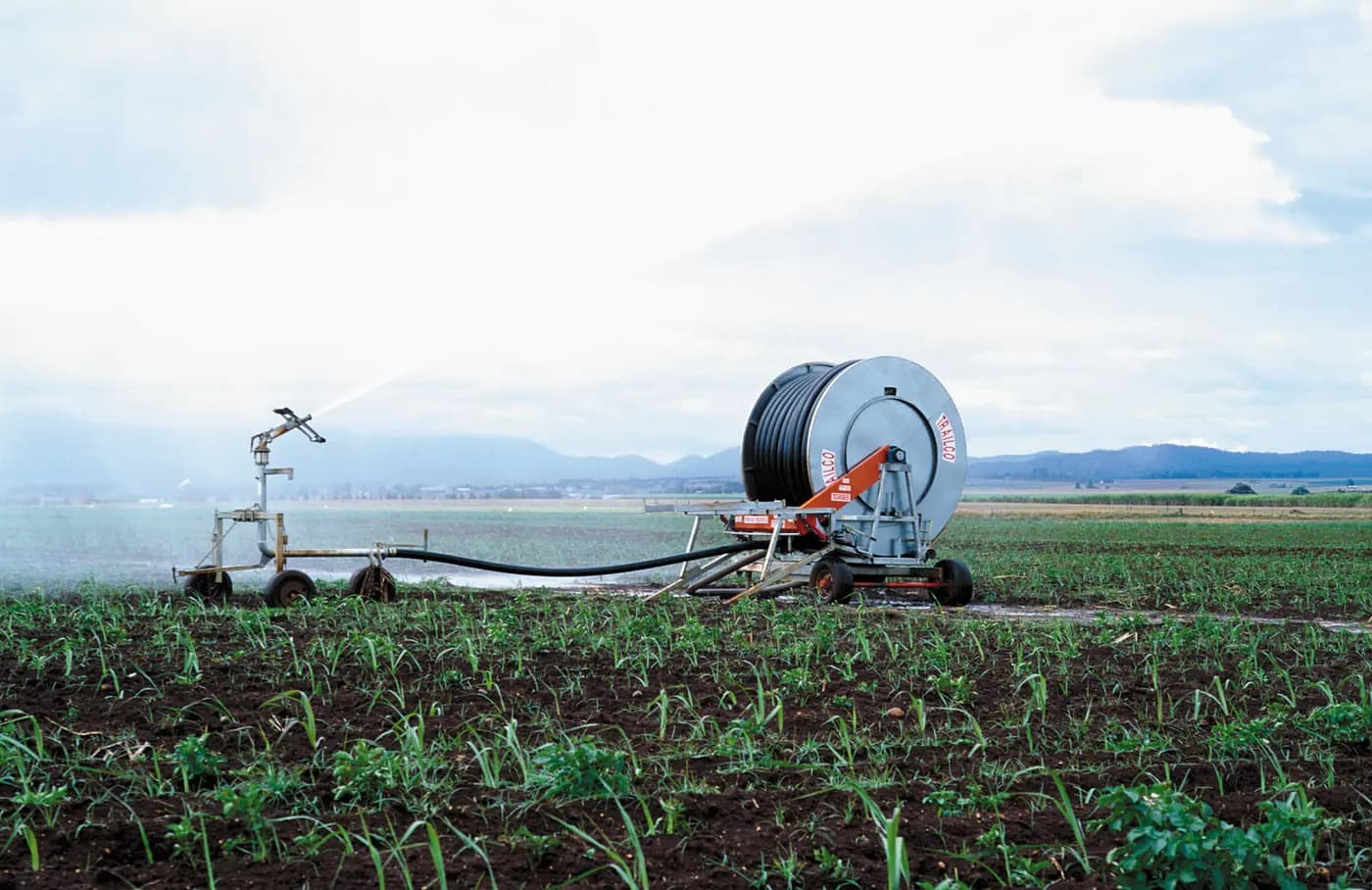
A traveling gun irrigation system keeps a sprinkler moving while a reel draws its cart along a field lane. If the gun must be replaced, the new head has to fit the existing cart and water-delivery arrangement, not just resemble the old head in a product photograph. Record the machine and gun already in service before comparing replacement models. The job is to restore a documented operating arrangement, then observe it over a complete pull. Keep the old head marking and the cart connection on the same comparison sheet; a similar gun photograph cannot establish physical fit during a moving pull. Traveling gun replacement head compatibility covers the cart connection, moving clearance and documented operating duty together.
Begin with the exact reason for replacement. A damaged body, worn nozzle, unreliable rotation, leaking joint and bent cart connection are different findings. If the machine maker specifies a replaceable nozzle or service part for the present gun, compare that repair with a complete head. If the cart or reel has a fault, another gun will not repair it. An existing traveler is assumed throughout this guide; a separate reel, cart, drive, hose and compatible mounting are still needed to build a complete moving machine.
Will the replacement rain gun fit the existing traveler cart?
Find the reel and gun-cart model plates and record the maker, model, serial reference and any configuration number. Record the present gun model, inlet connection, nozzle identification and supported operating settings from its own manual or the machine's records. Keep photographs of the gun from both sides, its inlet and cart connection, the hose-to-cart joint and the route through which the cart moves. An old invoice is useful, but inspect the installed equipment because a previous owner may have changed the head or adapter.
Make two lists. The first names parts that will stay: reel, cart, drive, water hose, cart riser or mounting, supply connection and any machine controls. The second names the parts proposed for replacement: bare gun, nozzle, adapter, gasket, support piece or an approved assembly. A quote for a “new sprinkler” cannot resolve fit until the seller knows which of those parts the line includes. Photograph the relevant cart plate or mounting drawing beside the proposed replacement drawing, rather than measuring a distant image on a screen.
Distinguish a hose-reel traveler from a sprinkler that is isolated and carried between fixed stops. The portable rain-gun field guide deals with stationary operating positions and manual moves. On a traveler, the cart travels while water is being applied. Its head must remain supported and correctly oriented through that movement, and the reel's actual operating requirements still apply after a head change.
Check cart connection and moving head clearance together
Document the old gun's connection geometry with the machine isolated and depressurized under its instructions. Record the nominal size, mating type, bolt pattern or thread specification where documented, gasket or seal, adapter, insertion clearance and the height and orientation of the mounted head. A nominal “two-inch inlet” does not prove a mating flange, thread form or bolt pattern. It also does not show whether the installed cart riser will support a different head's mass and operating forces.
Look around the entire moving gun, not only at its connection. Its rotation mechanism and stream need clearance from cart frame members, hose guide, wheels, crops, roadside objects and the reel at the end of the pull. Record the permitted cart-mounting method, head orientation and any restriction on its moving mass from the actual traveler and gun instructions. A heavier head or a longer projection can change the load on a cart even when an adapter can be bolted in place. Leave that compatibility decision to the equipment makers or a qualified installer with the drawings.
The riser and tripod support guide explains why an inlet and a support are separate fit questions for a stationary assembly. Apply the same discipline to the existing cart, but use its specific mount and dynamic-use limits. Do not assume a field tripod, generic riser or an improvised adapter is suitable for a moving cart. If the present head is no longer identified, obtain a cart drawing and its approved head options before choosing from retail listings.
Keep the gun and traveler operating points together
Retrieve the previous acceptable run record if one exists. It should identify the old nozzle and gun, pressure at a named measurement point, flow, active water source, reel or cart model, hose arrangement and travel setting. Record the lane used and the crop and soil observations. If that record is unavailable, measure the existing arrangement through an approved operating test before treating it as a baseline. A pump gauge by itself does not establish the pressure at a moving gun.
The replacement head changes the hydraulic duty if its selected nozzle draws a different flow at a different working pressure. The reel's drive may also take water or pressure according to the machine design, and the water path includes the mainline, connections and traveler hose. Check the machine maker's allowed operating range and obtain the proposed gun's paired nozzle, pressure, flow and throw data. A minimum from one product range and a maximum from another are not an operating point. The running-flow sprinkler worksheet helps keep actual demand separate from the number of planned positions; for this machine, include the reel's documented demand as well.
A head with a longer listed radius can ask for more water than the source and reel can deliver together. A smaller head can change the pattern and lane depth even when it seems easier to supply. Do not buy on the assumption that a pump adjustment, a slower reel or a larger nozzle will make a mismatch disappear. The existing machine instructions and the selected gun's performance data must support the combined running case. If supply data are incomplete, obtain measurements at the specified points during an approved run before committing to the head.
Compare two listed guns without assuming traveler fit
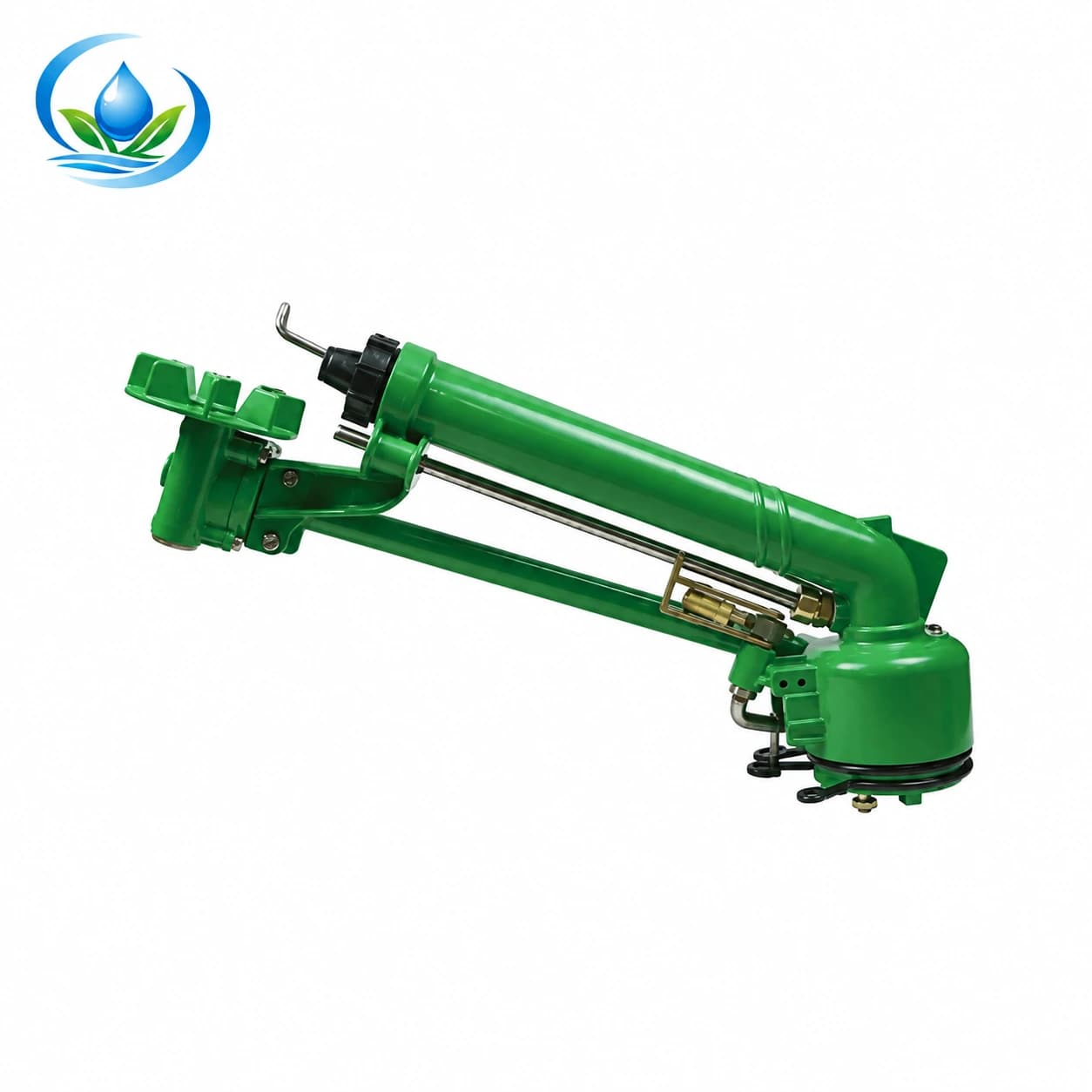
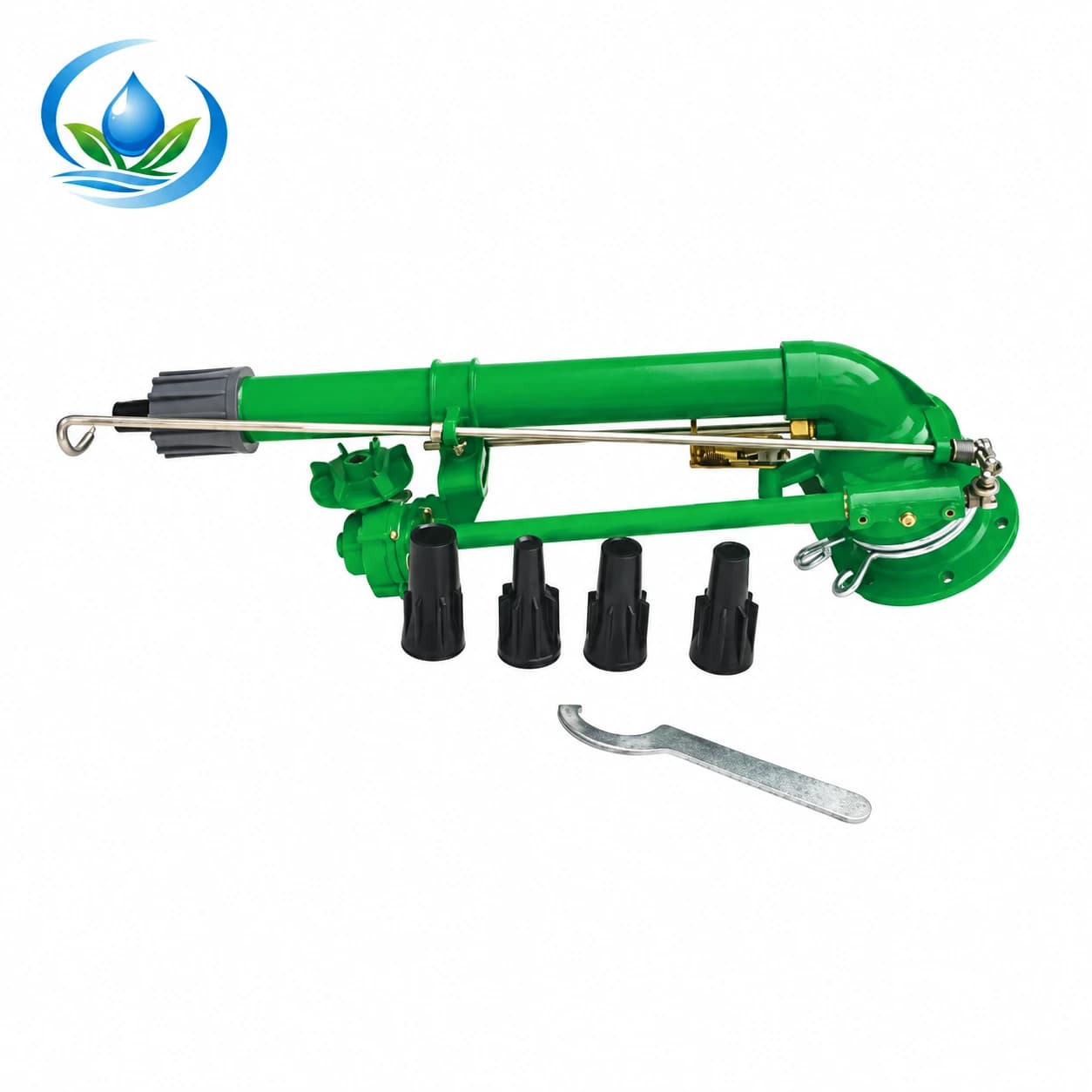
The IrriNex P40 metal rain gun and IrriNex P50 metal rain gun are published Store product families a buyer can investigate. The original catalogue lists P40 as IRRINEX-P40 with a nominal 1.5-inch inlet, a 12 × 20 mm nozzle entry, 2–5 bar working pressure, 9.5–37 m³/h flow and 22–41 m radius. It lists P50 as IRRINEX-P50 with a nominal 2-inch inlet, a 16 × 26 mm nozzle entry, 2–7 bar, 17.8–75 m³/h and 26–53 m. Their Store listings describe flanged inlets; the exact mating drawing and supplied flange details still need confirmation for the selected item.
These figures describe separate catalogue ranges, not a tested pair of pressure, flow and radius for one supplied nozzle. The multiplication signs in the nozzle entries do not establish the number of nozzles in the box or interchangeability with another gun. Neither product listing establishes approval for a specific traveler reel, cart, riser or end-of-pull clearance. Match the exact proposed model, nozzle and mount to the installed machine before putting either one on an order.
Use a simple comparison record with columns for existing gun, P40 and P50. Enter the actual connection drawing, supplied mounting pieces, nozzle arrangement, documented pressure-flow point, head mass and cart approval. Mark an absent field “unconfirmed” rather than inferring it from a nominal size or photo. If only one candidate has complete evidence for the cart and operating case, that answer is more useful than comparing their maximum throws. If neither does, the purchase remains unresolved even though both heads appear in the catalog.
Check the moving spray pattern and end of the pull
Draw the lane that the cart actually follows. Mark its start, finish, hose path, field boundary, access route and any area that must remain dry. Record the existing gun's full- or part-circle setting only if its actual model supports that setting. Ask how the proposed head and selected nozzle produce the required pattern while the cart moves, and whether the cart remains clear of the wetted ground needed for traction and guidance. A fixed-position radius drawn as a circle does not represent a moving pass.
Part-circle operation may help keep water away from a boundary or the cart's forward path, but it changes the application pattern. Do not transfer an arc mechanism, adjustment direction or setting from a Nelson or Rain Bird manual to an IrriNex head. The field-edge arc guide addresses the separate no-wet boundary decision; here the selected arc must also fit a moving machine and its lane. Obtain the exact model's permitted arc and adjustment instructions before ordering a head for that task.
Check what happens at the start and finish of the travel. Some machines may continue spraying after the cart stops; others have a documented stop or shutoff option. Confirm the installed machine's actual end state and how it affects water left near the reel. Do not assume every traveler automatically closes its sprinkler. A replacement head must not interfere with the cart's approach, its travel limit or any fitted control. If a new gun changes flow or sweep, have the full lane and end area reviewed rather than copying last season's travel setting.
Observe a supported trial before repeating the purchase
With the machine isolated and the pressure released by its approved procedure, the installer can verify the delivered model, connection, seals, mount and clearances against the accepted drawing. The planned line-work shutdown guide helps identify the water source, automatic restart and residual-pressure questions, while the actual reel and gun manuals govern this equipment. Never loosen a pressurized connection, reach into a moving gun or cart, or stand in the travel path to judge spray reach.
Run the first accepted configuration only under a planned, supervised procedure. Observe from safe locations at the beginning, along the lane and near the finish. Record pressure and flow at the specified measurement points, nozzle identity, cart travel behavior, leaks, gun rotation, boundary wetting and the actual end state. If a support moves, the stream reaches a prohibited area or a connection leaks, stop through the prescribed control and have the cause resolved before the next pass. One start-up photograph is not evidence of a sound complete pull.
Assess water delivered across the lane, not just the farthest visible droplet. The field catch-test guide shows why named sample locations and operating conditions matter. A moving traveler needs a test design that includes travel speed and adjacent passes; a stationary grid method cannot simply be copied. Oregon State University's irrigation inspection guide identifies the reel hose, gun and nozzle, cart and travel-speed mechanism as separate things to inspect. Use a suitable machine-specific evaluation to decide whether the replacement restores acceptable application.
Order the identified replacement, not an assumed complete system
List the existing reel and cart identifiers, approved replacement gun and exact nozzle, mating connection, any maker-approved adapter or gasket, and the operating case used to accept the choice. Show which parts are included with the selected product and which are separate. Confirm the current option, price, sale unit, availability and delivery on each Store product page. If a head has no direct purchase option, ask Store support how to order that exact model before buying related parts.
Keep the cart drawing, gun data and completed trial record with the order. If only a worn nozzle is being replaced, procure the correct service part for the identified existing head instead of purchasing a different whole gun on appearance alone. If the reel or cart also needs replacement, this is a machine-level selection, not merely an outlet swap. A sound purchase identifies the head that physically fits, operates inside the documented traveler and supply range, and produces an acceptable moving pass on the actual field.
Before you order
Compare this guide with the specifications for your exact product, selected option, water supply and field conditions. Your equipment requirements take priority over a general example.
Compare irrigation products