Types of Micro Sprinklers: Check Insect Protection Between Watering Runs
Check whether a micro-sprinkler protects its outlet during idle periods, then compare exact FC and PCS options before replacing a recurring problem head.
Published by IrriNex Store
Types of micro sprinklers differ in what happens at the outlet after the water stops. In a nursery or orchard, a head may sit idle between runs while insects or loose field debris can reach an exposed opening. When the same position needs repeated attention after idle periods, compare the exact head's documented insect-protection feature before buying another replacement. The useful decision concerns the hardware at rest and its next start, not insects on the crop. Micro sprinkler insect protection concerns the outlet after shutdown, whereas pressure compensation addresses discharge while the selected head operates.
First identify the installed model and observe what changed. A stalled rotor, a leaf crossing the stream and grit carried in the supply can all produce weak or uneven spray, yet an idle-outlet protection feature addresses only a particular entry path. The stalled-rotor field check deals with a head that should move but does not. The orchard clearance guide deals with water intercepted by growing vegetation. Keep those diagnoses separate before deciding which feature to purchase.
Compare idle-head insect protection in micro sprinkler irrigation
Mark one affected head and one working head of the same model, nozzle and mounting arrangement if available. Record their exact product codes, the crop block, supply branch, filter and last time they ran normally. Observe both during their ordinary operating group from a safe place: does the suspect head deliver a changed pattern immediately at startup, only after running for a while, or not at all? Note whether neighbouring outlets show the same change. Several weak heads at once point toward the shared feed or filtration before a protective head is selected.
After normal shutdown, inspect the outside of the suspect assembly without opening it. Photograph the nozzle area and any visible insect activity, dust, soil or loose crop material. A photograph of an insect beside a head does not prove it entered the water passage. Conversely, a clear exterior does not exclude a hidden obstruction. Keep the observation as evidence to discuss with the maker's instructions, not as a reason to put a probe into the nozzle.
Distinguish material entering from outside while the head is idle from solids arriving inside the water line during operation. An outlet-side barrier or closure can address the first route if its design and conditions are documented. Upstream filtration and line cleaning address the second route. Neither feature replaces the other. The water-source filtration guide helps describe the supply and retained solids before choosing a filter; its general advice does not supply a universal mesh rating for these particular heads.
Separate anti-insect closure from pressure compensation
An “anti-insect” name is a reason to request an exact model explanation, not a complete description of its mechanism. Ask which part changes position when flow stops, which opening is shielded, whether a separate barrier is supplied, and what its normal resting state should look like. Confirm the operating pressure and orientation needed for that mechanism to move as designed. A closure that acts on one named model cannot be presumed on another head merely because both are sold for micro-sprinkler use.
Keep the protection question apart from ordinary nozzle service. Ask how the maker permits inspection after a long idle interval and which parts may be removed for approved cleaning. Confirm whether an exact spare is available or whether the whole head is the replacement unit. Do not attach an improvised screen, glue a cap over the outlet, drill an opening or trim a movable piece in an attempt to reproduce a protected design. Any added restriction can change the spray and can conceal the original fault.
The photo and label of a head do not show every internal motion at shutdown. Request an instruction drawing or a short model-specific demonstration of the idle and running positions when the mechanism is important to the purchase. Keep its model code with the field record so the next crew does not describe a different head as having the same closure. The comparison is about a verifiable physical feature and its permitted inspection, not a claim that the crop will have fewer insect pests.
Separate insect protection, filtration and pressure compensation
Insect protection concerns outside entry into the outlet at rest. Filtration concerns material carried by the supplied water while the system operates. Pressure compensation concerns how a specified outlet maintains its nominal discharge as inlet pressure changes within its documented range. These are three different questions for the buyer. A head may claim one, more than one or none; the name of one feature does not establish the other two.
If spray weakens at several heads together, record pressure while the normal group operates, where the gauge is located and the filter condition. A single static reading at a closed source does not tell you what reaches the far head. If pressure varies across the block, a documented pressure-compensated option may be relevant, but the complete source, feed and zone still need checking. A PC label cannot clear a clogged passage or stop insects on foliage.
Compare the first normal startup after an idle period with later delivery from the same head. A brief irregular start may have different causes from a pattern that remains distorted throughout the run. Record whether the intended soil or containers actually receive water, not only whether the nozzle produces visible droplets. The container wetting-footprint guide helps with receiving surfaces when nursery pots are involved; the protection check here decides whether a particular idle outlet is a suitable replacement candidate.
Read the two Store families by exact option
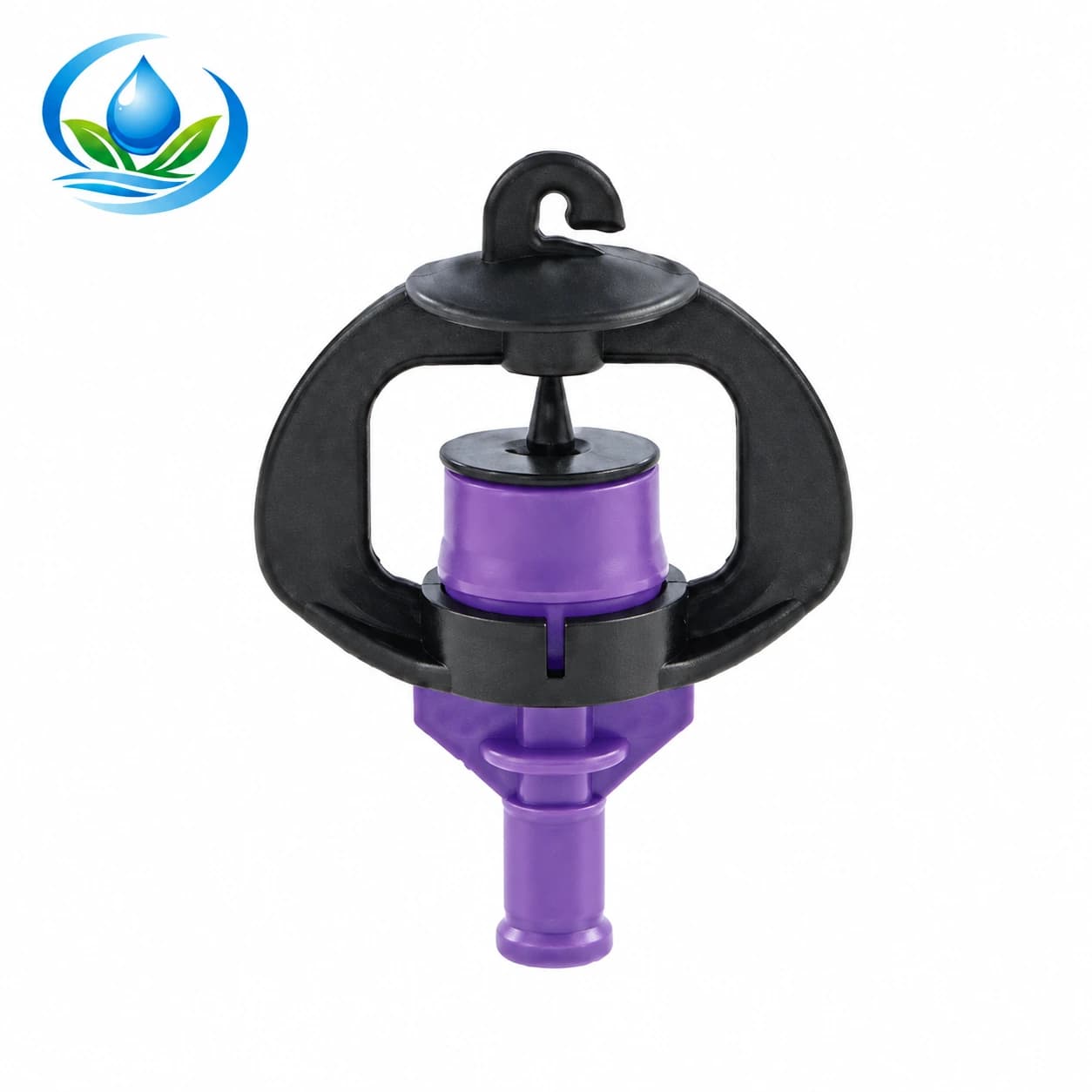
The FC anti-insect micro-sprinkler family has three current nozzle options. FC00100 pairs a 1.0 mm nozzle with 50 L/h at the catalogue's 2 bar reference; FC00120 pairs 1.2 mm with 75 L/h; FC00180 pairs 1.8 mm with 170 L/h. The published spraying radius is 4–5 m under the catalogue condition of a head 2 m above ground without wind. Record the complete code rather than ordering by the “anti-insect” name alone. The reference figures do not predict a mounted orchard footprint or approve a universal head spacing.
For an FC option, ask for the precise insect-protection component and what its idle position should be. Also confirm the selected head's inlet, mounting parts, filtration need, allowable operating range and supplied package. The listed 2 bar test point is not an entire pressure range, and the FC name alone does not establish a pressure-compensating function. If the farm specifically needs regulated discharge across varying pressure, compare an option whose own documentation addresses that job.
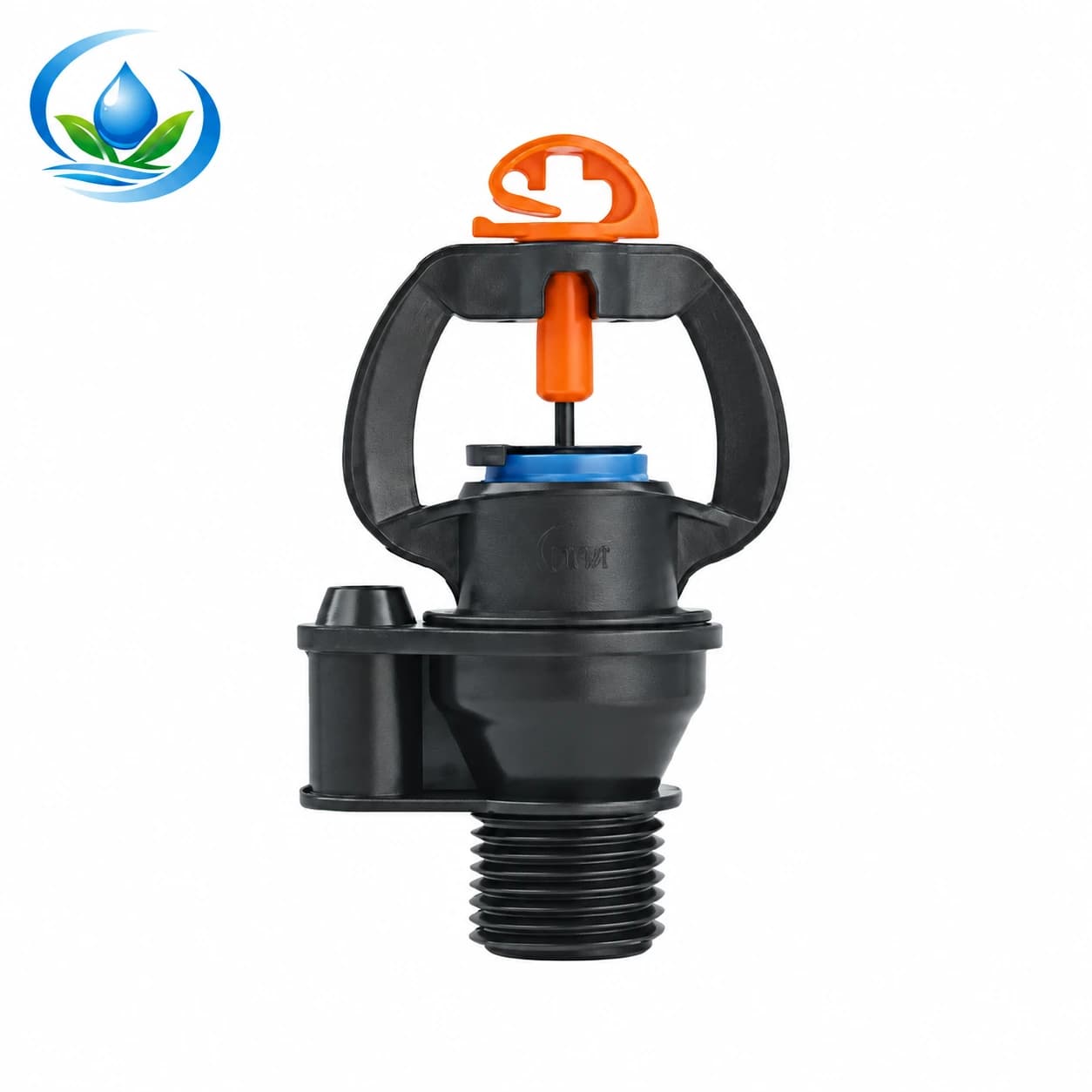
The PCS pressure-compensated sprinkler family is separately described with both pressure compensation and insect-resistant design. Its green PCS01 options list 45 L/h, blue PCS02 list 60 L/h, and red PCS03 list 95 L/h. The catalogue gives a 1.5–4 bar working range and 1.8–3 m spray radius for the family. These listed values are model references; check the chosen option's operating data and field coverage rather than treating all colours as the same discharge.
The PCS connection suffix matters as much as its colour: A denotes a 6 mm female connector, B a nominal 1/2-inch male thread, and C a 4/7 mm barb. A nominal thread size does not by itself identify thread standard or seal, and a barb label does not establish fit with every tube called 4/7. Confirm the complete code, mating part and actual mounting arrangement before purchase. Ask the maker to identify how this exact PCS option resists insect entry when idle and how its pressure-compensating element should be checked after a pause.
Trial one protected replacement through an idle interval
Choose a representative position where the recurring problem was documented. Keep the existing head's model, connection and support record; select a proposed FC or PCS option only after its inlet, mounted position, pressure range and intended wetted area fit the site. An anti-insect feature cannot rescue a head with the wrong spray reach or connection. The mounting comparison guide shows why hanging and standing codes must be distinguished even when their nozzle figures are similar.
Before anyone handles the existing outlet, have the responsible operator isolate and depressurize that work section using the site's equipment procedure. Follow the exact head maker's instructions for any permitted inspection or replacement. Keep the old and proposed parts identified separately. Do not probe the orifice with wire, force a rotor, use compressed air, add insecticide or acid, or improvise a cap to imitate the protection feature. If the instructions for the exact model are unavailable, hold the physical work and obtain them.
On the first approved run, record the selected model, active group, working-pressure measurement point and water reaching marked crop positions. Inspect the connection and support as the head runs. Then let the system complete a normal shutdown and document the head's visible resting condition against the maker's description. After a representative idle interval, look for external material around the head and repeat the normal run. Compare startup, sustained spray and water reaching the same marked positions. A single clear spray moment is weaker evidence than a repeatable result after the idle period that caused the original complaint.
If the test still shows a disturbed spray, separate a supply-side finding, external interference, head malfunction and an unverified protection mechanism before ordering more of the same. Do not increase operating pressure merely to drive debris through the nozzle. Recheck the existing filter, feed and mounting condition under their own instructions. A feature trial should yield a recorded model and outcome, not an assumption that every head in the block will behave like one sample.
Order the exact protected assembly, then keep its evidence
Count heads that will operate together separately from replacements kept in a box. A change from one FC nozzle to another or from FC to PCS can change nominal block demand; recalculate the active group from the exact selected flows and confirm pressure at its heads before extending a trial. Include the head, confirmed inlet connection, feed tube or adaptor, support and any separately supplied pieces in the purchase list. An image of an assembled sprinkler is not proof that every visible accessory comes in one sale unit.
For each selected option, compare the displayed price, sale unit, current availability and delivery information. If no purchase option appears, ask Store support about that exact model's availability before buying related connection pieces. Send the complete FC or PCS code, the existing assembly markings, the water-source and filter description, the operating-pressure observation, and the idle-entry question that remains unresolved. These details make a model-specific answer possible without assuming another maker's mechanism fits this head.
After the trial, retain a short record: location, old and new codes, connection, idle interval, observed resting state, first-start behaviour, sustained spray and water at the intended receiving area. If the same location fails again, that record helps distinguish recurring insect entry from supply debris, support movement or a different head fault. Keep protection, filtration and compensation as separate checkboxes on the next order. The chosen model should solve the documented idle-outlet problem while still delivering the intended water under the farm's approved operating conditions.
Before you order
Compare this guide with the specifications for your exact product, selected option, water supply and field conditions. Your equipment requirements take priority over a general example.
Compare irrigation products