Irrigation Micro Sprinklers: Check a Stalled Rotor Before Replacing the Head
A micro sprinkler can flow while its rotor stalls. Confirm the head type, inspect the feed and spray path safely, then retest rotation and coverage before buying a replacement.
Published by IrriNex Store
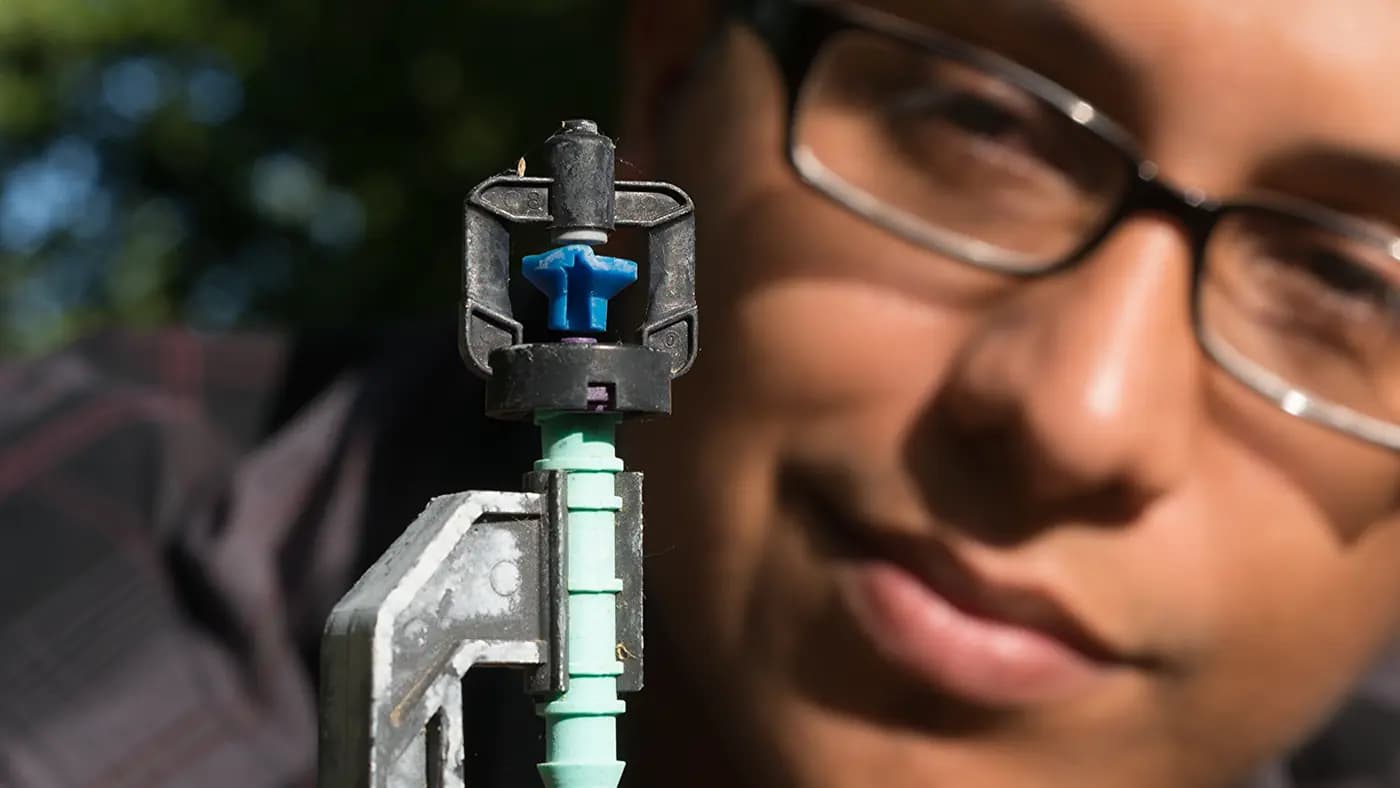
Irrigation micro sprinklers can show visible water while a rotor has stopped or the wetted area has changed. Before replacing a head, identify whether that exact device is meant to rotate, observe its spray from a safe position, and compare it with a working outlet of the same model. A wet patch beneath the head does not prove that the intended crop area is receiving water. A micro sprinkler rotor check observes rotation and the wetted area together, because visible discharge can hide a stalled head or a changed spray pattern.
This field check is for a grower who has noticed one suspect outlet in a crop row, orchard, or nursery block. It separates a genuinely stalled rotary head from an intentionally fixed jet, then asks whether the obstruction is outside the head, in the feed, or within a component that the exact maker permits you to service. The result should tell you whether to clear a local obstruction, investigate the supply, or buy a complete, correctly identified replacement.
Are these micro sprinkler heads meant to rotate?
Start with the installed model, not the appearance of the water. Some micro-sprinklers use a rotating element to move a stream around the outlet; other devices spread fixed streams or use a stationary deflector. A static jet can be working exactly as designed. Read the marking on the head, the order record, or its product specification before treating the absence of motion as a fault. If the assembly contains mixed heads, label the suspect position so it is compared with the correct type.
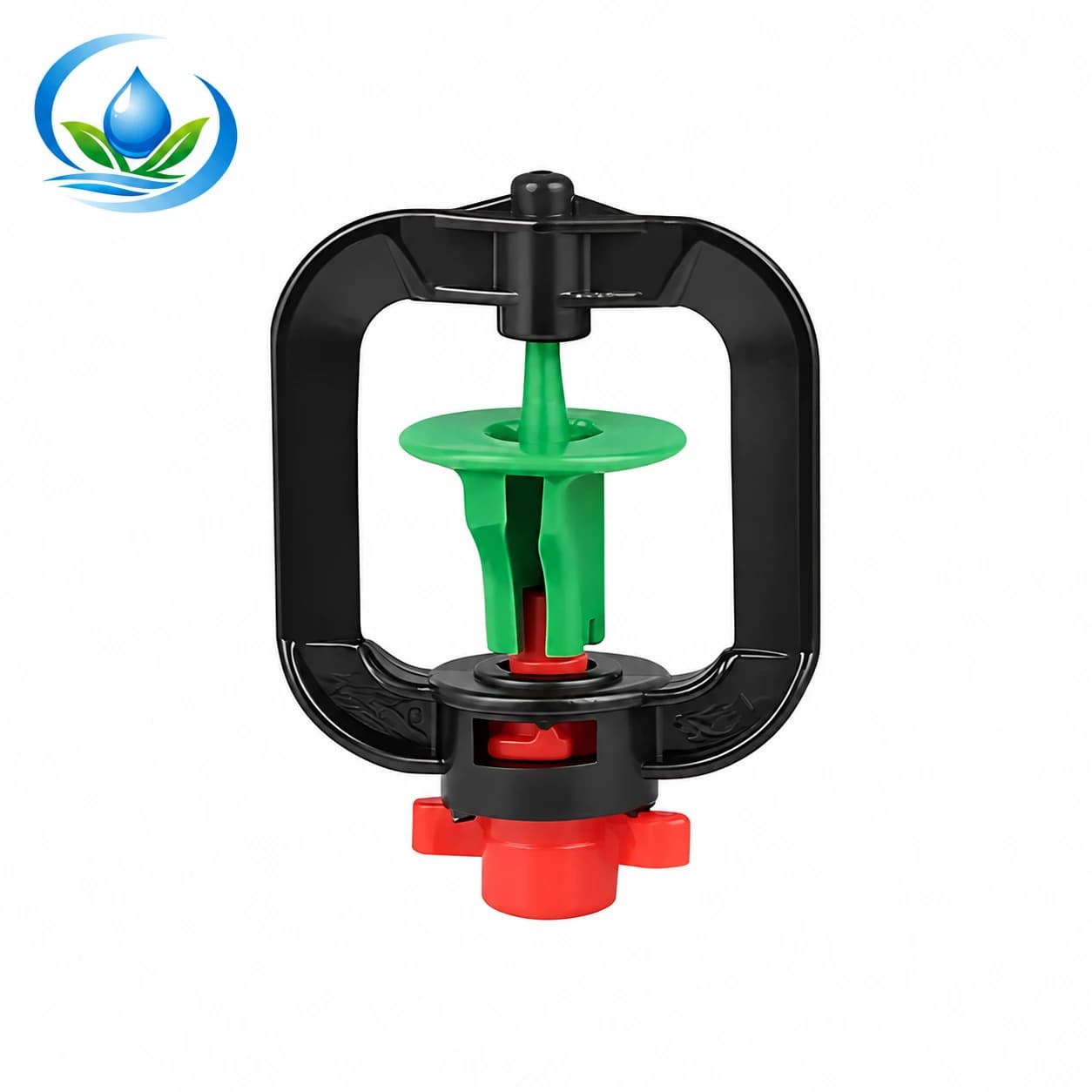
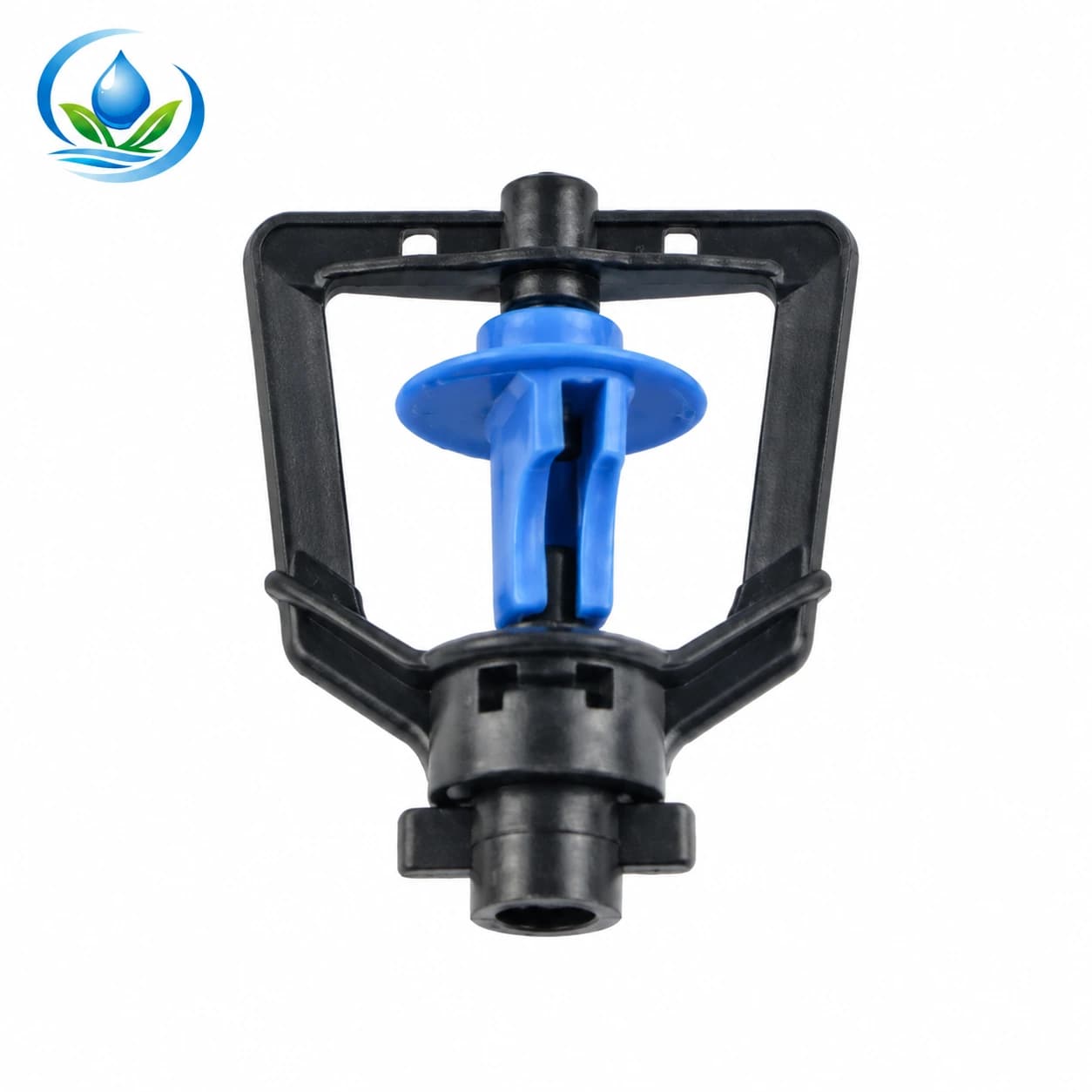
Both the 241T rotary micro sprinkler and the 251T085 hanging and standing rotary micro sprinkler are listed as rotary product families. That description identifies the expected operating principle; it does not establish that their rotor parts, connection pieces, or mounting supports fit each other. The 251T085 store entry lists a 0.85 mm nozzle, 40 L/h discharge, 2.0 bar working pressure, and 3 m spray radius under the catalog's reference conditions. Use the complete installed model and orientation before applying those numbers to a replacement decision.
If you are still choosing a head rather than diagnosing an installed one, the 251T hanging versus standing guide covers initial mounting and order checks. Here the narrower question is whether an installed outlet has lost expected motion and whether the water still lands in the intended area.
Compare a stalled rotor with a working matching head
Observe the suspect head during its normal operating group from a position clear of moving equipment and spray. Note whether the rotor moves, stops intermittently, or turns while the spray lands differently from before. Mark a few intended wetting points, such as the near side of a crop row and its farther edge. Photograph the head, its support, and the wetted ground without reaching into the running assembly. A short clip can preserve motion that a still image misses.
Compare with a nearby outlet only if it has the same model, nozzle, mounting orientation, and comparable exposure. An open row and a head crowded by foliage are poor controls even if their labels match. Record when the change first appeared, which valve group was running, and whether other heads in the group also changed. Several affected outlets point toward a shared feed, filter, or operating condition; one isolated head gives a different starting point.
Do not judge success by movement alone. A rotor can turn while a leaf intercepts half the spray, the support leans, or the stream lands beyond the target. Conversely, water emerging from a fixed jet says nothing about rotor health because that device has no expected rotation. The sprinkler catch-test guide explains how collection points can show distribution differences where a visual pattern is inconclusive.
Look for interference that changes the spray
A crop can grow into the spray path between inspections. Leaves, ties, support wire, a shifted stake, a hanging tube, or another nearby object may catch a rotating element or deflect water after the head has emitted it. Look for these from outside the running equipment. Insects or debris around an outlet may be relevant, but a visual impression is not a diagnosis of an internal part or proof of any claimed insect-proof feature.
Separate contact with the moving element from interception of water after it leaves the head. If a leaf physically touches a rotor, the visible symptom can be halted or irregular motion. If the rotor still moves but a support intercepts the stream, the symptom is an uneven footprint. The purchase decision differs: replacing the head would not move the support or restore a blocked route. Note the contact point, then isolate and release pressure before making any physical change.
When plants or containers have shifted, also check whether the head itself has been pushed out of position. A formerly useful spray can miss the current row even with normal rotation. The container spray footprint guide addresses choosing a wetting pattern for a layout; it is not a repair specification for the rotor in front of you. Keep that layout question separate from the fault check.
Isolate the area before handling the head
Use the site's shutoff procedure for the affected group and let the line depressurize before touching the outlet, feed tube, or support. Confirm that a controller cannot restart the group while it is open for work. If the shutoff point or isolation procedure is unclear, stop at visual observations and obtain the responsible operator's instructions. Do not hold or hand-spin a rotor under pressure, pull a tube from a live barb, or probe a running nozzle.
Once isolated, document the as-found assembly before changing it. Capture the model code, nozzle marking if present, hanging or standing orientation, feed connection, support, and any intermediate adapter. Check for an obviously bent support, a tube pinched against a frame, loose attachment, or visible debris at accessible surfaces. You can move an external leaf or tie out of the intended path if the site permits it, but an undocumented rotor disassembly is a different action.
Follow the service instructions for the exact installed model for any opening or cleaning of internal parts. One manufacturer's manual may describe a removable pin or bridge; that procedure cannot be carried over to a 241T or 251T simply because both are micro-sprinklers. Confirm that an exact approved spare and procedure are available before taking a head apart. If the required instructions or part identification are missing, keep the head intact and use the observations to ask for an approved procedure or a complete replacement.
Check the feed without blaming the rotor
Water at an outlet can be weaker because the supply is restricted, because a small feed tube is folded, or because several heads in the same operating group are affected. With the area isolated, trace the suspect feed from its connection to the head. Look for a sharp bend, compression under a support, a pulled connection, or a recently disturbed branch. A head with a sound rotor cannot distribute the intended pattern if its inlet receives a poor supply.
Compare the visible performance of the same model elsewhere in the group under the same running conditions. If all nearby heads weaken or change at once, record the filter condition, valve state, and pressure measurement location before ordering replacements. A pressure reading at the pump does not automatically describe the condition at a remote micro-sprinkler. The irrigation filtration guide helps separate water-source and filter questions, but it does not supply a universal mesh rating for either rotary model.
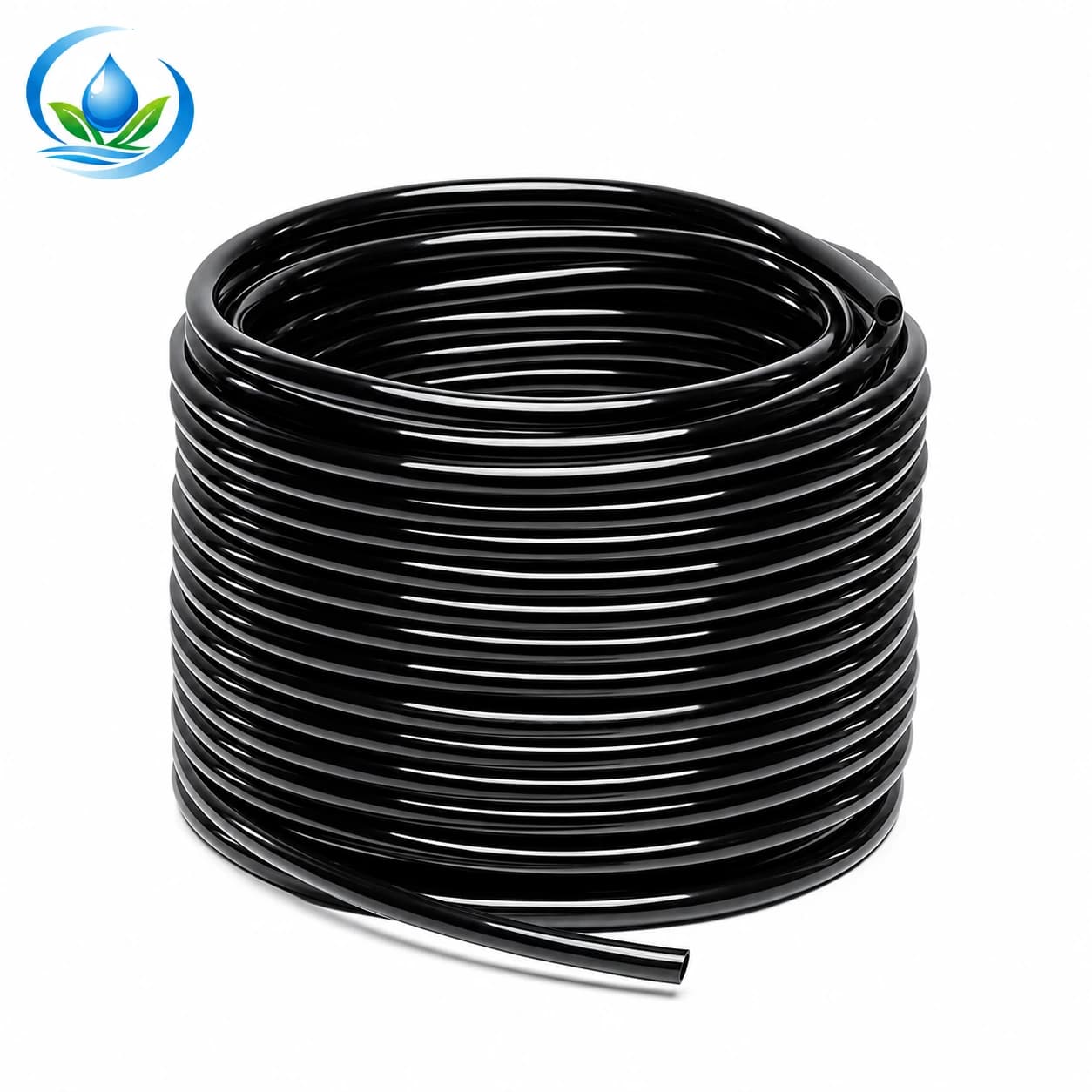
If a feed tube needs replacement, the micro-distribution tube listing has three distinct size pairs: 8 × 11 mm, 3 × 5 mm, and 4 × 7 mm, each stated as inner then outer diameter. Those are tube dimensions, not a promise that any option fits either head's barb or a retained adapter. Measure the existing tube and mating connection, verify the correct variant, and check the actual sale unit before purchase. Do not force a visually similar tube onto an unverified connection.
Decide what can be cleared and what needs replacing
After isolation, an external obstruction with a clear cause can often be removed from the spray path without replacing the head. Reposition a permitted tie or support so it will not spring back into the same place, then check that the change does not create a new collision with equipment or workers. If the head itself is cracked, distorted, or missing a piece, record that condition rather than improvising a repair from an unrelated product family.
Internal cleaning must come from the exact model's approved instructions. Do not substitute a wire for a nozzle tool, apply an unverified solvent or insecticide, use compressed air, increase pressure to force a rotor free, or remove protective pieces to gain access. Each may change the opening, damage a moving part, or create a new failure. A claim that a different model is self-cleaning or insect-proof would not establish either feature for the installed head.
If the rotor remains stalled after external interference and feed conditions have been addressed, compare the complete head and installation with a known working example. A complete replacement may be the sensible purchasing unit when no approved service procedure or exact spare is confirmed. Keep the failed head's model and connection details until the replacement has been tested; a generic note reading “micro sprinkler” is not enough to reorder the same assembly.
Retest motion and the wetting footprint
Reconnect only with confirmed compatible parts, secure the assembly as its model requires, and restore the operating group using the site's restart procedure. Observe from a safe place. Record whether the rotor now turns as expected and whether the spray reaches the same intended points noted before isolation. A clean-looking head or a moving rotor is only part of the retest. Check the ground or collection points after a comparable run so the coverage decision uses delivered water.
Keep the comparison fair: use the same active valve group, similar observation time, and comparable wind and crop conditions where possible. If conditions changed, record them instead of calling a different wetting shape a successful repair. An apparent shortfall at a row edge can be a head-position issue, an obstacle, or a supply issue, even after the rotor starts moving again. Repeat the check at the formerly missed point rather than judging from the outlet alone.
For a measured comparison, place simple collection points in the affected area and compare them with the working reference head during equal run times. The catch-test method is more informative than extrapolating a catalog radius across a real canopy. The water-meter reading guide can help track the group as a whole, but a meter total cannot prove one rotor or one row-edge point is receiving its intended share.
Match a replacement to the installed assembly
Keep the 241T and 251T families separate on the parts list. For a 251T085 replacement, the family page presents a 0.85 mm, 40 L/h, 2.0 bar, 3 m reference entry; the catalog also distinguishes hanging and standing 251T types with their own codes. Those reference figures are not proof of the site's exact operating pressure, a recommended spacing, or interchangeability with a 241T. Record the actual head code and orientation rather than replacing by color or apparent size.
Check the head, feed-tube inner and outer diameters, adapter, support, and supplied package contents as separate items. A photo may show a tube or stake without establishing that it is included in the order. If the original connection is damaged, ask for the head-side interface and mating part specifications before selecting a tube or fitting. The irrigation fittings guide helps organize those measurements; it does not validate a particular head-to-tube match.
Use the rotary product listings to identify the correct variant, then check the displayed price, package quantity, current availability, delivery options, and purchase path before committing. If no purchase option is shown for the selected head, ask Store support about availability before buying a related tube. The micro-tube page has selectable sizes, yet its sale unit and connection still need checking for this repair. Send the exact model, photos, and recorded fault with any unresolved fit or approved-service question.
Keep a short record for the next inspection
Write down the date, row and outlet position, exact model, symptom, operating group, obvious interference, feed observation, and action taken. Save a before-and-after clip or ground photo if practical. Note whether the rotor moved after work and whether the previously missed crop point received water. These two outcomes should occupy separate lines so a moving rotor does not hide a persistent coverage problem.
If the same position fails again, the record helps reveal a recurring leaf contact, strained tube route, unstable support, or shared feed issue. If a different position shows the same symptom, the correct comparison is easier when the original model and conditions are known. Avoid a generic replacement interval based on one failed head: service frequency and part life depend on the exact device and field conditions, which these product records do not quantify.
Return the group to routine operation only after the expected movement and the intended wetting area have both been checked. Then keep the confirmed replacement code and connection details with the parts inventory. The next buyer can use the product listings to compare the current variant, pack, price, availability, and delivery details, while reserving support questions for any fit or approved-service detail that the listing does not resolve.
Before you order
Compare this guide with the specifications for your exact product, selected option, water supply and field conditions. Your equipment requirements take priority over a general example.
Compare irrigation products