Drip Sprayers: Match the Wetting Footprint to Nursery Containers
Compare AESP and ASPR using the substrate inside the pot rim, foliage obstacles and a mounted trial before choosing the quantity for a nursery bench.
Published by IrriNex Store
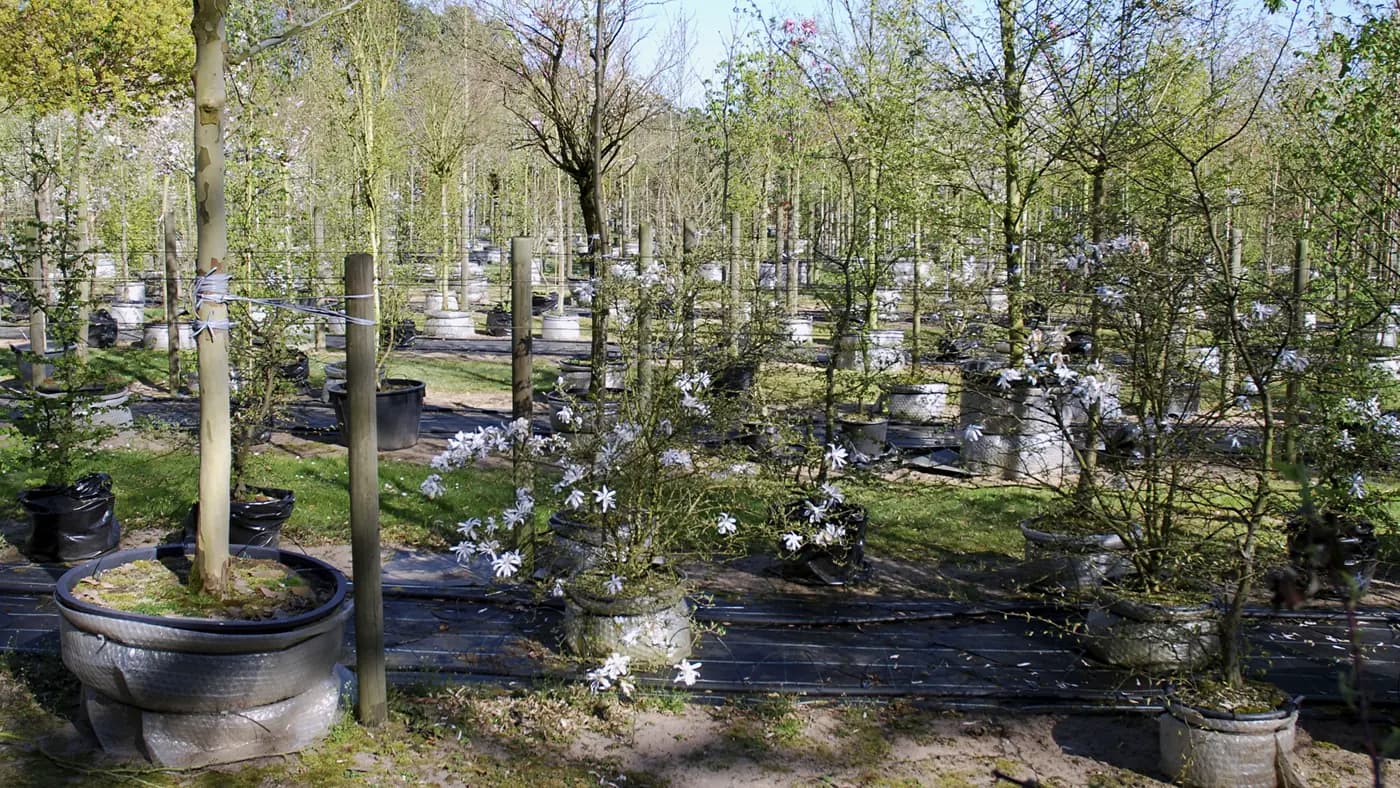
Drip sprayers for nursery containers should be selected by where their water lands at the intended mounting position. Start with the exposed substrate inside the pot rim, then check foliage, adjacent pots and the gaps between them. An adjustable head that reaches farther can still deliver less useful water to a particular container. Compare a small mounted trial before ordering the quantity for a complete bench or production block.
The decision here concerns the wetting footprint of AESP and ASPR adjustable heads. Their catalogue flow and pressure ranges match, while their listed radius ranges differ. That gives you two candidates to investigate, not a rule assigning a model to each pot diameter. The following checks turn those specifications into a practical sample request and a repeatable receiving record.
Mark the receiving substrate inside each nursery pot
Measure the internal opening at the rim and note how far the substrate sits below it. A head outside a tall rim may send water against plastic before it reaches the growing medium. A head placed too close to a stem or support can have an equally obstructed path. Sketch the actual space available for a head and its supply tube. A nursery drip sprayer wetting trial should record water that stays on the substrate separately from water that lands beyond the rim.
Separate the outside width of the container from the substrate area you intend to wet. Handles, thick rims and tapered sides make those different measurements. Add the position of the plant stem, exposed root ball, labels, ties and any surface dressing. These details explain why two pots sold under the same nominal size may need different trial positions.
For a group of containers, mark their gaps as carefully as their centres. Include the empty spaces left when saleable plants are removed. Water crossing an aisle or an empty position does not become useful container irrigation merely because it remains inside the head's visible spray circle. Test the arrangement you expect staff to maintain during ordinary work.
Read AESP and ASPR as separate adjustable options
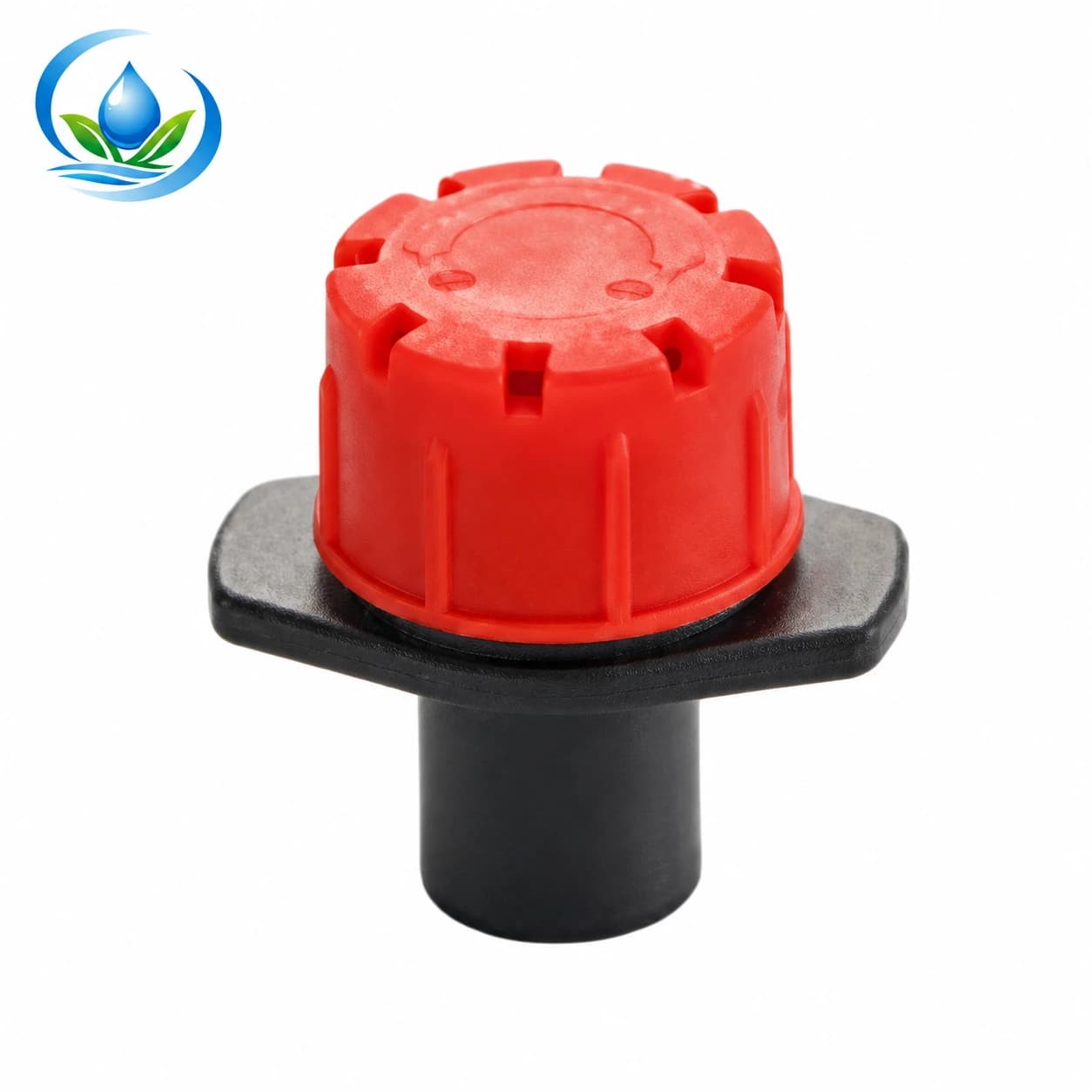
The AESP eight-hole adjustable sprinkler lists a more compact radius range than the ASPR turbo adjustable sprinkler. Both appear on physical page 6 of the IrriNex product catalogue. Keep the exact model codes in the enquiry: ASPR2 is a different entry, and a similarly coloured head is not sufficient identification.
| Catalogue item | AESP | ASPR |
|---|---|---|
| Discharge range | 0–90 L/h | 0–90 L/h |
| Working pressure range | 1–3 bar | 1–3 bar |
| Spraying radius range | 0–0.4 m | 0–1.5 m |
| Connection and included supports | Require confirmation | Require confirmation |
These are separate catalogue ranges. They do not establish which discharge accompanies a particular radius, pressure or adjustment position. In particular, the table does not say that the maximum radius and maximum flow occur together. A partly opened cap is not a calibrated flow setting unless additional model-specific evidence establishes that relationship.
The page carries a reference measurement condition of 0.2 MPa, 2 m above ground, without wind. That note belongs with the listed performance data. It is not a recommendation to mount these heads 2 m over nursery pots, and it does not predict coverage at your chosen pot-level position. Record the actual mounting arrangement and measure its result.
Select a useful drip-sprayer footprint before counting heads
AESP is a reasonable candidate to investigate when the intended receiving area is compact; ASPR is a candidate when a broader adjustable reach is needed. Neither statement confirms suitability for a particular pot. The narrower option may leave an obstructed section dry, while the wider option may throw much of its output beyond the rim. The trial must resolve those possibilities.
Do not calculate a guaranteed number of pots from a circular area based on the maximum radius. Such a calculation ignores the position of individual streams, container gaps and water intercepted by the crop. It also assumes that every part of the circle receives a useful amount. A reach figure alone supplies none of that information.
If only a small point of application is required, compare the purchasing questions in the drip emitter selection guide. A spray footprint is useful only when spreading water over the intended surface solves an actual need. Keep the choice open until the container trial shows what reaches the substrate.
Build the sample with a confirmed connection
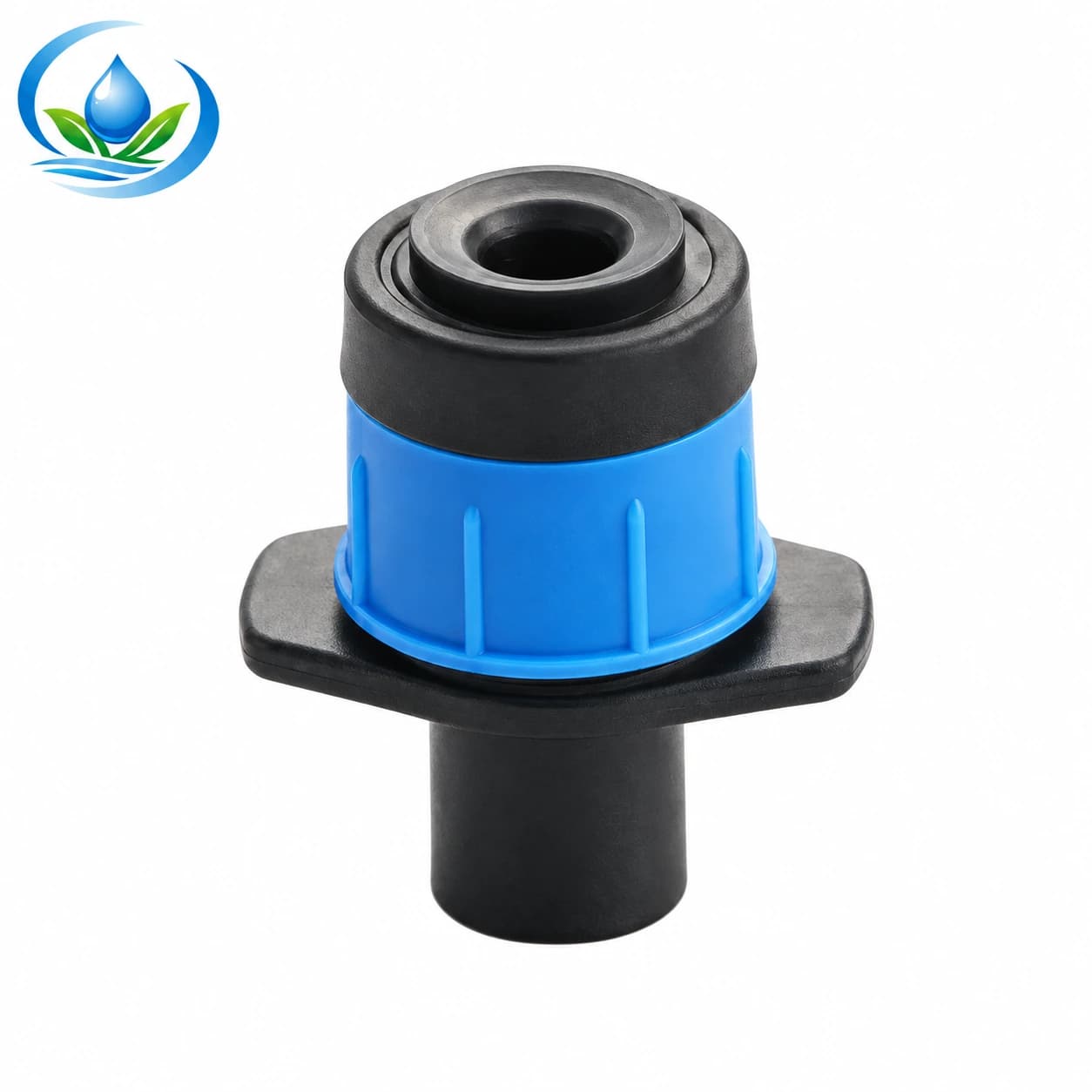
Ask for the inlet specification of the exact head and the compatible mounting parts. The verified catalogue entries do not identify its inlet diameter or thread. They also do not establish that a stake, adapter or length of tube is included. A photograph showing an assembled outlet cannot replace an itemised description of what will be supplied.
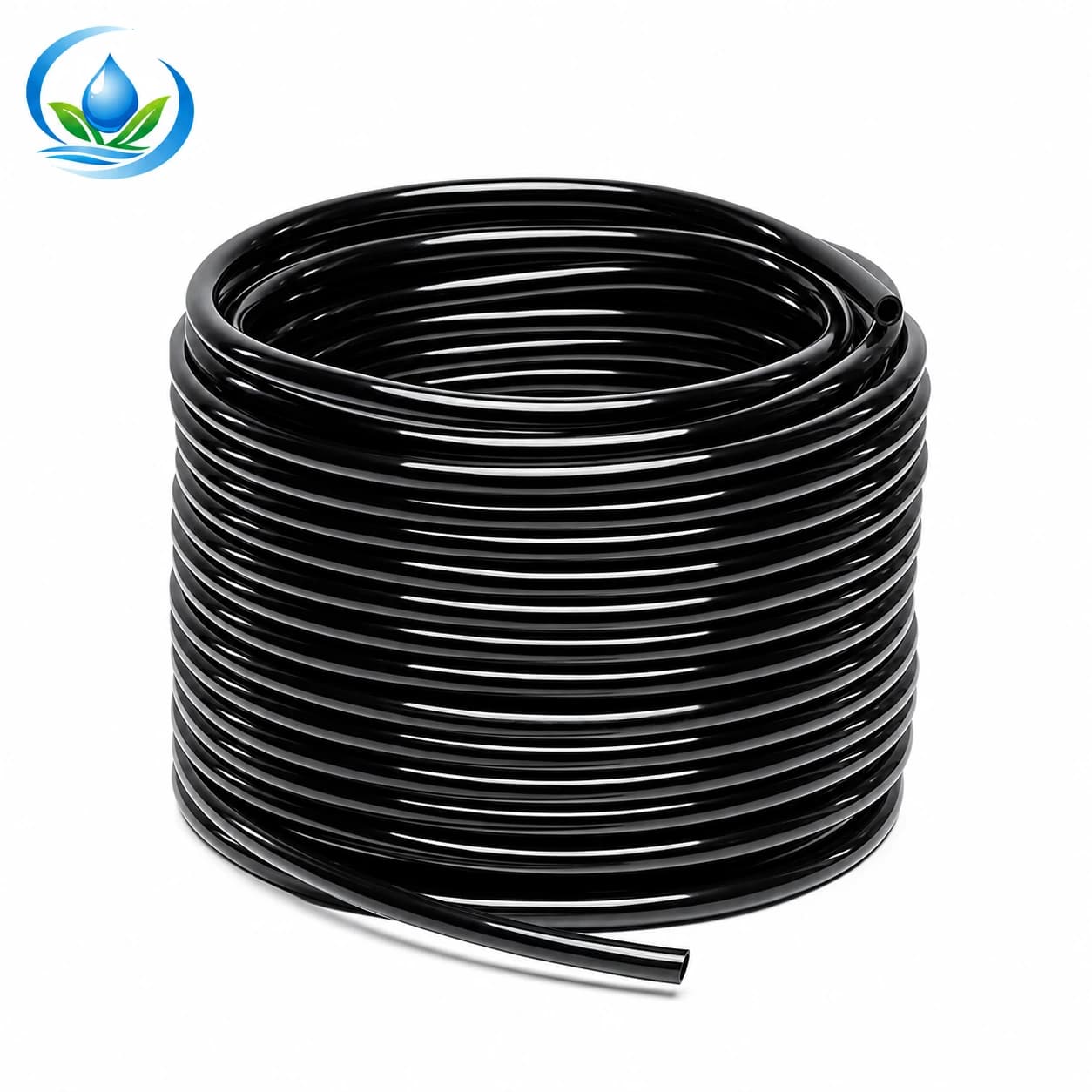
The micro distribution tubing currently has variants labelled 3 mm inside × 5 mm outside, 4 mm inside × 7 mm outside, and 8 mm inside × 11 mm outside. The paired sizes are visible on physical catalogue page 16. Those dimensions identify tubing options; they do not prove a direct connection to either AESP or ASPR.
Have the store confirm the complete path from the existing branch to the head, including any adapter and support. Check the pressure suitability of every supplied component separately. Leave enough practical access to move a pot without pulling on its outlet, and test whether the proposed support holds its position during routine handling.
Set up a representative nursery trial
Choose containers that represent the real range you intend to serve: an accessible pot, a pot with more obstructive foliage and an edge position are useful comparisons. Use the planned substrate and normal container spacing. Record the starting moisture condition so a recently watered pot is not compared casually with a much drier one.
Mount the sample at the proposed working position with the confirmed parts. Record its height relative to the substrate, its distance from the rim and its orientation to the plant. Photograph those relationships before running water. The image should allow someone else to reconstruct the placement, rather than showing only an attractive spray.
Operate the representative outlet group while measuring pressure near the trial, using suitable equipment. Record the measurement location and how many heads are running. A closed-line reading at the source does not describe the condition at an operating head. Repeat the observation at another relevant branch position if the final installation will extend beyond the sample area.
UF/IFAS discusses operating pressure, application rate and distribution in its nursery irrigation measurement guide. The container checks here support purchasing decisions; they do not replace a full irrigation uniformity evaluation.
Keep three different observations separate
First, observe the spray leaving the head. Note blocked streams, interference from the rim and movement of the support. Watch under the normal air movement of the work area, including relevant ventilation. A calm, unobstructed demonstration does not necessarily represent a bench beside a fan or an exposed outside edge.
Second, inspect where water arrives. Look beneath leaves and behind stems, not only at the visible front of the pot. Note water striking foliage, running down the outside of the container or landing between pots. A wet bench can coexist with a dry section of substrate; these observations should remain separate in the trial record.
Third, check the substrate response using a method suitable for the crop and growing medium. Surface colour alone cannot establish moisture throughout a root ball. Record where you checked and when, while avoiding unnecessary root disturbance. Water appearing at drainage holes is another observation, not automatic proof that the entire container received a suitable dose.
Consider an illustrative comparison of two positions on the same pot. One wets the near rim and the bench; the other reaches more exposed substrate but meets a low branch. Neither observation determines a final watering schedule. It tells you which placement issue to resolve before buying many identical assemblies. No measured performance for either model is implied by this example.
Change one trial condition at a time
If water misses the receiving surface, inspect placement and obstruction before increasing duration. Running longer preserves the same missed area when the underlying problem is a blocked path. Reposition only within the confirmed installation requirements, then repeat the observation with the other conditions held as consistently as practical.
Where the adjustment is changed, record it in a reproducible way that is possible for the supplied design. A reference photograph or supplier-approved marking may help. Do not treat an arbitrary turn count as a manufacturer's calibration. If settings cannot be repeated reliably, include the labour of checking every installed head in the purchase decision.
Stop a comparison when the inlet, support or pressure condition is uncertain. Resolving that uncertainty makes the next observation more useful. Repeatedly adjusting an unverified assembly can conceal the cause of an uneven pattern and produce a parts order that does not reproduce the sample result.
Measure demand separately from visible coverage
Once a position and adjustment look promising, obtain a timed discharge measurement with a collection arrangement that captures the output without restricting it or changing the operating pressure. If complete collection is impractical, request an appropriate measurement method for the assembly. A small cup intercepting one stream does not measure the whole head.
Record collected volume, elapsed time and operating conditions together. For example, a hypothetical complete collection of 0.6 L over two minutes corresponds to 18 L/h. Ten heads each measured at that same discharge would represent 180 L/h. This is arithmetic for a purchasing record, not a stated AESP or ASPR setting and not proof of supply capacity.
The guide to calculating outlet demand helps organise simultaneous quantities and units. Keep installed heads, heads operating together and boxed spares in separate columns. If different containers require very different adjustments, question whether they should share the same operating group before ordering the full quantity.
Plan for changes during the crop cycle
A nursery bench changes when plants grow, are pruned, are spaced farther apart or are removed for sale. Repeat the placement check after changes that alter the water path. Store the original record with a dated photograph so staff can distinguish a moved head from a changed canopy or a different adjustment.
Include filter identification and accessible flushing points in the assembly notes. Use the filtration buying guide to organise water-source questions, then request the chosen head's actual filtration requirement. The available AESP and ASPR entries do not justify selecting a universal mesh rating.
Watch a normal shutdown as part of the trial and record any continued drainage. Neither verified model entry establishes an anti-drip valve or pressure-compensating feature. If either function is required for the proposed arrangement, obtain separate confirmation rather than assuming that adjustment provides it.
Request the quantity that passed the trial
Prepare the enquiry around the exact head, confirmed connection, support and tube dimensions, trial position and simultaneous outlet count. State whether you need one sample, the installed quantity or additional replacements. Ask what one quoted unit includes and whether accessories are priced separately. These details let you compare the cost of complete usable outlets.
Request the current price, available quantity, included connection and support pieces, and delivery terms for AESP or ASPR before ordering. Keep the response with your trial record so the final supply request identifies the same assembly you evaluated. Confirm any proposed substitution before accepting it for the remaining containers.
When the sample or final order arrives, compare the code and counted pieces against the confirmed request. Preserve a record of the assembly that produced the accepted footprint. The useful outcome is a sprayer that can be placed, connected and checked consistently inside your nursery layout, with the purchasing quantity based on observed delivery to the intended containers.
Before you order
Compare this guide with the specifications for your exact product, selected option, water supply and field conditions. Your equipment requirements take priority over a general example.
Compare irrigation products