Fertilizer Injection Systems: One Injector for the Farm or One per Drip Zone?
Decide whether compatible drip blocks can share an injector or need separate nutrient paths by mapping valves, flow cases, source protection and operating steps.
Published by IrriNex Store
Fertilizer injection systems can be placed once before a farm manifold or closer to individual drip zones. The choice is not simply “one pump costs less than several.” It decides which crop blocks receive the same stock solution, how injection stops while water continues, which flow cases the injector must handle, and where source protection and isolation must work. Draw the water and nutrient paths for every allowed valve combination before deciding how many injection points to buy. A shared head station may be practical for compatible blocks that run separately; separate points may be clearer when crops, formulations or operating windows cannot be managed together.
This article is a location-and-count decision, not a fertilizer recipe or a comparison of injector technologies. The injector package guide checks what a Venturi or dosing-pump order actually contains. The farm zoning guide defines the hydraulic groups. Here the question is whether those groups can share a nutrient entry point without turning the zone schedule, operator handoff or clean-water finish into guesswork.
Draw where the nutrient could enter each water path
Start at the water source and mark pump, source protection, filtration, mainline, manifold valves, zone pipes and the last crop outlets. On a second colour, draw stock vessel, pickup, injector and point of entry into the water. Mark what the injection point feeds when each named valve is open. A station before the manifold can potentially send the same mixed water to any downstream zone opened during injection. A station after one zone valve serves a narrower branch, but its water flow and access may be different. The physical location tells you which unintended paths must be kept closed; the label on the stock tank does not.
List the normal operating combinations, including overlapping zones if the hydraulic design permits them. If two valves may open together, a shared upstream injector can affect both. If one block must always receive water only during another block's nutrient event, that operating state needs its own documented control, not an assumption that the crop will tolerate it. Record who sets valve states and what confirms them. Do not use a small row isolation valve as if it were a verified whole-zone chemical boundary.
Mark where the stock can be stopped while crop water continues through the same route. This water-only finish matters whether the station is shared or local. The clean-water finish guide covers the control transition after a permitted nutrient event. In this design, each proposed injection location must be able to make that transition for its named zones through a documented arrangement.
Ask which blocks can share a formulation and an event
Prepare one row per crop block with crop and stage, approved nutrient programme, water source, planned injection event, permitted simultaneous valves and person responsible. A common pump does not mean a common crop requirement. Blocks with different formulations or schedules may still share physical equipment if the farm can isolate them, change stock by the approved procedure, verify that the old route has been cleared where required, and operate each in a suitable water window. Those are conditions to demonstrate, not benefits of a central station by default.
If crops must receive different solutions at the same time, a single undivided upstream injection point cannot deliver two independently controlled recipes through the same mixed line. The farm might change the schedule so events are separate, or design separate injection routes. Do not solve the conflict by trusting someone to remember an undocumented valve position. If the crop programmes use one approved formulation but different irrigation durations, the nutrient step and water-only part still need named boundaries so one block is not injected simply because it irrigates longer.
A crop adviser and product labels establish what formulation, timing and amount are permitted. This article does not calculate those values. Its purchase question is whether the approved programmes can be executed through one station without cross-feeding. The new-concentrate compatibility guide becomes important whenever a shared station switches stock material; a successful old run does not approve the next concentrate for every seal, water source or crop.
Test the shared-station case before accepting it
One headworks injector can simplify storage and service when several blocks are operated in sequence, their approved products and control states fit, and the unit works over every allowed flow case. Compare the smallest single zone, the largest single zone and any legitimate combined set. A water-driven unit may have minimum as well as maximum carrier flow and pressure limits. A Venturi bypass needs the prescribed pressure relationship in each operating case. An injector that draws on the largest block may behave differently when only a small greenhouse section is open. Do not assume a family maximum proves acceptable operation across the whole schedule.
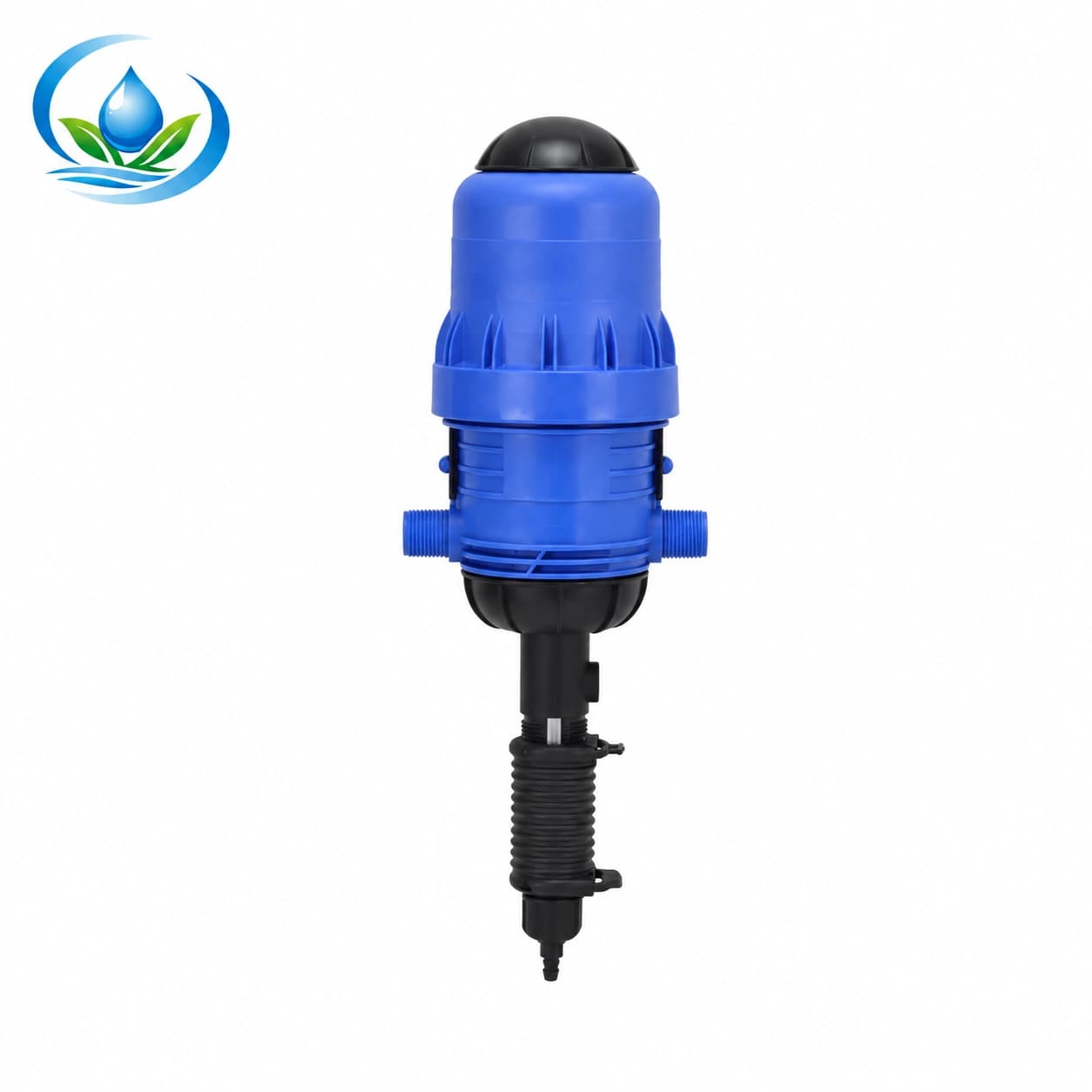
The published water-driven proportional fertilizer injector lists a family working-flow range, pressure range and adjustment range. Use those only as an initial screen; confirm the exact selected unit, its connections, solution compatibility and complete assembled conditions. A percentage printed on the body is not a measured nutrient dose in each block. The clean-water injector ratio check explains how to test stock uptake and carrier water together under a defined operating case before any fertilizer is mixed.
For a shared station, the operator's sequence must identify one block at a time or an explicitly allowed overlap: set valves, confirm carrier water and pressure, enable injection only under the approved plan, stop new stock, maintain the required water-only route and log the result. The station needs accessible isolation and measurement points according to its design. A central location may be easy to service, but a long downstream route can complicate knowing when a nutrient event has finished at each block. Establish that from the actual system and approved operating procedure rather than guessing a universal number of minutes.
Test per-zone injection where separation is valuable
Putting an injector after a named zone valve can make the nutrient path easier to identify and may allow different crop programmes to remain distinct. It may also multiply equipment, stock handling, source-protection checks, maintenance and failure points. Each branch injector must work at that branch's own minimum and maximum flow, not at the farm's total. Confirm that there is physical room for filter service, controls, stock vessel access and a safe water-only operating state. A compact crop block is not automatically a suitable site just because the pipe is short.
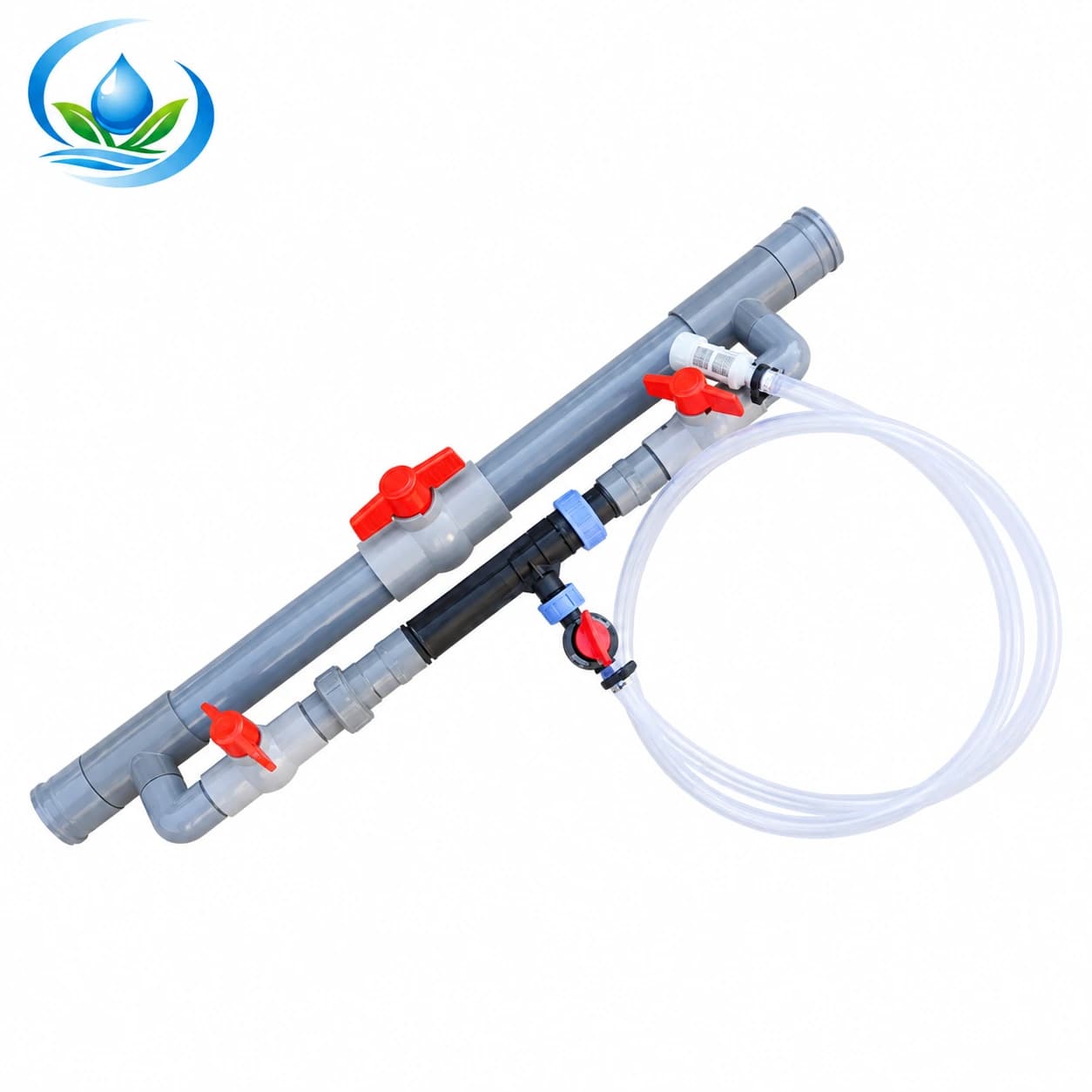
The assembled Venturi injector set is shown with a Venturi, bypass valves and fittings. It is a candidate station format only after its exact contents, connection standards and working conditions are confirmed for that branch. Online ordering is not currently available for this model. A photograph of a full bypass should not be read as a guarantee that source protection, tank, meter, injection controls or every site adapter is included. A local Venturi still depends on its installed differential pressure; it is not a simple passive tee into every drip pipe.
Per-zone hardware can also be the wrong response to a scheduling problem. If two blocks can safely use one central unit at separate times with documented stock change and water-only transitions, duplicating injectors may add work without solving a real conflict. Conversely, if central placement would feed an incompatible crop whenever its irrigation valve opens, one more well-located station or redesigned valve boundary can be more understandable than a complicated hand-operated bypass. Compare the operating cases before comparing the count of boxes.
Keep source protection and isolation tied to the actual layout
Every proposed layout needs protection against reverse movement toward the source and unintended continued injection under fault conditions, using equipment and procedures appropriate to the source, injected product and local requirements. The details vary by jurisdiction and installation. The University of Minnesota Extension's chemigation guide explains that safety devices, calibration and uniform water application all matter; its Minnesota permit and device rules describe that location, not a universal specification for every reader. Have the site's responsible designer confirm the actual backflow and shutdown arrangement before ordering either one station or several.
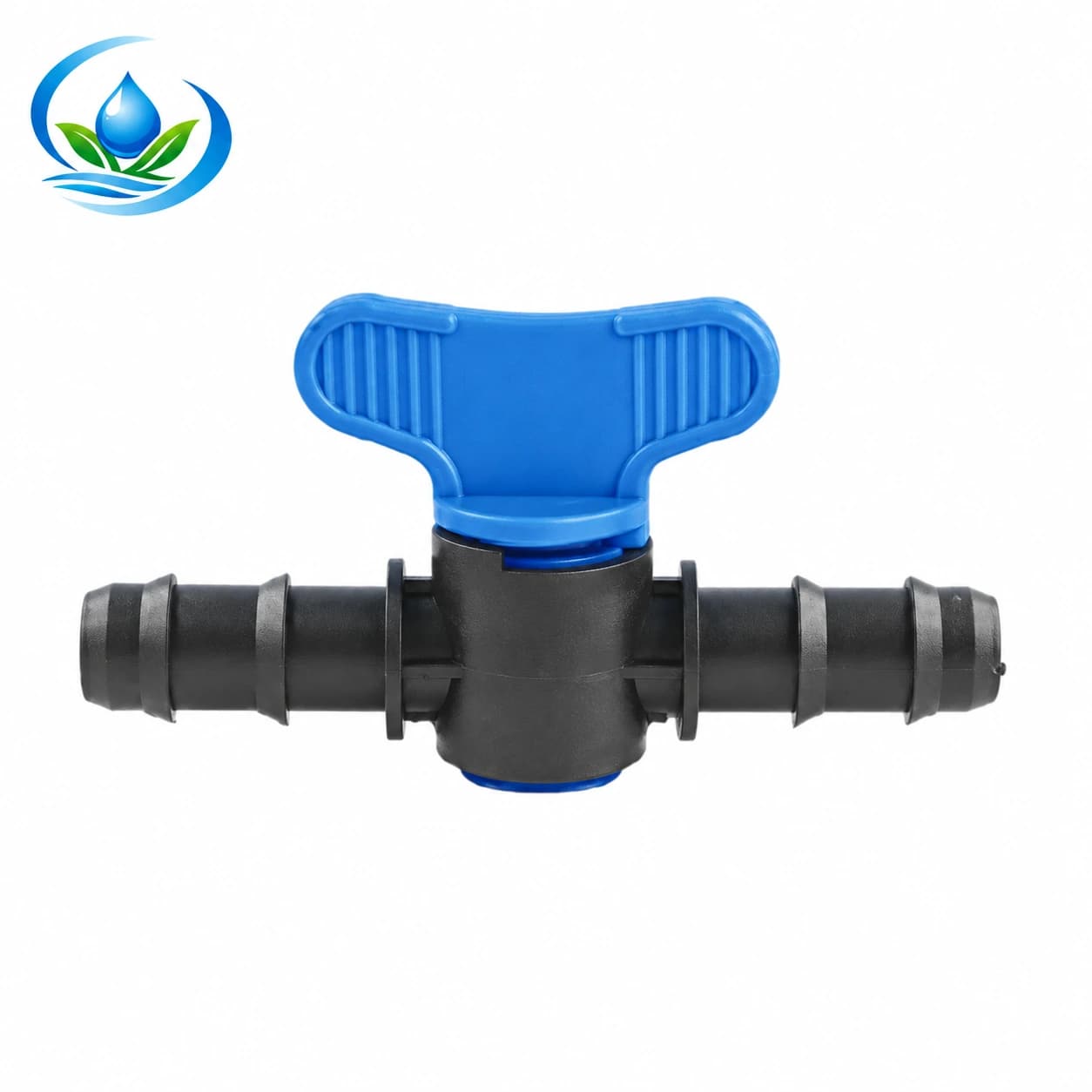
Draw protection before and after each proposed entry point so it cannot disappear from a price comparison. A small check component in a suction line is not automatically sufficient source protection. A row valve, including the published 16/20 mm blue-handle Maxi Valve, may be useful for an appropriately matched local water branch. Its size and function do not make it a default chemical isolation device for a farm main or a substitute for required safety equipment. Confirm both pipe interfaces and the approved role of every valve.
The source-protection question can change when injection moves from a common head to several branches. Trace all paths from a stock container toward the source, through manifold connections and toward other crops, including shutdown states. Record which parts are installed, inspected and maintained for each station. The answer may affect both number of injectors and the site work needed to use them; an apparently cheaper branch kit can omit important pieces of a compliant, serviceable installation.
Compare cost, access and handoff as operating systems
Make two complete options on one sheet. For a shared unit, list the injector, stock arrangement, controls, common pipe adaptations, source protection, water-only route, calibration cases and staff actions for switching crops. For per-zone units, repeat the list for each branch, including its own working range, access, parts and maintenance. Add installation labour, supported fittings, measurement points and training. Compare current quoted purchase terms only after both options describe complete systems, not one fully specified station against several bare injector bodies.
Use the actual work week as a test. Can one person change stock and valve state between two crop programmes without colliding with another irrigation window? Will separate branch units be checked often enough to stay calibrated? Is one central set located where a leak can be caught and the suction path inspected? Could a remote branch tank be confused with another product? The University of Maryland Extension's injector care and calibration guide stresses that the equipment's output should be checked rather than trusted from a scale setting alone. A layout that cannot be inspected consistently is a weak purchase even if its item price looks attractive.
Do not treat the assembled Venturi's displayed zero price as free or assume direct checkout when the listing is not enabled for it. For the proportional unit and each set, compare exact model, selling unit, included parts, current availability and delivery. If a required connection, stock-contact material or permitted operating case is missing, request that information with the zone drawing. Keep unresolved fields visible instead of filling them from another maker's diagram.
Commission the chosen number of injection points with water first
Before any permitted nutrient solution is used, identify and label each station and its crop-water path. Under the equipment's approved clean-water procedure, verify the normal carrier-water cases, the injector's measurable uptake or specified calibration method, and the transition to water-only operation for each named zone. Record actual valve states, flow and pressure, model and adjustment setting. A water-only test checks equipment routing and measurement; it does not approve a fertilizer recipe, crop dose or chemical compatibility.
Observe the smallest and largest allowed groups if one unit is shared. For separate points, test each branch where it will operate, including any controller sequence that prevents an injector running after water stops. Confirm that a branch not selected for injection receives only its intended water during the test. Do not defeat source protection, open pressurized joints or add fertilizer as a shortcut to making a delivery check. After the approved process, retain the test record alongside the installation drawing.
The buying answer can then be stated without ambiguity: one shared injector for named blocks operated in documented compatible sequences, or specified per-zone stations where independent paths are needed. Attach the exact product choices, allowed flow cases, safety arrangement, stock-change procedure and clean-water finish to that statement. If these cannot be written and tested yet, settle the layout before multiplying equipment. The number of injection points is a control and accountability decision as much as a hardware count.
Before you order
Compare this guide with the specifications for your exact product, selected option, water supply and field conditions. Your equipment requirements take priority over a general example.
Compare irrigation products