Fertigation Tank Size: How Big a Fertilizer Tank Should a Drip Block Buy?
Calculate usable stock volume and refill access for a drip block while keeping suction vessels separate from pressure-differential tanks.
Published by IrriNex Store
Fertigation tank size is a purchase decision that starts with the drip block's approved nutrient plan and the way the selected equipment moves concentrate. A suction vessel feeding a metered injector holds prepared stock; a pressurized differential tank sends a changing mixture through a bypass. The same printed capacity does not give the same application or refill schedule in those two arrangements. Before comparing compact and larger tank pages, record which route the farm actually uses, how much prepared liquid that route consumes in one irrigation event, and whether the crew can refill it without interrupting a block.
Separate the stock vessel from the pressure-differential tank
Draw the water line and the fertilizer path on one sheet. In a proportioning arrangement, water passes through the injector and the unit draws liquid from a separate stock container. Its stock volume declines as the metered suction continues. In a pressure-differential arrangement, some irrigation water moves through a pressurized tank and returns to the line. The composition in that tank can change during the event. These are different devices and different sizing questions even if both are sold under the broad name “fertilizer tank.”
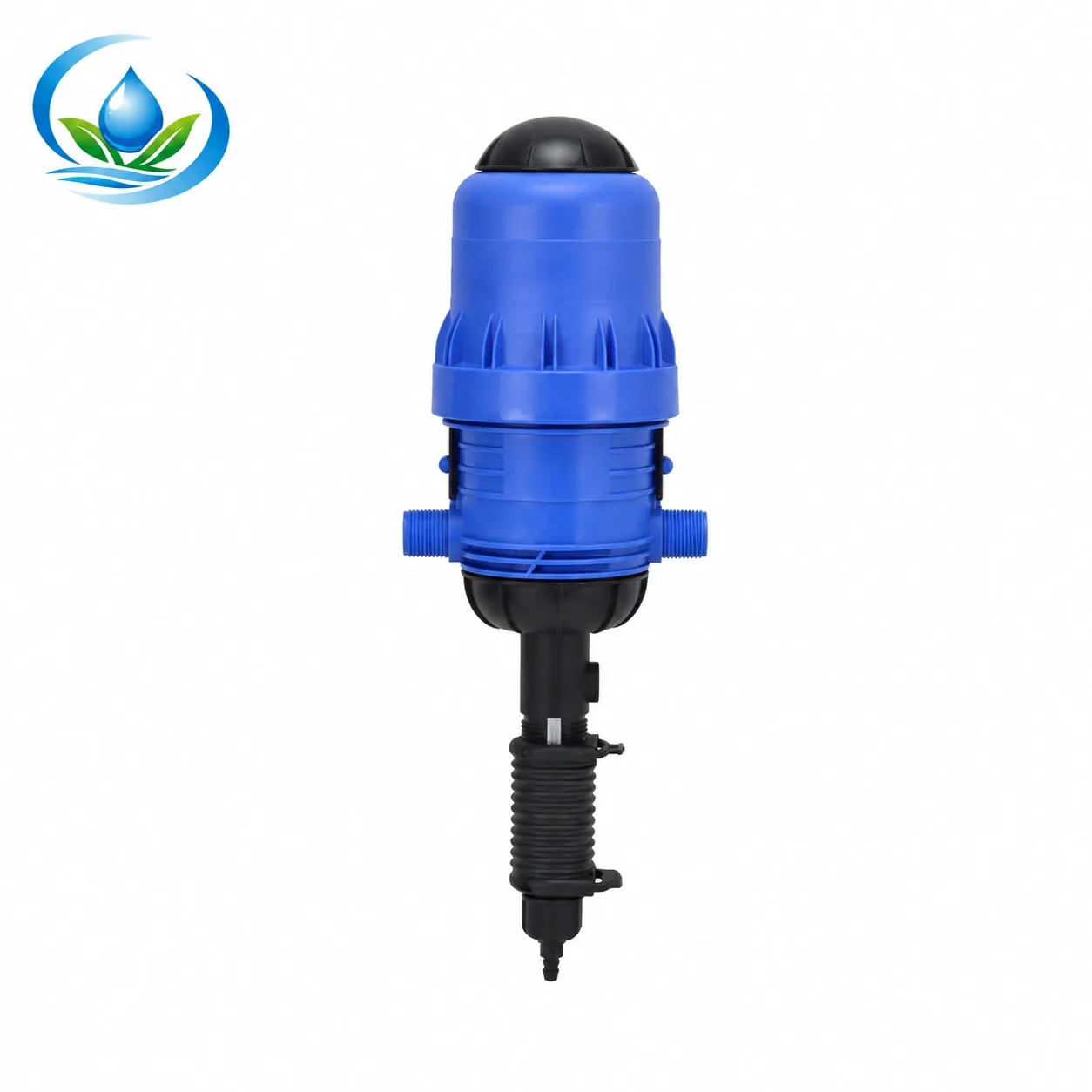
A container sitting beside the water-driven proportional injector is not automatically a pressure-rated bypass tank, and a bypass tank is not automatically the correct suction vessel for a proportional pump. The injector package guide helps identify the delivered body, suction path and separately needed container. First identify the actual equipment route; then ask which container type, connections, material and service procedure are approved for that route.
Do not use the volume of the irrigation water going to the crop as the tank volume. A drip block may receive many cubic metres of water while the approved stock plan uses a much smaller, separately calculated liquid volume. Conversely, a large vessel does not make a marginal injector suitable for the block. The farm needs a reliable water delivery route, permitted injection equipment, compatible nutrient solution and an accessible place for the container. Tank capacity solves only one part of that job.
Calculate prepared-stock demand from the actual event
For a suction-fed stock vessel, write down the active zone, planned injection window and the measured or manufacturer-supported uptake at the actual operating condition. The chosen crop adviser and product label establish the nutrient amount and stock preparation; this calculation only converts an already approved plan into a container requirement. Measure uptake with clean water when following the delivered injector's procedure. A falling level without a calibrated volume scale is a weak measure, especially in a tapered vessel.
For illustration only, imagine that a previously approved plan uses a measured clean-water suction rate of 0.45 L/min for a 40-minute injection interval. Multiplying the two gives 18 L withdrawn during that interval. This is not a crop dose, an IrriNex injector rating or permission to set an injector to 0.45 L/min. A different water flow, pressure, ratio setting or bypass condition may change the draw. Record the actual test conditions and repeat the check when the operating group changes. The clean-water injector ratio guide explains how to keep uptake and carrier-water measurements within the same test boundary.
Now decide what volume must be usable, not merely printed on a tank. A nominal 20 L container may not provide 20 L of reliably drawable stock if the approved pickup leaves a heel, the vessel needs a specified headspace, or the crew must stop before the pickup draws air. Those details belong to the selected container and injector instructions, not to a universal percentage allowance. Add only the actual reserve required by the farm's procedure. Write that reserve separately so it does not quietly become part of a nutrient calculation.
If one block is run in two stages, calculate the stages individually. An illustrative first stage drawing 9 L and second stage drawing 10 L needs 19 L of prepared stock only if both use the same approved solution and the same vessel may serve them without a forbidden gap or changeover. If the blocks have different crop plans, sources or materials, do not combine the numbers into one batch just to buy a larger tank. Make one event card per solution and compare the cards with the permitted refill points.
Do not size a bypass tank by suction arithmetic
A pressure-differential mixing tank does not simply lose a measured stock volume at a fixed proportion. Irrigation water enters the vessel, mixes with its contents and leaves for the line; the concentration may fall over the application. The University of Minnesota Extension discussion of chemigation equipment describes that declining-concentration behaviour. It is a reason to use the exact tank and bypass procedure rather than treating a vessel marked 100 L as 100 L of proportionally injected stock.
For this route, obtain the actual tank model's permitted pressure, connection drawing, filling and venting instructions, documented application behaviour and the approved way to verify the resulting delivery. Keep the irrigation group's flow and pressure with the bypass design. A tank may physically fit the available floor space yet fail the operating or service requirement. Do not transfer a competitor's bypass setting, application time or concentration curve to a Store tank. Do not open a pressurized vessel to check how much remains.
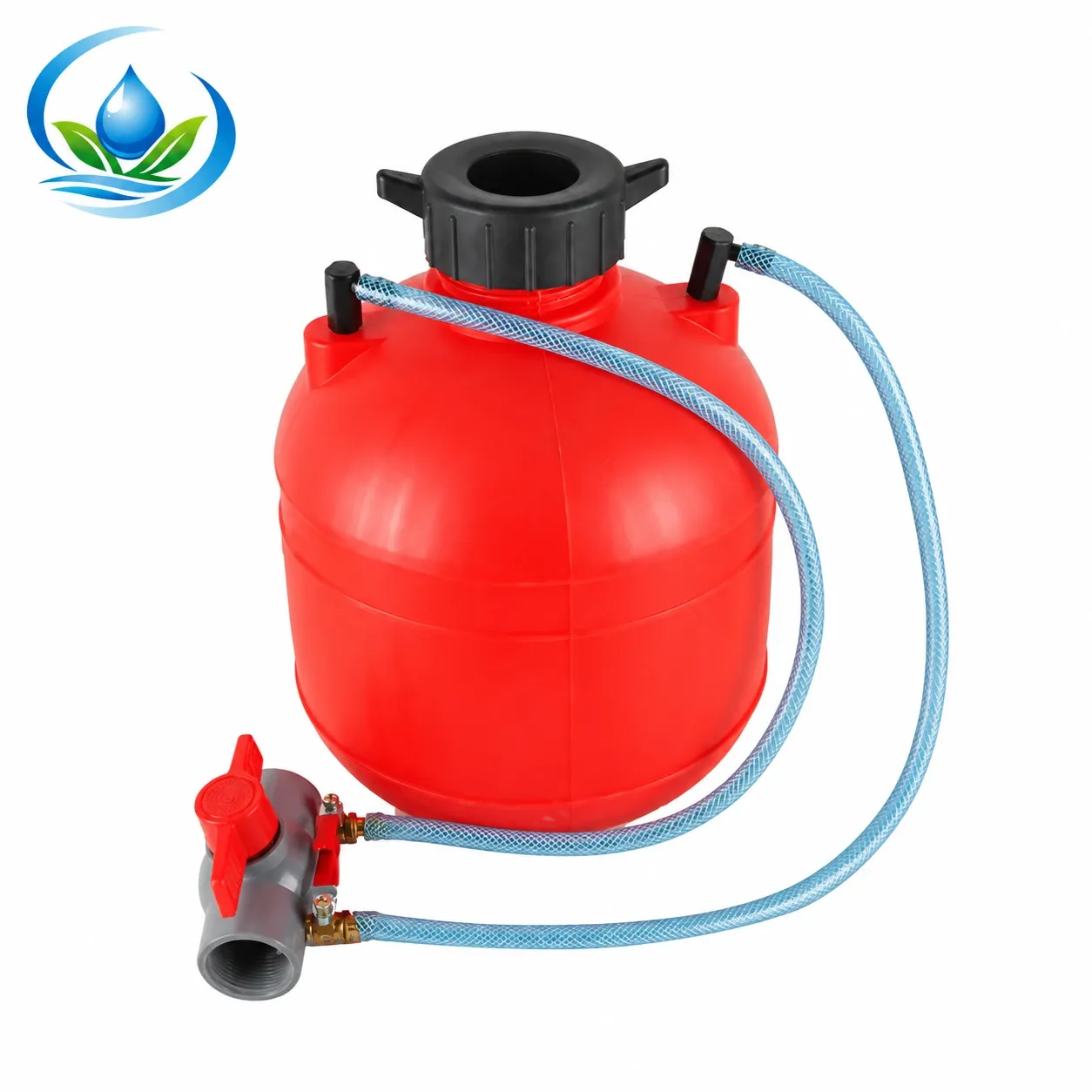
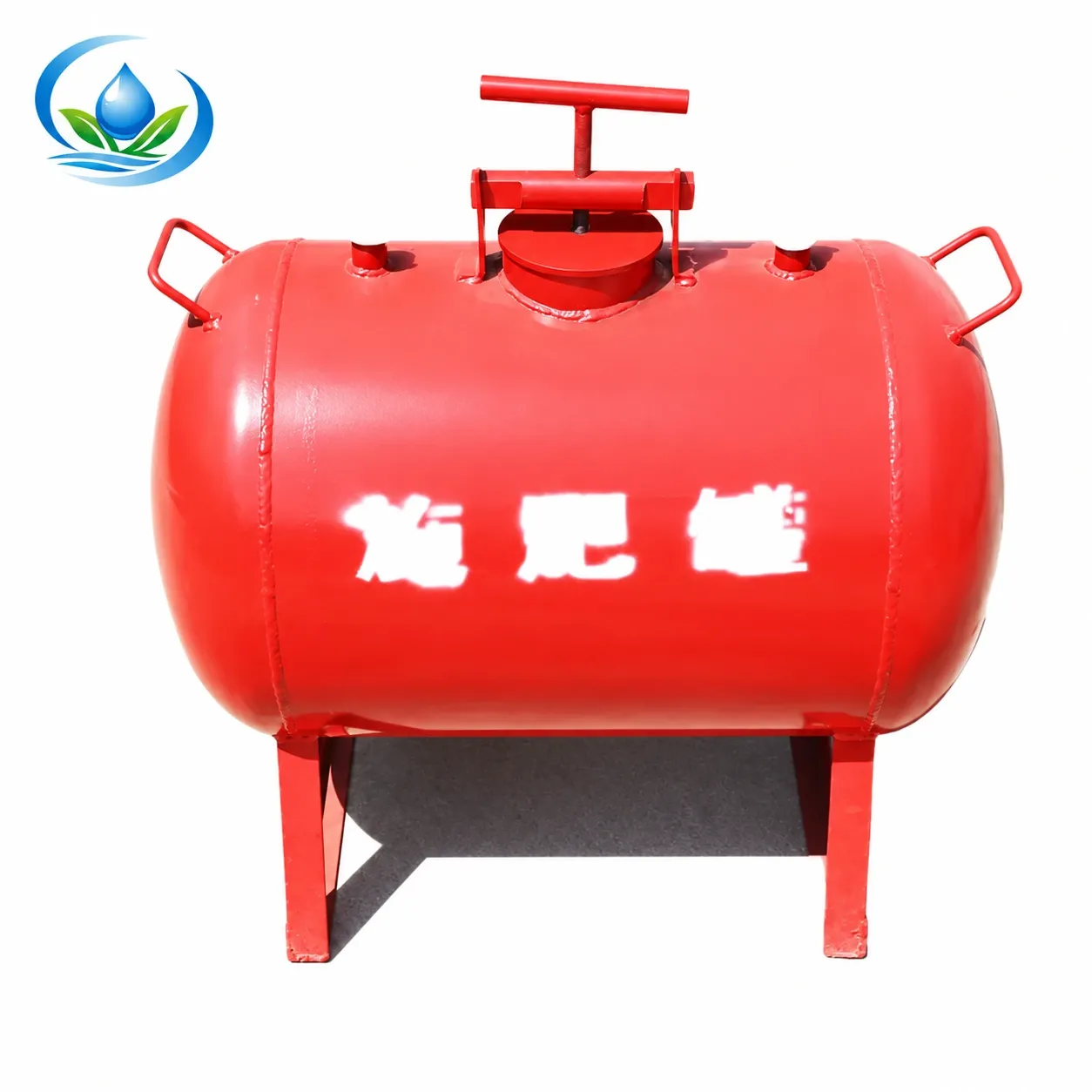
The compact plastic fertilizer tank and steel fertilizer tank are useful starting pages for the two listed vessel families. Their product pages do not settle the exact selected capacity, package contents and installation fit for every option. Confirm the model and delivered configuration before using a size in the crop plan. A larger tank should not be chosen simply because the previous one required a refill: poor water distribution, a changing bypass concentration or a wrong operating condition would remain after changing the vessel.
Make refill time and service access visible in the purchase
For each block, record when the crew can safely prepare, fill, observe and clean the container. A full irrigation round might have a short start-up period, a long unattended middle and a final clean-water finish. If the required refill falls during a period when no trained operator can reach the headworks, the theoretical tank volume is not operationally useful. Count the actual refill tasks, their travel and the interruption they cause. A larger vessel can reduce visits, while also changing lifting, mixing, cleaning and leftover handling. Choose against the complete work pattern.
Mark where the tank can stand without obstructing the filter, injector, valves or a normal maintenance route. Leave the service and removal space required by the selected manufacturer's drawings. The headworks service-space guide helps make that physical check before pipe and support positions are fixed. A tank squeezed behind a manifold may have adequate capacity on paper but be difficult to inspect or clean safely.
Check the vessel material and seals against the actual approved concentrate or diluted mixture that will contact them. “Fertilizer compatible” is too broad to decide suitability for a new formulation. The new-concentrate review separates concentrated stock contact from diluted water and crop use. Do not solve a compatibility gap with a larger tank, an improvised liner or an unapproved seal. Request the exact vessel and equipment material guidance with the nutrient product's current label and safety information.
Think about what happens to a partly used batch. A tank large enough for several events is not automatically a good store for leftover prepared solution. The product label and farm plan govern storage, holding time, agitation, security and disposal. Make only an approved amount that fits the planned operating sequence. Do not extend crop watering to empty a tank or send remaining nutrient down a drain. The clean-water finish guide addresses the separate end-of-run water route.
Compare the selected tank options on a consistent sheet
Put each proposed vessel on one row: exact model and selected nominal volume, usable volume under its approved pickup or bypass procedure, permitted pressure and connection, material approval for the intended liquid, included fittings, supported mounting and service access. Put the measured event demand or the approved bypass application requirement in the next column. A blank specification should remain blank until the exact seller or maker answers it; do not fill it with a number borrowed from a family photo.
Some compact-tank listings present several nominal sizes together, and a larger steel-family listing can show more than one size description. Do not order by a capacity embedded in a broad heading while the selected option or drawing says something else. Ask for the exact tank code, capacity, dimensions, connection ends and pressure limit of the unit being supplied. Separate maximum pressure from an approved working condition. If the page does not offer a direct purchase path for that option, request its current price, availability and delivery with the same model code.
The comparison should include what the crew would otherwise buy: a second permitted stock vessel, a compatible pickup assembly, a measured refill station or a different injector route. Sometimes a smaller, correctly placed vessel with one planned refill is easier to run than a larger unit that blocks service access. Sometimes a longer unattended window justifies more usable capacity. The result comes from the approved event and the actual labour window, not from a rule that the tank should cover a fixed number of acres.
Test the first event before repeating the choice
Before introducing nutrient, identify the exact model and follow its water-only commissioning instructions. On a suction-fed route, record the active irrigation group, observed uptake, water volume over the same interval, vessel starting and ending graduations, operating pressure and any change in distribution. On a differential tank, use the selected maker's approved observation and verification procedure; do not pretend a simple falling-level calculation establishes uniform delivery. If the injector fails to draw on a route that previously worked, the Venturi suction diagnostic can help distinguish a changed operating condition from a purchase error.
When the approved nutrient plan is run, record the actual block and batch identity, refill times and any leftover according to the farm's procedures. Compare the water distribution and crop observations with the existing baseline; tank capacity alone does not prove a crop benefit. The fertigation field-trial guide gives that wider operating and cost comparison. If the first event requires an unplanned refill, first determine whether the measured uptake, planned interval, usable volume or an equipment fault caused it. Buying the next size without identifying the cause can repeat the same problem.
Finish with an order request that states the exact container route, model, verified usable-volume need, connection and liquid-contact requirements, support and service space, and any planned refill. Attach the approved nutrient and equipment instructions that govern the application. Review the chosen product page for its offered configuration and any displayed pricing or delivery details; ask support to resolve an uncertain sale unit or fit. A good tank purchase lets the farm finish its documented drip-block event with an accessible, compatible container and a repeatable refill procedure; it does not replace the crop plan or certify the injector's performance.
Before you order
Compare this guide with the specifications for your exact product, selected option, water supply and field conditions. Your equipment requirements take priority over a general example.
Compare irrigation products