Irrigation Fertilizer Injector: Check the Body, Suction Parts and Set Contents
Identify the exact injector, suction-side pieces and bypass-set contents before ordering for an existing or new farm station.
Published by IrriNex Store
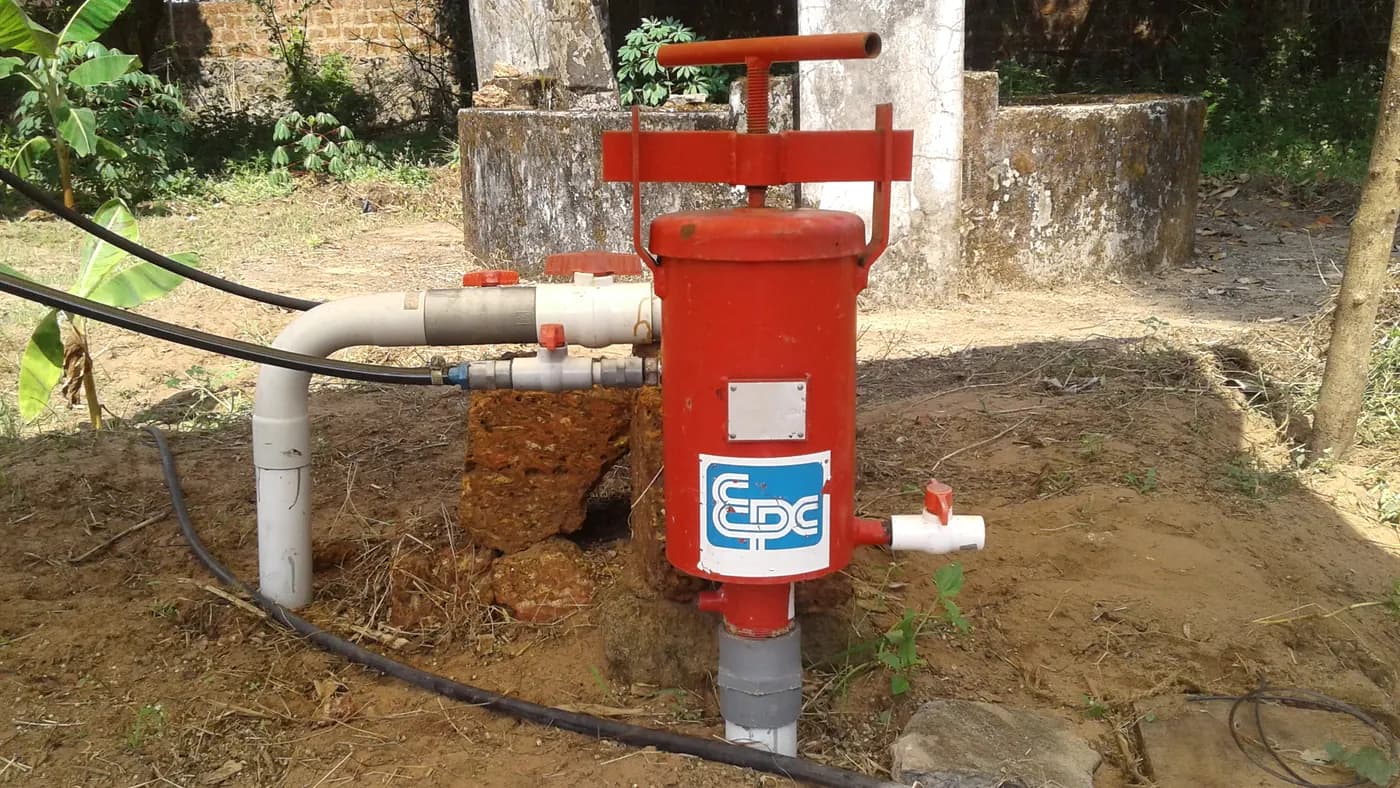
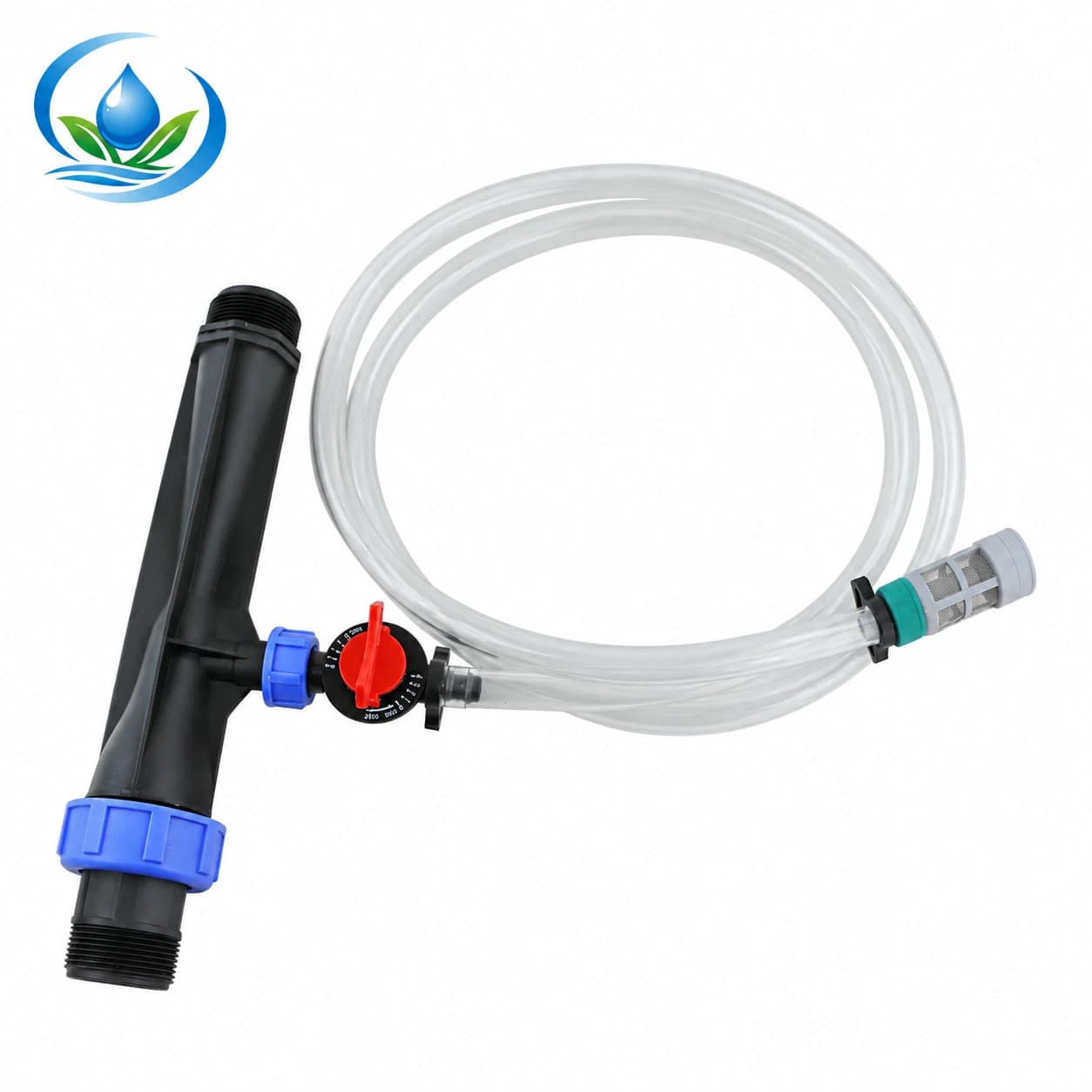
An irrigation fertilizer injector listing may show a Venturi body, a coiled suction tube, valves and a complete field arrangement in one set of pictures. Those are different purchasing units. Before ordering, identify whether you need the injector body for an existing station, a matched suction-side part, an assembled Venturi bypass set, or a water-driven dosing unit. Then record exactly which pieces the selected item includes. A connection size and an attractive diagram cannot answer that question for you.
Begin with the station you already own or the installation drawing you intend to use. Photograph the markings on the component being replaced, the water-side connections, the suction connection and the nearby valves. Mark parts that will be retained, parts that have failed, and parts that do not yet exist. This inventory prevents a replacement body from being mistaken for a complete bypass and prevents a set illustration from being treated as a packing list.
Decide what one order line must deliver
The Venturi fertilizer injector is the route for buying an injector item when the rest of the arrangement has already been identified. Its selected model still needs to match the planned water and suction connections and the permitted operating case. Do not count a hose, pickup strainer, valve, gauge, tank or adapter as delivered merely because one appears in a photograph. Ask for the selected option's contents if they are not itemized.
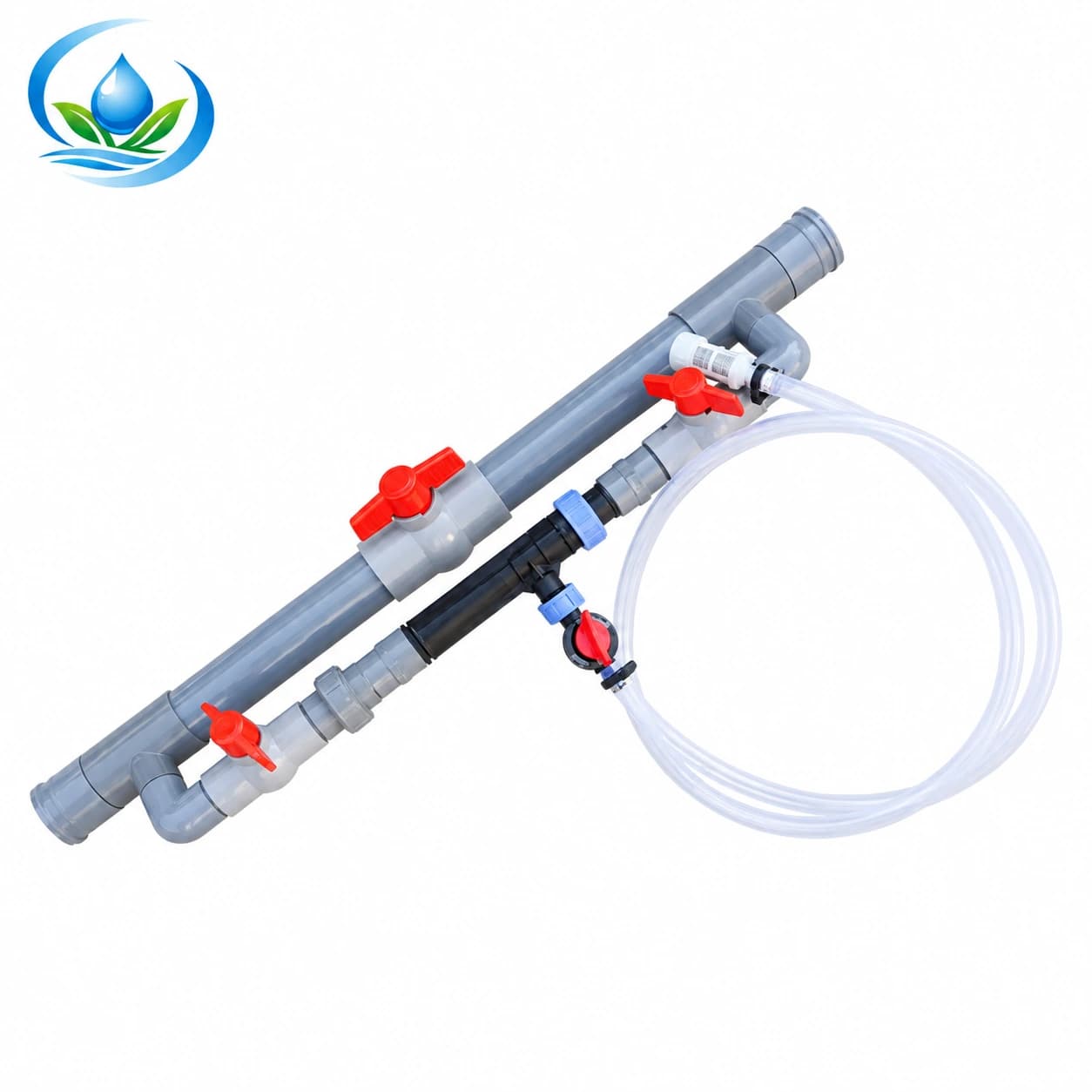
The assembled Venturi set lists a Venturi, bypass valves and fittings. That is a useful starting scope for a new bypass arrangement, but it does not specify every site's takeoff, return, source protection, stock vessel or measurement equipment. Confirm the exact option, quantities and connection ends before treating it as a complete order. The word “assembled” describes the offered set, not a promise that every part on your farm drawing is in its package.
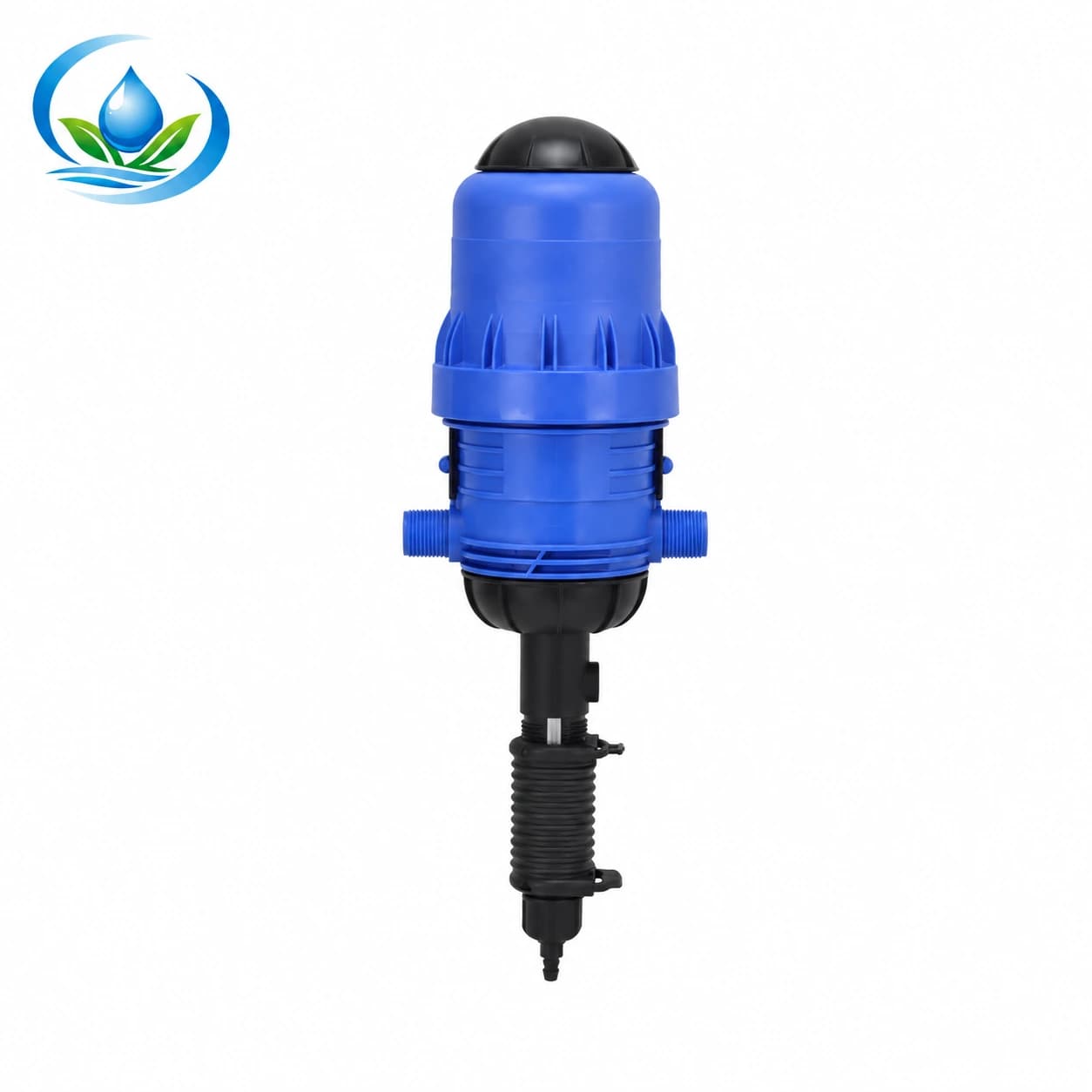
The water-driven proportional injector is a separate product route when that mechanism has already been selected for the farm. Its body and adjustment range do not establish which suction tube, strainer, adapters or spare seals accompany the delivered option. Request its actual supplied-parts list and drawing. A Venturi bypass fitting should never be assumed to mate with a proportional unit because both products are used for fertigation.
Use one row per line item in a purchasing sheet: selected product and option, quantity ordered, pieces expressly included, pieces already owned, pieces still required, and the evidence for each entry. An unanswered contents question is a reason to clarify the order, not a reason to buy two visually similar items and hope one fits.
Trace the injector water path and suction path separately
Sketch the actual water path from the source through the intended injection location to the crop lines. On a Venturi station, distinguish the injector water inlet and outlet from any bypass takeoff and return. On the stock side, draw the vessel, pickup, tube and connection into the injector. Label each physical joint separately. This is a parts-identification sketch, not an instruction to build an unverified bypass from a product photograph. An irrigation fertilizer injector package check should distinguish an installed water-path body from loose suction tubing and accessories shown beside it.
For every joint, record what connects on its left and right. Write the observed nominal size, measured pipe or fitting dimension where relevant, thread or other connection form from the actual part documentation, seal arrangement and the part that supplies it. A 1-inch label on an injector does not establish the thread form of a nearby fitting or the diameter of its suction port. Compare the actual selected product drawing with the existing parts before cutting pipe or ordering adapters.
Colour-code the sketch if it helps: water-path components, suction-path components, controls and site-supplied equipment. The stock tank belongs to the suction-side plan but does not become part of an injector order by appearing next to the unit. Similarly, an installation image can show a filter or pressure gauge to explain the system while the selected product contains neither. Keep the source-protection and filtration decisions with the actual site's qualified design and requirements.
If you cannot see a connection behind a mounted unit, collect the model label and the manufacturer's connection drawing rather than estimating from the exposed pipe. The filter and injector service-space guide helps keep that connection reachable in a new installation. An accessible joint also makes a later receiving and fit check possible without dismantling surrounding equipment.
Read each picture as evidence with a defined limit
A product page can combine a catalogue table, a close-up of one component and a schematic of a full working system. Give each image a different job. The table may identify model codes and separate maximum values; the close-up can show a visible body shape or port position; the schematic can explain where parts might sit. Only an itemized description or confirmed package list establishes what the chosen order line will deliver.
The current Venturi catalogue shows model codes F32V, F50V and F63V with 1-inch, 1½-inch and 2-inch water connections respectively. Their suction, water-flow and pressure maxima are separate figures, not a combined operating point. For an order audit, the model code and connection are identifiers. They do not tell you that the coiled tube in the picture is included, that its connection matches an older unit, or that the selected bypass will work at your measured pressures.
For the assembled set, the listed categories are Venturi, bypass valves and fittings. Make a second, more precise list before paying: number of valves, type and size of each fitting, injector model, branch orientation, loose or pre-connected pieces, and any seals or suction-side parts included. If the page does not show those details for the exact option, ask for the package list or a photograph of the actual supplied components. Do not convert a diagram's visible count into an order quantity.
For the proportional injector, check the exact body marking and the manufacturer's supplied-parts sheet. A drawing of a pickup tube or exploded service parts can describe how a unit operates without establishing that a replacement tube or service kit is included. Ask separately about what arrives with a new unit and what is available as a model-specific service item. The clean-water ratio check becomes useful after the correct unit and parts have arrived; it is not a way to identify an unknown fitting before purchase.
Use an existing station to avoid duplicate or missing pieces
Consider a grower whose Venturi body is physically damaged but whose bypass valves and pipework may remain usable. The proposed purchase is one identified replacement body, not an entire bypass by default. Record the marking on the old body, both water connections, the suction-port connection, the permitted operating case and any separate part that was damaged at the same time. Check whether the existing suction tube and seals may be retained under the exact model's instructions. A visible resemblance alone is not proof of compatibility.
If the old unit simply stopped drawing, first use the Venturi no-suction diagnostic guide to document the changed conditions. A replacement injector ordered from the water-port size will not correct a closed branch, a damaged pickup line or a different operating zone. The buying sheet should state whether the request is a confirmed body replacement, a confirmed external part replacement or a review of an unresolved symptom.
In the same station, a small tube visible near the injector may be a suction hose, a rigid injection section or another manufacturer's accessory. Name its function and record both ends before searching a catalogue. The Venturi injection tube is a separate product enquiry; its name alone does not certify it as the flexible pickup hose for every Venturi model. Ask for the exact part dimensions and material when the damaged component is the suction-side connection.
A grower starting a new station has the opposite problem: an injector body may be present in the draft order while the branch controls and site connections are absent. Put the assembled set next to the individual body as alternative order scopes, not automatically two things to buy. Compare the set's confirmed package with the drawing, and remove only the duplicate items that the exact selected option actually supplies. Keep the remaining site parts visible on a separate list.
List the missing suction parts for the exact order option
Give every part a status: “confirmed in selected item,” “existing and identified,” “required separately,” or “needs confirmation.” Put the product page, option code, manufacturer's drawing or existing-part photograph beside the status. That evidence column matters because a parts list assembled from several different pictures can look complete while referring to incompatible sizes or different product generations.
On the water side, check the injector or set, the designed isolation and control devices, the takeoff and return where applicable, every transition to existing pipe, supports and permitted measurement points. On the suction side, check the selected stock vessel, pickup, tube, strainer or check component if specified, connection to the injector and the materials that will contact the solution. These are categories to resolve against the actual station, not a claim that every listed accessory is included or mandatory for every model.
On a third line, record source protection, filtration and site-specific safety provisions established by the installation plan. A small suction-line check component is not a substitute for the water-source backflow arrangement required for an agricultural chemical injection site. Equipment labels, local requirements and qualified design determine the actual device and placement. The filtration buying guide helps choose the filter after water and outlet requirements are known; a filter drawn next to an injector is not an implied part of its package.
Make the sheet usable by adding a count. If two injection stations will operate independently, write the quantity of each confirmed package and the separate items for each station; do not multiply a photograph's valves by the number of stations. If one set will be moved between blocks, identify the connection and isolation arrangements at each block rather than assuming the same adapters travel with it. The farm zone worksheet can provide the actual station locations without turning this purchase audit into another pump-sizing exercise.
Keep hydraulic approval separate from package contents
A complete box can still be unsuitable for a particular water route. Before ordering, retain the selected model's permitted operating information and the farm's measured running conditions with the parts sheet. The Venturi's separate listed maxima do not promise suction at the site's flow and inlet/outlet pressures. The proportional injector also needs the selected unit's permitted flow, pressure, solution and connection details. Resolve that fit with the exact manufacturer's instructions or a qualified supplier review.
This check should stay short and specific in the order record: name the active irrigation zone, measured running water conditions, model, selected connection and the document used to confirm the fit. For a trial of whether injecting nutrients improves the farm's work, use the fertigation field-trial guide. The question here is what the selected retail item actually contains after the equipment route has been chosen.
Never repair an uncertain fit by forcing a thread, adding an unapproved adapter or moving a suction vessel merely to make a pictured arrangement look right. If the connection standard, material or supplied seal is unknown, hold that line on the sheet for confirmation. A separately purchased “universal” accessory cannot be treated as universal without matching the delivered model and its approved connection method.
Check the exact option before payment and again on receipt
At the product page, choose the exact variant or request the exact set configuration. Compare the current item, sale unit, price, availability, package quantity and delivery information. If a set's options or contents are not clear enough to order directly, send the supplier the marked drawing and ask for an itemized response. State which pieces you already own so the response addresses missing parts rather than repeating a general equipment recommendation.
Before payment, save the page or written confirmation that identifies the option and included parts. A useful confirmation names the injector or pump model, included valve and fitting counts where relevant, water-side connection standards, suction-side contents, separately required site parts and any accessory code. A vague phrase such as “complete fertilizer kit” does not resolve what is inside the package. Keep price and delivery with the same dated record because those details can change.
When the order arrives, compare the packing slip and physical pieces against that record before installing anything. Count bodies, valves, fittings, seals, tubes and instructions separately. Photograph labels and connection ends while the parts are clean and unassembled. If the delivered option differs, pause and resolve it before cutting existing pipe or combining components from different orders. Do not substitute an apparently similar suction part until the selected model's compatibility is confirmed.
Installation and water-only commissioning follow the delivered equipment instructions and the site's approved design. Isolate and depressurize before opening or changing a pressurized assembly. The receiving check confirms identity and contents; it does not demonstrate injection rate, crop dose or source protection. Keep the filled-out purchase sheet with the equipment so a later replacement request names the exact part instead of describing only “the fertilizer injector.”
Questions that prevent the common wrong order
Does a Venturi product photo prove the hose and pickup arrive with the injector? No. Confirm the selected option's itemized contents. The visible hose may be shown for context, and the interface still must match the delivered body even if a hose is included.
Does the assembled bypass set include the tank and every safety device? Its listed scope is Venturi, bypass valves and fittings. Check the actual package list; plan the stock vessel, source protection, measurement points and site adapters separately unless their inclusion is explicitly confirmed.
Can I use a Venturi accessory on a proportional injector? Use only an accessory whose code, connection, material and approved function match the selected unit. Shared use in fertigation does not prove interchangeability.
Should I buy a whole set for a damaged body? Identify the damaged part and the existing assembly first. If only the body needs replacement and the rest is confirmed suitable, compare that exact replacement. If the arrangement itself is missing or unsuitable, obtain an itemized set proposal and a separate fit review.
Finish the order with one clear line for the chosen injector or set, a second line for confirmed included components and a third for missing site parts. Mark unresolved connections and package contents for supplier confirmation. Then check the current product option, price, availability and delivery before committing. That record gives the farm a usable purchase and a precise reference for the next repair.
Before you order
Compare this guide with the specifications for your exact product, selected option, water supply and field conditions. Your equipment requirements take priority over a general example.
Compare irrigation products