Sprinkler System Fertilizer Injector: Check Water Distribution Before Buying
Before adding an injector to a fixed sprinkler block, verify where its water lands and whether the exact unit fits the measured operating group.
Published by IrriNex Store
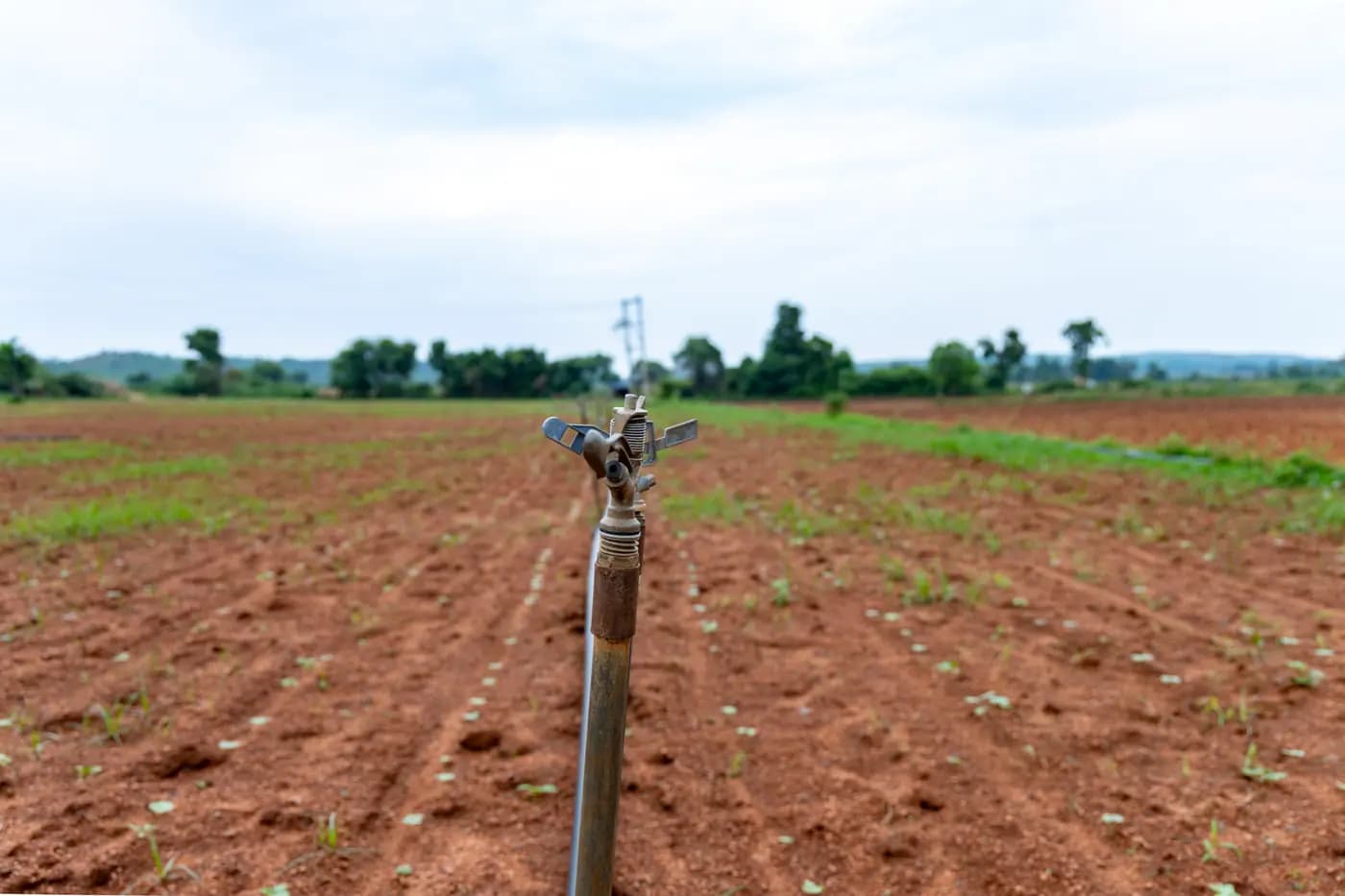
A sprinkler system fertilizer injector cannot correct a dry strip, an overwatered edge or a pressure loss that already appears during ordinary watering. Before buying an injector for a fixed field block, establish where its sprinklers put water while the intended group is running. Then check whether the proposed injection arrangement can operate at that same measured flow and pressure without spoiling the approved water pattern. Fertilizer follows the distribution route; the injector is only one part of the purchase. Use the same running crop group to compare ordinary water distribution before injection; a dosing device cannot correct a dry strip that already exists. Sprinkler fertigation water-only coverage should be observed on the running crop group before a dosing device is selected.
Imagine a vegetable block supplied by fixed risers. The near heads look strong, but a far row is uncertain and a field edge stays wet after the rest dries. A product page can tell the grower that an injector has a connection size or an adjustment range. It cannot tell whether every part of this planted block receives acceptable water. The buying decision begins with the installed block and its actual permitted operating group, not with the shape of the injector pictured online.
Is water-only sprinkler coverage ready for fertilizer injection?
Draw the source, pump, filter arrangement, mainline, relevant valves, sprinkler branches and the proposed injection location. Mark the heads that operate together during the crop's normal watering event. A group on a timer screen may differ from the group actually open in the field if a branch valve has changed or a repair isolated part of a line. Identify the present crop, planting stage and the irrigation window already accepted by the farm's crop plan. A chemical label and a qualified local adviser determine whether an input may be applied; this equipment review does not choose a fertilizer or its dose.
Keep a second line on the map for other operating groups. A single headworks may serve blocks with different head counts, branch lengths and elevation. An injector selected around the largest block could fail to draw or meter correctly when a smaller permitted group runs. Equally, a unit that suits the small group may lack a documented range for a larger one. List the groups that would actually receive the same approved nutrient programme instead of multiplying every possible valve combination into a fictional demand.
For each intended group, record the water source in use, which filter and valves are in the route, the running flow measurement and pressure observations at named points. Note recent source changes, filter loading and any other simultaneous user. A pump's maximum flow and maximum head are separate ratings, not evidence that both occur at the irrigation block. Ask for an operating record that can be repeated when the proposed equipment is reviewed.
Check the dry strip before selecting an injector
Walk the block during a normal water-only run. Look for stationary or obstructed heads, leaks, spray intercepted by leaves or supports, and drift beyond the planted area. Observe the near, middle and far parts of the active group as well as the boundary. Wet foliage alone does not tell you how much water arrives at a location, and a source gauge cannot reveal a dry pocket between risers. Record the nozzle or head identities and the conditions of the run so that a later comparison means something.
A mapped collection check can turn an uncertain patch into evidence. Use the fixed-block sprinkler catch-test guide for collector placement, equal exposure, measured depths and a repeated comparison. This purchase guide uses the resulting map; it does not replace that testing method. Keep edge readings distinct from interior readings, and write down wind, interruptions and the actual group running. A neat average can hide a dry row and a much wetter row. Do not declare a nutrient route acceptable from the average alone.
The collection map describes water arriving at the collectors, not nutrient taken up by roots. Inspect surface ponding, runoff, crusting and the receiving soil separately. The ponding-before-head-change guide helps separate a sprinkler delivery problem from a ground intake problem. This matters to an injector buyer because a wet patch can receive more nutrient solution without becoming a better watered crop position. A dry strip can remain deficient even while total water and stock use increase.
University of Minnesota Extension notes that nutrient application through sprinklers cannot be more uniform than the water distribution that carries it. Its chemigation discussion is framed by Minnesota conditions and rules; use its distribution principle here, not its local legal requirements or a universal application formula. The water pattern must meet the farm's own agronomic and equipment acceptance criteria before a nutrient delivery device is added. Read the University of Minnesota Extension discussion.
Separate a correctable fault from a redesign
If the map has a persistent low-water strip, identify what can account for it before requesting an injector. A blocked nozzle, damaged rotation, closed branch or leak has a different remedy from inadequate overlap or an unsuitable layout. Wind may change the observed pattern between runs. Do not promise that a longer nutrient run will fill the dry strip; it can add water and fertilizer to already wet places while the original defect remains. Repair and remeasure the water-only group where a specific fault is found.
Changing heads, nozzle sizes, pressure or simultaneous head count also changes the hydraulic condition an injector would experience. Keep the before and after water records together. If the farm needs a head or layout change, complete its documented design and field check before locking in an injector size. If the constraint is soil intake rather than coverage, an injector purchase will not remove runoff. A limited field comparison can be worthwhile, but the fertigation field-trial guide addresses that wider labour and outcome question after the irrigation route is understood.
A moving pivot, travelling gun or hand-moved line presents a different distribution pattern and operating sequence from a fixed riser block. Do not extend a stationary block's catch map or injector selection to those machines. The selected machine and application plan need their own documented design, control and source-protection review. This article's shopping path is deliberately tied to a named fixed operating group.
Compare injector fit at the same running condition
Once the water pattern passes its field review, mark the intended injection point and ask for pressure and flow at that location while the same sprinkler group runs. Record both the water available to the injection branch and the pressure still needed at the far sprinklers. A Venturi uses a documented inlet-to-outlet relationship to create suction; a branch bypass and its controls can change pressure available downstream. Do not take an advertised maximum suction figure as the rate at your field's actual pressure and flow.
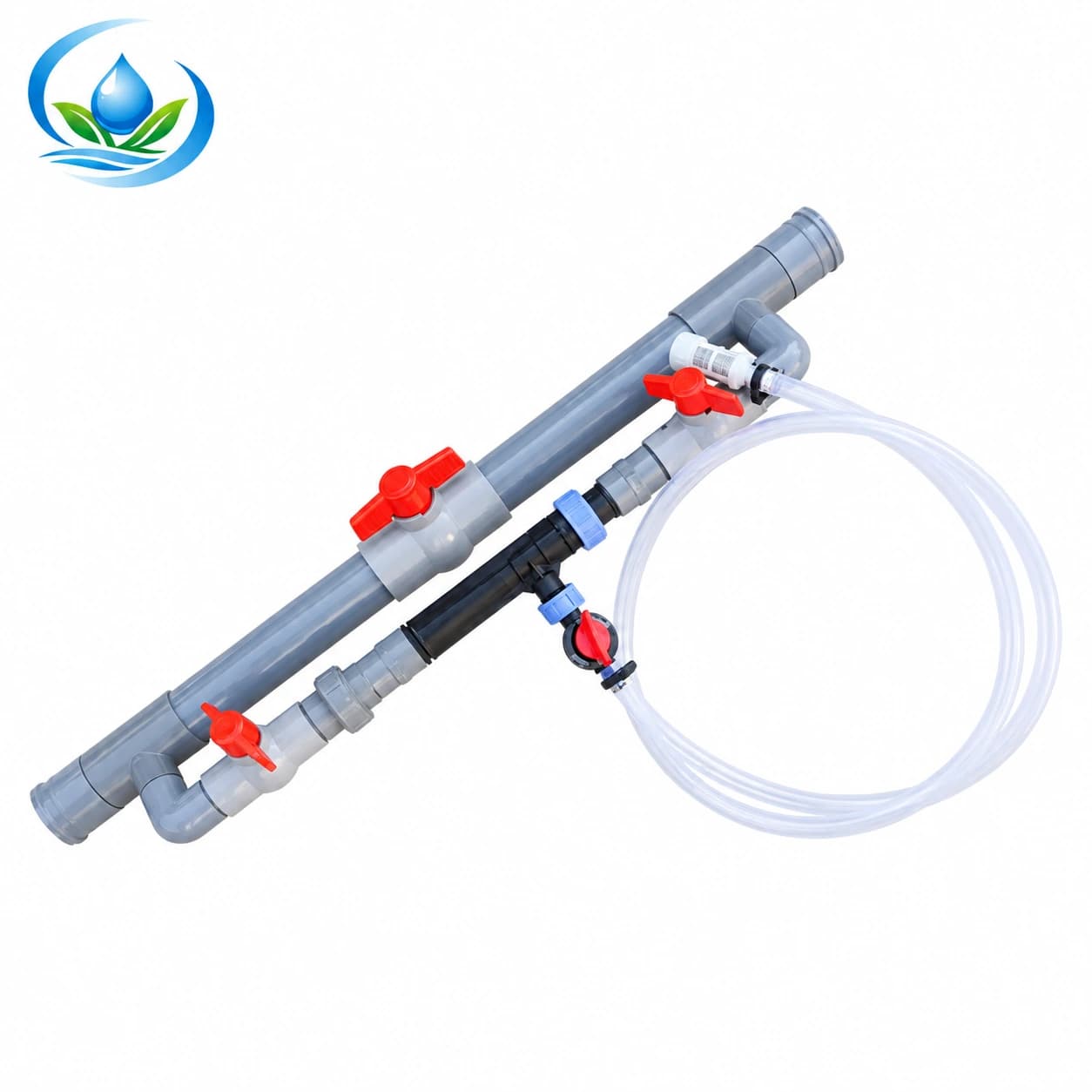
The assembled Venturi injector set lists a Venturi with bypass valves and fittings. It offers an identifiable product route, not proof that the package contains the source-protection arrangement, every site adapter, a suitable stock vessel or a verified operating point for this sprinkler block. Confirm the exact selected option, its included pieces, connection ends, manufacturer's performance information and permitted water conditions. Keep the existing filter and valve layout on the drawing; a schematic beside a product does not prove that it matches the farm.
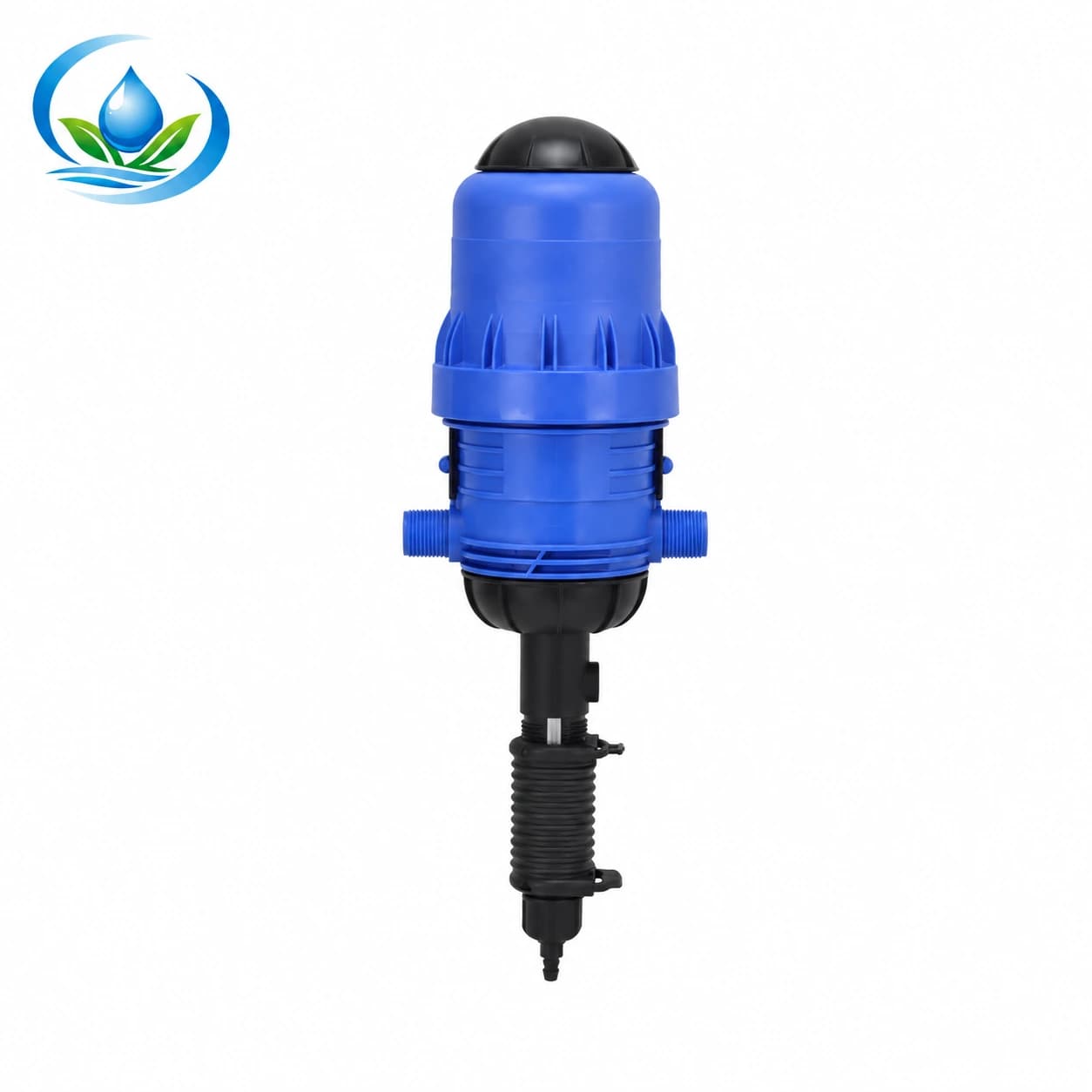
The water-driven proportional injector is a separate route. Its listed adjustment range does not establish a dose at the operating block, nor does a water-driven name prove a controller, automatic shutoff or compatibility with every nutrient. Obtain the delivered variant's flow and pressure envelope, connections, wetted-material approval and operation instructions. Compare the smallest and largest real groups on the farm with that documented envelope. The clean-water ratio-check guide explains a later acceptance measurement; that test cannot make an out-of-range operating condition suitable.
For either route, preserve the sprinkler pressure and distribution the crop already needs. A convenient inlet size is not a license to sacrifice the pressure at distant heads. Conversely, a pressure gauge that looks acceptable at the headworks does not certify equal delivery at the field edge. If an equipment seller proposes a bypass, regulator or another control change, ask how the exact arrangement maintains the already documented field condition. Have the qualified designer resolve the site layout; do not improvise a live bypass from a general diagram.
Check what must be approved outside the injector box
Introducing nutrient stock to irrigation water creates a source-protection and material-compatibility question separate from the sprinkler pattern. The water source, injection point, stock vessel, intended fertilizer and local requirements determine the accepted protective arrangement. A check component on a suction tube is not proof that the source is protected. Ask the responsible local installer or authority to confirm the complete design before use, and keep the approved arrangement with the equipment record. This article does not prescribe valve order or a chemical operating procedure.
Similarly, a water-distribution map does not approve a new concentrate. The label, crop plan and materials that contact undiluted stock need their own review. If a formulation changes, the new-concentrate compatibility guide covers that distinct decision. Do not respond to uncertain nutrient distribution by strengthening stock, adding an unapproved product or changing the dose. First establish the water route and resolve the cause of variation.
The irrigation window still belongs to the crop. Plan nutrient addition only within a crop-approved watering event, and identify how the selected unit can stop new stock while normal water delivery continues if that finish is required by the approved plan. The clean-water finish guide discusses the control distinction for drip systems; its timing or hardware cannot be transferred automatically to an overhead sprinkler block. Do not extend irrigation solely to empty a stock vessel or assume that a tank becoming empty proves all remote sprinklers receive clean water.
Turn the field evidence into a short buying brief
Give a seller or designer the block map, head and nozzle identifiers, active quantity, water-only collection results, working source and branch measurements, crop watering window and the exact position proposed for injection. Mark any unresolved dry or wet locations. Name each permitted operating group that would use the injector, including the smallest. Add the water source and the selected nutrient identity for the separate source-protection and material review. A useful request asks which exact unit and documented installation can serve those conditions; it does not ask only for the largest injector on a catalogue page.
Keep the package question explicit. Does the selected order contain the body, bypass valves, fittings, suction-side components, measurement points and any approved protection equipment? Treat each as a separate line until the exact option confirms its contents. The injector package-contents guide helps distinguish an individual device from an assembled set. A photographed tank or schematic filter does not become a delivered part. Ask for the connection standards and fitting materials rather than relying on similar-looking diameters.
Check the current selected option's price, sale unit, availability and delivery details. If an option does not permit a direct cart purchase or its contents and model data are missing, ask Store support how to order that exact unit and obtain its documents before buying related parts. Keep this commercial check separate from technical acceptance. A purchasable item can still be unsuitable for the block, and a technically plausible diagram can still omit necessary parts.
A responsible decision has three possible outcomes. Buy the exact documented arrangement when the fixed block's water pattern and operating case are accepted and the site-specific injection and protection design is complete. Hold the injector order while a sprinkler fault or soil response remains unresolved. Or reject that model and request another documented option when its permitted flow, pressure or materials do not cover the real duty. Each outcome is more useful than adding nutrient stock to an unexplained dry strip.
Questions to settle before checkout
Will an injector make a dry part of the sprinkler block receive more fertilizer?
It sends stock into the water route; it does not independently redistribute that water at the field. Find why the area receives less water, correct the documented cause where possible and compare the water-only pattern again. Raising stock concentration would also change what the better-watered places receive and is not a distribution repair.
Is one good pressure reading enough to select the injector?
No. Record pressure at identified points with the intended sprinkler group operating, along with actual flow and the distribution evidence. The selected injector also needs its own documented flow, pressure and connection case. Static pressure or separate maximum ratings cannot substitute for that combined operating review.
Can the same injector serve several fixed blocks?
Possibly, if its exact documented range and control arrangement cover every permitted group and the nutrient programme authorizes their use. Check each group's running conditions and water pattern separately. A good result in the largest block does not prove that a smaller block draws or meters within the same unit's accepted range.
What if the water pattern is acceptable but the package list is unclear?
Keep the field record and request the selected option's itemized contents, model instructions and compatible connections. Do not infer included safety equipment or suction parts from a photograph. Place the order only after the missing parts and installation responsibilities have names and evidence.
Before you order
Compare this guide with the specifications for your exact product, selected option, water supply and field conditions. Your equipment requirements take priority over a general example.
Compare irrigation products