Fertilizer Injector for Irrigation System Upgrades: Check a New Concentrate First
A new fertilizer concentrate needs three separate checks: injector contact materials, the dilution with actual irrigation water, and the crop nutrient plan.
Published by IrriNex Store
Choosing a fertilizer injector for irrigation system upgrades starts with the new concentrate, even when last season's feed ran without trouble. The new container can have different ingredients, concentration and label conditions. Those differences matter first where undiluted stock touches the injector, then where the injected solution meets the farm's water, and finally where that solution reaches the crop. Check those three questions separately before buying seals, replacing an injector or putting the new formulation into the line. Fertilizer injector concentrate compatibility starts with the parts touched by undiluted stock, then requires separate checks for source water and crop approval.
Consider a grower who changes from one liquid nutrient product to another while keeping the same drip block and water-driven injector. The coupling still fits and the previous ratio setting is known. Neither fact answers whether the suction tube and internal wetted parts tolerate the new stock, whether the diluted water will remain suitable for the irrigation route, or whether the new nutrient programme is right for that crop. A useful purchasing decision starts with the exact product identity, the exact injector model and the water actually used on that block.
Check a fertilizer injector against a new concentrate
Make a short change record with three headings: concentrated product against equipment materials; diluted product against irrigation water and distribution parts; and the agronomic use of that product for the crop. A favourable answer on one line cannot fill a blank on another. For example, a supplier may approve a body and seal for a stock liquid while the farm's water and dissolved constituents still create a deposit risk downstream. Conversely, a solution that looks clear in a container does not establish that the injector's suction assembly can contact its concentrate.
Record the proposed formulation's full trade name, manufacturer, version or batch where relevant, and whether it replaces or supplements the earlier product. Keep the current label and safety data sheet with the change record. Note the intended stock preparation, storage conditions and working temperature only as specified by the product instructions and farm plan; do not use a concentration remembered from the old formulation. If more than one product enters the headworks, identify the order and route prescribed by the responsible adviser and manufacturers rather than assuming they may share a stock vessel.
The first practical question is whether the change is approved at all under the product label, the crop nutrient plan and the installed equipment's instructions. If those documents do not establish a compatible route, pause the product change and obtain a model-specific answer. A new injector purchase is not a substitute for confirming the fertilizer's suitability for the crop or the local water. The fertigation field-trial guide can help with the separate question of whether a changed nutrient approach produces a useful field result; the checks here establish whether this formulation can enter the existing equipment route.
Trace stock-contact parts before checking diluted solution
Start at the stock container, then follow the pickup, suction tube, foot component if fitted, injector inlet and internal dosing path to the point where stock mixes with irrigation water. Write down the exact installed injector model and any separately supplied tube or service assembly. A generic product-family name is not enough: manufacturers can change seal sets, tubing, check components and approved fluids between variants. A compatible main body does not automatically approve a replacement hose bought from a different range.
For each wetted component, seek its documented material and the delivered model's chemical-compatibility guidance. Give the equipment manufacturer or qualified supplier the new formulation's label and safety data sheet, the intended stock conditions, and the actual model and part references. Ask for an answer covering the concentrated contact path, not merely a sales statement that the equipment is a “fertilizer injector.” If the documentation identifies a compatible service part, check that exact part number and installation instruction before ordering it.
Inspect existing components under the equipment maker's isolation and service instructions before reusing them. Cracking, swelling, hardening, loss of suction or an unexplained leak deserves diagnosis even if the new formulation has not yet run. Such symptoms do not by themselves identify the cause or authorize a different seal material. Do not dismantle a pressurized injector, improvise a seal, or assume that a service kit for another make fits this one. A maker-approved part change should also leave the unit inside its documented flow and pressure operating conditions.
If the old stock remains in the container or suction path, follow the product label and the exact injector's changeover instructions for handling and cleaning. Do not use the irrigation block as a disposal route simply to empty an old mixture. The point of this review is to keep unknown concentrated contact out of the new run, while respecting the farm's existing procedures for chemicals and equipment. If the maker's instructions are missing, obtain them for the delivered model before service or a formulation change.
Check the diluted solution against the actual water
After the injection point, a different question begins. The fertilizer is now diluted by the farm's irrigation water and may pass through downstream filtration before moving through the manifold, pipes and emitters, depending on the installed layout. The source-water mineral composition, prior treatments, other nutrients and temperature conditions can affect what remains dissolved. A water sample from another season, well or blend may describe a different mixture. Put the current water report beside the proposed product information and ask the fertilizer maker or qualified adviser to review the combination for this application.
UC Agriculture and Natural Resources guidance on microirrigation maintenance identifies chemical precipitation as a concern and recommends assessing irrigation-water constituents before combining inputs. It does not supply a universal approval for a particular farm mixture. Use its point as a reason to bring the right water analysis to the manufacturer or adviser, not as a recipe, an automatic pass threshold or permission to combine products that the label keeps separate.
A physical filter can catch some particles; it cannot make a dissolved incompatibility disappear or certify that a concentrate is safe for injector seals. If deposits appear in a filter or at emitters after a formulation change, note where and when they occurred, the water source, the active products and the operating group before deciding on replacement hardware. The water-test and filter-selection guide covers how to read source-water results for treatment choices. Here that report is an input to the new formulation review, not an invitation to assume that a finer screen solves precipitation.
Do not treat a clear-looking sample, a single electrical-conductivity reading or one successful short run as a blanket compatibility certificate. The mixed solution can encounter different water, concentration and temperature along the system or on another day. A jar test may be part of a supplier's documented process, but its method and interpretation belong to the responsible product and water specialists. Do not invent a farm-side mixing sequence, acid addition or pH target from a general article. Preserve the adviser or maker's written decision and the conditions it covers.
Keep crop use separate from hardware compatibility
The fertilizer label and the crop adviser determine whether the new product, application amount and timing fit the crop. Injector fit only says that a specified flow path may handle a specified material under specified operating conditions. It does not approve the nutrient rate, confirm legal uses, replace tissue or soil interpretation, or prove a yield benefit. When the nutrient analysis or formulation changes, revisit the farm's calculation before carrying over the old stock volume or injector setting.
The injector ratio-test guide explains how a real operating flow changes the stock-uptake denominator. That arithmetic becomes useful only after the material and water checks pass. A percentage marking copied from a previous product does not preserve the same nutrient delivery if the new product contains a different nutrient concentration. State the target from the approved crop plan, then have the responsible operator calculate stock preparation and injection settings from the delivered equipment's instructions.
Keep the crop watering window in view as well. The irrigation event should meet crop water needs; it should not be stretched to consume unwanted stock or to force an unapproved formulation through the system. If the proposed nutrient programme cannot fit the permitted crop irrigation, revise the programme with the adviser before purchase. The clean-water finish guide addresses the separate matter of how a planned injection ends along the active route. It does not settle material compatibility at the start of a new formulation.
Compare the two Store injector formats by the documented route
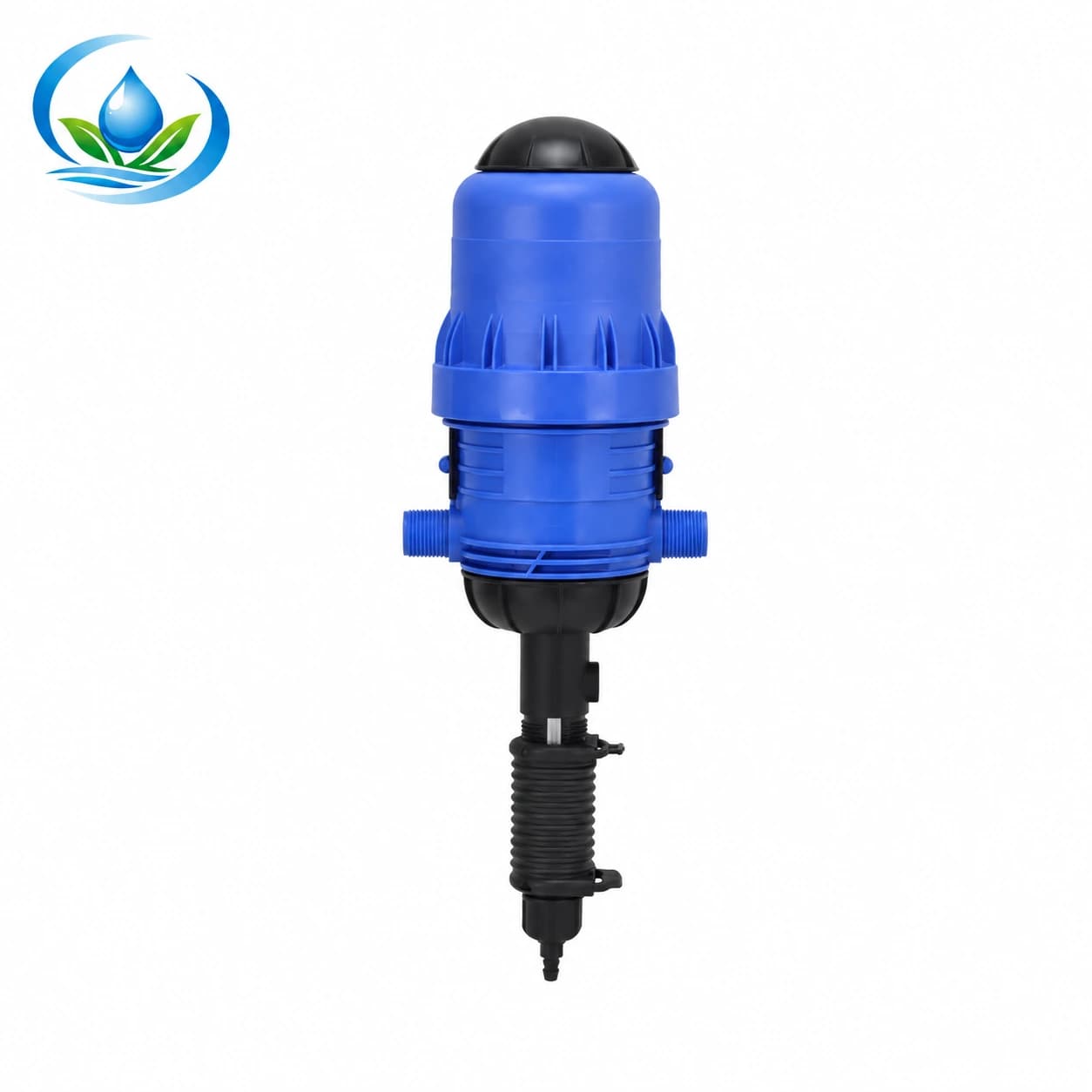
The water-driven proportional fertilizer injector is a dosing-pump format. For an existing or proposed unit, verify the exact delivered variant, wetted materials, approved liquids, suction assembly and service parts with its maker. Confirm the selected model's working flow and pressure for the block, connection fit, and the maker's documented changeover procedure. The family name and visible ratio control do not prove that a new concentrate is compatible with every internal material.
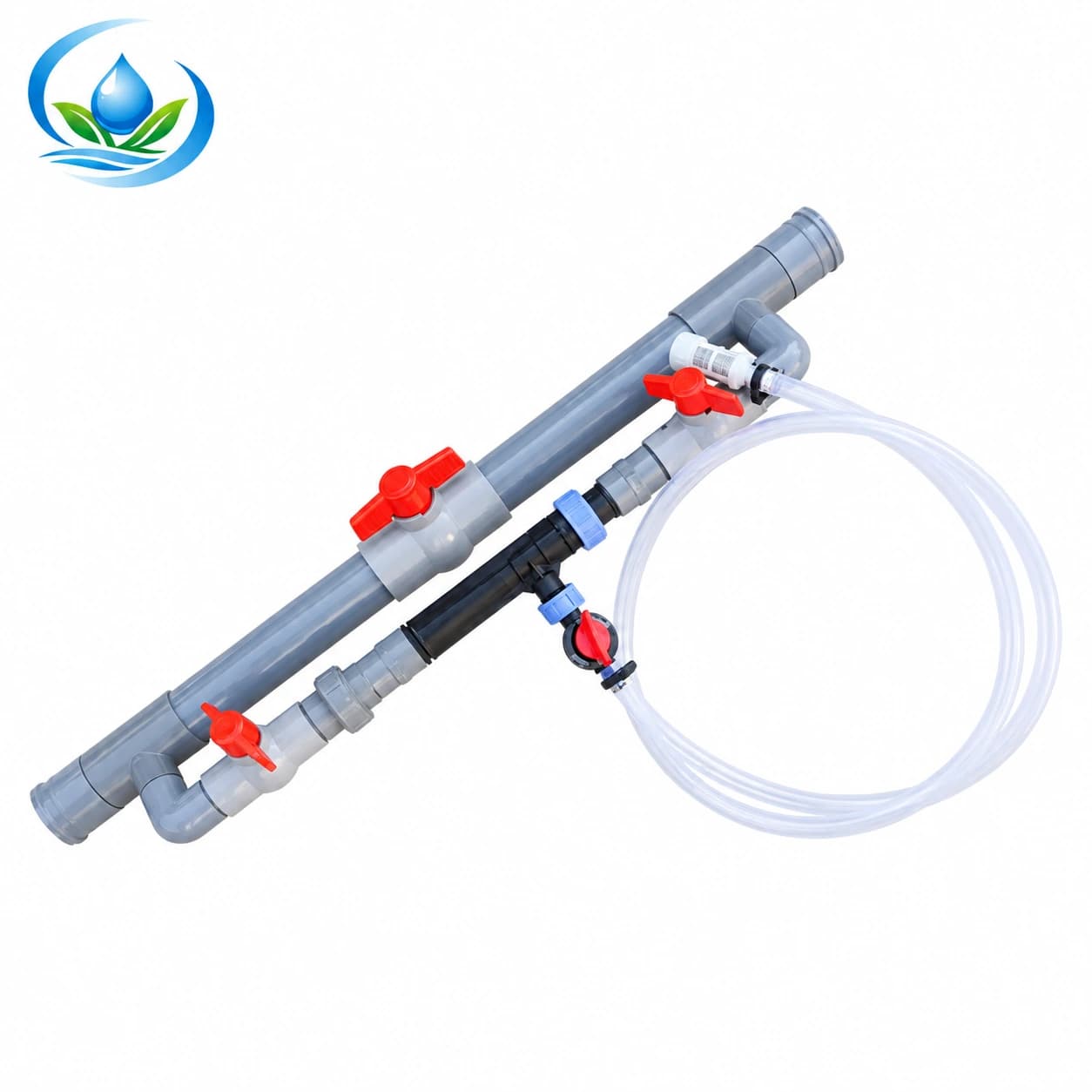
The assembled Venturi injector set includes the suction device, bypass valves and connecting fittings described on its product page. Its injection behaviour depends on the installed flow and pressure relationship; its concentrated contact path still includes a pickup and suction side that need their own material review. Confirm the exact set contents, connections and documented chemical compatibility for the chosen formulation. Do not assume that a bypass changes chemical resistance, that every service part is included, or that a different maker's Venturi drawing describes this set.
Use the injector contents guide to identify the delivered body and suction-side parts that the new concentrate would contact. This purchase still requires a documented answer for the concentrated product and a water-and-crop plan for the diluted product. A bigger nominal suction rate or a familiar connector cannot replace those answers. The Venturi no-suction guide applies when a previously approved system fails to draw; it does not establish that an unfamiliar liquid is suitable to run.
Make the first approved change repeatable
Before a first permitted run, put the old and new formulation names, source-water report, active block, injector model, approved component references and relevant instructions on one record. Note which elements were reviewed by the fertilizer maker, equipment maker and crop adviser. If an approval depends on a certain stock condition, water source or model variant, write that limit next to the decision. This prevents a later crew from reading “compatible” as permission for a different concentrate, a second well or another injector.
Use the maker's normal commissioning and monitoring method for the selected equipment, with the farm's approved chemical handling and crop plan. Observe stock uptake, leaks and the expected irrigation distribution without opening live joints or changing protected connections. If a new leak, loss of uptake, unusual deposit or crop concern appears, stop the change under the site's approved procedure and record the condition. Do not respond by increasing injection strength, adding an improvised chemical, or ordering a more aggressive injector before the cause is identified.
Separate an equipment fault from an approval question. If a Venturi set stops drawing the same previously approved liquid, pressure and bypass diagnosis may be appropriate. If the new product has not yet been approved for its concentrated contact path, a successful suction test would answer the wrong question. Likewise, if water chemistry is unresolved, a fresh seal or filter does not solve it. Keep these decisions in sequence so replacement parts are bought for a verified need rather than for an unexplained change in formulation.
Buy only after the exact model and formulation align
Build a shopping list from the approved outcome: retain the current unit as documented, obtain an exact maker-approved service assembly, or select a replacement injector whose materials and operating range have been checked for the new product and block. For the selected Store option, verify current price, sale unit, availability and delivery details before buying. If the Venturi set does not present a direct purchase option, ask Store support how to obtain that exact set and its model instructions before purchasing adjacent fittings or hoses.
Send the formulation name and safety data sheet, intended stock conditions, current water report, crop and block, injector model, and relevant connection and flow information with the compatibility question. Request an answer that names the actual variant and any approved part reference; a generic statement about “fertilizer injectors” leaves the most important contact surfaces unresolved. Keep that answer with the farm's change record so the next formulation decision begins from evidence rather than from the fact that the old liquid once ran successfully.
Before you order
Compare this guide with the specifications for your exact product, selected option, water supply and field conditions. Your equipment requirements take priority over a general example.
Compare irrigation products