Irrigation Water Treatment Systems: Read the Water Test Before Buying Filters
Use sample context and laboratory units to separate particles from dissolved constituents before comparing a disc filter or sand separator.
Published by IrriNex Store

Irrigation water treatment systems should be chosen after reading a representative water test, not from a photograph of a clear pond or a single high number on a report. A physical filter can intercept appropriate suspended material; it cannot remove dissolved salts, correct pH, or establish that water is safe for a crop or for people. Before buying a disc filter or sand separator, confirm what was sampled, when and where it was sampled, which units the laboratory used, and which result describes a problem the proposed product can actually address. Use the irrigation water test for filter selection only after confirming the sampled source, date and units behind each reported result.
This guide starts when a grower receives a new laboratory report or changes from one irrigation source to another. Its outcome is a short decision record: what the report establishes, what is still unknown, whether either of two listed physical-filter families merits further comparison, and which concerns require separate assessment. It helps decide whether a physical filter matches a documented finding before any product is ordered.
Read the water test before choosing an irrigation water filter
Read the sample label before any result. Record the source, collection point, date, time, collector and operating state. “Farm pond” is too broad if one sample came from the surface after rain while the pump draws from a deeper intake in the dry season. Likewise, a well sample taken after a short start may differ from water delivered during a long irrigation run. Note any blend of sources, storage tank, settling step or existing filter between the sampled point and the irrigation headworks.
Ask whether the sample was collected by the laboratory's specified method for the parameter being reported. A bottle intended for routine chemistry may not answer a microbiological question; a sample from a stagnant tap may not represent the running source. Keep the laboratory's instructions, preservation information and report identifier with the result. Do not infer a missing test from a clear photograph or from an unrelated result in another season.
If the source recently changed, describe that change beside the report. A new well, lower reservoir level, canal cleaning, storm runoff or revised intake can alter the particle load without necessarily changing every dissolved constituent in the same way. An old analysis is useful history, but it is not automatically the current purchasing specification. When the sample does not represent the operating source, arrange a suitable new test before committing to a filter.
Separate suspended material from dissolved water findings
Copy each reported parameter together with its unit, method or qualifier. Electrical conductivity may be expressed in mS/cm or another conductivity unit; dissolved minerals may appear as mg/L, while a particle result may use a different test. A pH number has a different meaning from alkalinity reported as a concentration. Do not compare two bare numbers with their headings removed, or convert EC into an exact total-dissolved-solids result using an assumed universal factor.
Look for a result marked below detection, estimated, outside a method range, or omitted. “Not reported” does not mean “zero.” If a lab only measured pH and conductivity, it has not thereby determined sand loading, suspended solids, iron form or microbial risk. List the unanswered questions that matter to the crop and the protected irrigation outlets. The lab or a qualified adviser can help choose a relevant follow-up analysis rather than an indiscriminate package of tests.
Penn State Extension’s irrigation-water interpretation guide explains why water chemistry is read with the crop and growing medium, rather than as a single universal pass/fail number. Its numerical concern levels describe particular conditions and plant sensitivities. Use a local, crop-specific interpretation for your report; do not import a threshold from another crop or region into the filter cart.
Sort the results by what kind of material they describe
Create three columns on the report: material already suspended in the water, substances dissolved in it, and biological or use-specific safety questions. Sand, grit, silt, plant fragments and some other suspended particles can be candidates for physical separation or filtration if the selected device is matched to their behaviour and the irrigation system. EC, sodium, chloride, boron and other dissolved constituents are different questions. A disc element does not remove them merely because it has a fine grade.
Do not turn “turbidity,” “cloudy,” or “sediment observed” into a precise particle-size distribution. A report may describe total suspended solids without saying which fraction will settle, which floats, or which can pass the proposed filter. Ask the laboratory or source operator what the reported method represents, and compare it with a sample from the actual pumping condition. A physical filter is selected for the particles it can retain at a real flow, not for a vague water-color category.
Iron and manganese require special care in this sorting step. A laboratory may report a concentration while the material is dissolved, whereas deposits visible later may have formed after water contacted air or changed chemistry. A routine disc element or hydrocyclone is not demonstrated to remove a dissolved concentration by its mesh or cone shape. Record whether the lab distinguished filtered and unfiltered samples or otherwise characterized the form. If not, obtain an appropriate interpretation before designing a separate treatment step.
Keep biological concerns separate. A water report intended for irrigation chemistry may omit tests relevant to produce-safety or other uses. Neither visual clarity nor a cleaner-looking outlet proves that pathogens are absent. Do not describe the two listed physical-filter products as disinfection, a potable-water solution, or a food-safety clearance. Follow the applicable testing and management advice for the crop and use through a qualified source.
Turn the result into a specific physical-filter question
For each suspended-material finding, write what you know and what the filter would have to do. “Heavy, settleable grit at the pumped well outlet” raises a different question from “fine organic material from a reservoir.” If the concern is dissolved sodium with no established particle issue, the correct physical-filter question may be “none yet.” This distinction prevents a seller's mesh number from becoming an answer to a chemistry result.
Next identify the downstream device that needs protection and its exact maker-stated filtration requirement. A drip emitter, tape outlet, micro-sprinkler and control valve do not necessarily share a suitable grade. The filtration selection guide compares broader filter families and complete train layout after the source load and outlet requirement are known. Here, stay with the report: which contaminant is present, and has the proposed device documented a way to address it?
Write the normal and combined zone flows separately from the water-quality numbers. A laboratory report cannot tell you the flow through the proposed filter. The zone-flow calculation guide helps total simultaneously operating outlets. Use those flow cases with the selected filter's actual operating data, connection, pressure loss and service instructions. A maximum rating on a product page is a ceiling, not a recommended operating point or a guarantee of removal at that flow.
When a Y-body disc filter is worth comparing
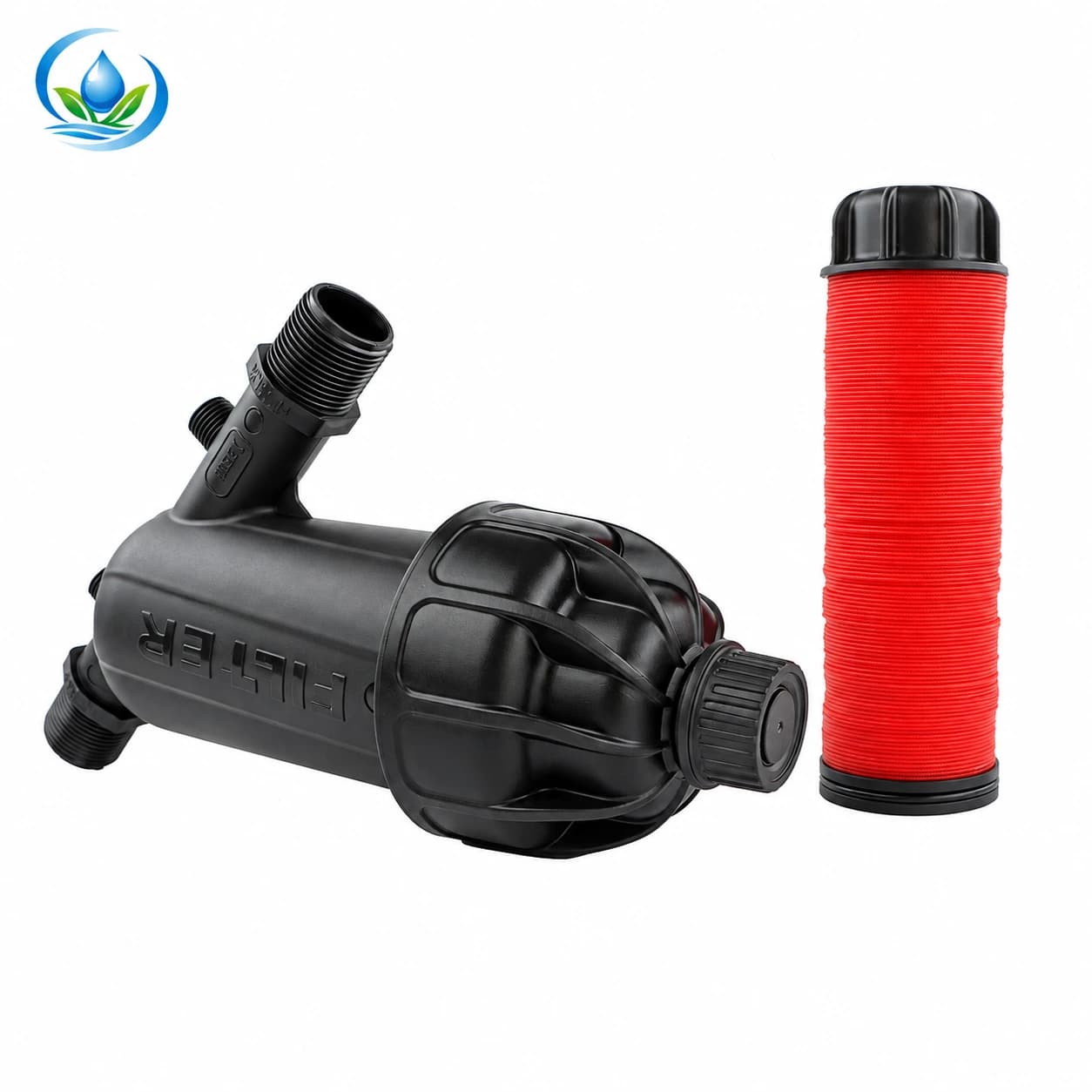
A disc stack offers a physical barrier for appropriately sized suspended material when its grade, operating flow, housing and maintenance method fit the source and protected outlets. The Y-body disc-filter listing includes F32YD with a 1-inch connection and 120-mesh element. Its stated maximum discharge is 6 m³/h and its stated maximum pressure is 8 bar. These are independent limits; they do not supply a pressure-loss curve or prove that 6 m³/h at 8 bar is a preferred operating condition.
Use the report to ask whether there is a particle problem for which that element is appropriate. Then verify the emitter's documented grade requirement, the real flow through the filter, the pressure available to the distant row, the connection standard, and a place to isolate and clean the stack. The drip pressure checklist helps distinguish a source reading from pressure available at the outlet. The 120-mesh label is not a universal micron or removal-efficiency claim. A finer-looking grade is not a correction for salinity, pH, dissolved iron or an unknown organism.
If the source contains a seasonally changing load, consider whether the filter can be inspected and cleaned at the required frequency. The disc-stack return-to-service guide describes checking a cleaned stack and its seals after a filter is already installed. That maintenance task does not replace a source test before purchase. Record whether the new report points toward suspended loading, rather than using a repeated cleaning problem as proof of one particular contaminant.
When a hydrocyclone merits investigation
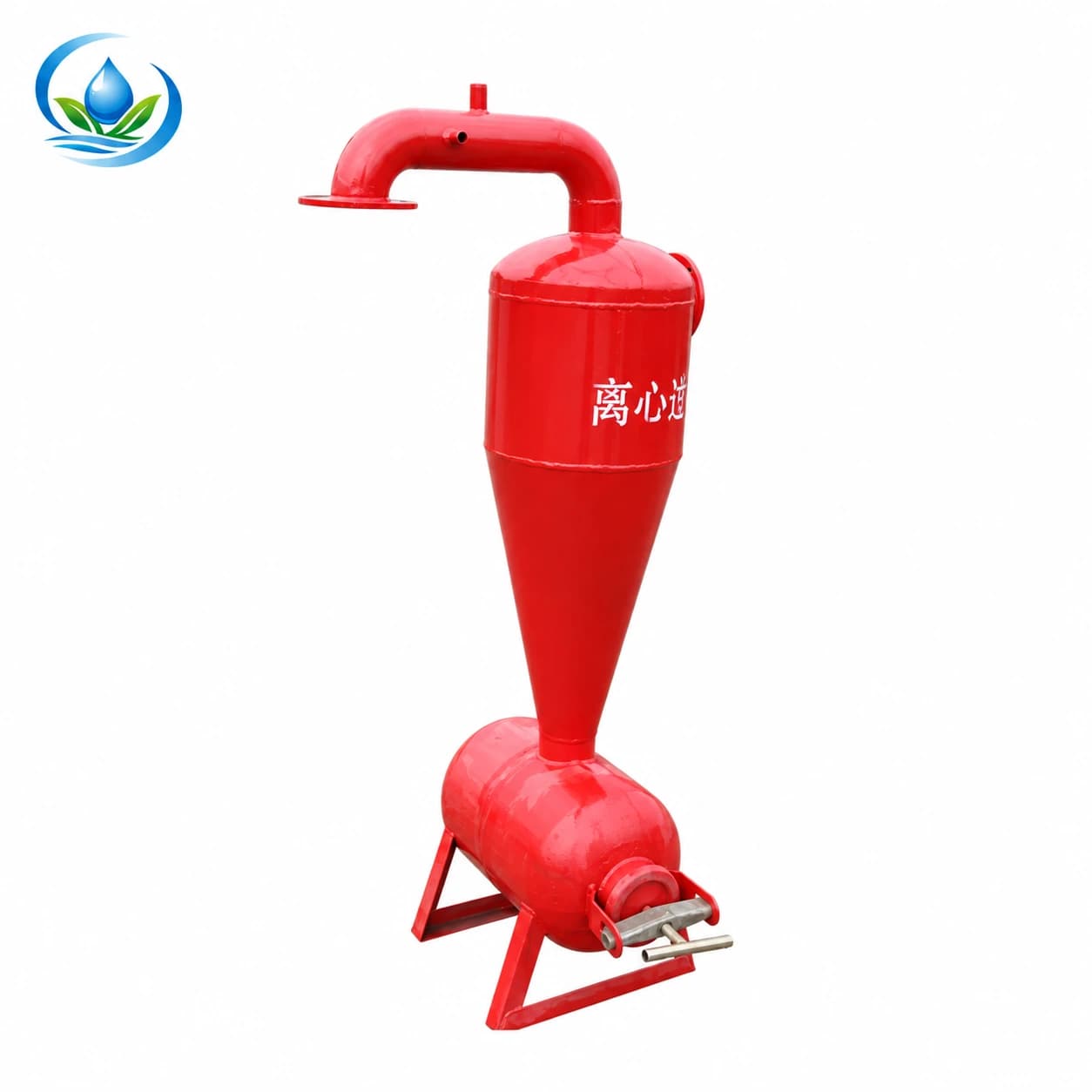
A hydrocyclone can be a candidate for heavier, separable sand or grit in a flowing supply. It is a preliminary separation stage, not a final fine barrier for all drip outlets and not a treatment for dissolved chemistry. The hydrocyclone listing includes F63LX with a 2-inch (63 mm) connection and 10-bar maximum pressure. Confirm this model's operating-flow range and relevant particle-separation evidence before buying; its connection and pressure label cannot establish either.
That missing flow information matters because the separator's action depends on the actual flow and particle behaviour. Do not buy F63LX solely because the pipe is 2 inches, the water report mentions “sand,” or its pressure maximum exceeds the system's gauge reading. Request the exact model's recommended operating range, pressure-loss data, inlet and outlet details, purge arrangement and evidence relevant to the observed sand before deciding. If this information cannot be established, mark the separator choice unresolved.
Where a suitable separator is justified, count any downstream final filter separately according to the protected device's requirement. A separator does not turn heavy-sand removal into 120-mesh protection. Conversely, if the report points to floating organic fragments rather than dense grit, the cone is not established as the right stage. Ask for model-specific evidence about the actual water and operating condition, including how collected solids are removed.
Know when neither listed filter answers the result
High conductivity, total dissolved solids, sodium, chloride or boron describe dissolved-water questions. A disc stack and sand separator are not desalination systems. Keep the values and units for crop, soil and source assessment, but do not place either physical filter in the cart as the proposed cure. Any alternative water source, blending or advanced treatment decision needs qualified, crop-specific review before equipment is selected.
Similarly, pH and alkalinity should be read together with the crop and growing medium. A filter may catch a solid already formed, but catching a deposit does not necessarily resolve why new scale forms later in the line. Hardness, iron and manganese can lead to precipitation or clogging under particular conditions. Ask for an interpretation of the relevant chemistry and its form before naming a treatment method; do not choose acid, chlorine or another chemical from a number alone.
A microbiological or produce-safety concern is a separate assessment, even if the same source also carries sand. The absence of a microbiology line on a standard irrigation chemistry report is not a negative test. A physical filter's published mesh or pressure maximum gives no assurance that the water is safe for drinking, crop contact or any regulated use. Keep the intended use in the request to an appropriate testing or advisory service.
Compare three realistic report patterns
Pattern one: well water with observed heavy grit and a separate dissolved-mineral result. Confirm that the grit observation comes from the pumped water, not only from sediment in an old container. A sand separator may merit model-specific flow and separation review; the dissolved result remains outside that device's function. An emitter may still need an independently selected final particle filter.
Pattern two: reservoir water with suspended organic material and an otherwise incomplete report. A disc filter may be a candidate for the documented particle load, but the operating flow, grade, maintenance capacity and downstream outlet still decide whether F32YD fits. Do not infer that the reservoir's color proves a specific contaminant or that a disc filter handles every biological or dissolved concern. Fill the missing analysis before a wider treatment claim.
Pattern three: visually clear source with elevated EC or another dissolved constituent. A clean appearance does not make the result irrelevant. It also gives no evidence that adding a 120-mesh element will change that chemistry. Record the source and unit, obtain crop-specific interpretation, and leave the physical-filter purchase tied to a separately established particle-protection need. These examples organize questions; none assigns a universal safe concentration or promises a treatment outcome.
Make a retail decision record, then check the selected option
On one page, retain the sample ID, source and collection point, date and operating condition, laboratory name, parameter and unit, and any missing or qualified results. In a second column, state the suspected physical load and how it was observed. In a third, name the proposed filter stage and the exact evidence still needed: outlet grade, operating flow, pressure loss, connection, pressure limit, cleaning or purge method. Mark dissolved and biological concerns as separate follow-up items instead of squeezing them into the filter row.
Check the selected product option's current price, sale unit, availability and delivery information before ordering. Confirm any accessories supplied with F32YD and the operating-flow evidence for F63LX. The screen-filter service guide shows why the exact body and element matter later if a filter is repaired or replaced. Keep the selected model, element and any confirmed seal or purge parts in the purchase record.
If the report or model information is incomplete, send Store support the sample context, full relevant report with units, protected outlet model, normal and simultaneous flow, and the exact filter option being considered. Ask for the missing product fit or operating data. For crop chemistry or water-safety interpretation, seek the suitable laboratory or qualified adviser. A good purchase is one where the listed device has a documented job; a result it cannot address stays visible for its own decision.
Before you order
Compare this guide with the specifications for your exact product, selected option, water supply and field conditions. Your equipment requirements take priority over a general example.
Compare irrigation products