Irrigation Water Treatment Systems: Prove What Changes Across a Filter
Turn a filter offer into a checkable result with matched inlet and outlet samples, clean and loaded observations, and separate decisions for particles and dissolved concerns.
Published by IrriNex Store
Irrigation water treatment systems are easy to judge by the appearance of the outlet water and hard to judge by a defensible result. If a grower is offered a filter for an organic reservoir or a gritty well, the useful buying question is: what changes across this particular unit during a representative irrigation run? A clearer jar may indicate that some suspended material has been intercepted. It cannot, by itself, establish that the unit met an agreed particle claim, that it will keep doing so as it loads, or that dissolved-water concerns have disappeared. This guide turns a proposed or installed filter into an acceptance record that a purchaser can actually use.
Begin with the proposed physical-filtration job. Name the particles or observable loading problem, the water source, the actual operating flow, and the equipment the filter is meant to protect. Then ask for matched observations on both sides of the unit. The answer may justify accepting that limited job, changing the service or sizing proposal, or assessing a different treatment route for a separate water-quality issue. Those are distinct purchase decisions; one attractive outlet sample should not collapse them into a single claim.
Make the offer state a testable particle job
An offer such as “treats poor irrigation water” gives no purchaser a way to decide whether delivery meets the promise. A better offer identifies the source condition to be tested, the suspended material of concern, the intended operating flow or range for the selected option, the sampling locations, the observation period, and the outlet condition or equipment requirement against which the result will be judged. If a laboratory result will be used, agree on the parameter and method with the laboratory before buying or commissioning. A visual comparison can supplement that record, but it is not a substitute for a lab-defined particle measurement when that is the actual claim.
The acceptance condition should be tied to the downstream task, such as protecting the documented passages of the selected emitters, and to a method capable of resolving the claimed difference. Do not invent a universal removal percentage, mesh rule or “passing” pressure drop. A quote also needs to say who provides the sampling ports, gauges, drain access and replacement elements needed to maintain the claimed result. The Store filtration buying guide helps with source and emitter matching; this record tests the performance of the chosen proposal rather than redesigning the filter train.
Ask the supplier to separate three statements in writing: what a listed component is built to do, what the assembled installation is expected to do at the specified flow, and what will count as acceptance at the farm. A nominal grade printed on a product page describes the element; it is not a measured result from the installed system. Agriculture Victoria's drip-filtration guidance explains the particle-protection purpose and the tradeoff among retained material, flow and maintenance. The actual Store variant and site conditions still govern the offer.
Pair the inlet and outlet during the same operating event
Choose a sampling point immediately upstream of the unit being evaluated and another immediately downstream, before storage, fertilizer injection, blending or a long distribution run. Label ports on a simple sketch. Identify whether the proposed result concerns one disc housing, a hydrocyclone, a media unit, or the entire installed group; the two ports must enclose exactly that claimed boundary. If a separator and a final disc filter are both supplied, a single pair around both stages can assess the combined outlet, while separate ports are needed to attribute an effect to either component.
Arrange collection with the laboratory that will analyze the samples. It should specify bottles, flushing, preservation, collection timing, handling time and an appropriate analytical method for the proposed particle claim. Collect upstream and downstream as a matched pair at the same recorded operating flow and source state, allowing for the water's travel time through the equipment where relevant. Record pump and valve state, flow, inlet and outlet pressure, source level or well operating stage, recent rain or disturbance, and whether cleaning or backwash occurred. Use the same lab method and reporting basis for both samples. Where a quick visual observation is useful, use clean matched containers and identical handling; settling one jar longer than the other creates a false comparison.
An inlet that changes during collection defeats a neat before-and-after story. A reservoir can send a different mix of algae and fine debris after wind, rain or a change in intake depth. A well can shed grit on start-up but much less later in the run. If the upstream sample represents the first state and the downstream sample the second, a difference could come from the source rather than the filter. Mark the pair inconclusive and repeat under a stable or explicitly matched condition. When source variation is part of normal operation, plan more than one paired event that covers the relevant states; do not average unrelated inlet and outlet bottles into a claimed removal result. Ask the laboratory how its method's precision affects interpretation of a small reported difference.
Observe a clean unit and a unit approaching service
One good observation just after cleaning cannot establish a usable service interval. First document the verified element or media condition, the selected valve arrangement, actual flow and the pressure readings immediately before and after the clean filter. Collect a paired sample if the acceptance plan calls for one. Later, while the same source state and operating flow can be reproduced, repeat the relevant paired observation when retained material has accumulated and the unit is approaching its documented service point. If the flow or inlet state cannot be reproduced, record the difference and avoid calling the two observations a like-for-like change in removal. Record elapsed run time, maintenance performed and what was removed at cleaning. Do not use a generic pressure-loss figure from another manufacturer as the trigger.
Interpret particle results together with hydraulics. If outlet particle control looks plausible when clean but deteriorates before an operator can reasonably service the unit, the proposed area, cleaning access, service frequency or stage selection may need revision. If differential pressure rises rapidly, confirm the installed flow and source loading before assuming that a finer element is the cure. If pressure loss is unexpectedly low while debris appears downstream, inspect bypasses, seats, seals, element damage and sampling location. These are diagnostic possibilities, not a verdict from one gauge reading. The disc-stack return-to-service guide covers reassembly checks when a cleaned disc unit is involved; a poorly seated stack invalidates a claimed installed result.
For a media proposal, put its backwash procedure and follow-up observation in the acceptance record. Compare the relevant flow and pressure state before and after service, and confirm that sampling does not accidentally collect backwash water. The media-filter backwash guide is useful for evaluating the service plan. Do not promise that the Store's listed unit includes automatic backwash unless the exact offered configuration establishes it.
Keep downstream changes out of the filter result
A sample at a field outlet answers a different question from a sample directly after the filter. A storage tank may add settled or newly suspended material. Fertilizer injection may change the chemistry and introduce undissolved material downstream. A repaired pipe, corroding fitting or unflushed lateral may contribute its own debris. If these are between the filter and the downstream sample, a dirty field sample does not prove the filter failed, and a clean field sample does not quantify what the filter alone removed. Use a direct upstream/downstream pair to evaluate the filter, then make a separate field-delivery check if emitter protection is also in the offer.
The same separation applies to appearance. Brown or green colour, cloudiness and visible grit can shift as suspended matter is captured, but some coloured substances remain dissolved and clear water can still contain dissolved salts or other constituents. If a source report raised a chemistry concern, keep that result in a separate water-quality record. A filter acceptance sheet must not silently change its status from “unresolved” to “solved” just because the outlet jar looks better. The water-test reading guide explains how to check the source report before filter selection; use it for that earlier task rather than repeating a parameter-by-parameter glossary here.
Where a chemical concern affects crop, soil or growing media, obtain appropriate raw-water and, if needed, after-treatment laboratory evidence interpreted in that crop and media context. If the intention is to claim that a separate treatment stage changes a dissolved constituent, specify that stage, its own sampling boundary and a suitable lab method. Do not assign such a claim to a disc, media or centrifugal particle device without evidence. Physical filtration can remain valuable for protecting outlets even when the chemistry needs an independent decision.
A hypothetical reservoir acceptance record
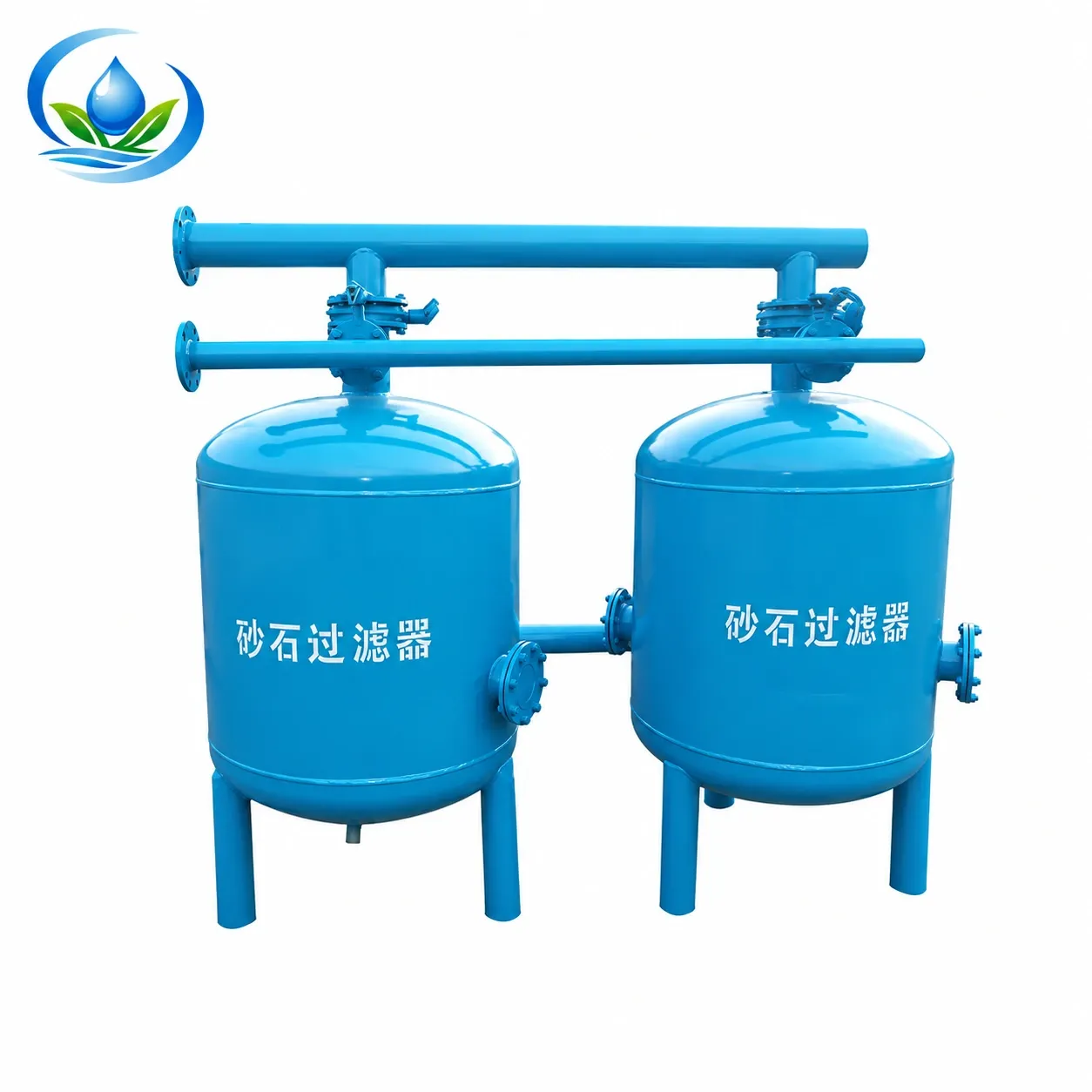
Consider a purchaser drawing from an organic reservoir with recurring fine plant fragments and a changing intake condition after windy weather. This is a proposed purchase exercise, not a customer result or a measured trial. The offer under review is a suitable physical-filtration stage, with the published twin-tank media-filter family as a comparison point. Its listing is not a promise of immediate checkout or of a specific organic-removal result. The purchaser records which exact offered configuration, media, valves and service arrangement would be supplied before treating it as a complete installation.
| Purchaser field | Entry to agree or observe |
|---|---|
| Claim in the offer | State which suspended reservoir material the proposed system should reduce at the agreed irrigation flow and which downstream equipment needs protection. Leave the acceptance criterion to the buyer, supplier and lab to define from that task; no generic percentage is inserted. |
| Matched event | Sample at ports directly before and after the offered boundary during the same stable intake and flow state. Record water level, intake position, recent weather, zone valves and travel-time allowance. Ask the lab to approve the particle method and handling. |
| Clean and loaded views | Record clean-stage flow, inlet and outlet pressure, paired result identifiers and visual notes. Repeat near the documented service point under a comparable inlet condition; record backwash or manual service and the return-to-service observation. |
| Separate chemistry note | If the reservoir report also raises a dissolved-water concern, mark it unresolved by the particle trial. Compare appropriate laboratory results and crop or media context through a separately assessed route. |
| Possible decision | Accept the physical-filtration scope if the agreed particle evidence and sustainable service behaviour meet the recorded job. Revise size or cleaning provision if loading defeats that job. Seek a separate assessment for any chemistry issue regardless of visible clarity. |
The purchaser does not write “passed” into this hypothetical sheet. The empty result identifiers and agreed criterion become real only after a suitable offer and properly collected test. If the reservoir inlet is turbulent during one observation and calm during the other, repeat the pair instead of crediting the filter for the source change. If the outlet still carries troubling fragments at matched flow, inspect whether the offer, installed condition and service cycle actually correspond before buying a finer nominal grade.
A separate hypothetical record for a gritty well
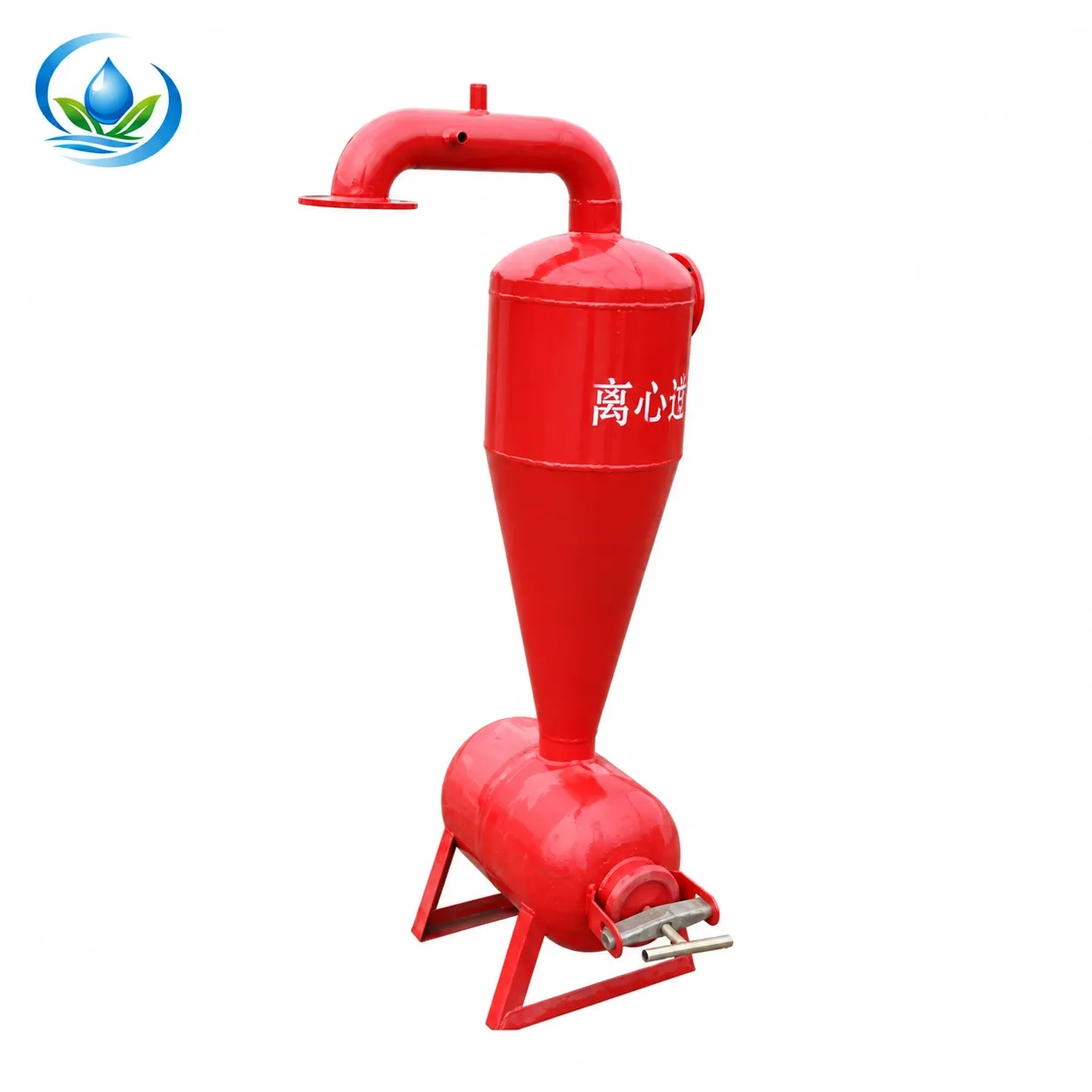
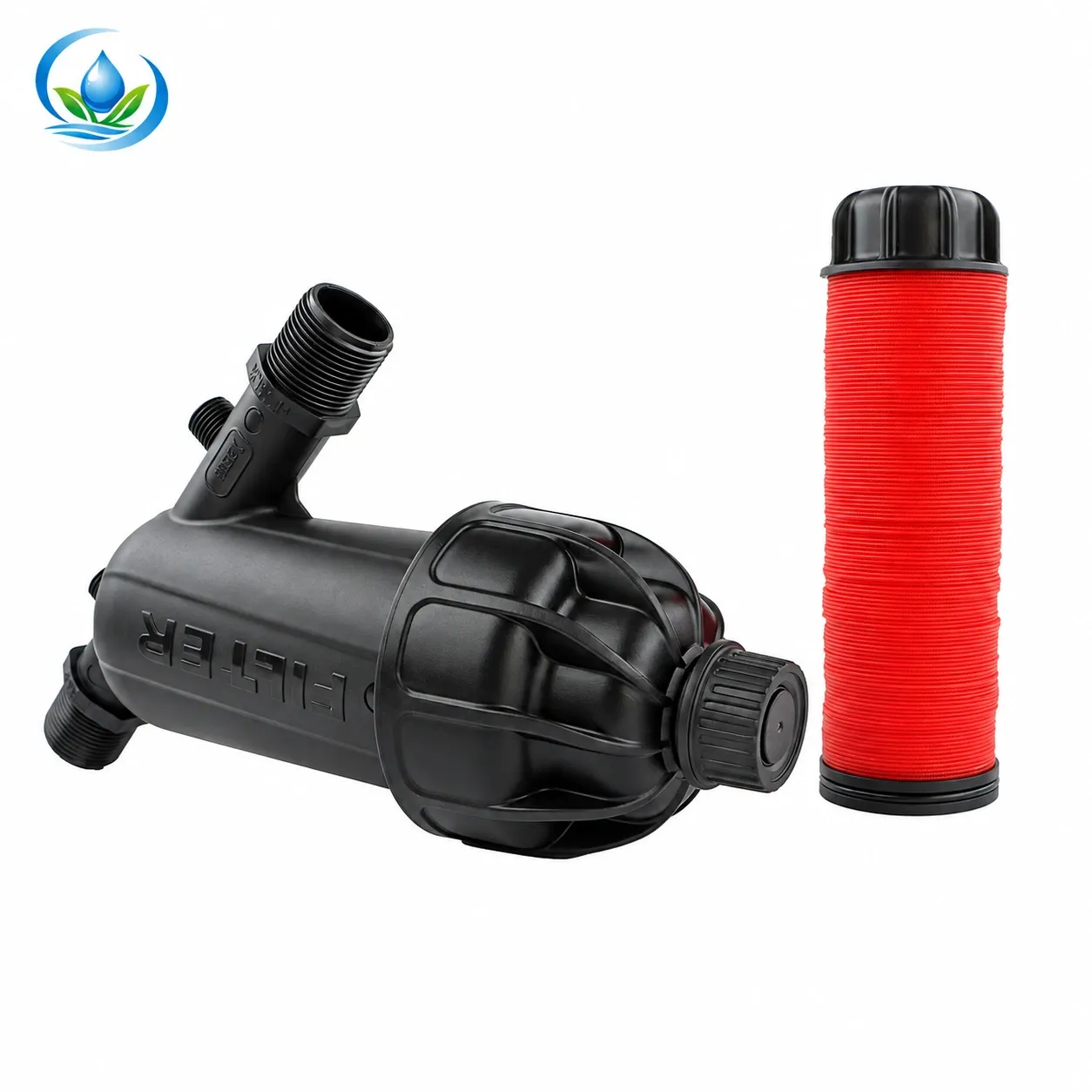
A different purchaser sees grit in well water, especially during pump start-up. Here the first claim to examine is separation of suitable heavy particles, with the published hydrocyclone sand-separator family as a possible comparison. Its actual separation depends on the selected equipment and operating conditions; the listing is not a verified removal guarantee or direct checkout promise. Where small irrigation passages need final protection, the Y-body disc-filter family may be evaluated as a separate final barrier. Availability and purchase details depend on the exact selected disc option. Neither family is a substitute for testing the proposed installation at the well's real flow.
| Purchaser field | Entry to agree or observe |
|---|---|
| Claim in the offer | Name the gritty fraction and the intended operating condition for the separator. State separately what final particle barrier is required by the actual downstream equipment, if one is part of the order. |
| Matched event | Collect an upstream/downstream pair around the separator while the well is in the same documented start-up or steady-running state and at the same operating flow. Do not compare a gritty start-up inlet with a later, naturally cleaner outlet. |
| Service evidence | Record chamber or purge condition, flow, pressure and the timing of inspection. Repeat the relevant comparison when the collection chamber has accumulated material but before its documented service limit. If a disc follows, test its own inlet and outlet if its individual performance is claimed. |
| Other water finding | Keep any well-water salinity or other dissolved finding in a separate laboratory and crop-context file. Removing visible grit does not demonstrate its reduction. |
| Possible decision | Accept the limited grit-control claim when matched evidence supports it and purge access is workable. Revisit flow, size, installation or service if grit crosses the boundary or the chamber cannot be managed. Assess dissolved concerns by a separate route. |
The sand-separator chamber guide covers the practical purge check that makes this record meaningful. If the actual zone flow lies outside the offered unit's documented operating range, do not call the trial a failure of all hydrocyclones or quietly change the flow to produce a favorable jar. Obtain a correctly specified proposal and repeat the matched evaluation. A disc that catches residual particles may protect emitters while also showing that the separator's claim needs a narrower definition.
Decide what to accept, revise or assess separately
There are three defensible outcomes, and a purchase can involve more than one. Accept a defined physical-filtration scope when representative paired evidence supports the agreed suspended-material job, the selected option fits the observed flow and pressure conditions, and the cleaning interval is practical. Keep the record limited to that scope. A clear jar alone, a nominal grade alone or a test at an unmatched inlet does not satisfy it.
Revise the service or sizing proposal when the result depends on an unrealistically clean element, frequent unplanned cleaning, a flow outside the selected option's documentation, a bypass, or a sampling boundary different from the offered unit. A revised proposal may change access, element area, stage choice or the stated claim; it then needs its own acceptance evidence. Repair a damaged or incorrectly seated element before treating its poor result as a reason to replace the entire family.
Seek a separately assessed route for dissolved constituents, crop or media compatibility, or a problem arising after the filter. The physical filter may still have a legitimate and useful particle-protection job. Write the unresolved issue beside that accepted job, retain the original report and paired-sample IDs, and define new evidence for any additional treatment before spending on it. At handover, keep the signed offer, selected product option, port sketch, lab method, flow and pressure logs, clean and loaded observations, service instructions, and decision with the irrigation records. The next operator can then repeat the same comparison when the source changes instead of guessing from water colour.
Before you order
Compare this guide with the specifications for your exact product, selected option, water supply and field conditions. Your equipment requirements take priority over a general example.
Compare irrigation products