Screen Irrigation Filter: Choose a Body for a Farm Header
Compare compact, medium and steel screen-filter housings against header flow, exact connection, pressure limits and service access before replacing a farm filter.
Published by IrriNex Store
A screen irrigation filter for a farm drip header has to fit more than the pipe. The housing must suit the simultaneous zone flow, pressure limits, water condition, element service method and space available to remove the screen. Compare the exact compact plastic, medium plastic and steel screen-filter families using only their documented option facts. Then confirm the selected connection and installation envelope against the actual header. This guide is about choosing the body and configuration for a farm header. It does not diagnose a clogged installed filter or convert mesh labels to micron openings; separate guides cover cleaning decisions and mesh evidence.
Map the header before choosing a filter housing
Draw the water path from pump or supply to the first branch and downstream zones. Mark the point where the filter would sit, the direction of flow, valves, gauges, pressure regulators, injectors and any bypass. Note which valves can isolate the filter and where trapped water can be drained under the equipment instructions. This simple plan helps distinguish a connection problem from a service-space problem before choosing a body.
Measure the actual pipe outside diameter and identify each existing joint type. Do not assume a nominal inch size proves a particular thread standard or that a metric outside diameter and a nominal imperial size are interchangeable. Photograph the mating ends and any markings. Include straight length on both sides, available support points and the clearance needed to withdraw the screen element or open the cover. A housing that fits between two elbows on paper may be impossible to service once installed.
Record the operating case. List which zones operate together, their measured or documented demand, source condition and pressure at the proposed filter location while water is flowing. Add any later expansion that the header will serve. A filter selected for one small zone may be undersized if several zones can run simultaneously. Conversely, buying the largest body based on a future possibility can add cost and installation burden without resolving a current requirement.
The filtration selection guide helps describe the source and the downstream device that needs protection. The service-space planning guide addresses removal and access around headworks equipment. Use both to prepare the layout, then compare the exact screen-filter bodies below.
Compare the exact plastic screen-filter options
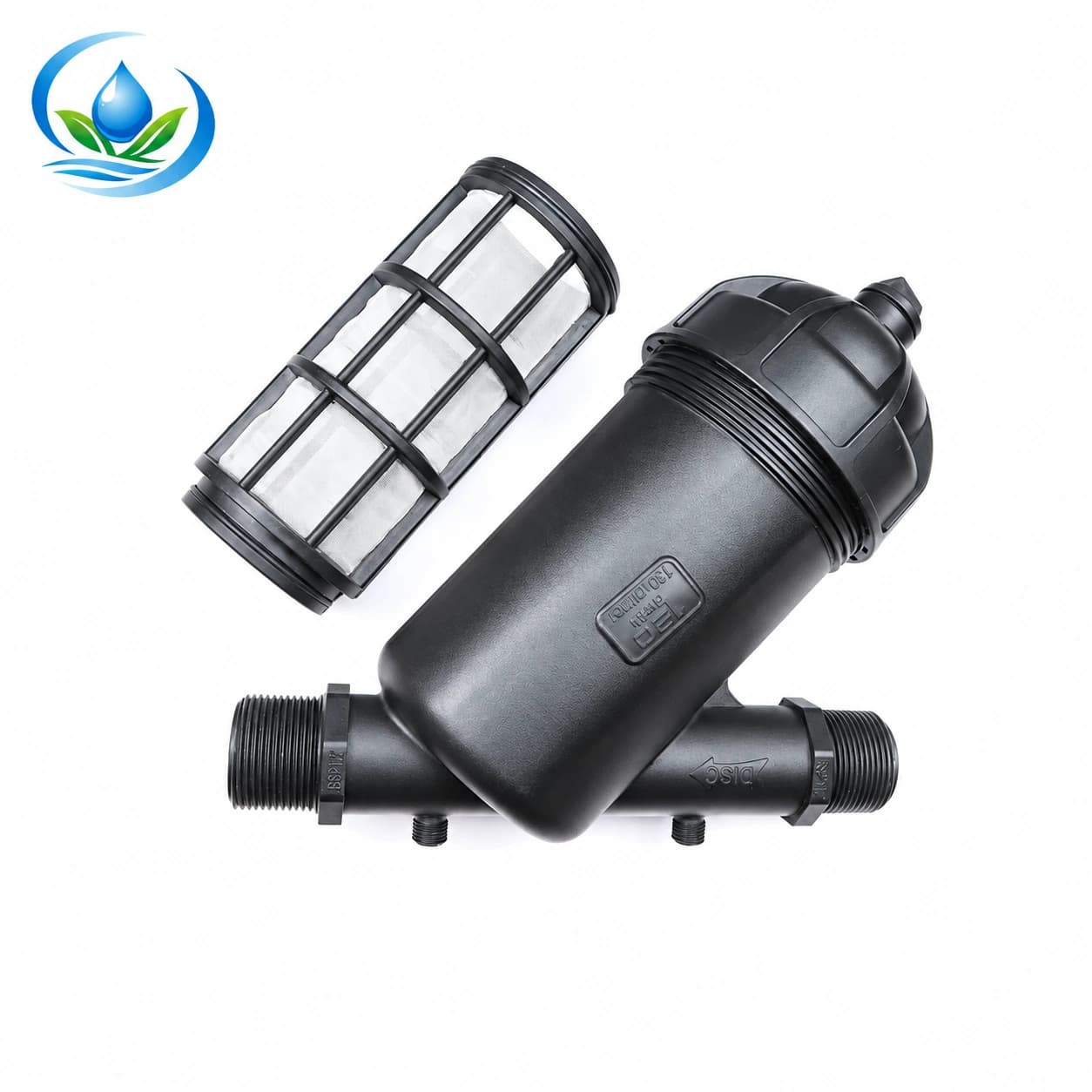
The compact plastic family has two documented variants. F25YS is listed with a 3/4-inch (25 mm) connection, 120 mesh, a maximum flow of 5 m³/h and maximum pressure of 8 bar. F32YS is listed with a 1-inch (32 mm) connection, 120 mesh, maximum flow of 6 m³/h and maximum pressure of 8 bar. These are exact option figures from the current product record.
The medium plastic family lists three variants: F32YS at 1 inch (32 mm), 120 mesh, 6 m³/h maximum flow and 8 bar maximum pressure; F50YS at 1-1/2 inches (50 mm), 120 mesh, 20 m³/h and 8 bar; and F63YS at 2 inches (63 mm), 120 mesh, 25 m³/h and 8 bar. The F32YS identifier appears in both the compact and medium family records. Do not infer that the two product pages necessarily represent different elements, bodies or spare compatibility simply because the family listing differs.
| Published product family | Exact listed option | Connection | Filtration | Maximum flow | Maximum pressure |
|---|---|---|---|---|---|
| Compact plastic screen filter | F25YS | 3/4 in (25 mm) | 120 mesh | 5 m³/h | 8 bar |
| Compact plastic screen filter | F32YS | 1 in (32 mm) | 120 mesh | 6 m³/h | 8 bar |
| Medium plastic screen filter | F32YS | 1 in (32 mm) | 120 mesh | 6 m³/h | 8 bar |
| Medium plastic screen filter | F50YS | 1-1/2 in (50 mm) | 120 mesh | 20 m³/h | 8 bar |
| Medium plastic screen filter | F63YS | 2 in (63 mm) | 120 mesh | 25 m³/h | 8 bar |
A maximum flow entry is a stated upper limit; it is not a pressure-loss curve or assurance that the filter is suitable at that flow in a particular header. A maximum pressure is a separate limit. Do not pair maximum flow and maximum pressure as though both values describe one tested operating point. Confirm the selected model’s flow and pressure-loss information for the intended duty.
Understand what the steel family does and does not establish
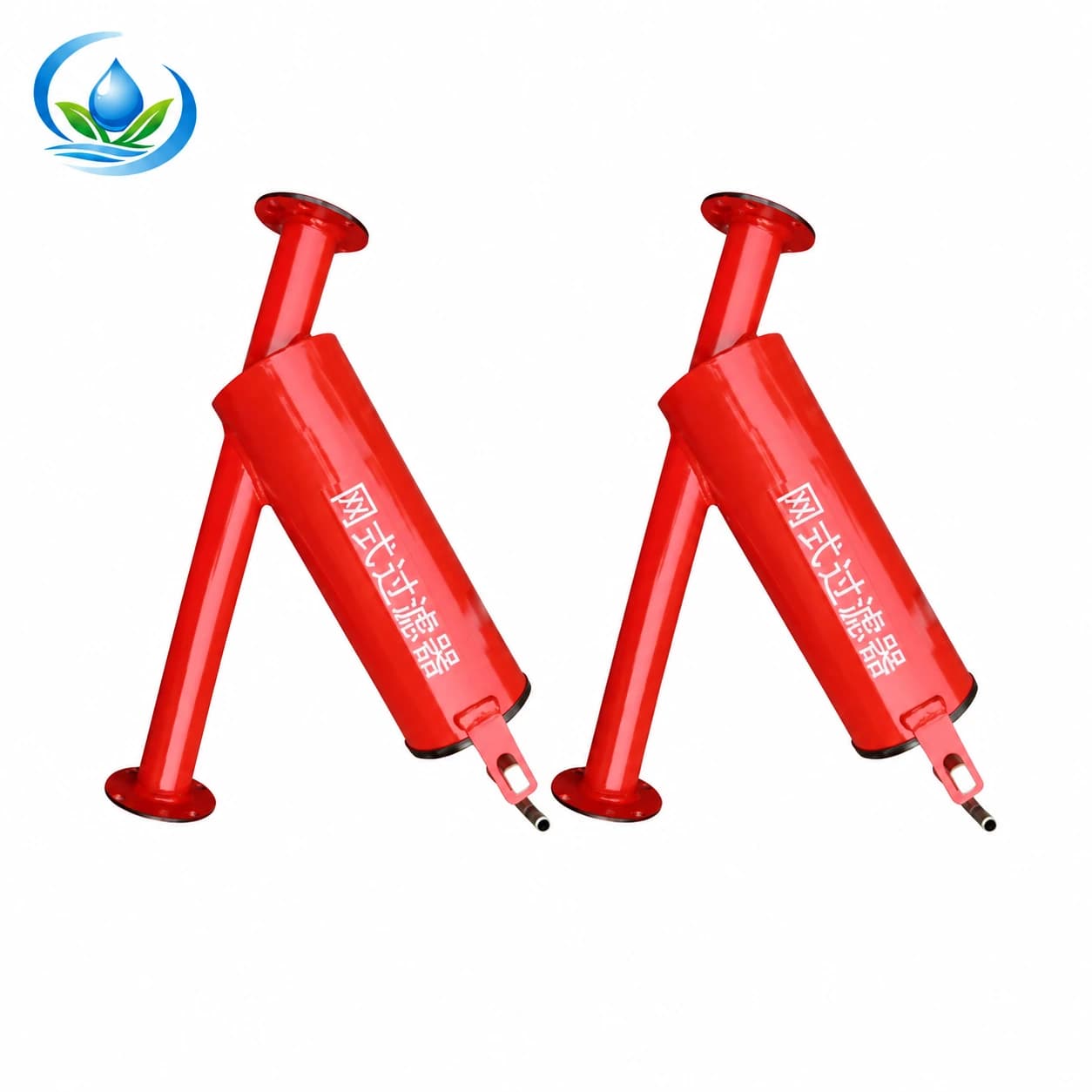
The steel Y-screen filter record identifies stainless steel 304 body material, connection sizes of 2, 3 and 4 inches, mesh options of 80, 120, 150 and 200, a listed flow range of 20–80 m³/h and a 2, 3 or 4 inch / PN10 variant description. These are family-level facts. The available record does not pair each connection size with a specific mesh and a specific flow. It also does not provide a model-specific pressure-loss curve or clearly identify every selected configuration.
That matters when the current header uses a 2-inch connection. The family page alone does not prove that a particular 2-inch, 120-mesh, 25 m³/h configuration is the intended option. A family-wide range may include multiple body configurations. Ask for the exact model or option label and its corresponding connection, mesh, flow, maximum pressure, element and package details before comparing it to one plastic variant.
Steel construction may be a relevant material comparison for a given installation, but material alone does not prove compatibility with a water chemistry, mounting method or operating pressure. Confirm the manufacturer’s intended service, corrosion considerations and connection type. Do not describe the product as stainless throughout if the record only identifies body material, and do not assume the screen element shares that material.
Online ordering is not currently available for these three filters. Use their product pages to identify the exact options, then confirm availability, order unit, current price and delivery before setting an installation date. Request a quotation if no price is offered for the selected configuration.
Match header demand to the selected option carefully
Calculate the demand of zones that can run together, using the actual outlet counts and verified flows where available. If the flow is not measured or documented, label it as an estimate rather than presenting it as fact. Record whether a pump, filter, injector or other device shares the same flow. Compare the total to the selected filter’s exact maximum-flow entry, then ask for complete-filter pressure loss at the intended flow.
For example, a hypothetical header with a measured simultaneous demand of 4 m³/h would be below the compact F25YS listed 5 m³/h maximum. That arithmetic does not by itself prove suitability. The grower still needs to confirm pressure drop, connection fit, filtration suitability and pressure envelope for the actual water and operating schedule. If the same header could reach 7 m³/h, the F25YS maximum-flow figure would no longer be a safe match for that documented peak.
Likewise, the medium F50YS record lists 20 m³/h maximum flow, but the larger headline does not guarantee low loss or adequate filtration at a smaller farm’s normal flow. An oversized connection may require reducers and supports. A reducer can introduce extra joints and installation constraints. Compare the whole route, not just the inlet number.
The flow calculation guide helps keep simultaneous outlets and units straight. The farm drip design guide covers zone planning. Neither substitutes for the exact filter curve or for measured flow at the header.
Choose filtration from water and emitter evidence
A screen housing is only one part of filtration selection. Determine what material is present in the source, when it appears and which downstream component has the smallest relevant passage. A screen filter uses a surface element; suspended fine sediment or organic matter can load it differently from hard sand. A hydrocyclone may be used ahead of filtration for suitable sand separation, while disc or media filtration may better fit other source loads. Do not choose a screen body merely because it has the same connection as an old unit.
Agriculture Victoria’s drip-filtration guidance explains that screen, disc and media filters differ in how they capture and retain particles. It notes that screen filters provide surface filtration and may hold less dirt before cleaning than depth media, and that filter selection must balance filtration with flow and service demands. The guidance also cautions that particle passage and emitter blockage are not resolved by a mesh label alone. Use this as general selection context; the exact outlet manufacturer’s filtration requirement and the product’s own rated element remain controlling.
Do not convert 120 mesh to a single guaranteed micron opening for all screen constructions. Mesh count describes openings per linear measurement convention, but strand dimensions and rating methods affect actual passage. Verify the specific element’s manufacturer-stated filtration rating. The mesh evidence guide explains what to request; the sand-separator guide covers a distinct upstream task and collection chamber, not the screen housing choice.
Check pressure limits and hydraulic information separately
The plastic variants shown above list a maximum pressure of 8 bar. This is not a recommendation to run a farm header at 8 bar, and it is not a pressure-loss value. The steel family record includes PN10 in the variant description, but the exact option and applicability of that rating still need confirmation. Compare all components in the assembly, including pipe, joints, valves, gauges and supports; the most restrictive verified limit governs.
Ask for the pressure-loss curve or data at the intended flow and exact element grade. A filter that passes the maximum flow in a catalogue table may still impose too much loss at the farm’s actual condition. Compare pressure before and after the filter while the intended zone operates, using appropriate gauges and a consistent operating case. A static reading with valves closed is not a substitute.
Consider pump start, shutoff, elevation and valve closure in the pressure envelope. Do not treat an item’s maximum pressure as evidence that all transient conditions are safe. Where system behaviour is uncertain, have the responsible irrigation professional evaluate the installation and use the manufacturer’s limits. This is a selection check, not a recommendation to adjust the pump beyond its approved setup.
Plan service access, isolation and cleaning waste
Estimate the room required to open the cover and remove the element in the direction specified by the manufacturer. Leave access for a person to isolate the water, relieve pressure, clean the screen, inspect the seal and reinstall the housing. A filter placed behind a pump, against a wall or directly under a low beam may technically connect but make routine service impractical.
Plan where collected solids and wash water will go. Avoid discharging debris into a clean crop row, drainage channel or water source where that creates a separate problem. Record whether the filter is manually cleaned or has an approved flushing arrangement; do not infer self-cleaning from the body shape. Ensure the isolation and depressurization method follows the exact product instructions before opening any pressurized housing.
Include unions or removable connectors where they make later service possible, and support the pipe so the filter body does not carry unintended bending load. The same connection size may be offered in different joint styles; verify thread, flange or other interface details for the actual option. Never force a mismatched connection or rely on a sealant to correct incompatible threads.
The screen filter cleaning or replacement guide is for diagnosing an installed unit. This article answers an earlier question: which housing family and documented option should be considered for the header in the first place. Keep those decisions separate so a replacement choice does not accidentally repeat an old mismatch.
Compare complete installed cost rather than body price alone
Build a quote around the full installed assembly: filter body and exact element, adapters, unions, isolation valves, gauges if required, supports, labour, flushing access and disposal or reuse arrangements for cleaning water. A smaller body may cost less but require reducers or a difficult maintenance layout. A larger body may simplify the connection but bring extra space and support needs. Compare the same scope for each option.
Request current price, available quantity, lead time, freight and what one ordered unit contains. Ask whether the element is installed, whether the cover and seals are included, and whether the selected option is a complete filter or a body only. Keep each answer on the comparison sheet so an incomplete quotation does not appear cheaper than a complete assembly.
List unresolved facts beside the quote rather than filling them with assumptions: exact thread, selected mesh, flow curve, pressure drop, element access, package quantity and availability. If the supplier cannot verify an essential interface or hydraulic limit, pause that option and compare one with complete documentation. The purchase decision should be auditable after installation, not dependent on an old product photo or a remembered verbal description.
Use a compact decision sheet before requesting the filter
Before you contact a supplier, assemble a one-page record with the measured header size, connection standard, flow by simultaneous zone, operating pressure, source description, downstream emitter requirement, available service space and expected cleaning method. Add the exact option being considered and copy each documented maximum or range with its model label. Mark any value that belongs to a whole family rather than a specific option.
For a compact plastic option, the comparison may be between F25YS and F32YS if their actual connections and flows fit the measured header. For a medium plastic option, compare the F32YS, F50YS and F63YS records individually. For steel, request the selected connection and mesh combination instead of relying on the family range. These are starting points, not automatic product recommendations.
Then ask for confirmation of current availability, exact model, element rating, flow performance, pressure limits, connections, included pieces and return terms before purchase. Keep the seller response with the installation drawing and, after commissioning, record clean filter pressure readings at a named flow case. This makes later inspection useful without turning the selection article into a cleaning diagnosis.
Frequently asked questions about farm screen filters
Is the largest connection always the best choice? No. It must fit the header and the selected flow, but an oversized port can require reducers and does not guarantee a suitable pressure drop or element grade.
Can I compare the plastic and steel options by mesh alone? Not safely. Confirm exact element construction and rating, connection, flow data, pressure loss and service method for the chosen option. A shared mesh number does not prove identical opening or fit.
Does a maximum flow mean the filter will work at that flow? It is a listed maximum, not a full performance curve. Request the pressure loss and allowable operating information at your intended flow and exact element.
Can I order these filters online now? Online ordering is not currently available for these models. Confirm availability and request a current quotation for the exact option.
What if I only want to clean the filter I already own? Use the existing service-or-replace guide and the installed unit’s exact instructions. This article is for comparing new housings against a header before selecting a unit.
A sound screen-filter choice starts with the measured header and ends with an exact, serviceable configuration. Match the connection and simultaneous flow, preserve the distinction between family ranges and option facts, and get model-specific performance and availability confirmed before ordering.
Before you order
Compare this guide with the specifications for your exact product, selected option, water supply and field conditions. Your equipment requirements take priority over a general example.
Compare irrigation products