Screen Filtration: Irrigation Mesh and Micron Labels
Compare a 120-mesh screen label with the maker’s stated opening, emitter requirement and complete filter identity before ordering.
Published by IrriNex Store
For screen filtration, irrigation buyers can compare labels at a glance: two filters may both say 120 mesh. That shared number does not tell a grower the clear opening through the screen, the element fitted inside a particular housing, or whether either filter meets a selected emitter’s requirement. Before ordering, turn each label into a short evidence card. Record what the screen count says, what opening the maker actually states, and which complete filter will arrive. Then compare the same fields for the two options. Ask for the actual clear-opening specification and installed element code for each exact filter option; equal mesh labels can leave different evidence gaps. Irrigation filter mesh opening is a clear-aperture specification to compare with emitter requirements, not a mesh-count guess.
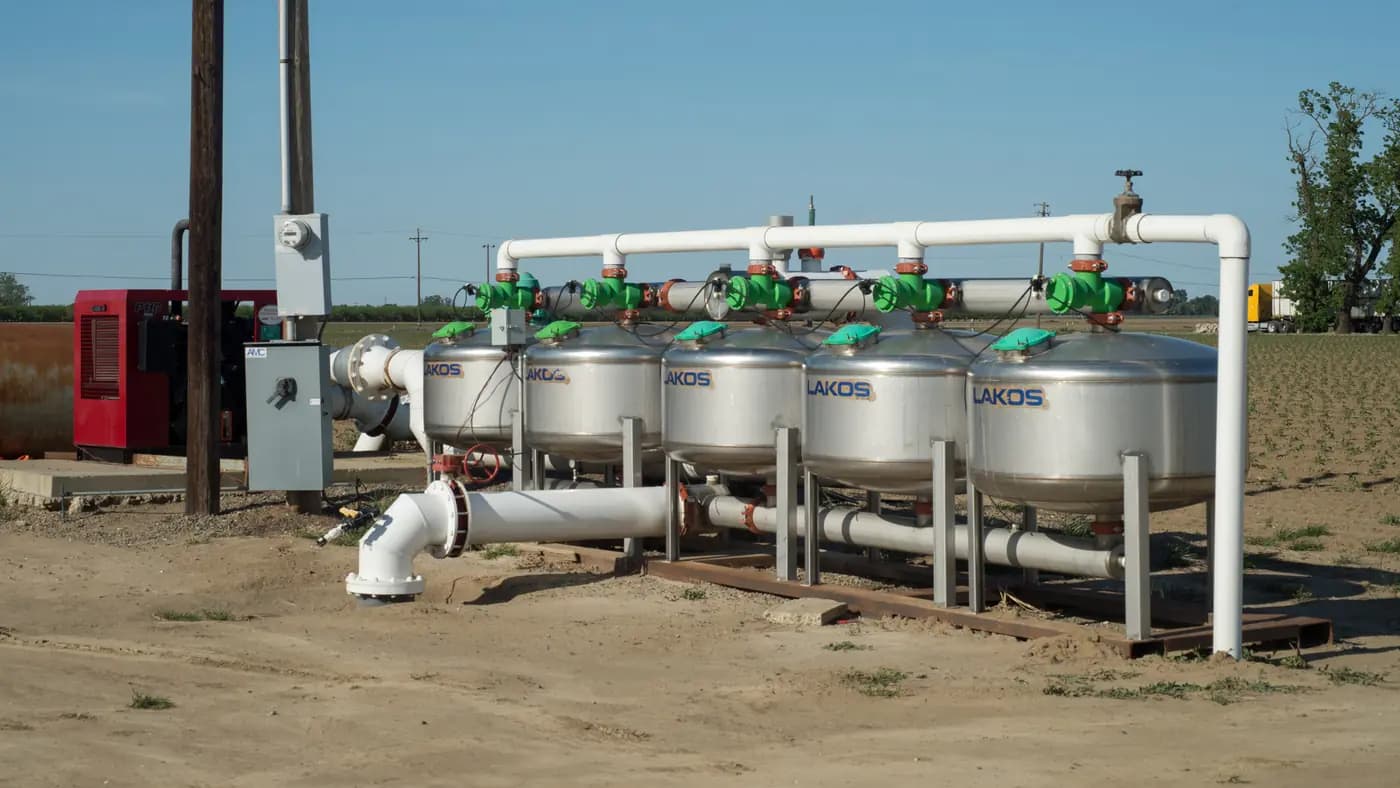
The farm filtration station in the opening photograph uses sand-media vessels; it shows the setting in which filtration decisions matter, not a screen element or a mesh test. The screen decision below begins at a product label or quotation. If the emitter calls for a particular filtration grade, the buyer needs an opening or rating stated for the proposed element. An attractive housing photograph and a matching nominal pipe size cannot supply that missing grade.
Does a 120-mesh screen meet this emitter's filtration requirement?
Write down the actual crop outlet first: its maker, model and required filtration statement. An emitter with a small internal path may have a different requirement from a sprinkler nozzle or a larger dripper, even when the same farm pump supplies both. Record the requirement in the unit and wording used by that outlet maker. A statement such as “100 micron or finer” is not automatically satisfied by a screen described only as “120 mesh.” Conversely, a mesh requirement may be tied to a specific maker’s element definition. If no requirement is available, resolve that gap before using a conversion chart as a substitute.
Next identify the water source and the stage where the candidate screen will work. A screen used after a sand separator has a different solids load from one installed directly after a pond intake. The irrigation filtration buying guide helps with the wider question of which treatment stages suit the source and outlets. Here the narrower task is comparing the grade evidence for a screen already under consideration. Even a correct opening does not tell you how fast organic debris or changing sediment will load the screen.
Put one line on your comparison sheet for the outlet requirement and another for each proposed filter. Keep the exact words from the relevant documentation. “Mesh,” “micron,” “nominal,” and “absolute” are different labels, and a supplier may define them differently. If the outlet maker expresses its limit in microns while the screen seller gives only mesh, mark the screen opening as missing. That simple blank cell is more useful than an unqualified numerical conversion.
Mesh count versus clear opening: what does the label prove?
For a simple square woven screen, mesh count describes openings along a linear inch. At 120 openings per inch, the pitch from one strand to the next is approximately 25.4 millimetres divided by 120, or 0.2117 millimetre. Pitch includes both the clear opening and the strand that occupies part of it. It is therefore not the clear opening. A count by itself omits the strand diameter and any construction detail that changes the shape of the passage. It also says nothing about the condition of an installed, worn or damaged element.
The distinction is visible with two hypothetical square weaves. Hold the count at 120. If a hypothetical strand is 0.08 millimetre wide, the idealized square opening is 0.2117 minus 0.08, or 0.1317 millimetre—about 132 microns. If another hypothetical strand is 0.11 millimetre wide, the idealized opening is 0.1017 millimetre—about 102 microns. Both could carry the same count while their calculated clear openings differ by roughly 30 microns. These are teaching dimensions, not measurements of any IrriNex screen and not filtration ratings for either candidate.
That subtraction works only for the stated square-weave illustration. A grooved disc stack forms passages in a different way, and perforated sheet has holes rather than crossing strands. Do not calculate a disc or perforated-element grade by inserting an imagined wire diameter. Even for woven material, the maker’s actual opening specification and rating method are stronger evidence than a buyer’s reverse calculation from a catalogue label. The arithmetic shows which measurement is missing; it does not replace that measurement.
Units can hide the same gap. One micron is 0.001 millimetre, so 130 microns is 0.130 millimetre. Converting 0.130 millimetre into microns is exact arithmetic; deciding that a 120-mesh Store screen has a 130-micron opening is a separate product claim. Keep those actions apart. A printed conversion table is useful for understanding approximate scales, but use the element maker’s paired rating when deciding whether a screen meets a particular outlet requirement.
Make one screen-grade evidence card for each offer
A useful card has three groups of fields. The first records filtration: screen construction, mesh count, manufacturer-stated clear opening or micron rating, rating convention, and the source document or product label that establishes it. The second identifies the item: complete filter model, element identifier, housing size, connection type, and any seal or included part listed with that exact package. The third records the working context: the emitter requirement, intended zone flow, available pressure, source water, and the service location. Each field answers a different question. A correct mesh label cannot fill a missing housing identity, and a correctly sized connection cannot fill a missing grade.
| Field to record | Example entry | What the entry decides |
|---|---|---|
| Outlet requirement | Exact emitter model and its stated filtration requirement | Target against which grade evidence is compared |
| Screen label | 120 mesh, as printed for the selected element | Count; not a complete clear-opening value |
| Opening evidence | Maker’s stated microns or clear opening, with document and revision | Whether the proposed element can be checked against the target |
| Complete item | Housing model, element ID, connection and package contents | What must match the order and installation |
| Working state | Zone flow and pressure where the complete filter will operate | Separate hydraulic suitability check |
Do not let one impressive number stand in for the other fields. If an offer says only “120 mesh, 2 inch,” ask for the element grade and exact connection standard. If it states a micron figure but names no element or test basis, ask which screen that figure describes. If it names a replacement element, compare its part number with the installed housing and seal arrangement before treating it as a substitute. The card is complete only when the line for each proposed offer points to the actual item being sold.
Bring a photo of the existing filter label when replacing a complete unit, plus the outlet maker’s filtration instruction. A photograph of a red or black screen insert may help identify the shape, but colour alone is weak evidence of grade or compatibility. The screen-filter service or replacement guide addresses a damaged or poorly sealing installed unit. In a new comparison, keep the focus on the stated grade, actual element and complete purchase identity.
Compare the catalogue model with the exact listing option
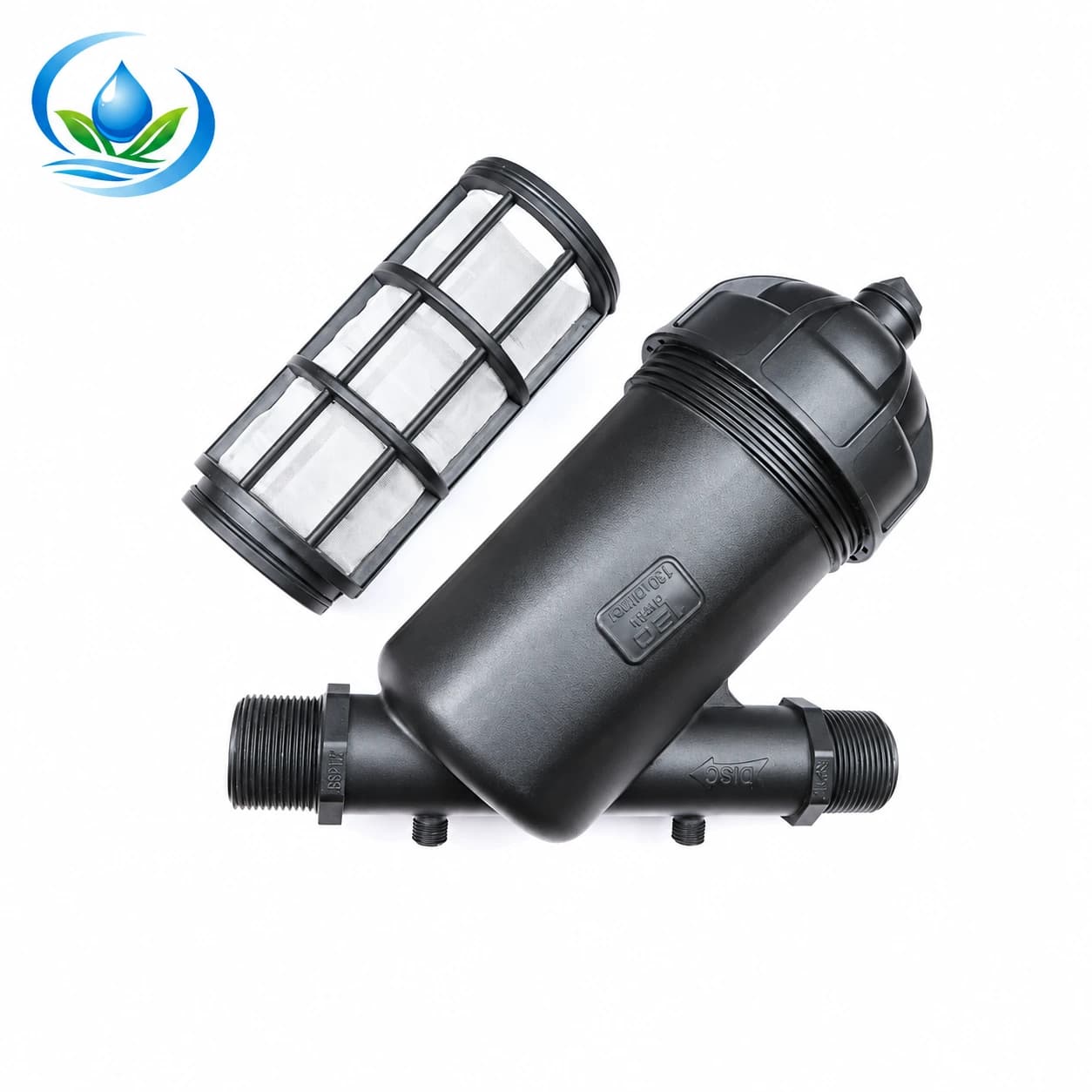
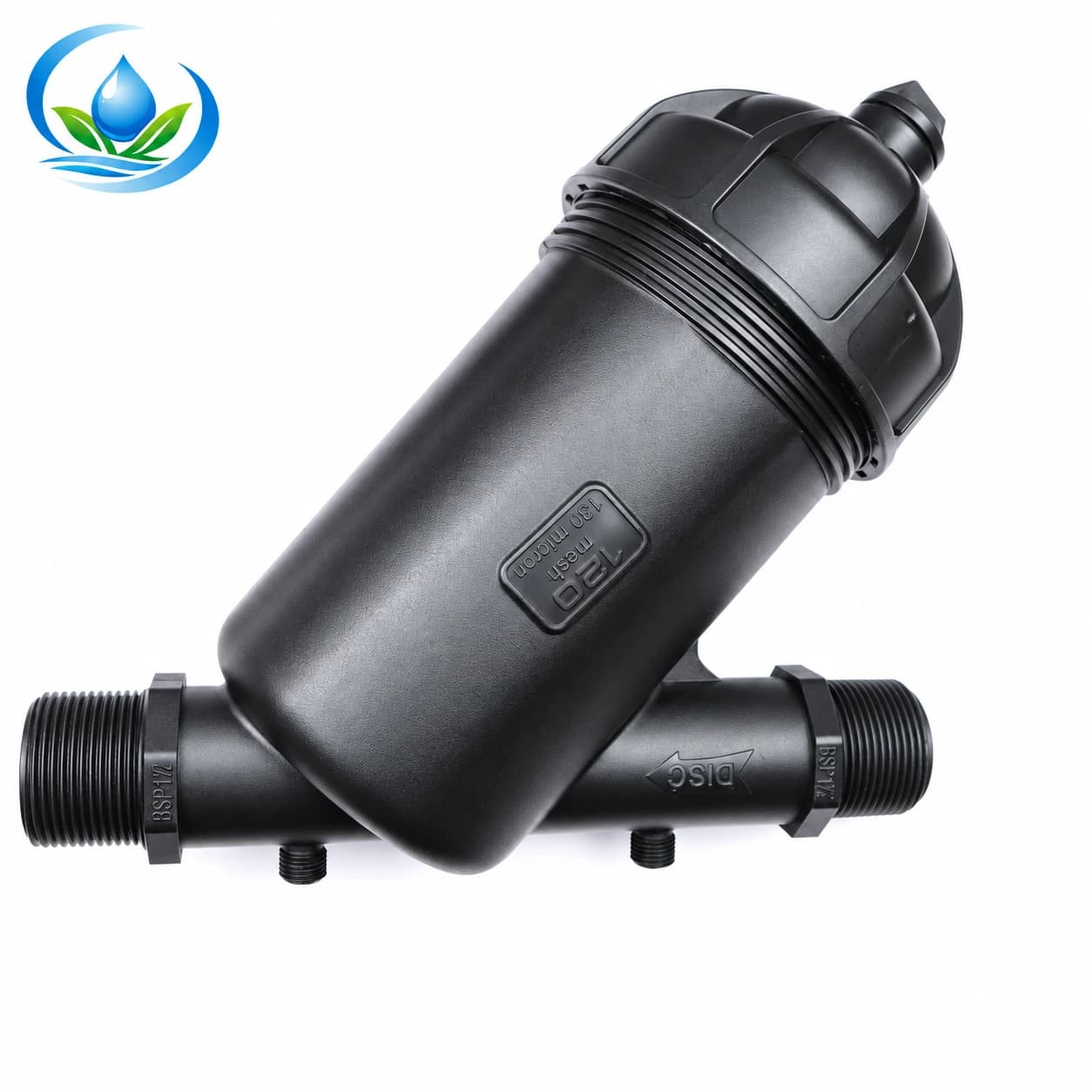
The original IrriNex catalogue illustrates why model identity matters. On its screen-filter page, Y-screen examples F25YS, F32YS and F63YS each carry a 120-mesh label, while their stated connections are respectively 3/4 inch, 1 inch and 2 inches. Their separate maximum-discharge entries differ, too. The shared count therefore does not make these models interchangeable, nor does it produce an opening in microns. The catalogue does not state the wire diameter or a Store-specific micron rating for those examples.
For a smaller line, inspect the plastic screen filter small listing and its selected connection and grade. For a larger line, inspect the plastic screen filter medium listing the same way. The current small and medium options list 120 mesh with specific model codes and connection sizes; match the selected option to the catalogue row. Make sure the option you intend to order corresponds to the model and element whose grade evidence you are using. If that pairing is absent, ask support to identify it before choosing the line item.
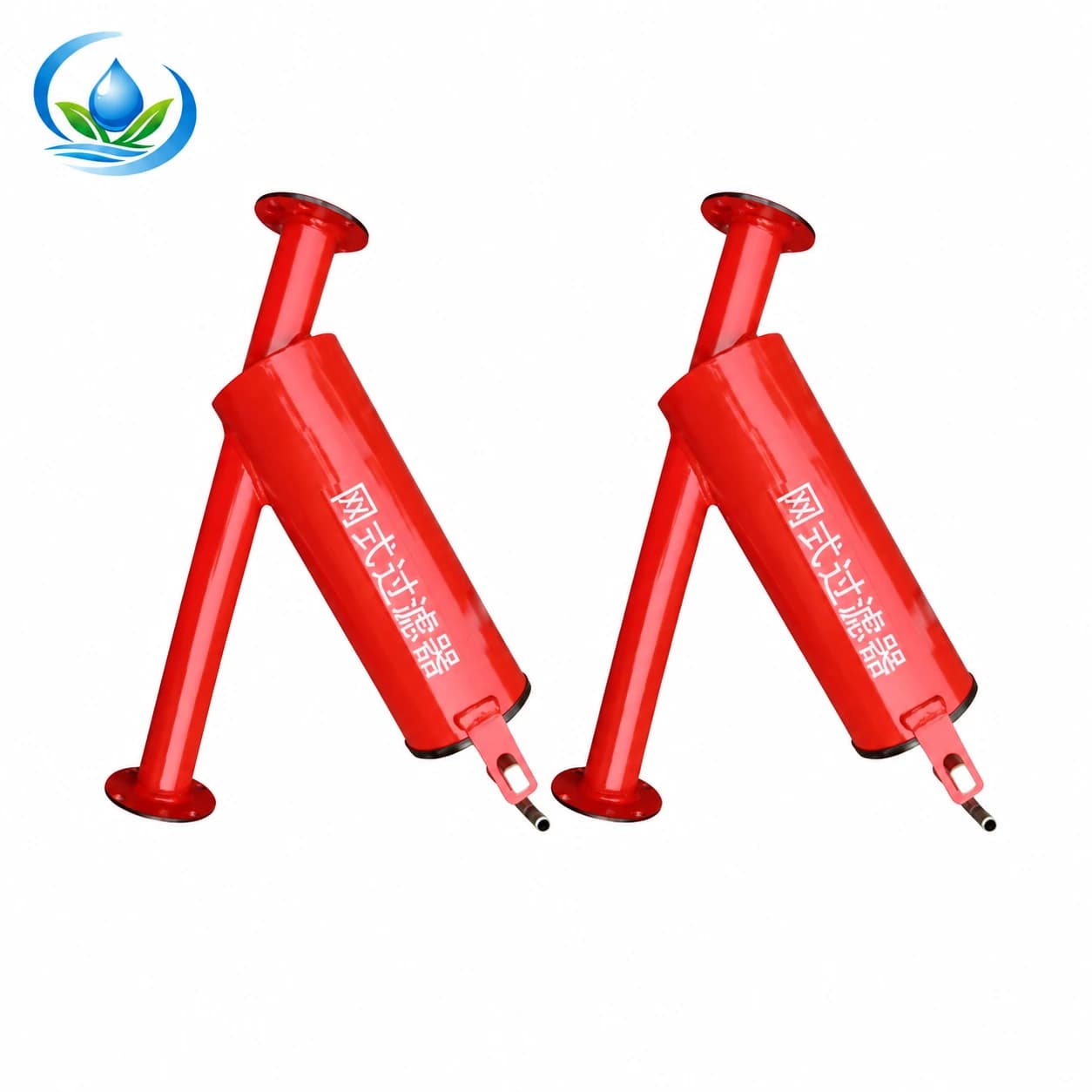
A steel screen filter listing offers another housing family, but a change of body material does not establish finer filtration. Compare its selected screen grade and connection with the same card. Do not infer that an element from one family slips into another because both carry a 120-mesh label. The mesh count describes a screen property, while physical fit depends on the complete element dimensions, ends, seal and housing design. A spare screen should be treated as a separate exact part, not as an invisible inclusion in a filter order.
Filter limits need their own line after the grade decision. A maximum discharge is an upper catalogue limit, not an assurance that the complete filter has acceptable pressure loss at that flow. A maximum pressure is a separate containment limit, not an operating point paired with maximum discharge. Obtain the selected unit’s complete-filter flow and pressure-loss information for the intended element, then check the zone’s available pressure. The filter service-space guide helps place the body where the actual element can be removed and the connections accessed.
Work a two-offer comparison without guessing a micron grade
Imagine a grower has a named drip outlet whose maker calls for a documented maximum screen opening. Offer A provides a 120-mesh label and a 1-inch connection, but gives no opening size or element identifier. Offer B supplies the selected screen’s stated opening and element identifier, but its connection standard has not been compared with the existing pipe. This is a hypothetical ordering exercise, not a rating of two Store filters. Neither offer is ready to order yet: A lacks the grade evidence and B lacks the connection check. The correct response is two short, different requests, not a guess that they are equivalent.
Now suppose A’s seller sends the exact element data and B’s connection is confirmed. Put the maker-stated openings next to the emitter requirement, with the rating conventions attached. If both meet it, evaluate the complete filter’s flow, loss, service access and package contents. If only one meets it, the other cannot be rescued by a larger port or a higher maximum-flow headline. If neither provides comparable evidence, keep the grade decision open and request a documented option. This is the value of the evidence card: it makes each unresolved item visible without inventing a universal mesh conversion.
A buyer may also see “120 mesh” on a disc filter. The disc-stack return-to-service guide explains that the element’s actual stack and housing matter after cleaning. For a purchase comparison, record a disc maker’s stated filtration rating as supplied; do not apply the woven-square example to the disc. The same word “mesh” on two technologies does not prove the same passage geometry or cleaning behavior.
Water-test results can inform the source and loading side of this comparison. The irrigation water-test guide shows how to read particle and other findings before selecting a treatment sequence. A laboratory result for suspended solids does not by itself identify the correct screen opening, and a screen opening does not guarantee a useful service interval. Put the outlet requirement, source findings and selected unit data together; retain each as a separate piece of evidence.
Order the identified filter and keep the grade record
Before choosing a listing option, compare the product-page option with the evidence card: body model, selected connection, screen grade, element identity if given, package unit, current price, availability and delivery. If the page does not resolve the selected grade or matching element, ask support about that particular option. Do not buy a loose insert on the strength of the mesh number alone. Keep the maker’s grade statement with the receipt or order record so a later replacement can be checked against the same body and outlet requirement.
When the filter arrives, compare the marked model and installed element with the order. An unexpected element label is a reason to pause installation and resolve the difference. Follow the selected maker’s installation, isolation, depressurization and cleaning instructions. A screen that physically fits and passes water has not thereby demonstrated its stated opening or established that it protects the outlet. The practical acceptance record is the exact model and element, the maker’s grade statement, the connection and flow check, and a clean operating observation at the intended zone.
For a sand-media stage upstream, the media-filter backwash guide covers its separate service decision. It does not turn the downstream screen’s count into a micron value. Keep those two stage records separate. If the outlet requirement or water source later changes, revisit the screen-grade card rather than assuming the old 120-mesh label still settles the choice.
Questions buyers ask about mesh labels
Does 120 mesh equal one fixed micron number? No. It states a count for a screen construction, while the clear opening also depends on strand dimensions and the maker’s rating method. A chart can illustrate an approximate relationship, but the selected element needs its own stated opening or qualified filtration rating. The hypothetical subtraction above explains the information gap; it is not a way to certify an unmeasured screen.
Can I choose the filter with the larger port if both say 120 mesh? Port size solves a connection question and may affect the available hydraulic range. It does not establish the same opening, element fit or pressure loss. Compare the grade, exact connection standard, complete-filter data and intended operating flow in separate rows. A larger inlet is not a substitute for the outlet maker’s filtration requirement.
Can I order a replacement element by colour or mesh alone? Record the installed housing model, element part number, seal arrangement and maker’s grade statement. Match the replacement to that identity and the actual outlet requirement. If a product page does not list a matching spare, ask about availability before making it part of the order. This avoids treating a similar-looking screen as a certified fit.
Before you order
Compare this guide with the specifications for your exact product, selected option, water supply and field conditions. Your equipment requirements take priority over a general example.
Compare irrigation products