Media Filtration: Irrigation Backwash Checks Before You Buy
Compare normal irrigation and backwash modes, including cleaning-water supply, crop flow and the dirty-water drain, before choosing a media filter.
Published by IrriNex Store
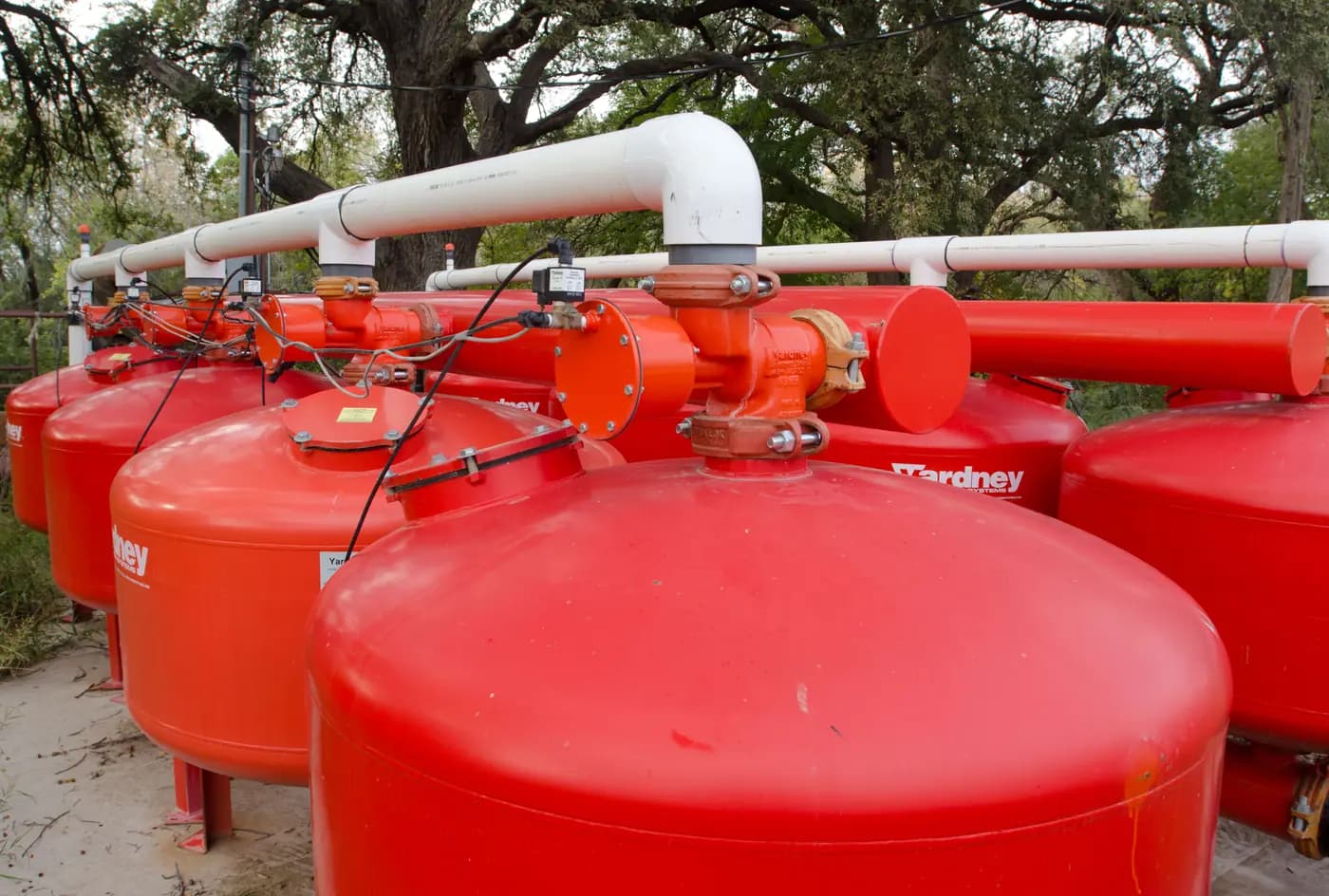
With media filtration, irrigation water must serve both the crop and the cleaning cycle after the bed retains suspended material. A vessel that fits the normal irrigation pipe can still be a poor purchase if the site cannot supply its specified backwash condition or carry the dirty discharge away. Before choosing a single or twin arrangement, map both operating modes, the source of cleaning water, the flow left for crop zones during cleaning, and the actual drain destination. Confirm the media filter backwash water supply and dirty-water discharge path, because the normal crop-water route cannot establish cleaning capacity.
This is a pre-purchase check for a grower already considering media filtration. If the source contaminants or protected emitters have not been identified, use the water-source and emitter filtration guide first. Here the decision is whether a particular media-filter package can be operated and cleaned at the farm, not whether every irrigation system needs a media vessel.
Map the irrigation system filter normal and backwash routes
Start with a sketch of the actual headworks. In normal filtration, show the pump or storage outlet, each media vessel, the clean-water manifold, any final screen or disc stage, and the crop zones allowed to run together. Mark flow direction, pressure measurement locations and the place where the operator can identify the active arrangement. A photograph of several tanks is not a pipe diagram; hidden valves and connections decide how water moves.
Make a second sketch for backwash. Identify which vessel is being cleaned, where the reverse-flow water comes from, what remains connected to the crop outlet, and where the loaded water exits. The wash source may be raw supply, filtered water from another vessel, or a separate arrangement, depending on the selected equipment. Confirm the actual package's route rather than assuming that one tank always uses one source and two tanks another. The branch carrying dirty wash water must be distinct from the clean supply to crop outlets.
Keep these sketches beside the proposed product option. Ask for the exact vessel and manifold drawing that labels normal and cleaning connections. A supplier answer such as “automatic backwash” is incomplete unless the included valves, controls, water source, discharge connection and cleaning-mode flow are identified. The two-mode sketch reveals a missing part before pipe is ordered or a trench is dug.
Check backwash supply and dirty-water drain before buying
Write down the permitted normal irrigation cases: the smallest zone, the largest zone and every combination that is allowed to operate simultaneously. The zone-flow calculation guide can help turn outlet counts into those working flows. Record available source flow and pressure while each relevant case runs, not just the pump label or a no-flow gauge reading. The normal media-filter option needs a model-specific service-flow range and pressure-loss information for the selected bed and source water.
Then make a separate cleaning case. Obtain the required wash flow, the pressure at the point named by the exact model, and any condition for acceptable bed cleaning. Find out whether the pump, tank or other supply can maintain that condition when the source level is low and the filter is dirty. The cleaning requirement is not a small universal percentage added to normal irrigation flow; it can change which paths are open and which vessel is producing clean water.
If crop irrigation must continue, establish the remaining filtered capacity and the pressure available to the open zones while one vessel cleans. A twin-tank label alone does not answer this. Depending on the designed manifold, control sequence and source capacity, the remaining vessel may or may not support the farm's required zone. Compare that case with the actual zone schedule and the farthest outlet's pressure need. The drip-pressure checklist helps keep source, filter and far-row readings separate.
If irrigation can pause for cleaning, document which zones will be closed and how the crop schedule accommodates the interruption. A planned pause can be a workable choice; claiming uninterrupted supply without a verified cleaning-mode calculation is not. Record what will happen if cleaning starts during the largest zone, whether an operator must stop that zone, and how the system returns to the approved normal route.
Check where backwash water originates
The quality and availability of wash water affect the arrangement. A source line carrying the same suspended load as the inlet may behave differently from a route that draws already filtered water. A separate clean-water source adds storage, protection and connection questions. Ask the maker of the selected package to identify the intended source and how its specified cleaning condition is maintained. Do not borrow another manufacturer's raw-water or filtered-water diagram as proof of how the Store vessel is plumbed.
Where the cleaning supply is drawn from a multi-vessel bank, trace which units produce that water during each cleaning event. Find out what happens if a unit is isolated for service or if the source pressure falls. A bank designed to wash one tank at a time cannot be assumed to clean several at once. Equally, two vessels in a listing do not prove that each has its own valves, a complete clean-water manifold or a controller that switches modes without operator action.
Where a separate supply is proposed, keep its source, capacity and connection within the designer's approved arrangement. A temporary hose tied to a convenient pressurized point is not a verified backwash source. Its potential to send dirty or untreated water into a clean crop line must be assessed before purchase. Ask for the actual supplied components and connection drawing rather than improvising a wash route after the tanks arrive.
Give dirty discharge a real destination
Backwash water carries material removed from the bed and can be much dirtier than the normal filtered outlet. Locate the drain or collection point on the site plan, trace the entire route from the package's discharge connection, and confirm that the location may receive that water under the farm's applicable site requirements. A valve opening over the headworks floor is not a drainage plan. Keep wash water away from electrical equipment, paths needed by operators, clean parts and places where it would undermine a support.
Ask for the selected package's discharge connection and the operating information needed to size its receiving pipe or collection arrangement. Check whether the route is long, elevated, shared with other drains or likely to become obstructed by settled solids. These conditions can affect backwash operation, so the drain design and its acceptance cannot be inferred from inlet pipe diameter. Do not route dirty discharge back into the clean crop manifold as a shortcut.
Consider the first cleaning event and the later maintenance season. An accessible inspection point lets an operator see whether the line is flowing as intended without standing in the discharge. A settled-solids collection area may need planned handling. The headworks service-space guide helps place equipment and walkways, while this check decides whether the cleaning discharge has a workable path and destination.
Compare single-tank and twin-tank arrangements for your site
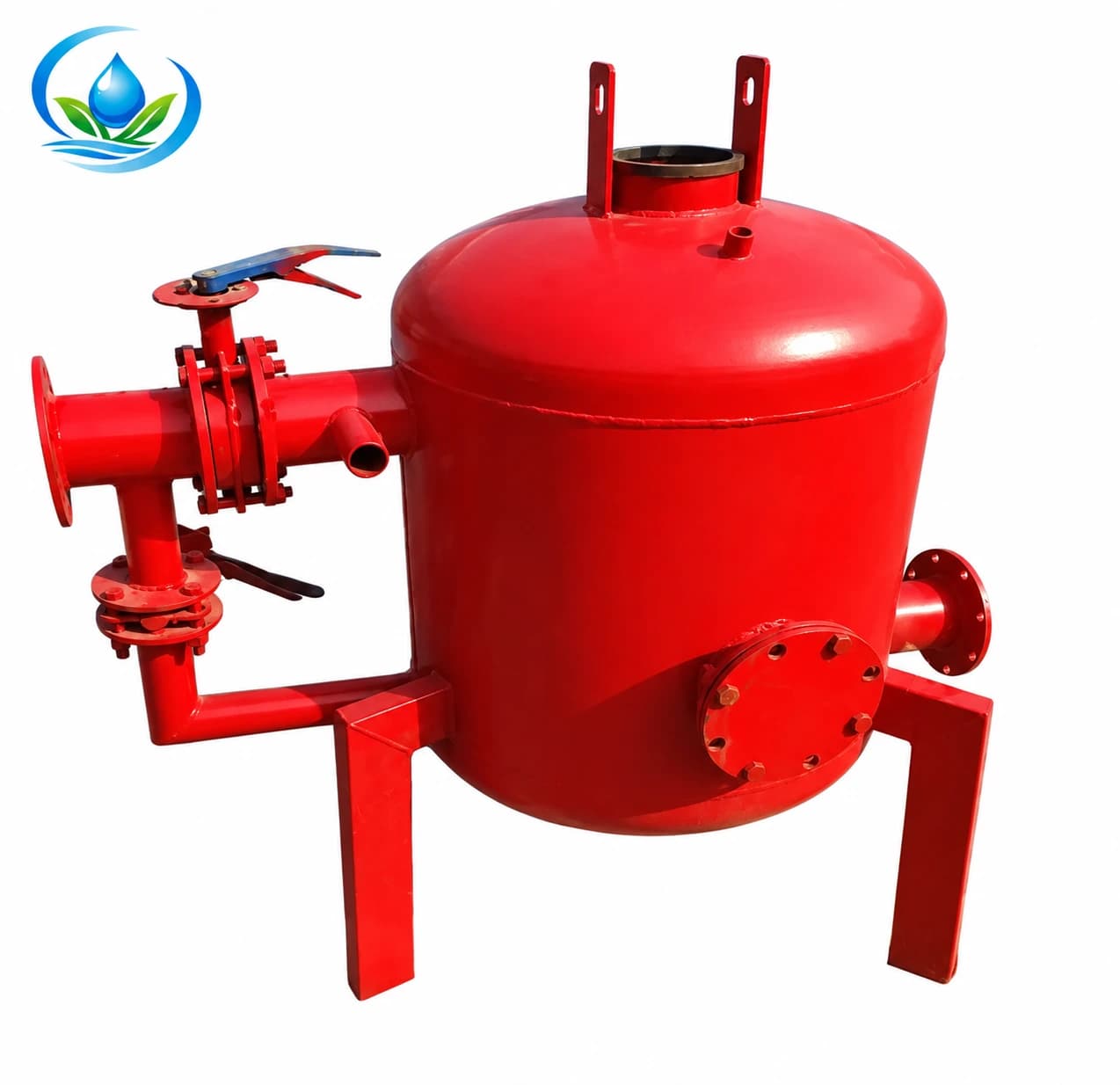
The single-tank sand-media filter is a useful comparison when the farm can define a controlled cleaning interruption or another approved route to supply the crop. Identify the exact vessel, media specification, inlet and outlet connections, service-flow range, wash-water source, required wash condition, valves and drain pieces before buying. Its item code FLT-SAND-ONE identifies the listing; it does not by itself specify a backwash rate, cleaning sequence or included media.
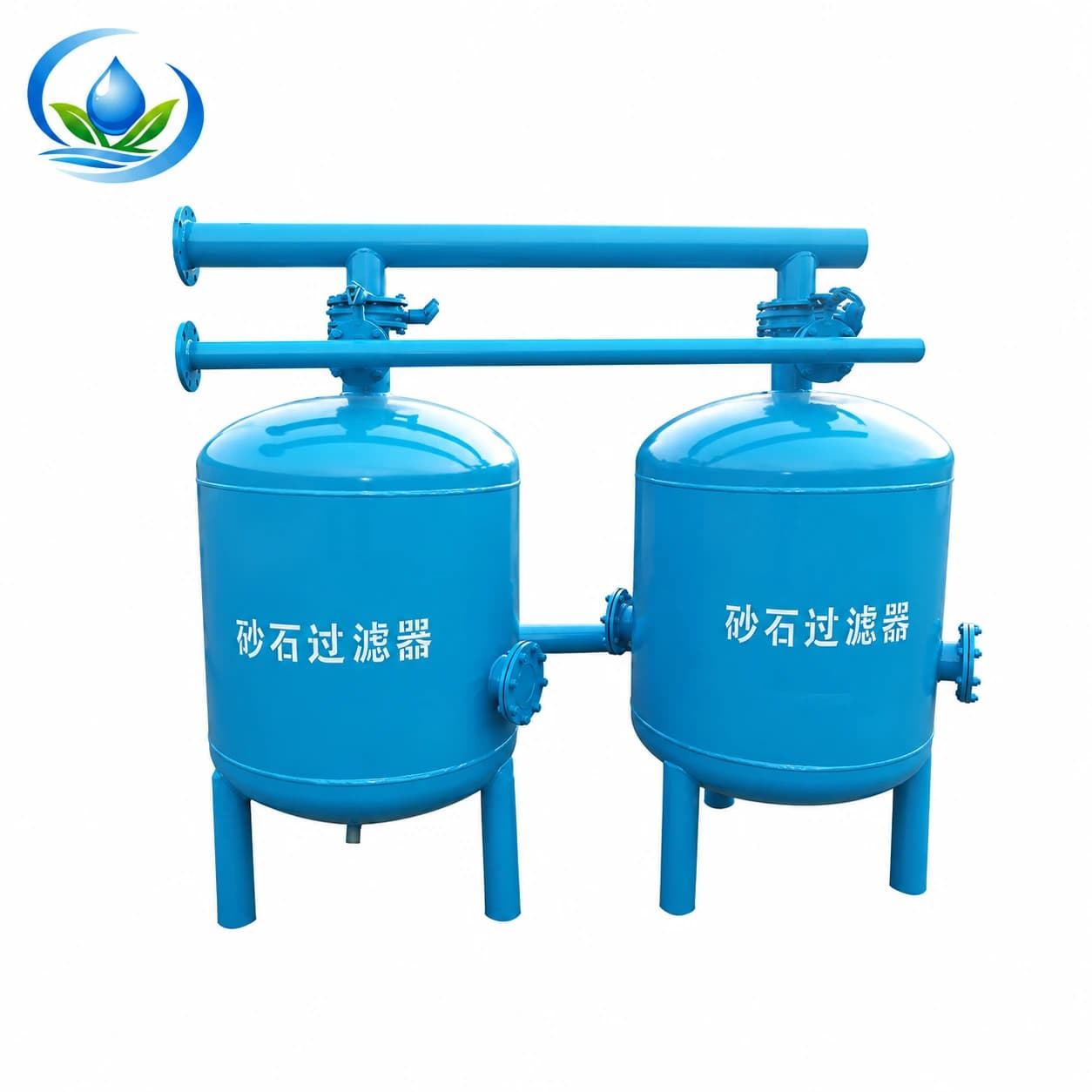
The twin-tank media-filter listing is worth examining when the farm may need another vessel to filter while one is cleaned. Ask for the actual arrangement behind item code FLT-SAND: vessel models, parallel or other manifold layout, per-vessel filtration and backwash conditions, valves, controls, supplied media and cleaning-water path. Compare the delivered configuration with its own documented filtration and wash conditions. Confirm separately whether the proposed package can keep the required crop zone running throughout the specified cleaning event.
Do not treat “twin” as a synonym for “automatic.” A controller, sensors, command-water connections, switching valves and a power source are physical parts of a particular package, not consequences of counting tanks. A manually managed twin station may still be appropriate if its instructions, operator availability and crop schedule fit. Conversely, an automatic arrangement needs a safe response to low source pressure, a blocked drain or a component that fails to switch. Request the exact package schedule rather than assuming either feature.
For both listings, compare the selected option's displayed price, sale unit, current availability and delivery information. Ask Store support about availability if no purchase option is shown. A useful fit question names the intended vessel, source, normal zone flows, cleaning-mode requirement, available pressures and discharge route. Those facts allow a model-specific answer without treating an approximate family description as an order-ready design.
Account for the bed and the parts around it
A media vessel only performs as intended with the specified bed, internal distribution parts and suitable loading and cleaning conditions. Request the actual media type, grade, quantity and whether it is supplied with the selected option. Also identify any underdrain, pressure ports, valves, manifolds, controller, backwash connections and drain components supplied or required separately. A product photograph may show a complete station even when an individual sale unit is a vessel or partial assembly.
Match the filtration job to the material present in the operating source. Sand, fine mineral particles and organic debris can load and clean differently; the correct bed and operating range come from the selected equipment and water analysis. The water-test reading guide separates suspended solids from dissolved constituents before a physical filter is bought. A sand-media bed is not a desalination unit, a pH correction or a food-safety clearance.
Ask how the maker expects the bed to be checked after initial operation and later service, without requesting an improvised valve sequence. Too little effective wash may leave retained material; inappropriate wash conditions can disturb or lose media. Use the selected model’s media and operating instructions to set wash flow, pressure and duration, and to confirm that the bed remains in place.
Use a two-mode worksheet before placing the order
Make one row for normal filtration and another for cleaning. For each, record the active water source, active vessel or vessels, actual or required flow, pressure measurement point, outlet path, permitted crop zones and expected discharge destination. Add the name of the model document that supports each condition. If a field is blank, the purchase decision is still open; a pipe diameter or tank count will not fill it in.
For a farm that can interrupt irrigation, the key test is whether the source supports proper wash conditions and the drain accepts the dirty event. For a farm that cannot interrupt a sensitive zone, the additional test is whether the specified bank maintains adequate filtered flow and pressure while the named vessel cleans. These are distinct purchasing cases. They cannot be resolved by a generic percentage allowance or by the claim that backwash is brief.
Give the package seller the source and water-load description, zone-flow schedule, normal and cleaning pressure observations, required uninterrupted zones, proposed drain route and the exact single- or twin-tank option. Ask for its complete connection and included-parts schedule, model-specific filtration and wash requirements, and instructions governing the mode change. When those match the site, choose the currently available option and retain the documents with the installation plan. If the cleaning mode remains unproved, resolve it before the filter becomes the only path protecting the crop.
Before you order
Compare this guide with the specifications for your exact product, selected option, water supply and field conditions. Your equipment requirements take priority over a general example.
Compare irrigation products