Agricultural Irrigation Filtration Equipment: Filter Choices for Sand and Organic Matter
Build a serviceable station from measured farm water conditions, working flow, filter pressure loss and planned cleaning access.
Published by IrriNex Store
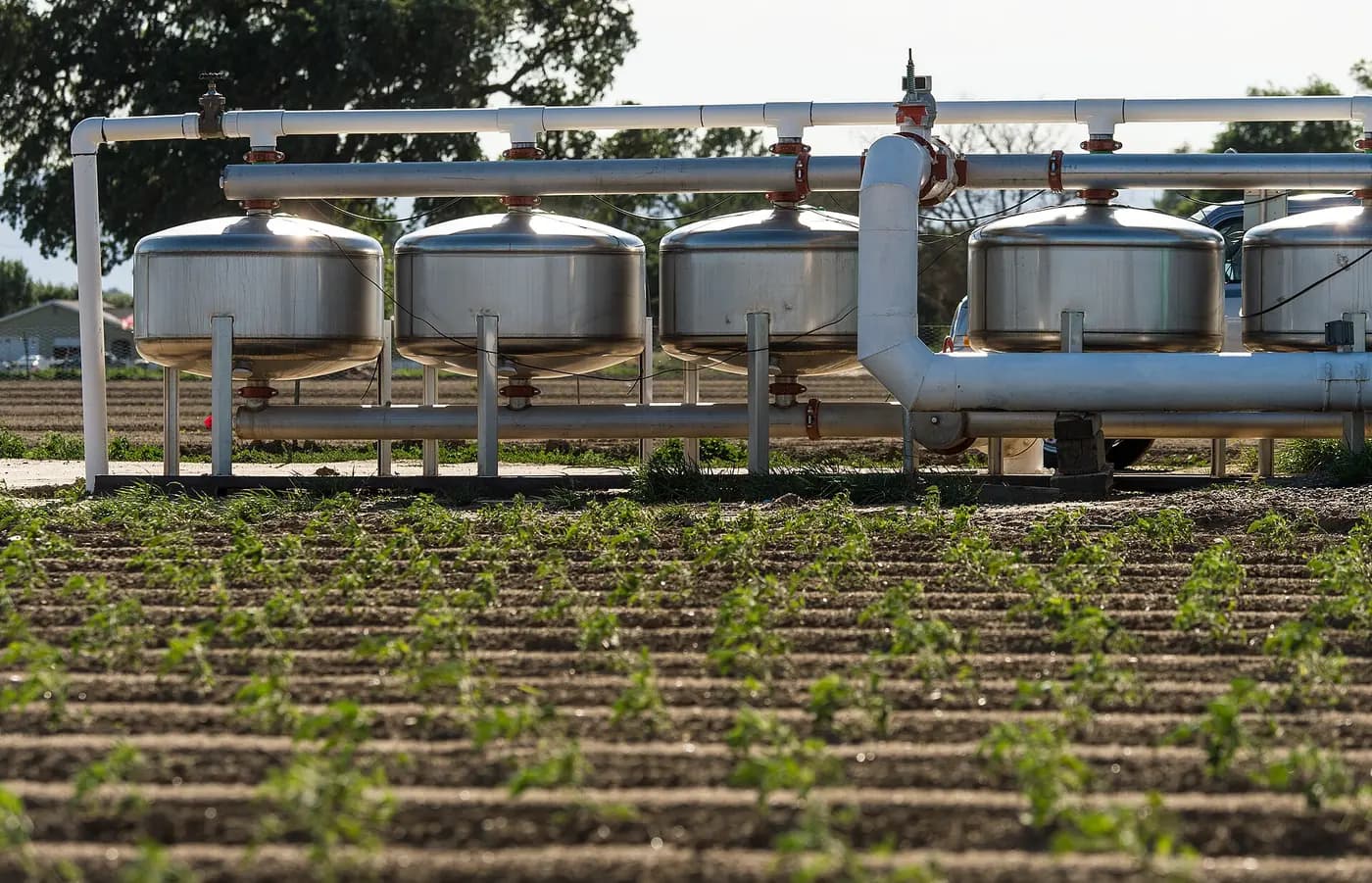
Agricultural irrigation filtration equipment: filter stations should be assembled for the water actually entering a farm, not from a picture of every filter type in series. Grit pumped from a well and algae carried from an open pond behave differently; one separator cannot solve both. Start with a representative water observation, the outlet passages that need protection, the flow during irrigation and the water available for cleaning. Then choose only the stages that have a defined job, put them in a serviceable order, and leave space to inspect what each stage catches.
This is a station-layout and buying guide. The general filtration buying guide compares technologies against source and emitter needs. Here the deliverable is a source-specific sketch for sandy or organic farm water: where a hydrocyclone might precede a media stage, where a final disc filter might sit, how the captured debris leaves, and which readings will tell a technician when the arrangement is failing. A single clean water sample or the nominal size printed on a housing is not enough to approve a station.
Describe the water problem before drawing filter vessels
Record the source, how it changes during a season, and what appears in a clear sample collected while the pump operates under normal conditions. Settleable grit, suspended fine material, floating organic fragments and biological growth are different observations. Ask whether the problem occurs at start-up, after rain, during a reservoir bloom or throughout every shift. A well can bring abrasive mineral particles; a surface source may carry leaves, algae and fine organics. Water can contain more than one of these, so a stage should be justified by what it is expected to remove.
Do not diagnose all poor water by eye. A clean-looking sample can still cause a problem inside small emitters, and a visibly dirty sample does not reveal how much pressure a particular filter bank will lose. Arrange the relevant water analysis and compare results with the emitter maker's filtration requirement and the designer's flow cases. The water-test interpretation guide helps separate observations that call for filtration from those that need another form of treatment. A sand separator, media vessel or disc stack should not be sold as a remedy for an uncharacterized dissolved-water issue.
Include the lowest and highest intended system flows, plus any legitimate backwash mode. Note pump capacity, available pressure at the proposed station, desired pressure at the farthest crop outlet and any future zone expansion that is actually planned. Filters consume head even when clean, and the pressure difference rises as they load. The selected housings and connections must fit the operating case, not merely match the nominal diameter of an existing pipe. Ask the supplier for exact model-specific pressure-loss and service data where the product page does not provide them.
Assign each possible stage one documented task
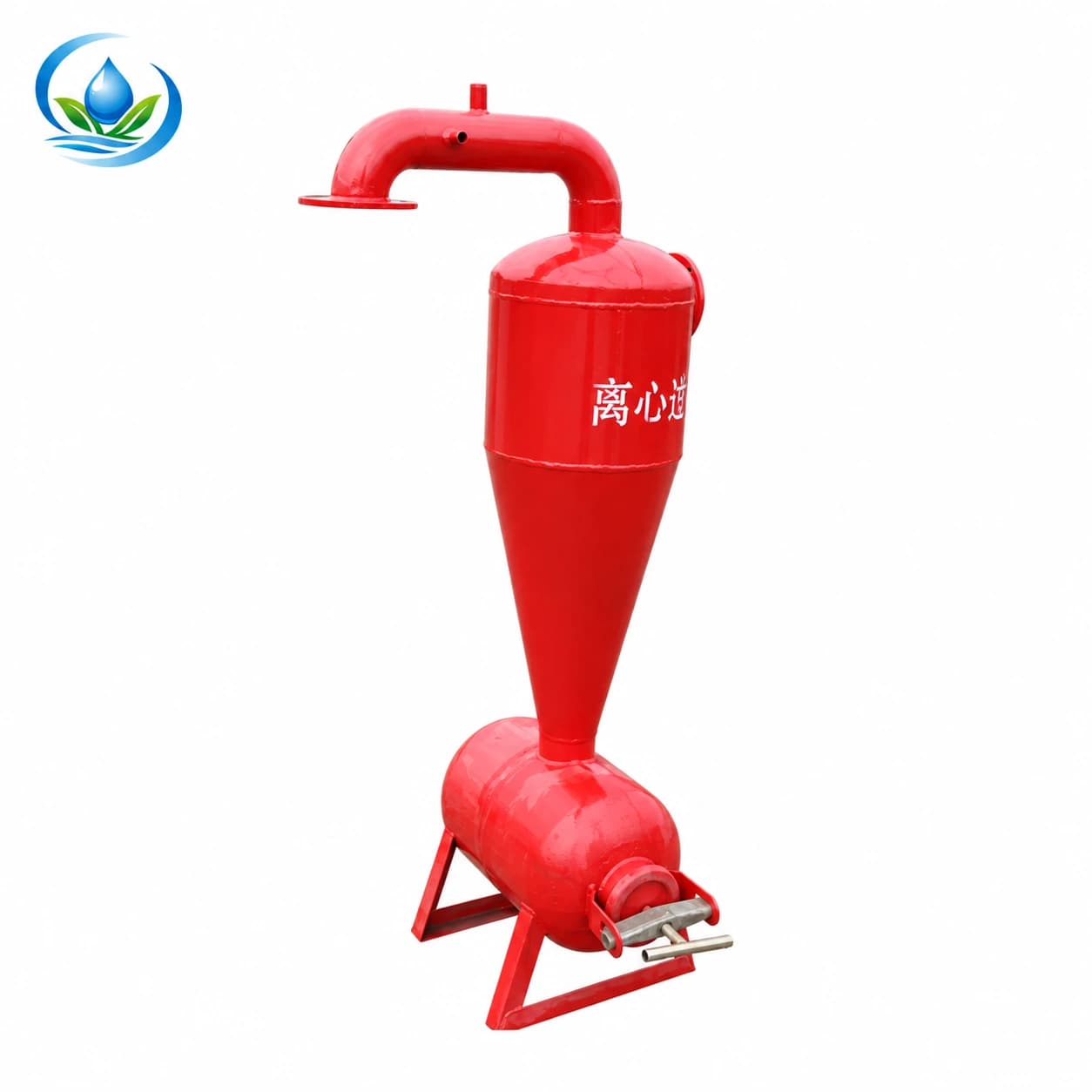
A hydrocyclone uses the flow pattern in its body to separate suitable dense grit and collect it below. It is a pre-separator, not a fine filter and not a remedy for floating algae. If measured grit from a pumped source justifies one, draw it upstream of finer filtration with an accessible collection chamber and a safe place to empty it. The published hydrocyclone sand separator lists several connection options, but the current listing is not directly purchasable. Confirm the exact option, working flow, connection and collection arrangement before specifying it. Do not infer performance from the maximum pressure printed in an option label.
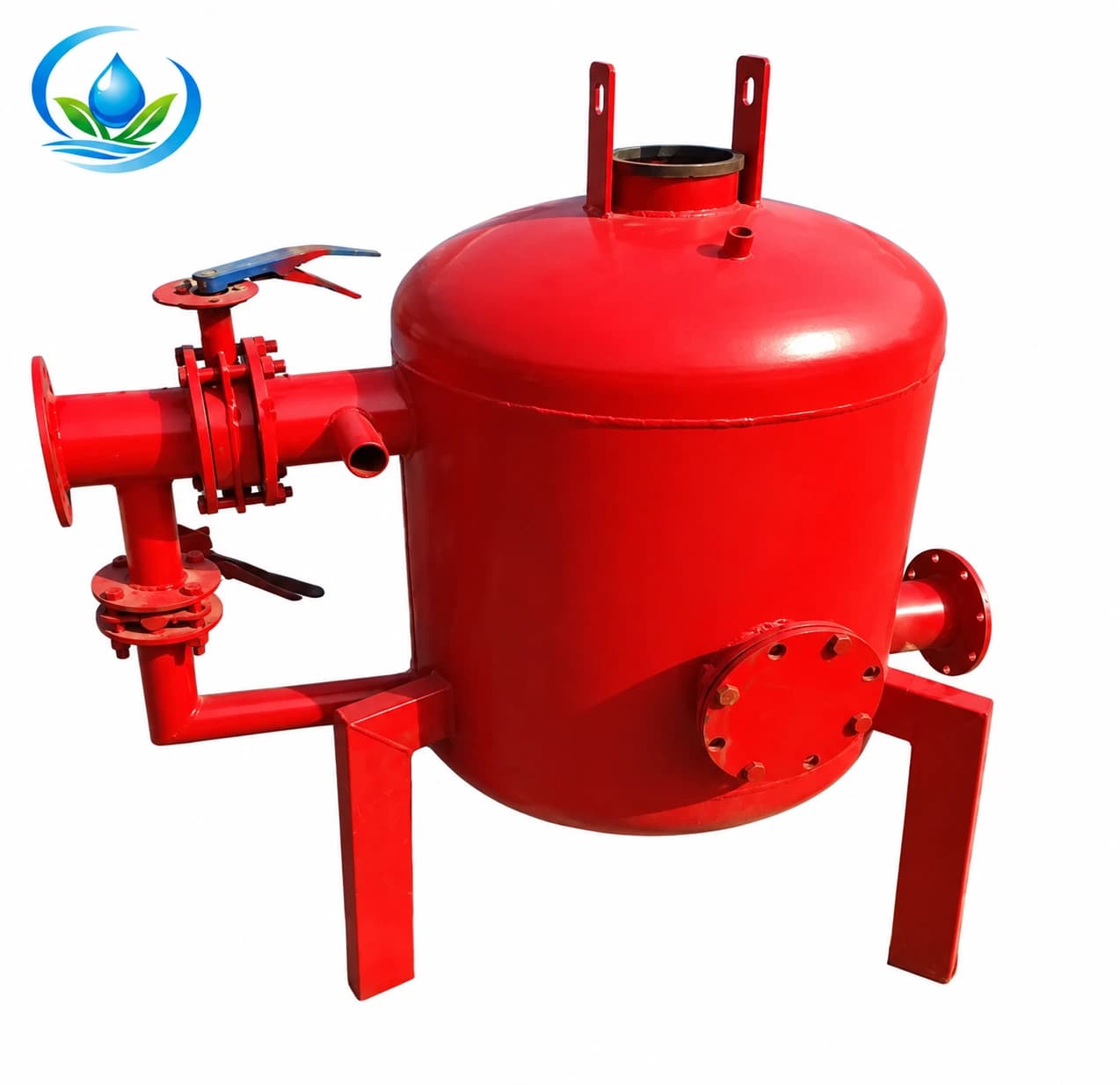
Media filtration can be appropriate where source observations show a high burden of fine suspended or organic material. A vessel contains a bed that captures material through depth; it requires a correctly designed cleaning arrangement and space for the displaced water. The published single-tank sand media filter is a product family to discuss with the designer, not proof that one tank can perform every backwash case while the field continues to irrigate. Its current listing is also not directly purchasable. Confirm media, vessel size, valves, pressure measurement, backwash flow and disposal route as an assembled system rather than assuming the product image includes them.
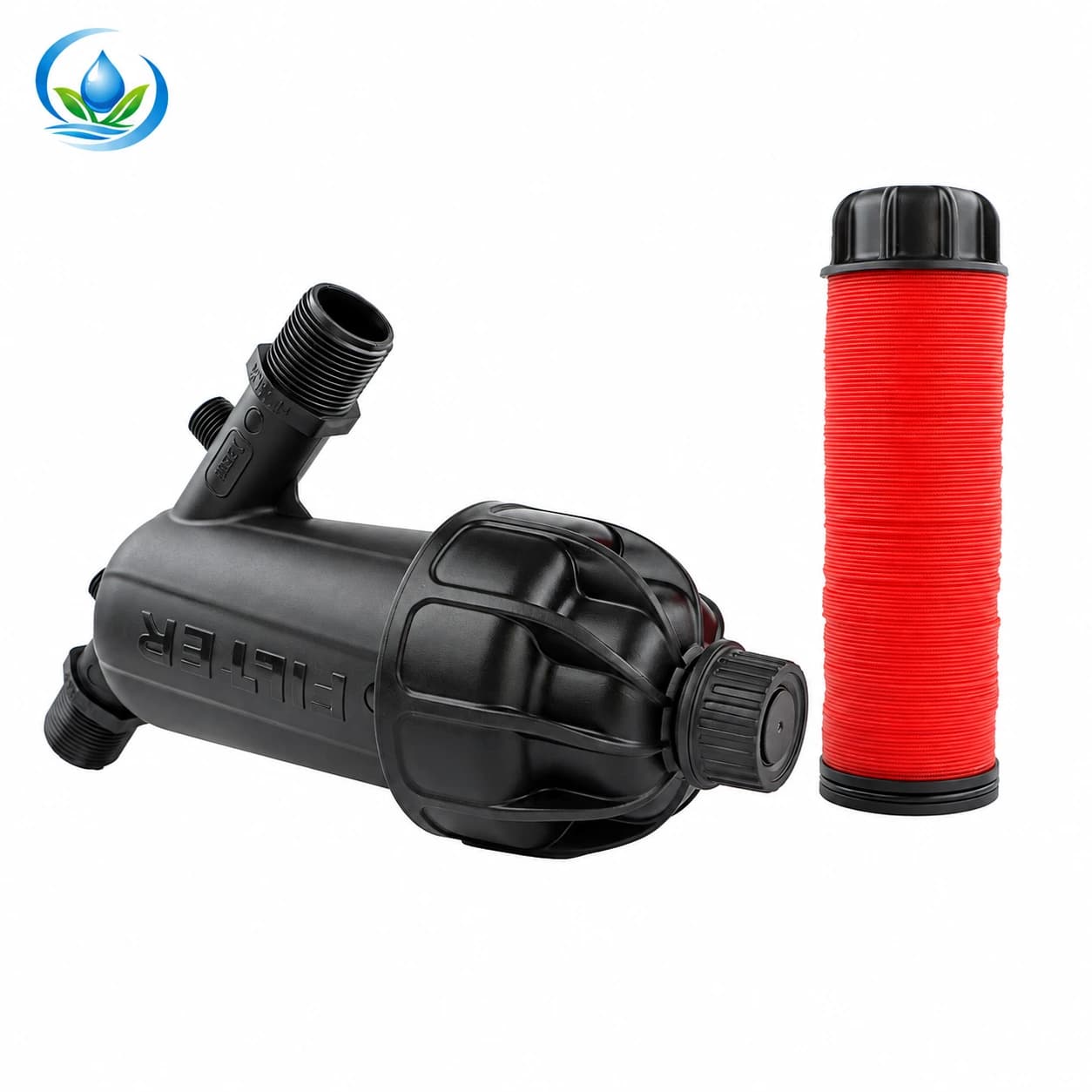
A disc filter can serve as the selected final protection where its grade, capacity and cleaning method suit the downstream emitter. The published Y-body disc filter lists options with connection, 120-mesh label, maximum flow and pressure; compare the exact option with measured zone flow and the stated requirement of the emitters. A final disc stage is not a universal requirement after every media filter, and adding one without room to clean it can make the station less reliable. The disc-stack inspection guide addresses the physical check after a cleaning, when a ring stack or seal has been disturbed.
Set the order according to the source, not a fixed three-box recipe
For predominantly sandy water from a pumped source, a justified grit separator might come first so heavy particles do not abrade or fill the finer stage. A downstream filter still has to protect the emitter against material the separator does not capture. For organic or highly turbid surface water, a correctly designed media stage may be more relevant than a hydrocyclone; large debris control at the intake and the chosen final protection need separate consideration. If the water has both grit and organics, a staged design may be warranted, but each stage must have a measured purpose and a way to be cleaned.
On the drawing, label flow direction, every inlet and outlet, isolation valve, pressure port, drain, collection vessel, bypass that is allowed during maintenance, and connection to the crop line. A bypass that sends untreated water to emitters should never be treated as a convenient cleaning shortcut without a designer-approved operating state. Identify where pressure is read before and after each stage so a rising differential can be tied to the stage that is loading. If two units are adjacent with no port between them, the operator may know only that the whole bank loses pressure.
The Agriculture Victoria guidance on drip filtration distinguishes screen, media and disc filters and describes a hydrocyclone as a sand separator used ahead of filtration rather than a fine filter itself. Its examples of mesh, pressure loss and backwash conditions are context, not specifications for these Store products. Use the chosen emitter instructions and exact equipment data for the site. Avoid borrowing a universal mesh number from an unrelated installation or treating a filter grade as a guarantee of clean water under every source condition.
Make cleaning water, drains and access part of the purchase
A station is not serviceable just because the drawing shows enough straight pipe. Leave physical clearance to remove the disc stack or open a vessel, inspect seals, isolate pressure, carry out the approved cleaning procedure, and reach the collection chamber without crawling beneath a leaking joint. Check how a worker will identify the correct valve and stand safely while reading gauges. Draw hose routing and the destination of flush or backwash water; water discharged next to the foundation can make a tidy station unusable.
Media backwashing is a hydraulic operating case, not a maintenance footnote. Confirm the required clean-water supply, direction changes, valves, flow and pressure with the designer and vendor of the assembled media system. If irrigation must continue during cleaning, that requirement may affect the number of vessels and the pump duty; do not assume a single-tank product page provides such a mode. If cleaning happens while irrigation is paused, write that operating boundary into the schedule. Either way, captured material needs a planned destination compatible with site conditions and local rules.
Hydrocyclone collection chambers also need an emptying path and inspection routine. The sand-separator chamber guide helps distinguish an actual collection arrangement from a separator body alone. A unit sized from a connection diameter but installed where the chamber cannot be accessed may create more maintenance than it saves. For discs, allow enough room to withdraw the element, inspect its orientation and reseat the seal according to the model instructions.
Build a quote that includes the whole station
Ask for two or three alternatives against the same water and flow requirements, rather than comparing a bare separator price with a complete filter bank. Your request should include source and sample results, expected contaminant type, emitter requirement, smallest and largest irrigation cases, pressure available, cleaning-water supply, space available and desired maintenance routine. Require each quote to list model and option, connections, clean pressure loss at the relevant flow, filtering grade or media specification, valves, gauges, drains, supports, backwash requirements and replacement parts.
Show which stage addresses each observed problem. If a hydrocyclone appears in a quote for algae-only water, ask what measured grit justifies it. If a fine disc appears after a media vessel, ask what downstream risk it manages and whether that extra pressure loss is affordable. If the quote omits a way to measure upstream and downstream pressure, request one. The service-space planning guide is useful when drawing the physical arrangement, but station order still follows the source water and emitter requirement.
Check the current selling status of every item. The hydrocyclone and single-tank media listings are published but are not presently enabled for direct checkout; a displayed zero price is not a free offer. The Y-body disc family has purchasable options, yet a listed nominal connection and maximum flow do not guarantee suitability for this bank. Confirm current terms, exact stock-keeping option, included components and delivery for each quote. Leave unspecified adapters and backwash controls as open items until the supplier identifies them.
Commission with recorded pressures and a cleaning trigger
At installation, verify flow direction and each isolation or drain point against the approved drawing before running the crop lines. Measure the pressure before and after each clean stage at a named normal flow, and record the date and valve combination. That is the station's baseline for later comparison. Observe the first cleaning cycle or manual inspection according to the exact equipment instructions and confirm that waste leaves by the planned route. Do not open a pressurized vessel or run an unapproved bypass merely to get water to the field.
As the source changes, compare actual differential pressure and flow with the baseline and the vendor's cleaning criteria. An unexpected small differential is not always reassuring: an element may be damaged, bypassing, or no longer collecting material. A rapid increase may point to a source event or undersized stage. Inspect the captured material and sample downstream water when troubleshooting, rather than only shortening a timer. Record each cleaning, chamber emptying and element inspection so a seasonal trend becomes visible.
The finished buying decision should name an ordered station, not a pile of filter types: for example, a verified grit-removal need followed by the selected downstream protection, or a media stage for documented organic loading with an appropriately specified final element. Attach source evidence, exact model data, pressure budget, service clearance and cleaning route. When those facts do not yet support a stage, leave it off the first quotation or seek more water and equipment evidence. A filter station succeeds when the person operating it can see what each part removes, clean it safely and maintain the pressure needed at the crop.
Before you order
Compare this guide with the specifications for your exact product, selected option, water supply and field conditions. Your equipment requirements take priority over a general example.
Compare irrigation products