Orchard Sprinklers: Check Spray Clearance as Trees Grow
Trace micro-sprinkler spray blocked by growing trunks, branches, weeds or supports before moving a head or buying orchard replacement parts.
Published by IrriNex Store
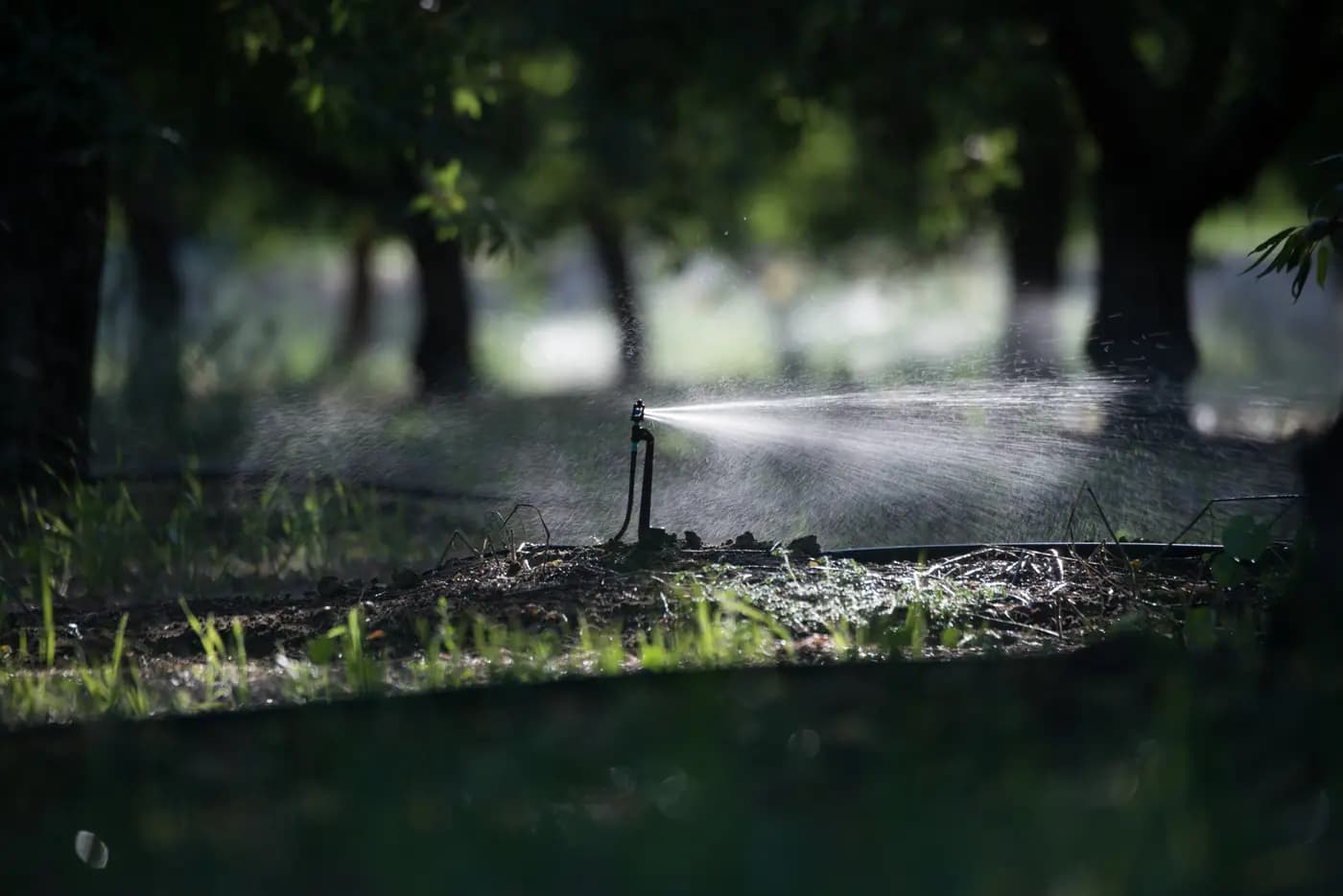
Working orchard sprinklers can lose useful ground coverage as the orchard grows. A micro-sprinkler may still rotate and discharge water, yet its stream now strikes a thicker trunk, a lower branch, seasonal weeds or a shifted support. The buyer's question is whether the spray path is blocked at this tree, the head itself is failing, or the operating group has weakened. Observe that difference before ordering another head or moving a feeder tube. An orchard micro sprinkler spray shadow can form behind a thicker trunk or new branch even while the head rotates and discharges water.
A dry-looking patch on one side of a tree is a reason to inspect, not a prescription for a larger radius or a longer run. Water caught by an obstacle can wet the trunk or one small spot while leaving the intended soil elsewhere less served. The relevant wetted area depends on the orchard's crop, soil and irrigation plan; surface colour alone cannot establish adequate moisture through the active root zone. Keep the field observation and the crop-water decision separate.
Find spray shadows under orchard micro sprinkler heads
Choose an affected row and give each suspect outlet a tree and head identifier. On a simple row sketch, mark the lateral, head position, trunk, low limbs, support stakes, weed or cover growth, nearby equipment route and the ground points the spray was intended to reach. Record the installed model and its mounting arrangement. This is a map of the current system, not a new spacing template for every tree in the orchard.
Observe one full normal operating interval from a safe place. Note where the stream first meets an object and whether the obstacle stays fixed or moves in wind. A branch can intercept only one direction; a wide trunk may create a persistent shadow behind it; a tie or stake may produce a narrow missed strip. Photograph the head and the ground from the same marked position. Do not reach through an active spray or move a pressurized tube to take a closer look.
Repeat the view at a nearby tree only when its head code, mounting height, operating group and exposure are comparable. A neighbour without low branches is a useful contrast for the obstacle, but not necessarily a hydraulic control if its feed run differs. Mark the last date on which the wetting pattern was acceptable, if the crew has a record. That timing helps distinguish gradual canopy growth from a recently displaced stake or broken connection.
| Observed pattern | First distinction to test | Possible purchase implication |
|---|---|---|
| Normal head motion, stream hits trunk or branch | Is the missed soil behind a physical obstruction? | Review a supported position or documented pattern before replacing a working head. |
| Head does not move as its model should | Is the rotor contacted or stalled? | Follow model-specific service or replacement checks. |
| Several outlets appear weak | Are working pressure, filtration or feed conditions shared? | Investigate the group before ordering heads individually. |
| Spray reaches ground but soil remains unsuitable | What do representative rooted-soil observations show? | Review the irrigation plan rather than changing hardware by appearance alone. |
Distinguish branch obstruction from weak flow or head failure
First verify that the installed outlet is intended to rotate. A fixed jet can be stationary by design; a rotary unit that stops intermittently needs a different investigation. Watch the rotor and the stream separately. A rotating head can throw into a trunk on every pass, while a branch touching the rotating part may slow or stop it. The stalled-rotor field check explains the mechanical fault path; here a working head can still have a blocked route to the soil.
Next check whether the symptom is confined to one location. Several heads on the same operating group losing reach together suggest a shared feed, filter, valve or operating-pressure question. One head with a spray shadow directly behind a new obstruction suggests a geometry question, although a local kink or damaged connector can coexist. Record the active valve group and where any working-pressure reading was taken. A static gauge at the pump does not describe pressure at the orchard head while it is spraying.
Do not increase the pressure to force water past a branch or open a nozzle to push a pattern farther. Those actions can alter discharge throughout the group without clearing the object. If a tube is pinched against a support or the head has physically shifted, isolate and depressurize the group by its normal procedure before handling it. If the rotor is genuinely stalled, follow the exact maker's service instructions rather than borrowing a disassembly or cleaning step from a different head family.
Check where the water lands and what the soil receives
Mark at least the previously missed ground position, a visibly wetted position and a comparable position at a reference tree. Observe the same normal run and record wind, active outlets and elapsed time. If a visual comparison is inconclusive, use suitable equal-opening collectors at defined ground positions and compare their catches over the same interval. The sprinkler catch-test guide gives the collection method; this orchard check focuses on the path around each tree and obstacle.
Do not turn a collector result into a universal per-tree water requirement. A dry catch behind a trunk documents where spray failed to arrive during that test; a wet collector does not prove the entire rooted area is adequately supplied. Examine representative soil at relevant rooted positions with local crop guidance, and keep the observation separate from the decision on irrigation timing or amount. The aim is to repair an identified delivery path, not to prescribe orchard scheduling from a photograph.
Look beyond the first visibly dry arc. Moving one head away from a trunk may improve its far-side path but leave a new missed area next to the line, put spray onto a service lane or change overlap with the next tree. Draw both the intended and unintended destinations before choosing a new support point. If the orchard includes a separate drip ring or twin-line layout, treat that as a different water-delivery arrangement rather than counting its emitters as proof that the micro-spray shadow is harmless.
Plan a supported change without guessing a universal clearance
There is no single trunk offset, mounting height or mature-root radius that follows from the word orchard. The workable position is one that the head and its support permit, the feeder can reach without strain, field operations can avoid, and a trial shows serving the intended soil. Measure the proposed route around the actual trunk, cover, stakes and machinery path. Mark where the head can be identified and accessed for inspection after the canopy grows again.
Have the responsible orchard team decide whether vegetation or supports can be changed without harming crop management. Record what blocks the stream and which changes are permitted. A temporary weed condition and permanent trunk growth may call for different long-term arrangements. Keep any new tube or support out of routine cultivation and harvesting paths using the selected components' approved mounting method. Check that the revised path will remain accessible for inspection when the tree and ground cover develop further.
Before moving or disconnecting anything, isolate the relevant water group and release pressure as the installation requires. Inspect the proposed location dry: can the approved support hold the head in its intended orientation, can the feed route reach without kinks, and will movement of the tree or equipment pull the connection? Do not stretch an old feeder taut or assume a spare tube fits because its outside diameter looks similar. Build one confirmed assembly and trial it under the original operating group before repeating the change along a row.
Compare the exact head instead of borrowing another brand's features
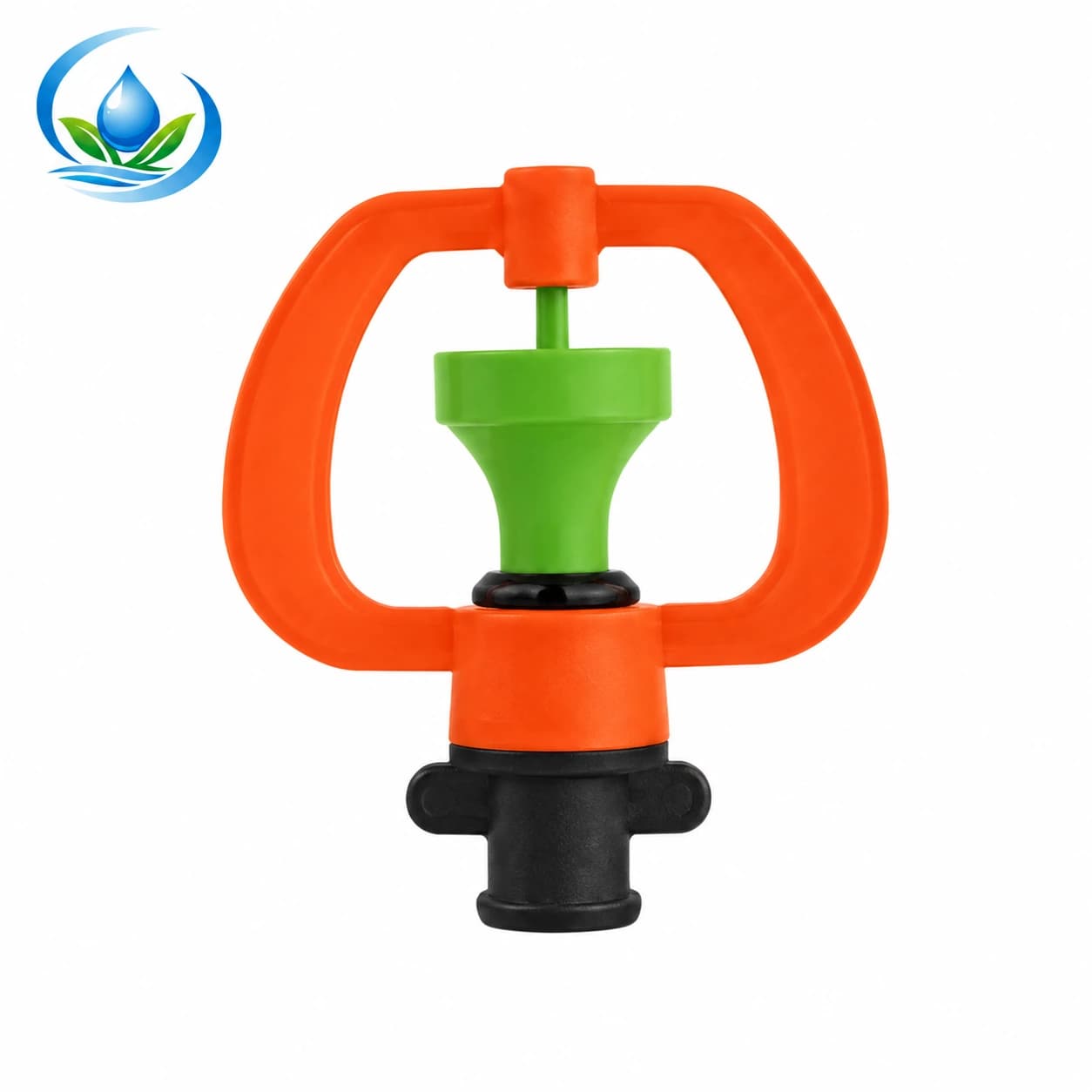
The IrriNex XPGPT085 rotary micro-sprinkler is a 251T-family 360-degree model with a nominal 0.85 mm nozzle and 40 L/h at a listed 2.0 bar reference point. Its catalogue gives a 3–4 m radius under the specified test of a head 2 m above ground in windless conditions. A low-mounted head under an almond or other orchard canopy has different geometry, so that radius is neither a promised field footprint nor a planting distance. Confirm the exact mounting, connection and delivered pattern in a representative tree position.
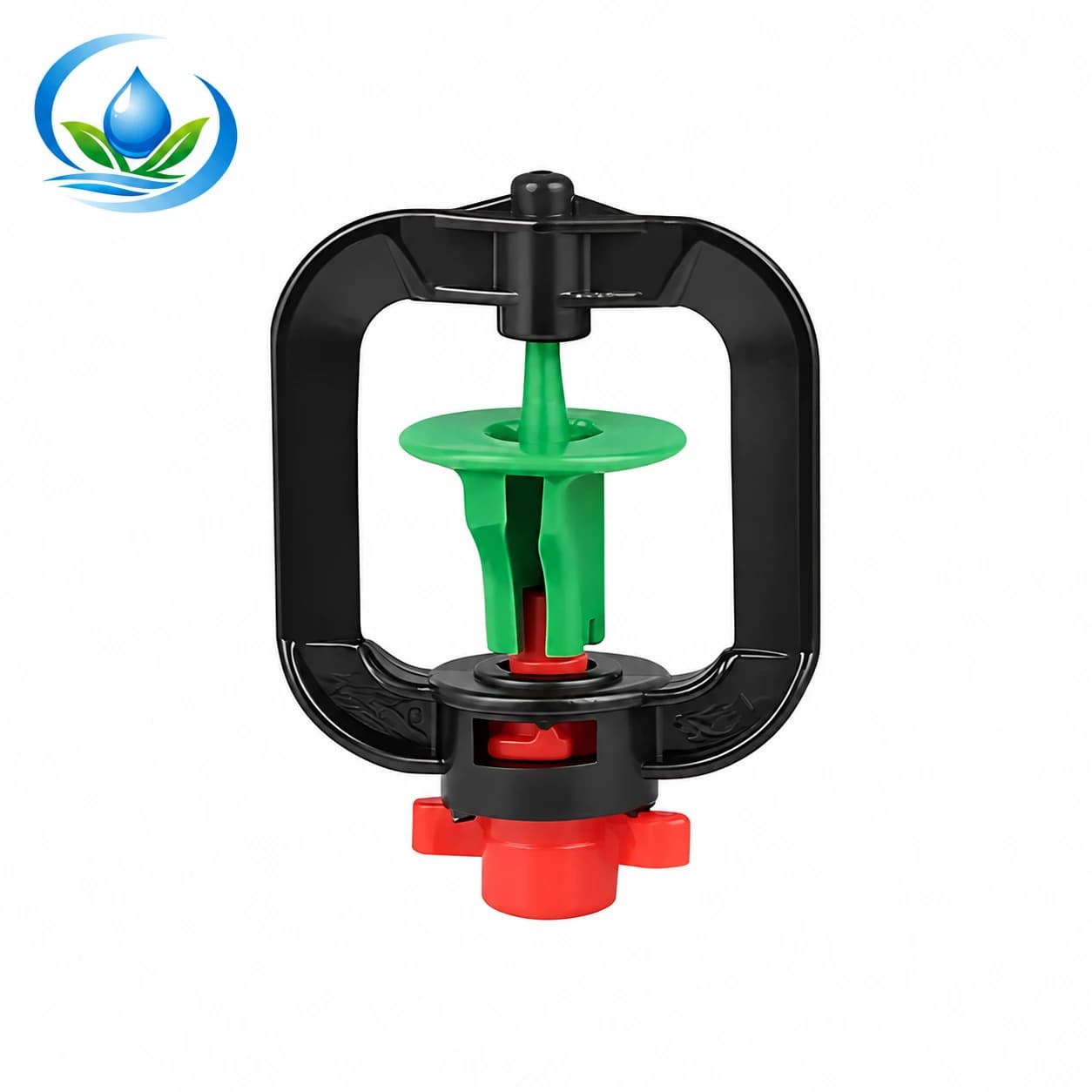
The IrriNex 241T rotary micro-sprinkler family is another listed option, with its own variants and connection details. Do not transfer XPGPT085 discharge, reference radius or support parts to a 241T simply because both rotate. Compare the installed head's full code with the proposed replacement's documented orientation, operating requirements and supplied pieces. If those data are incomplete for the selected 241T option, obtain the model-specific information before treating it as a drop-in replacement.
If your arrangement needs pressure regulation, a detachable deflector, a trunk stream splitter, insect protection, a specific thread or frost protection, select an exact model whose documentation confirms the required function. Do not snap, cut or add an improvised plate to a head to copy another maker's orchard pattern. A replacement can be considered when the existing head is damaged or a documented alternative fits the measured need; a working head facing a trunk may only need a properly supported location.
Verify the feeder and support as a complete connection
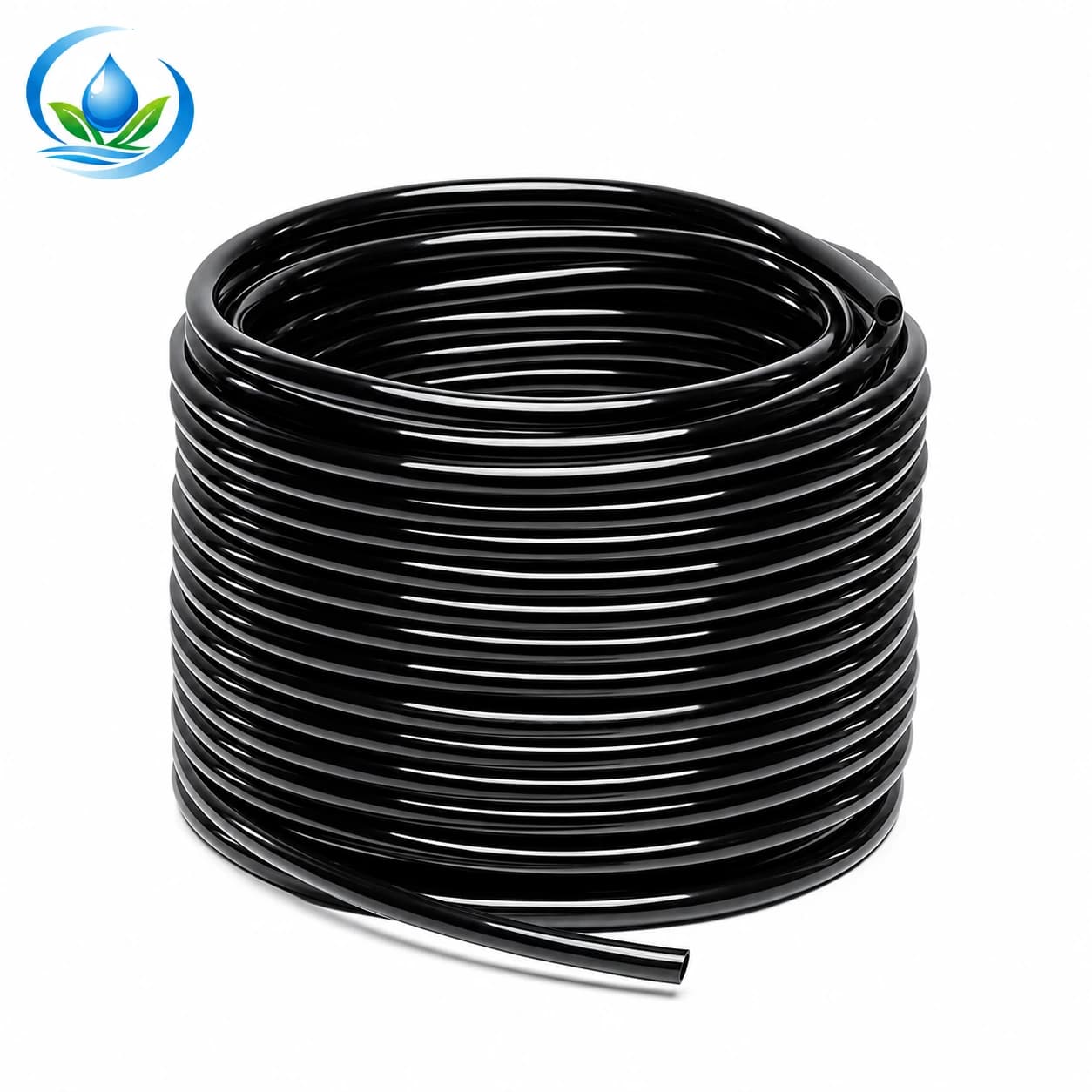
The micro-distribution tube listing includes paired inner and outer sizes, including 3 × 5 mm and 4 × 7 mm options. These numbers describe the tube, not the inlet connection of XPGPT085 or of every 241T variant. Measure the retained feed and identify the head-side and upstream mating parts separately. Confirm the permitted tube, retention method, installed length and support before cutting multiple new feeders; catalogue size similarity alone does not prove an assembled fit.
Sketch a route for each changed tree from the existing lateral connection to the proposed head position. Count the actually installed feed length, bends, approved support, connectors and any replacement for a worn section. Keep spare material separate. A longer or narrower feed path can change pressure loss even if the number of heads is unchanged, so the finished assembly needs an operating check at near and far positions. The guide to resetting moved micro-feeds illustrates the route-and-count discipline in a different crop setting; orchard clearances and supports must be checked here.
Protect the final route from rubbing on trunks, snagging on low branches and damage by mowing or cultivation. Allow only the movement supported by the actual assembly, without leaving a loose loop where equipment can catch it. The PE connection guide can help identify the upstream connection family; it does not establish a micro-head barb fit. Trial one joint under the selected head's instructions, check for leaks at operating pressure, then record the exact accepted parts for repeat orders.
Recheck the block after the trial and order only confirmed parts
Run the trial tree and its neighbours as the block normally operates. Compare head motion, the obstacle contact point, spray destination, representative catches if used, and soil observations at the same marked positions. Record wind and the active group so a later inspection can reproduce the comparison. A shifted head may change total demand only if the outlet model or count changes, but different feed lengths can still alter local delivery. If several heads are replaced with another rated flow, recalculate the active group before ordering the full row.
Prepare a purchase record with tree and head IDs, the exact retained or proposed model, confirmed mounting orientation, tube inner and outer diameters, supported connection pieces, measured route length, support, and tested number of replacements. Check each selected product page for its current price, sale unit, availability, delivery and ordering path. If a head page has no direct purchase option, ask Store support when and how that exact model can be ordered before buying related tube. A photographed assembly does not establish which pieces come in one sale unit.
After the change, keep the dated row sketch and ground-position observations with the parts record. Recheck the former shadow and any new edge after canopy growth, vegetation management or equipment work changes the path again. If the result remains weak across multiple heads, return to the shared supply investigation; if a rotor fails, follow its model-specific repair path. A useful orchard purchase solves the observed obstruction or identified component failure and leaves a repeatable way to verify water still reaches the intended soil.
Before you order
Compare this guide with the specifications for your exact product, selected option, water supply and field conditions. Your equipment requirements take priority over a general example.
Compare irrigation products