Greenhouse Irrigation: Reset the Lines After Moving Nursery Pots
After nursery pots move, reconcile active outlets and new positions, check tube reach and closures, then retest water delivery before ordering replacements.
Published by IrriNex Store
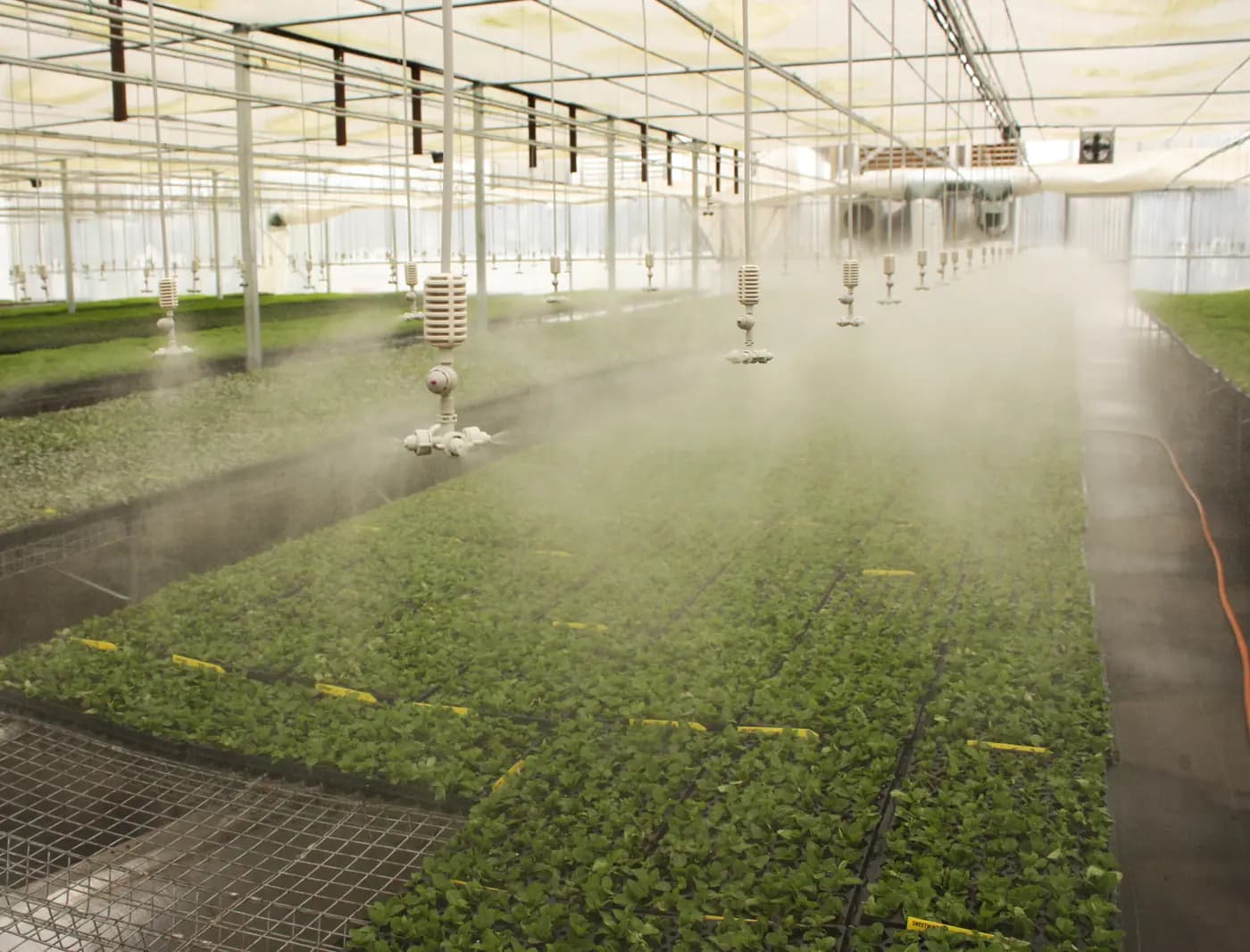
Greenhouse irrigation needs a fresh layout check when nursery pots move, even if the pump, valve and crop remain the same. Moving a tray group can leave a delivery point aimed at an empty bench, pull a small feeder tube tight, or change how many outlets are open in one operating group. Mark the new pot positions and trace the existing lines before buying replacement tubing or increasing the timer. Greenhouse irrigation outlet count after moving pots depends on how many containers remain, while wider spacing changes feeder reach rather than nominal outlet demand by itself.
This is a reset of a working container network, not an assumption that every moved pot needs a new emitter. First reconcile the number of pots with active outlets, then see whether each tube still reaches its assigned container without strain or obstruction. A test under normal operating conditions shows whether the revised arrangement delivers acceptably. Keep the layout and test record so the next spacing or sale does not undo the correction.
Map moved greenhouse pots and active outlets
Give each bench or growing lane a stable identifier and draw the present water route from its supply connection to the individual containers. Mark the valve group, visible branches, tube sizes, endpoint models and normal service access. Photograph representative corners and aisle crossings while they are still assembled. This makes it easier to distinguish a line intentionally moved from one accidentally dislodged during handling.
Count containers and active watering positions separately. One container may have a documented multi-point arrangement, while another may have one outlet; the old number of small tubes is not necessarily the new number of pots. Record the association that actually exists. Also list spare pieces, isolated branches and open positions separately, since physical inventory alone says nothing about which outlets will operate.
Note current symptoms before dismantling anything: a weak corner, a wet aisle, a tube rubbing on a rack or a dry pot beside an active outlet. Those observations form a baseline for the reset. If the group was already uneven, a later problem should not automatically be blamed on moving the pots.
Check tube reach and unused outlets in the new layout
Put the proposed pot locations on the drawing with their container sizes, crop groups and dates. Identify pots that stayed, pots moved to another bench, plants sold or discarded, and new pots brought into the group. Mark vacant positions that may be filled later. The count at the end should reconcile with the number of live delivery endpoints, including any deliberately shared or multiple-outlet assembly whose behavior is documented.
Draw the space needed by carts, harvest or transplanting work, doors and movable bench travel. A feeder line that reaches a distant pot in a straight sketch may cross the working aisle in reality. A loose loop can snag a tray or catch a hand during lifting. Keep access and irrigation routes on the same drawing rather than solving each in isolation.
For a bench that moves, examine both extreme positions and the movement between them. Identify which water-carrying parts move with the bench and which remain fixed. Do not assume an ordinary static tube will safely flex across a moving joint; confirm the intended movement allowance and support for that assembly before it is used.
Reconcile every changed pot with an active outlet
Make a simple position list: old pot ID and outlet, new pot ID and outlet, and the final state of any unused branch. Walk the benches with the list. A relocated pot may still be connected to its original feed, need an approved extension, or need to be assigned a different existing point. Decide each case explicitly so a nearby empty outlet is not mistaken for the one feeding the pot.
When plants leave for sale, their irrigation outlets do not disappear by themselves. Identify how that specific branch is isolated or parked under its component instructions. A detached arrow dripping onto the floor can make a total flow reading look normal while the remaining plants receive less than expected. A branch folded sharply as an improvised stop may be damaged and is not an approved closure.
Keep a record of empty but intentionally reserved positions. Label their status and show who will reactivate them when pots return. The zone grouping guide helps check the wider active group when its outlets change; this bench list supplies the exact count for that review.
Measure each feeder route as it will actually run
Measure from the real branch connection along the proposed support route, over or around the bench and pot rim, to the intended outlet position. A straight line between pot centres undercounts bends, vertical changes and service allowance. Record length by route type if many positions repeat, then spot-check the end and corner cases that are less regular.
Use enough controlled movement allowance for ordinary spacing and handling without leaving loops across work surfaces. The tube should not pull on the endpoint when a pot is lifted through the permitted motion, and it should not be trapped beneath a container. Check contact with sharp bench edges, hot surfaces, hinges, rollers and supports. Ask for the selected tube's bending and retention limits where they are not documented.
If the new pot location lies beyond the supported reach of the existing assembly, stop and plan a confirmed reroute or new branch. Stretching the tube or dragging the supply connection sideways can create a partial restriction or leak that a casual first look misses. Conversely, a long replacement piece should not be chosen solely to avoid reconnecting; its installed hydraulic behavior still has to be checked.
Select the exact microtube, not a lookalike diameter
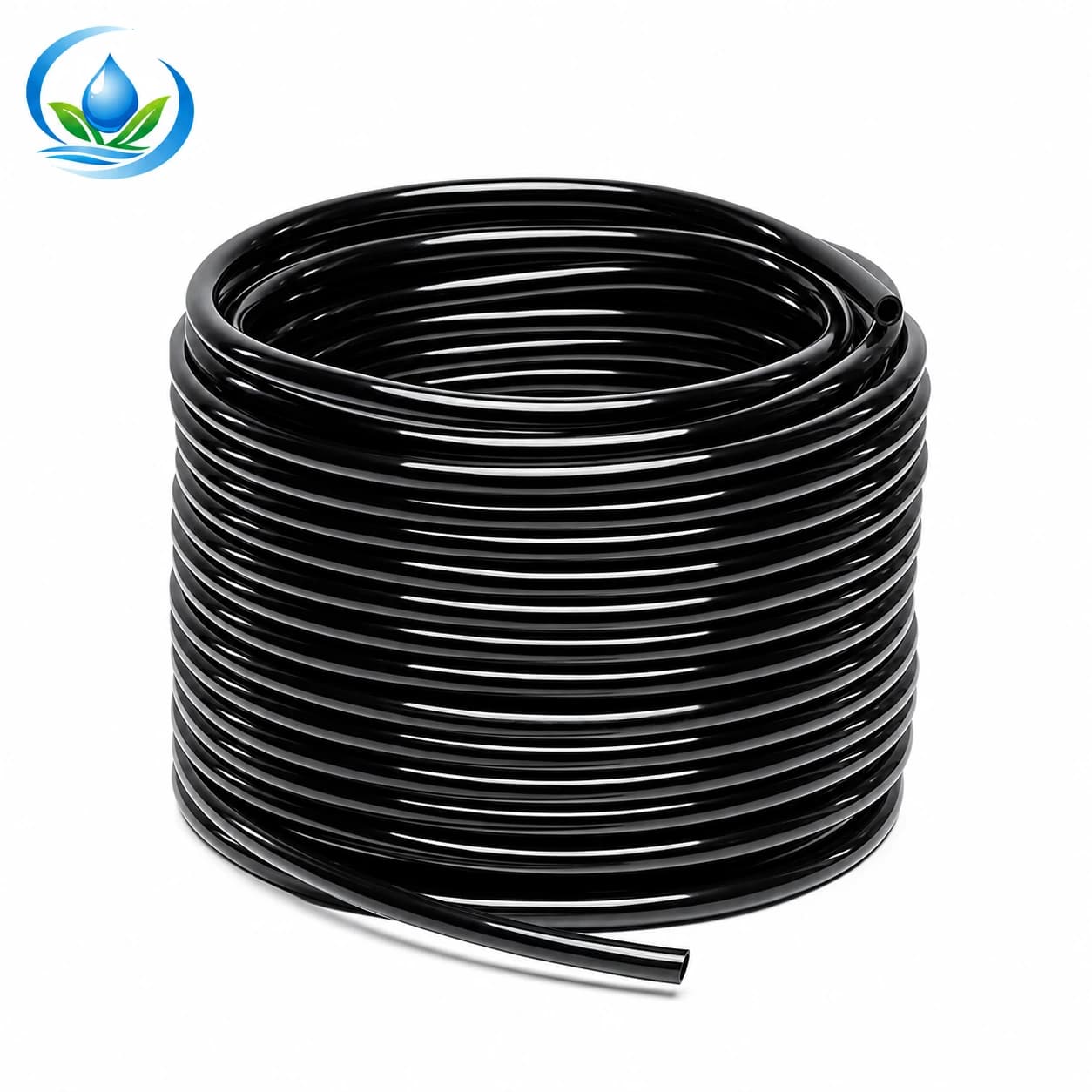
The micro distribution tube listing contains distinct paired sizes. Variant IS-43-D01B858F3D is 3 mm inside and 5 mm outside; IS-43-62F1B6EA6F is 4 mm inside and 7 mm outside; IS-43-62F1B6EB6F is 8 mm inside and 11 mm outside. These are catalogue dimensions, not evidence that any one pair fits every arrow, upstream connector or older installed line.
Record both diameters from the existing marked tube or a verified specification. Confirm the mating connection at the supply end and the plant end, the material, and the supported retention method. A tube may seem to grip an inlet during a dry trial but loosen once warm, wet or moved. Do not cut a full batch from a size chosen by colour, an inch-based competitor label or the outer diameter alone.
Measure the required length for the repeated routes and count actual pieces, then check the product listing's current sale unit, price and available quantity. The catalogue does not establish a roll length for these size pairs. Keep an allowance for confirmed cuts and sensible replacements in a separate column; unused tube length is not an extra active outlet.
Check whether the old arrow geometry still suits the pot
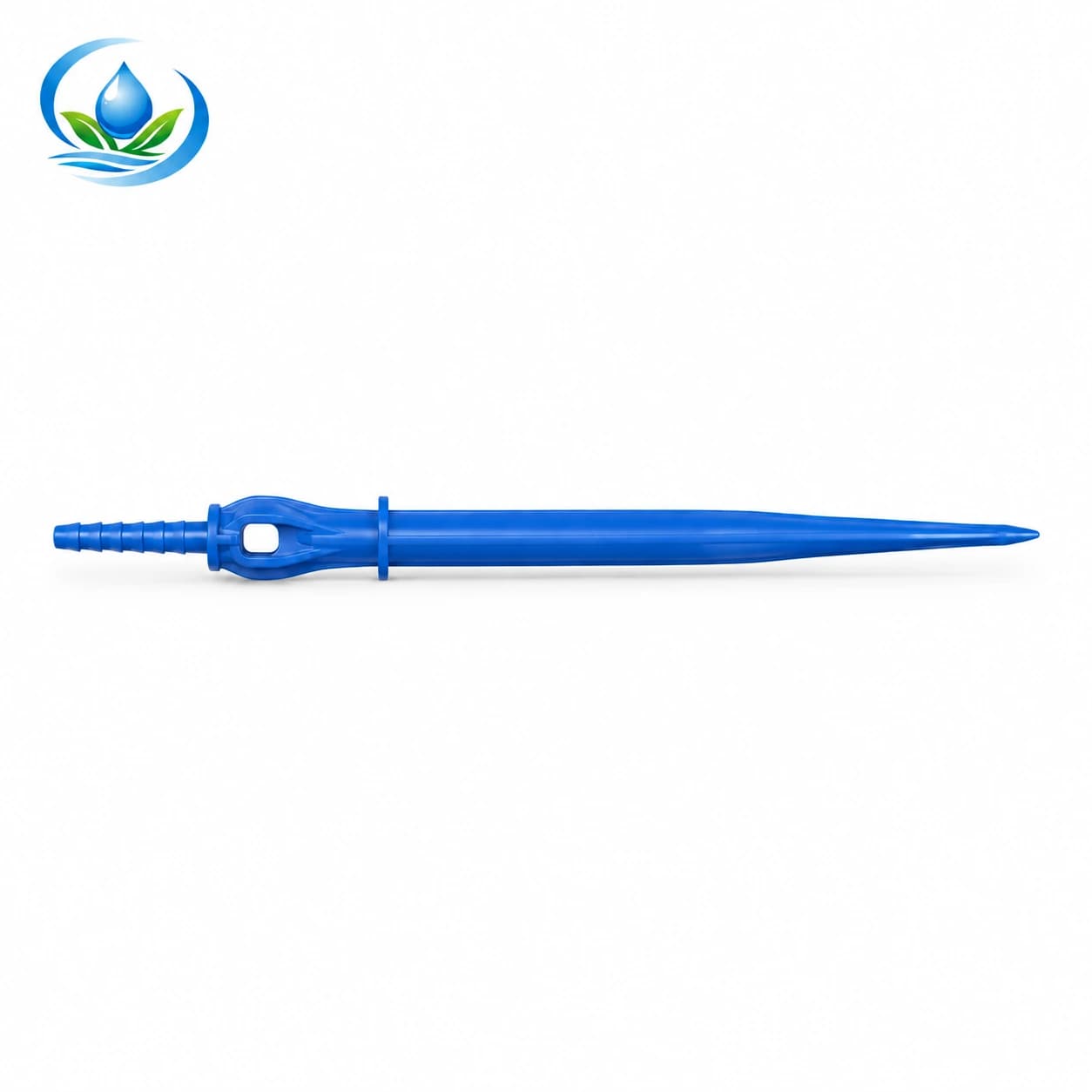
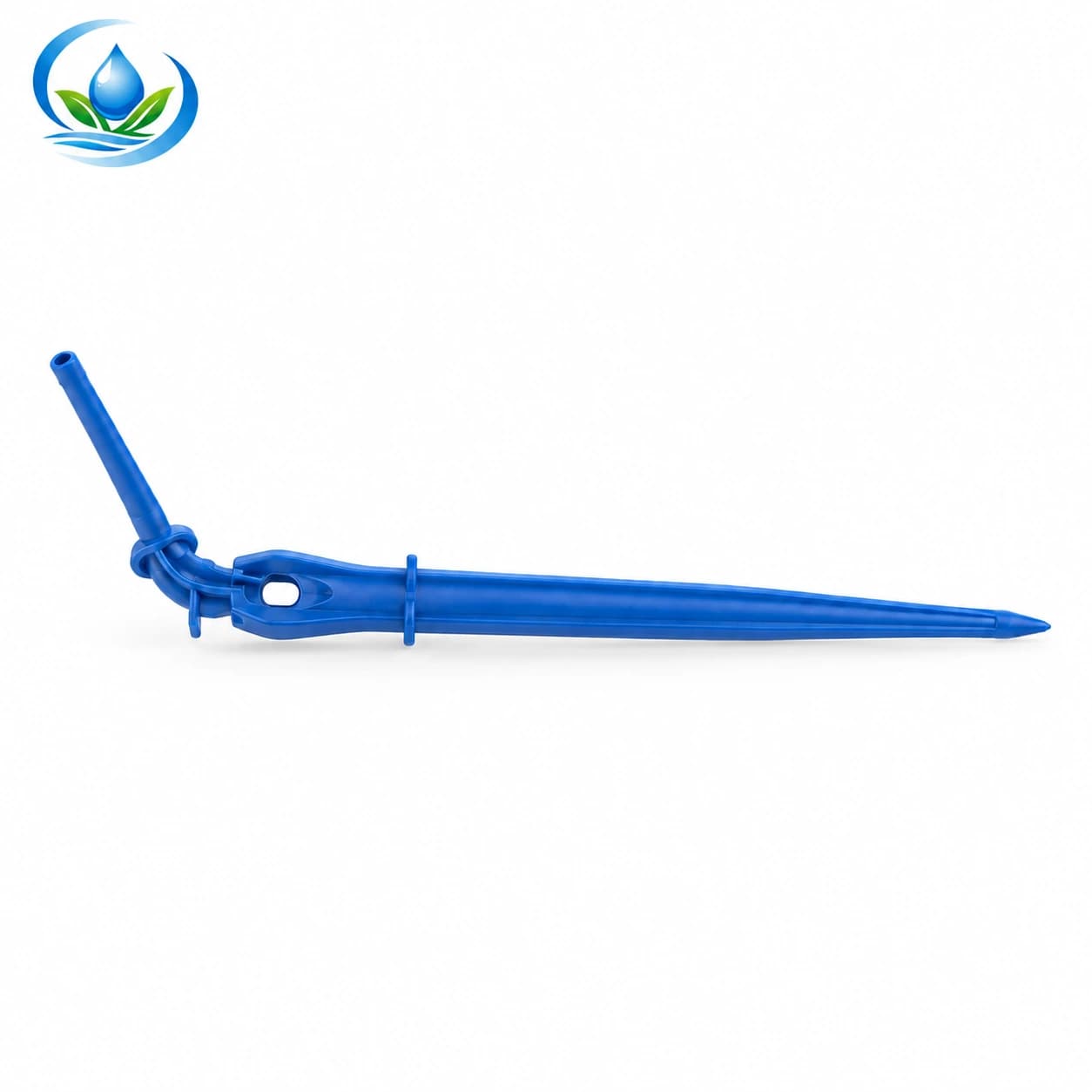
The listed 2101 straight arrow dripper and 2102 bent arrow dripper are each blue, single-outlet models with a nominal 2 L/h catalogue rating. Their different inlet geometry can change how a tube approaches a newly spaced container. Hold the exact candidate at the real rim and check whether the route bends cleanly and keeps the outlet at its intended location.
Neither arrow's shape establishes pressure compensation, a universal insertion depth, or a direct fit with any of the three microtube variants. Confirm where water is metered in the existing branch, including any upstream emitter or splitter, before changing the endpoint. The nursery arrow endpoint guide explains that first assembly decision; a relocation reset starts from the assembly already accepted in the pots.
If the existing arrow remains suitable, retain its identified model and focus on route, count and delivery. If a side approach now forces a fold, compare the other verified geometry in one representative complete assembly before ordering replacements. A new shape with the same nominal outlet label is still a changed connection that must be checked in operation.
Separate pot spacing from total outlet demand
Spacing forty-eight pots farther apart does not, by itself, change the nominal demand of forty-eight unchanged, simultaneously active outlets. For illustration only, if the accepted arrangement has exactly one independent nominal 2 L/h outlet per pot, forty-eight active pots represent 96 L/h nominal total. If twelve pots and their outlets leave the group, thirty-six such active outlets represent 72 L/h. These are arithmetic examples, not measured flow or a rule that every pot needs one arrow.
Longer or more sharply routed feeder tubes may change actual pressure loss and delivery, even while the nominal outlet count stays forty-eight. An added endpoint, a capped branch or an altered upstream metering arrangement can also change the operating case. Keep nominal arithmetic and measured performance in separate columns. Do not multiply a splitter's port count by an upstream emitter rating as if every branch were an independent rated emitter.
Use the outlet-demand calculation guide to screen the new simultaneous group with the actual documented assembly data. Compare the screen with source flow and running pressure after the bench is reset. A good count cannot establish that the farthest outlet remains supplied.
Handle disconnected branches under a defined procedure
Before opening, moving or replacing a water-carrying connection, isolate the relevant group and release trapped pressure by the installation's intended method. Confirm that it cannot restart unexpectedly while someone works at the bench. Keep removed ends clean and identify them before reconnecting. Reopening an unknown branch under pressure invites water release and makes the endpoint history hard to follow.
Use only the closure or parking method supported for the exact connection. The existence of an end cap elsewhere in the shop does not prove it mates with this microtube or with an arrow's supply arrangement. If a permanent removal leaves a connector or hole in a supply tube, obtain the specified repair part and method rather than relying on a squeezed tube or an unverified plug.
Recheck the active group after several branches have been shut. Less total draw may change a regulator's or other equipment's operating condition. That does not mean the remaining arrows automatically deliver more; the complete installed system and its measured pressure decide what happens. Mark the closed positions on the bench map so a later worker does not open them by mistake.
Restart one identified group and trace water to its pots
Inspect the revised layout without pressure first. Look for damaged tube ends, bent connectors, crushed sections, missing supports, disturbed filters and outlets lying outside their containers. The filtration guide helps identify the upstream equipment to keep in the operating case. Confirm the intended active valves and any permitted flush or restart steps for this installation. Then operate one defined group under its normal protection equipment while observing for leaks and movement.
Trace each operating line to its assigned pot; do not accept a wet bench as proof that the pot is watered. Check a near branch, a distant branch, a moved corner pot and any newly extended feeder. Record running pressure at appropriate points and use a consistent timed collection method for representative outlets without obstructing their flow. Repeating measurements at the same identified positions makes the changeover easier to judge.
Record the total group reading only alongside the endpoint observations. A normal total can hide an open branch watering an empty slot and a restricted branch feeding a saleable plant. Correct faults at the connection or route, then retest the same pot positions. If flow remains uneven, investigate the pattern across the operating group before buying replacement outlets.
Check the growing medium before changing runtime
A moved pot may now sit nearer a fan, shade line or hotter glazing, and a denser canopy can intercept water differently. Inspect the relevant rooted medium and plant condition after the normal irrigation event rather than judging the top surface alone. Record pot size, substrate and crop stage for any group whose need differs from its previous neighbours.
Do not lengthen every event to compensate for one kinked feeder or an unserved container. Restore physical delivery first, then use observed moisture and crop requirements to review the schedule. The runtime review after outlet changes helps with that separate calculation. No fixed greenhouse minutes, outlet spacing or watering frequency follows from the arrow's nominal 2 L/h label.
Where the pots were merely moved but the active assembly and operating case stayed comparable, the old schedule may still be a useful starting record. Confirm that in the new positions rather than assuming it. Keep the date, group, pot IDs, pressures, collection results and substrate observations together so future staff know why a change was made.
Buy only the replacement pieces the reset proved necessary
Prepare a short parts list from the reconciled map: exact tube size, measured cut lengths and quantities, confirmed straight or bent arrows where replacements are needed, and any separately verified connectors or closures. Distinguish installed pieces from spares. A photograph of a complete branch is useful for checking an order but does not prove that all photographed parts come in one sale unit.
Choose the verified variant on each product page and check its current price, pack or sale unit, availability and delivery terms where shown. Confirm that the exact arrow model can be ordered; if its listing has no purchase option, ask Store support about supply. For unresolved connection or operating questions, provide the existing model, both tube diameters, pot-route measurements and test observations. Once the sample works, use the same identifiers across the affected benches.
Leave the revised bench map and a labelled accepted example with the nursery records. At the next spacing or sale, workers can reconcile the active count, reach and pot delivery again without treating every relocation as a new system design. The purchase is successful when the replacement pieces restore a route that remains serviceable and waters the intended containers in the tested arrangement.
Before you order
Compare this guide with the specifications for your exact product, selected option, water supply and field conditions. Your equipment requirements take priority over a general example.
Compare irrigation products