360 Micro Sprinkler Nozzle Choice for a Nursery Bay
Compare the exact 251T nozzle variants against your running pressure, row spacing and edge catch before specifying a nursery bay quantity.
Published by IrriNex Store
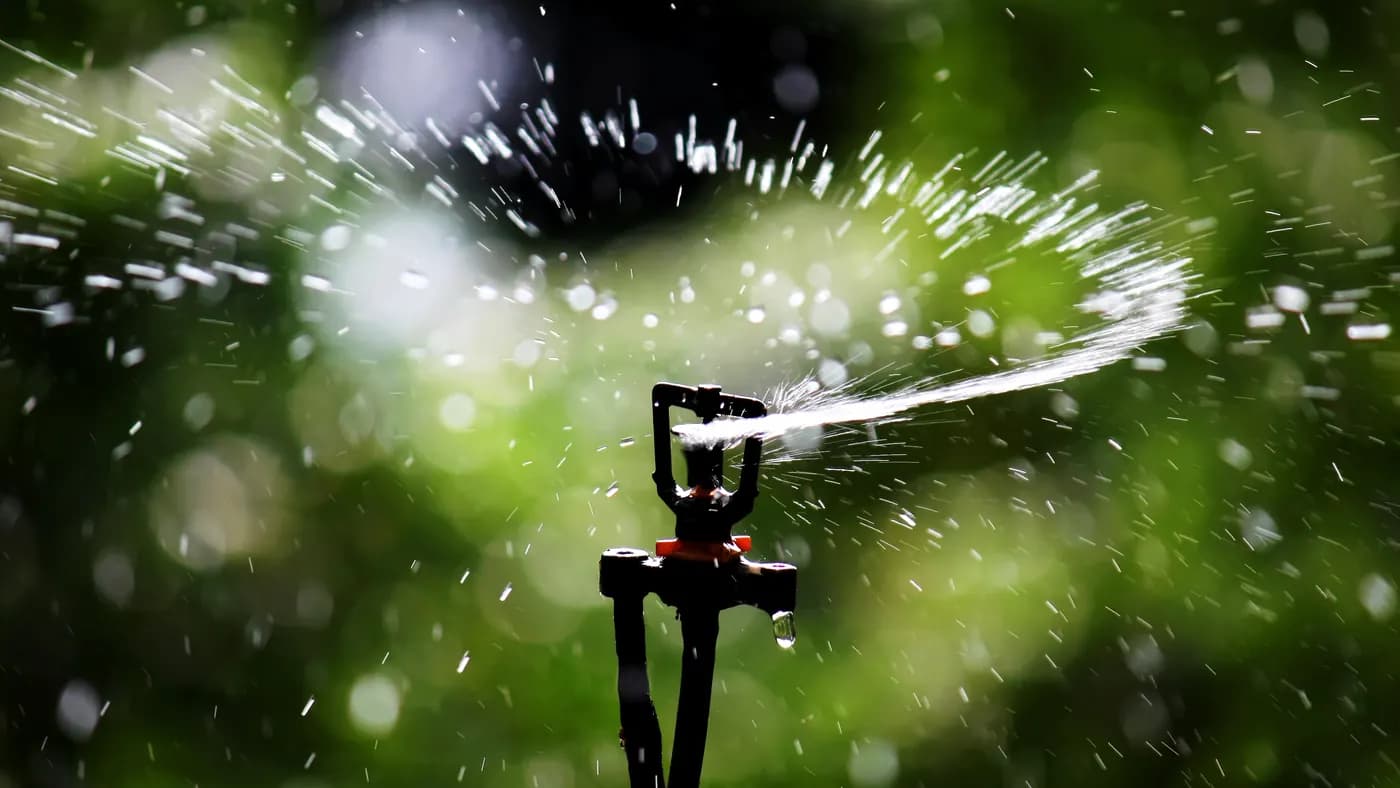
A 360 micro sprinkler can look like an easy choice when a nursery bay needs water across a circular area. The nozzle diameter, however, changes the catalogue flow and listed reach, and those values do not tell you how evenly each pot or bench edge will receive water. Compare the exact 251T option against the operating pressure and spacing in your bay, then run a marked catch trial before ordering a full quantity. This guide is about nozzle selection for one nursery bay. A separate earlier guide compares hanging and standing head orientation; here the question is which documented nozzle opening fits the area you actually need to wet.
Start with the crop area rather than a radius number
Draw a simple plan of the bay before selecting a sprinkler. Mark the bed or bench dimensions, positions of pots or trays, aisle edges, posts, gutters, fans, hanging baskets and any nearby surface that should not be wetted. Show where the water header runs and where a head could physically be mounted. Add crop height and expected canopy growth. A 360-degree label describes the intended direction around a head; it does not guarantee that every point in a circle receives the same amount of water.
Distinguish the area that can be sprayed from the area that should receive useful water. A radius may extend into a walkway, strike a greenhouse post or land on the outside row of containers. The farthest visible droplet is not the same as a measured useful wetting boundary. Decide what receiving surface matters for this crop and mark several repeatable observation points, including a centre, a near edge and a far edge.
If you are replacing an existing nozzle, record the code and diameter stamped or shown on it, the mount height, the distance to the receiving surface, and the number of heads operating together. Do not rely on a memory such as “the small blue one.” Keep the existing observation as a baseline: if it serves the middle but misses the edges, a wider listed radius might be relevant, while a pressure or blockage problem could produce a similar symptom. The stalled-rotor field check helps rule out a head that is not rotating correctly before the nozzle itself is blamed.
Compare the three exact 251T nozzle options
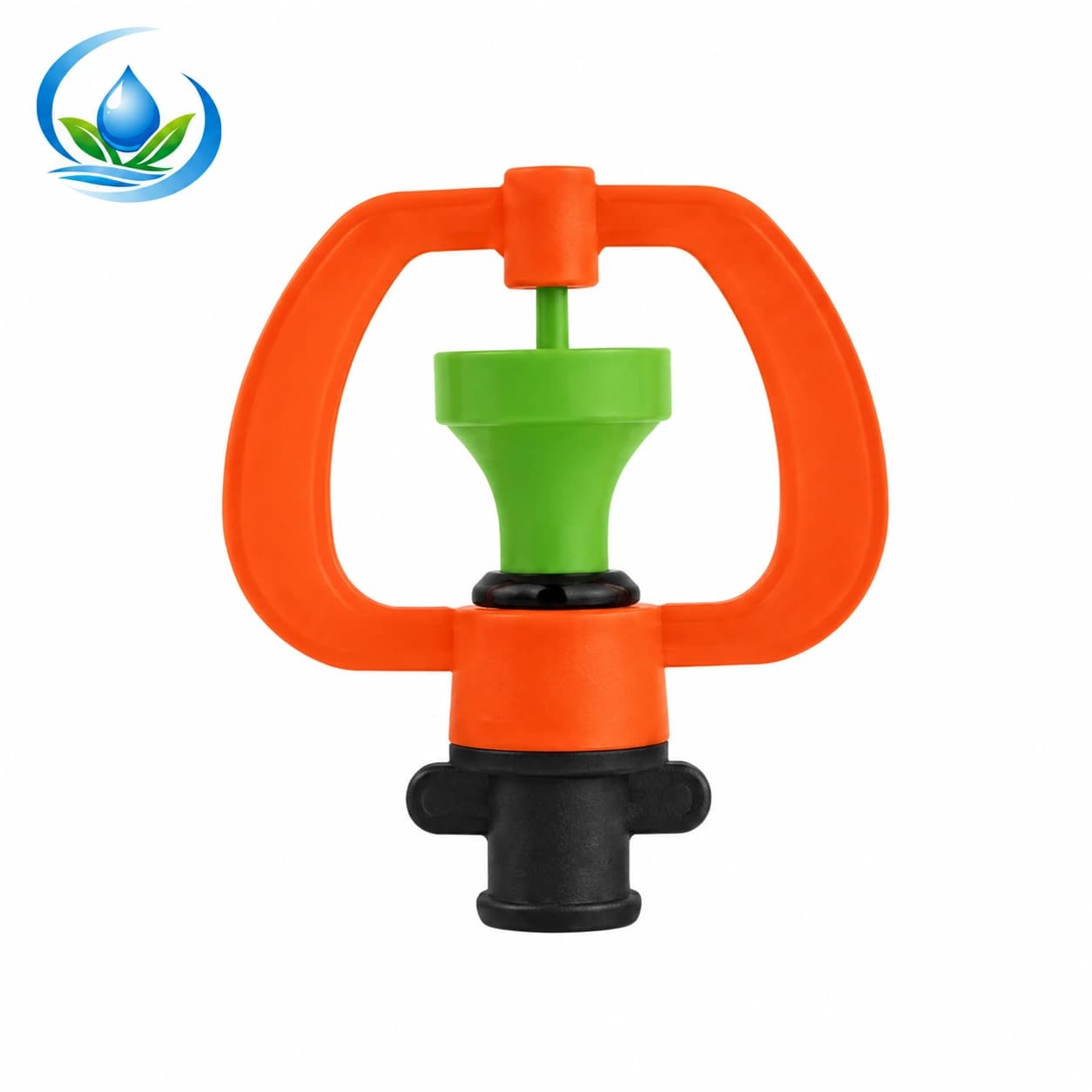
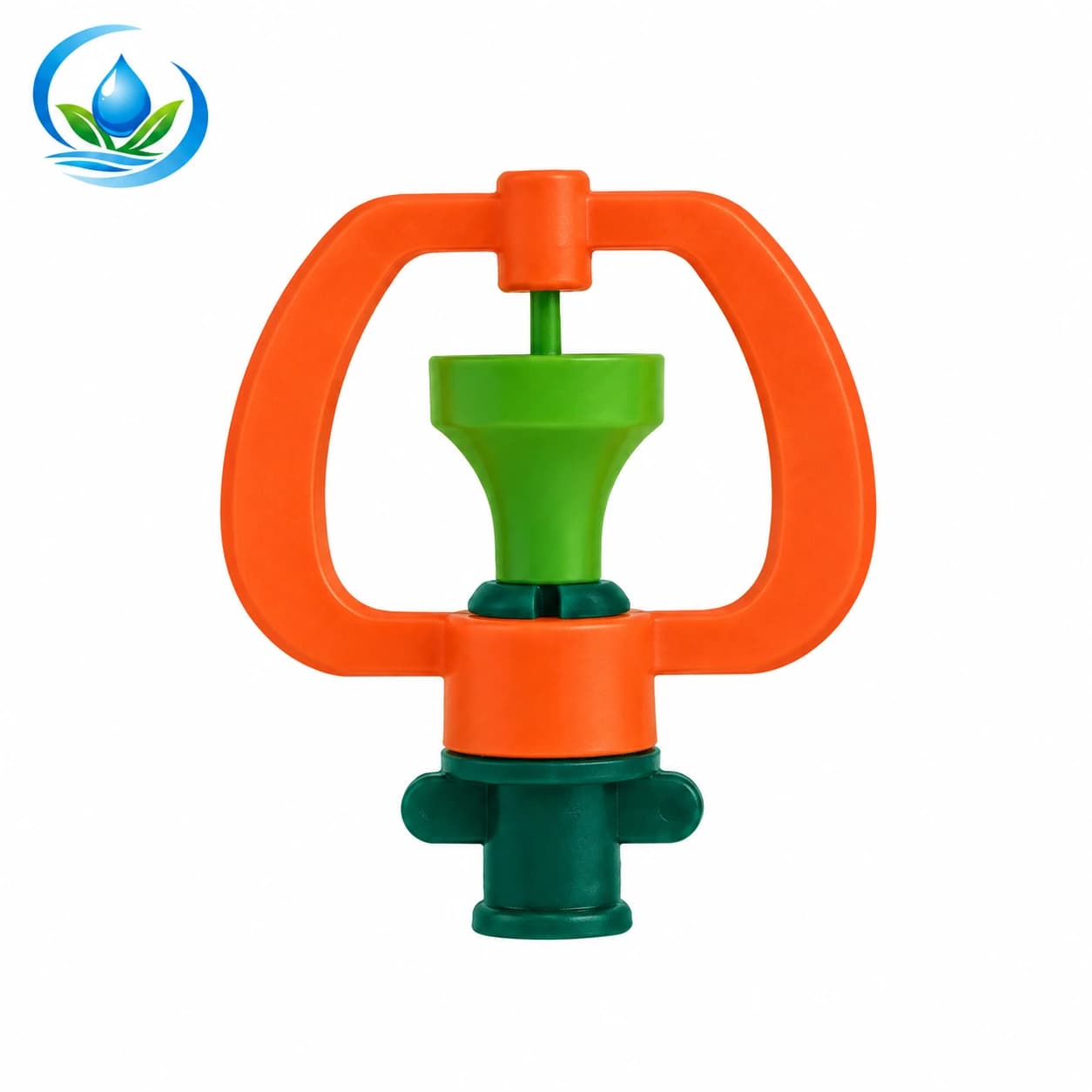
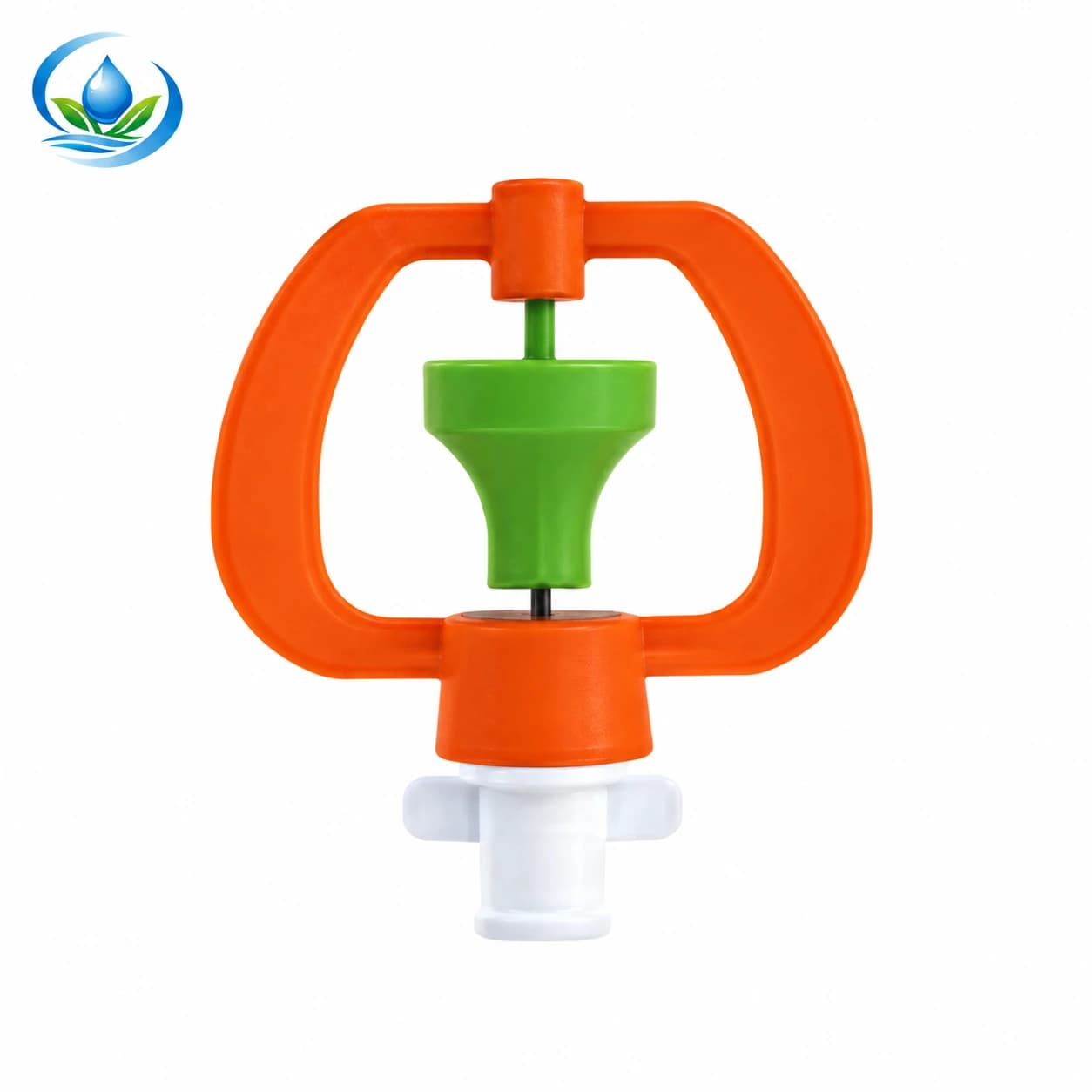
The current product records identify three 251T 360-degree rotary micro sprinkler choices: XPGPT085, XPGPT120 and XPGPT160. Their listed nozzle diameters are 0.85 mm, 1.2 mm and 1.6 mm. The associated catalogue figures are option-specific. Do not assume the three heads share one flow or one radius simply because they belong to the same family.
| Exact option | Listed nozzle diameter | Listed flow | Listed working pressure | Listed radius |
|---|---|---|---|---|
| XPGPT085 | 0.85 mm | 40 L/h | 2.0 bar | 3–4 m |
| XPGPT120 | 1.2 mm | 70 L/h | 2.0 bar | 3–4 m |
| XPGPT160 | 1.6 mm | 120 L/h | 2.0 bar | 4–5 m |
These listed figures belong to the named options under their catalogue reference conditions. The 1.6 mm variant lists a longer radius and higher flow than the smaller options. That does not prove it is a better purchase for every bay. Higher flow affects the simultaneous demand on the pump and pipe, while a greater stated reach may send a larger share beyond a narrow bed. The 0.85 mm option may reduce nominal demand but is not automatically the best choice if the edge positions remain dry.
The product pages are published but are currently marked not directly purchasable. Treat them as exact model references for a request, not as a promise of stock, immediate checkout, or delivery. Confirm the actual option, current availability, sale unit, connection, included support pieces and current price with the store before planning installation.
Read radius as a reference, not as head spacing
A catalogue radius is not a spacing recommendation. Two heads each listing a 4 m radius do not automatically serve an 8 m diameter bed uniformly when installed 8 m apart. Real distribution depends on overlap, pressure at the operating heads, height, wind, obstructions, rotation and the way the spray intersects the crop. The catalogue reference for this 251T family is recorded at 0.2 MPa, 2 m above ground and in windless conditions. Keep those conditions attached to the figures when comparing them with your installation.
Nursery structures often create partial barriers. A post may interrupt one direction; foliage may divert or collect droplets; a bench edge may catch spray before it reaches pots. A head mounted at a different height can create another pattern even when its model is unchanged. Measure at the planned position instead of transferring the catalogue radius directly to a nursery spacing diagram.
Oregon State University Extension advises nursery growers to schedule water according to crop and root-zone conditions rather than a fixed assumption, and to group containers with similar water use when practical. That guidance is useful context for deciding which containers belong in a bay and how their response should be observed. It does not supply a spacing rule for these heads. The wind-exposure guide helps separate a nozzle choice from a pattern shifted by airflow.
Check pressure while the planned group is running
Each of the three listed options shows a working pressure of 2.0 bar. This is a catalogue point, not a complete pressure range or a pressure-compensation claim. A gauge at a pump outlet with every zone closed does not show what the farthest head receives while the intended group operates. Record pressure at a suitable point during flow and note the number of active heads, valve position, filter condition and any other simultaneous demand.
When a bay includes many heads, calculate a preliminary demand from the exact option flow and the number that run at the same time. For example, twelve XPGPT085 heads at their listed 40 L/h would total 480 L/h as simple catalogue arithmetic. Twelve XPGPT160 heads at 120 L/h each would total 1,440 L/h. These examples are not pump specifications or installed performance predictions. They show why a nozzle substitution can alter the supply requirement substantially.
Compare measured flow and pressure against the pump, pipe, valve and filter documentation. If an upstream change or shared-zone load reduces pressure, changing to a larger orifice may increase demand without correcting the cause. If readings are inconsistent, repeat them under a stable, named operating condition. The sprinkler zone flow guide explains how to record simultaneous outlet demand; use the 251T figures above rather than borrowing a drip-emitter rating.
Run a nursery-bay catch test before setting quantity
A small trial should represent the intended crop arrangement, head height, mounting type, water supply and usual ventilation. First confirm the exact option and compatible connection parts. Use the manufacturer’s installation and safety instructions, isolate and depressurize before changing a fitting, and avoid modifying an undocumented nozzle. Place sample heads only where the installation can support them safely.
Mark collection positions before opening the zone: close to the head, midway, at the bay perimeter and at any known dry corner. Include actual crop or container positions, not only empty bench space. Use equal collectors that can stand securely and remain open for the same timed run. Record their locations, exposure time, number of heads operating, running pressure and weather or ventilation conditions. Measure the collected water with consistent units.
Do not interpret a single cup as a full map. A low catch at one edge may reflect a barrier, a head that failed to rotate, an unsuitable mount, pressure variation or wind. A wet floor can coexist with dry pots. Repeat the comparison if the first run included an unusual gust or a changed valve condition. Keep each result separate, then compare the edge, centre and perimeter rather than reporting only a total.
UF/IFAS describes mist systems as a distinct tool used in propagation to wet leaf and medium surfaces, with different nozzle types and control methods. This article addresses a rotary 251T bay nozzle selection, not the selection of an intermittent propagation-mist controller. Do not apply a mist interval or droplet claim from another system to these rotary options. The existing propagation-bench mist layout guide covers that separate crop task.
Choose the nozzle that fits the bay trade-offs
Use the trial to identify the limiting condition. If the current small option reaches the centre but misses the edge at documented operating pressure, test the next exact option rather than jumping directly to the largest nozzle. If the edge catches well but the path overshoots into an aisle, a larger radius may increase wasted wetting. If all positions receive less water than expected and the operating pressure is low, resolve the supply condition before changing the nozzle.
Compare three things together: the pattern in the marked positions, the actual simultaneous flow requirement, and the practical installation. Do not select solely by the diameter number. That dimension identifies the nozzle opening, not a connector size. It also does not specify droplet size, filtration requirement, material, anti-drip behavior or pressure-compensation performance. Those details need their own documentation for the exact code.
Where one bay contains separate crop groups or different container sizes, evaluate whether they should run together. OSU notes that container-grown crops can differ in water use and recommends grouping plants with similar use where possible. A single nozzle choice cannot correct an operating zone that combines substantially different irrigation needs. The container wetting-footprint guide covers adjustable pot-level sprayers; it is not a substitute for this rotary-head trial.
Confirm connection and package contents before the order
The verified product data establish the nozzle diameter, flow, working pressure and radius for each exact option. They do not establish every mating connection, support, tube, filter requirement, package quantity or accessory included. Before asking for a quote or availability, provide the selected product code and a photograph of the existing header connection. Measure the actual mating parts rather than estimating from the product image.
Ask the store to identify the order unit: one sprinkler head, a kit with a stake or hanger, or a specified count of pieces. Request a list of included and separately required parts. Confirm whether the selected code is the 251T rotary model and whether it is suitable for the intended mounting orientation. A similar-looking product from another family is not evidence that its connector or dimensions fit.
The hanging-versus-standing buying guide addresses installation orientation and the need to identify a complete model code. This article carries that principle forward to the separate XPGPT nozzle sizes. Keep orientation and nozzle selection as two independent checks, then verify the exact delivered configuration.
Keep a useful replacement and acceptance record
After the bay trial, save the full code, selected nozzle diameter, stated catalogue flow and radius, measured operating pressure, head location, mount height, simultaneous head count and catch results. Add photographs that show the connection and marked collection positions. If one setting or position changed during testing, record when and why. This makes the result repeatable when a head fails or the crop arrangement changes.
When the eventual order is received, compare its model label with the confirmed request before assembly. Count the heads and accessory pieces against the itemized description. Do not treat the product’s publication status or a family photograph as evidence of purchasability or package contents. If a code differs, pause and resolve the discrepancy before distributing units across the bay.
Check the new installation at the same named operating condition used for the trial. Look for leakage, blocked rotation, obvious edge gaps and overspray beyond the intended receiving surface. A small nursery-bay trial cannot prove a crop-yield result or guarantee every future weather pattern. It gives the grower a documented basis for selecting an option, estimating the operating group demand and deciding whether a larger purchase is justified.
Questions to settle before specifying a 360-degree head
Does 360 degrees mean a uniform circle? It describes the intended direction of spray around the head. The catalogue radius alone does not show equal depth at every point. Use collectors across the actual bay and retain the test conditions.
Does a larger nozzle always improve edge coverage? The 1.6 mm option lists a longer radius and higher flow than the smaller options, but the useful result depends on pressure, spacing, mount, airflow and obstructions. Confirm the added demand and measure the receiving area.
Can I order any of these products directly now? The three product records are published and identify options, but they are marked not directly purchasable. Ask about current availability, price, exact connection and package contents before making a schedule dependent on them.
What should an availability request include? Include the exact code, intended mounting, bay sketch, operating pressure and flow context, quantity, connection photos, simultaneous head count and requested accessories. Ask the seller to identify any unresolved compatibility facts. A specific request is more useful than asking for “a 360 sprinkler” without dimensions or a field application.
Use a documented trial to make the purchase decision: select by the exact option data, verify the operating group and catch pattern, then confirm every interface and supplied piece. That process keeps a catalogue comparison from being mistaken for a field guarantee and gives the nursery a clear record for later replacement.
Before you order
Compare this guide with the specifications for your exact product, selected option, water supply and field conditions. Your equipment requirements take priority over a general example.
Compare irrigation products