Micro Sprayer Irrigation: Check Wind Exposure Before Switching Heads
Compare where one installed micro-sprayer sends water during calmer and exposed runs before buying a different head or changing its mounting.
Published by IrriNex Store

Micro sprayer irrigation can look adequate in a calm orchard or nursery run and miss the intended soil when the weather changes. Before buying a head advertised with a different radius, compare where water lands from the same installed head during a calmer and a more exposed normal run. Hold its model, operating group, pressure observation and marked receiving positions as constant as practical. The question is whether changing the head would address the observed wind exposure, or whether a permitted operating window, supported position or different delivery method deserves attention first. Record the head model and the marked crop-side positions that remained dry in each normal operating window; the comparison tells you whether a different head is the relevant purchase. A micro-sprayer wind exposure test is useful only when calm and exposed runs use the same marked crop positions.
A stream that visibly reaches farther in one direction does not prove adequate water on the crop side. Wind can shift droplets, but a blocked rotor, branch, loose support or altered supply can make a similar patch. Record those possible causes before changing an order. A product's radius measured without wind is a reference for its named test, not a promised footprint in a working block. Make the purchasing decision from repeated water destinations and the exact equipment limits rather than the most distant visible droplet.
Compare micro-sprayer coverage in calm and exposed runs
Choose one problem row or nursery bay and mark the head, its intended receiving soil or containers, a downwind edge and a position that normally receives water. Draw the direction of the row, nearby shelter, access lane and any surface where spray must not land. Note the installed model, nozzle marking, mounting height, orientation and last condition in which delivery looked acceptable. The map should represent this site rather than a general sprinkler spacing formula. It lets the crew compare the same places even when the air direction reverses.
Observe the selected head and neighbouring outlets during their ordinary operating group from a safe location. If several heads weaken together without a directional shift, check shared feed, filter, valve and pressure before ordering replacements. If one head does not move as its model should, use the stalled-rotor field check. If a stream strikes a trunk or moving branch, the orchard clearance check addresses that obstacle. Wind and vegetation may coexist; photograph where the stream first hits an object and where it lands beyond that object.
Record wind direction at crop level during the run and describe whether the air is steady, gusting or changing. A weather report from a distant station may not describe a sheltered row, a nursery side opening or a low-mounted sprinkler. Include rain, temperature changes and any recent movement of supports as context. Do not treat a single recorded wind speed as a universal accept-or-reject threshold for every micro head. The finding sought here is directional displacement in this installation, compared with a second, less exposed operating window.
Does wind move water away from the same marked crop positions?
Use the normal crop irrigation plan to identify a calmer run and a run with noticeable exposure. Do not add unnecessary watering simply to produce a comparison. Keep the same head code, active outlet count, valve group and marked observation points. Record the working pressure at the same named point while the group is operating; a reading with the system shut cannot stand in for it. Also record any change in source level, filter condition or neighbouring zone use. If these conditions differ materially, note the difference rather than assigning all of the changed pattern to wind.
Mark a few comparable receiving positions on the intended soil or container area, plus a place beyond the intended boundary. Observe arrival at each point during the same defined part of the run. If the crew uses equal-opening collectors, place them stably at the same height and positions, and give them the same timed exposure. Keep each run's readings and wind notes separate. The sprinkler catch-test guide explains how to measure depth and rate; this comparison asks whether exposure shifts water away from the marked crop area before a different head is purchased.
Compare both the area that loses water and the place that gains it. A downwind wet access lane beside a dry row is different from a pattern that becomes weak everywhere. Note whether droplets are carried away before reaching the ground, whether a nearby canopy catches them, and whether spray reaches an unacceptable boundary. Photographs from the same marked viewpoint can show direction, but cannot quantify crop water on their own. A collector showing a low catch at one point documents that point for that run; it does not by itself determine the soil's stored water or the crop's full requirement.
Repeat the observation when feasible, especially if the first windy run included gusts or a changed valve arrangement. Do not average a calm map and a windy map into a single apparently acceptable footprint. Keep dates, run lengths, active heads, pressure observations, collection positions and wind direction attached to each result. If the ground remains wet from a previous run, record that fact separately from fresh water caught during the comparison. This record helps decide whether the issue is an occasional operating condition, a persistent site exposure or a hardware fault that happens to appear when the wind rises.
Choose the least disruptive change that still serves the crop
If the same assembly serves the marked area in a calmer normal window but repeatedly misses it when exposed, discuss whether the site's irrigation schedule can use a less exposed period while still meeting crop and operational needs. That decision depends on the crop plan, system capacity and available water; it is not a universal instruction to water at dawn or to lengthen every run. A longer exposed run may send more water onto the downwind edge while the intended strip remains short. Confirm actual receiving-area water before making timing the remedy.
A supported change to head position or orientation may reduce exposure at one site, but the selected head, feed tube and support must allow the new arrangement. Mark the proposed position and check access, crop clearance, tube reach and equipment traffic while the section is isolated and depressurized under its site procedure. The hanging versus standing 251T guide helps distinguish mounting families, while the riser support guide illustrates why a taller assembly needs a verified support chain. Neither guide gives a universal height that defeats wind for this micro-sprayer.
Ask for the exact candidate head's trajectory and permitted mounting information before assuming a shorter advertised radius, a different spinner or a lower mounting point will improve the result. Lowering one head could help one spray path yet put it behind weeds, a container rim or a growing trunk. Moving it can alter overlap and feeder losses. Trial one approved assembly at a marked position under its actual operating group, then compare the intended and unintended receiving places again. Do not cut a nozzle, raise pressure beyond its instructions or fit a homemade shield to force a desirable photograph.
Where exposure repeatedly makes spray delivery unsuitable, compare a different documented water-delivery arrangement for the particular crop area. A tree drip ring or twin line places outlets nearer the intended soil, but it needs its own crop, soil, flow, filtration and connection design. The orchard drip-ring and twin-line guide frames that separate purchase. It is not evidence that every micro-sprayer should be replaced with drip, nor that a droplet lost from the current spray is a measured water-saving percentage.
Read the two Store heads without turning PC into a wind claim
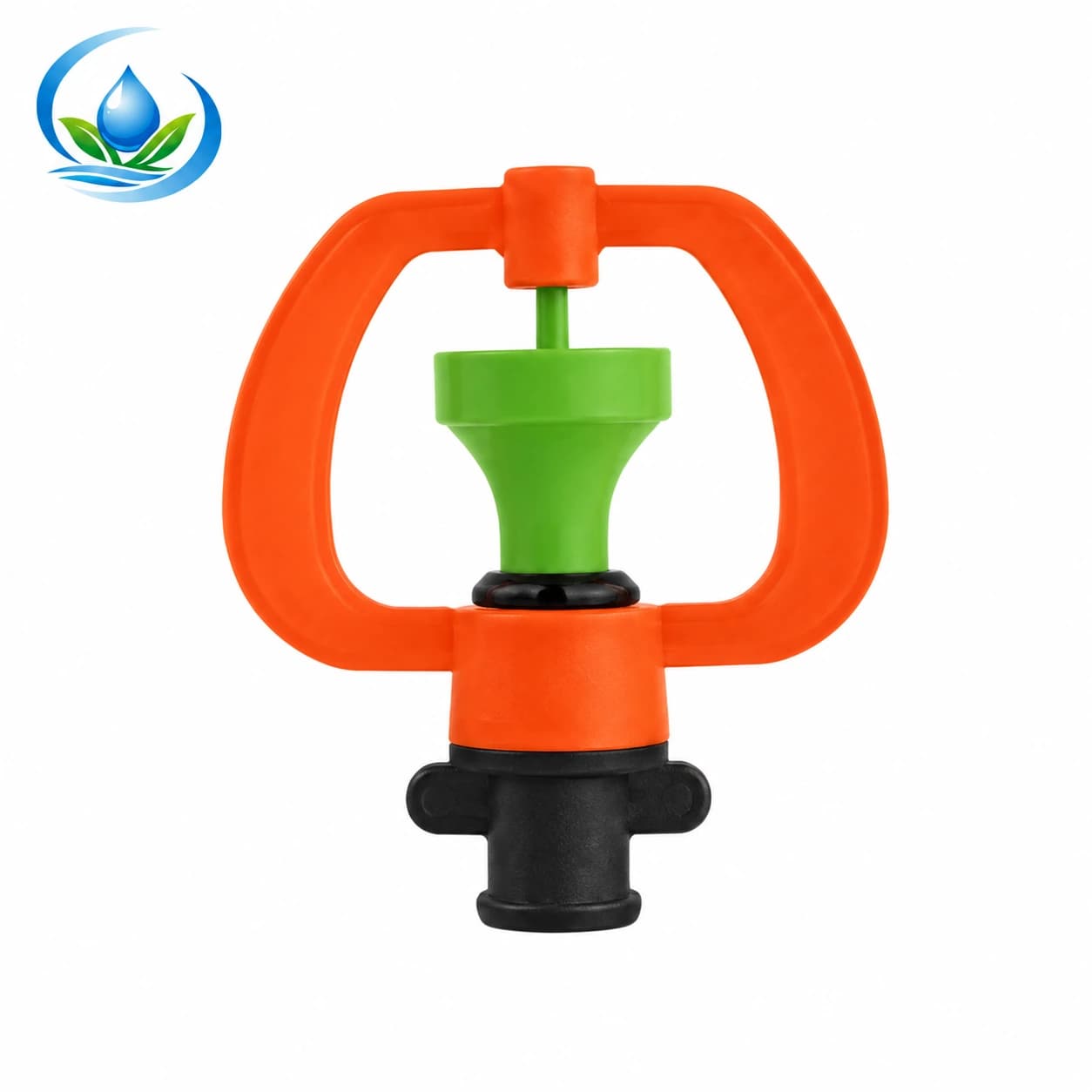
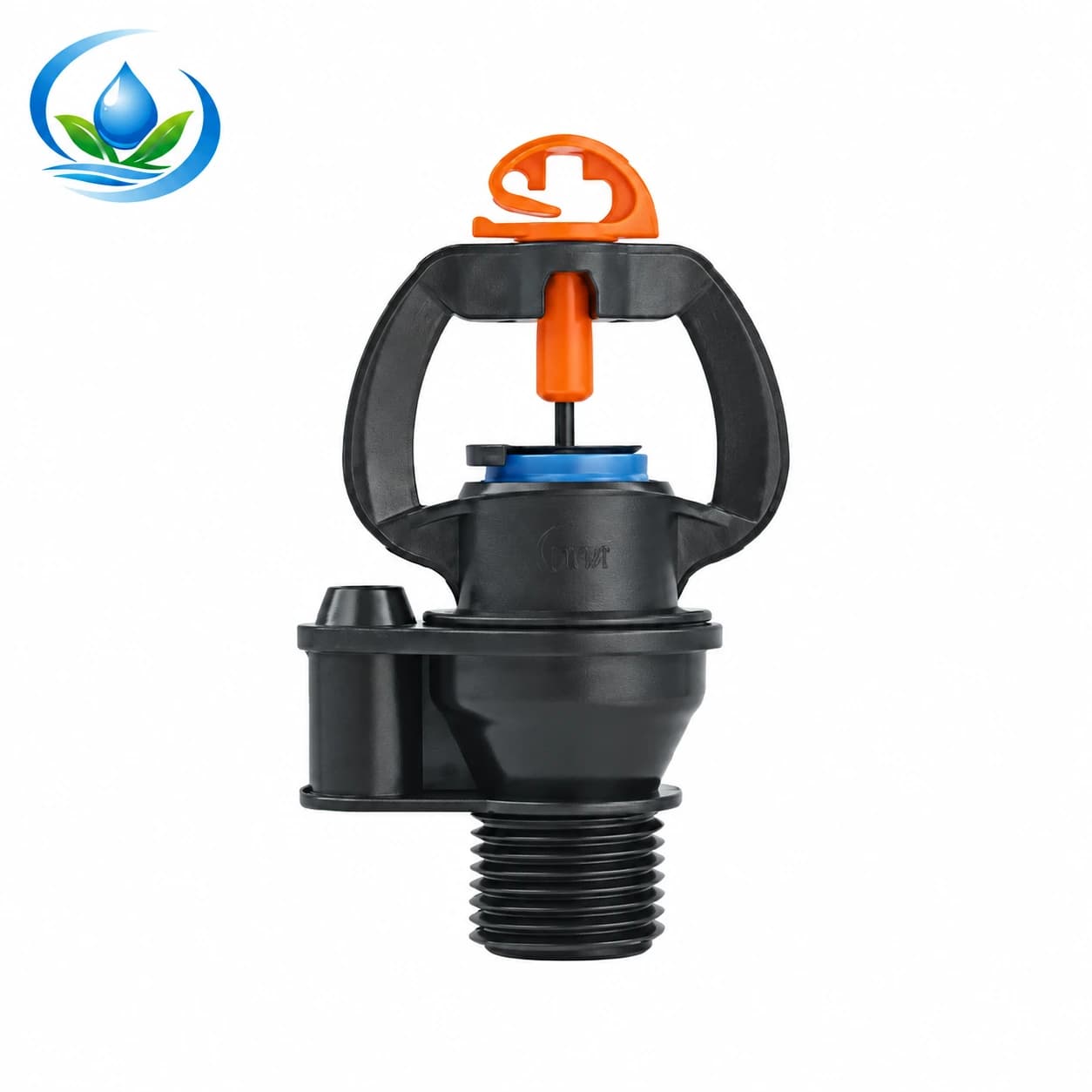
The XPGPT085 rotary micro-sprinkler is a 251T-family 360-degree head with a 0.85 mm nozzle and a listed 40 L/h at 2 bar. The catalogue lists a 3–4 m spraying radius under a reference condition of a head 2 m above ground without wind. That interval is neither an installed reach guarantee nor a target separation between trees. Ask for the selected head's mounting, connection and operating instructions, then judge it by water at the marked crop positions in the actual installation. Its 360-degree description does not mean water will arrive evenly around a tree during an exposed run.
The PCS pressure-compensated sprinkler family lists green PCS01 at 45 L/h, blue PCS02 at 60 L/h and red PCS03 at 95 L/h, with a documented 1.5–4 bar working range and 1.8–3 m radius. Pressure compensation addresses discharge across its specified pressure range; it does not still the air, fix the direction of droplets or certify equal ground coverage in wind. Ask for model-specific trajectory and field performance data if a PCS option is proposed for the exposed position. Its published radius and XPGPT085's radius come from their own references and are not a side-by-side windy-field test.
The PCS suffix identifies its connection alongside colour and flow. Code A selects the female 6 mm connector; code B has a male thread labelled 1/2 inch; code C selects the 4/7 mm barb. Confirm the complete option, mating standard, seal, tube and mounting before treating it as a replacement for XPGPT085. A similar-looking head or a nominal size alone does not prove that existing feeder parts fit. If the chosen PCS flow differs from the current head's 40 L/h reference, recalculate the demand of heads that operate together and verify working pressure under the proposed group before purchasing a whole row.
Neither product listing proves a wind-resistant nozzle, a certified wind-loss figure or a field coverage curve for this location. Select between heads only when their documented operating and connection data match the system and a representative trial supports the water destination needed. If the problem instead follows a shared pressure drop or broken support, resolve that cause first. A PC head may improve a pressure-related discharge concern within its range, but it cannot be purchased as a substitute for checking the spray destination when the air changes.
Trial one approved change, then place the exact order
Write the proposed trial as one change to a known baseline: for example a different permitted operating window, a supported location, or one exact head model with an approved connection. Do not change all three at once and call the result a head comparison. Isolate and depressurize the relevant section before any connection or support work and follow the equipment instructions for reassembly and restart. Keep the old code, new code, active group, pressure point and original receiving positions in the test record. Observe from a safe place without holding a live head against the wind.
After the change, observe a normal run under a comparable calmer window and, when conditions permit, an exposed window. Repeat the same ground positions, collector method if used, and notes on air direction. Examine the joint, support and nozzle motion separately from where droplets land. If the changed arrangement only moves a dry strip to another tree or sends water onto an access route, it has not solved the purchasing problem. If the evidence is mixed, keep the small trial in place and seek the candidate's exact operating data before multiplying it across the block.
Prepare an order with the confirmed head code, number operating simultaneously, number held as spares, approved support, exact mating parts and any new feed length measured for the tested position. Check the selected product page for its displayed price, sale unit, current availability and delivery. If no purchase option appears, ask Store support about that exact head before buying a related connector. Send the calm and exposed observations, pressure measurement point, crop receiving map and unresolved fit question. These details make the requested change reviewable without claiming a generic wind cutoff or a guaranteed percentage of water saved.
Keep the two separate run records with the chosen assembly after installation. They show future crews whether an apparent dry area arose with wind, a new obstruction, altered pressure or movement of a support. Recheck the marked crop positions when the canopy, nursery layout or seasonal exposure changes. The correct buying outcome is the documented method that places water where this crop needs it under the operating conditions the farm can actually use, with its limitations visible before a larger purchase.
Before you order
Compare this guide with the specifications for your exact product, selected option, water supply and field conditions. Your equipment requirements take priority over a general example.
Compare irrigation products