Impact Sprinkler Brass or Zinc Alloy? Verify the Head Before Buying
Find out whether an old brass-head request means the whole body or one component, then compare actual zinc-alloy and plastic Store listings.
Published by IrriNex Store
An impact sprinkler brass search can lead to three very different products: a head made with a brass body, a plastic head with one brass bearing, or a metal-looking head made from another alloy. If a field crew needs to replace an old “brass sprinkler,” identify which part must actually be brass before placing an order. The material requirement belongs beside the old model and the job it performs, not in a search box alone. A gold-colored photograph or a familiar impact-arm shape cannot establish the composition of the complete assembly. Put the required metal component and exact old-head model on the same order line; a gold-colored photograph cannot certify the assembly's alloy. A brass versus zinc alloy impact sprinkler choice depends on which exact component is specified in the material record.
Consider a grower replacing several heads on an established vegetable block. The maintenance note says “3/4 brass impact,” but the old order record has no model number. One worker means the visible body; another recalls a brass bearing listed on a supplier page. If the farm orders by that phrase, it may receive a head with a different body, inlet, nozzle or operating demand. The practical task is to translate the vague note into a checkable parts requirement and then compare actual product identities. If full brass construction is mandatory, the listed IrriNex choices discussed here do not satisfy that requirement.
Is the impact sprinkler body brass or only its bearing?
Start with the complete sprinkler that must be replaced. Save a legible photograph of its model stamp, any packaging label, the inlet side, nozzle markings and the whole installed assembly. Copy the manufacturer and model suffix without shortening them to a nominal size or a color. An older head may have a body, moving arm, bearing, nozzle, spring, pin and seals made from different materials. Ask which of those parts the purchasing specification refers to. A record that says “brass bearing” answers a different question from one that requires a brass body.
Use the previous purchase order, exact maker’s parts list or a model-specific drawing to resolve the wording. A service technician may know that a bearing is the failed component, while procurement may have been asked to source a complete replacement head. Confirm whether this order is for a repair part or a whole sprinkler. Do not assume that an internal part is sold separately, interchangeable across brands or included in a replacement unit. If the old item is unmarked and documentation cannot establish its material, write “material unverified” instead of treating the color as a test result.
There may be a reason for a precise material requirement in the farm’s equipment specification or an existing approved replacement list. Keep that requirement intact. Conversely, some invoices use “brass” as a loose description of an old-looking metal sprinkler. Ask the responsible buyer whether the approved requirement is full-body material, a particular bearing or nozzle material, or simply the operating function of the old head. Do not silently relax a mandatory full-brass specification because a zinc-alloy product has a similar finish. Do not promise that one material will last longer than another at this site without relevant product and water-condition evidence.
Brass, zinc alloy, or plastic: which component is specified?
A full-brass description claims a particular material for the whole specified construction, subject to the maker’s exact definition and the other parts listed separately. A “brass bearing” description identifies only a bearing. A “zinc-alloy impact sprinkler” identifies a different material category for the head being sold. These phrases are not interchangeable. A metal appearance in a catalog image confirms only the appearance visible in that image. Surface finish, lighting and plating can make distinct constructions look alike.
Compare the words in an offer with its model-specific material schedule. Which components are named, which are merely pictured, and which remain unstated? A page may say “brass impact sprinkler” in its heading and describe a bronze body, brass tube and stainless parts in the detail. Another may sell a plastic-body unit with a brass bearing. Those examples illustrate why the component list matters; they do not establish the construction of an IrriNex model. Keep each seller’s statement attached to its own SKU and variant rather than borrowing a material claim from a neighboring photograph or a broad product family.
For an unfamiliar old unit, avoid makeshift identification by scratching, cutting or dismantling it while the irrigation line is in service. A bright exposed surface is still not an alloy certificate, and opening a pressurized assembly is not a buying check. Obtain the exact documented part description. If the head has already been removed for a proper repair, retain its label and the technician’s model record; use those to ask the seller about a replacement rather than guessing from weight or shine.
Compare the three listed IrriNex heads honestly
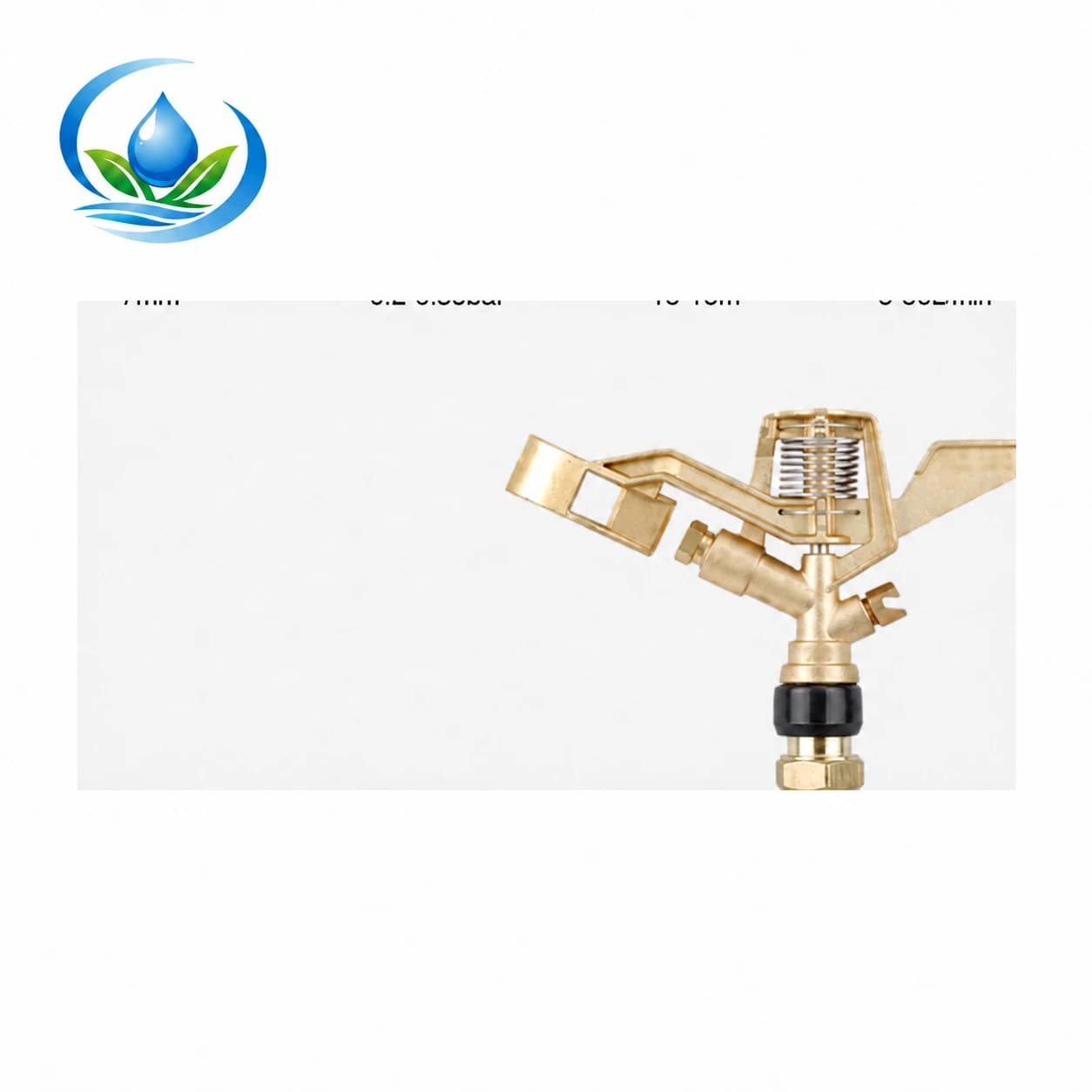
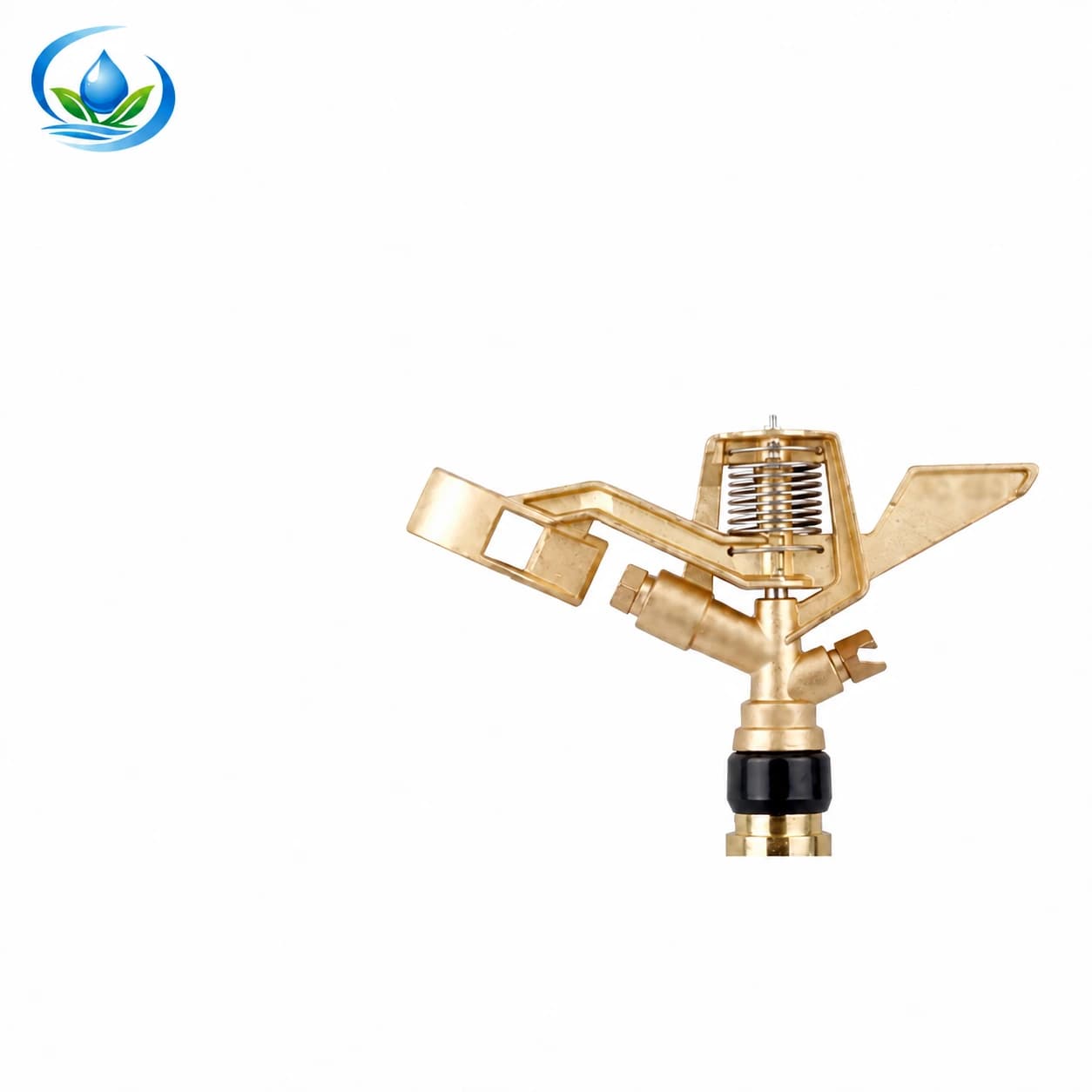
The IRRINEX-S24 impact sprinkler and IRRINEX-S23 impact sprinkler are listed as zinc-alloy heads. Their verified catalog rows identify separate models. The S24 row shows a 3/4-inch male inlet, while the S23 row shows a 3/4-inch female inlet. Each row lists a 5.0 × 2.5 mm nozzle set, a working-pressure interval of 0.5–4.0 bar, a flow interval of 6.8–32.4 L/min and a radius interval of 3.0–16.5 m. Those are separate ranges, not a pressure-by-flow performance curve or proof that both heads can replace each other.
The word “zinc-alloy” is material evidence for the offered head category, not evidence of a fully brass body. The gold-tone product image does not change that. The S23 and S24 inlet orientations also differ, so even a farm that accepts zinc alloy cannot treat them as the same line item. Confirm the exact supplied version and maker’s inlet drawing if one of these models is being considered. A shared nominal 3/4-inch size does not confirm thread standard, seal arrangement or connection to the installed riser. The 3/4-inch head and riser guide handles that separate connection decision.
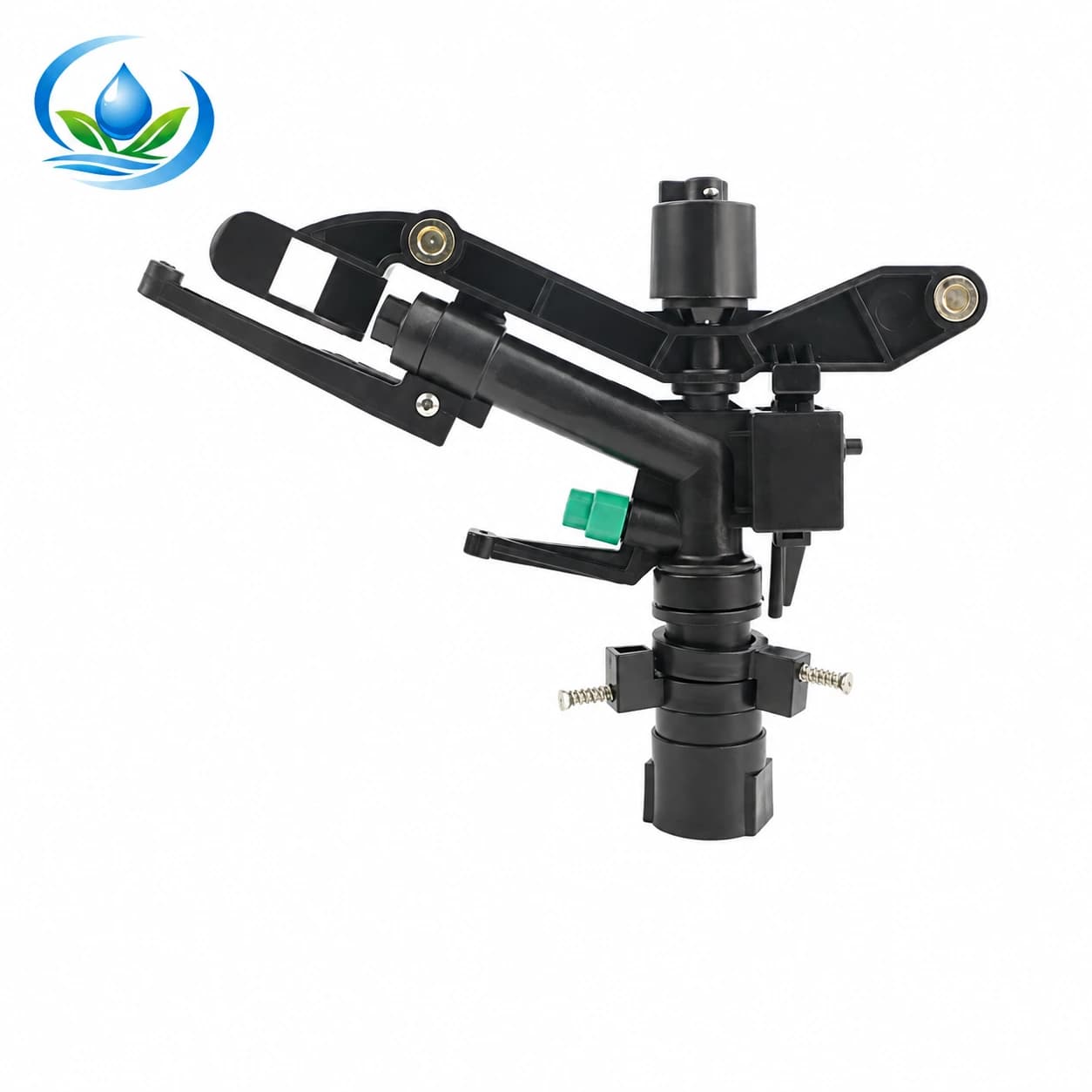
The IRRINEX-S50 agricultural impact sprinkler is listed as a plastic head with a 1-inch female inlet. Its separate catalog ranges are 2.0–5.0 bar working pressure, 3.7–5.0 m³/h flow and 15–17 m radius. It is not a brass-body option or a same-size alternative to the S23 or S24. A buyer might prefer its documented operating configuration for a different field position, but its material and inlet identity should be stated accurately. Do not use the S50 listing to infer the composition of the S23/S24 bearing, nozzle, arm or seals.
None of these three Store listings is a verified all-brass impact head. If the farm specification requires the entire head or body to be brass, hold this purchase and obtain a model-specific brass construction statement from a supplier that offers a suitable product. The correct answer to a material mismatch is not to relabel a zinc-alloy SKU as brass. If the approved requirement allows zinc alloy or plastic, continue the comparison under the actual material name and then test its other fit conditions.
Keep material identity separate from field performance
Material is one field on the purchase card. It cannot tell you the discharge at the block’s working pressure or where the water will land. For each candidate, put the exact model, nozzle set, documented inlet and material beside the existing head’s identification. Add the pressure measured while the intended group runs, the number of heads operating together and the required coverage position. The complete impact-head replacement guide provides the broader record for flow, pressure and connections; use it after the material gate has been resolved.
Read a catalog range correctly. The S23/S24 rows do not say that 6.8 L/min occurs at 0.5 bar or that 32.4 L/min occurs at 4.0 bar. Likewise, the S50’s pressure, flow and radius endpoints are independent. Ask for the exact nozzle’s documented pressure-discharge-radius information at the operating condition required on this block. The head operating-point guide explains why a supply pressure quoted at the pump is not necessarily the pressure at the sprinkler. A material match cannot compensate for an unsupported hydraulic fit.
When the nozzle designation on the old head is unclear, do not treat “brass” as a nozzle size. Record both outlets if it is a dual-nozzle assembly, and use the paired-nozzle identification guide before requesting an exact substitute. Keep nozzle material, bore size and complete-head material as different facts. A seller may offer a compatible replacement nozzle without offering the entire head construction the farm specified. Equally, a material-compliant head with the wrong nozzle may change block demand and wetting.
Do not decide from throw alone. A new head that reaches a similar visible distance may apply a different flow, produce another pattern or require a different support. If the proposed substitution changes the block, compare field delivery after a documented installation using the sprinkler catch-test method. The test assesses water distribution; it does not determine whether a component is brass. Keep the acceptance evidence in separate columns so a successful water pattern cannot accidentally become a material certificate.
Build an order line that cannot hide an unknown
Make one line per proposed model and quantity. Write the old model and which part failed; the required material and the particular component it covers; the offered head’s exact SKU and documented construction; and any missing material statement. Then add the inlet, nozzle, running-condition evidence, mounting arrangement, current price, sale unit, availability and delivery terms. A blank cell is more useful than an assumed answer. If the exact variant or material statement is missing from a product page, ask Store support for that evidence before treating the candidate as approved.
For example, an order note might say: “Replace six complete field heads. Existing description says brass but full-body requirement has not yet been confirmed. S24 is documented zinc alloy and 3/4-inch male; do not order as brass. Ask maintenance to identify the old model and procurement to confirm whether zinc alloy is permitted.” That note prevents a superficially plausible substitution from becoming an undocumented purchase. It also leaves room for the approved buyer to decide that material is flexible once the real equipment requirement is understood.
If material is flexible but the farm is changing head type, keep the operating and physical-fit checks with the same order record. The riser and tripod support guide covers elevated assemblies; support is not established by a sprinkler material label. Check the selected product page for the exact option, current displayed price, sale unit and purchase availability. Where direct checkout is unavailable, give support the model, quantity and unresolved fields, and ask how that exact item can currently be ordered. Do not buy adapters or spare parts on the assumption that a photographed assembly includes them.
On delivery, compare the model marking and supplied documentation with the approved order line before the field crew repeats a substitution across the block. Retain the material statement with the model and variant, then keep operating checks with the installation record. If the required construction was full brass, neither the listed zinc-alloy S23/S24 nor the plastic S50 should be accepted as fulfilling that specification. If a different construction was explicitly approved, name it plainly so the next replacement does not recreate the same ambiguous “brass impact” note.
Before you order
Compare this guide with the specifications for your exact product, selected option, water supply and field conditions. Your equipment requirements take priority over a general example.
Compare irrigation products