Irrigation Pump: Check the Suction Hose Before Buying Connections
A discharge hose pressure rating does not prove suction suitability. Map the low water level, vacuum-rated bore, supported route and both inlet interfaces.
Published by IrriNex Store
An irrigation pump can be carefully chosen for a crop block and still arrive with the wrong inlet hose. A flat hose that carries water away from a pump under positive pressure is not automatically suitable for the suction side, where the hose may have to resist collapse as the pump draws from a tank or pond. Before buying connections, describe the source at its operating water level, the route into the exact pump and the hose's documented vacuum service. That turns an uncertain collection of adapters into a model-specific inlet order. Put the exact pump inlet, supported hose route and documented vacuum rating on the same order line; a layflat discharge-hose label cannot establish suction suitability. The irrigation pump suction hose rating belongs with the actual inlet route and the selected pump's documented operating limits.
Imagine a grower moving a surface pump beside a field reservoir. The existing layflat discharge line reaches the crop, and a coil of similar diameter sits in storage. It is tempting to use that coil on the inlet because both ends appear to fit. Yet the stored line's pressure rating describes delivery service, not whether its wall stays open under suction. The buyer needs a hose with an approved internal bore and suction rating, a supported route, and two correctly sealed interfaces: one at the source assembly and one at the pump inlet.
Trace the suction route from operating water level to pump inlet
Start with the pump model and its planned position. Draw a line from the water surface through the intake assembly and every section of hose or pipe to the inlet port. Mark the source's usual and lower operating levels, not only the level when the tank is full. For a well or enclosed source, use an existing operating-level record or a qualified measurement; do not approach an active intake to obtain a number. The changing vertical difference and the path losses belong in the exact pump's allowable suction assessment.
Measure the route the hose must actually follow, including the distance around a bank or tank wall, the location of supports, accessible bends and the space needed at each end. A straight-line distance on a farm map can understate the required supported length. Record any sharp edge, vehicle movement, floating intake arrangement or seasonal relocation that changes the route. The hose should not hang from the pump port or pull a source fitting out of alignment when the water level or field setup changes.
Ask the pump maker or installer to check this route against the selected model's inlet and priming instructions. Do not borrow a suction-lift number from a different pump. A self-priming label does not authorize running a dry unit or placing it at any height above a source. The surface-pump family buying guide handles the broader duty and power choice. This purchase concentrates on whether water can reach that selected pump through a documented inlet assembly.
Is the inlet hose rated for suction rather than discharge pressure?
Read a hose specification for the service it actually names. Positive working pressure describes water pushing outward on a delivery line. Burst pressure describes a different test condition and is not a normal operating target. Neither value establishes that the same hose will keep its bore open when the pump creates suction. A hose intended for inlet service needs an explicit vacuum or suction-use rating for the relevant conditions, together with construction that resists collapse along its installed route.
Some reinforced hoses can perform on the inlet, but material words such as PVC or rubber alone are not an approval. Confirm the exact make and variant, rating basis, permitted temperature range and water compatibility in the hose documentation. Consider whether the line is held in a bend or repeatedly moved, because an unsupported kink can close the bore even when the straight hose is rated. A simple hand squeeze or a successful brief fill does not certify its operating performance. Ask for the manufacturer's limits rather than guessing from wall thickness or colour.
Layflat is useful when a pump sends water across a field and the line can roll up after it drains. The layflat header move guide describes that distribution-side task. Its handling and positive-pressure checks do not make a collapsed storage coil into an inlet line. The Store's layflat, ordinary PE and PVC distribution listings should not be used as suction-hose recommendations without an exact product specification approving vacuum service. If no such Store option is documented for the chosen pump, obtain a verified suction assembly through an appropriate supplier.
Match internal bore to the exact inlet and flow task
Write down the actual hose inside diameter, not just a nominal inch label. The internal bore affects inlet velocity and friction loss; the outer diameter and wall construction influence which connector and retention method can fit. Ask the pump maker for the permitted inlet size and route conditions at the intended duty. Do not assume a universal rule that the hose must be one nominal size larger, or that a larger hose always fixes a poor source level or a leaking joint. A change in diameter may also require an approved transition at each end.
Record the water flow the pump must deliver to the active crop group and the head required at that same flow. Then have the complete source-to-crop route reviewed, including the inlet losses. Maximum flow and maximum head in a catalogue are separate endpoints, not simultaneous output. A hose choice based on the maximum flow alone may be larger or smaller than the manufacturer allows at the real operating point. The smallest-zone pump check helps list legitimate operating groups; carry those groups into the inlet review if the same pump serves several shifts.
Record the hose's rated bend conditions, proposed installed length and any transition pieces on the order sheet. If the maker supplies a minimum straight section or particular geometry for that model, use its instruction. Do not import another seller's fixed multiple of hose diameters. A long or tortuous suction run can add losses and make priming less dependable even if each component is individually suitable. The goal is a route that the exact pump and hose makers can evaluate, not a dimension copied from an unrelated installation picture.
Check both ends as an airtight assembly
At the pump end, identify the delivered inlet port, its true connection standard, sealing face and approved adapter. At the source end, identify the pickup, strainer or valve arrangement that the installed design actually requires. A generic nominal size does not establish thread form, hose barb size, seal type or clamp fit. Ask for the exact mating component at each interface and the retention method specified for that hose wall. The port material and the connector's appearance do not tell you whether two unmatched threads will seal.
The suction side can admit air through a joint that looks dry from the outside. That is why a visual absence of drips is not proof of an airtight inlet. Note the number and position of accessible joints on the route, then keep their maker-approved seals and assembly method with the hose order. A suitable hose with an improvised transition can still let air in. Conversely, a leak seen near the pump may be on the discharge side; mark which interface is wet before assigning blame to the inlet.
An intake screen or foot valve may be part of a specific design. Confirm whether the selected pump calls for one, what the water contains and how the component affects the inlet route. Do not add a foot valve to every installation simply because a parts guide lists it. Its size, direction, material and service access must match the actual model and source. If a replacement pump is being considered, the replacement-pump physical-fit guide checks its mounting dimensions and port positions against the installation. A hose that fits the old pump does not establish that the new unit can occupy the same space or connect without a revised route.
Keep bends supported and the intake accessible
Plan supports so the hose holds its intended shape from the water source to the pump. Mark where it crosses a bank edge, a rough slab, a walkway or an area visited by machinery. A bend near the pump can transfer load to the port or locally narrow the bore; a sag can trap a different water or air condition during starting. Use the exact hose maker's bend and support guidance. Avoid pulling a hose into position with a short adapter or fastening it in a way that forces a permanent kink.
Position the source assembly according to the pump and intake instructions for the operating water level and debris conditions. A surface intake that is adequately covered at rest may become exposed as pumping lowers the source. A screen clogged by leaves or sediment can restrict supply even when the hose itself is sound. Include a way to inspect and service the arrangement using the manufacturer's stopped and isolated procedure. Do not reach into a live inlet or remove a guard to prove that water is moving.
If the hose is moved between sources, record each approved location separately. A route from a full tank beside the pump is not the same suction task as a longer line across a pond bank. Keep each route's low operating level, length, support points and two end fittings on its own sheet. The solar daylight-output guide shows why source level and the time of delivery must be considered together for a solar-fed crop block. Here, the immediate purchasing question remains the physical inlet path for the selected pump at the intended source.
Use the Store pump pages for model identity, not a hose rating
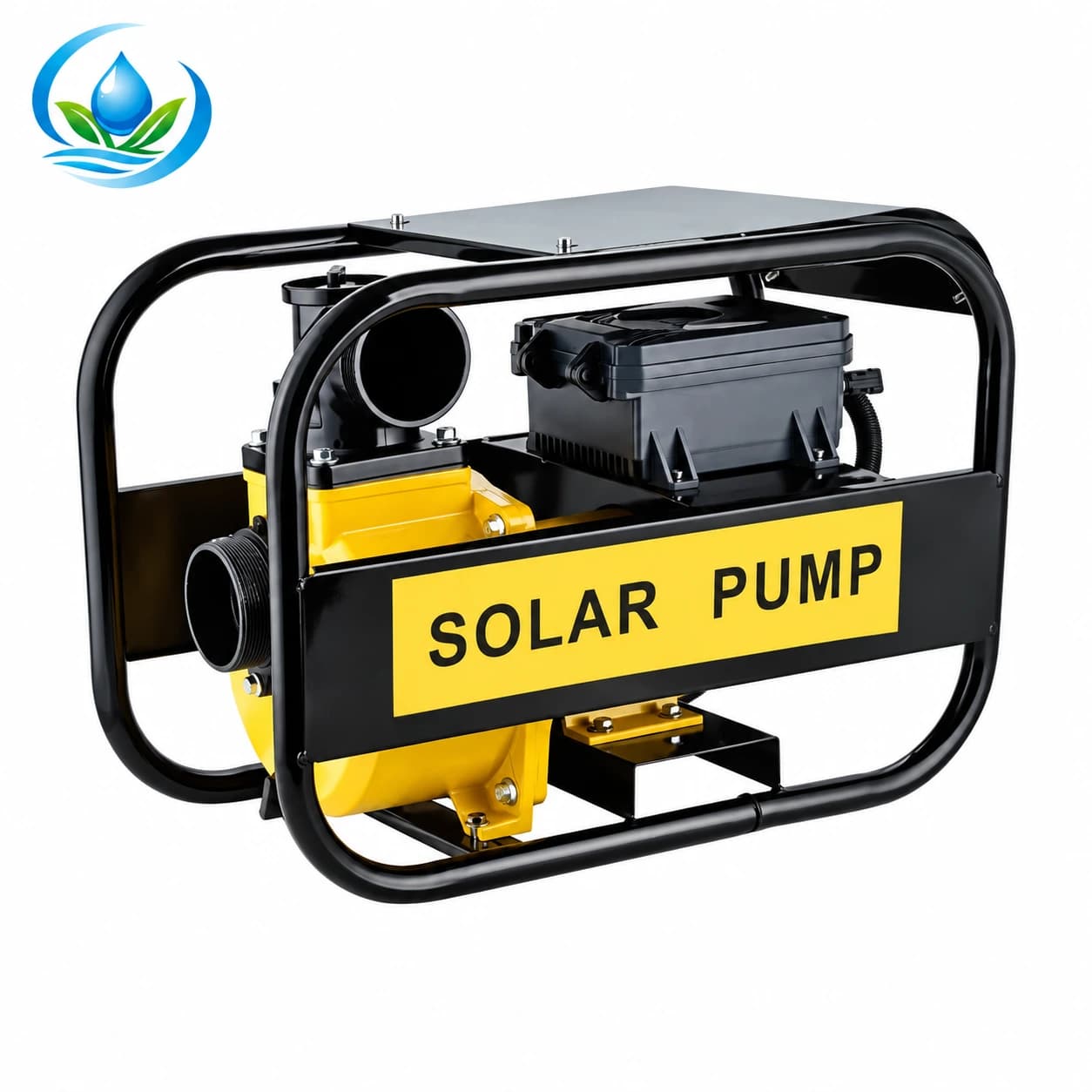
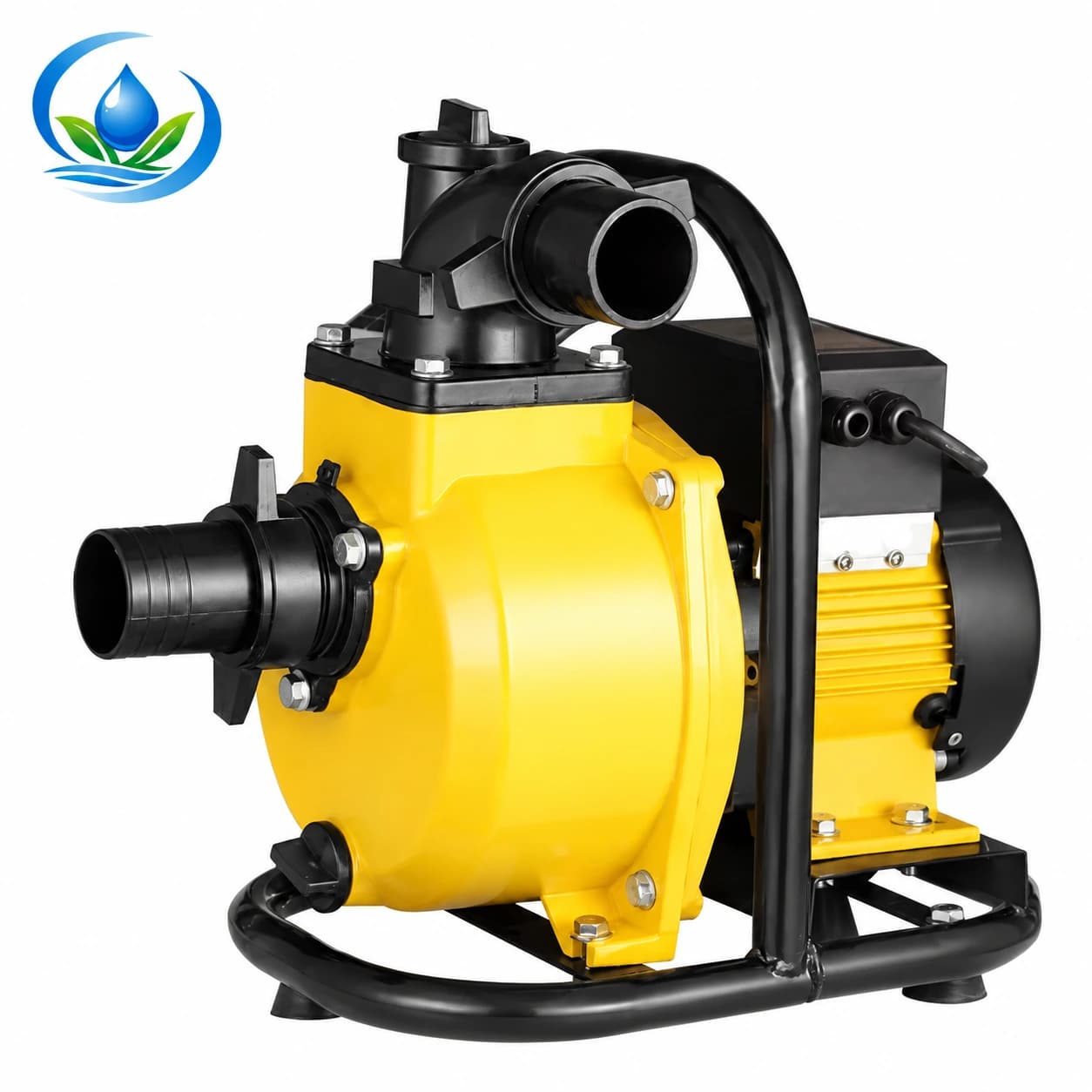
The ZQD solar-oriented self-priming surface-pump family offers several catalogue models. For example, ZQD8-30-72-750 is listed with maximum flow 8 m³/h, maximum head 30 m and a nominal one-inch connection entry. The ZM battery-oriented surface-pump family includes 25ZM6.5-25-48/72-750, listed with maximum flow 6.5 m³/h, maximum head 25 m and a nominal one-inch connection entry. These are separate model rows, not universal family specifications or approved inlet-hose sizes.
Neither row promises its maximum flow at its maximum head. The nominal port entry does not state the thread standard, mating seal, permitted suction route, required hose construction or included inlet accessories. Obtain the exact model curve and inlet instructions before finalizing the hose. Confirm which parts are supplied with the selected option; a pump photograph showing a strainer or controller is not a packing list. A solar-oriented label does not verify a panel set, and a battery-oriented label does not verify a battery or automatic control.
Both product families are current Store routes for choosing a pump, but a published product page is not evidence of an in-stock, directly purchasable suction hose. For each selected pump variant, check current price, sale unit, availability, delivery and ordering method. If direct checkout is not shown, ask Store support how to obtain that exact model and its inlet documentation before committing to surrounding connections. Order the hose only when a seller can provide its actual vacuum service and compatible fittings for the reviewed arrangement.
Turn the route into a precise parts request
Put the pump model, operating source levels and crop duty at the top of the list. Add a sketch with measured supported hose length, intended bore, bend locations and water conditions. Then list the exact pump-end port and mating adapter, hose make and vacuum rating, source-end component and its connector, and each maker-approved seal and retention part. Mark any unverified dimension or rating as a question instead of substituting a familiar nominal size. A purchase record with two named end interfaces is more useful than “one suction hose and two clamps.”
Ask the supplier to confirm the assembly as a set: hose wall and rating, both transitions, operating temperature, required support and the pump maker's source-level allowance. If no documented match exists in the current Store range, ask for the pump's exact inlet details and source a rated hose elsewhere; do not relabel a discharge layflat as suitable by appearance. Retain the selected part references with the pump model so a later hose replacement does not start from a coil with an unreadable label.
When the components arrive, compare the labels and interfaces with the agreed list before installation. A qualified installer should follow the pump and hose makers' assembly, priming and first-run procedures, with the normal source supply and intended crop group. Record source level, visible joint condition, delivered flow and working pressure at named points during the permitted run. Stop and resolve collapse, air entry or loss of water delivery under the equipment procedure rather than repeatedly running a dry pump or improvising a test on a live inlet. The accepted assembly is the one that fits the exact model and performs through its actual operating route.
Before you order
Compare this guide with the specifications for your exact product, selected option, water supply and field conditions. Your equipment requirements take priority over a general example.
Compare irrigation products