Irrigation Pumps: Check Replacement Dimensions Before Ordering
Compare the exact replacement pump drawing with mounting holes, full equipment envelope, pipe positions and service access before ordering.
Published by IrriNex Store
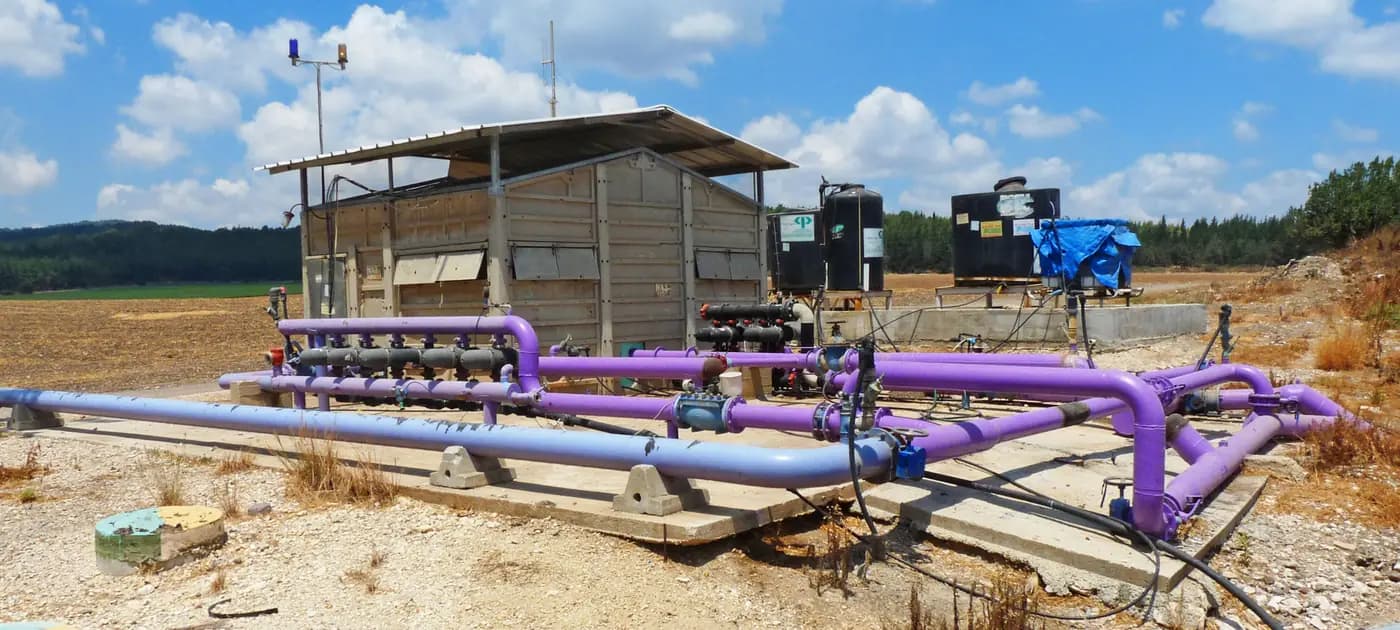
Irrigation pumps can meet a farm's required flow and head yet still be poor replacements for the unit already installed. Once a qualified technician has decided that the old pump must be replaced and a candidate has passed the duty and power checks, compare its actual mounting drawing with the space, pipe positions and access available at the site. A shared nominal port size or similar product photograph cannot show whether its feet, casing, motor and connections will fit. Irrigation pump replacement dimensions include the mounting base and full service envelope, not just the inlet label.
The buying task is to send a supplier and installer one verifiable physical-fit record before an order is placed. It should identify the old assembly, the proposed exact model, mounting-hole positions, suction and discharge locations, outer envelope and the room needed to bring in and service the new unit. If a dimension or connection standard is unknown, keep it open for a model-specific drawing or installation assessment. A field sketch helps locate the question; it is not permission to adapt a pump by forcing pipes or drilling a foundation on a guess.
Has replacement of this irrigation pump already been approved?
Keep the technician's decision that replacement is needed with the asset record. This page begins after that decision. If the cause of weak delivery, changed crop demand or a failed start has not been resolved, physical fit alone will not make a new pump suitable. The solar and battery surface-pump selection guide covers the separate flow, total-head and power choice. Here, mark the candidate as hydraulically and electrically approved, conditionally approved, or still awaiting evidence before working through installation fit.
Identify what is actually being replaced: pump body only, pump and motor, an assembled base-mounted unit, or a wider package that may contain a controller and accessories. Photograph readable nameplates and the whole installed arrangement from safe accessible positions. Record manufacturer, exact model and revision for the old unit, and the full code of each candidate. A family label such as “solar surface pump” is too broad for a dimensional comparison. Keep the installation drawing revision beside the model code, because a revised foot pattern or motor option can change a physical interface.
Ask the installer which site parts are fixed for this purchase and which can be professionally changed. A concrete pad, a welded manifold, a protected pipe route and a narrow equipment-room doorway may each set a different constraint. An old connection that was fitted under strain is not a suitable template to reproduce. The site survey should describe the current condition; the installer decides whether it is acceptable or needs correction. That distinction prevents the replacement order from promising a direct fit to an already unsuitable installation.
Will the new pump fit the existing mounting footprint?
Record the old pump's mounting surface and the positions of its feet or base, using a fixed datum on the pad or frame. Include overall support length and width, the distance between hole centers in both directions, the number and size of mounting holes, orientation of the shaft or motor and the height of the pump connections above the support. The installer should determine the measurement method and whether the old unit can be safely accessed. A photograph with a tape measure can help explain a dimension, but perspective in a photograph is not a reliable substitute for a measured plan.
Request the dimensional drawing for the exact offered pump configuration, including its motor or drive arrangement. Compare the drawing's reference points with the site's reference points. A loose claim that both units have “four feet” does not show that their hole centers or centerline heights coincide. Likewise, an outside length that appears shorter does not establish that the new body clears the existing support or piping. Note each field as match, difference or missing evidence, with the drawing revision used for the check.
A difference does not automatically rule out the candidate, but it changes the scope of the project. A qualified installer may need to assess a new support, engineered mounting arrangement or piping change. A hole mismatch needs a model-specific installation decision; improvised slots or shims do not establish a suitable fit. The correct support and fastening follow the particular equipment's instructions and the site's loads. Get the modification identified and priced before comparing the purchase with a truly direct-fit alternative.
Check the full envelope and the route into place
Compare overall length, width and height of the candidate assembly, not just the pump casing. A different motor housing, terminal box, controller position, cable exit, priming access or guard can occupy space that the bare body drawing leaves blank. Record nearby walls, covers, railings, manifolds and fixed electrical or water equipment. Mark which clearance is for normal inspection, which is for a specified service action and which is simply the unobstructed path needed to get the packaged unit into position.
Walk the normal delivery route on a plan with the installer. A pump may fit on its pad but not pass through the gate, doorway or turn into the shelter in its supplied condition. Confirm package dimensions and handling information for the exact sale unit before delivery. The responsible crew determines the lifting and access plan using the actual weight and site conditions; a buyer's clearance sketch does not authorize a lifting method or moving heavy equipment around people or live services.
Allow the model's documented operating and maintenance space to remain available after nearby pipes and controls are connected. A cover that opens only when a manifold is removed, an inaccessible data plate or a blocked motor ventilation route can create a poor long-term fit even when the mounting holes line up. Do not import a general clearance number from another pump manual. Ask for the selected model's installation instructions and have the installer mark the required access on the same drawing as the proposed pipe route.
Locate both water connections, not only their nominal size
For the suction and discharge sides separately, record the existing pipe centerline, its direction of approach, support and distance from the mounting datum. Then request the candidate's port locations and orientation from its exact drawing. Two pumps with nominal one-inch inlet and outlet entries can place those ports at different heights, on different faces or at different distances from the feet. Their physical distance to the fixed pipe matters as much as the connection label.
Confirm the real connection standard, sealing face and mating part at each port. A nominal size does not establish a thread form, flange pattern, union type or seal. Keep the pump-end interface separate from the hose or pipe's other end. The suction-hose buying guide addresses the hose's vacuum rating, bore and two sealed ends; this replacement check asks whether the newly selected pump's port and location can connect to the installed route without harmful loading. A fitting that screws in partly or appears close in a photo is not proof of an approved joint.
When an offered port does not meet the existing pipe naturally, record the offset rather than asking the installer to pull rigid pipe into position. A qualified installer can assess supported transition pipework, allowable connection forces, alignment and whether the source route must change. KSB's pump-installation guidance treats external pipe loads and equipment support as part of the installation; the exact maker's instructions govern this purchase. Avoid buying a collection of generic reducers before the port, seal and new route have been verified.
Existing suction hardware may have been selected for the previous pump. The replacement's permitted suction arrangement and priming procedure still need model-specific review even if the pipe end appears to fit. Do not infer that a “self-priming” label approves a particular lift, hose or dry start. If the new port changes the suction route, the installer should revisit its support and operating water level. This page records the physical change; it does not repeat a pump fault diagnosis or prescribe a suction-system repair.
Keep physical fit separate from operating approval
A physically convenient replacement can still fail the farm's duty requirement. Retain the selected pump curve, flow and total-head point, power arrangement and permitted controls with the fit sheet, but do not use bolt-hole spacing or a shared port size as evidence of hydraulic performance. The smallest-zone pump guide handles the low-flow operating case that may arise after some crop rows close. Its answer may change the exact candidate, which means the physical drawing must then be checked again.
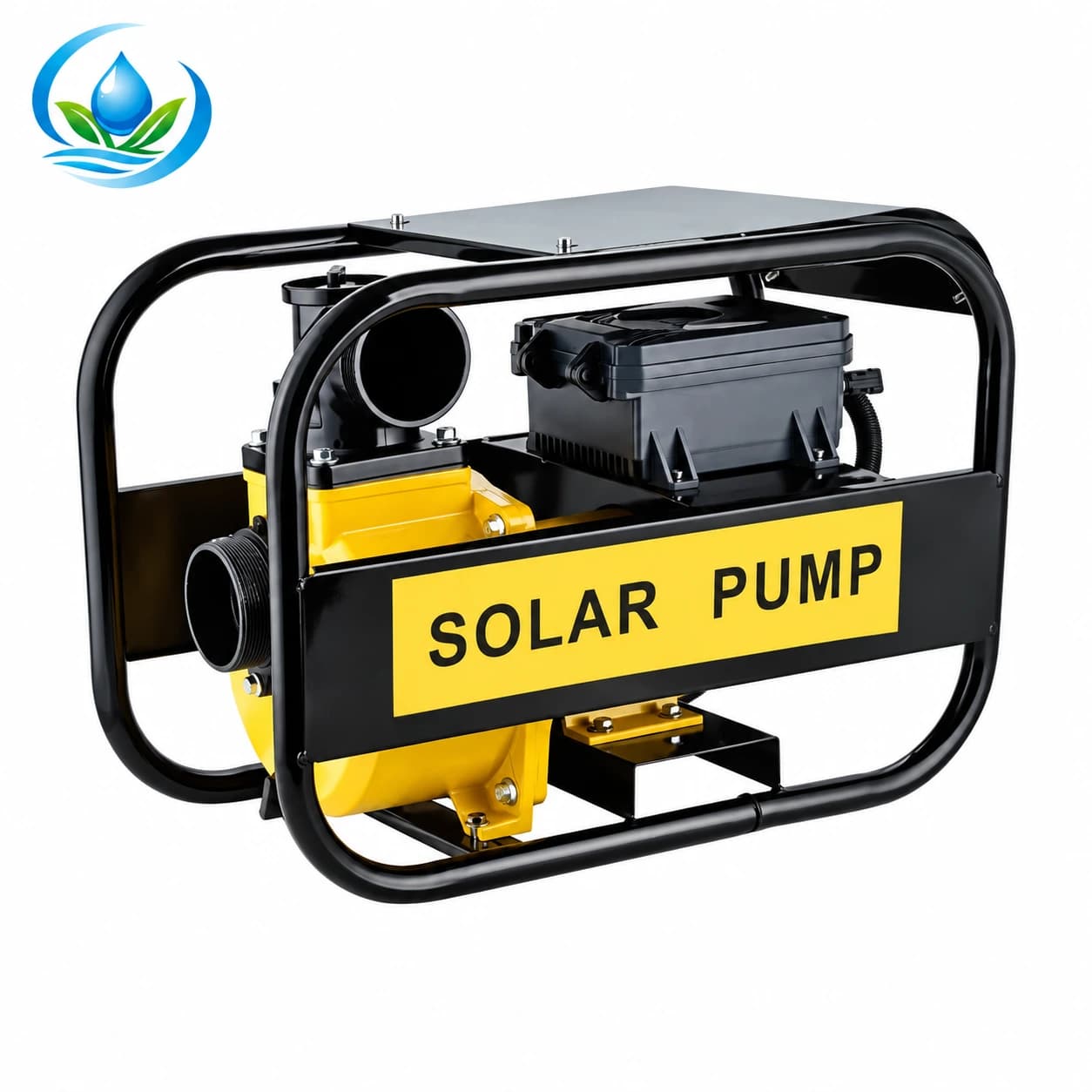
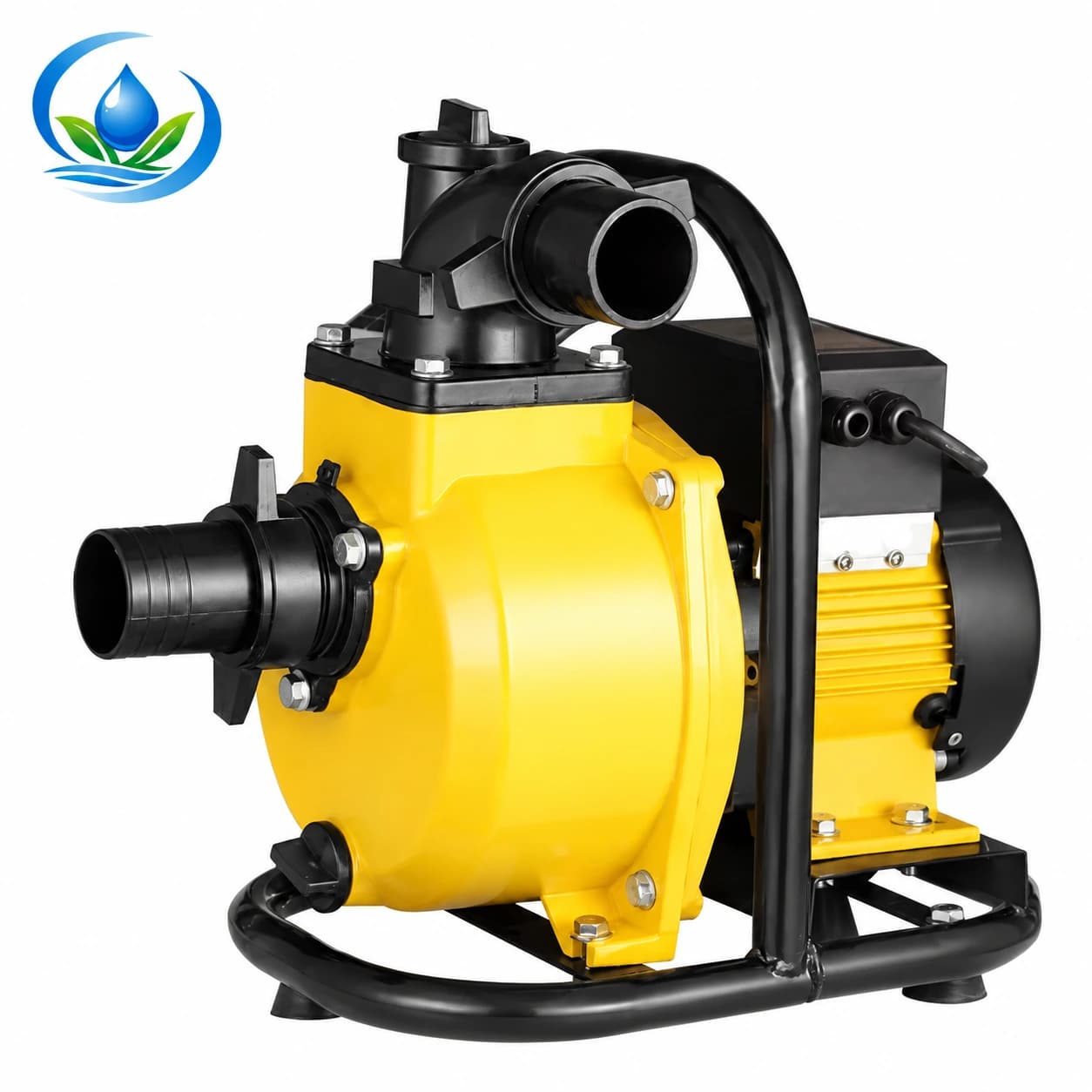
The ZQD solar-oriented surface-pump family and ZM battery-oriented surface-pump family are two listed routes for a replacement discussion. Their exact options differ in electrical supply and published hydraulic endpoints. The Store family pages and catalogue maximum-flow and maximum-head entries do not establish a common mounting footprint, port position, thread standard or included base. Request dimensions for the specific model code and offered assembly. No length, hole spacing or interface standard is assigned to either family without that drawing.
Where an offer includes panels, controller, battery equipment or a separate enclosure, identify those items on the layout independently. A pump-body drawing may not show the whole ordered package or the space the power equipment needs. The solar-output evidence guide covers whether a seller's claimed operating result applies to the offered power and water circuit. Keep that performance question distinct from whether the delivered assembly can physically occupy the planned installation.
Use one comparison sheet for each candidate
Give the sheet four columns: existing measured condition, proposed drawing value, difference or missing item, and the person responsible for accepting a change. Put mounting pattern, base and pump envelope, suction and discharge centerlines, port standards, support points, service access and move-in route on separate rows. Mark whether the candidate is an equipment-only unit or includes a base, motor, controller or fitting. A blank in the offered drawing is an unanswered question, not a match.
For example, imagine that the existing pump has a discharge connection facing the manifold, while the proposed drawing places its discharge on another side. This is a hypothetical comparison, not a description of ZQD or ZM. Even if both ports have the same nominal diameter, the buyer should ask the installer for a supported connection plan and cost before ordering. In another case, hole centers may match but the new motor extends into a service walkway. The footprint row passes while the envelope row does not. Keeping these differences separate prevents one familiar dimension from hiding another constraint.
Classify the outcome clearly. “Direct physical fit supported” requires the exact drawing and site measurements to agree, subject to installer approval. “Fit with identified modifications” requires the modified support or pipework to be designed and included in the scope. “Unresolved” means a necessary drawing, interface or site dimension is missing. Do not promote an unresolved line to a pass because the crop needs water soon. A delay in information is visible and manageable; discovering an unpriced mismatch after delivery is harder to correct.
Buy the complete, reviewable replacement scope
Send the supplier the old nameplate, site plan, measured fit sheet and exact proposed model code. Request the current dimensional drawing, connection detail, assembly weight, documented service space and itemized included parts. Ask the installer to identify any required support or pipework change and who will supply and verify it. Keep the hydraulic and electrical approvals attached as separate gates. That gives the seller a precise question without implying that Store support has surveyed the farm or approved field modifications remotely.
Before placing the order, check the selected option's current price, sale unit, availability and delivery route. A family page is not proof that a specific mounting base, controller, adapter or anchor set comes with the pump. If the selected option has no direct purchase control, ask Store support how to order that exact code and obtain its drawing before buying surrounding parts. Record the accepted model and drawing revision with the order. If the seller proposes a substitute, recheck the complete sheet; a similar maximum flow or shared voltage does not preserve physical fit.
When the shipment arrives, compare labels and listed contents with the approved order before installation. The delivery-inspection guide covers that separate receiving task. A qualified installer then confirms the actual support, connection and access conditions, follows the maker's procedure, and commissions the pump against the previously approved duty. The buyer's pre-order record should remain attached so any change discovered on site is assessed openly rather than hidden in a forced joint or an undocumented mounting alteration.
Keep the technician's decision on operating duty and power together with the installer's decision on physical fit and any specified changes in the same order record. Include the model code, drawing revision, measured site dimensions, accepted differences and included-part list. That is what turns a replacement that looks similar online into an order the farm and installer can actually evaluate.
Before you order
Compare this guide with the specifications for your exact product, selected option, water supply and field conditions. Your equipment requirements take priority over a general example.
Compare irrigation products