Solar Drip Watering System: Check a Seller’s Daylight Output Claim Before Buying
Check which pump, power setup and water circuit a seller demonstrated, and compare them with the exact contents offered for purchase.
Published by IrriNex Store
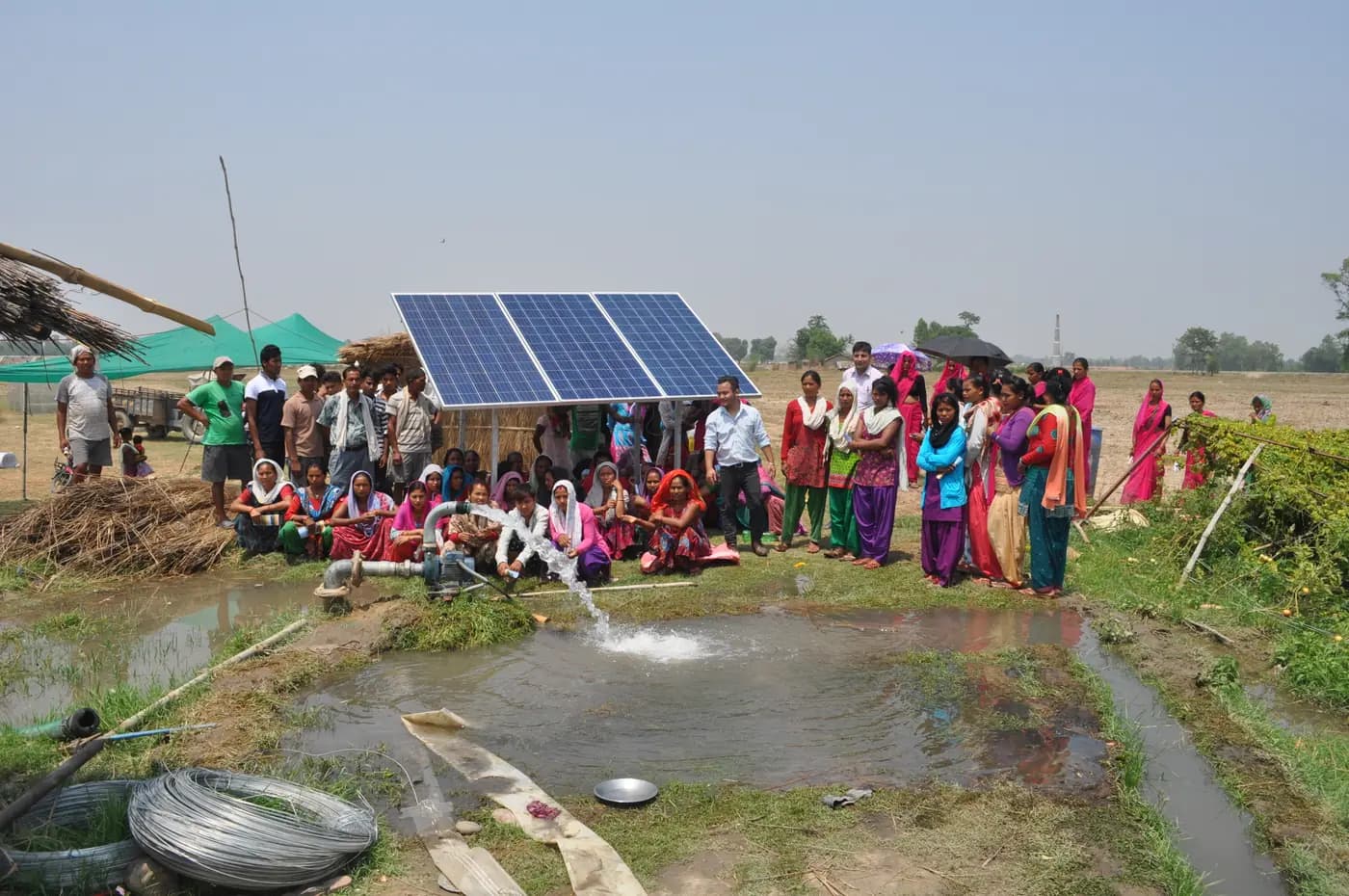
A solar drip watering system can look ready for a field when a seller shows a pump throwing water in bright midday sun. Before ordering that offer, find out exactly which pump and power arrangement are shown, what the water passed through, and what pressure was maintained where the drip group would connect. A clear video of an open hose proves that water came out of that hose under those conditions. It does not prove that the offered package will operate a filtered drip block or deliver the advertised output for all the hours implied by a headline. Use the evidence request below to decide what the claim actually supports. A solar irrigation pump demonstration should identify the pump and water path shown, then compare that arrangement with the filtered drip block the buyer will run.
Keep the seller's original wording, product link, option code, photo or video and date together. A phrase such as “solar drip kit” may describe a pump only, a pump with controller, or a package including parts that do not appear on the product option being sold. The practical buying task is to compare the demonstrated assembly with the exact contents and duty offered for purchase. A missing item or a different model in the demonstration should be resolved before surrounding pipe and power parts are placed in the cart.
Compare a solar powered water pump for irrigation with field duty
Start a one-page claim card with the product page, seller name or order channel, selected model code, variant, stated sale unit and advertised output. Capture the specific claim rather than a cropped headline alone. If several options share a page, mark the option actually selected at checkout. A family photo can show a larger model while the price beside it belongs to a smaller one. Neither the appearance of the housing nor a similar pump name establishes that a filmed demonstration used the model offered to you.
Ask for a visible model plate or an unambiguous written identification of the pump in the demonstration, plus controller and power-source identities where those affect the result. Record whether the same pump, impeller configuration, controller and voltage are offered in the selected package. If the evidence describes a different option, label it as a demonstration of that option, not proof for yours. A written table tying test conditions to the exact sale code is more useful than a claim that every pump in the family “works the same.”
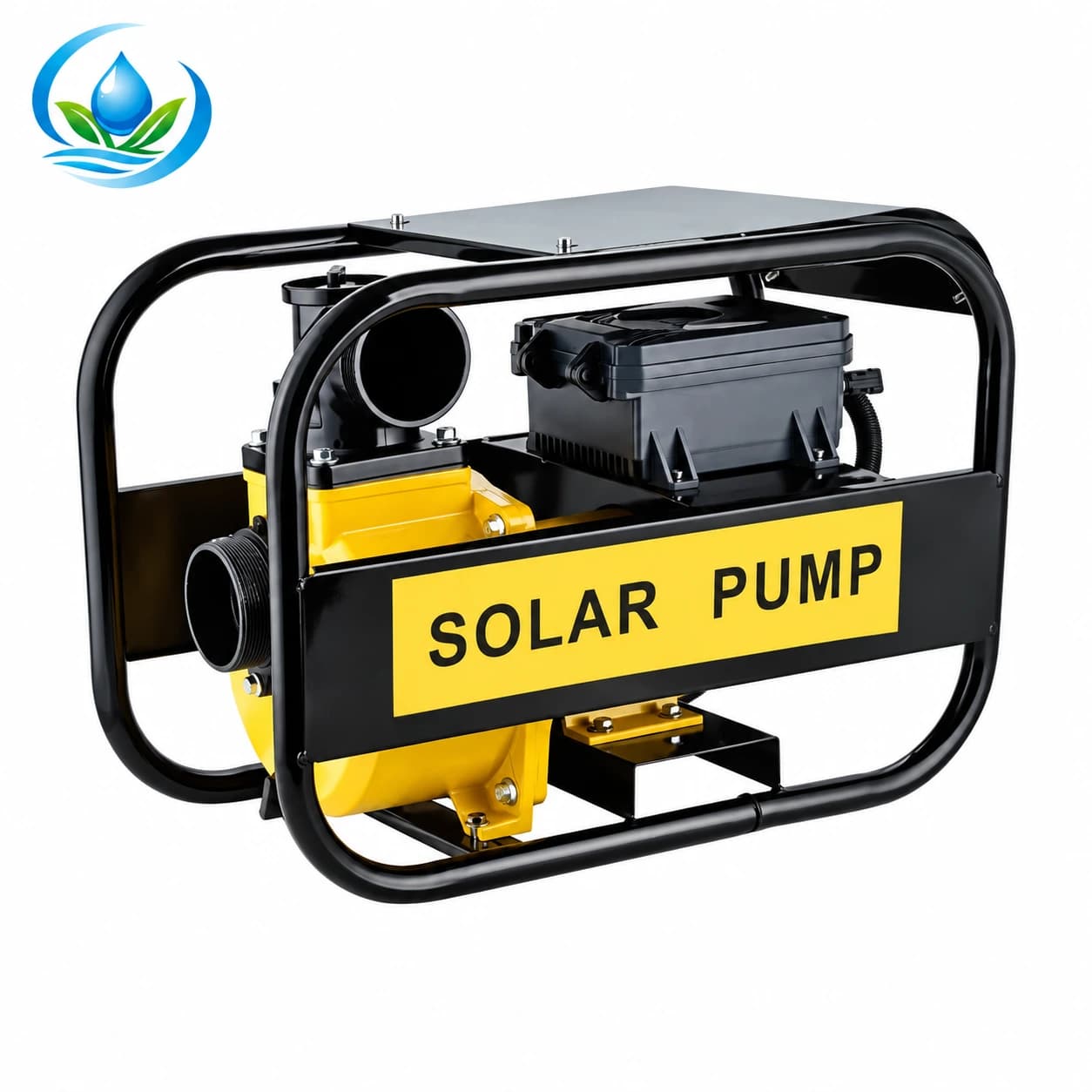
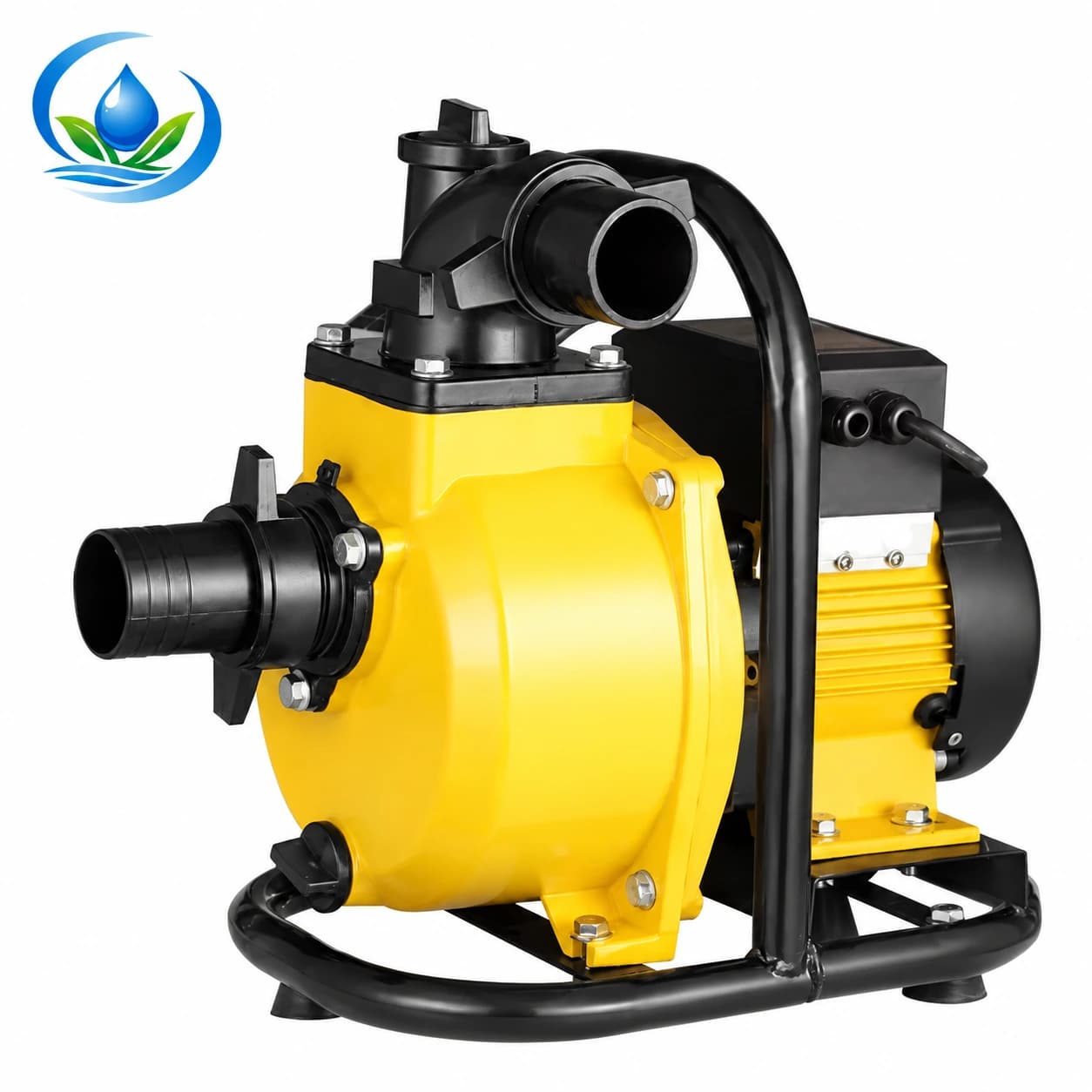
The solar and battery surface-pump comparison helps separate the two pump families and their model codes. For this order, keep the seller's exact configuration in the claim card. The listing may let you choose a pump while the demonstration includes a separate controller, a photovoltaic array, a battery or a tank that is not in the sale. Request an itemized contents list, including quantities and connection parts, before treating a demonstration scene as a packing list.
Compare the demo outlet and pressure with field duty
Draw a line around the demonstrated water circuit. Did the outlet discharge freely into a bucket, fill an open tank, or feed the actual filter, valve, pipe and operating drip group? Those are different hydraulic jobs. Record the water source level, suction arrangement, delivery height, pipe route and any visible restriction. An open hose may show impressive movement because little pressure is required at its outlet. Its measured rate cannot be presented as the rate available at the crop inlet while that inlet maintains its required pressure.
Ask where pressure and flow were measured, whether readings were taken during the same stable interval and which valves were open. A gauge at the pump discharge is useful but is not a gauge at the distant drip block. If a seller quotes both quantities, request their measurement locations and units. A claim that only gives volume collected in a container needs the elapsed time and the container's usable volume. A pump running beside an open tank may meet a water-transfer claim even though no evidence yet supports direct drip feeding.
For a farm with an existing zone, write the exact group to be served and its required flow at the relevant pressure. The drip outlet-flow worksheet organizes the outlet count; it does not measure pump output. Send the seller the required water-delivery point and ask for evidence at a comparable flow-and-head condition. This request is much narrower than asking, “Is it strong enough for my field?” It lets the reply be tied to a model, a route and a measurable condition.
Keep a transfer offer separate from a direct-feed offer. Filling a tank can be a legitimate purchase if the later irrigation has its own verified way to supply the emitters. The tank photograph does not prove that gravity at its low level will run the drip equipment. The low-tank-level check covers that later task. Do not let the seller's open-tank demonstration quietly become evidence for a pressurized field outlet that was absent from the test.
Read daylight output as a claim with a time boundary
A video showing one strong moment should be described as one moment. Ask for timestamps, run duration, measured interval volume and the observed power or sunlight condition if the claim says “daylight output” or “all-day watering.” Morning shade, clouds, panel orientation and a falling source level can change delivery. A strong noon segment alone supplies no measured morning or late-afternoon volume. Equally, a poor moment caused by a temporary closed valve does not represent the offered unit's normal performance. Preserve the operating context with each reading.
Check the exact language of a daily claim. Does it mean an instantaneous rate, a total measured over a named day, or a theoretical maximum multiplied by daylight hours? If a seller provides a total, ask which meter or volume method was used, which hours were included and whether the water went to a tank or through the crop's pressure boundary. If the claim refers to typical weather, ask for the location, season, power arrangement and source condition behind that statement. These questions identify the evidence's scope without inventing a guaranteed daily yield.
For direct feed, daylight duration matters only when the pump can actually serve the running drip group at its required pressure during the hours the farm can irrigate. A video of flow before the filter or without the intended number of outlets does not show that condition. If the farm expects a morning run, ask for a representative morning demonstration or documented output at the relevant input and hydraulic duty. If the seller cannot provide one, keep that part of the claim unverified. The buyer can still consider a tank-transfer use separately when its independent field supply is established.
Avoid turning a package label into a solar-production calculation. Array watts, pump rated watts and maximum pump flow answer different questions. The seller should identify the actual panels or power input used for the demonstration and show that the selected option includes or supports that arrangement. Do not infer a number of panels, wiring arrangement or battery size from a product-family name. Electrical configuration and protection require the exact equipment instructions and a qualified installer; the buyer's card simply records what configuration the claimed output depended upon.
Compare exact catalogue limits without calling them a demo result
The ZQD solar-oriented surface-pump listing includes exact option ZQD8-30-72-750. Its catalogue row identifies a 72 V, 750 W model with a maximum flow of 8 m³/h, a separate maximum head of 30 m and a working-voltage range of 72–150 V. Those maxima are limits from a model entry, not evidence that the video achieved 8 m³/h against 30 m of head or that the selected power arrangement maintained either value throughout daylight. Ask which curve and test setup correspond to this exact code before accepting a claimed operating point.
The ZM battery-oriented pump listing includes 25ZM6.5-25-48/72-750. Its row identifies a 48–72 V, 750 W model, a maximum flow of 6.5 m³/h, a separately stated maximum head of 25 m and a 40–85 V working range. It is a different power route. A video of ZQD on photovoltaic input does not demonstrate what a ZM option will do on an offered battery arrangement. The listing's voltage entries alone do not approve a battery or a solar/battery automatic switching scheme. Request the exact power and controller documentation for the selected offer.
Neither maximum-flow figure may be paired with its maximum head as though both were measured together. A seller might display both numbers honestly as separate catalogue endpoints; the buyer still needs the relevant flow-versus-head information for the proposed circuit. If a listing or reply presents an output at the field's required pressure, ask whether it comes from a maker table, a measured test or an estimate. Record that distinction. Do not reconstruct a performance curve from two endpoint figures or from the visual height of a fountain in a clip.
Check the interface and included parts with the same precision as the output. The nominal pump inlet and outlet size does not identify every thread standard or fitting needed on the farm. The selected option may include a pump without panels, a controller or suction hardware; only a confirmed contents list establishes what is supplied. Photograph a received label later against that list, but complete the pre-order comparison first. The delivery inspection guide handles the separate job of checking what actually arrives after purchase.
Send a short request that the seller can answer
Give the seller the chosen product code and link, a copy or date of the claim, the intended water route and the crop-group duty at a named point. Ask four connected questions: What exact hardware made the shown output? What hydraulic circuit and pressure did it serve? For what measured daylight interval and power condition was output recorded? Which demonstrated pieces are included in the sale unit? A written response can point to a model sheet, test record and packing list without requiring a staged video for every query.
Compare the answer on one claim card with columns for advertised, demonstrated, offered for sale and still unknown. For example, a midday free-discharge clip can support only that open-discharge observation. It does not become a false claim merely because your farm needs a different duty, but it cannot validate that duty either. A maker curve may support the required operating point while the actual daylight profile remains unshown; retain that distinction. If the seller supplies revised evidence, attach it rather than silently rewriting the original claim.
Decide whether the answer permits a purchase for the specific job. A documented tank-transfer duty with the selected package may be ready for an order even when direct drip feed remains unsupported. A direct-feed order needs the exact hydraulic and power configuration supported at the intended duty, plus a plan to verify it after installation. If a vital model, controller or included item differs between demonstration and cart, hold the affected option. If the needed pressure or daylight case has no data, request that missing evidence or choose a product whose evidence covers it.
When a zone may run alone after other outlets close, ask whether the selected pump and controller also support that smaller operating case. The smallest-zone pump check handles that distinct question. Do not add extra heads to make an advertised maximum appear useful; that changes the farm's irrigation duty. Similarly, a claim about moving water into storage does not justify ordering a battery or controller that has not been included and matched in writing.
Preserve the decision through checkout and the first field run
Before checkout, save the selected variant, current price, sale unit, availability, delivery terms and confirmed contents. If a listing lacks a clear purchase option, use the exact model and evidence card to ask Store support how to order it. Keep any controller, panel, battery, connector and tank as separate line items unless the package list expressly includes them. Confirm the permitted suction arrangement and priming instructions for the chosen pump; “self-priming” is not permission to start without water or repeatedly run dry.
After delivery, compare model plates and included pieces with the accepted order. Have qualified personnel install and commission the documented configuration. Observe flow and pressure at the agreed locations with the actual filter and crop group, while recording source level and the relevant power condition. These first-run measurements establish whether the installed arrangement performs its own duty; they do not retroactively turn an open-hose seller clip into proof of that duty. If the result differs, investigate the actual configuration before changing a pump or bypassing protection.
Keep the claim card, seller response, final contents list and field readings together. A useful conclusion can be “the shown unit moved water into a tank under these recorded conditions,” “the exact offer supports this named drip duty in the supplied data,” or “the proposed field duty remains unverified.” Each statement has a different purchasing consequence. The strongest evidence is not the most forceful stream in the video; it is a traceable match among the offered model, demonstrated configuration, required delivery point and items that will actually arrive on the farm.
Before you order
Compare this guide with the specifications for your exact product, selected option, water supply and field conditions. Your equipment requirements take priority over a general example.
Compare irrigation products