Gravity Fed Irrigation: Check the Lowest Tank Level Before Buying
Measure full and low water surfaces, compare high and low outlets, then test the exact pipe, valves and emitting components before ordering a gravity-fed layout.
Published by IrriNex Store
Gravity fed irrigation should be assessed at the lowest water level you intend to use, not only when the tank is full. Water may reach the first outlets during a demonstration and still fail to operate the selected emitters, filter or timer correctly as the level falls. Before buying the distribution parts, record the changing water surface, the elevation of the crop outlets and the route between them.
This guide helps you decide whether an existing elevated tank or reservoir can support a proposed irrigation arrangement. It leads to a measured purchase record: components supported by their documentation, a representative trial, and a defined point at which watering must stop or the supply must change. It provides no tank-support construction design or universal minimum tank height.
Test gravity drip at the lowest usable tank water level
Mark the intended full and low operating levels using the tank's existing level indication or another appropriate measurement method. The low mark may sit above the tank outlet because of the intended reserve, sediment management or the supply arrangement. Water below that mark is not part of the usable irrigation volume in this assessment. A gravity fed drip irrigation low-tank trial should measure water-surface height above the outlets at the intended minimum level, then observe flow under operation.
Write down how the tank is refilled and whether refill continues during irrigation. An arrangement that works only while an inlet maintains a high level has a different operating condition from one that must complete a run without replenishment. Keep those two cases separate, even if they use the same tank and downstream pipe.
Use a tank and support already suitable for their intended service. If changing the site or raising the tank is proposed, the supporting structure and installation need their own competent design. A pressure calculation is not evidence that a platform can carry a full tank.
Measure from the water surface to the outlets
The useful elevation difference is vertical distance from the free water surface to the point being assessed. Measuring from the tank base, its outlet fitting or the top of its supporting frame gives a different number. A long horizontal hose adds route length but creates no extra elevation head.
Choose one fixed reference and record the highest and lowest irrigation outlet elevations relative to it. Add intermediate high points on the pipe route where filling or air management may require attention. Keep elevation readings separate from lengths measured along the ground. A photograph of a slope cannot replace either measurement.
Check the outlet height in its actual operating position. A point mounted above the soil has less elevation difference below the tank surface than an outlet on the ground beside it. Where the crop block slopes, one tank level can produce different static pressures at different outlets.
Calculate static head only as an initial screen
For fresh water in an unpressurized tank, approximate static gauge pressure in bar equals vertical water head in metres multiplied by 0.098. Thus one metre corresponds to about 9.81 kPa, or 0.098 bar. These are water-column conversions, not the pressure guaranteed at a flowing emitter.
University of Florida IFAS hydraulics guidance explains the elevation-to-pressure relationship and distinguishes it from losses during flow. Its crop-specific pipe examples are not sizing instructions for this tank.
Consider a hypothetical site where the full water surface is 3 m above the highest outlet and the low mark is 1.5 m above it. A second outlet is 1 m lower. The table shows the static screening values; it contains no pipe, filter or valve losses and makes no product recommendation.
| Water level and outlet | Vertical difference | Approximate static pressure |
|---|---|---|
| Full tank, highest outlet | 3 m | 0.294 bar |
| Low mark, highest outlet | 1.5 m | 0.147 bar |
| Full tank, lower outlet | 4 m | 0.392 bar |
| Low mark, lower outlet | 2.5 m | 0.245 bar |
The full-tank reading alone would miss the weaker condition at the high outlet. The low-tank reading alone would miss the higher pressure possible farther downhill. Gravity does not inherently mean low pressure: a sufficiently elevated source can exceed the limits of downstream equipment.
Follow the complete route while water is moving
Available operating pressure is affected by the tank outlet, pipe, fittings, valves, filtration and any control equipment. Record the actual route, pipe dimensions and intended simultaneous flow. Use suitable hydraulic calculations and component loss data to assess that route; do not deduct an arbitrary fixed percentage from static pressure.
For the initial comparison, inspect restrictions that are easy to overlook: a narrow outlet adapter, a partly closed valve, a kink, or a much smaller section between two larger pipes. A larger downstream tube does not remove the upstream restriction. Equally, replacing every fitting before locating the loss can waste a useful trial budget.
Measure at identified points while the intended group operates. Select instruments with a useful range and resolution for the expected pressure. If readings are near the bottom of an oversized gauge, an apparently steady needle may conceal the difference that matters to the selected emitter.
Match minimum and maximum conditions to exact models
For each proposed emitting product, obtain the operating-pressure range, the discharge basis at the relevant pressures and any stated startup requirement. Pressure compensation does not mean operation at any pressure. An emitter allowing a few drops through below its documented range has not demonstrated controlled discharge or acceptable distribution.
Check controls separately. An electrically operated timer may require a minimum inlet pressure or differential for its valve to work, even though its clock and display operate normally. A label describing battery power says nothing about that hydraulic requirement. Use the exact timer model and its instructions.
A regulator reduces pressure when its inlet and flow conditions permit regulation; it cannot increase a weak gravity supply. Where regulation is necessary at a high source elevation, its own requirements must also remain satisfied at the low tank level. The pressure-regulator selection guide explains those additional checks.
Compare transport tubing by its verified role
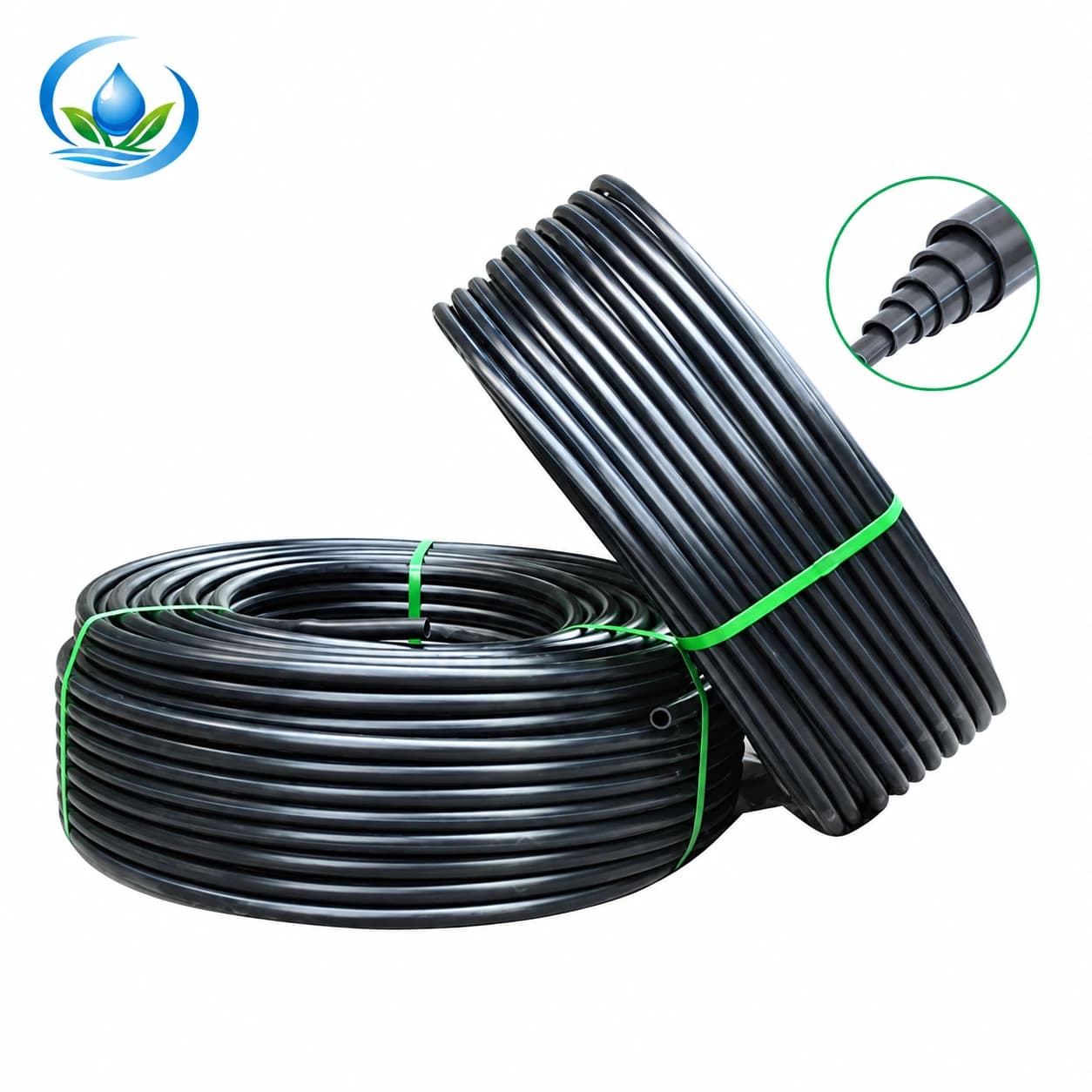
The blank PE tubing range includes SKU IS-4-DD62380CF7, identified as 16 mm outside diameter with a 1.0 mm wall. This is non-emitting tubing for carrying water through a compatible layout. Those dimensions identify an option; they do not establish how far it can carry your required flow from a particular tank.
Record outside diameter for connection selection and the appropriate internal dimensions for hydraulic assessment. Include every change in size. Compare a candidate route using its real length and demand rather than choosing tubing because its label matches the tank tap.
Keep the order quantity separate from the active hydraulic route. Spare tubing in storage has no effect on the test. A future extension does, once connected and operated, and should be evaluated as a separate arrangement before it is added.
Use manual valves for isolation, with a recorded sequence
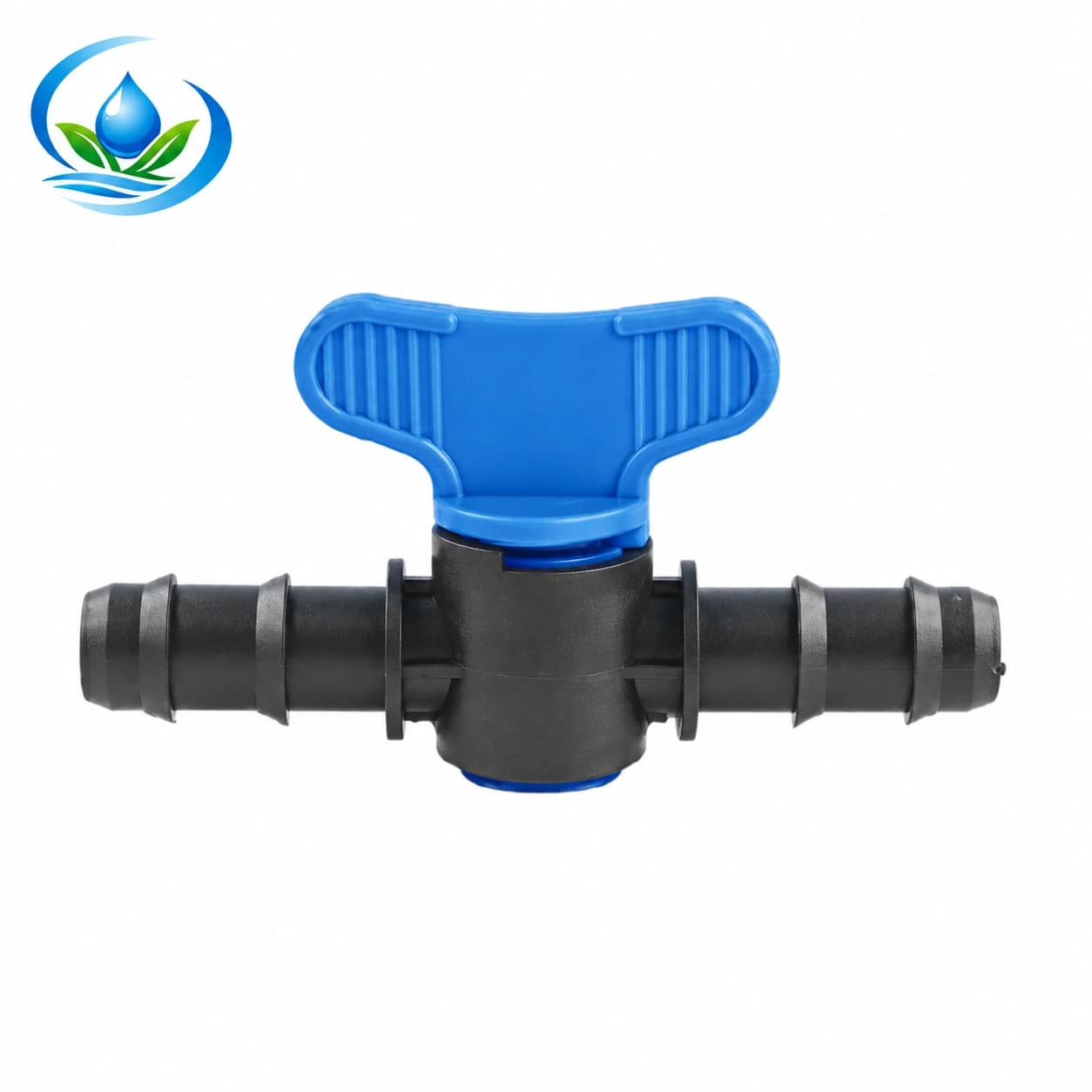
The blue-handle Maxi Valve listing identifies V16A1 at 16 mm and V20A1 at 20 mm. They provide manual shutoff choices for compatible connections. Their model and size do not establish a regulator function, a check-valve function or a zero-pressure timer rating.
Match the connection assembly, including the tube dimensions and required retention method. Place each valve where its position can be checked during a run. Label which groups may operate together so the acceptance test can be repeated by another person.
Operating fewer outlets can reduce shared flow and friction loss. It cannot raise the static head available from the same water surface. If even the theoretical low-level pressure is below a component's documented minimum, dividing the outlets into smaller groups does not resolve that basic mismatch.
Keep emitting tape conditional until its operating data fit
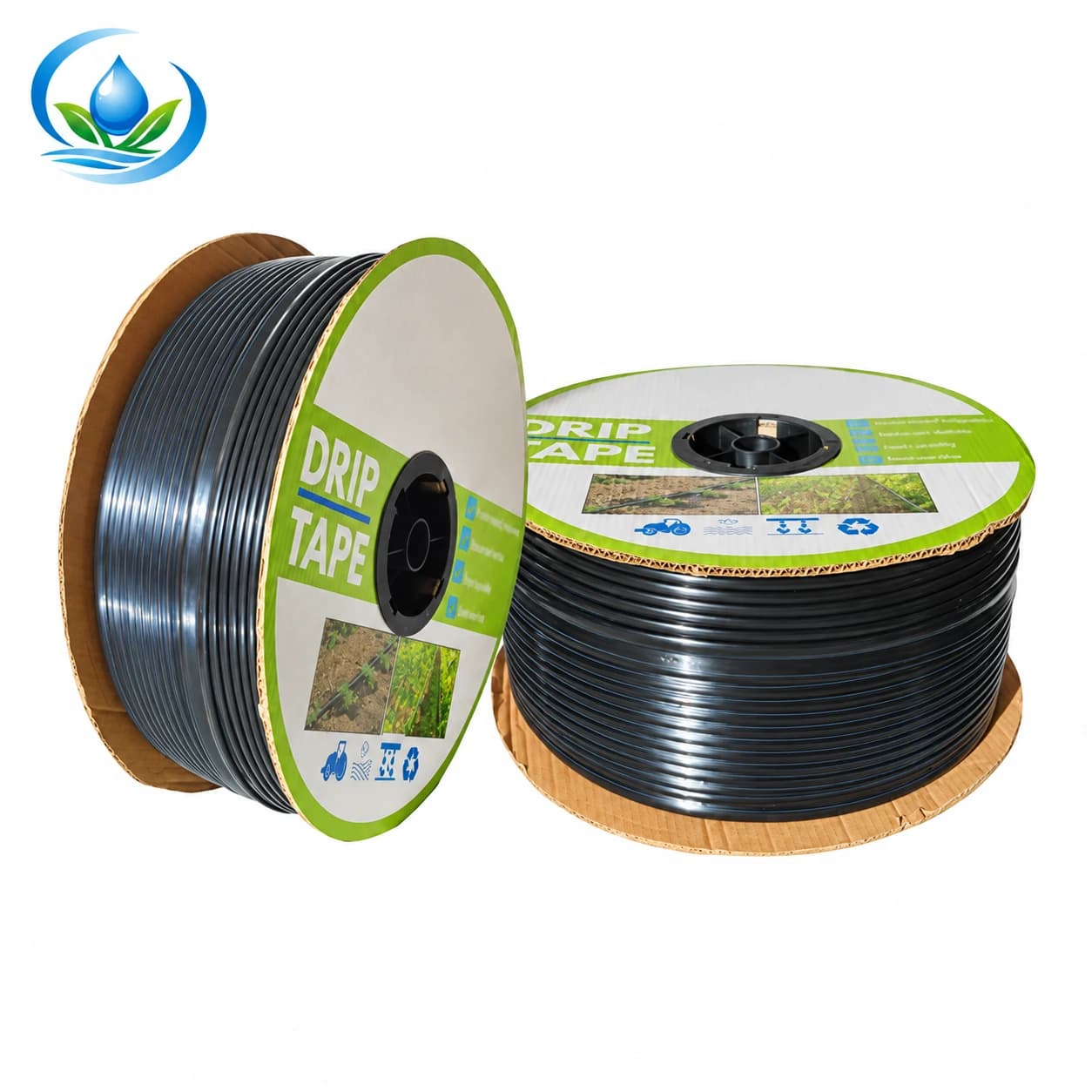
The flat-emitter drip tape range includes SKU IS-2-C526AC2D85: 16 mm diameter, 0.2 mm wall, 30 cm spacing and a 2,000 m roll. These details identify a purchasing configuration. The roll length is not an approved gravity-fed lateral length, and the spacing is not a low-pressure performance rating.
Match that exact configuration to documented emitter discharge, minimum and maximum operating pressure, filtration and permitted layout. A broad statement that “drip tape works with gravity” cannot fill missing model data. A visually inflated line or wet soil at its first few outlets is also insufficient.
If the required documentation is unavailable, keep this line item pending while finishing the route and level record. That is a useful purchase decision: it avoids ordering a full roll on the strength of a demonstration that did not represent the weakest operating condition.
Include filtration in the low-level assessment
Describe the actual stored water and the emitting product's protection requirements. A tank supplied with apparently clear water can still contain sediment or other material. Choose filtration by the water and outlet requirements, then assess the filter's pressure loss at the intended flow.
Make the trial with the required filter installed and serviced. Record its condition and, where measurement points permit, the pressure difference across it. Plan a service trigger based on its instructions and the system's accepted readings. A clean-filter result is a baseline, not permission to ignore changes during use.
Removing filtration to make a weak trial look better changes the assembly being assessed and can expose emitters to blockage. Resolve the filter selection, flow or supply issue while retaining the protection the selected equipment requires.
Test the proposed arrangement at full and low levels
Start with a representative installation using the intended route, components and outlet positions. A short tube placed beside the tank is not representative of a distant elevated row. If the first trial uses fewer outlets, record that fact and repeat the assessment for the intended simultaneous group before scaling.
At the full level, record water-surface elevation, active valves, pressure at the selected points and equal-time collection volumes from representative near, far, high and low outlets. After normal filling has stabilized, observe whether the controller opens and closes as intended. Keep startup observations separate from stable delivery readings.
Repeat at the lowest intended level with the same group and collection method. Record water level at the start and end of each collection because a small tank may change appreciably during the test. Simultaneous samples are useful when falling level would otherwise make sequential comparisons unfair.
Compare individual results with the model documentation and the project's agreed delivery criteria. Do not average away a poorly supplied high outlet. A satisfactory trial supports only the tested arrangement and conditions; it does not certify another row length, larger group or different timer.
Separate pressure, stored volume and refill capacity
A wide tank can hold more water than a narrow one at the same surface elevation, yet the static pressure at an outlet depends on that elevation difference. Buying more storage does not automatically provide more pressure. Likewise, a large full tank may have too little usable volume above the accepted low mark to complete the planned event.
Record usable storage between the accepted marks, expected withdrawal and dependable refill separately. The flow calculation guide helps describe simultaneous demand. Crop water targets and irrigation timing require their own scheduling basis; neither follows from tank capacity alone.
If the gravity arrangement cannot meet the documented duty, compare a revised route, a supported alternative component or a different supply arrangement. The pump selection guide is a next step when added pressure is being considered. A pump requires its own duty and power assessment.
Leave the trial with a clear purchase decision
Order the tested configuration when its exact components and measured full-to-low operating conditions meet the documented requirements. Revise and retest when route loss, simultaneous demand or a specific component prevents acceptance. Hold the affected item when model data or a credible low-level trial is missing. Confirm price, quantity and supply terms before placing the order.
Keep one record containing the tank marks, outlet elevations, route drawing, exact model codes, filter condition, permitted valve combinations, sample results and stopping level. Make that level visible to the operator. Send the record through IrriNex Store support for a specific component-matching question. The useful outcome is a repeatable operating range and a justified parts list, with the low-water condition established before the larger purchase.
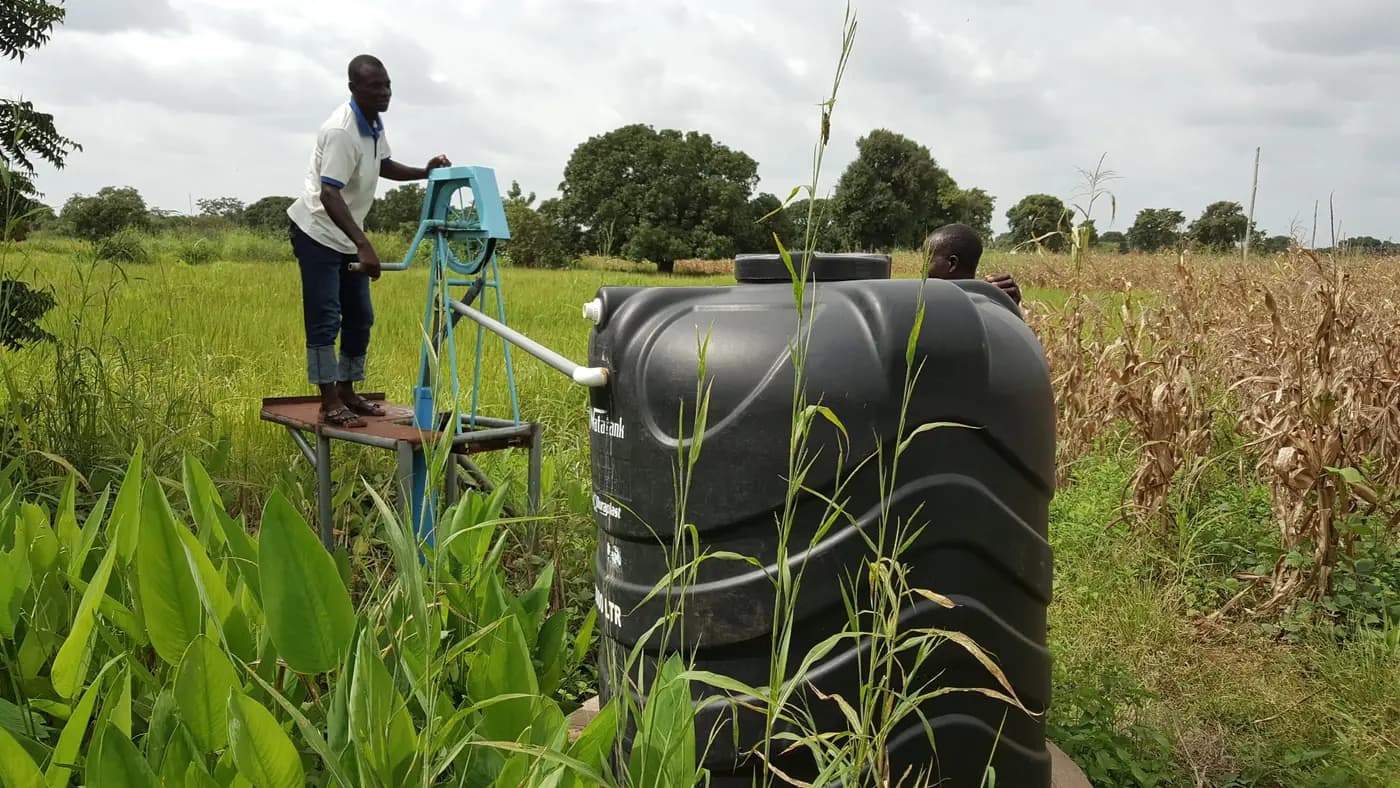
The accompanying photograph shows a farmer filling an irrigation tank with a foot-operated pump beside crops in Ghana. It illustrates water storage and replenishment; the pictured scene does not establish the water-surface elevation or the performance of any gravity-fed outlets.
Before you order
Compare this guide with the specifications for your exact product, selected option, water supply and field conditions. Your equipment requirements take priority over a general example.
Compare irrigation products