Micro Spray Emitters for Nursery Benches: Choose the Pattern by a Tray Trial
Compare spray and refraction heads at the same marked trays, under real operating pressure, before choosing a nursery bench pattern.
Published by IrriNex Store
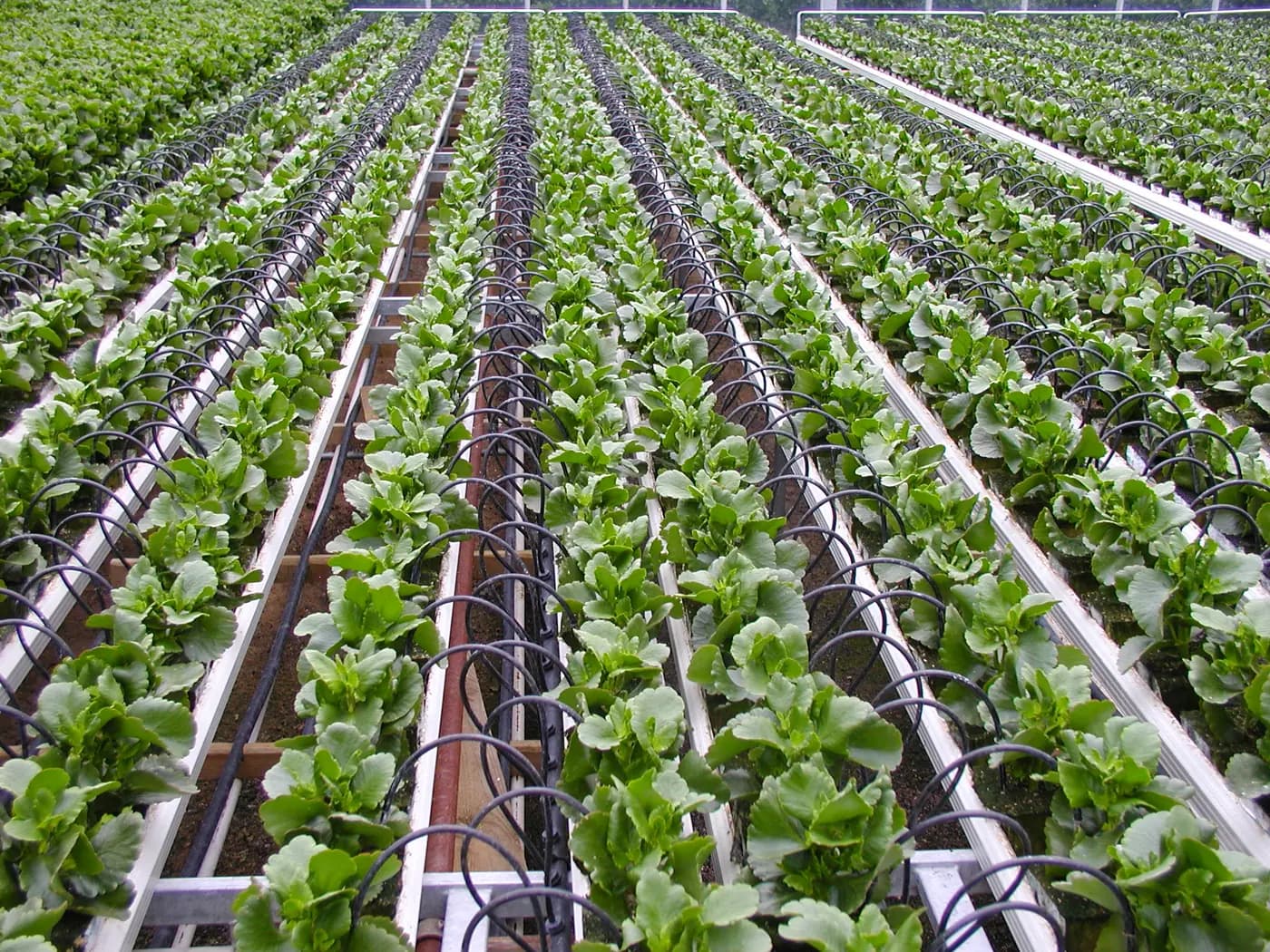
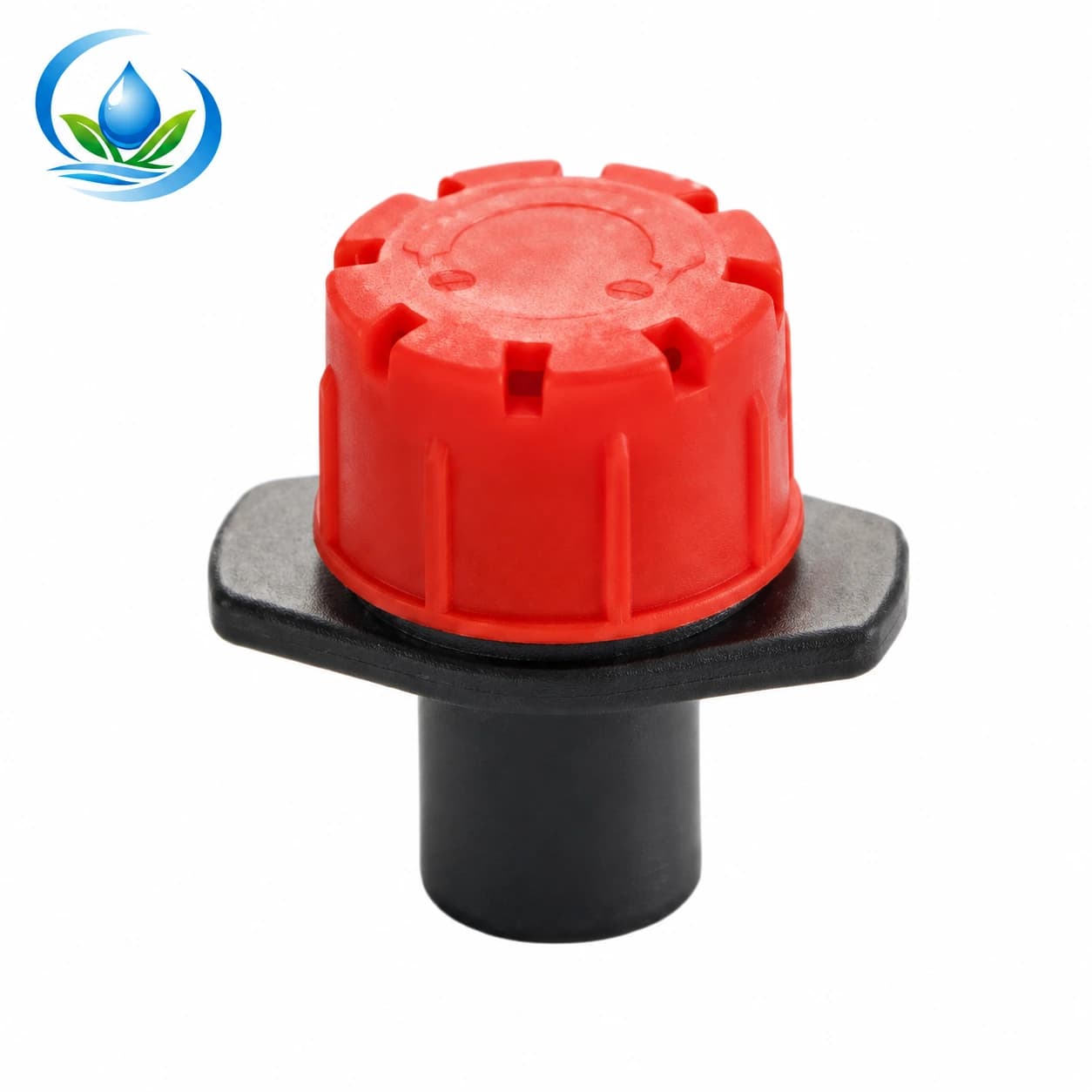
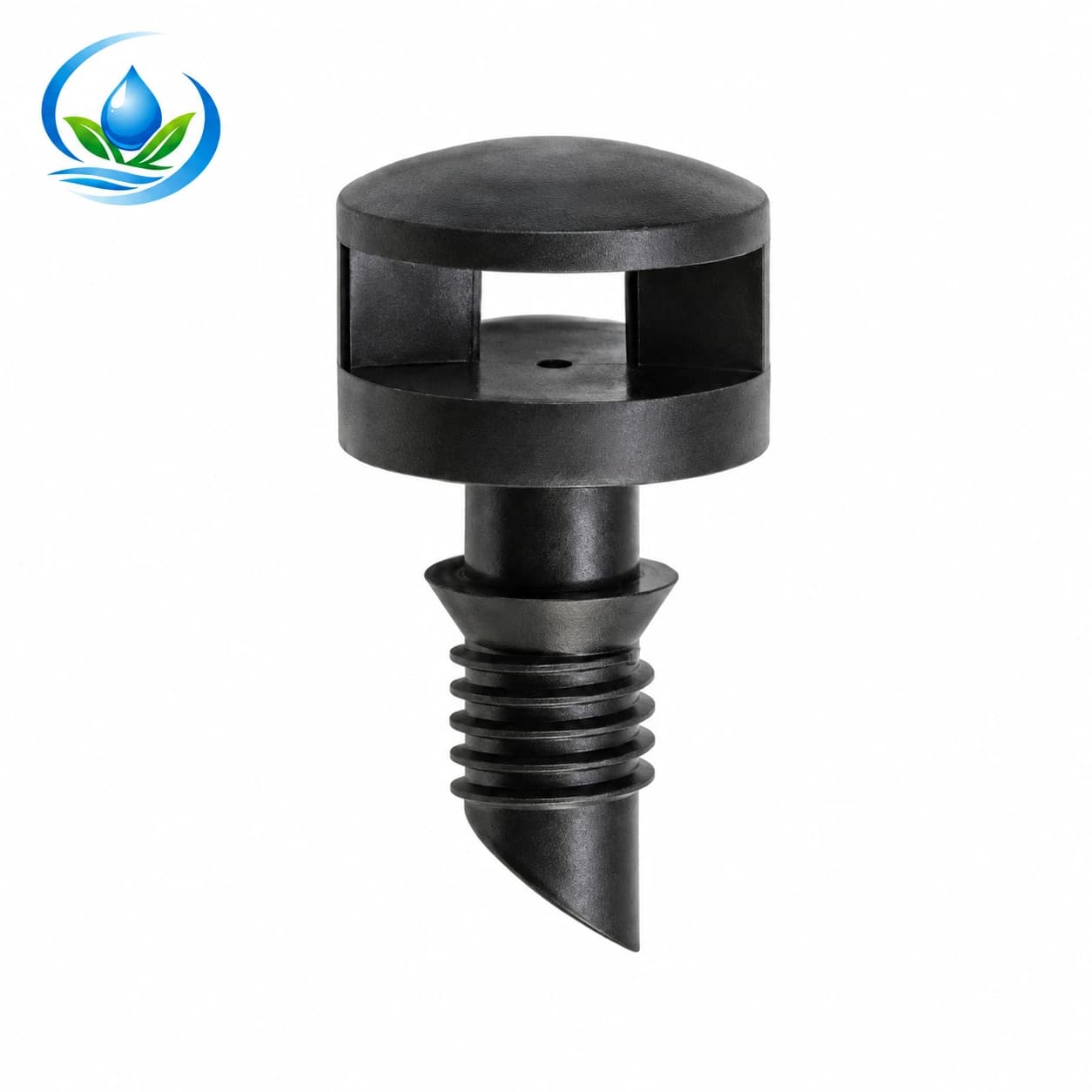
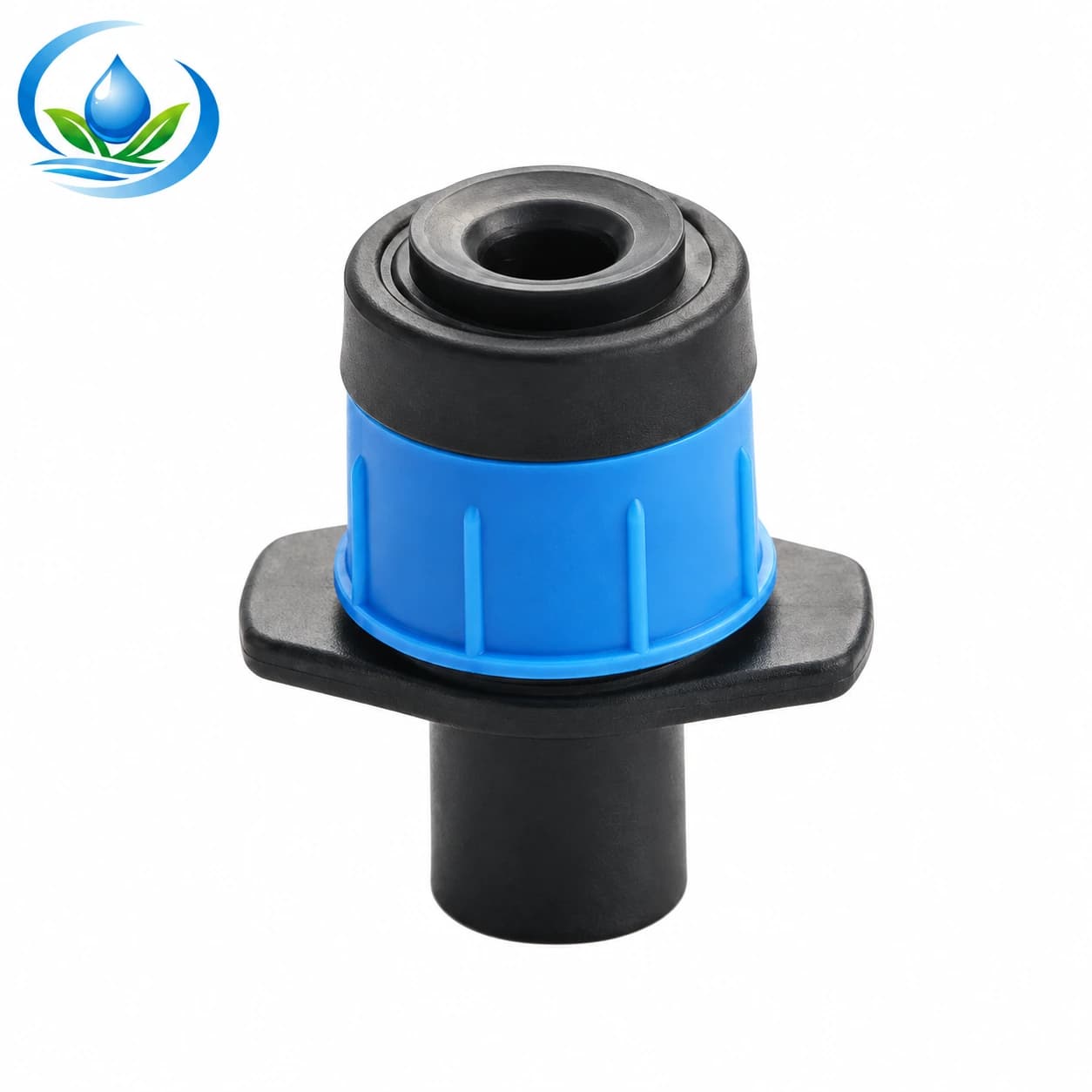
Micro spray emitters can create very different wetting patterns on a nursery bench even when two heads appear similar in a product photograph. Choose among them by marking the trays that matter, measuring water at the edges and centre, and recording pressure while the intended group is operating. A tray trial gives you a grounded way to compare the AESP eight-hole adjustable sprinkler, the ASPR turbo adjustable sprinkler and the DMZS085A on-line refraction mist nozzle. It does not make them interchangeable: their verified catalogue data differ, and the spray reaching your crop depends on placement, obstructions, pressure, crop stage and ventilation.
Define the nursery task before comparing a head
Begin with the crop stage and the surface that must receive water. A nursery bench with rooted plants in containers has a different task from a propagation bench carrying unrooted cuttings. UF/IFAS explains that intermittent mist in propagation can coat leaf and medium surfaces so evaporation from the film helps protect cuttings before roots form. That purpose should not be confused with routine root-zone irrigation for established plants. This article is about comparing a spray pattern against a tray map after the nursery has defined the crop task and an approved watering approach.
Draw the bench with length, width, tray positions, empty gaps, aisles, supports, roof members, side openings and fans. Mark the water header and any locations where a sample head can be mounted safely. Include the crop canopy expected during the trial, not only the bare bench. A nozzle may have a nominal radius while a support, leaf mass or tray rim diverts much of the spray. Note which areas should receive water and which should stay dry, such as an aisle, electrical equipment or a neighboring crop group.
Label observation points before testing: supply end, centre, far end and exposed edge. Identify the tray and cell position at each point. If the bench is regularly rearranged, mark a representative production layout rather than a single temporary arrangement. A useful record lets another grower return the collectors to the same locations. It also prevents a broad phrase such as “the edge is dry” from hiding which tray row or plant group needs attention.
Read the exact options without merging their specifications
The store’s verified facts identify three products for comparison. The AESP eight-hole adjustable sprinkler lists a flow range of 0–90 L/h, a working pressure range of 1–3 bar and a spraying-radius range of 0–0.4 m. The ASPR turbo adjustable sprinkler lists 0–90 L/h and 1–3 bar, with a radius range of 0–1.5 m. The DMZS085A on-line refraction mist nozzle lists a 0.85 mm diameter, 40 L/h flow, 1.5–2.5 bar working pressure and a 1 m radius.
| Exact option | Verified catalogue data | Open question for the tray trial |
|---|---|---|
| AESP | 0–90 L/h; 1–3 bar; 0–0.4 m radius | Which adjustment and placement wet the intended cells? |
| ASPR | 0–90 L/h; 1–3 bar; 0–1.5 m radius | Does its broader possible reach overspray or leave gaps here? |
| DMZS085A | 0.85 mm; 40 L/h; 1.5–2.5 bar; 1 m radius | How does the refraction pattern deposit on these trays? |
For AESP and ASPR, these are catalogue ranges. They do not pair a particular flow with a particular adjustment setting or radius; maximum flow and maximum reach should not be assumed to occur together. The values also do not describe droplet size, distribution uniformity or application rate on your bench. DMZS085A has a listed 40 L/h value and radius, but that does not predict what fraction reaches a given tray cell. Keep every number attached to the exact product code.
The catalogue lists a reference test condition for adjustable sprinklers of 0.2 MPa, 2 m above ground and windless. That is a reference condition, not a prescribed nursery mounting height. The exact product pages are published but marked not directly purchasable. Confirm current availability, sale unit, connection, included supports and price before making an order plan.
Keep the test fair across centre and edge trays
Test a limited, safe sample arrangement for each option. Use the same marked tray positions and equivalent run durations. Record the exact code, mounting height, orientation, adjustment if the design permits it, active head count and operating pressure. If the candidates cannot run under similar supply conditions, write down why; a result from different pressure or a different valve group cannot fairly rank the heads.
Place collectors that can capture spray consistently at the chosen points. Use the same opening, position, support and timed exposure for each run. Protect them from splash bouncing from a rail or neighboring tray. If the question is cell-level delivery, locate the collectors at representative cells and distinguish direct spray from water that runs off leaves or support wires. Measure the collected water using the same units and a repeatable method.
Observe the whole map, not just the average. One option could produce a high centre catch and a dry far corner; another could give a lower but more even catch. Whether either pattern is suitable depends on the crop objective and the responsible grower’s criteria. Do not create a universal “good” threshold from a single trial. Retain the raw readings with labels and photographs. If one point appears unusual, repeat it before changing equipment.
Keep leaf observations separate from substrate observations. UF/IFAS describes how propagation mist places a film on cutting foliage and medium, whereas a rooted nursery crop may need water delivered to the root zone. A wet bench does not prove that the intended leaf or cell received the right amount. Likewise, a dry-looking leaf does not establish that a rooted container lacks water. State which crop response the trial is intended to observe and use the nursery’s approved criteria.
Record operating pressure and other live demand
Measure pressure at a suitable point while the test heads and their intended zone are operating. Record where the gauge is located, which valves are open, the number of heads running and whether other benches share the supply. A closed-line pressure reading cannot stand in for the pressure at a working nozzle. If the far end of the bench receives less water, determine whether supply conditions vary along the branch before attributing the pattern to nozzle design.
For AESP and ASPR, the verified working range is 1–3 bar; for DMZS085A it is 1.5–2.5 bar. These ranges are specific to those records and are not permission to exceed a system component’s limit. Check the pump, valve, tubing and filter information too. Do not set pressure from a gauge at the source without checking the operating head or the rest of the supply arrangement.
Use the listed flow only where it is actually documented. AESP and ASPR each show a 0–90 L/h range, not a selected flow at each pattern. DMZS085A lists 40 L/h. A hypothetical group of ten DMZS085A heads would add 400 L/h of nominal listed discharge, but this is only arithmetic from the catalogue figure; it is not measured flow at your bench or a pump recommendation. For an adjustable model, measure the actual outlet demand by a suitable method or request the model’s setting-specific data rather than multiplying the top of its range by head count.
The sprinkler zone flow guide explains how to keep outlet count, simultaneous operation and units together. Apply that bookkeeping approach but do not transfer drip-emitter ratings to these micro-spray heads.
Account for crop stage and nursery scheduling
Oregon State University Extension notes that container capacity is limited and plant water use changes during development and with weather; a fixed amount each time can be excessive on cool or humid days. It also notes that grouping plants with similar water use can help manage irrigation. These principles matter when defining a fair tray trial. If the candidate heads are tested on different crop groups or at different stages, crop response may be mistaken for a hardware difference.
Keep the trial within the nursery’s existing crop-care plan. Do not extend mist duration or add extra runs just to make one pattern appear more successful. A trial records distribution at known conditions; the schedule decision remains tied to crop stage, weather, media and the responsible grower’s process. If the target task is propagation, preserve the established mist control and crop criteria while comparing only the head placement or pattern that has been authorized.
The existing mist-versus-root-zone guide distinguishes these objectives. The propagation tray layout guide covers a separate comparison of head counts and mounting positions for misting. This package is narrower: compare the edge and centre deposition from the listed spray and refraction options using your actual tray grid and running pressure.
Separate nozzle pattern from wind and obstructions
Record ventilation, side curtains, open doors, fans and natural airflow during each run. A breeze can carry fine spray away from one side of the bench or alter where water lands. Repeat the trial in a representative operating period if conditions changed materially. Do not compare a calm run with a windy run and attribute every difference to the selected model.
Look for hard obstructions such as support rails, plant labels, leaves, hanging baskets and trays above the target. Note whether water is intercepted and then drips into a collector later. If the pattern changes when a support is moved, record that as an installation effect, not a nozzle performance specification. Keep a photograph from the same angle alongside each test map.
The wind exposure article helps separate displacement by airflow from a hardware change. The 251T orientation guide addresses whether a head belongs in a hanging or standing mount. Neither article proves AESP, ASPR or DMZS085A connection dimensions, package contents or compatibility. Confirm those for the exact option independently.
Decide when a spray head is the wrong comparison
A micro spray pattern should not be selected merely because the word “sprinkler” appears on a listing. If the job is to deliver water to a limited root zone or individual pots, compare whether a point emitter or drip sprayer is more appropriate. If the job is to maintain leaf wetness for a defined propagation process, the controller, timing, air movement and crop response may matter as much as nozzle shape. A different application objective changes what the trial should measure.
Do not use a listed radius to infer how many bench positions a product can serve. AESP’s 0–0.4 m range and ASPR’s 0–1.5 m range are separate catalogue ranges. DMZS085A’s 1 m listed radius is another exact figure, not evidence that it covers a one-metre-wide strip evenly. Water interception, spacing, pressure and distribution need a trial. An outlet that appears to reach a tray may not wet the cells the nursery intends to serve.
The container sprayer footprint guide discusses adjustable pot-level wetting. Use it if individual container footprint is the primary decision. For propagation mist, the UF/IFAS source and existing tray guide above cover the distinct task. Do not force one product comparison to answer a crop question it was not designed to test.
Prepare a complete product request after the trial
Once a candidate shows a useful pattern, write a short specification card: product code, trial position, number of simultaneous heads, mounting height and orientation, operating pressure measurement, duration, marked tray readings, wind or ventilation state and the result the nursery considers acceptable. Attach the sketch and representative photographs. Include whether the head must connect to an existing tube or header and provide measurements of those mating parts.
Ask the seller to confirm the exact option, connection, included support, tubing or adapter, order unit, current availability and price. Ask for the manufacturer’s filtration recommendation and any installation or adjustment instructions for that exact model. The verified facts do not establish the required mesh, inlet interface, materials or package accessories for all these options. Do not infer them from the product image or a visually similar model.
Online ordering is not currently available for these heads. Confirm whether the requested model can be supplied, how many units a quoted line represents, and whether the price includes a support or connection kit. Avoid scheduling installation until those items are resolved.
Commission one representative section and retain the map
When the selected option is available and its connection is confirmed, install a limited representative section according to its instructions. Check for leaks, secure mounting, unintended spray on aisles or equipment and delivery at the same marked trays. Compare its operating pressure and collector readings with the approved trial. Do not expand the system until the configuration matches the tested one and the nursery’s responsible operator accepts the result.
Keep an updated copy of the map when the crop grows, trays move, a fan is added or the bench is reconfigured. A previously successful pattern can change when the receiving surface changes. Repeat only the relevant checks and note what changed. Store the product code and exact option beside the layout record so a future replacement does not silently substitute a different head.
A sound decision may be one AESP unit, one ASPR or DMZS085A option, a different documented device, or no purchase until pressure and placement are resolved. The trial has value even when no candidate wins: it shows whether the limiting factor is distribution, supply, wind or the crop task. That is more useful than ordering by appearance and discovering the mismatch across a complete nursery bench.
Frequently asked questions about micro spray emitters
Can I compare the maximum listed flow for AESP and ASPR? Both list 0–90 L/h ranges, but the catalogue does not link each flow to a particular adjustment or radius. Do not assume maximum reach and maximum flow happen together. Measure the selected setting or request exact data.
Does DMZS085A’s 1 m radius mean one metre of uniform coverage? No. It is a listed reference value, not a measured distribution map for your tray layout. Test centre, edge and other relevant cells.
Are the listed products ready for direct checkout? The product records are published but marked not directly purchasable. Confirm availability, price, sale unit and included parts before relying on them in a production schedule.
What if the edge remains dry after a test? Check pressure, active group, wind, obstruction, mounting position and whether the head is operating as specified. Change one condition at a time within the approved crop plan, then repeat the marked test before ordering a larger quantity.
Choose a micro spray emitter from evidence gathered at the same trays and operating condition. A fair trial clarifies which listed pattern, if any, matches the nursery task while keeping catalogue figures separate from unmeasured field performance.
Before you order
Compare this guide with the specifications for your exact product, selected option, water supply and field conditions. Your equipment requirements take priority over a general example.
Compare irrigation products