Micro Irrigation Sprinkler Heads: Mist the Air or Water the Root Zone?
A mist cloud and wet leaves do not establish root-zone water. Compare nursery air, foliage and substrate needs before choosing mist heads or inline dripline.
Published by IrriNex Store
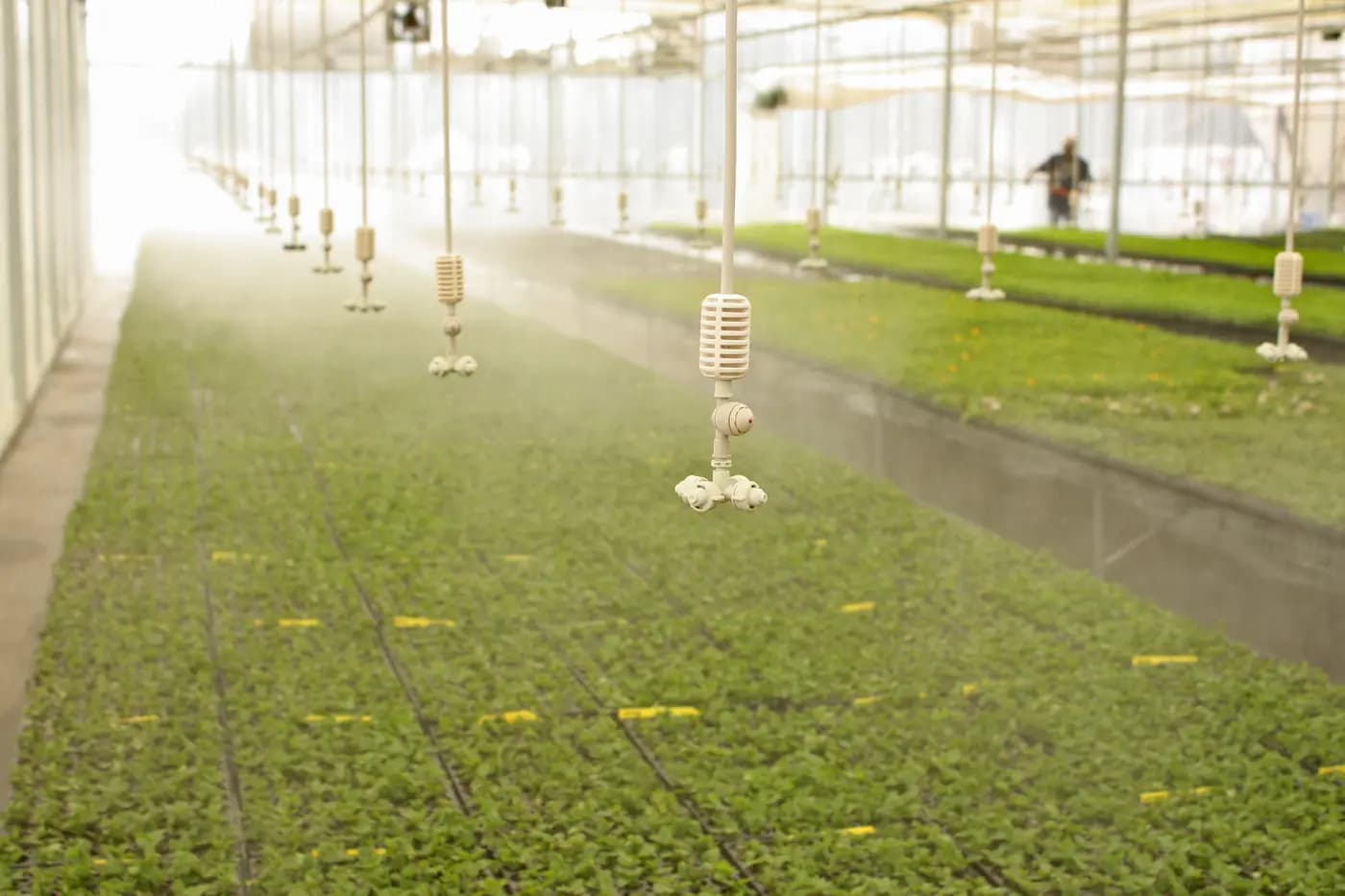
Micro irrigation sprinkler heads can put a fine-looking spray above greenhouse seedlings, but the visible cloud does not show whether the growing medium at the roots has received enough water. A nursery may be trying to raise air humidity, limit drying of cutting leaves, or irrigate the substrate. Those are three different outcomes. Before buying mist heads for a bench, name the outcome that is missing and record air, leaf and medium observations separately. A head selected for one job should not be credited with the other two without a representative check. Record the air or leaf response alongside a separate root-medium check; visible mist alone cannot certify water delivered below the surface. Greenhouse mist versus root-zone drip is a crop-medium choice that needs a root check even when the air looks wet.
Picture a propagation bench where the foliage glistens after an overhead event, yet plugs at one edge remain light and dry below the surface. Lengthening the mist event could increase water on leaves and pathways while leaving the underlying distribution problem unresolved. The opposite can also happen: a carefully placed dripline may wet the rooting medium while the air around unrooted cuttings still fails the nursery's established humidity procedure. The purchase decision is whether an overhead mist outlet, a direct root-zone line, or a separately controlled combination matches the crop stage and observed need.
Mist for greenhouse air or drip water for the root medium?
Write the nursery's goal in one sentence for each bench. “Keep the air within our propagation program's accepted condition” is an environmental target. “Reduce drying of exposed cutting leaves during a defined stage” is a leaf-surface target. “Deliver water to the root-bearing medium without leaving it persistently saturated” is a substrate target. The same crop can move between these tasks as roots form and canopy changes. Do not turn a visible spray pattern into a universal schedule or a claim that one set of heads will perform all three duties.
Identify the benches, crop stages, tray or pot sizes, growing-medium batches, shade and ventilation conditions. An open tray edge can receive a different mist exposure from the sheltered centre. A newly stuck cutting and an established plant may share a greenhouse but need different decisions. Record which group the installed valve actually serves; a timer common to both benches cannot independently correct a need that exists on only one. The guide to resetting pot lines after relocation helps when the delivery position moved; here the first question is what kind of water response the crop requires.
Make three columns in a short observation sheet. For air, note the location and timing of the nursery's chosen humidity and temperature reading. For foliage, note representative upper and sheltered leaves, visible wetting and drying under the normal air movement. For medium, use a crop-appropriate check at the relevant rooting depth and note drainage where it can be observed. A single wet leaf does not report the whole bench's air condition, and a wet medium surface may conceal a dry plug or an excessively wet lower layer.
Choose observation positions before changing the equipment. Include a central tray, an edge near ventilation and a position that has shown trouble. Use the same labelled positions after a small trial so differences can be compared. Note when the last root-zone irrigation and mist events occurred. If every tray was watered just before the test, a later moist plug does not show what the proposed mist head added. Keep crop response and equipment output distinct in the record rather than explaining both with one attractive photograph of fog.
Can visible mist replace checking substrate moisture?
A mist head discharges water into the space above plants. Some droplets may evaporate, some may land on leaves, trays, paths or exposed medium, and the distribution changes with the actual mounting and air movement. Do not assume that a fine appearance means complete evaporation or that every droplet reaches roots. A change in an air reading can support the environmental part of the nursery's goal, but it does not measure water stored in a plug. Likewise, leaf wetness should be recorded as leaf wetness, not as a substitute for root-zone irrigation.
Excess water can create a different problem from insufficient water. Penn State Extension's seedling guidance identifies excessive soil moisture and excessive overhead misting among conditions that favour damping-off. That does not diagnose a crop from one wet tray or mean mist itself prevents or causes disease in every greenhouse. It supports checking the medium and leaves rather than lengthening an event blindly. Use the crop and nursery's approved moisture criteria; no universal leaf-wet minutes or substrate threshold follows from the head's flow label.
For established roots, inspect whether water reaches the intended medium volume and how it drains between the existing events. If the medium is dry while leaves stay wet, a direct root-zone delivery option deserves investigation. If the medium already remains too wet, adding a line merely because the leaves look dry could aggravate it. A grower may need separate air or leaf management and a revised root-zone schedule, not a larger single outlet. The key is to keep the evidence for each task attached to that task.
A bench may need both overhead and below-canopy hardware, but each should have a named role and an approved control arrangement. It is not enough to connect two devices to the same branch and assume a shared timer will produce the desired climate and medium conditions. If the nursery needs independent starts or stops, establish how the existing controller, valves and supply can actually provide them. Confirm the operating pressure and flow of each intended group; a regulator chosen for low-pressure drip does not automatically provide a suitable supply for a higher-pressure mist nozzle.
Use the exact MJ40A figures for a mist trial
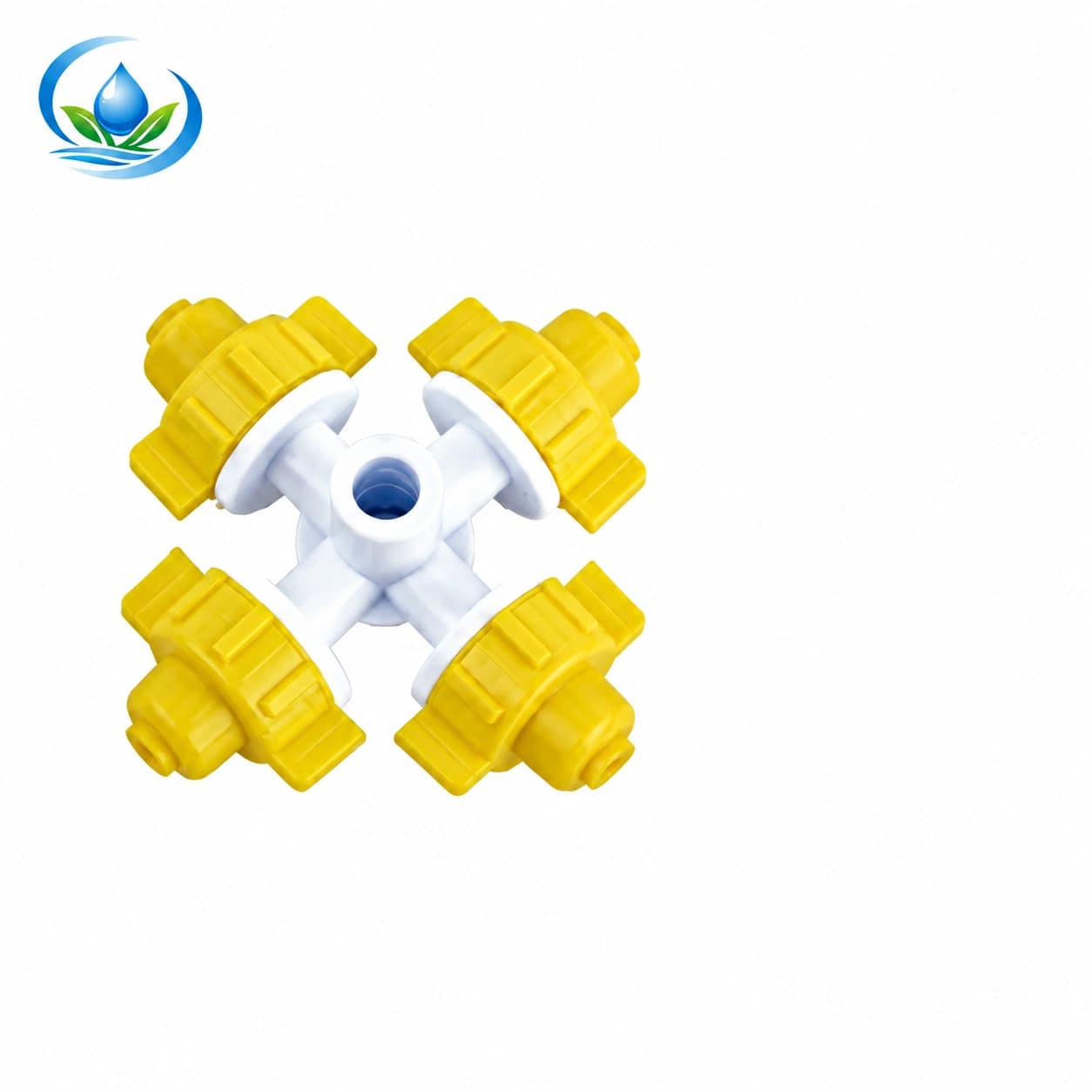
The MJ40A four-outlet misting nozzle is listed with a 0.8 mm nozzle, 48 L/h discharge, 2–3 bar working-pressure range and a 1 m radius reference measured 2 m above ground in windless conditions. These are catalogue entries, not a claim that 48 L/h stays constant across the full pressure range. The radius is not guaranteed bench spacing or proof of an even water dose across every tray. Ask for the inlet, connection and support information for the exact offered item, and check what the order unit includes. A picture of a suspended assembly does not confirm that tubing, hanger, valve or controller comes with the nozzle.
Do not infer a droplet diameter, pressure compensation, automatic anti-drain action or a particular on-off pulse pattern from the MJ40A listing. Those features must be documented for the selected complete assembly if they are needed. A lingering drip after a normal stop is a different question from the intended mist during operation. The greenhouse overhead drain-down guide explains how to distinguish stored-line drainage, continuing supply and water falling off the operating hardware before ordering an extra device.
Count planned heads and their simultaneous operation before testing the supply. Four MJ40A heads at the listed 48 L/h would represent 192 L/h of nominal nozzle discharge at the stated conditions. This arithmetic does not measure how much reaches a tray, what portion evaporates, or whether the farthest nozzle receives the required working pressure. Record running pressure near representative heads, the selected valve group and any other outlets active at the same time. If those facts are unknown, request a small trial rather than buying a complete bench quantity from the radius figure.
Mount a sample using only the confirmed connection and support method for that model. Include the crop's actual height, rack position and ordinary ventilation in the check. The head orientation buying guide shows why a nozzle code and a mounting arrangement are separate order facts. For MJ40A, confirm the complete supplied assembly rather than borrowing connection details from a 251T sprinkler. Observe the mist during a normal permitted event from a safe location and record the three evidence columns afterward.
Compare an inline root-zone line by the water it delivers
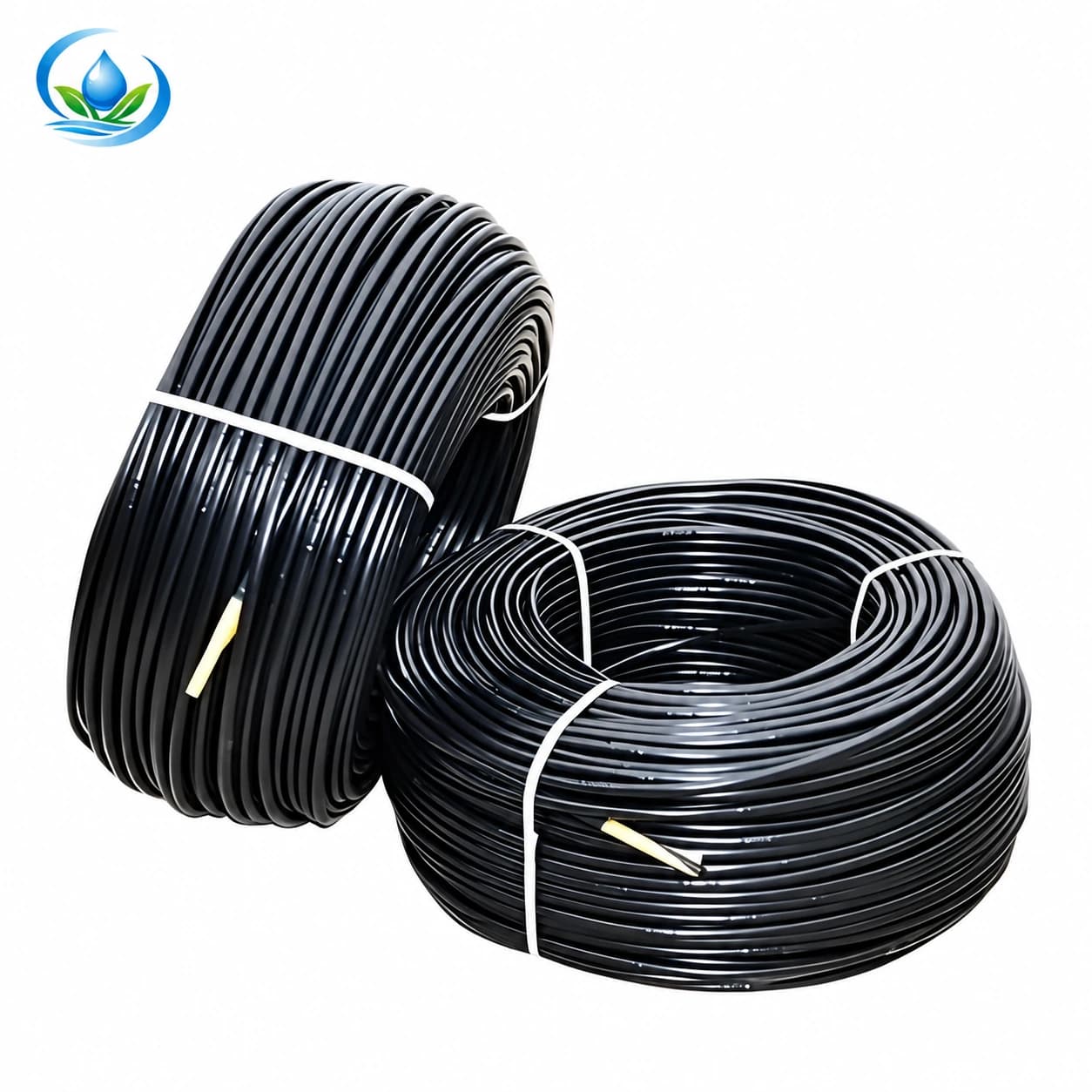
The inline drip pipe is a different delivery path. The published IS-3-8CDA6B18CD option comes on a 500 m roll. Its built-in outlets are 30 cm apart and each has a listed 2 L/h flow; the nominal pipe diameter is 16 mm with a 0.8 mm wall. These entries describe a particular offered roll, not an installed greenhouse layout. Its emitters can be placed to deliver near the intended growing medium where the crop and container arrangement allow a suitable route. They do not by themselves raise air humidity or guarantee wetting of every plug.
Check how a proposed line would sit relative to trays, pots, aisles and moving benches. Its fixed emitter spacing may not correspond to the current container positions. A line watering an empty gap cannot be counted as a plant outlet; a line directly under foliage may still miss a separate container. The container sprayer footprint guide demonstrates the value of watching where water lands, while this choice asks whether the needed receiving volume is the air, the leaves or the root medium. Trace the actual medium response before ordering a roll.
Keep the operating groups and their pressure requirements distinct. MJ40A's 2–3 bar listed range is not a pressure setting for the chosen inline-drip option. The dripline's 2 L/h emitter rating does not establish that a mist nozzle will work through the same regulator or that both lines should run simultaneously. If both are proposed for one bench, ask for a documented hydraulic and control plan for each group, then verify the selected equipment at the relevant operating points. A single headworks gauge cannot establish pressure at every remote nozzle or emitter.
Run a trial that answers the nursery's stated question
Choose a small representative area with labelled observation positions. Preserve the crop's current approved watering plan while comparing a sample mist arrangement or a separately tested root-zone route. Record the head or line code, mounting and connection, active group, running pressure location, event times and crop stage. Observe air, leaves and medium on a schedule chosen by the nursery, not by a generic fogger timer. This allows the grower to ask whether the added hardware improved its assigned outcome without silently changing all other water inputs.
Interpret mixed results directly. If an air reading changes but the plug remains dry, the overhead outlet may serve an air task but has not demonstrated root watering. If leaves glisten while both air and medium observations remain outside the nursery's accepted plan, revise placement or control rather than declaring success from the cloud. If the medium receives water but foliage still dries too quickly at a sensitive stage, investigate a separate propagation-environment response. None of these observations alone establishes a disease diagnosis, a crop-wide uniformity figure or a suitable daily runtime.
Stop an equipment comparison when a connection leaks, the measured running pressure is outside the selected item's allowed condition, or the mounted pattern reaches an unintended work area. Resolve the specific mismatch before extending events. Keep water away from live electrical equipment and use the installation's approved isolation procedure before changing a head or line. For source-water and filtration questions, the water-test interpretation guide helps separate physical particles from dissolved conditions; obtain the selected nozzle's exact filtration requirement rather than assigning a mesh from its opening diameter.
Recheck after a change in tray density, crop height, ventilation or container spacing. A result accepted on one bench may change when plants are sold or shifted. Keep dated photographs and the three observation columns with the confirmed head or line model. The repeatable record shows whether the misting duty changed, the root-zone delivery changed, or both. It also prevents an attractive demonstration of a spray cloud from becoming the only evidence behind a larger purchase.
Make the order match the demonstrated job
Before buying, write the required outcome, representative observation, selected exact model, pressure and connection evidence, included parts, operating group and quantity on one sheet. For MJ40A, verify the selected item's current ordering route, price, sale unit, availability and delivery before purchasing hangers or tubing. For the inline-drip option, choose the variant with the documented diameter, wall, emitter spacing, flow and roll length, then check the displayed sale terms. If fit or supply remains uncertain, give Store support the model codes and trial record for a specific answer.
A successful choice may be one mist head group, a direct root-zone line, or two separately justified routes. Preserve the distinction in the handoff: which device addresses air, which addresses leaf exposure and which waters the growing medium. The delivered equipment should be accepted for the outcome actually observed under the nursery's crop plan. A cloud above the bench, wet leaves and a moist rooting medium are different facts; keeping them separate leads to a purchase that can be checked when the next batch arrives.
Before you order
Compare this guide with the specifications for your exact product, selected option, water supply and field conditions. Your equipment requirements take priority over a general example.
Compare irrigation products