Quick Coupling Irrigation: Identify the Mating System Before Ordering
A 32 mm quick connector can mean a hose cam pair, a ball-and-socket pipe joint or a valve key. Identify the installed mating system before ordering parts.
Published by IrriNex Store
Quick coupling irrigation parts are often requested with only a size and a photograph: “We need a 32 mm quick connector for this hose.” That description can point to very different hardware. A cam-and-groove hose pair, a ball-and-socket pipe coupling, a removable key for a buried outlet valve and a push-together line connector perform different jobs. Before ordering, identify the mechanism that actually joins the two halves, then record what each outer end must attach to. Speed of connection is not a compatibility specification. Record the locking action and both outer interfaces on one photo card; a nominal 32 mm label does not say which quick-coupling family will mate. Quick coupling mating system identification checks the locking action and both outer interfaces before matching nominal size.
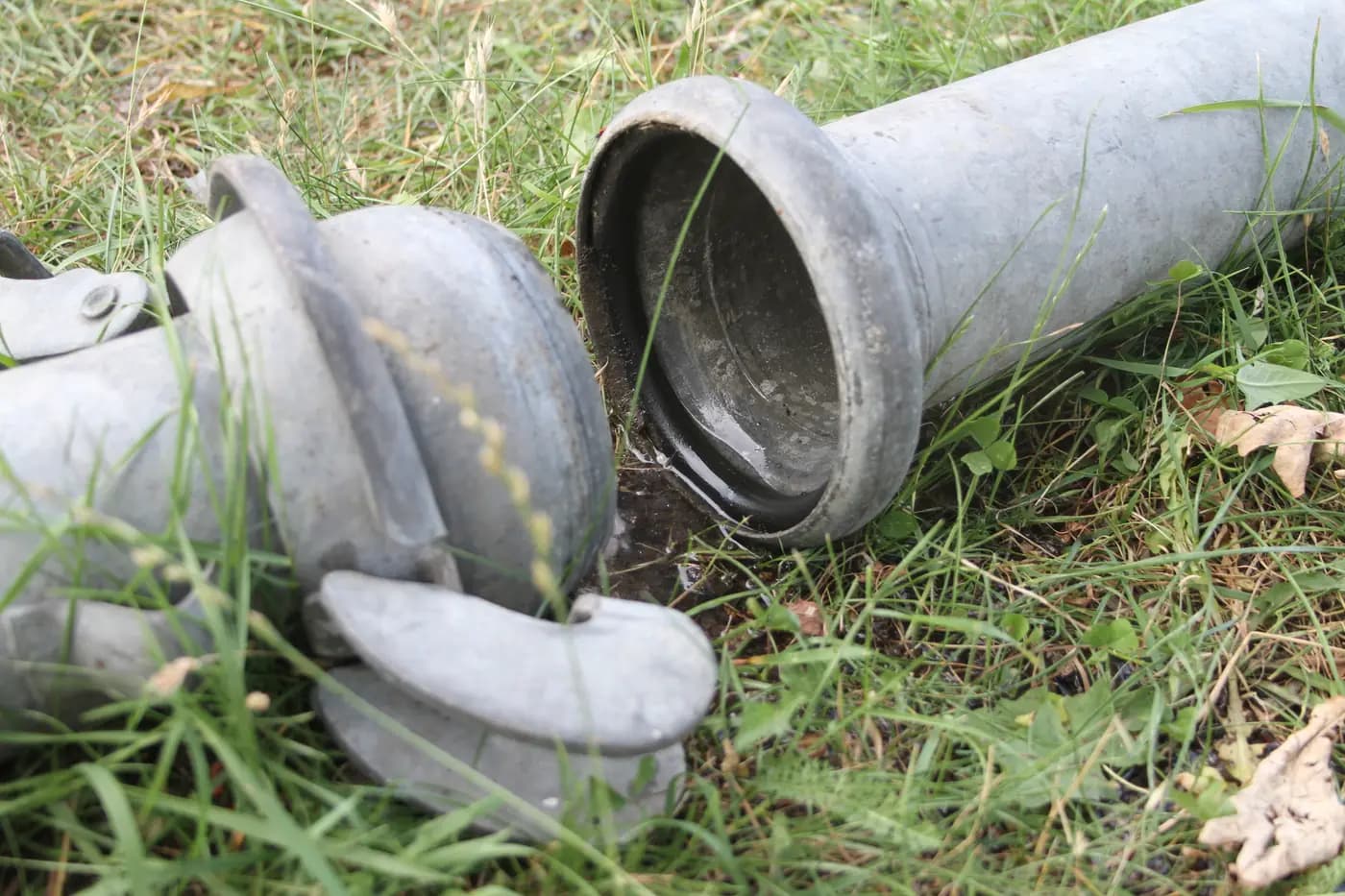
This guide helps a buyer translate a field nickname into one complete, checkable order. It is for an existing connection or a clearly defined new mating point, not a method for rebuilding a damaged compression nut. The opening photograph shows a Bauer-style pipe connection on grass; it illustrates one family, not either Store product or a universal mating system. The agricultural fittings guide separates elbows, branches and ordinary repairs. Here the first decision is earlier: which connection system is already installed, and whether either Store-listed fitting even belongs to it.
Is this quick coupling camlock, Bauer, valve key, or push-fit?
Start with the intended work. Does a crew disconnect a transfer hose from a pump every move, join two line lengths in a field, or insert a key into a fixed water-access valve? Those are different physical interfaces. Mark the fixed side and the moving side on a sketch, including the hose, pipe, valve or equipment already attached to each. If the connection is being replaced after damage, retain both old halves or clear photographs of their markings before one is discarded.
Give the joint a location and a purpose: “block C pump outlet to movable header,” “two lengths of the same distribution line,” or “portable hose at buried valve V4.” State whether the crew intends to disconnect at that point during normal work or only for occasional service. Do not use a photo of the hose tail alone to choose the central coupling. The tail may be an adapter into the actual mating pair, and the opposite half may be fixed on equipment several metres away.
If the job moves an existing layflat header between crop blocks, the block-to-block hose guide addresses the old outlets, wall condition and new route. For this order, record the coupling mechanism at the accepted header end separately. A hose that fits the new length and row layout still needs a documented connection to the supply. The word “quick” does not say whether the old hose end, a replacement hose or the supply fitting must change.
Identify both mating halves before ordering by size
On a cam-and-groove connection, the pair consists of a grooved adapter and a coupler with cam arms that retain it. A ball-and-socket irrigation coupling has a different mating shape and locking arrangement. A quick-coupling water outlet uses a fixed valve and its matching removable key; the hose connection is beyond that key. These are examples of how the same shopping phrase can describe different systems, not parts that can be mixed because they all connect rapidly.
Inspect from a safe, unpressurized position under the site's procedure. Photograph each half straight on and from the side, including arms, hooks, lugs, grooves, sockets, seals and readable model codes. Keep images of the assembled joint too, because orientation can explain which piece is the adapter and which remains on the hose. A rubber ring appears in more than one family, so its presence is not a system identifier. If the connection is inaccessible or cannot be identified without opening a live line, obtain the installed drawing or qualified service help first.
Make a small identification card with four fields: fixed half, moving half, locking action and sealing location. Add the maker and full model of each half where known. A card reading “two cam arms close over a grooved adapter” is much more useful than “black quick coupling.” A card reading “key inserted into a fixed valve body” points to a different catalogue section. Where the mechanism is still unknown, keep the purchase on hold rather than testing a likely-looking part against a valuable installed valve.
Map the connection beyond the quick pair
Even after the central mating system is known, both external interfaces need their own description. One side may finish in a hose shank, pipe socket, threaded port or equipment flange. The other may attach to another hose or to a valve key and swivel. Record each end in order: equipment or pipe, end fitting, mating pair, opposite end fitting, and continuing hose or tool. Count what is already installed and what the order must provide. A single “32 mm” value rarely describes that entire chain.
For each hose or pipe end, retain its material, marked size, relevant inside or outside dimension, wall or series where the maker requires it, and the method that holds the end fitting. The nominal size of the central coupling need not be the same measurement used for a threaded port or flexible hose wall. If the route includes a thread, identify its gender, nominal size, standard and sealing seat separately. The thread identification guide covers that outer interface; a correct quick pair does not make an unrelated thread fit.
Check the complete operating service with the exact component documents: intended water use, pressure and temperature limits, installed support and expected movement. Do not borrow a pressure figure from a similar camlock, a garden-hose connector or the supply pipe and assign it to an unverified joint. The same holds for a maker's stated interchangeability within its own standard or product series. Establish the exact permitted combination for the halves that will actually meet in the field.
Read the Store 7900 and 7902 listings as separate clues
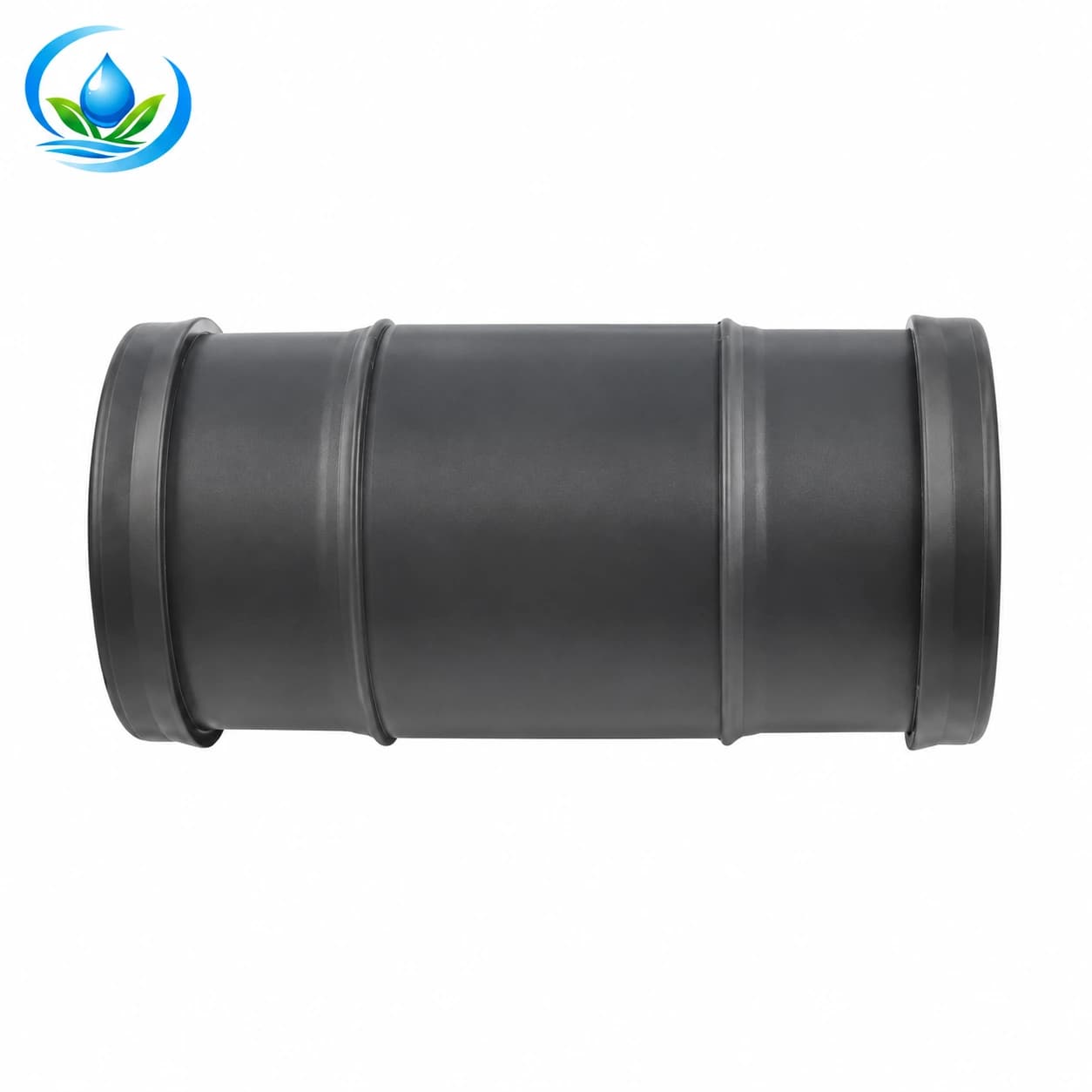
The Store irrigation hose coupling page lists the 7900 family, including 790032 at nominal 32 mm, with larger selected sizes. Its catalogue image shows a straight connector in the hose-and-tape fitting section. That identifies a listed connection family and its nominal options. It does not establish that the item is a cam-and-groove pair, a Bauer-style ball-and-socket coupling, a valve key, or an approved mate for any one of them. Ask for the exact mating and hose-end instructions before using it in an existing installation.
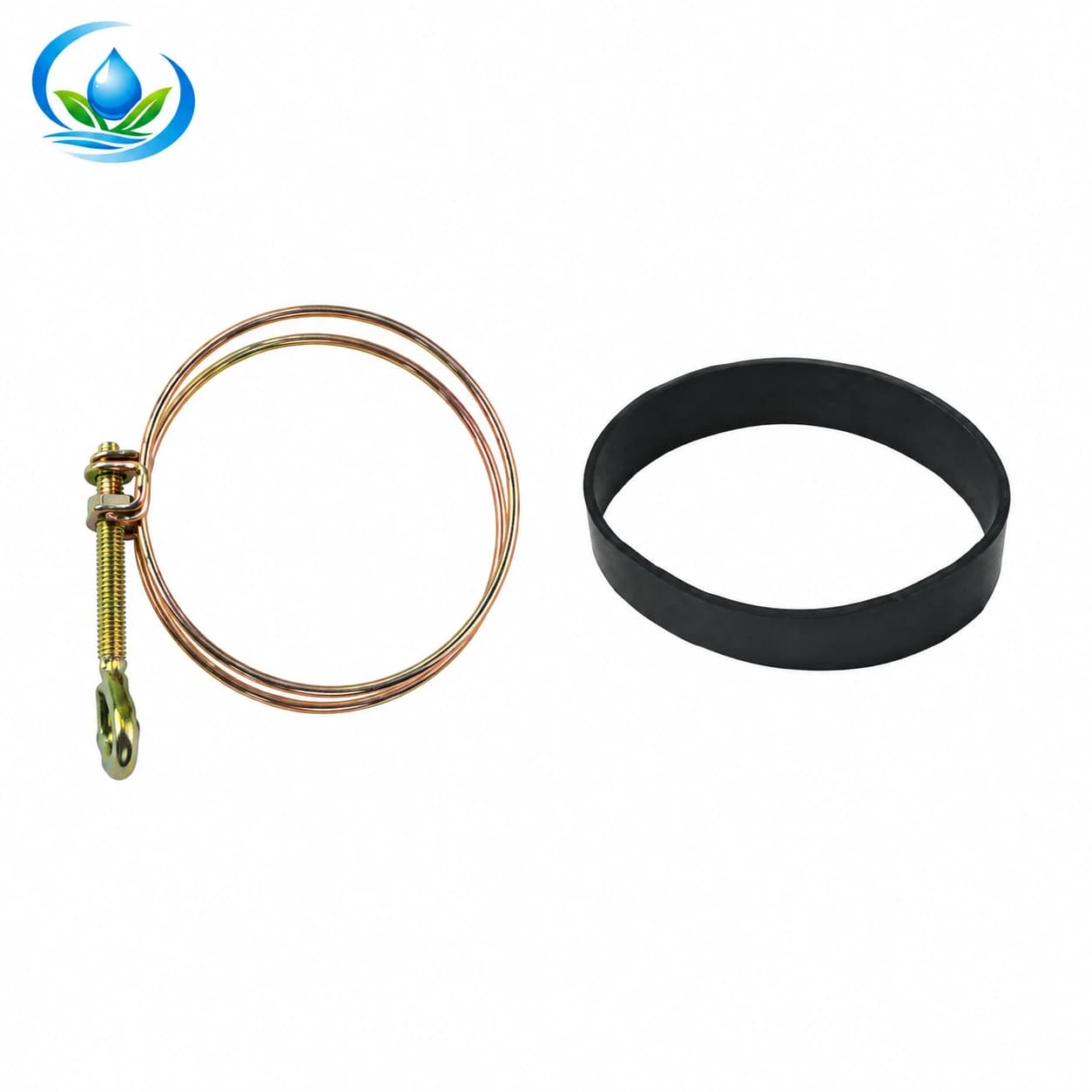
The separate steel clip and rubber ring page includes 790232 at nominal 32 mm and other selected sizes. It is a retaining and sealing component listing, not the whole connector. The parallel 32 mm numbers 790032 and 790232 are useful identifiers to take into a model-specific fit enquiry; the numerical similarity alone does not show that the clip and ring belong to the selected 7900 coupling, are included with it, or replace a camlock gasket. Check the manufacturer's drawing and the selected package contents.
A photo of the Store connector also cannot reveal a hidden old fitting's inside diameter, seal shape, retention method or service rating. Compare the old marking, both mating surfaces and the actual line end with the selected model documentation. If the installed hardware is identifiable as a different quick system, follow that system's exact parts list. The PE compression coupling guide is another separate route for joining two sound PE ends; a nut on a compression fitting does not turn it into a quick-release hose system.
Use three field examples to prevent the wrong order
Example one: a movable hose with visible cam arms. Record the grooved adapter on the fixed equipment and the cam-arm coupler on the hose, then the tail and hose retention on that coupler. Ask for the exact cam-and-groove type, mating size and service conditions. Do not place a Store 790032 into the cart because it is labelled as a hose coupling; its listing does not claim the required cam-arm interface. If an adapter is necessary, every interface and its approved connection must be specified separately.
Example two: a fixed capped outlet and a removable key. Record the valve body and key model before the hose swivel and hose tail. The key opens a water-access valve; a plain two-ended hose coupling does not perform that function. If only the swivel or hose end needs changing, identify that interface without replacing a sound valve. The whole chain matters: a key that engages the valve but ends in the wrong outlet connection will not complete the intended hose arrangement.
Example three: an old straight connector in a distribution line. If its markings and approved instructions identify the same 7900 family, compare the complete selected option with the line opening, both mating ends and the documented retention and seal. Investigate any listed clip or ring by its exact code and drawing. Do not infer a quick-release function from a worker's nickname. When the old item is broken or unlabeled, send clear photographs and the line specification to Store support for an exact product-family answer before buying several nominal sizes to try.
Build the order around a complete mating record
Put one row on the purchasing sheet for each physical interface, not merely one row saying “quick coupler.” The record should name the fixed component, the removable or opposite component, their full codes, the joint's locking and sealing method, both outer connections, the pipe or hose specification and the intended operating conditions. Identify any required seal, clip or swivel as its own line only when its maker specifies it. Mark existing components that will remain in service so they are not purchased twice.
Check each selected product page for its actual option, current displayed price, sale unit, order availability and delivery. Confirm whether a pictured loose ring, clip, adapter or hose is part of that sale unit; photos are not package lists. On arrival, compare codes and contents with the approved connection record before the parts are taken to a field crew. The delivery inspection guide helps preserve a discrepancy while labels and packaging are still present.
If the existing maker or mating system remains unknown, send support photographs of both halves, every readable marking, a sketch of what each outer end serves, and the hose or pipe data. State whether you need a complete pair or a documented component of an installed pair. Do not assume that a Store listing covers a camlock, ball-and-socket or valve-key system it does not name. Once the exact assembly has been confirmed and installed by its instructions on an isolated line, observe the joint during a permitted normal run and retain its identity for the next move. The order is ready when every piece has a defined mate and purpose.
Before you order
Compare this guide with the specifications for your exact product, selected option, water supply and field conditions. Your equipment requirements take priority over a general example.
Compare irrigation products