Agricultural Irrigation Hose: Check Flat Width Against Nominal Size Before Buying
Measure a drained layflat hose without mistaking its flat width for nominal inside diameter or an approved coupling size.
Published by IrriNex Store
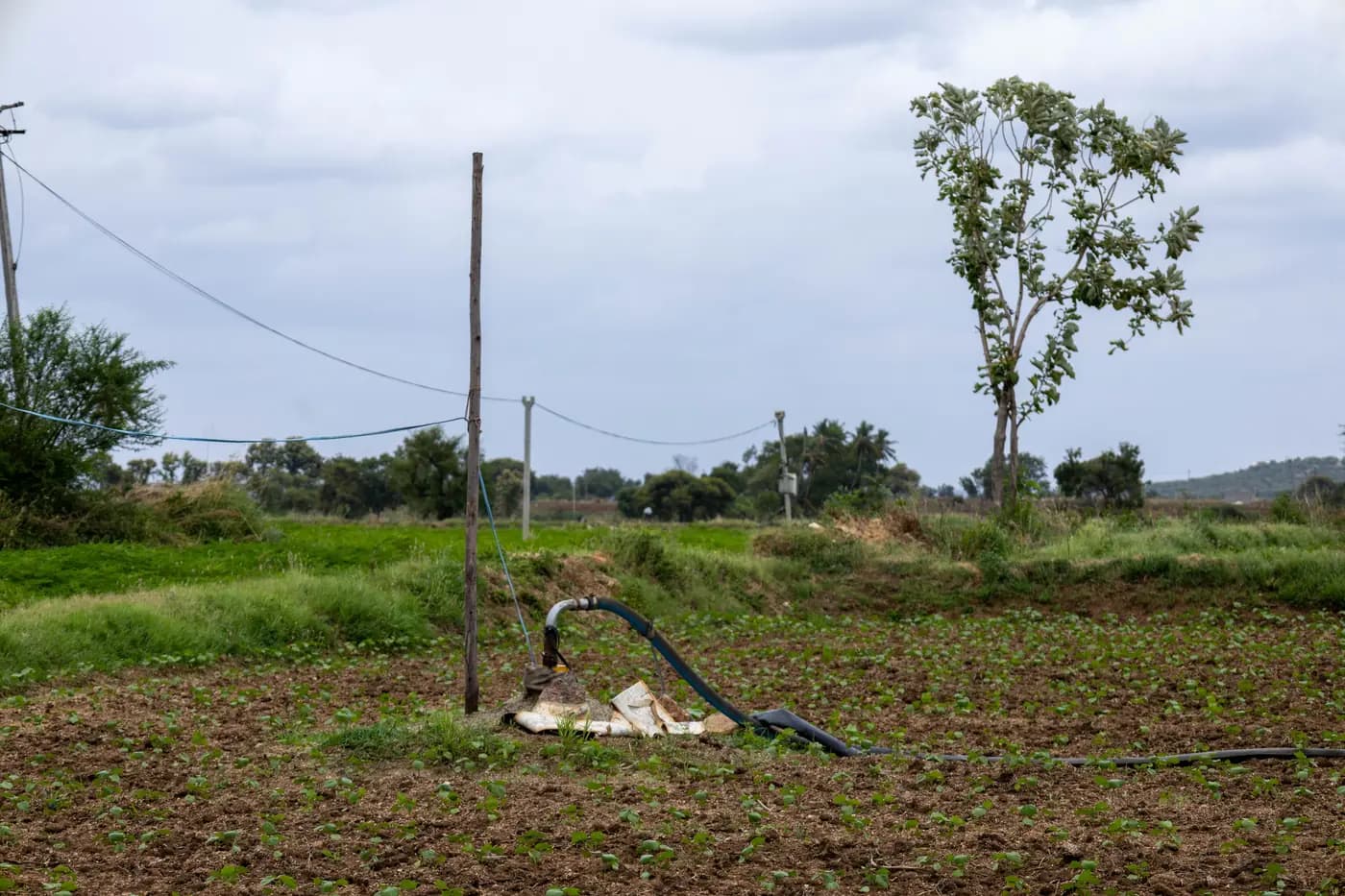
An agricultural irrigation hose can measure much wider across a drained, flattened roll than the nominal diameter printed on its label. That is a common source of wrong coupling orders: a crew lays a ruler across the flat hose, writes down the visible width and searches for a connector carrying the same number. Before buying a replacement section or a joint, establish what that measurement describes. Record the hose identity and its documented internal size first; use flat width as a clue that can help confirm an exact model, never as a substitute for its rated bore or connection specification. Record measured flat width beside the printed hose code, not in the nominal-size field; connector choice depends on the exact mating specification. Layflat hose nominal diameter comes from the exact product and connector specifications, not flat width alone.
Imagine a grower extending a temporary layflat header at the edge of a vegetable block. The old hose is drained and rolled, its label partly rubbed away, and one worker measures about 80 mm from edge to edge. The available coupling page lists sizes in millimetres. Ordering an 80 mm part would assume those two figures use the same dimension, even though one is the width of a collapsed tube and the other is a fitting designation. The correct purchase may require a different nominal hose size and a connection method approved for its wall. A field sketch and a few careful observations can prevent the crew from purchasing a joint it cannot verify.
Is layflat hose flat width the same as nominal diameter?
A layflat hose has an opening through which water flows when the line is expanded. A manufacturer's nominal size may refer to its stated internal diameter, but the exact dimensional convention belongs to that maker and product. Flat width is the distance across the hose when it rests collapsed. Wall thickness describes material between inner and outer surfaces, sometimes including a reinforcement structure. Outside diameter, roll length and working-pressure rating are different specifications again. Write each number with its unit and source rather than calling them all the hose “size.”
Flat width generally reflects part of the collapsed tube's circumference, so it is not the same measure as the circular opening. A calculation for a thin, perfectly round and fully flattened sleeve is only an idealized estimate. Real irrigation hose has two walls, folds, manufacturing tolerances and possibly reinforcement that affects how it lies. Material and wear also affect what a ruler sees. A width-to-diameter table supplied for one manufacturer's hose can help screen that product; it cannot certify the inside diameter of another maker's PE or PVC hose. If the exact size matters for an order, use the exact product's documentation or a verified sample measurement.
Keep the pressure designation out of the dimensional conversion. A printed “2 inch” can identify a nominal bore while “6 bar” describes a rated operating condition for a stated construction. Neither proves the other, and a wider-looking flattened hose is not necessarily a stronger line. A pressure class or burst value also does not tell you the diameter of a coupling. Make separate fields for material, nominal ID, flat width, wall, working rating, supplied length and the intended connection at each end.
Measure drained hose without guessing its inflated bore
Look for the manufacturer's name, series, printed nominal size, pressure designation, production or batch marking and any original order label. Photograph each legible mark beside a scale, then copy the characters rather than rewriting them as a guessed metric size. A hose retrieved from storage may have an old connector on one end that was added later. That connector's stamping does not necessarily identify the original hose bore. Keep the hose's own identity and the attached part's identity on separate lines.
Ask whether the piece is the same construction throughout its length. A repair may have joined PE layflat to PVC layflat or to a different reinforced section. Colour and flat appearance alone do not distinguish those products or their wall specifications. If the roll is made of several sections, number the sections from the supply end and record any visible labels at each one. Do not buy one set of couplings for the whole route until the actual mating ends are identified.
If an intact label and the purchase record identify the exact selected variant, use its maker's dimensional data as the starting point. The ruler is then a cross-check for the received or retained item, not a replacement for the datasheet. If the label is missing, record that limitation. Ask the supplier to identify the hose from the available marks, section photographs and documented measurements. A numerical width by itself is insufficient to assert a nominal internal diameter or an approved pressure rating.
Measure a safe, representative flattened section
Only handle an installed header after the farm's normal procedure has isolated it, prevented unintended restart and released retained pressure and water through its designed route. A hose that looks flat in one place can hold water in a low portion, so appearance is not proof that a fitting can be opened. The planned line-work shutdown guide helps define the isolation boundary for that separate task. Do not undo a live coupling merely to obtain a measurement, and do not cut an in-service hose to see its opening.
On a clean, unloaded length, let the hose rest naturally without pulling its edges taut. Measure across the flattened tube at right angles to its length. Record whether the measurement includes a seam, raised fold or damaged edge, because those may change the reading. Repeat at several places on the same identified section and write the individual observations rather than selecting the widest one as the “true diameter.” Note the tool, unit and position on the section. A photograph of the ruler beside the hose helps a remote product specialist understand exactly what was measured.
Inspect an accessible, already open end only under the approved safe-work condition. A flexible mouth can deform under a caliper, and a visibly round opening may not have returned to the nominal shape used for its rating. Ask the hose maker how to measure its internal diameter and wall on a retained sample without damage; use that method when available. Do not force a rigid object into a reinforced opening to make it match a desired size. If a usable end or maker's measurement method is unavailable, leave internal size unverified and send the width and identity evidence to the supplier.
For example, an edge-to-edge reading of roughly 80 mm on a stored roll is useful as an observation. It does not establish that the hose has an 80 mm internal bore, nor does it automatically select a connector labelled 80 mm. A manufacturer-specific chart may narrow the possibilities, but the final choice still requires the exact hose construction and the connection data. Report the width in a column headed “flat width measured” rather than entering it into a field labelled “nominal diameter.” That simple wording prevents a later buyer from mistaking an observation for a specification.
Read the two Store listings without inventing a fit
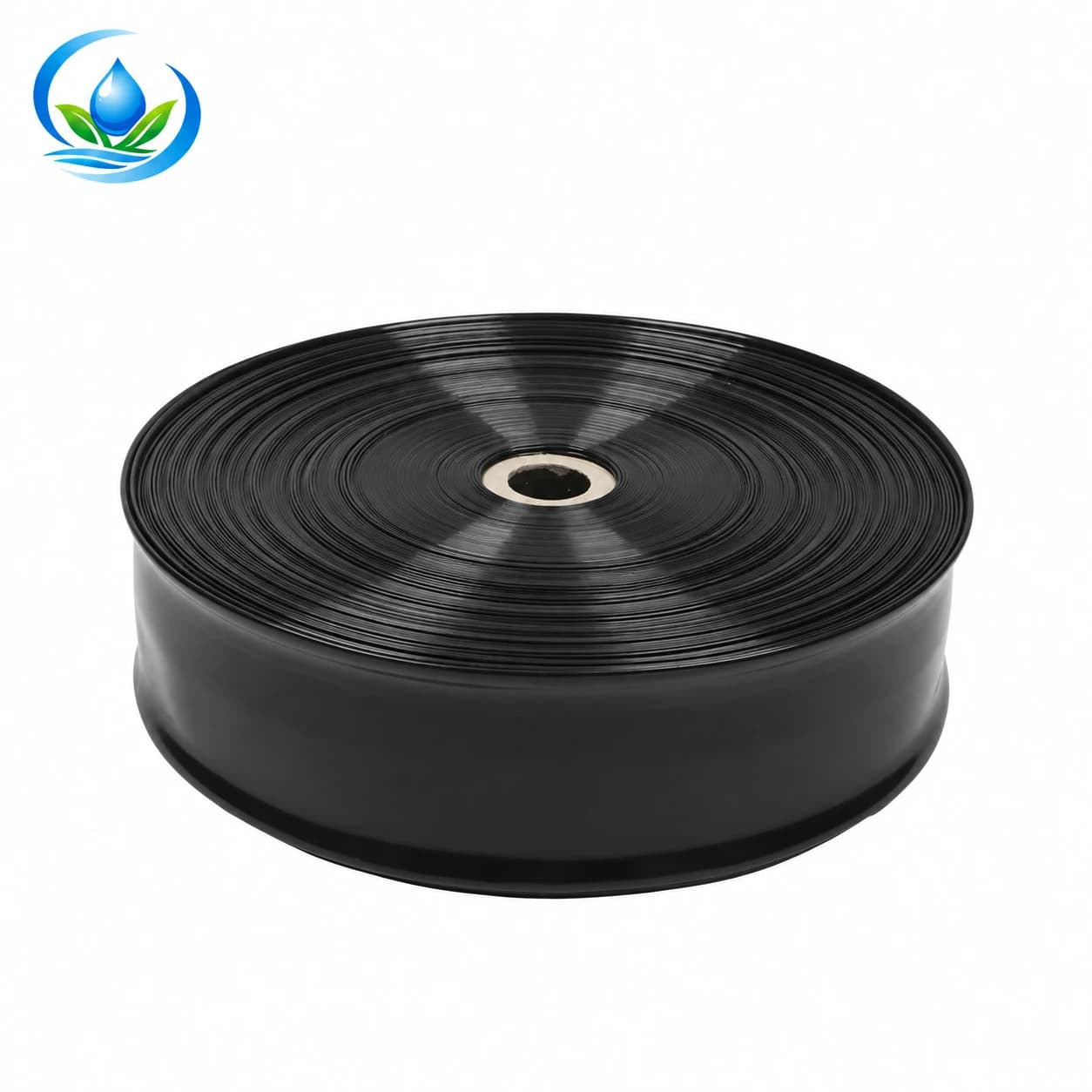
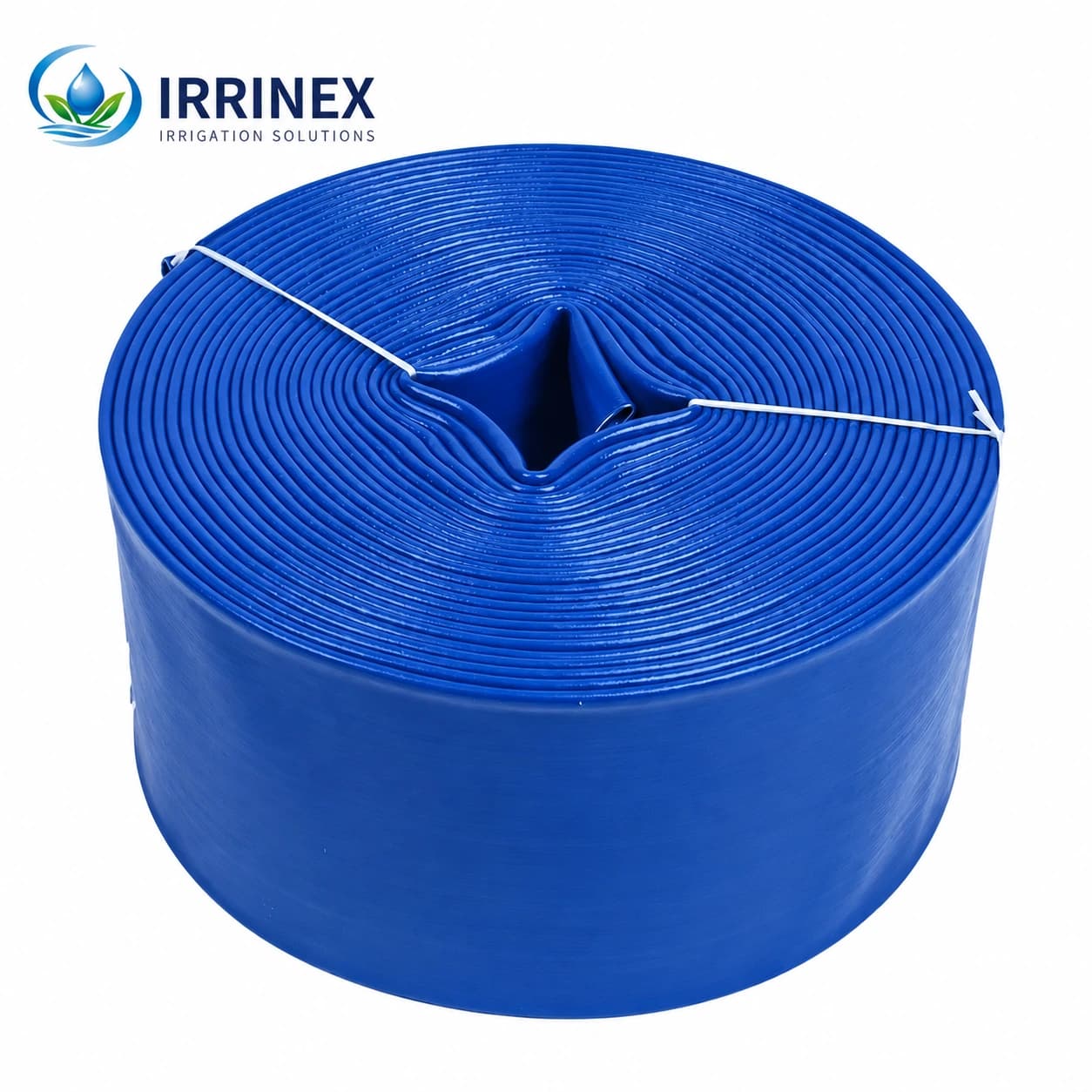
The PE layflat water-supply hose is a published Store family for field water delivery. Its listing gives a nominal size family of 1–6 inches and a broad operating-pressure family of 2–6 bar. Those are family ranges, not confirmation that every size, rating and roll length can be ordered together. Obtain the actual selected variant's nominal internal diameter, wall or construction, working rating and supplied length. If its option selector does not show a purchase choice or complete dimensions, ask Store support about the exact variant before buying matching hardware.
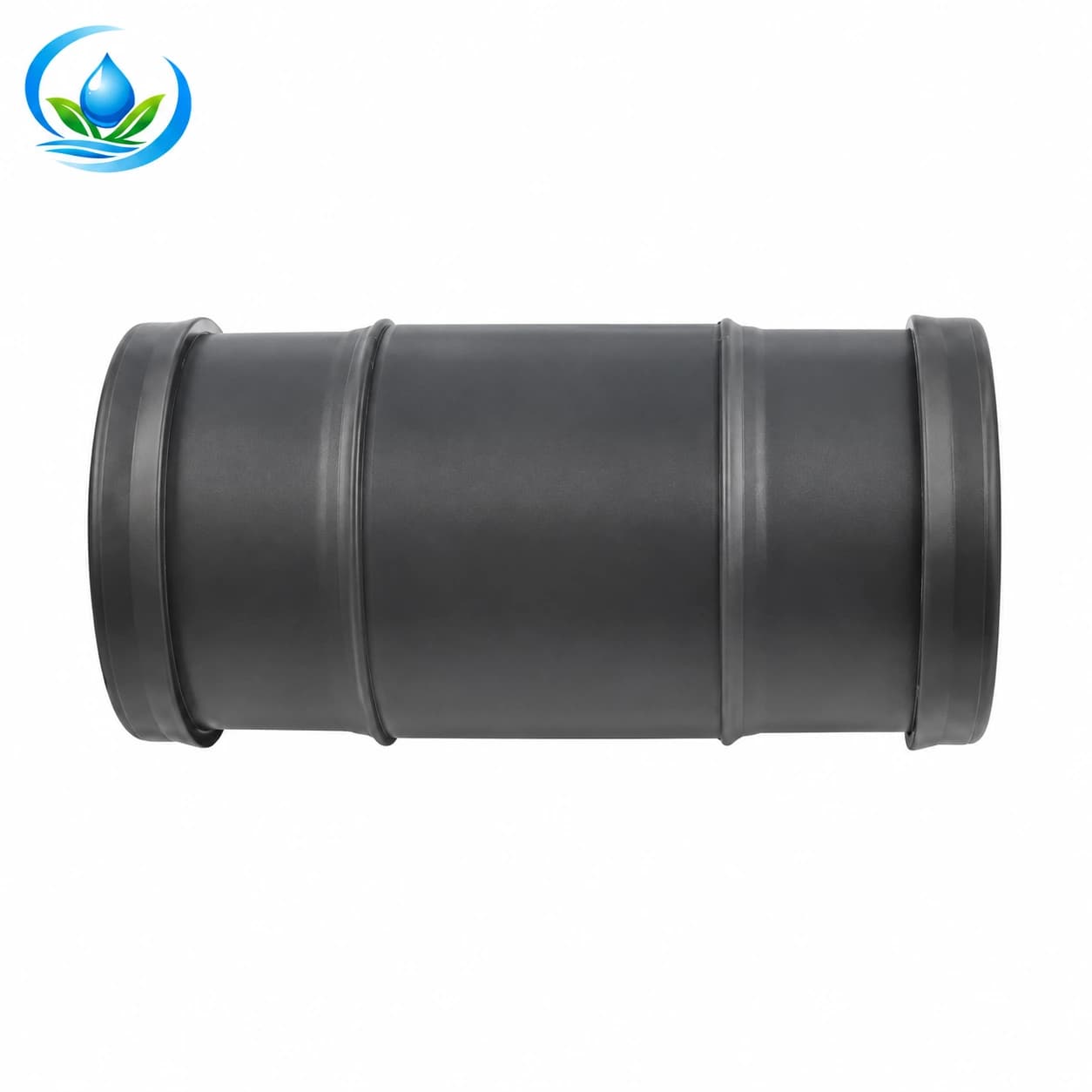
The 7900-series irrigation hose coupling is a separate published fitting family. The original catalogue shows the 790032 coupling at 32 mm and other distinct size codes through 110 mm. These numbers describe the listed fitting options; they do not prove that a 790032 accepts every hose called 32 mm, nor that its retention arrangement suits the selected PE layflat wall. Its photograph does not turn it into a camlock or establish a pressure rating for the assembled hose joint. Confirm the fitting's actual hose-side geometry and permissible installation before pairing it with a hose.
Store also lists a PVC layflat hose family for moving irrigation water. It is not a PE variant simply because both products lie flat when drained. If the old line is PVC, ask for the exact PVC construction and dimensions instead of transferring the PE family's size or pressure range. The agricultural pipe-size guide covers outside diameter and wall for round PE pipe; use the selected flexible hose's own dimensional convention for this order.
Also state whether the hose is on the pump delivery side or at its intake. A layflat water-delivery listing does not document vacuum suitability for suction. If the unidentified line is intended to feed a surface pump, use the pump suction-hose checklist for that separate rating and inlet task. A correctly translated flat width still cannot turn an unrated discharge hose into a suction-rated assembly.
Match the joint as an assembly, not a pair of labels
Identify both hose ends the proposed coupling would join. They may have different nominal bores, wall constructions or reinforcement even if they show a similar width while flat. Ask for the exact fitting option's permitted internal diameter range, insertion geometry, grip or clamp method, seals and allowed operating conditions for each side. Check whether the maker approves that particular hose construction and whether a different connector is needed for a transition. Do not infer fit from nominal numbers printed in different product families.
The way a joint grips the hose matters. A component that enters the bore relies on the inner dimension and wall response; another fitting may capture the outer surface or use a different retaining arrangement. A 32 mm marking could refer to one of those interfaces. Confirm which one on the selected 7900 option before comparing it with any recorded hose dimension. A coupling that seems to enter a soft end is not automatically retained under working pressure. Conversely, forcing a larger piece into the mouth can damage the hose before the water is turned on.
Keep the system's operating condition with the proposed assembly. Record the water source, maximum credible normal working pressure at this route, whether the section moves, and what other outlets run at the same time. The hose's family rating, the exact selected variant and the fitting's permitted assembled condition need to be reconciled. The layflat header moving guide handles a reused route's outlet positions and condition after relocation; this check answers the earlier question of what hose and connector the buyer has actually identified.
If the header will carry punched row outlets, do not use flat width as the offtake's hole size. The layflat row-outlet guide separates the header, wall opening and tape connection. An outlet marked 16 mm often describes a branch interface, not a 16 mm hole in the header and not the header's nominal bore. First establish the hose variant, then obtain the outlet maker's permitted wall and hole details. Buying a coupling at one end and row outlets along the wall involves separate fit evidence.
Turn measurements into a purchase answer
Send the seller one compact record: photographs of hose and existing ends, any readable product label, material, measured flat width at named locations, nominal ID if documented, wall or reinforcement information, working rating, route length and the exact proposed fitting code. State which details are observed and which have been confirmed in maker documents. Ask the seller to identify the hose variant and a permitted mating arrangement for both ends; request the current option, price, sale unit, availability and delivery information. An unanswered bore or grip requirement should remain visibly open.
When an exact match is documented, check the delivered hose and connector labels against the accepted record before the crew commits to a long installation. Use the components' own instructions for assembly and the farm's approved startup procedure. Observe an accessible joint under its intended operating condition from a safe position. If it leaks or moves, isolate and depressurize before investigating; adding a tighter improvised clamp to an unidentified coupling is not a substitute for establishing compatibility. Keep the accepted codes and measurements with the field map for the next purchase.
A final shopping line should say which hose is being bought, its documented nominal internal size and wall or construction, its measured flat width only as supporting evidence, its exact pressure and package option, and the approved connector reference for each end. If those fields cannot be linked to the same actual products, hold the joint order and obtain the missing identification. That decision is more useful than converting a flat ruler reading into an apparently precise but unverified diameter.
Before you order
Compare this guide with the specifications for your exact product, selected option, water supply and field conditions. Your equipment requirements take priority over a general example.
Compare irrigation products