Sprinkler Filter for Farm Blocks: Choose Debris Control Without Starving the Nozzles
Choose a sprinkler filter for the water, flow and debris in one operating farm block. Compare pressure loss, nozzle passage and cleaning access before ordering.
Published by IrriNex Store
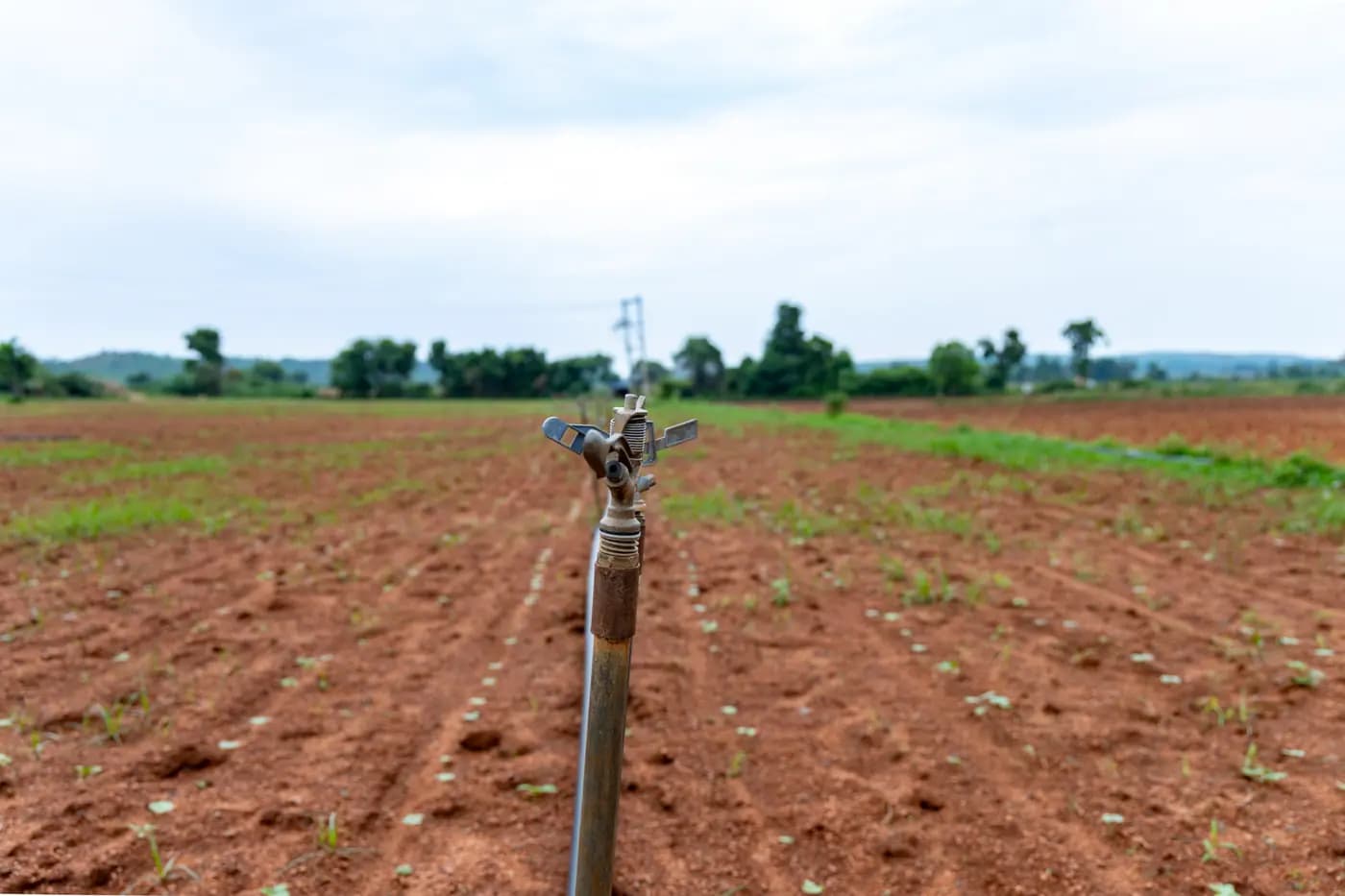
A sprinkler filter for a farm block has to intercept the debris that causes trouble while allowing the block’s required water through at useful pressure. The filter label alone cannot answer that question. Start with the source, the actual nozzles and the flow running at the same time; then compare filter capacity, pressure loss and how easily a worker can clean it. This guide turns those observations into a purchase decision for one operating sprinkler block.
The goal is not to make every water source laboratory-clean. It is to reduce the particles that create a demonstrated problem without installing a restriction that leaves the far heads short of pressure. The exact opening that matters depends on the sprinkler’s internal passage and the debris present. There is no universal mesh number that guarantees a particular nozzle will remain clear, and a published maximum flow is not the pressure-loss curve for your installation.
Describe the problem before selecting a filter
Begin with a short description of what led you to consider filtration. Perhaps a head stops rotating, a jet becomes uneven, a nozzle plugs after a source change, or visible grit collects at the end of a lateral. Those observations point toward questions, not a filter specification by themselves. Record which heads are affected, whether the problem appears immediately or after a run, and whether it occurs throughout the block or only at particular positions.
Take a water sample at the point where the block draws from the system, using a clean clear container. Note whether settled material looks sandy, silty, fibrous, leafy or biological. If the source is a pond or open reservoir, repeat the observation after weather or seasonal changes; one clear sample does not describe every intake condition. A basic visual check cannot identify every particle size or water-quality issue. If the debris is fine, variable or economically important, arrange an appropriate water analysis and ask what the result means for the proposed filter type.
Record recent work too: a repaired mainline can release scale or construction debris, while a changed intake depth can draw different material. If only one sprinkler is affected, inspect its inlet screen, nozzle and local branch before assuming the central filter is inadequate. A system-wide filter cannot fix a damaged nozzle, poor overlap, wind drift or a pressure-control fault.
Use the irrigation filtration buying guide for broader source-water and emitter considerations. This article narrows the decision to sprinklers in a block that is already being operated. For the separate question of what mesh labels do and do not establish, read the guide to screen mesh and opening evidence.
Map the nozzle passage and what can reach it
“Nozzle passage” means the narrowest path that debris must pass through on its way to the spray outlet. For an impact sprinkler that may include an inlet screen, internal waterway, drive mechanism opening or one of two nozzle ports. Do not infer this path from the outside diameter of the nozzle. Look up the exact sprinkler model and nozzle configuration, inspect the manual or parts drawing, and ask for documented passage information if it is not stated.
At the same time, inspect the water upstream. A stable supply of clean groundwater creates a different filtration task from a pond that carries leaves, algae or sand after rain. A screen can be convenient when visible solids dominate and someone can inspect it; a disc element has a different surface and groove structure; heavier or variable solids may require a different treatment sequence. These are decision families, not a claim that one element type suits every source.
Do not convert nozzle diameter into a universal mesh or micron rule. Mesh counts describe the number of openings along a screen convention; actual opening size depends on the screen specification, wire and construction. Particles also vary in shape and behavior. A flexible strand may bridge an opening that a round grain passes, while fine material can remain suspended and travel onward. Read the exact filter element description and the sprinkler manufacturer’s filtration guidance together.
For replacing a head or confirming a specific model’s fittings and performance range, see the impact sprinkler head field replacement guide. For a nozzle pair, the relevant checks are covered in the agricultural sprinkler nozzle guide. Those guides help identify the downstream equipment; this one decides what belongs upstream.
Measure the flow of the block that will run
A filter is selected for the water passing through it, not just for the nominal pipe diameter. List every head that runs during one irrigation set and use documented nozzle flow at the operating pressure where available. If the block has mixed heads, multiple nozzles or pressure differences along the lateral, calculate the total from the actual configuration rather than multiplying one head’s advertised maximum by the number of heads.
Where reliable records are missing, measure the block flow with a suitable flow meter or a safe, calibrated method. Record the valve position, pump condition, other simultaneous uses and the duration of the reading. Repeat it at the normal operating point. A short test with only part of the block open will understate the demand that a central filter sees when the full block is irrigated.
Then compare that measured demand with the exact filter option’s documented flow rating. A maximum flow is a boundary stated for a product configuration; it does not tell you what pressure the filter will lose at your flow, how much dirt it can hold, or whether flow remains even across the element. Keep a margin if the supplier or designer specifies one, and account for future blocks only if they will genuinely run through the same unit at the same time.
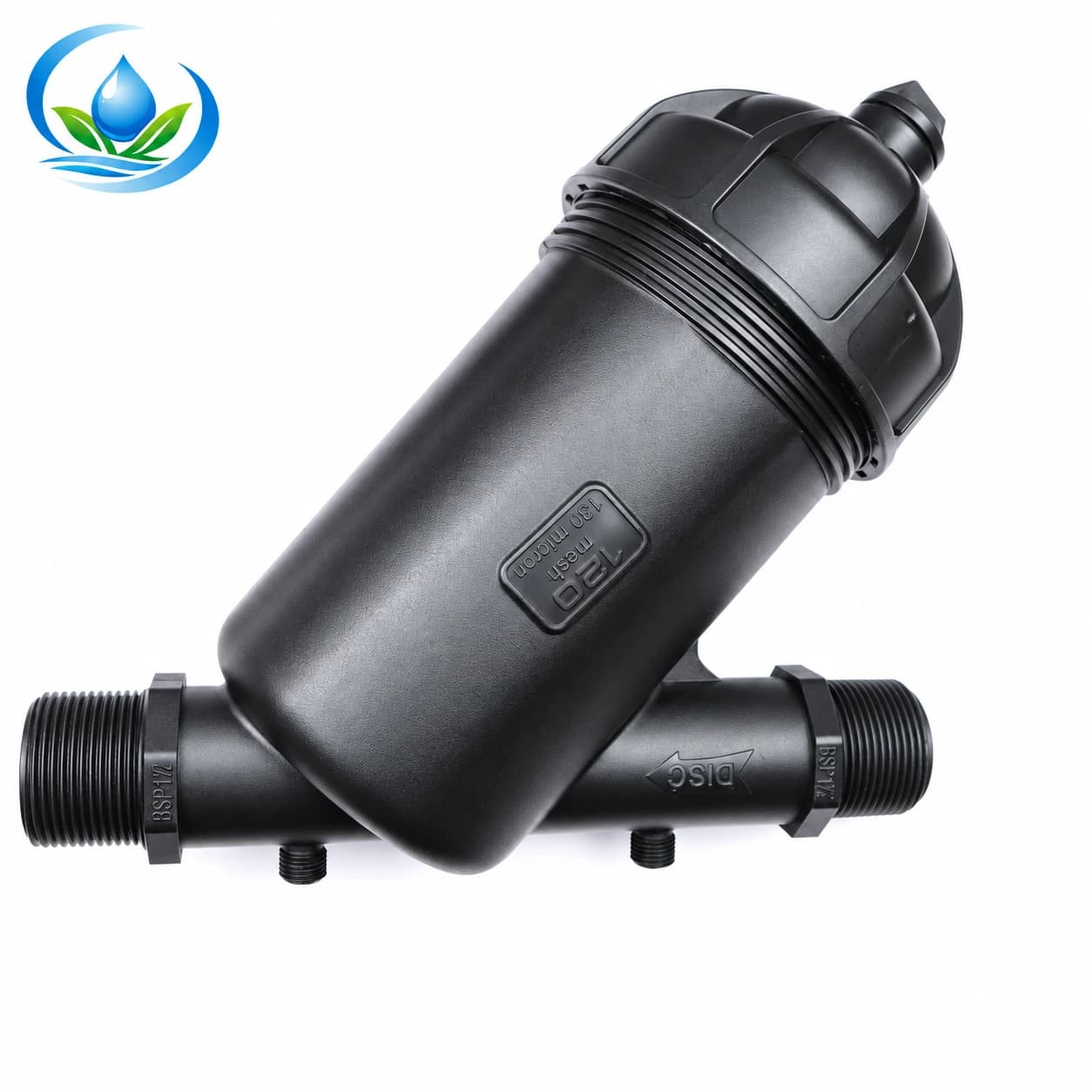
Two published purchasable disc-filter families illustrate why exact option selection matters. The Y-body disc filter has option-specific connections and stated maximum flows from 5 to 35 m³/h; the T-type disc filter lists options from 30 to 50 m³/h. Their listed variants are 120 mesh, but that does not make them interchangeable or prove either is right for a sprinkler block. Compare the exact connection, installation orientation, rated limit, element grade and pressure-loss information with your field measurements before choosing.
Protect pressure at the operating heads
Sprinklers need adequate pressure at the head while water is flowing. Static pressure measured with every valve closed does not show what the far head receives during irrigation. A filter that accumulates debris may develop a larger pressure difference across its inlet and outlet. A filter that is too small for the operating flow may also consume useful pressure while clean. Both effects can appear as shorter throw, incomplete rotation or changed application, but those symptoms are not proof that filtration is the only cause.
Before purchasing, identify a safe location for pressure gauges immediately upstream and downstream of the proposed filter. Also measure pressure at representative sprinklers, including a near head and a hydraulically distant head, during a normal set. Use instruments with suitable ranges and fittings, and install them according to their instructions. Compare readings under the same pump, valve and block conditions; changing another zone at the same time makes the comparison unreliable.
Write down four observations: upstream pressure, downstream pressure, pressure at the near head, and pressure at the far head. The difference between the two filter-side readings is the observed filter differential at that moment. Repeat after the system has run long enough to represent normal operation, and later when symptoms begin. A rising differential can suggest loading; a persistently large difference on a recently cleaned element may point to an undersized unit, a restricted connection or a measurement issue. Do not apply a generic alarm threshold unless the exact filter documentation provides it.
The UF/IFAS field evaluation of sprinkler uniformity describes how pressure, nozzles, overlap, wind and clogging can affect application. Agriculture Victoria’s filtration guidance explains pressure differential as one way to monitor filter loading and notes that type and condition affect head loss. Its numerical examples are not sprinkler design limits. The practical rule is to obtain the product’s pressure-loss information at the measured flow and preserve the pressure required at the actual heads, rather than treating a maximum pressure rating as evidence of low loss.
Choose a service routine a crew can sustain
A filter that traps debris must eventually release it through cleaning, flushing or element replacement. Choose a model whose service method matches the staff, water and schedule available. A manually cleaned screen can be simple to inspect, but it needs safe isolation, pressure relief, access to open the housing and a way to dispose of captured material. Disc elements also require following the model’s disassembly and cleaning procedure. Automatic cleaning adds controls and moving parts that need their own checks.
Before committing to a location, imagine a real cleaning visit. Can a worker reach the cover without climbing over a running pump? Is there clearance to withdraw the element? Can the unit be isolated without interrupting another critical block? Is there drainage for wash water? Are the pressure gauges visible from the service position? If cleaning requires awkward lifting, a special tool or a long shutdown, it may happen less often than the water quality demands.
Set an initial inspection schedule based on observed loading, not a promise that one interval fits every farm. After installation, check the element and note the elapsed run time, debris type, filter differential and cleaning effort. Shorten the interval if the element loads quickly; lengthen only after repeated observations support it. If debris arrives in pulses, such as after a storm or intake disturbance, add an event-based inspection.
For an installed screen-filter service decision, the screen-filter service-or-replace guide covers inspection of the element and seal. Its repair advice complements this article’s selection question: first decide what the block needs, then keep the chosen unit serviceable.
Use a worksheet to compare candidate options
Put the measurements and product documents side by side before ordering. A useful worksheet can be one page, as long as it preserves the conditions behind each number. Do not fill an unknown cell with a guess. Ask for a drawing or exact option sheet when a connection, differential curve or cleaning clearance is not documented.
- Block identity: field, crop, valve or zone name; normal operating date and pump state.
- Source: well, pond, canal or other supply; observed debris; sample or analysis date; seasonal changes.
- Downstream equipment: sprinkler model, nozzle configuration, documented passage or filtration instruction, number of active heads.
- Demand: measured total block flow and method; other simultaneous users; expected future changes.
- Pressure baseline: upstream and downstream candidate-filter locations, near-head pressure, far-head pressure, valve and pump state.
- Candidate unit: exact model and option, element type and grade, connection standard and size, published flow limit, pressure rating, pressure-loss data at the required flow.
- Service: isolation method, cover clearance, element removal direction, cleaning procedure, drainage, spare element and expected inspection work.
- Open questions: compatible adapters, gasket material, pressure differential trigger, flow margin, warranty condition, and exact parts supplied.
Score candidates against the same evidence rather than assigning points to an attractive feature. A high maximum flow does not compensate for a connection that cannot be installed safely. A fine grade does not help if the element blinds rapidly or no one can clean it. A lower-cost housing may have a higher lifetime labour burden. Ask each supplier to identify the exact option and state which operating data support its recommendation.
If one option lacks pressure-loss data, compare the unresolved issue honestly. It may be possible to instrument a trial or obtain a technical curve; it is not sound to assume the smallest-looking housing has acceptable loss. The right purchasing document makes the uncertainty visible before the line is cut.
Commission with a before-and-after field check
Install only after isolating the line and confirming that the housing, element, seals and connection orientation match the instructions. Support the pipe so the filter does not carry unintended load. Confirm that gauges are placed where they can be read and that the unit can be isolated and drained. Flush loose installation debris from the upstream pipe using a controlled procedure before it reaches the element or sprinklers.
Open the block gradually and inspect every connection for leaks. Purge air safely from high points if the system design calls for it. Once the pump, valve and all active heads are at their normal state, record upstream and downstream filter pressures and pressure at representative heads. Compare those values with the baseline collected before installation. Do not expect an improvement just because a filter was added; the readings may show that the filter consumes more pressure than planned.
Check the sprinkler pattern as well as the gauges. Look for rotation, jet shape, wetting reach and obvious dry gaps, while noting wind and any nozzle differences that could affect the pattern. A catch-can test can make distribution differences visible across the block. UF/IFAS describes measuring collected depth at evenly distributed cans and comparing the low quarter with the overall average; its method is useful as an observation tool, while its nursery examples should not be mistaken for a universal crop target.
After a representative run, inspect the filter element and note what it collected. Record run time, pressure differential, head readings, cleaning action and any changes in coverage. Repeat under similar conditions after the first few service cycles. These observations show whether the selected filter is balancing debris capture with available flow and manageable maintenance.
Separate a filter problem from another system fault
If the far sprinklers weaken after a filter is installed, compare the readings rather than immediately choosing a coarser element. A low downstream pressure with a large differential may indicate loading or a restrictive filter/connection. A similar pressure loss at both near and far heads can suggest a pump, regulator, valve or supply issue. Good pressure at the manifold but low pressure at only one head points toward a local branch, obstruction, leak or head problem.
Uneven water application has several possible causes: nozzle mismatch, blocked or worn outlets, altered spacing or overlap, wind, pipe losses, pressure variation and changing pump performance. UF/IFAS lists these as contributors to sprinkler uniformity. Inspect the easiest local causes and compare neighboring heads before changing filter grade. A filter may prevent some debris from entering; it cannot restore a damaged nozzle, correct spacing or compensate for inadequate supply.
If one nozzle repeatedly blocks while the rest remain clear, preserve the material found and compare its shape with the passage and local screen. Check the head inlet screen, branch flush point and upstream leaks. If the debris is fine or biological, seek a water-quality recommendation suited to the source rather than using an arbitrary micron label. Where the whole block loses pressure as the filter loads, review service frequency, element area, flow demand and filter type together.
Keep a simple fault log. Include the date, affected position, operating flow, filter differential, head pressures, weather, source level and maintenance performed. A repeated pattern over several runs is more useful than a single impression. It also lets a supplier or irrigation technician evaluate the system from evidence instead of choosing a product based only on pipe size.
Confirm the exact option before placing an order
Before purchasing, verify the filter body and element option, nominal connection, actual thread or flange standard, flow data, pressure rating, available pressure-loss curve, cleaning method and replacement-element availability. Confirm adapters, unions, valves, gauge ports and any fittings needed to install it. Nominally similar sizes do not establish that two connection standards mate. Do not assume a product’s maximum pressure describes its pressure loss or its allowable flow under your conditions.
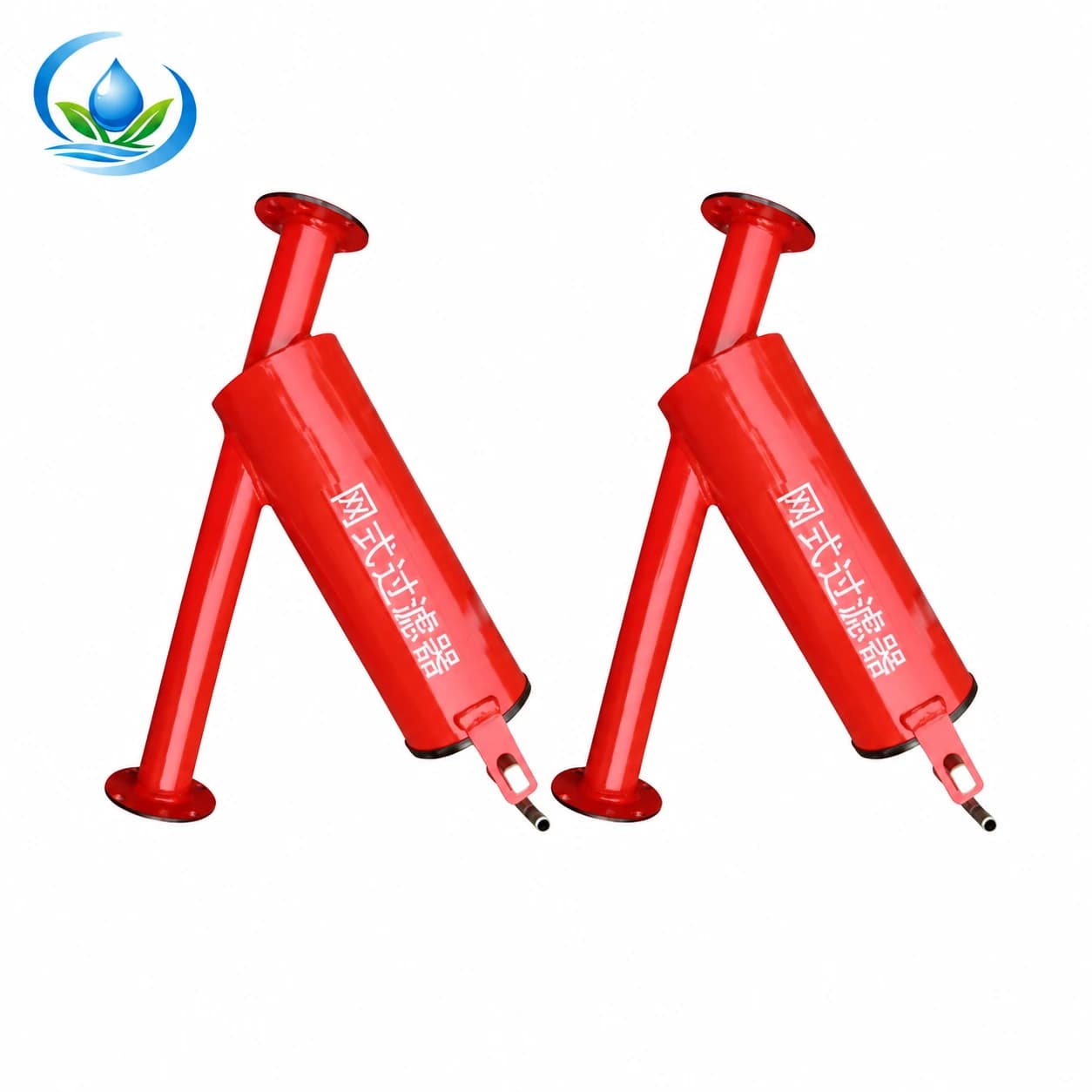
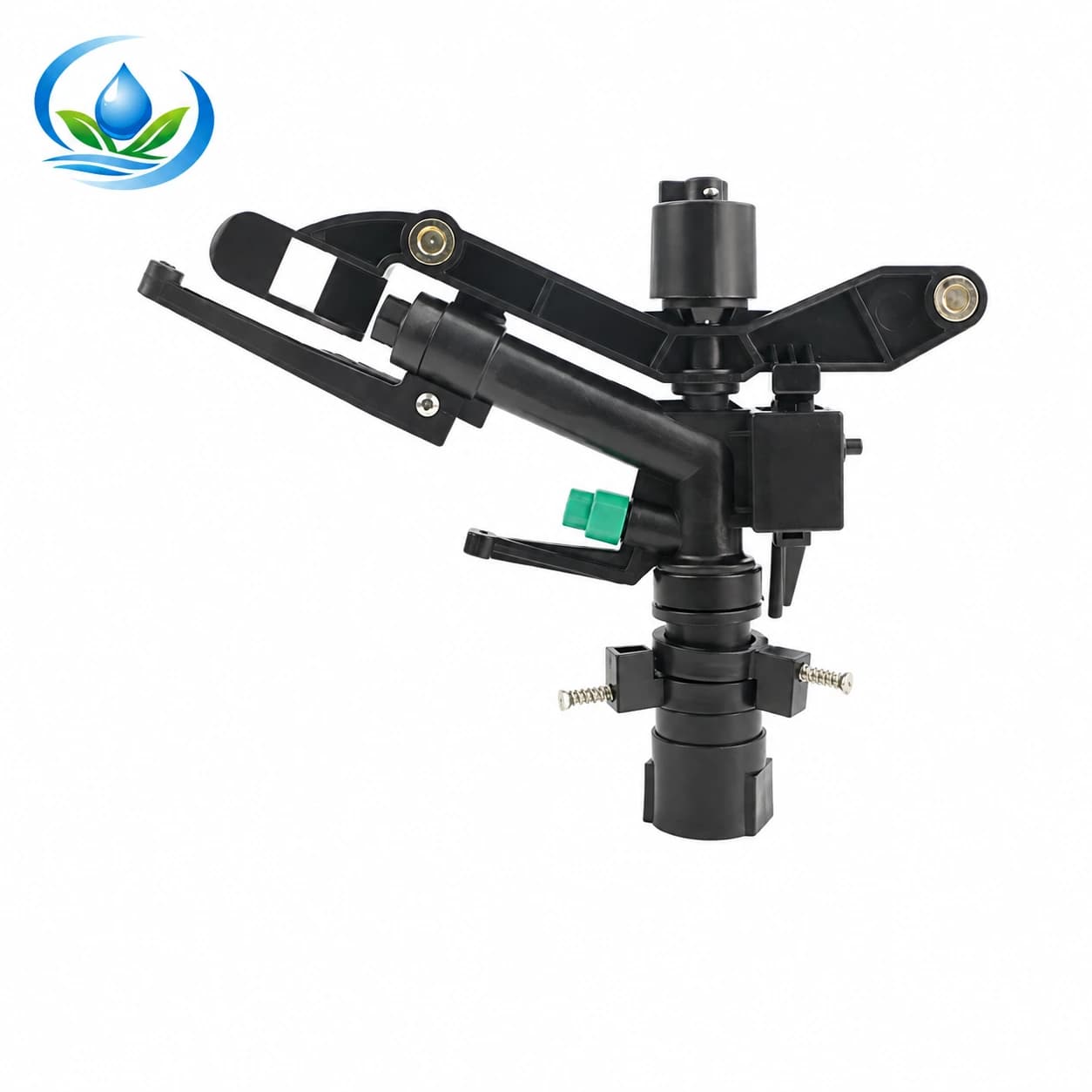
Compare the steel screen filter and medium plastic screen filter against your measured flow and service space, using the S50 sprinkler page only to identify the downstream head you are protecting. Online ordering is not currently available for these three models; ask for current options, price and availability. The Y-body disc filter and T-type disc filter have different listed options if a disc stage suits the water. Compare the exact option and its pressure loss rather than treating a product-page price as a complete installed quote.
Keep the final worksheet with the installation record. A good choice states what debris the filter is intended to intercept, what flow the block actually requires, what pressure remains at the heads, how loading will be recognized and how the element can be cleaned. That evidence lets the farm maintain the block and reassess the choice when the source, nozzle arrangement or operating schedule changes.
Before you order
Compare this guide with the specifications for your exact product, selected option, water supply and field conditions. Your equipment requirements take priority over a general example.
Compare irrigation products