Fertigation Systems for Agriculture: Fixed or Mobile Across Crop Blocks?
Compare a fixed station with a mobile fertigation unit using real crop-block connections, move work, water conditions and complete configured costs.
Published by IrriNex Store
Fertigation systems for agriculture can be installed at one headworks or moved between crop blocks, but mobility is useful only when the complete water and nutrient route can be reconnected, checked and operated at each destination. A fixed station can serve several zones through permanent pipework; a mobile frame can visit separate sources or seasonal blocks. Neither format proves that the injector, controls or source protection suits every field. Compare the blocks to be served, their simultaneous and sequential demand, the work of each changeover and the exact configured equipment before requesting a station.
Map the blocks and mark every connection the station will use
Start with a field map rather than a photograph of a fertigation skid. Give each crop block a name, area, water source, active irrigation zone, planting season and physical connection point. Mark which blocks share one protected source and which draw from a different well, reservoir or supply network. Note whether water and fertilizer must run simultaneously in two places or whether the crew can finish one block and move to the next. A portable station that can visit three blocks still serves only the blocks its equipment and schedule can handle under the planned operating sequence.
Record the water conditions at each connection while the crop's actual zone is running: flow, pressure at the proposed station, downstream pressure needed by the outlets and the source-water report used for the nutrient plan. The farm drip-design guide starts that hydraulic inventory; the zone guide separates simultaneous demand from a sequence of valve groups. A nominal pipe size at two farms does not prove the same operating point, connection standard or chemical-water behaviour at both.
Put the crop and nutrient plan on a separate line for each block. The responsible adviser, fertilizer label and local requirements govern which material and rate may be applied. The station purchase does not set a dose. If two blocks need different stock preparations, a move may require an approved changeover, cleaning and verification rather than a quick swap of hoses. If one block has no confirmed source-protection arrangement or accessible drain and isolation procedure, mark it as unresolved. Mobility must not carry a protection assumption from the first site to the second.
Compare one fixed route with a real move sequence
A fixed station remains at a chosen headworks while valves and pipework distribute treated water to eligible zones. Its buying list includes the configured station, suitable takeoffs and returns, supports, isolation, source protection, measurement points, access and the connecting network. The station may reduce repeated transport, but the route to the far block can add pipe, fittings, pressure loss and maintenance locations. Do not treat a fixed unit as serving a block merely because the block appears on the same farm map.
A mobile station changes location. On a work sheet, write each transition as a separate job: complete the approved injection and clean-water sequence, isolate and depressurize the equipment, disconnect under the maker's procedure, secure stock and loose parts, move the unit over the actual route, reconnect at the next prepared site, then verify the new operating case. The needed vehicle, lifting method and travel time depend on the delivered frame and farm surface. A unit called “mobile” is not evidence that one person can roll it through planted rows or carry it while filled.
Consider a hypothetical schedule with three non-overlapping blocks. If each has a two-hour irrigation window, a move-and-check takes 35 minutes and the next block's window begins 15 minutes after the first ends, one travelling station would miss the next start unless the schedule changes. Those numbers are illustrative planning inputs, not a Store move-time claim. A second fixed station, a permanent distribution route or a revised crop schedule may be better. Conversely, if the blocks run on different days and the connection checks are practical, a mobile unit may avoid buying a full station at each site. Count the work that the chosen route actually creates.
Keep the hydraulic case and injector check attached to each block
Changing blocks changes more than the hose location. A new valve group may have another flow, backpressure or elevation difference; a Venturi-based arrangement can change suction when that relationship changes. A powered dosing arrangement also has defined operating limits. For each proposed destination, request the exact station's flow, inlet and outlet pressure, injection mechanism, supported control mode and connection drawing. Compare a documented working point, not separate maximum catalogue values. A static gauge reading or an open-hose bucket test does not show the station's behaviour while the crop outlets run.
Use a water-only acceptance test for each connection under the delivered unit's instructions before preparing nutrient. Record the station and block IDs, active valve group, source flow, pressure at the stated measurement points, stock-side water use, water-side volume and time interval. The injector ratio guide explains why those quantities need matching boundaries. A correct ratio at the first farm connection does not certify it at the second. A vessel level change without a measured interval is not a substitute for the test.
Water uniformity still matters. University of Minnesota Extension explains that nutrient distribution in an irrigation system cannot exceed the distribution quality of the water carrying it. That principle is useful for both station formats; the source's Minnesota crop rates and permit rules are not worldwide equipment settings. Check the already installed drip or sprinkler route on each block before attributing a dry row to the station. A larger injector or a mobile frame cannot repair a blocked lateral, a leaking connection or an unsuitable valve grouping.
Read the three listed station formats as configurations
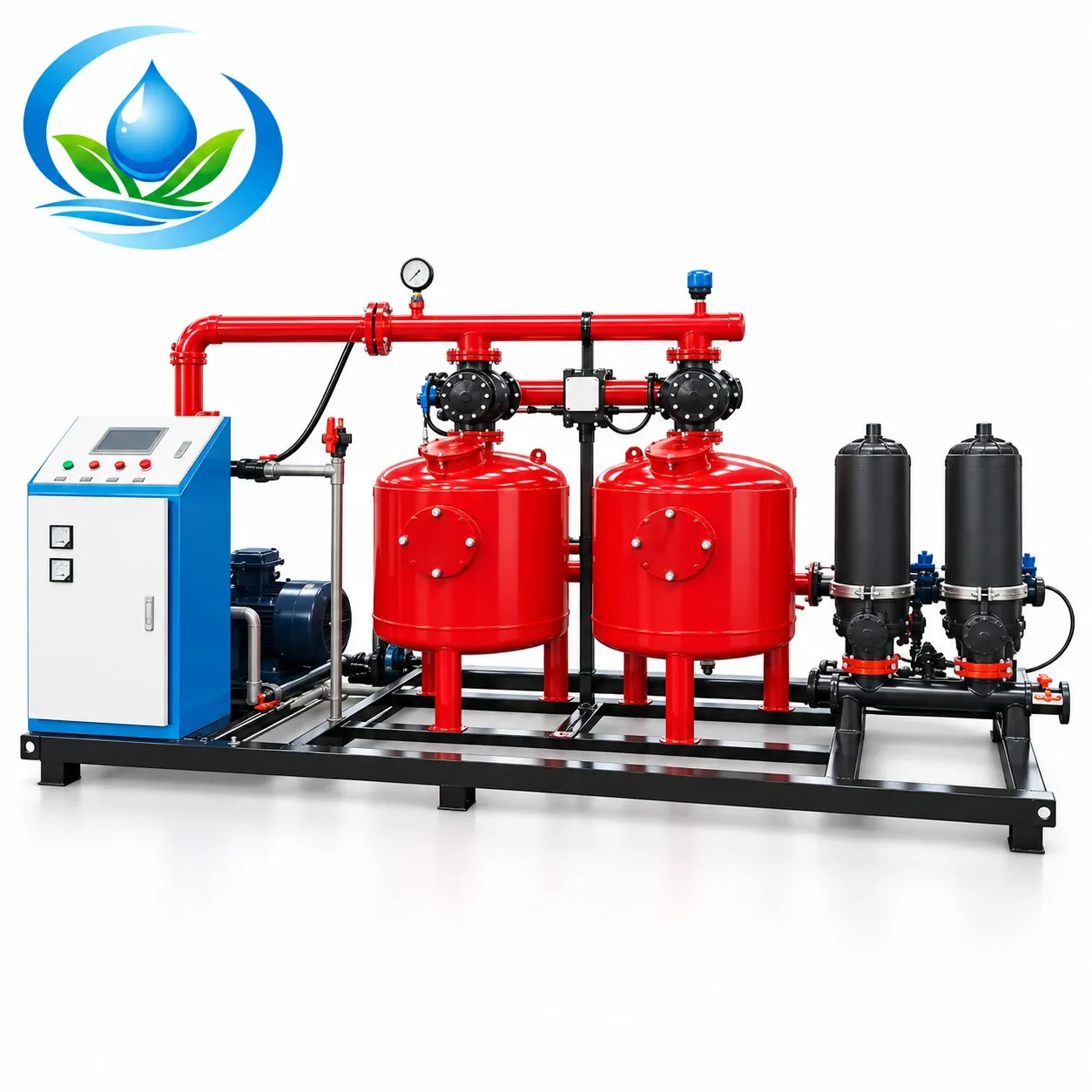
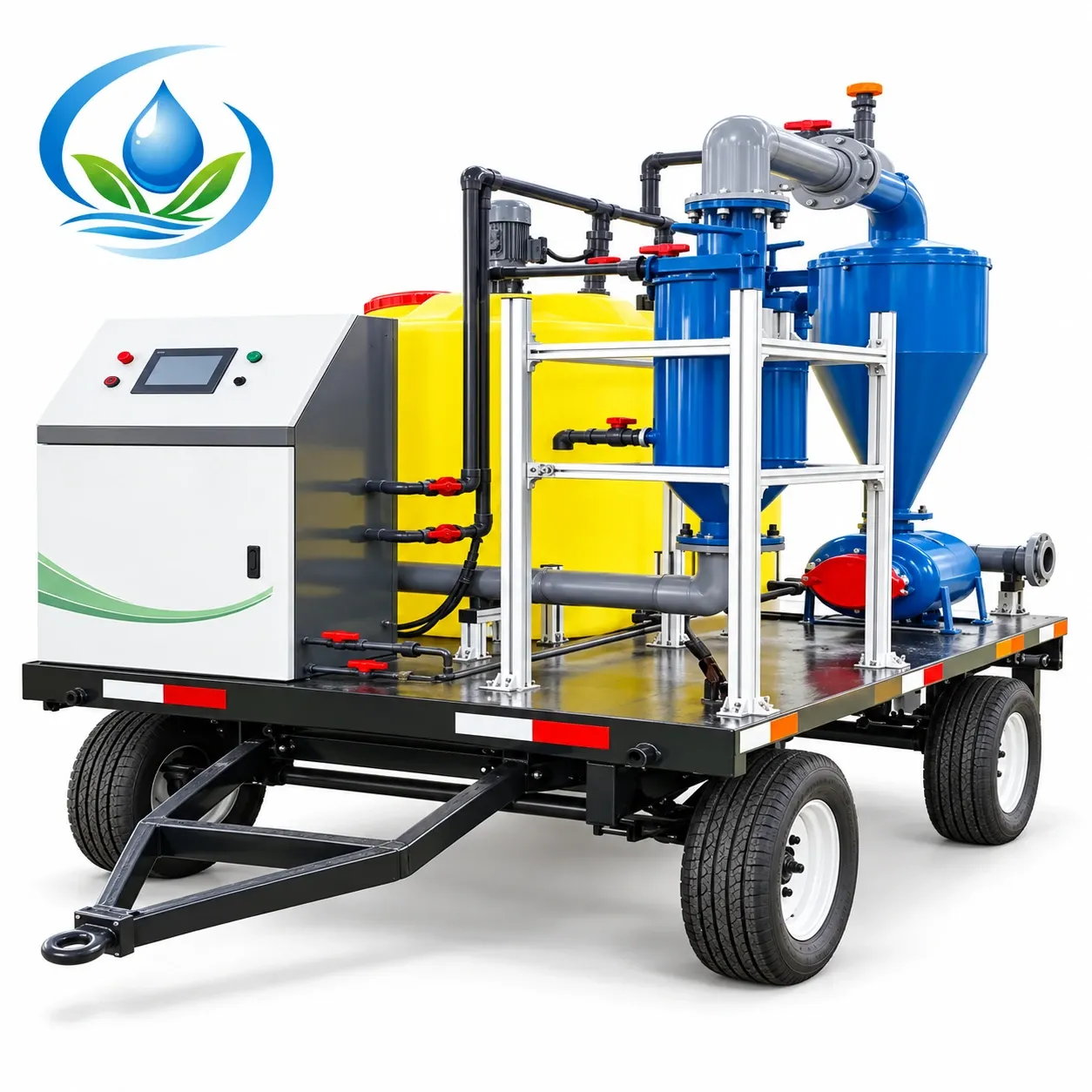
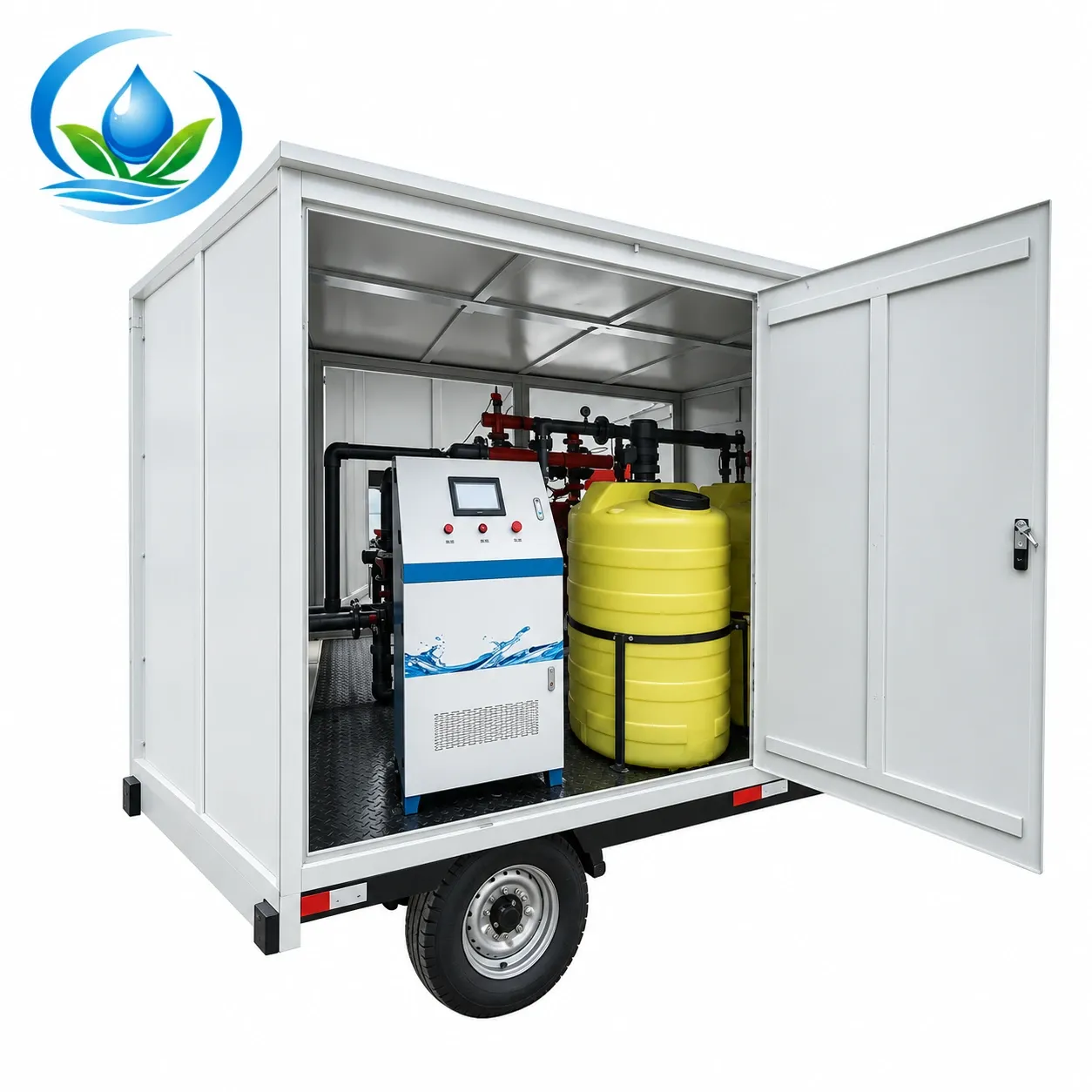
The fixed automatic fertigation station is the listed fixed-skid route. The mobile open-frame fertigation skid and enclosed mobile fertigation unit are the two listed mobile routes. Their current pages identify installation form and water-and-fertilizer dosing function, but the names do not establish a shared pump, valve count, dosing capacity, sensor package, controller function, power requirement or connection detail. Request the exact configuration and included-parts drawing for the chosen application.
On the comparison sheet, give each proposed station one line for the water path and one for nutrient contact. Record exact component models, permitted flow and pressure, number and type of dosing channels, compatible materials for the intended solution, control and measurement functions actually included, and how the selected unit is powered. Then add the required external site items: source protection, filtration, support, compatible stock vessels, transitions to existing pipe, safe isolation and the means of checking delivery. A photograph of a complete installation cannot establish which of those pieces is in the quoted unit.
An enclosure may protect components from some field contact, but its label alone does not prove weather rating, ventilation, lockability, chemical storage approval or easy service. An open frame may make some parts visible, but it does not certify safe lifting or field mobility. A fixed station may have automatic functions, yet its name does not confirm remote control, alarms or a specific dosing algorithm. Compare documented functions, site requirements and service drawings for the exact selected configuration instead of inferring features from three broad product-family names.
Plan stock handling and changeover before choosing mobility
List the nutrient products and stock containers that each block will use under the approved farm plan. Mark whether the same prepared solution can serve another block, whether the suction or dosing path needs a model-specific changeover, and how the operator confirms that no unapproved material remains in the route. Do not assume a mobile station automatically carries a tank of ready-to-use stock. The tank may be a separate item with its own material, mounting and refill requirements. The new-concentrate guide separates the material-contact question from the crop and water questions.
Identify a safe place for the station at every site. It needs the service and removal access specified by the delivered unit, a stable support arrangement, a practical route for operators and a place where lines will not be struck during crop work. The filter-and-injector service-space guide helps reserve that space at a fixed headworks. For a mobile arrangement, repeat the same site survey rather than assuming one compact footprint fits every pump pad. Keep water and electrical work within the relevant manufacturer's instructions and qualified site design.
Make the end-of-event sequence explicit. A clean-water finish may be needed along the active water route under the approved nutrient and equipment instructions; it is not a universal fixed number of minutes or extra irrigation to dispose of stock. Record what happens before disconnecting a mobile station and what remains in the hose or manifold. Never open a live nutrient line to make a move faster. A manual fallback or emergency stop procedure should be identified for the exact controls supplied, not invented from a competitor's brochure.
Compare complete costs and run one representative block
Build two cost columns covering the same set of blocks and a realistic season. For the fixed route, include the configured station, permanent pipe and valves, supports, source and safety devices, installation, monitoring and service visits. For the mobile route, include the configured unit, prepared connection points at every site, transport and handling equipment, travel, water-only verification at each move, changeover materials and any crop-window delay. Use actual current quotes, measured labour or clearly labelled estimates. Do not compare a bare mobile frame with a fully installed fixed station.
The fertigation field-trial guide examines the wider farm benefit of adding injection. This purchase comparison assumes the application itself has an approved purpose and asks where its station should live. Before expanding across all blocks, test one representative connection with the exact proposed configuration and the farm's ordinary active zone. Measure water-side and stock-side behaviour under permitted conditions, verify normal crop-water delivery and record what the operator had to do. For a mobile option, include a real transition to a second prepared site; a showroom demonstration at one outlet does not test the buying reason for mobility.
Choose a fixed station when a permanent distribution route can serve the intended blocks at documented working points and its lower changeover burden justifies the site work. Choose a mobile format when the blocks' schedules and prepared connections make moves feasible and its confirmed configuration works at each site. If neither case has evidence for the farthest block, the unresolved hydraulic or access issue belongs in the purchase request. Ask for the exact station configuration, included components, current price, availability, delivery and commissioning documentation before committing to the field route.
Before you order
Compare this guide with the specifications for your exact product, selected option, water supply and field conditions. Your equipment requirements take priority over a general example.
Compare irrigation products