Irrigation Supplies: Convert Piece Counts to Cart Packs Before Checkout
Turn confirmed field counts into the right pack options, cart quantities, piece totals and leftovers before paying.
Published by IrriNex Store

Irrigation supplies are often counted as individual pieces in the field but sold as selectable packs online. A grower may need 18 confirmed replacement drippers, yet the product option says “50 Pack” and the cart asks for a quantity. Entering 18 there would order 18 packs, not 18 drippers. Before checkout, turn each field count into a selected sale unit, a number of sale units and a resulting number of usable pieces. Keep the exact product identity with that arithmetic. A correctly calculated pack of the wrong emitter or punch is still the wrong order. Keep cart quantity in packs and extended quantity in individual pieces on separate order fields; a 50 Pack label must not be read as fifty cart units. Drip emitter pack quantity calculation separates the number of packs in the cart from the number of usable pieces arriving.
How many drip-emitter packs should the cart contain?
Make a short list of tasks that actually require new pieces. Count installed positions that need a replacement, planned positions that have already passed the layout check, and an intentional spare quantity separately. Do not turn a rough plant count into an emitter order when a plant may have more than one outlet or no new outlet at all. In a working field, identify the complete old part, its connection and the location it serves before choosing the current replacement. The emitter-cap identification guide helps keep a complete adjustable dripper separate from a fixed-flow cap or an unverified loose spare.
For each list line, write “needed pieces” in one column and leave “packs to buy” blank. A counted requirement is a site fact; a pack size is a current selling option. They can change independently. If 18 working positions need replacement and the grower also wants two confirmed spare drippers, the required quantity is 20 pieces. If those two spares are already in labelled stock, the new purchase requirement remains 18. State which situation applies rather than adding a general spare percentage and then counting the same stock twice.
Give tools their own line. Four workers each needing an approved 4 mm punch is a four-tool requirement, not four holes and not four emitters. A punch purchase is separate from the number of outlets to install; one worker may make many approved holes with one tool. The punch-and-outlet matching guide addresses whether the selected tool belongs with a particular pipe and outlet. The arithmetic below uses a punch listing as an independent pack example; it does not say that this punch is approved for the adjustable dripper on the next shopping line.
Convert individual piece need to the selected pack quantity
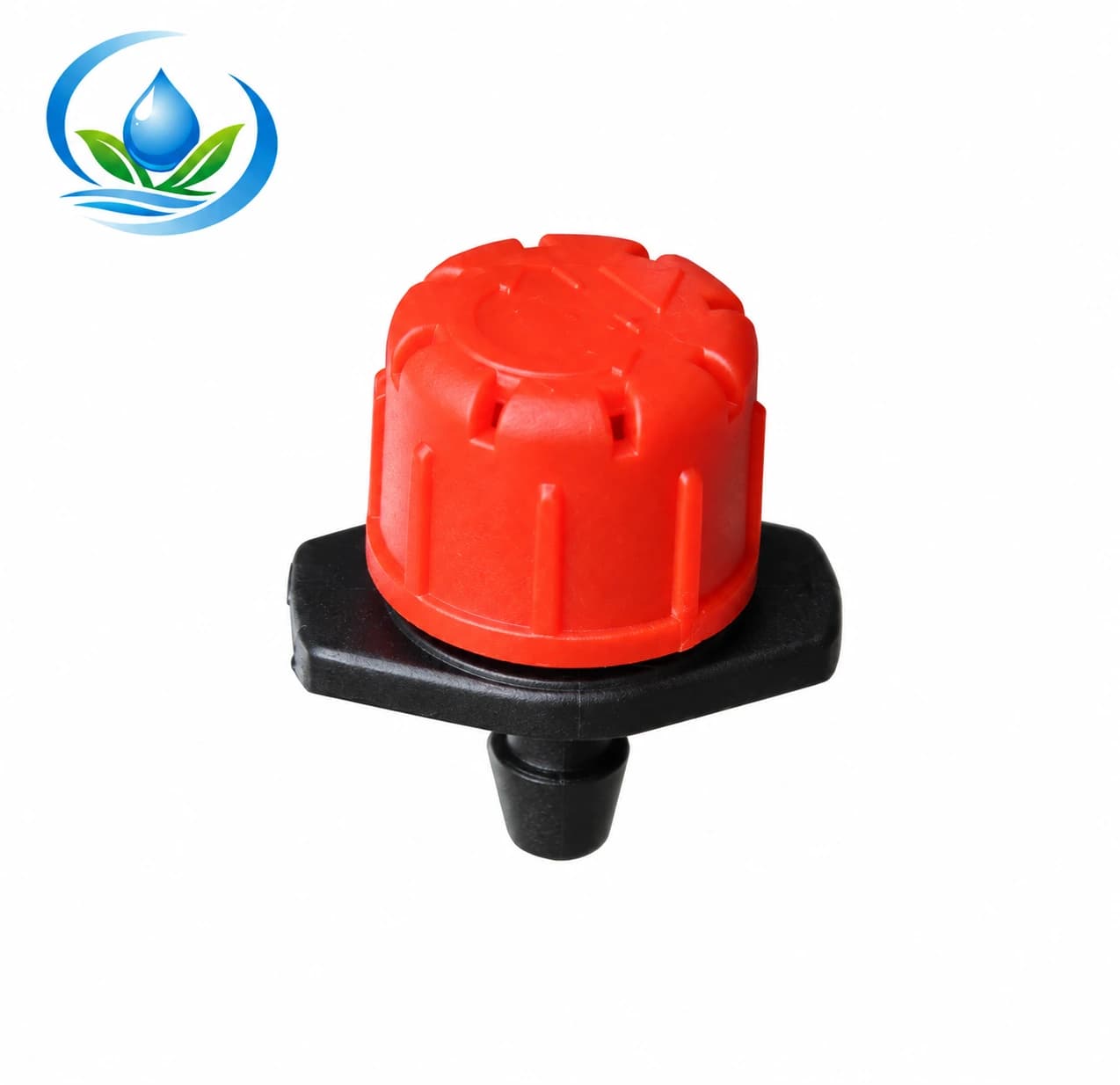
On the current adjustable-dripper product page, AOD0170 has selectable 50, 100, 500 and 1,000 Pack options. Each option names a different number of complete drippers in one sale unit. The quantity control acts on the selected option. A quantity of one with “50 Pack” means one pack containing 50 drippers; a cart quantity of two means two such packs, or 100 drippers. It does not mean two individual outlets. Confirm the exact chosen label in the cart before paying, because switching the option while leaving quantity unchanged changes the number of pieces.
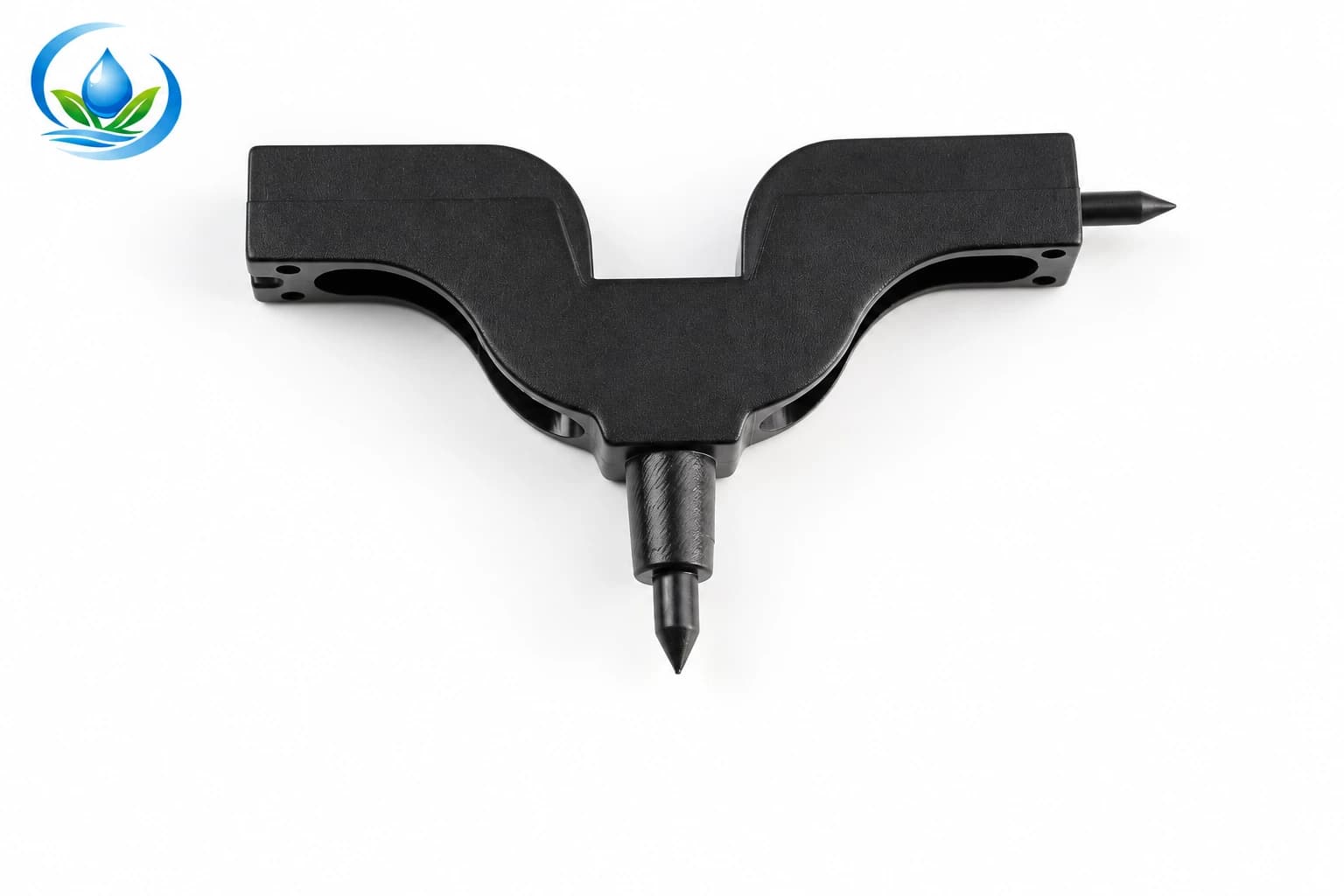
The 4 mm plastic punch listing offers 1pc, 2pcs, 3pcs, 5pcs and 10pcs options. Here too, the number beside the product is the quantity of the selected option, not necessarily the number of tools. One selected 5pcs option represents five punches; two selected 2pcs options represent four. The labels describe tools per selling unit. They do not prove that any particular emitter stem should be installed with a 4 mm opening or that the tool can be used on every tube wall.
Write the full chosen option beside the count even when the product family name is clear. “Adjustable dripper, 50 Pack, cart quantity 1” is a usable order line; “dripper, 50” leaves open whether 50 is a pack label, piece count or cart quantity. A current price belongs to the selected option, not to each piece unless the seller explicitly says it is a piece price. For an option priced per pack, divide its current pack price by the number of pieces only to compare options; the checkout still charges the pack price times cart quantity.
Convert a single pack size with whole-number arithmetic
Once the exact option is confirmed, divide the needed individual pieces by the pieces in one sale unit and round up to a whole number of sale units. Then multiply packs by pieces per pack and subtract the need to show the remainder. For one fixed pack size the worksheet is: cart quantity = ceiling(needed pieces ÷ pieces per option); pieces purchased = cart quantity × pieces per option; remaining pieces = pieces purchased − needed pieces. A decimal cart quantity is not an alternative when the page sells packs as whole options.
| Illustrative requirement | Selected option | Cart quantity | Pieces received | After meeting requirement |
|---|---|---|---|---|
| 18 confirmed AOD0170 replacements | 50 Pack | 1 | 50 drippers | 32 remain |
| 70 confirmed AOD0170 replacements | 50 Pack | 2 | 100 drippers | 30 remain |
| 4 approved punch tools for four workers | 5pcs | 1 | 5 tools | 1 remains |
These are counting examples, not a recommendation to replace 18 or 70 outlets or buy a tool for each worker on every farm. The site must first establish that the selected AOD0170 model performs the intended duty and that the selected tool is permitted for its own separate job. If only 18 emitters are needed, selecting the 50 Pack and entering 18 as cart quantity would produce 900 pieces. That multiplication is why the pack-to-cart step deserves its own check immediately before payment.
Rounding up solves the piece shortage for a single option, but it does not settle whether the remainder is wanted or whether another option costs less overall. Label the surplus with its exact model and storage plan. Thirty-two drippers remaining from the first example are usable spare stock only if their model is actually used, they remain identifiable and they can be stored according to the product instructions. The field-spares guide handles a later stock ledger and reorder trigger; this worksheet decides the sale units for the present checkout.
Compare pack combinations before chasing the cheapest piece
Where several pack sizes are available for the same confirmed item, list only combinations that meet or exceed the required piece count. For a hypothetical requirement of 120 AOD0170 drippers, one 100 Pack plus one 50 Pack yields 150 pieces. Three 50 Packs also yield 150. One 500 Pack yields 500. Compare each combination using the price actually displayed for each selected option at the time of ordering: item subtotal = sum of (option price × cart quantity). Keep any delivery charge or promotion separate until its conditions are known. The option with the lowest unit price may tie up money and shelf space in hundreds of unneeded pieces.
A mixed-option cart needs two lines, not one unexplained total. Write “100 Pack × 1” and “50 Pack × 1” separately, with their variant identifiers if shown. Their contents add to 150. If a product page does not allow mixing options of the same product in one cart, do not invent a workaround; confirm how the seller can supply the intended combination. Check whether the accepted checkout actually retains both lines before treating the comparison as an order. Do not assume a variant image or family headline proves the pack selected in the final cart.
For four approved punch tools, one 5pcs option and two 2pcs options both cover the requirement, but the first leaves one tool and the second leaves none. A 3pcs plus a 1pc option also covers four if both options can be ordered. Compare the current totals and practical distribution to the crew, not just the displayed cost per tool. There is no reason to purchase ten simply because its apparent unit price is lower if the extra tools have no use. Conversely, a documented future crew need may make the spare intentional. Put that future use in the requirement column rather than hiding it in the arithmetic.
Check availability and delivery of each option independently. A lower displayed subtotal is not an effective purchase if the selected option cannot be ordered or will not arrive before the work. The crop-row budget guide deals with the whole project and freight; this pack comparison is a narrow line-item calculation inside an already defined parts list. Prices can change, so retain a dated cart or quotation for the accepted option rather than quoting a permanently fixed cost from an article.
Keep product fit separate from package arithmetic
Before converting a count, identify which exact product the field needs. The adjustable dripper page's AOD0170 range and its pack labels do not prove that the model replaces a fixed-rate emitter or an installed AOD0190. AOD0190 appears as a different catalogue model and is not the same current selectable option on that page. Matching a crop location to a water delivery method, inlet and allowed operating condition comes first. The calculation begins only after the selected model and installed connection are established.
The same boundary applies to the punch listing. “4 mm” is a tool description, not permission to punch a 4 mm hole in any blank polyethylene, tape or mainline. Obtain the selected pipe maker's permitted opening and the intended outlet's stem dimensions and installation instructions. Try a sample only where those instructions allow it. A pack of five correctly counted punches cannot repair a wrong hole size. Keep the tool line distinct from the dripper line in the cart and from any separate fittings the installation requires.
Do not infer missing accessories from a sale unit. A 50 Pack of drippers is a count of that selected item, not fifty complete branch assemblies with microtubing, stakes, valves and filters. A 5pcs punch option counts tools; it does not include five replacement tips or approval for five tube families unless its actual listing says so. List each required supporting component by its own confirmed sale unit. The eight-row parts-list guide helps ensure a whole field assembly is specified; this article checks how confirmed individual counts become current cart lines.
Audit the final cart in both units
Use one row per exact selected option with these fields: task/location, product and model, selected option label, needed individual pieces, pieces per option, cart quantity, extended pieces, remainder, current option price, item subtotal, availability and unresolved fit questions. Make a separate row if the same model is ordered in two pack sizes. The sheet should allow another worker to recompute the total without guessing whether “2” means two drippers, two packs or two installation zones. A simple multiplication error should be visible before it becomes an unwanted shipment.
Reopen the cart after the last option change. Confirm the product code, option label, number of sale units and subtotal for each line. Where the checkout displays shipping or taxes, use its current amount for the order decision. If a price or option is unavailable, pause that line and ask about the exact model and sale unit; do not substitute a similar-looking dripper or tool merely to complete payment. Save the accepted order summary so the person who receives the parcel knows the expected pack and piece totals.
After delivery, the delivery-inspection guide takes over: it compares ordered packs and actual contents without opening or mixing uncertain goods prematurely. The field-crew handover guide then allocates accepted pieces to blocks. Those later checks do not fix an excessive cart quantity placed today. Before checkout, the decisive record is the conversion from the field's needed pieces to the selected pack labels and the exact number of those packs in the cart.
Before you order
Compare this guide with the specifications for your exact product, selected option, water supply and field conditions. Your equipment requirements take priority over a general example.
Compare irrigation products