Drip Irrigation System for Potted Plants: Group Mixed Nursery Container Sizes
Group nursery pots by size, medium and water use, then trial one or two arrow points and a movable microtube route before buying by bench.
Published by IrriNex Store
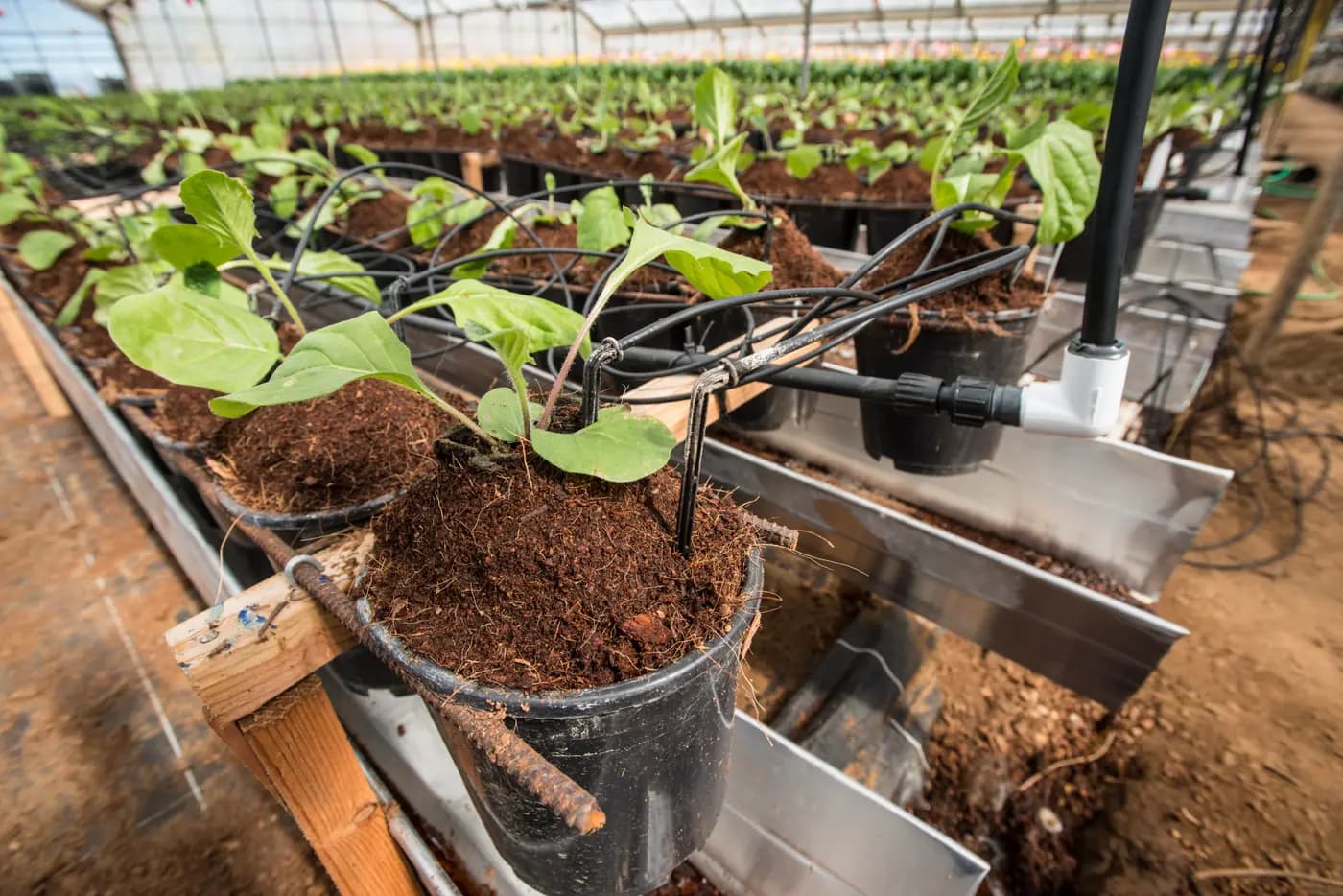
A drip irrigation system for potted plants in a working nursery should begin with the containers, not with a bag of identical stakes. A bench of small liners, medium stock and large pots may share a pipe, but it rarely shares one useful watering event. Container volume, growing medium, crop stage and exposure all affect how much water a pot can hold and how quickly it dries. Group similar pots into an operating unit, test one or more application points in each group, and only then count microtubes and arrows. The result is a purchase based on occupied positions and measured response rather than on the number of pots visible in a photograph.
This article addresses mixed commercial container production. It does not promise that every pot needs one arrow, or that a model's nominal discharge equals the water retained by a plant. The arrow-stake and microtube guide explains the anatomy of one endpoint, while the two- versus four-branch guide counts complete assemblies. Here the decision comes earlier: which containers can share a zone and a watering event, and how many tested outlets each group actually needs.
Map the pots by water behavior, not bench number alone
Walk the nursery while the plants are in their real production positions. Mark pot diameter and depth, crop and stage, medium, shade or exposure, and whether the containers are close-packed or spaced for growth. A large, bark-heavy pot and a small peat-based liner may look equally dry at the surface yet behave very differently deeper down. A bench label is a useful location reference; it is not proof that its contents should receive one schedule. Note any pots moved frequently for grading or sale, since an installed arrow must remain functional after those routine moves.
Make groups that can be operated together without forcing a slow-drying pot to receive every event needed by a fast-drying neighbour. Oregon State University's nursery irrigation scheduling guidance recommends grouping plants with similar water use and evaluating container moisture rather than running one fixed clock blindly. Use that principle with your actual crops; its regional plant list or percentages are not universal targets for this nursery. If mixed pots cannot be moved physically, consider separate controlled feeds or keep hand attention for outliers instead of pretending that one emitter setting solves the scheduling conflict.
Draw a simple map with a code for each group and mark which pots are currently occupied. Keep future empty positions separate. A 60-pot bench containing 25 fast-drying small pots, 25 medium pots and 10 large pots is not automatically a 60-arrow order. The number of watering positions and their grouping must come from a trial in those three pot types. This map will later determine branch layout, active flow, replacement stock and the effect of pots leaving for sale.
Check the growing medium before adding more outlets
Pick representative containers in each proposed group before changing hardware. Compare a known recently watered pot with one due for irrigation by its weight, a suitable moisture check and inspection below the surface. A dry-looking top layer can cover a moist root zone; a wet top can hide dry material beneath. UMass Extension's greenhouse watering resource makes this point, and it matters when deciding whether more arrows or a longer event would help. Record the method, not just a subjective word such as “dry”.
Observe what happens when a normal test event begins. Does water enter the medium near the intended root area, run down the inside wall, escape across a crust, or leave through the base almost immediately? A second arrow can widen application around a large pot, but it cannot correct a feed tube that misses the container or an unsuitable wetting pattern by itself. A faster outlet can worsen runoff from medium that accepts water slowly. Treat these as separate hypotheses to test on representative pots.
Keep the single-pot drainage method for a later measured diagnosis when an individual pot has unexpected outflow. That guide asks what happened in one container during one event. The grouping decision here asks whether many pots with different storage and demand belong under the same control at all. After grouping, repeat moisture checks as crops grow or pots are spaced; a valid grouping in the propagation stage may not remain valid at shipping size.
Choose one or several application points for each pot group
For a small container, one properly placed point may wet the required medium; a broader pot may need two separated points, or a different delivery approach. Neither is a universal rule. Mark the proposed arrow positions on the real pot, accounting for the stem, root ball, rim and room for crop work. The question is whether water reaches the intended root volume at an acceptable rate, not whether every pot carries the same number of blue arrows.
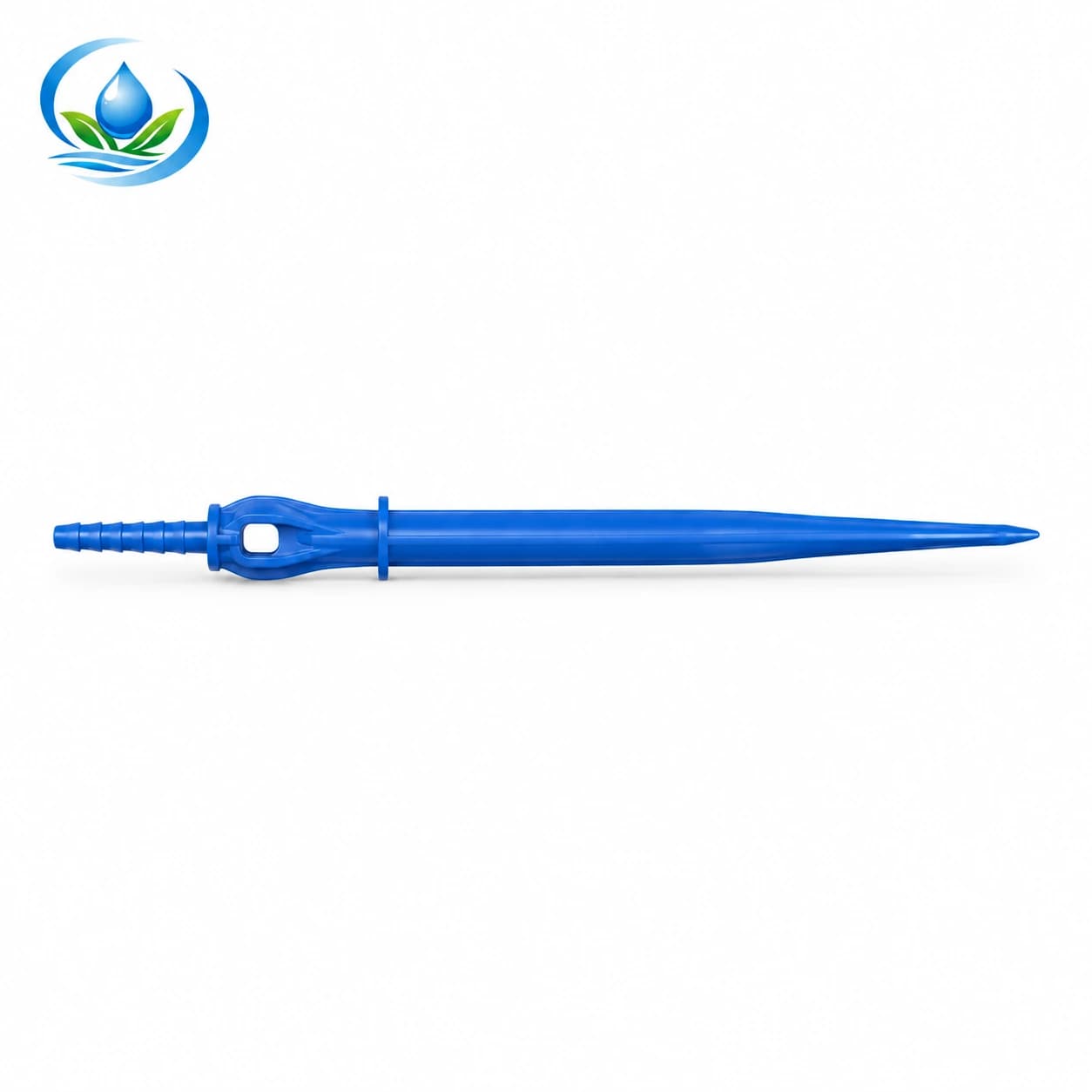
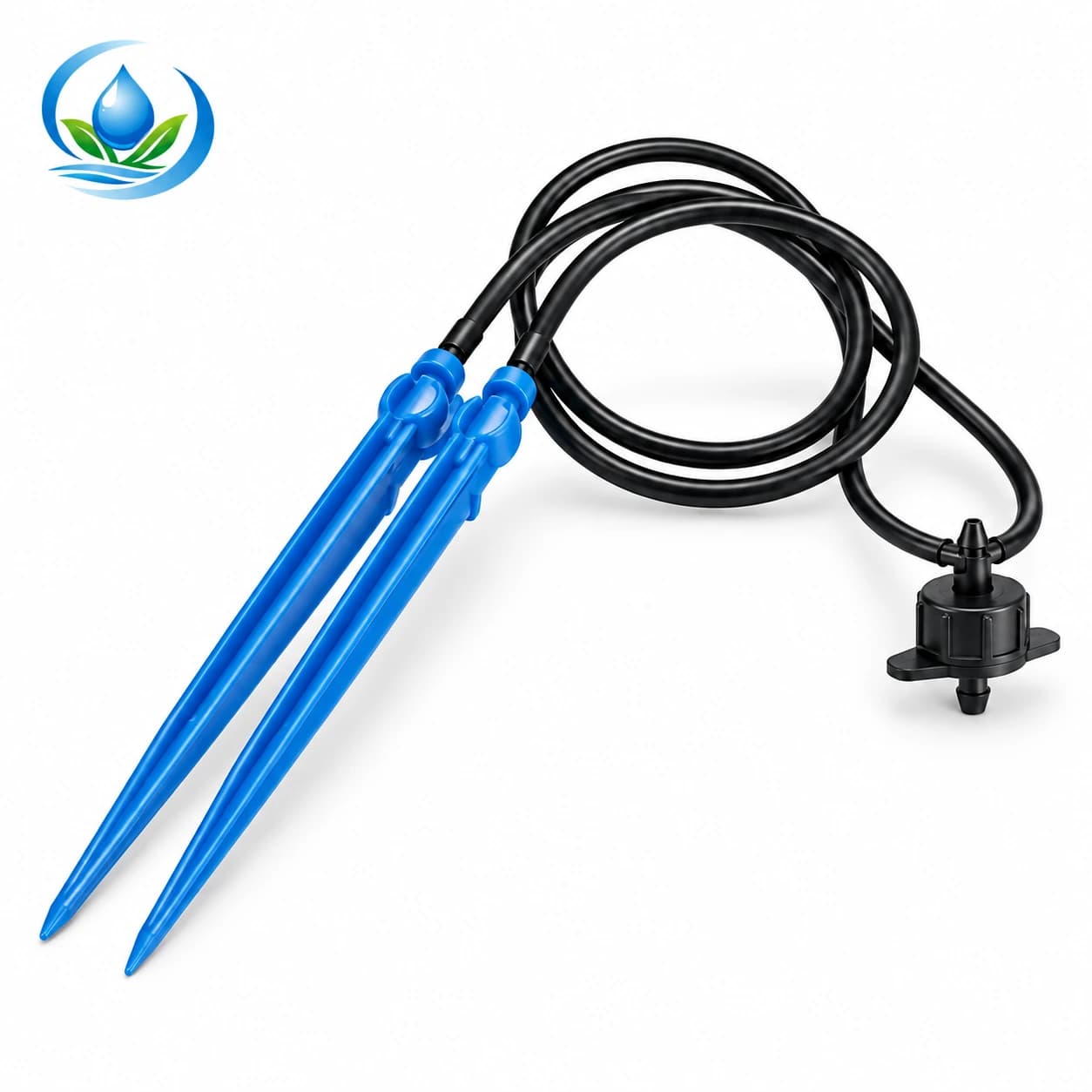
The 2101 straight arrow is listed as one nominal 2 L/h outlet. The 2121AD two-branch assembly is listed as two nominal 2 L/h outlets with a 4 L/h total. Those are catalogue descriptions of the identified models, not measured delivery or approval for every pressure and tube route. Online ordering is not currently available for either model; confirm the exact option, price and availability. The two-branch unit can serve two positions in one suitable large pot or positions in two nearby pots if its documented layout allows it. It does not create two separately controlled watering schedules.
Use a representative pot and the intended branch route to compare one versus two points. Keep the operating source, duration and starting medium condition as comparable as possible. Observe coverage inside the medium and the location of drainage, not merely a wet patch on the bench. If two points improve coverage but double the group's water demand, reconsider zone capacity and event duration before buying all assemblies. If one point gives a sound result in a small-pot group, a branch count based on the number of pots may be unnecessarily high.
Design microtube routes around nursery movement
The route from the supply to each arrow must survive the way staff move containers. Measure from the actual feed, over or around the pot rim, to the chosen position in the medium. Add only the movement allowance needed for spacing and lifting, while keeping surplus tube out of trolley paths and neighbouring plants. A route that fits a close-packed bench may pull an arrow from its pot after containers are spread apart. Test those normal positions before cutting a whole roll.
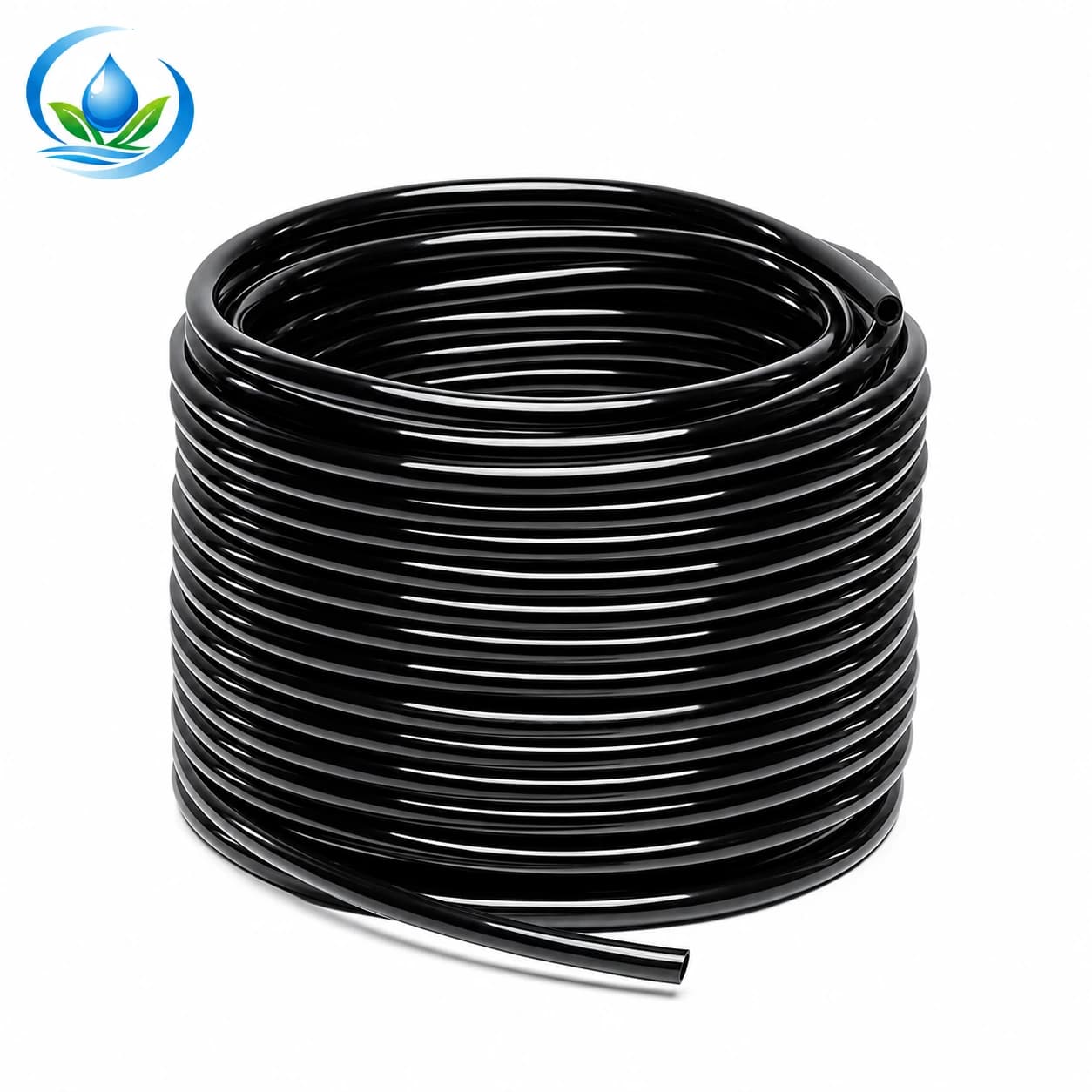
The micro-distribution tube page offers distinct inside and outside diameter pairs, including 3 × 5 mm, 4 × 7 mm and an 8 × 11 mm variant in its product record. Those are separate options; matching a nominal number on a stake photograph is not proof of fit. Confirm the approved tube for the exact arrow and upstream connection, plus the length and retention method. Do not assume the individual arrow listing includes all tube, connector and metering parts shown in an application image. Some existing nursery layouts meter water upstream of the terminal arrow; identify that device before changing it.
Route several sample branches across the least convenient pots, not only the nearest ones. Watch for a sharp rim, tight fold, bench edge, moving tray and a container that is regularly removed. An empty position should have a documented isolated or parked state; a loose running arrow on the floor is not useful crop irrigation. Folding an unknown tube as a shutoff is not a validated solution. If a branch reaches only when stretched, change the grouping or approved tube configuration rather than letting the arrow act as a tie to the supply pipe.
Separate group flow from water delivered to a pot
Count active outlets that run simultaneously. For illustration, if a verified layout used ten 2101 outlets at their nominal 2 L/h, the starting nominal total would be 20 L/h. Five documented 2121AD assemblies also provide ten nominal outlet positions and a nominal combined total of 20 L/h. This arithmetic does not prove equal delivery under a particular header, pressure or branch route, and it does not say that any pot should receive a fixed number of litres. It only prevents counting a two-branch assembly as though each branch were rated at the 4 L/h assembly total.
Keep the scheduling question separate. A nominal 2 L/h point operating for a stated interval gives a theoretical discharged amount under the model's specified conditions. How much the root medium holds depends on that pot and the event. The emitter buying guide explains pressure behaviour and total zone demand. Neither the shape of an arrow nor the branch count proves pressure compensation. Confirm actual model data and sample delivery at near and far positions before opening a large nursery group at once.
As pots are sold or moved, update the active-outlet map. A capped or isolated branch may change the operating flow seen by the rest of an assembly; follow its approved method and measure when the layout changes. Do not count stored spare arrows as active demand. A larger nursery can keep separate figures for installed potential positions, currently occupied positions and outlets actually operating in the next irrigation set. That distinction helps choose equipment without mistaking production inventory for hydraulic load.
Trial one full watering event in each representative group
Build one complete sample using the intended supply connection, filter and controls. Use the exact arrow and microtube options under consideration. Flush the feed as specified before connecting small passages, then start the normal group gradually and inspect for leaks, dislodged tubes and kinked branches. Catch the output of selected outlets for a measured interval without pulling them away from their normal elevation or restricting them. Label near, middle and far samples, as well as one pot at a difficult route. A group total can look acceptable while one branch barely delivers.
Next observe the container, not just the arrow. Check where water enters, where the moisture front reaches by the nursery's established method, and whether drainage occurs in a way that makes sense for the crop programme. A pot that remains light and dry after the event needs investigation: inadequate discharge, misplaced arrow, media bypass or an unsuitable schedule have different remedies. A pot that becomes heavy and repeatedly wet may need a different group, not a second outlet. Do not create a universal pass percentage from one trial; use the component instructions and the grower's crop criteria.
Repeat after the ordinary movement that will happen in production: spacing pots, shifting a tray, replacing an empty position and lifting a container for grading. Recheck tube connection, arrow placement and delivery. Record which changes affect the accepted arrangement. This test is different from the container sprayer footprint comparison, which asks whether a spray reaches the intended pot area. Here the outlet is a point and the main decision is how to organise unlike containers around it.
Turn tested groups into a bench-by-bench purchase
For each accepted group, write down crop and stage, container and medium, active pots, tested application points per pot, arrow model, complete assembly count, exact microtube option and routed length, controlled zone, measured sample result and how to park an unused branch. Separate operating units from spare stock. One two-branch assembly is not automatically a complete kit of feed connector, filter and tube of your chosen length; check what the listing actually includes. Ask for exact model and compatibility details where the page lacks them.
Do not purchase every planned expansion position immediately as though it were currently watered. A new crop batch, larger pots or different medium can change both grouping and outlet choice. Buy enough validated parts to reproduce the successful layouts plus a labelled, justified service reserve. Compare sale unit, price, availability and delivery of the exact options. A displayed zero or missing price is not an offer of free equipment, and a published model is not necessarily enabled for immediate checkout.
Keep the nursery map with a photograph of each accepted setup and a short operating record. When a batch moves, compare the new container and medium against its group before copying the old timer or branch arrangement. If the group remains similar, recheck sample pots; if it diverges, test a new group. A potted-plant drip system becomes practical when the purchase can be traced from real containers through measured application points to an operating group that can be revised as stock changes.
Before you order
Compare this guide with the specifications for your exact product, selected option, water supply and field conditions. Your equipment requirements take priority over a general example.
Compare irrigation products