Drip Irrigation vs Soaker Hose: Should This Crop Row Change?
Compare a working porous hose with manufactured-emitter tape or dripline using measured crop delivery and actual service costs.
Published by IrriNex Store
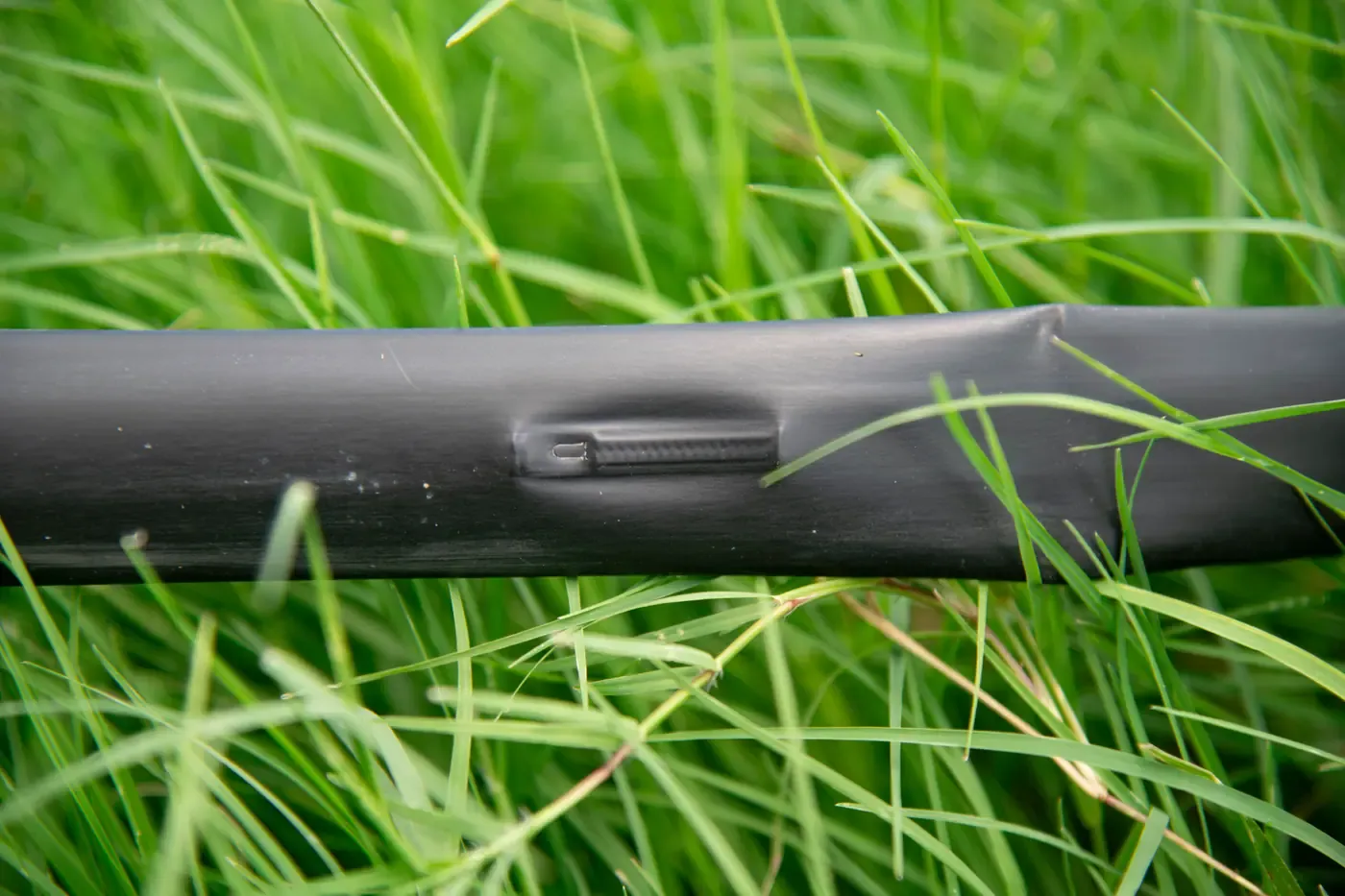
The useful question in drip irrigation vs soaker hose for a crop row is whether a porous line that still waters the crop has earned another season in the field. A grower who already owns an operating hose faces a different decision from someone planning a new block. Replacing every row can consume line, fittings, labor and a planting window before it improves anything. Yet keeping a line because water is visibly seeping from it can hide weak delivery at the far end or wetting outside the active root zone. The decision needs a working-hose baseline, a small fair trial of manufactured emitters and a cost comparison for the same rows.
Identify the line that is actually watering the row
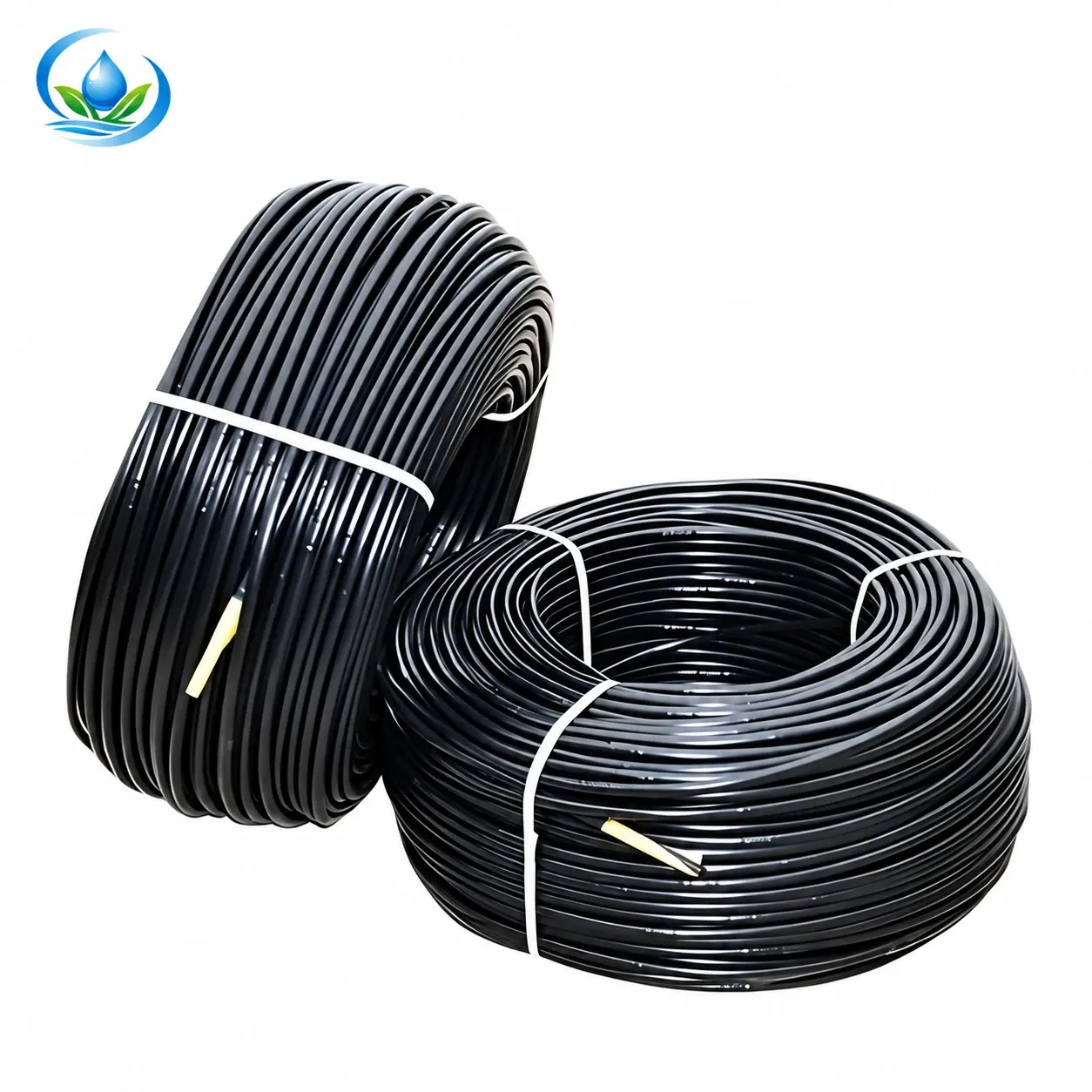
Start with the hose in the bed, not its nickname on an old invoice. A porous or soaker hose releases water through its wall along much of its length. Tape and inline dripline carry water to manufactured outlets at set intervals. A plain supply pipe carries water to those laterals but does not itself irrigate the row through built-in outlets. The FAO's drip irrigation chapter distinguishes porous-wall pipe from tape with outlets made during production and notes that variation in pore size can affect porous-hose discharge. That is a reason to measure your hose, not a verdict that it has failed.
Find the hose marking, purchase record or an offcut before treating a dark, flexible line as porous. Check whether water emerges continuously through the wall, from deliberately spaced outlets, or from damaged spots. Record its size and construction if known, its age in crop cycles, how it is placed relative to the plants, and whether it is retrieved, moved or left in place. A line that was described as a soaker hose but has discrete emitters belongs in a different comparison. If identification remains uncertain, expose and observe a short section under normal operation before ordering an alternative.
Describe the farm row as carefully as the line. Note crop, planting pattern, row and bed width, line position, lateral length, slope, soil texture, mulch, water source and the number of rows operated together. One porous line down the middle of a narrow vegetable bed does not create the same wetting pattern as a line beside a wider-spaced crop. Decide which rows are genuinely comparable; do not use a short level row near the pump to stand in for a long sloping block. For a broader choice among tubing families when building a new layout, use the crop-row tubing buying guide.
Finally, write down the crop-water target that the farm already uses or can document locally: the crop stage, intended wetted root area, irrigation trigger and amount for the current soil and weather. An extension recommendation, crop adviser, soil-water measurements or an established farm schedule can provide that target. A catalog's outlet spacing does not determine how much water this crop needs. Without a crop target, a comparison can show that two lines behave differently but cannot tell you which behavior is useful.
Measure the working hose before judging its performance
Choose a representative active zone and run it in a stable condition: normal source, normal filtration and valve settings, other valves in their usual state, and a consistent point in the pump cycle. Record the date, recent rain, starting soil condition, operating duration and which crop rows are open. Measure the actual volume entering that zone with a meter where possible, or use a calibrated flow measurement that represents its inlet. Note the zone's operating flow and pressure at the source or control point. A pressure reading before a filter alone says little about pressure available to the crop rows after that filter and the feed route.
At near, middle and far crop areas, record pressure at accessible points while the full zone is running. Where a suitable test arrangement allows it, collect water from equal measured lengths of exposed porous hose at all three positions for the same interval without changing the normal operating arrangement. Record each volume, collection time and sampled length so the actual flow per unit of hose can be compared along the row; keep the measured whole-zone flow alongside it. The capture method matters because water that bypasses a tray or a temporarily isolated hose section can make the apparent delivery misleading. If direct collection is impractical, use the zone volume and repeated soil observations, and label the near-to-far discharge as unknown rather than inventing a flow rate. Photograph the test positions so a second reading uses the same places.
Check the hose before accepting the baseline. A torn section, split end, buried leak, clogged stretch, flattened bend or feed restriction can create an unusually poor result. Repair a local fault and repeat the measurement if the rest of the hose is serviceable. If the whole line has deteriorated or blockage cannot be cleared, document that as a replacement problem; its faulty output is not a fair portrait of what a healthy porous hose would deliver. The replacement might still be sensible, but the claim changes from “manufactured emitters outperform this working hose” to “this failed assembly needs repair or replacement.”
Do the check at more than one irrigation event if the purchase affects many rows. A single event after unusual rain, a partially loaded pump or a freshly disturbed bed can mislead. Note changes in source pressure, filter condition and the number of simultaneously open rows. The comparison needs actual flow and pressure under conditions the farm can repeat, not an estimate from the hose's appearance or a generic pressure rule for all soaker products.
Look below the surface where the crop uses water
A wet strip visible from the tractor path is only a surface observation. At the near, middle and far positions, check soil at consistent depths and offsets from the plant line before irrigation and after a consistent settling interval. Use the same soil probe, auger, moisture sensor or tensiometer method each time. The question is whether the wetted zone reaches the crop's active roots without leaving a persistent dry band or sending much of the applied water below the intended zone. The useful depth and timing depend on this crop and soil, so record the farm's actual target rather than copying a generic wetting radius.
Walk for hidden losses too. A soggy depression near a join, unexpectedly vigorous weeds beyond the cropped strip, an isolated saturated patch, or a pressure drop along the row can point to leakage. A dry surface under mulch may conceal adequate root-zone moisture; a glossy surface may conceal shallow ponding and dry soil beside the roots. Separate the observation from its explanation. For example, “far-row probe was dry at the target depth after the usual application” is actionable; “the hose wastes water” needs a measured volume and a cause.
Connect the measurements to field work. Record the labor spent finding and patching leaks, clearing restrictions, moving the hose for cultivation, retrieving it at harvest and starting the next planting. A porous hose that meets the crop target and needs little attention may be worth keeping. Another may deliver enough water but repeatedly interrupt harvest or bed preparation. These are real costs even when the water meter shows no dramatic difference. Keep observations by row or zone so one troublesome section does not condemn a whole farm's hoses.
Trial an emitter line against the same crop-row target
Test a short candidate segment on a representative part of the field before pricing a whole-block conversion. Use adjacent comparable rows if possible, or repeat a before-and-after trial on the same row with careful records of crop stage and weather. Match row length, bed shape, planting, soil, slope and line placement as closely as the field allows. Keep source water and filtration consistent. Confirm that the candidate line is operated within the requirements of its exact option; do not assume that pressure or filtration suitable for the porous hose also suits the new outlets. Run the rest of the zone in the state that would exist after a real change, since changing the number of active laterals can change pressure and flow.
Give each test row the same documented crop-water target. Meter and stop each test when the same volume per comparable bed area has entered the row, then record the different durations needed. Equal clock time is not a fair test when line discharge differs. If only a whole-zone meter is available, isolate and meter the candidate rows in a controlled trial or account for every other active branch; dividing total pump volume by an assumed number of rows can hide uneven distribution. Record starting soil moisture, inlet and relevant crop-area pressure, zone flow, applied volume, and near, middle and far root-zone observations using the same method as for the old hose.
Try the candidate long enough to see an ordinary irrigation and a normal field-service task, not just the first attractive wet strip. Did it bring the far crop area closer to its target at the same applied volume? Did the water enter the bed where roots are active? Did it create a new dry band between crop rows or a repair burden during cultivation? Repeat a questionable result after checking for a kink, blocked filter or unusual source pressure. A fair trial can find that an emitter line improves distribution, that it behaves no better in this bed, or that the field's supply problem affects both. It need not produce a winner.
If a change is accepted, the old controller setting is a starting record, not the new schedule. Outlet flow and wetting geometry may differ, so the runtime guide for changed emitters explains the separate scheduling work. For this purchase test, keep the comparison tied to measured water delivered and the crop target; a shorter run by itself is not a saving.
Use the evidence to keep, change or defer
Keep and monitor: The porous hose is identifiable and repairable, near-to-far delivery is adequate for the crop, root-zone checks reach the documented target, and a properly operated trial does not produce a meaningful field or service improvement. Record a few fixed check points and inspect them during the next crop cycle. Keeping a working line is an active decision supported by evidence, not a failure to modernize.
Change the affected rows: Repeatable measurements show that the healthy existing hose misses the far crop area, wets the wrong part of the bed, or consumes recurring repair and retrieval labor. A candidate segment corrects the relevant problem at the same crop target and the actual ownership-cost comparison supports the change. Scope the order to rows with that problem; a good trial in one soil or slope does not automatically justify replacing every block.
Defer a full purchase: The hose is damaged and has not been repaired for a fair baseline, no local crop target has been set, the candidate was tested at an unsuitable pressure, or both formats show poor delivery downstream of a supply or filtration problem. Fix or measure the common cause, then rerun the small comparison. If the trial improvement is real but the installation would interrupt a near-term crop operation, the next planned bed reset may be the sensible decision point. A decision to defer should name the missing observation and the date or field event when it will be taken.
Do not make a water-saving or yield claim from a neater wetting pattern alone. The row may need a different runtime to receive the same useful water; crop response may take a season to measure. If water savings are part of the business case, meter both treatments and use the same crop outcome. The field water comparison guide covers that measurement separately.
Choose an emitting format for this bed and service routine
If the trial supports a change, select a line for where water should enter this particular bed and how crews will handle it. On a vegetable bed rebuilt after harvest, test whether tape placed beside the crop gives the needed wetted strip and whether crews can lay and retrieve it without costly damage. On a row where a line is shifted during field work or kept in position longer, test whether inline pipe's placement and handling suit that work better. Neither format is automatically more efficient simply because it has manufactured emitters. The meaningful comparison is the wetted root area, near-to-far delivery, damage exposure and service time in this field.
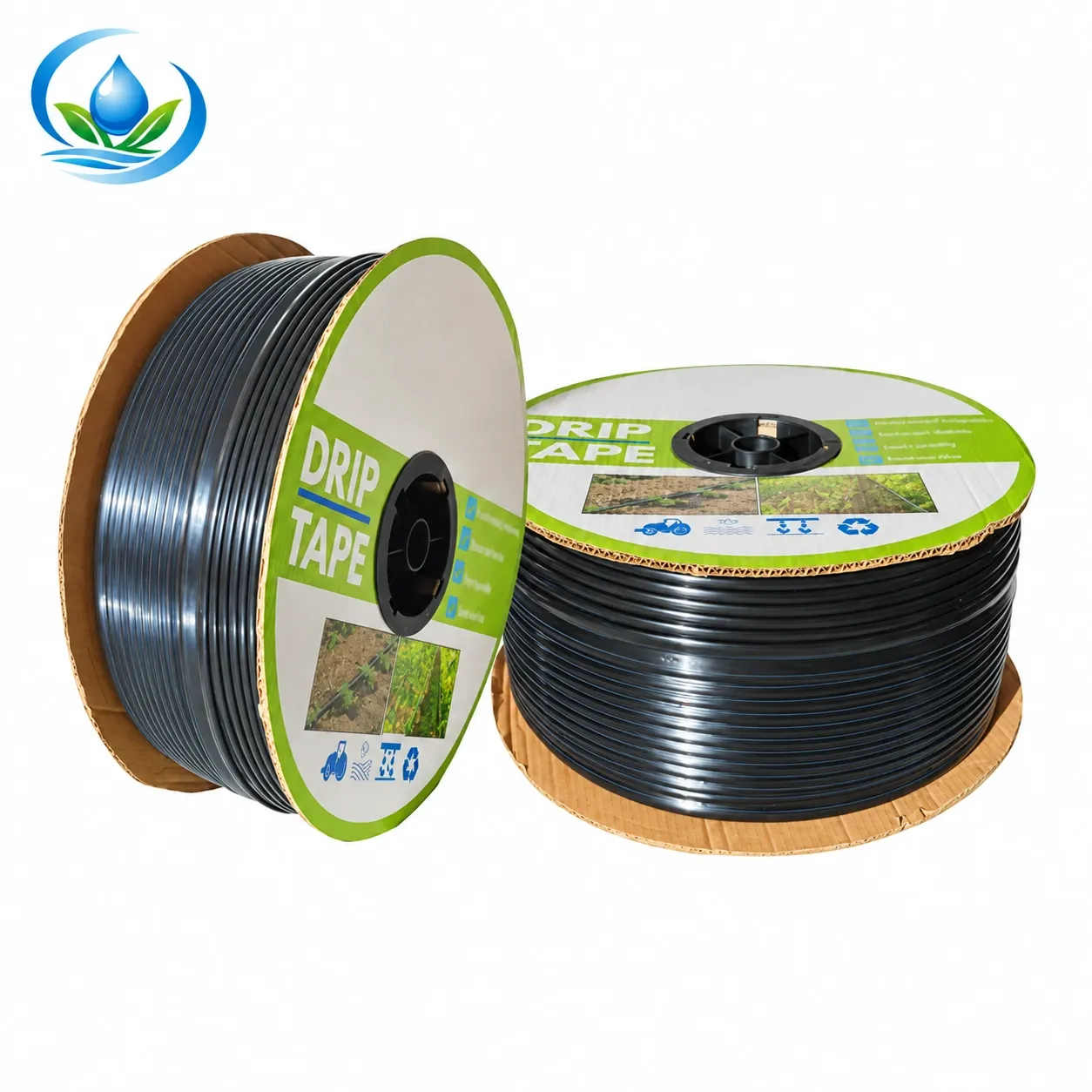
The Store's flat drip tape has an identified 16 mm nominal, 0.2 mm wall option with 30 cm outlet spacing on a 2000 m roll. The documented option does not pair those details with an outlet discharge or an allowed maximum installed run. Its roll length is a purchase quantity, not a promise that one long lateral can be fed from one end. Before using it in the trial, obtain the exact option's operating and layout requirements and check whether its 30 cm outlet pattern wets the crop position intended. Do not assign it the nominal flow of another tape or of the inline pipe.
The Store's inline drip pipe has an identified 16 mm, 0.8 mm wall option with 30 cm outlet spacing, nominal 2 L/h per outlet and a 500 m roll. That nominal outlet rating does not establish pressure compensation, the field discharge at your operating pressure, or permission for a 500 m single hydraulic run. Use the trial's pressure and row delivery to judge the planned length and layout, and verify the exact option's allowable conditions before extending beyond the sample. More wall thickness by itself is not a measured number of extra crop seasons.
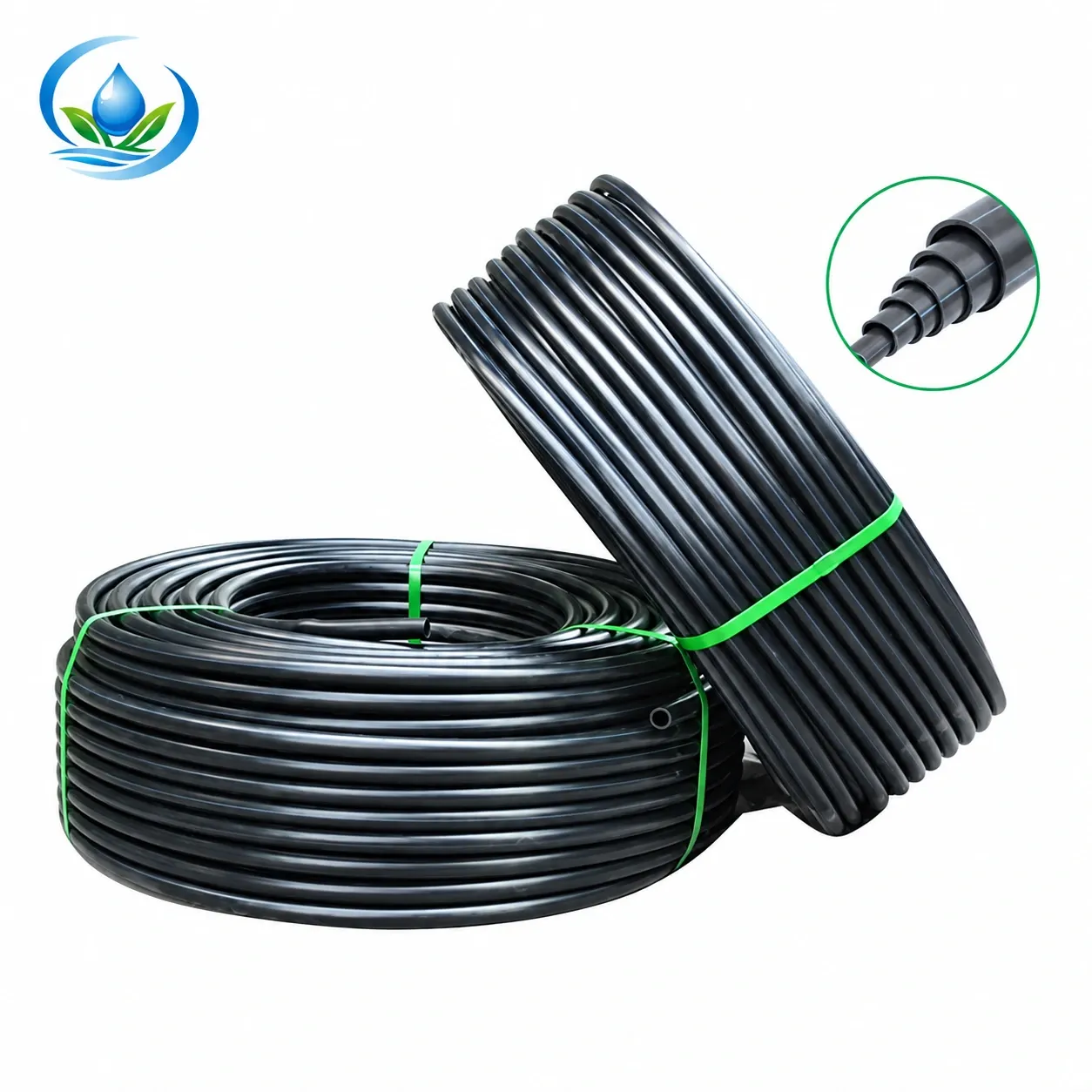
The blank PE lateral pipe includes a 16 mm outside-diameter, 1.0 mm wall option. It has no built-in emitting outlets, so it belongs on the feed side of a possible layout, not as a third emitting substitute for the porous hose. A usable existing feed may be retained, or a replacement feed may be needed, depending on measured condition and the new layout. Check the product page for its current purchase route and availability. The three nominal 16 mm descriptions do not prove that their fittings interchange. For the physical connection work after choosing a format, use the soaker-hose replacement connections guide and verify the mating parts on the exact options.
Price the same rows over two or three real crop seasons
Build two farmer-filled columns for the same row count, crop and comparison period: keep or repair the porous assembly, and convert the affected rows. Use two seasons if that is the farm's credible planning window, or three if rotations and access make three more informative. This is an accounting horizon, not a promised life for either product. Quote local prices, use paid labor rates or a stated value for farm labor, and count only parts and work actually required. A roll, fitting pack or filter should be charged for the amount consumed, with any genuinely reusable remainder recorded separately.
| Farmer's entry for the same scoped rows | Keep or repair porous hose | Convert to tested emitter line |
|---|---|---|
| Rows, crop and two- or three-season window | _____ | Same scope: _____ |
| Line or hose bought and usable material carried forward | _____ | _____ |
| Starts, ends, adapters and other connection parts | _____ | _____ |
| Filtration or pressure-control work actually needed | _____ | _____ |
| Install, retrieve, clean and repair labor by season | _____ | _____ |
| Field time disrupted and parts that cannot be retained | _____ | _____ |
| Metered water and pumping cost at the same crop target | _____ | _____ |
| Total for the chosen window and rows | _____ | _____ |
Include actual new line, starts and ends, adaptors, and any filtration or pressure-control changes that the exact trial shows are needed. Count the labor to lay, secure, retrieve, clean and repair each system in each season, plus the value of field time lost if installation or repairs disrupt planting, cultivation or harvest. Put discarded ends, damaged line and other parts that cannot be retained on the appropriate side. If an existing feed, filter or control part can truly stay in service, do not buy it again in the conversion column. If it must change, do not pretend that the new emitter line alone is the full project cost.
Keep the crop result beside the totals. A cheaper assembly that misses the target is not the same service; a more expensive assembly needs a demonstrated field or labor benefit to justify the difference. Enter water and pumping costs only from measured volumes and local charges, and enter any crop-value difference only if the farm actually observes and prices it. No universal water-saving percentage, yield gain, product life or payback period can replace this calculation. When the trial shows little difference and the current hose remains serviceable, the keep column may be the best purchase decision.
Order for a limited decision, then verify the next row
For an initial purchase, count the actual rows and their measured lengths, the number of laterals per bed, starts, ends and a realistic allowance for cutoffs or field damage. Check how the candidate's outlet spacing falls relative to the plants and where the water will enter the root zone. Verify the exact option's outlet discharge, allowed operating conditions, filtration need, practical run length for this layout and connector fit before scaling the order. A label that says 16 mm or a roll that contains hundreds of meters answers none of those questions alone.
Keep the first order limited to rows that can be measured and serviced as a coherent zone. After installation, record its actual source and crop-area pressures, flow, applied volume, near-to-far wetting and service time against the original trial sheet. If blank PE is part of the feed plan, the guide to uncoiling agricultural PE pipe covers that separate handling task. Expand to the next block when the field observations and cost entries still support the change. If they do not, the trial has paid for a useful answer: keep the operating porous rows, repair the weak ones and revisit the decision when crop or field conditions change.
Before you order
Compare this guide with the specifications for your exact product, selected option, water supply and field conditions. Your equipment requirements take priority over a general example.
Compare irrigation products