How Much Water Does Drip Irrigation Save? Compare Your Crop Block Fairly
Compare measured water supplied to a crop block before and after a drip trial. Keep area, weather, soil moisture, service water and crop performance in view before calculating a percentage.
Published by IrriNex Store
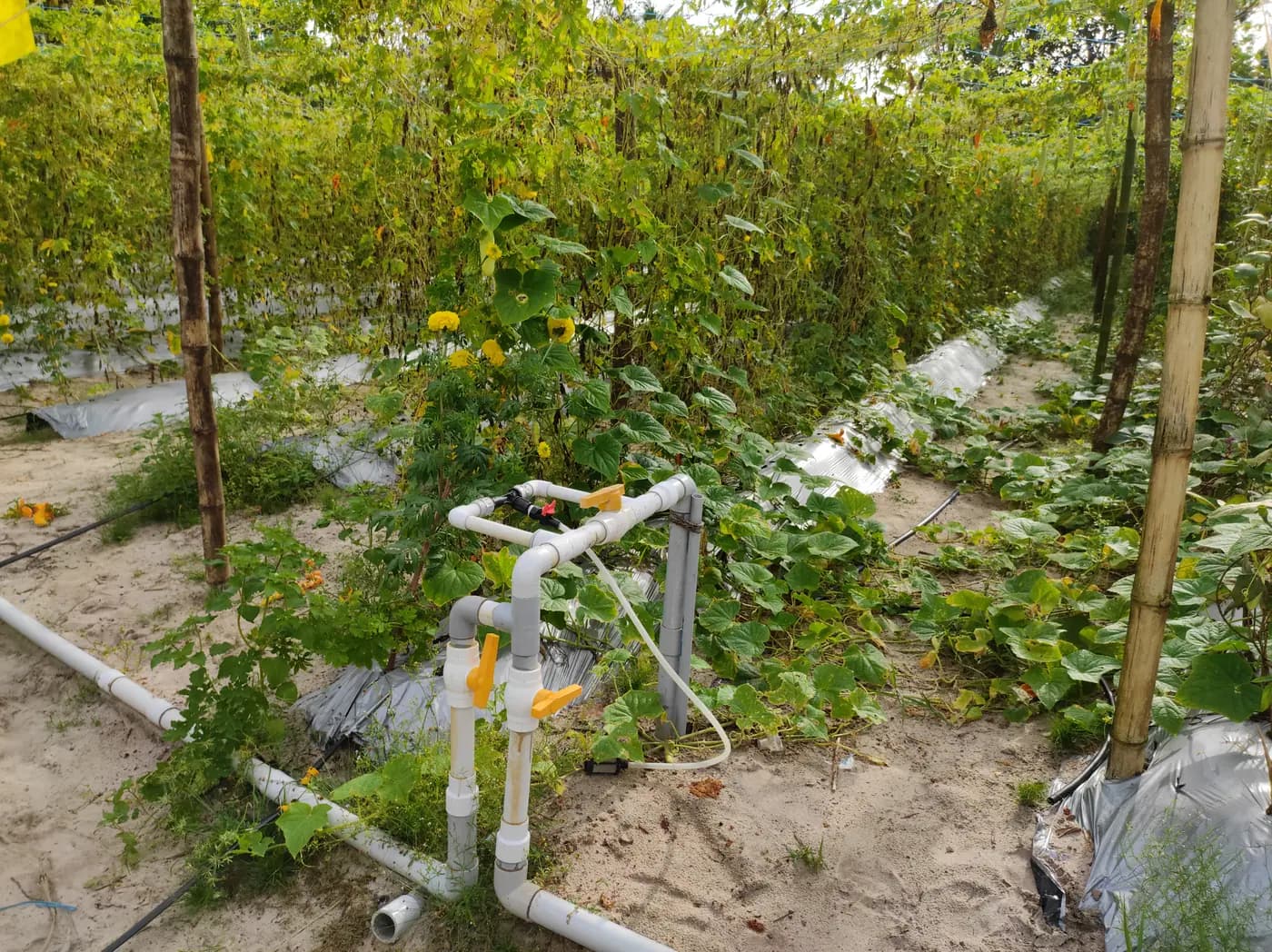
How much water does drip irrigation save on your crop block? There is no reliable percentage to assign before comparing the existing irrigation with a working drip arrangement under comparable conditions. Start with the water actually supplied to a defined area, then check whether that area still receives appropriate irrigation and produces the intended crop. A drip irrigation water savings field comparison needs matched measurement boundaries before a percentage is calculated.
A smaller supply total is useful evidence, but its meaning depends on what changed. Fewer planted rows, a wetter week, depleted soil storage or an underperforming lateral can all reduce the recorded amount. A fair comparison keeps those explanations visible so a trial can support a component purchase without turning an unexplained difference into a savings promise.
Which two watering arrangements does this savings comparison measure?
Name the crop block, measured area, planted layout and period you want to evaluate. State whether the question concerns water supplied to that block, water withdrawn at the farm source, or an irrigation-only subtotal. Those quantities may have different boundaries. Decide which one will guide the purchase and use that definition for both arrangements.
Describe the existing method and its condition. A leaking old hose is a different baseline from a maintained sprinkler installation. Repairing an accidental leak can lower use regardless of the replacement irrigation method. Preserve the fault record so you can distinguish an improvement in maintenance from an effect attributed to drip delivery.
Record the proposed change precisely: a new lateral type, different outlet arrangement, revised scheduling, or several changes together. If the trial changes equipment and management simultaneously, its result concerns that combined package. Do not later present the observed difference as a property of one roll of tape alone.
Does the meter cover the same users in both trials?
Sketch the measurement point and every branch it supplies. A dedicated block measurement is easier to interpret than a source total shared with another crop, livestock or washing. If other users operate during the observation, exclude their independently measured volume or label the result as combined use. Unknown shared demand cannot be assigned to the trial by guesswork.
Use suitable existing measurement equipment and its documented units, installation requirements and service condition. Retain original readings and dates. If the meter changes between periods, establish whether the records remain comparable. The guide to recording irrigation volume at a meter explains the reading procedure that can support this longer comparison.
Locate any tank relative to that point. Water entering storage during a period need not equal water leaving for the crop if the stored quantity changes. Record the relevant beginning and ending storage condition or choose a boundary that measures the intended delivery directly. Moving the meter boundary after the retrofit changes the question as well as the equipment.
Include the water needed to operate and maintain each system
Keep separate entries for routine irrigation, line flushing, filter servicing and other water drawn for the compared installation. Then retain a total covering all uses within the agreed boundary. A drip trial should not appear better simply because its cleaning water was omitted while the old system's total included maintenance and startup.
Some service water may come from a separate hose outside the block meter. Record it separately if it belongs to the agreed comparison. Avoid counting a volume twice when a head meter already includes it. If a quantity cannot be measured reasonably, identify the gap rather than hiding it inside an estimated “normal” allowance.
Preserve records of failures and unusual events too. A burst connection, extended flushing after repair or accidental overnight operation can dominate a short comparison. Show the inclusive total and identify the event. If you also calculate a routine-operation subtotal, apply the same exclusion rule on both sides and explain why it was used.
Match crop area and stage before comparing periods
Use equal areas where practical and record the actual planted area rather than a remembered field size. Converting a larger old block to a smaller drip block will often reduce its total without demonstrating lower use per comparable crop area. When areas differ, report volume per unit area alongside total volume and preserve both original area measurements.
Area normalization does not remove differences in crop, density or growth stage. A recently planted row and a fruiting row can require different management even if their measured areas match. Choose comparison periods that represent similar crop tasks, and keep variety, planting dates, harvested sections and missing plants with the water record.
Equal calendar length is useful but insufficient. Two weeks under very different evaporative demand or rainfall do not provide an equivalent test simply because both contain fourteen days. A nearby comparison block observed over the same dates can improve context when its soil, crop and management are suitably matched, but proximity alone does not guarantee equivalence.
Record weather and the water already stored in the soil
Collect relevant rainfall and weather observations for both periods. Note whether beds are exposed, covered by film or sheltered under a structure. A rain reading does not establish that the same water entered every crop's rooted soil. Keep the observations that explain irrigation decisions rather than subtracting all recorded rain automatically from a supply total.
Assess the soil's starting and ending moisture condition using an appropriate consistent method. A trial that begins with wetter soil can draw on stored water while requiring less irrigation. If it ends substantially drier, part of the apparent saving may be a reduction in storage that cannot simply be repeated in the next period.
Use those findings with local crop guidance when deciding irrigation. The rainfall scheduling checks help document a pause or restart decision. For the comparison, retain the reasons and conditions behind those decisions so a rainy trial is not credited entirely to the new emitting line.
Calculate a percentage from a stated baseline
The percentage reduction in a comparable measured volume is the baseline volume minus the trial volume, divided by the baseline volume, multiplied by 100. The baseline belongs in the denominator. Keep the reporting unit, measurement boundary, area and period beside the calculation, so the percentage does not become detached from what was actually compared.
Consider an explicitly hypothetical example for equal areas and equal observation periods under an agreed accounting boundary. The baseline receives 240 m³ in total, consisting of 230 m³ for irrigation and 10 m³ for service. The trial receives 180 m³, consisting of 164 m³ for irrigation and 16 m³ for service. These are invented arithmetic inputs, not field results or recommended crop volumes.
| Illustrative quantity | Baseline | Drip trial |
|---|---|---|
| Irrigation subtotal | 230 m³ | 164 m³ |
| Service water | 10 m³ | 16 m³ |
| Total within the comparison | 240 m³ | 180 m³ |
The difference is 60 m³. Using the inclusive totals gives (240 − 180) ÷ 240 × 100 = 25% less supplied water in this example. Ignoring the higher service use would describe a different result. The arithmetic demonstrates how to report a reduction; it does not establish that a real retrofit will achieve that percentage.
A zero baseline cannot support this percentage calculation. If the trial total exceeds the baseline, the result represents an increase, not a negative amount to hide. If the apparent difference is comparable to reading uncertainty or unmeasured shared use, report that limitation instead of adding decimal places that imply greater confidence.
Separate lower supply from consumption and productivity
USGS irrigation water-use guidance distinguishes withdrawals from consumptive use. A block's supply measurement therefore cannot by itself establish an equal reduction in crop consumption or in water unavailable for local reuse.
Some supplied water can leave the field as runoff or drainage; some remains stored, and some is consumed through evaporation and plant processes. A supply comparison does not quantify each pathway. Name the measured result accurately, such as “lower water delivered through this block inlet during the recorded period,” rather than claiming a complete farm or basin water balance.
Water productivity also needs an output measure, with a clearly defined water denominator. If you want to compare marketable crop produced per unit of irrigation supplied, record that output consistently and label the metric accordingly. A lower meter total alone supplies neither a yield result nor proof of improved productivity.
Check that lower use still accomplishes the irrigation task
Inspect representative crop positions and the relevant rooted soil during the trial. Include difficult locations, not only the vigorous plants near the inlet. Look for uneven delivery, persistent dry sections, leakage or water moving beyond the intended area. A restricted filter or blocked lateral can lower total draw while making the irrigation worse.
Compare delivery at several outlets using the same appropriate sampling method, and record their operating pressure and active group. Verify that changes in time or outlet count have not silently changed the intended event. The runtime review after outlet changes supports that calculation once the hardware is delivering correctly.
Keep crop condition and, when available, comparable harvest observations alongside the water totals. Do not deliberately withhold needed irrigation to improve the percentage. When the crop response is uncertain, obtain suitable agronomic advice and continue the observation period; an attractive early number is not worth accepting a poorly supplied planting.
Specify the trial line without assigning it a saving
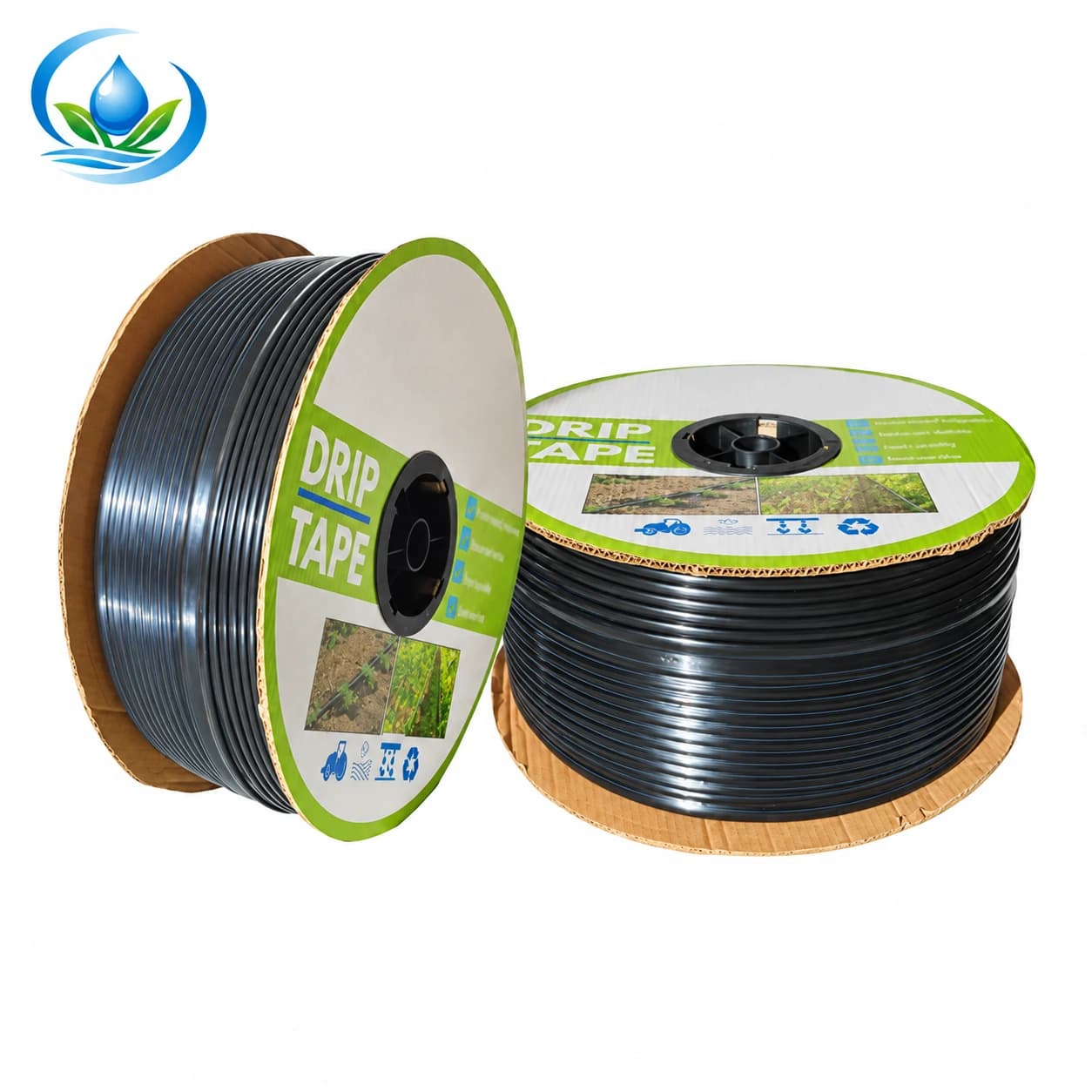
One identifiable flat-emitter tape option is IS-2-C526AC2D85. It is supplied in 2000 m rolls and has a 16 mm diameter; the selected wall measures 0.2 mm, with outlets repeating at 30 cm. Request the discharge and operating requirements of that exact configuration before using it in a demand calculation.
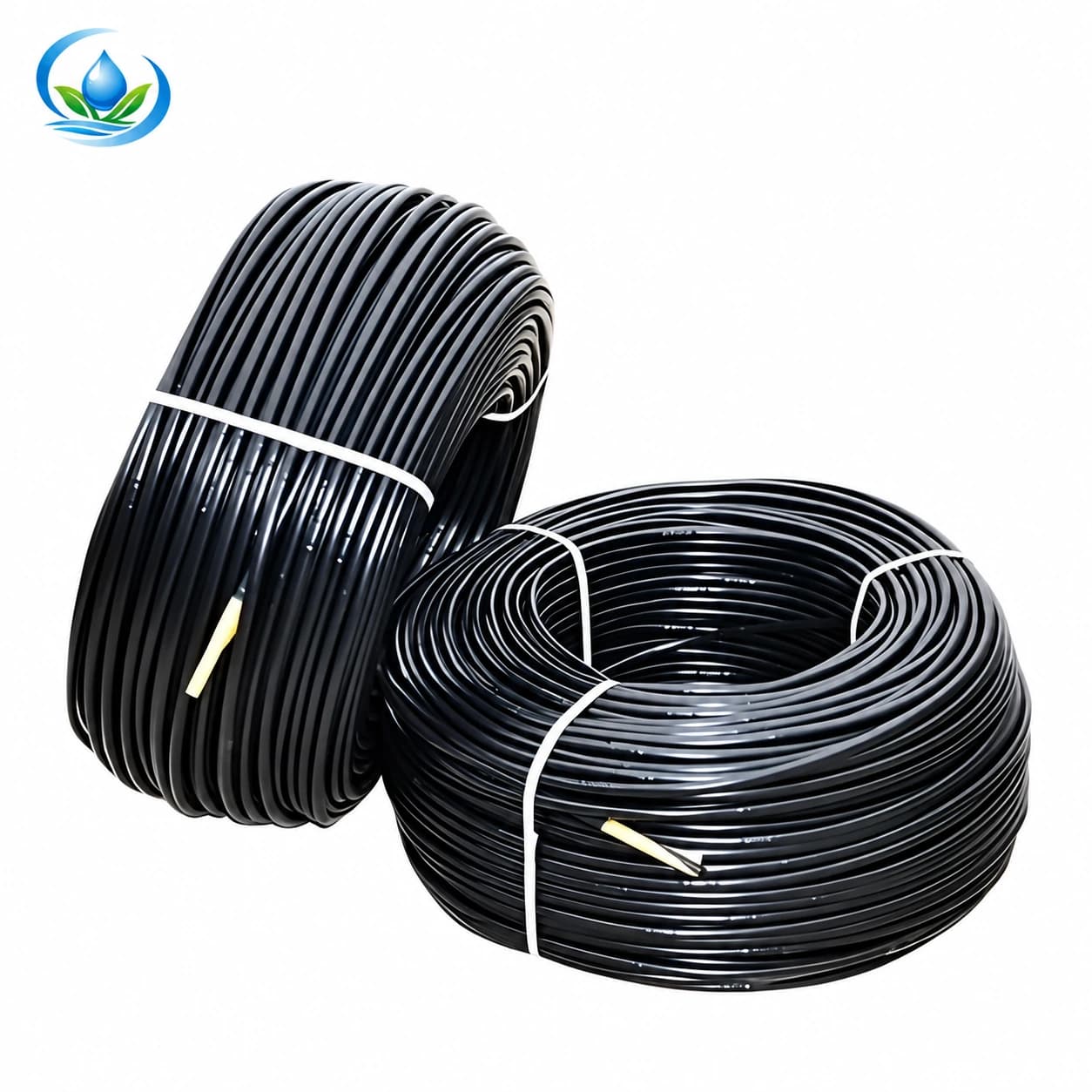
The inline emitter pipe option IS-3-8CDA6B18CD identifies a nominal 2 L/h outlet choice. Its construction is 16 mm diameter with a 0.8 mm wall, and the selected outlet interval is 30 cm; roll supply is 500 m. That label does not establish pressure compensation or measured discharge under your trial conditions.
Roll metres describe purchased material, not allowable single-run length or the portion that must operate together. Choose and document the installed layout from the crop, soil and exact product data. Keep connections, terminal service points and any retained supply parts on the trial drawing. A change of wall, spacing or outlet model creates a changed trial configuration.
Make filtration and service part of the trial purchase
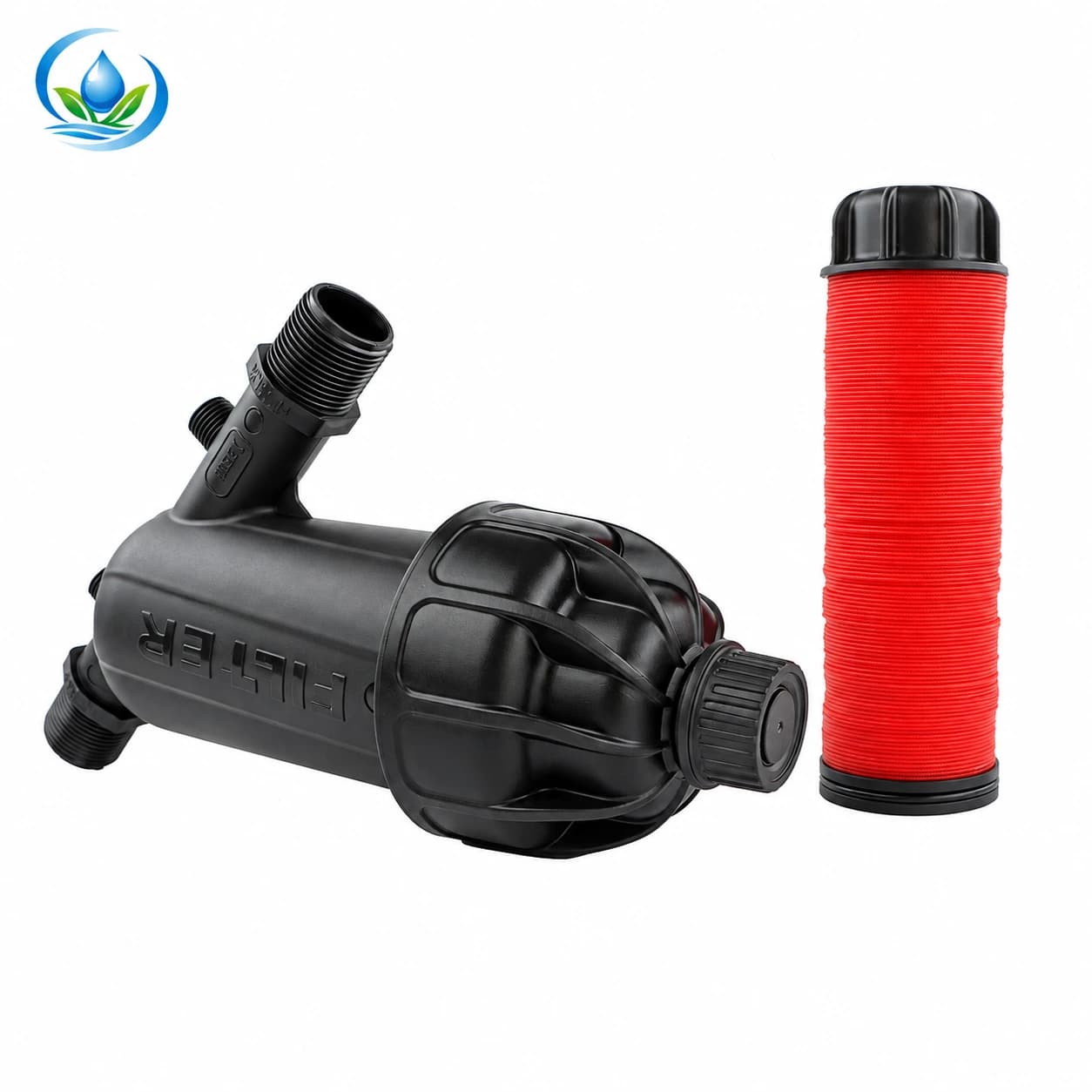
A complete Y-body disc filter option is F32YD, SKU IS-34-F32YD. Its catalogue identifies a 1-inch connection and 120-mesh grade, with a maximum flow of 6 m³/h and an 8 bar maximum pressure. These separate limits do not give its actual pressure loss or prove suitability for every drip outlet.
Match filtration to the selected emitter requirement, source condition and operating group. Confirm connections, working limits and access for the prescribed cleaning method. Include service water in the agreed accounting record. A filter that protects the trial correctly is part of the operating arrangement, not an accessory to remove to make a flow reading look favourable.
Check the supply and protection equipment under the proposed combination using the farm drip design checks. A successful small sample does not confirm a larger simultaneous area. Document the exact tested group before extending purchases to more rows or combining previously separate blocks.
Use the result to decide whether to expand, revise or keep measuring
Begin with a manageable, representative trial whose water and crop observations can be recorded reliably. Keep a dated baseline and log every meaningful change. Repeat comparable observations rather than selecting only the most favourable event. A short before-and-after record can reveal a useful difference while leaving its cause uncertain, especially when weather or soil storage changed.
Expand a purchase when the component fit, irrigation performance and comparison evidence support the intended application. Revise the trial when delivery is uneven or the measurement boundary is unclear. Continue measuring when the water difference is small, the crop stage has changed or the outcome is not yet observable. These decisions need the record, not a promised universal percentage.
Use the block map, original totals, crop and weather notes, and operating observations to select the exact listed tape, pipe and filter variant that fits the trial. Check the product listing for its current price, pack size, availability and delivery terms before ordering; ask support about any remaining fit or operating question. Keep equipment and service costs visible without assuming a payback period or bill reduction from the water percentage alone. The useful result is a defensible decision about the next area to equip.
Before you order
Compare this guide with the specifications for your exact product, selected option, water supply and field conditions. Your equipment requirements take priority over a general example.
Compare irrigation products