Drip Irrigation System for Blueberries: Check the Root Layer Before Buying Emitters
Inspect moisture beneath weed mat and across the rooted bark layer before choosing fixed-spacing dripline or individual emitters for a blueberry bed.
Published by IrriNex Store
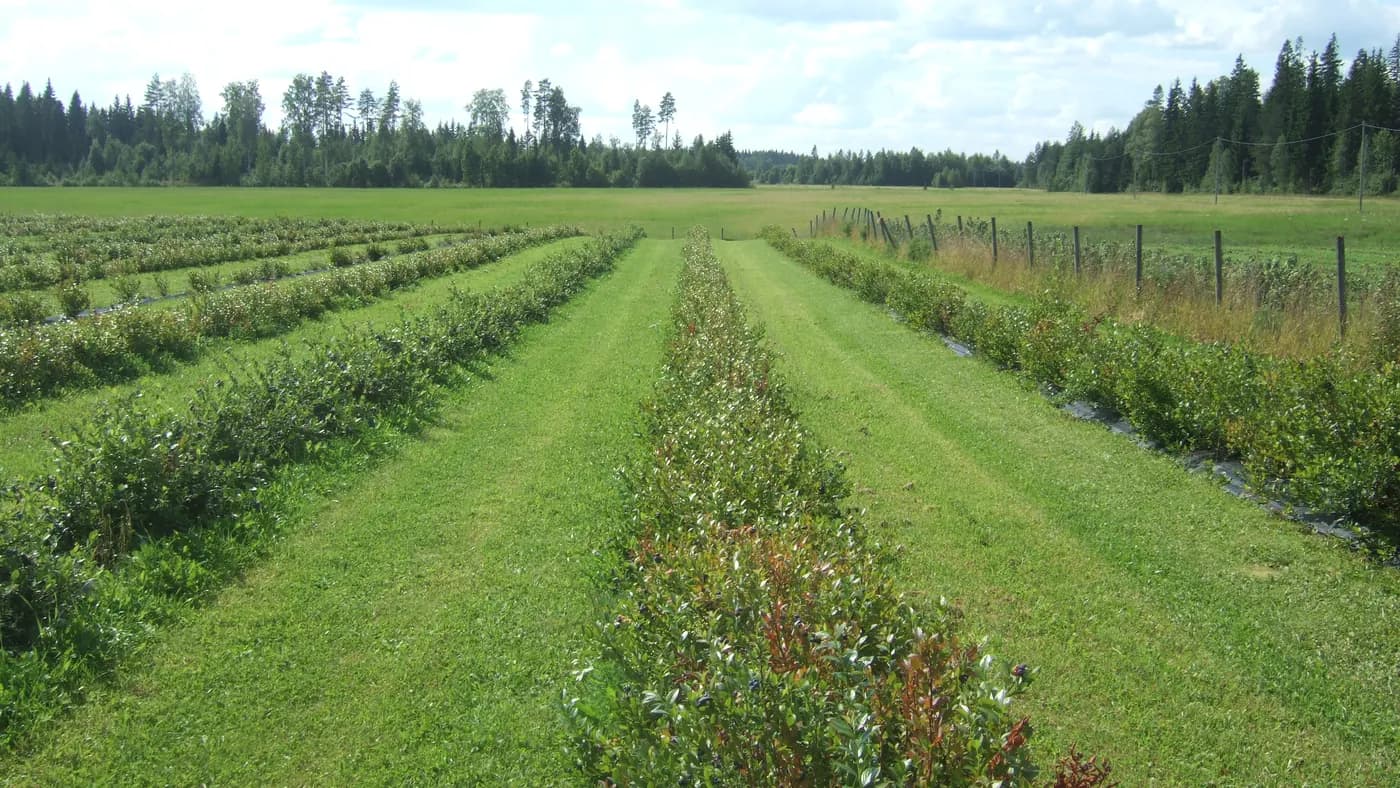
A drip irrigation system for blueberries should be chosen around the part of the bed that actually contains roots. If water appears beneath an outlet while nearby bark remains dry, buying a higher flow emitter may leave the original problem unresolved. First establish whether water is failing to reach the outlet, landing in the wrong place, or moving through a narrow part of the bed. Those observations lead to different purchases.
This guide focuses on blueberry beds in soil, pine bark or bark-amended soil, including beds covered with weed mat. It helps you compare a fixed-spacing dripline with individual delivery points and decide what to inspect before ordering. It does not prescribe one number of emitters, watering duration or layout for every blueberry planting.
Inspect the blueberry root layer beneath bark and weed mat
Start with a short description of your planting: cultivar, approximate plant age, bed material, bed width, covering and current irrigation arrangement. Distinguish a thick bark bed from a thin bark mulch over soil. They may look similar from the aisle, but an irrigation decision needs the location of the roots and the material surrounding them. Check an accessible representative location without cutting through established roots. A blueberry drip irrigation wetting trial should look where active roots receive moisture, not infer success from a damp patch under one visible outlet.
The UF/IFAS guidance for southern highbush blueberries in Florida describes shallow roots concentrated in pine bark and water moving down through vertical channels. In that production context, a few wet delivery points can coexist with uneven moisture across the root layer. This is a reason to inspect lateral wetting in your own bed, not to assume every blueberry soil behaves like a Florida bark bed.
Mark where irrigation water enters the bed relative to the rooted material. A dark patch on the covering, a wet aisle or a damp surface directly beneath a dripper does not establish the moisture condition between outlets. Your purchase should address the observed gap, rather than the size of the visible wet mark.
Make weed-mat access part of the inspection
Locate existing seams, edges and service openings before lifting the covering. Use the access already provided, and avoid blindly cutting near hidden tubing or roots. Record whether a line lies under the mat, on top of it, or has moved toward an aisle. Trace individual delivery tubes to their ends; an outlet that has slipped outside the intended bed may still discharge normally.
Compare several positions: beside an outlet, between adjacent outlets, and across the bed where roots are present. Also compare the rooted layer with the material below it. Keep the observations tied to the same watering event and note recent rain. A single inspection after a storm cannot tell you what the drip arrangement alone accomplished.
Choose inspection points that you can revisit after a small alteration. Photograph their position and replace the covering carefully. A future order may need an accessible connection or replacement line, but access itself is also a maintenance requirement: a component hidden beneath an immovable cover is harder to check when performance changes.
Separate missing water delivery from poor root-zone wetting
If one outlet delivers noticeably less water than neighbouring outlets, investigate the delivery path first. Inspect for a pinched tube, displaced connection, obstruction or visibly damaged component. Compare collected discharge over the same interval at several representative points. A cup measurement is more useful than judging the apparent size of individual drops.
If discharge is similar but moisture remains concentrated in narrow strips, the next question is where the water enters the bed. Increasing the flow at the same point does not prove that water will reach a dry area to the side. Conversely, adding outlets will not repair inadequate supply pressure or a blocked filter.
The pressure checks before choosing dripline help separate supply limitations from component selection. Record pressure while the relevant block is operating, rather than relying only on a static reading with outlets closed. If the observations remain inconsistent, resolve that uncertainty before buying replacements for an entire planting.
Choose the delivery pattern before the product family
A fixed-spacing line places an outlet at each manufactured interval. Individual emitters let you select the delivery locations, provided the tubing, connections and mounting arrangement are compatible. Neither description guarantees a particular wetting width. Use the bed inspection to decide whether you need repeated delivery along a continuous rooted strip or a small number of separately positioned outlets.
For an existing installation, consider the smallest useful trial: reposition an accessible delivery end, replace a confirmed faulty component, or test a short sample of the proposed line. Change one factor at a time so that the result remains interpretable. Keep a record of the original arrangement before moving anything.
Drip tape is another fixed-spacing option worth comparing when its specified wall, flow, pressure and connections suit the intended installation. However, a tape price alone is not a complete comparison with a thicker dripline. Include joining parts, expected handling and the work needed to reach the line under the covering. No universal blueberry tape specification is established by this guide.
A verified dripline option to use in a comparison
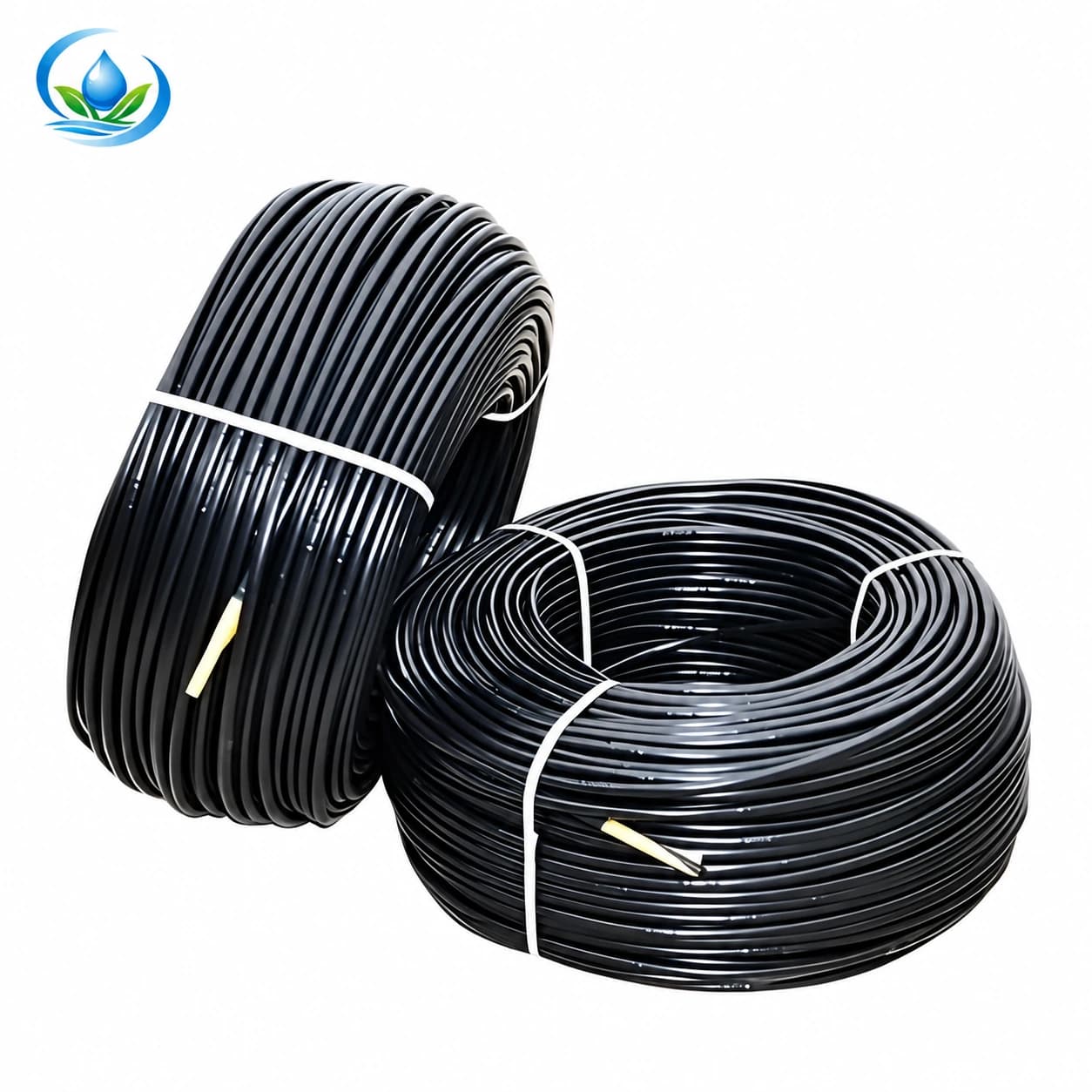
The current dripline with built-in emitters includes a verified option labelled 16 mm / 0.8 mm wall / 30 cm spacing / 2 L/h / 500 m roll, SKU IS-3-8CDA6B18CD. Treat those values as one complete option. Do not combine one variant's spacing with another variant's flow and assume the resulting configuration can be ordered. Request a quotation for this exact SKU and confirm its supply terms before ordering.
The 30 cm value describes the interval between built-in emitters. It is not a validated spacing between blueberry plants, lines or beds. Likewise, 500 m is the supplied roll length, not a demonstrated permissible lateral length. The chosen operating pressure, actual line length and available supply still need to be checked for the proposed block.
This option is useful for a representative trial where repeated outlets could suit the observed rooted strip. Its listed specifications do not establish pressure compensation, an anti-drain function or resistance to root intrusion. If one of those features is essential, request confirmation for the exact option instead of treating it as a property of all dripline.
Where individual PC emitters fit the purchase
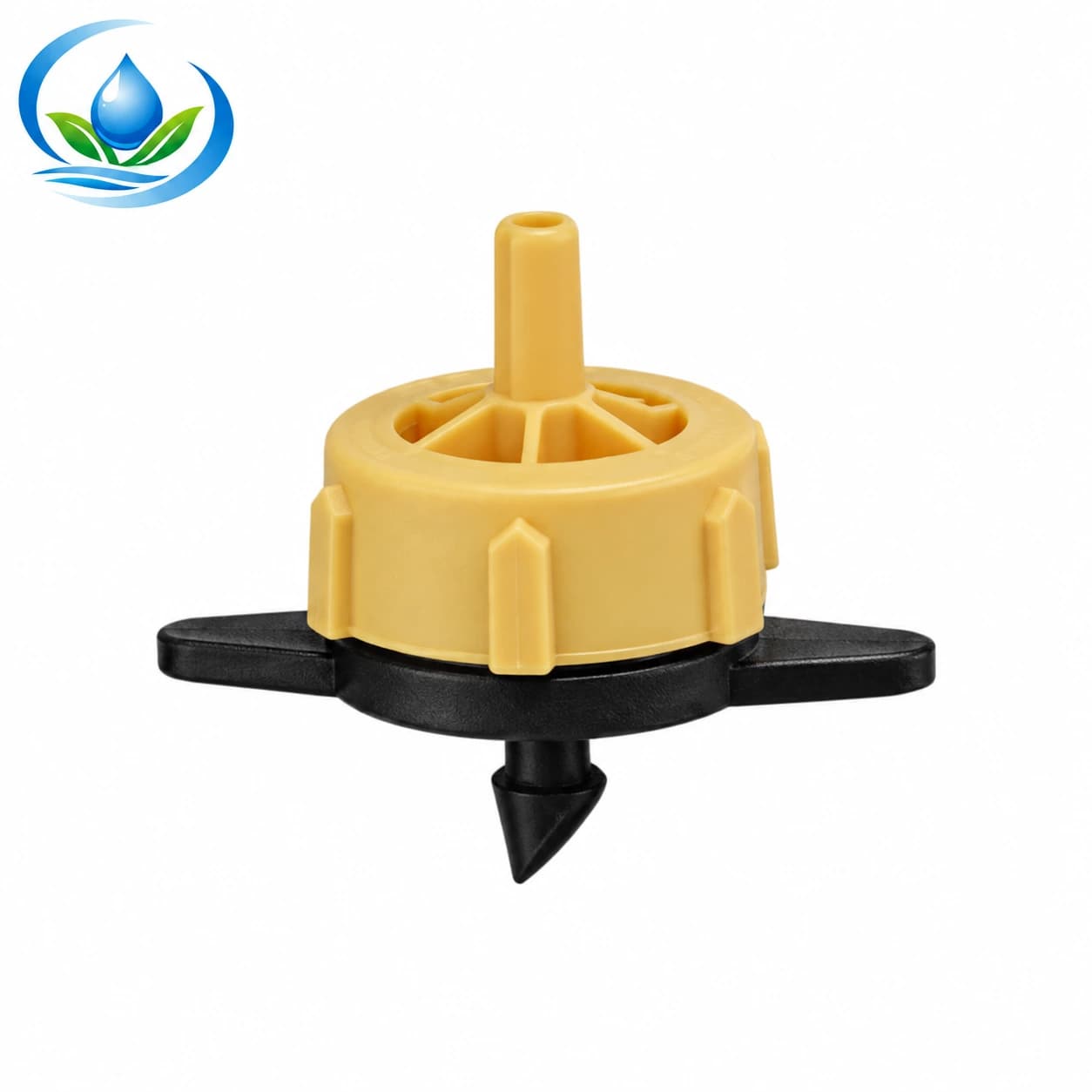
The published pressure-compensating emitter family lists TANDPCD02 at 2 L/h, TANDPCD04 at 4 L/h and TANDPCD08 at 8 L/h. These are nominal flow choices within that family. Choosing a larger number is not a substitute for checking whether the existing water entry points correspond to the dry rooted areas.
Pressure compensation concerns the emitter's discharge behaviour within its specified operating conditions. It does not distribute water sideways through bark or establish the wetted width. The available evidence does not confirm the exact compensation window, connector bore, punch diameter or an anti-drain function for an intended assembly. Request those details before purchasing connecting parts.
Also confirm whether the order includes only the emitter or any delivery tubing, stakes and fittings. These accessories are not assumed to be supplied. Confirm the selected model's price, available quantity and supply terms before ordering.
Use a comparison that includes service work
For each candidate, write down what you would actually install: the complete line option or emitter model, delivery locations, connection details and accessible termination. Then compare the number of joints, the means of securing the outlet and the work required to expose it later. These practical differences can matter as much as the cost of a single emitter.
The emitter buying guide provides a broader comparison of flow choices and quantities. For this blueberry decision, keep that comparison anchored to a particular observation: a damaged outlet, a misplaced delivery end or a dry part of the rooted bed. Avoid ordering a full assortment before you know which problem you need to solve.
Filtration remains part of the comparison because a different outlet arrangement does not remove the water-quality issue. Use the filtration selection guide to gather water-source and emitter information. Obtain the required filtration specification for the chosen product; a universal mesh recommendation would bypass the actual water and component requirements.
Test a representative section before a larger order
Select a section that represents the bed needing improvement, with access to the positions already recorded. Note the starting moisture condition, the operating block, the trial components and the duration used. Repeat the discharge comparison and inspect the same root-layer positions after water has had time to move through the bed. Use observations to compare arrangements, rather than turning this trial into a universal watering schedule.
Look for two different outcomes: the proposed components deliver consistently, and their placement improves moisture at the intended rooted positions. If only the first outcome is achieved, the mechanical purchase may be correct while the placement still needs work. If water appears mainly below the rooted layer, extending the same event is not evidence that the dry lateral area will improve.
Do not extrapolate one successful test to beds with different bark condition, soil, slope or plant age. Group comparable beds for the purchasing decision and keep exceptions visible. The guide to irrigation blocks and zones can help when the intended additions affect the supply available to other rows.
Turn the result into a short, specific order
List measured replacement lengths, the number of confirmed faulty emitters, any additional delivery points supported by the trial, and the required connecting parts. Separate components you can reuse from items that need replacement. Include photographs of existing connections and the complete product label in an enquiry; “blueberry drip parts” is too vague to establish compatibility.
Check the installed arrangement again when the covering is moved, bark is renewed or the observed rooted strip changes. Keep the successful trial record with the order so that a later buyer understands why that model and quantity were selected. The goal is a maintainable delivery arrangement that reaches the observed root layer, with each purchase justified by the bed rather than by a generic crop package.
Before you order
Compare this guide with the specifications for your exact product, selected option, water supply and field conditions. Your equipment requirements take priority over a general example.
Compare irrigation products