Drip Irrigation for Watermelons: Keep Active Rows Watered Through Successive Picks
After the first watermelon pick, check which rooted plants still carry fruit and whether their drip lines deliver water before closing a section or buying replacement material.
Published by IrriNex Store
Drip irrigation for watermelons needs a second look when the first fruit is ready but other melons remain on the vines. Removing ripe fruit does not mean the rooted plant has finished producing. Before buying a new line, closing a row valve or changing the watering plan, identify which plants the existing line serves and check water in their soil. The decision belongs to the producing vines and the actual hydraulic section, not to the date of the first picking pass. Mark the fruiting plants and the valve-controlled section separately; a picking date is not evidence that every vine downstream has finished producing. Watermelon drip irrigation after the first pick follows the vines still fruiting on each controlled row, not the harvest date alone.
This is a field purchase decision for a commercial block with a working drip arrangement. Penn State Extension's watermelon production guide notes that fruits are pollinated at different times and multiple harvests are often necessary. It also describes a need for moisture during the growing season without presenting a fixed last-day cutoff. The practical consequence is to keep harvest maturity, rooted-soil moisture and line delivery in separate records. A ripe fruit, a wet patch of ground and an open valve each answer a different question.
After the first watermelon pick, which vines still need drip water?
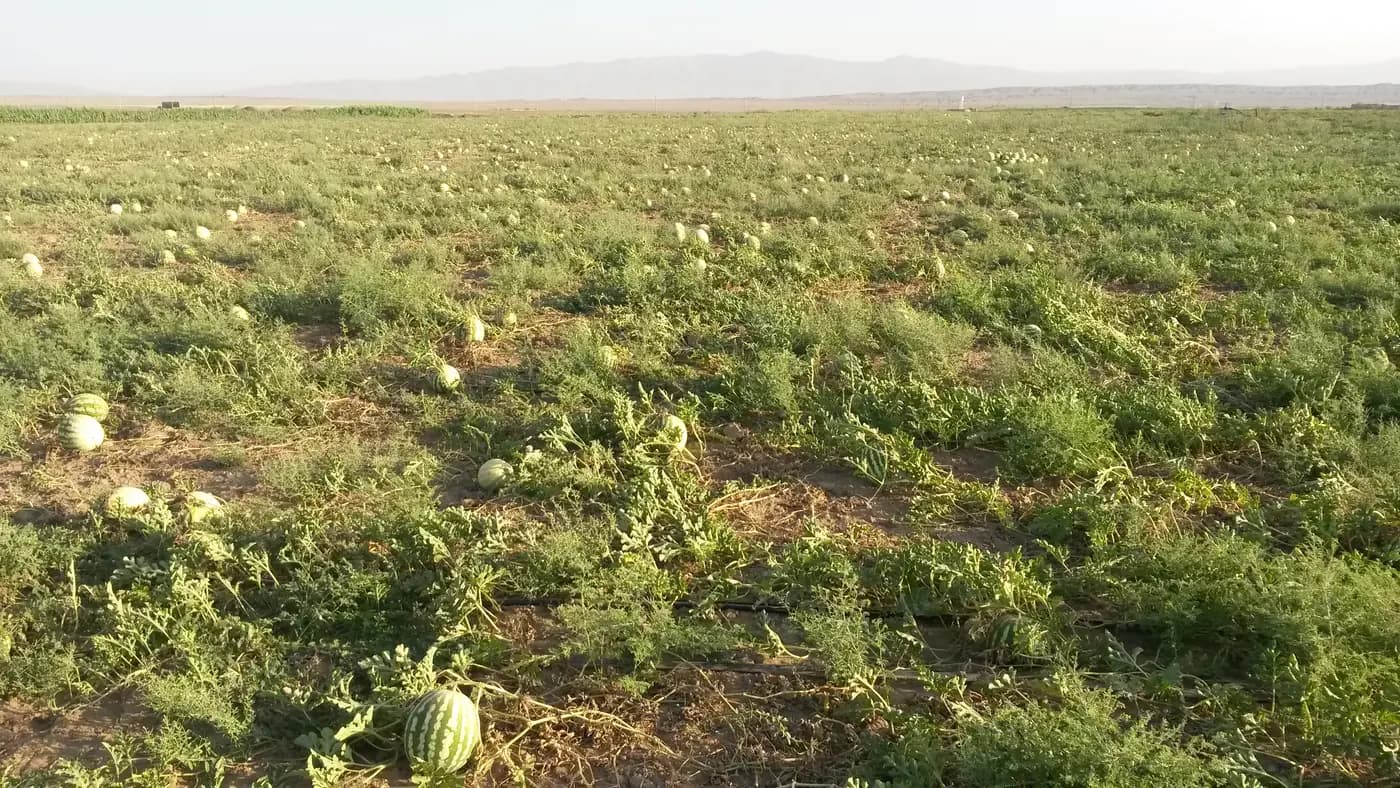
After the first harvest, give each planted row a stable ID and record which rooted plants still carry developing fruit. A vine can have a mature melon removed while smaller fruit remains attached. Other vines in that same row may not have supplied a fruit in the first pass. Do not treat the truck tally as an irrigation shutoff count. Follow the stem and the planted row from a safe working edge; the fruit may sit far from the crown under overlapping vines. Mark uncertain plants as uncertain rather than making a quick assumption from the visible fruit at one end.
Make a simple three-state field record: actively growing fruit, potentially later pick, and plants that the farm has confirmed are no longer producing. Record the observation date and the person who will revisit it. These states are not prescriptions for three different runtimes. They show whether there is still a crop receiving water in a particular hydraulic section. Where a pollenizer variety is present, include its planted positions and current role in the record. Its fruit may be handled separately at harvest, but its living plants cannot be ignored just because they are absent from the sale-fruit count.
A harvest decision and a water decision can change on different days. Fruit maturity is assessed for picking under the farm's crop and market requirements. The rooted vine's moisture need is assessed from crop stage, soil and weather. Cutting one ripe melon does not remove the later fruit from that vine or close its emitters. Conversely, a section whose crop has truly finished may still be physically connected and drawing water until the correct control is used. Keep those four facts—fruit picked, plants remaining, valve state and actual flow—on the same dated sheet.
Can a finished row valve close without cutting off fruiting vines?
The watermelon row-layout guide maps the rooted row before vines hide it. At this later stage, use that map as a reference while you inspect the soil relevant to plants with developing fruit. Pick repeatable points near an operating outlet, between outlets and at near and far positions on the same active line. If soil or cover changes across the block, include those differences instead of inspecting only the convenient field edge. The crop's moisture need must be assessed where those rooted plants remain, even when the harvest path now follows fruit lying away from the planted row.
Record the pre-irrigation condition, recent rain, the active valve group, the time of the last event and what happens at the chosen soil positions afterward. Examine a crop-relevant layer with a suitable method that avoids damaging roots, tape, fruit and mulch. A damp surface immediately below one emitter is not proof that the rooted area of every still-producing plant received water. Equally, a dry aisle outside the intended wetted strip is not by itself evidence of failure. Use the crop's local advice and soil observations to interpret each position.
Do not convert a visible melon symptom into a universal watering correction. A split, small or pale fruit can have several possible causes, including differences unrelated to the current line. One unusually wet soil check might follow rain rather than an excessive programmed event. Compare the recorded irrigation, plant state and field observations before changing the entire block. Avoid fixed advice to stop water a certain number of days before harvest or to reduce every event by a set percentage. A repeated-pick field can contain plants at different fruit stages on the same day.
If the soil is too dry at one representative root position, first confirm whether water actually leaves the expected outlets and reaches that location. If the soil stays overly wet, inspect whether the event, rain, a leak or poor drainage supplied the excess. Changing runtime for every row before identifying the cause may make acceptable positions worse. The runtime review after an outlet change helps separate a new delivery rate from a crop watering decision; this harvest check should likewise keep line performance apart from the crop's present need.
Verify delivery while the normal producing group runs
Run the irrigation group that actually serves the remaining fruiting plants. Record the valve positions and any pump, filter or source conditions that differ from the earlier season. Watch for leaks at row starts, joints and ends from an accessible position. At identifiable near and far outlets, use the approved observation or collection method for that line to see whether discharge is present and reasonably consistent with the installed design. Do not lift an active tape under vines, loosen a pressurized joint or move a fruit to expose an outlet.
A row can have enough total supply on a meter while one damaged lateral under the canopy misses several plants. The reverse is also possible: the near outlet looks active, but the far end weakens when other permitted rows run together. The uneven-emitter-flow check helps distinguish a local outlet problem from a group-wide restriction. Record the named fault location before requesting a splice or new length. A repair that stops a leak is not complete until delivery to the plants beyond it is checked under the intended running group.
Removing a fruit does not change the nominal discharge of a fixed set of open emitters. A valve closed on an entire line or a physically removed length changes the hydraulic case; a melon picked from a still-connected vine does not. If an operator proposes shutting one row after the first truck leaves, compare the open-line count and operating pressure for the group that would remain. The drip-flow calculation guide handles outlet and simultaneous-flow arithmetic; the melon check supplies the crop-state evidence for which lines still need to operate.
Decide whether a finished crop and a controllable water section coincide
Sometimes a complete row or independently fed section has genuinely finished production while another section continues. Before selecting a valve, trace the existing water route on the field sketch: header, row start, any in-line join, emitting material, terminal point and the other lines sharing the control. A manual valve can only isolate the part of the water path it actually controls. One valve cannot serve different fruit stages on the same rooted plant independently, and a valve placed on the wrong branch cannot create a new independent zone by itself.
Write the crop decision first: which rooted plants still require water under the local crop plan? Then write the hydraulic decision: which of those plants are served by each open line and what would close if the proposed handle were moved? If a section contains both remaining fruit and plants judged finished, a simple closure may be the wrong purchase. Maintain the necessary supply and investigate whether a supported layout change is possible at a later crop turn. The staggered-row control guide covers the broader row-valve topology; here the hard case is several fruit maturities within one watermelon planting.
Use the first harvest only as a prompt to verify, not as an automatic valve instruction. A completed section should be identified by the farm's crop decision and by an actual independent connection that can be operated within the system's allowed flow and pressure range. Follow the installed valve and pump instructions for any change. Do not close all outlets against a running pump or pinch a tube to imitate a valve. After an approved change, compare near and far soil and outlet observations on the still-active rows. A smaller operating group may alter regulator or pump behaviour even though no new emitter was installed.
Keep the line's exact identity attached to any repair purchase
If the existing material passes the field checks, buying a different drip line because the first fruit was harvested adds no useful crop control. If a verified fault requires a replacement length, record the current line's full option code, its wall and connection type, the length to replace and the condition of both mating ends. A tape splice and a change to round inline pipe are different jobs. Order only after the permitted connection and working conditions are confirmed for the retained material. Do not cut a sound run under a mature vine merely to fit a convenient item from storage.
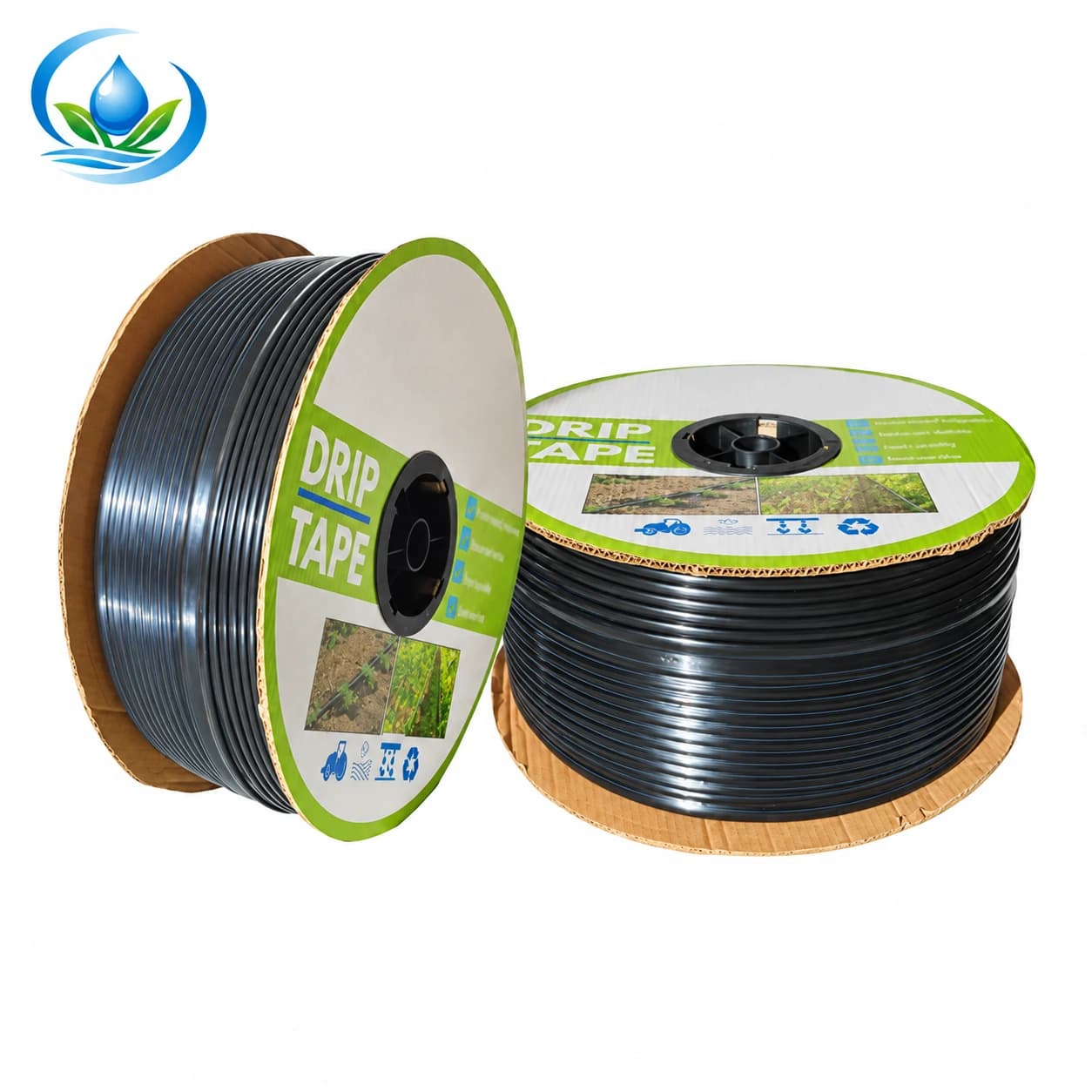
The flat drip tape listing includes option IS-2-C526AC2D85, with nominal 16 mm diameter, 0.2 mm wall, 30 cm outlet interval and a 2,000 m sale roll. It can identify a proposed like-for-like trial or replacement, but the listing does not establish the exact outlet discharge, allowable pressure or maximum operating lateral length. Those data are needed before recalculating a group if more tape is added. A sales roll length is not a recommended installed run, and its 30 cm outlet spacing is not a crop-stage watering schedule.
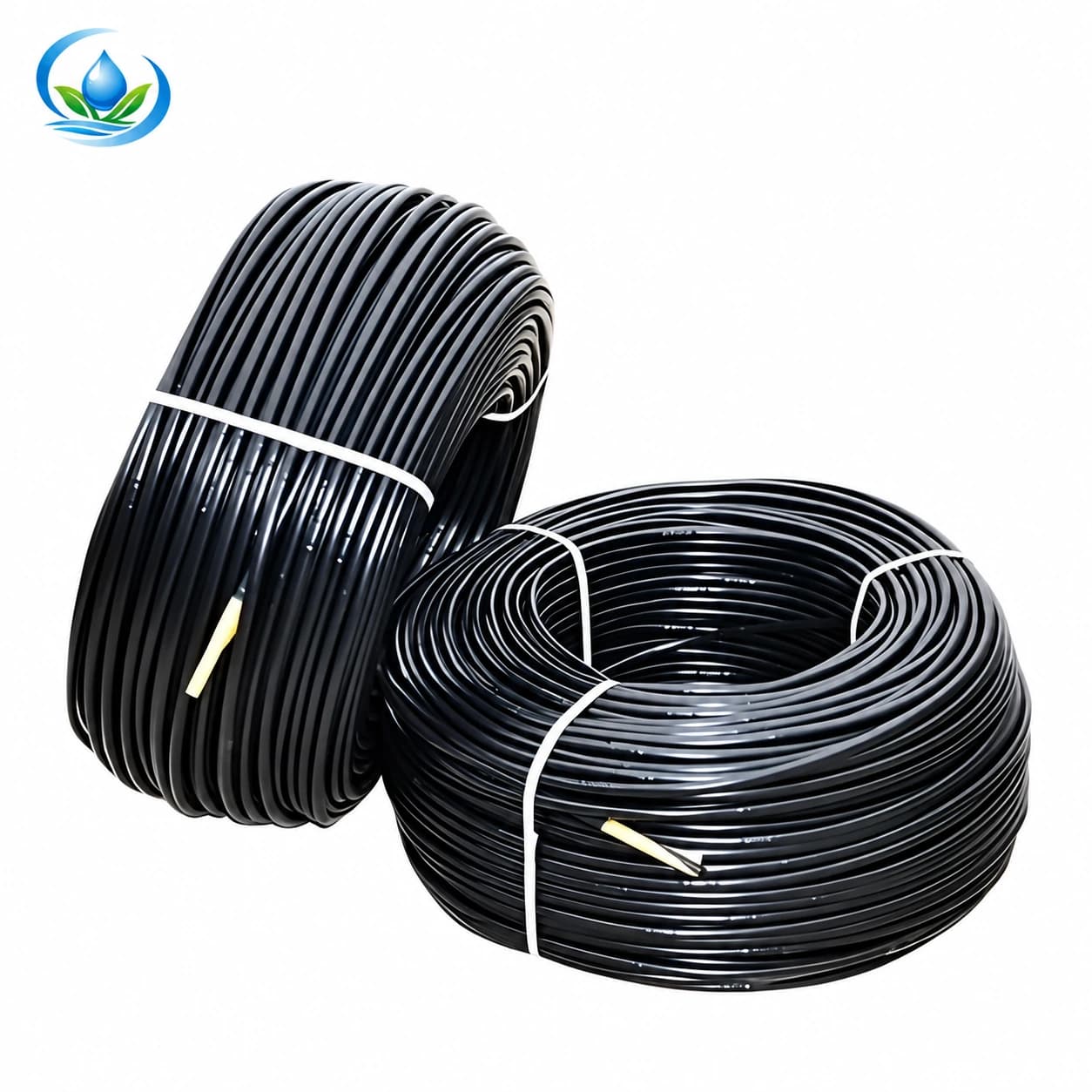
The inline drip pipe option IS-3-8CDA6B18CD has a nominal 16 mm diameter, 0.8 mm wall, 30 cm emitter interval, listed 2 L/h per emitter and a 500 m sale roll. That nominal emitter value is not measured delivery in the harvest field, and the option is not documented as pressure-compensating simply because it has integrated emitters. It should not be treated as a drop-in repair for the flat tape or its connector. If the farm is considering a different material for the next planting, test the whole connection and flow case then instead of changing a working midseason section on a roll-label resemblance.
Keep a purchase list separate from the irrigation instruction. For a fault, the list needs an identified damaged location, exact matching material and compatible join or end part, with the quantity actually needed. For a genuine zone change, it needs a mapped branch and a valve whose two connections, intended service and control path are established. Any unused part is a spare, not an active outlet. If no component is faulty and later fruit remains on the same vines, the immediate action may be continued observation under the farm's irrigation plan rather than a cart of new parts.
Handover a record for the next picking pass
Leave the crop team a dated row sheet showing which rooted vines still carry developing fruit, which fruit was picked, the water group allowed to run and the soil positions being watched. Include the line identity, valve state, near/far delivery findings, recent rain and any repair pending. This is more useful than a note saying only “row harvested.” A different picker can then understand why an area still receives water after some fruit left the field or why a truly completed independent section has been taken out of service.
At the next picking pass, repeat the crop-state and soil checks before changing the controls again. Keep fruit-quality evaluation with the grower or crop adviser; neither a ripe rind nor a sweeter sample from one pick proves that a prescribed reduction in water caused it. If a later pass finds a new dry rooted area, investigate delivery and moisture separately. If a line is repaired, restart it under its documented method and verify the downstream plants, not just the absence of leakage at the repair.
Check the selected product pages for their current price, sale unit, available options and delivery. If a line, connector or valve interface is unresolved, send support the exact option code, photographs of both mating parts and the marked row record. Buy the material that answers the verified field problem. During successive watermelon picks, the continuing question is whether the still-producing rooted plants receive suitable water through the actual open lines—not whether the first harvested melon has left the farm.
Before you order
Compare this guide with the specifications for your exact product, selected option, water supply and field conditions. Your equipment requirements take priority over a general example.
Compare irrigation products